Gross Allgawischken
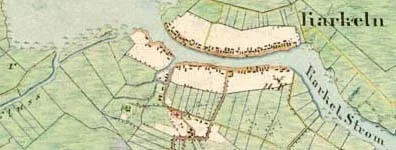
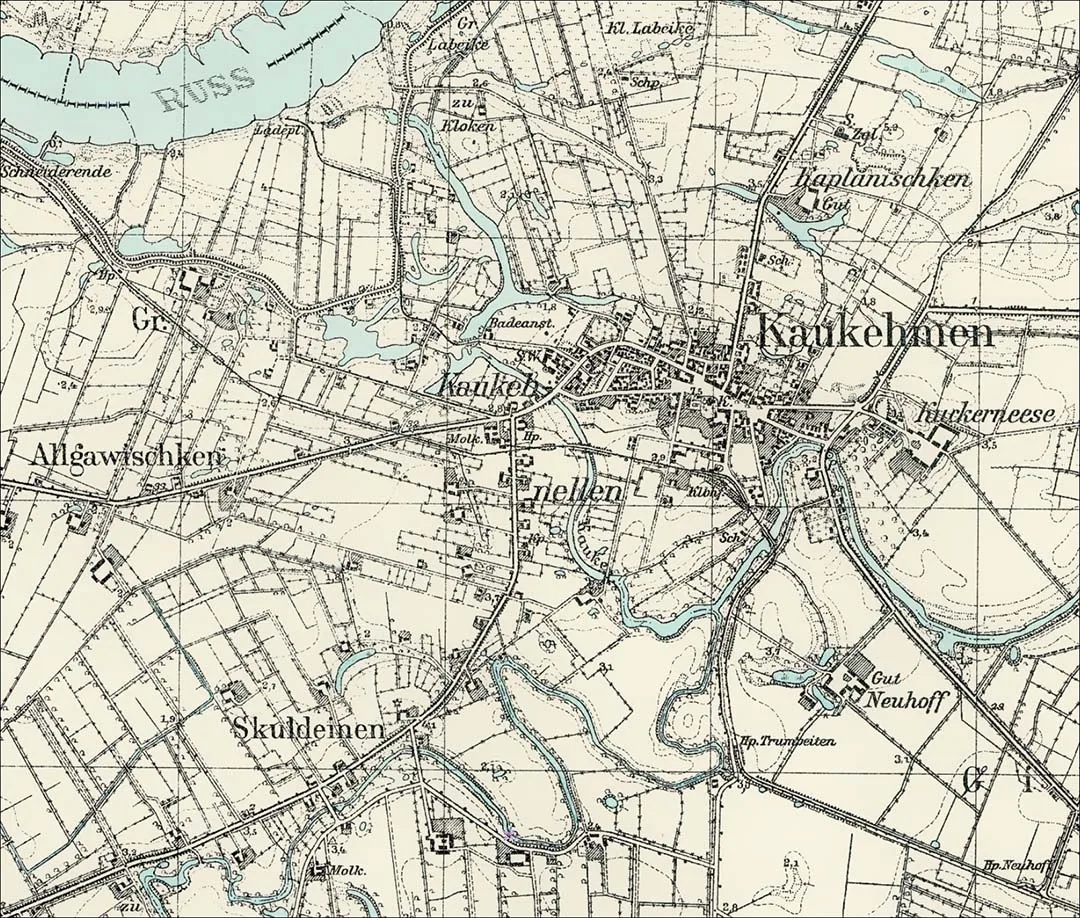
Groß Allgawischken (from 1938 Schlichtingen) is first mentioned in 1736 as Algawischken. In 1785 Gross Allgawischken was classified as a Kulm-law village (kölmisch Dorf) with 28 households. The village also owned a windmill on the Ruß River (Neman). The village belonged to the Amt Kuckernese (part of Yasnoye) of the Kreis Insterburgschen. Coordinates of Gross Allgawischken: 55°09'50'' N 21°31'35'' E.
In the 19th century Gross Allgawischken was a village which from 1818 formed a rural community in the Kreis Niederung (from 1938 the Kreis Elchniederung). The village belonged to the parish of Kaukehmen (from 1938 Kuckerneese, Yasnoye). In 1818 Gross Allgawischken is still described as a Kulm-law village with a windmill and 18 households, belonging to the Amt Kuckerneese (part of Yasnoye).
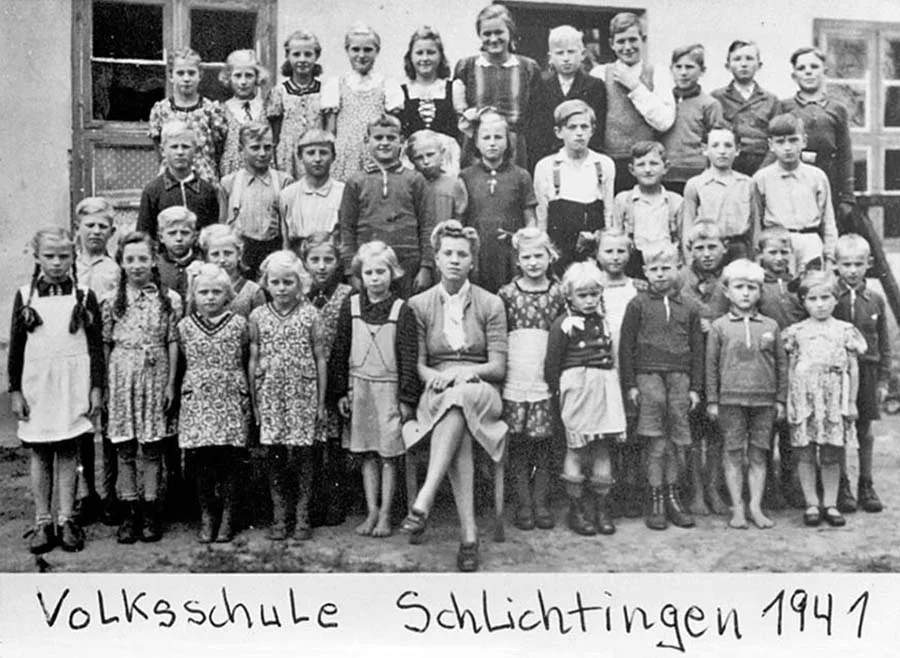 A group photograph of the pupils of the Schlichtingen school with their teacher (1941).
In 1871 Gross Allgawischken had 24 dwelling houses, in which 37 families lived.
On 26 March 1874 the rural community of Gross Allgawischken was included in the newly established Amtsbezirk Sausseningken (from 1939 the Amtsbezirk Milchhof, Cherkasskoye). The owner of the estate in Gross Allgawischken, one Schapals, held the post of head of the Amtsbezirk in 1905–17.
In 1885 the Gross Allgawischken community owned 400 ha of land, including 209 ha of arable land and 10 ha of meadows. The village had 25 dwelling houses, in which 44 families lived. By 1895 the number of dwelling houses in Gross Allgawischken had fallen to 23, and the population consisted of 36 families, as well as two men and one woman living apart from a family.
By 1905 the number of dwelling houses in the village remained the same (23), but they were now home to 33 families and two single people. Property tax revenue per hectare of land amounted to 25.64 marks, more than 65% above the average for the communities of the Kreis Niederung.
At the beginning of the 20th century a narrow-gauge railway (750 mm) to Groß Brittanien (Shcheglovka) was laid past Gross Allgawischken; by 1911 it had been extended to the village of Karkeln (Mysovka). The village had a passenger platform on the railway. In the pre-war years Gross Allgawischken had a school.
Skuldeinen
In the 19th century Skuldeinen was a village which from 1818 formed a rural community in the Kreis Niederung (from 1938 the Kreis Elchniederung). The village also belonged to the parish of Kaukehmen (from 1938 Kuckerneese, Yasnoye). Coordinates of Skuldeinen: 55°09'50'' N 21°31'35'' E.
In 1818 Skuldeinen had 12 households, and the village itself was described as a Kulm-law village (köllmisch Dorf) belonging to the Amt Kuckerneese (part of Yasnoye).
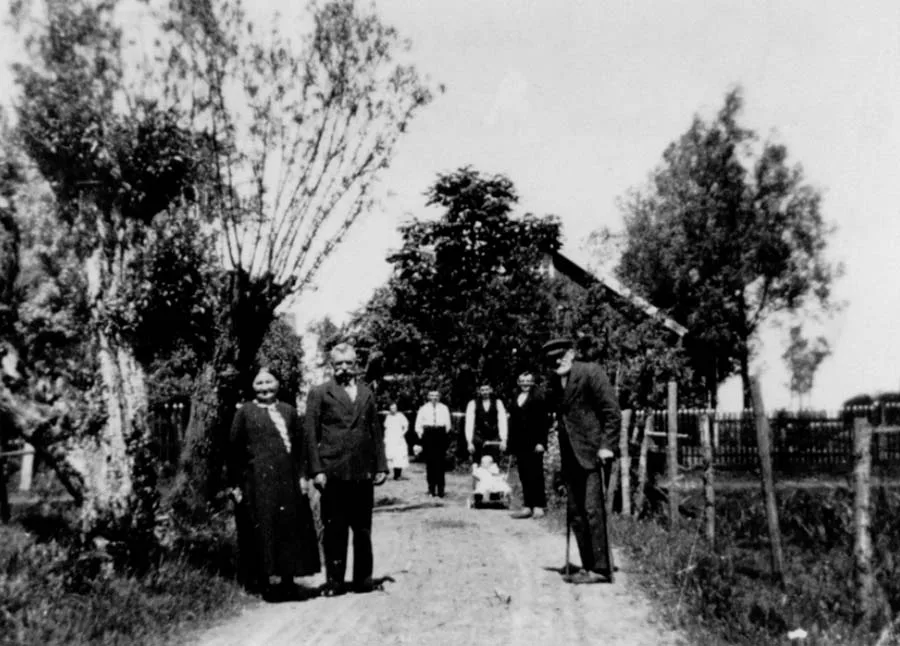 The road to the Jantz family farmstead (late 1930s).
In 1871 Skuldeinen had 11 dwelling houses, in which 18 families and one single man lived.
On 26 March 1874 the rural community of Skuldeinen was included in the newly established Amtsbezirk Sausseningken (from 1939 the Amtsbezirk Milchhof, Cherkasskoye). A war invalid from Skuldeinen, Arno Gerull, held the post of head of the Amtsbezirk in 1928–45.
In 1885 the Skuldeinen community owned 161 ha of land, of which 66 ha was arable land and 29 meadows. The village had 11 dwelling houses, and the population consisted of 15 families.
On 12 October 1896 the village of Szaudszen, which had previously formed a separate rural community, was incorporated into the Skuldeinen community. Subsequently the village of Szaudszen became the central part of the village of Skuldeinen. This merger increased the community's land to 215.9 ha. The combined village had 20 dwelling houses, in which 29 families and one single man lived.
As of 1905 the village of Skuldeinen had 15 dwelling houses, and the population consisted of 31 families and one person living without a family. Property tax revenue per hectare of land amounted to 27.93 marks, 80% above the average for the communities of the Kreis Niederung.
In the pre-war years Skuldeinen had a butter dairy and a wind generator.
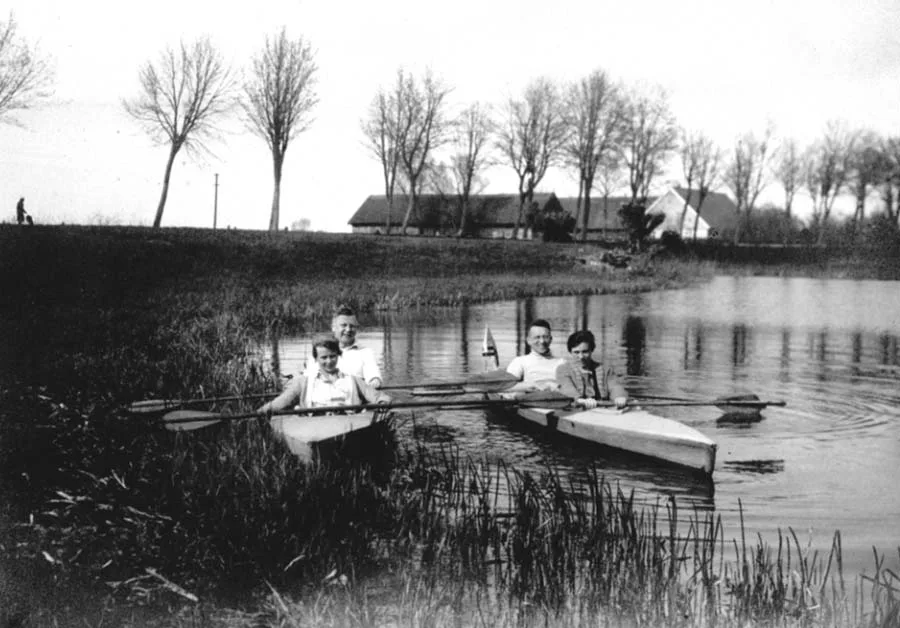 A canoe trip on the Alte Gilge near Skuldeinen (1923).
On 5 July 1950 the village of Skuldeinen was renamed the settlement of Gribki. The southern part of the village of Gross Allgawischken also became part of the settlement of Gribki de facto.
In 1972 Gribki had 17 houses, and there were a dairy farm and a pig farm. All the houses and farm buildings stood on the site of former Skuldeinen; on the site of former Gross Allgawischken there were only ruins and sheds. Later these too were destroyed, and there are no buildings here now. The settlement of Gribki was removed from the register and incorporated into the settlement of Yasnoye no later than 1975. By 1985 about a dozen houses and a dairy farm remained of the former settlement. By 2001 the number of houses had increased to 15; the dairy farm was apparently no longer operating. As of 2019 the former settlement of Gribki had nine households, which now belong to the settlement of Yasnoye. All of them are on the territory of former Skuldeinen.
Population change of Skuldeinen: 1818 – 118, 1867 – 121, 1871 – 107, 1885 – 79, 1895 – 161, 1905 – 128, 1910 – 126, 1925 – 129, 1933 – 126, 1939 – 118 inhabitants.
Population change of Gross Allgawischken: 1818 – 143, 1867 – 270, 1871 – 240, 1885 – 246, 1895 – 218, 1905 – 198, 1910 – 222, 1925 – 205, 1933 – 154, 1939 – 147 inhabitants.
Population change of Szaudszen: 1867 – 81, 1871 – 60, 1885 – 66 inhabitants.
Composition of the population of Skuldeinen in 1871: Evangelical Christians – 102, Catholics – 1, other Christians – 3, Jews – 1, children under 10 – 14, literate – 46 (49%).
Composition of the population of Gross Allgawischken in 1871: Evangelical Christians – 216, Catholics – 13, other Christians – 11, children under 10 – 41, literate – 101 (51%).
Composition of the population of Szaudszen in 1871: all 60 – Evangelical Christians, children under 10 – 16, literate – 19 (44%), blind – 1.
Photos: Bildarchiv Ostpreußen.
Translated from Russian with the help of AI (Claude, Anthropic), October 2026.