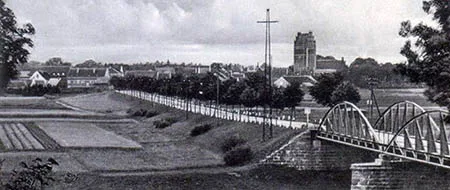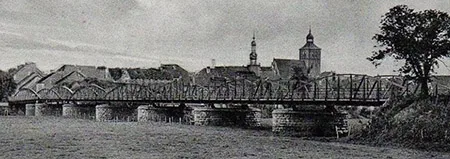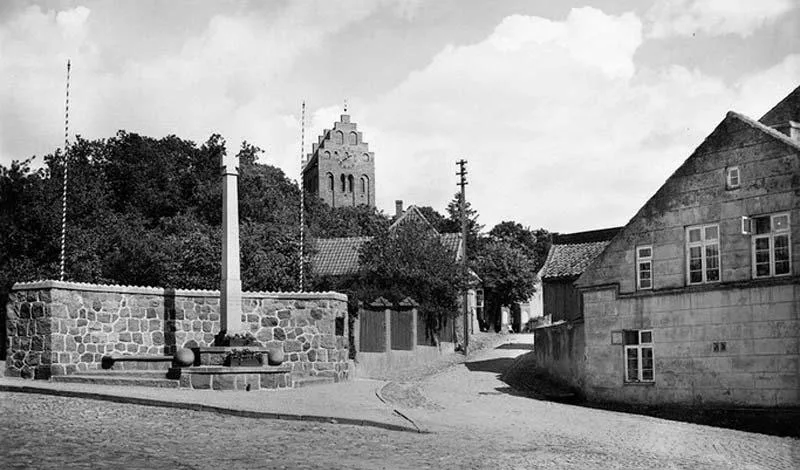
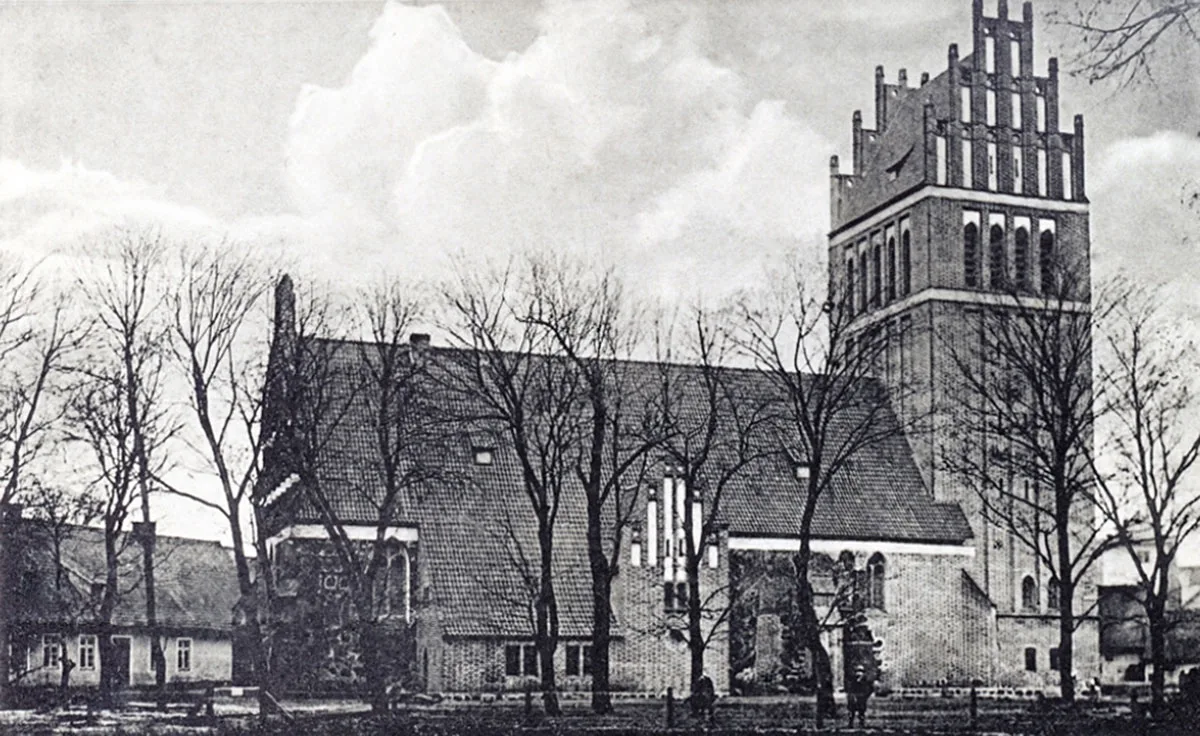
During the First World War the church was badly damaged, but it was soon restored and reconsecrated on 30 August 1925. The west tower was rebuilt, made to resemble the old one, but taller. A staircase was added to it on the south side. The nave kept its old stepped gable on the east. A sacristy on the north, a porch on the south. Buttresses between the pointed-arch windows. The altar, pulpit and organ are of new workmanship.
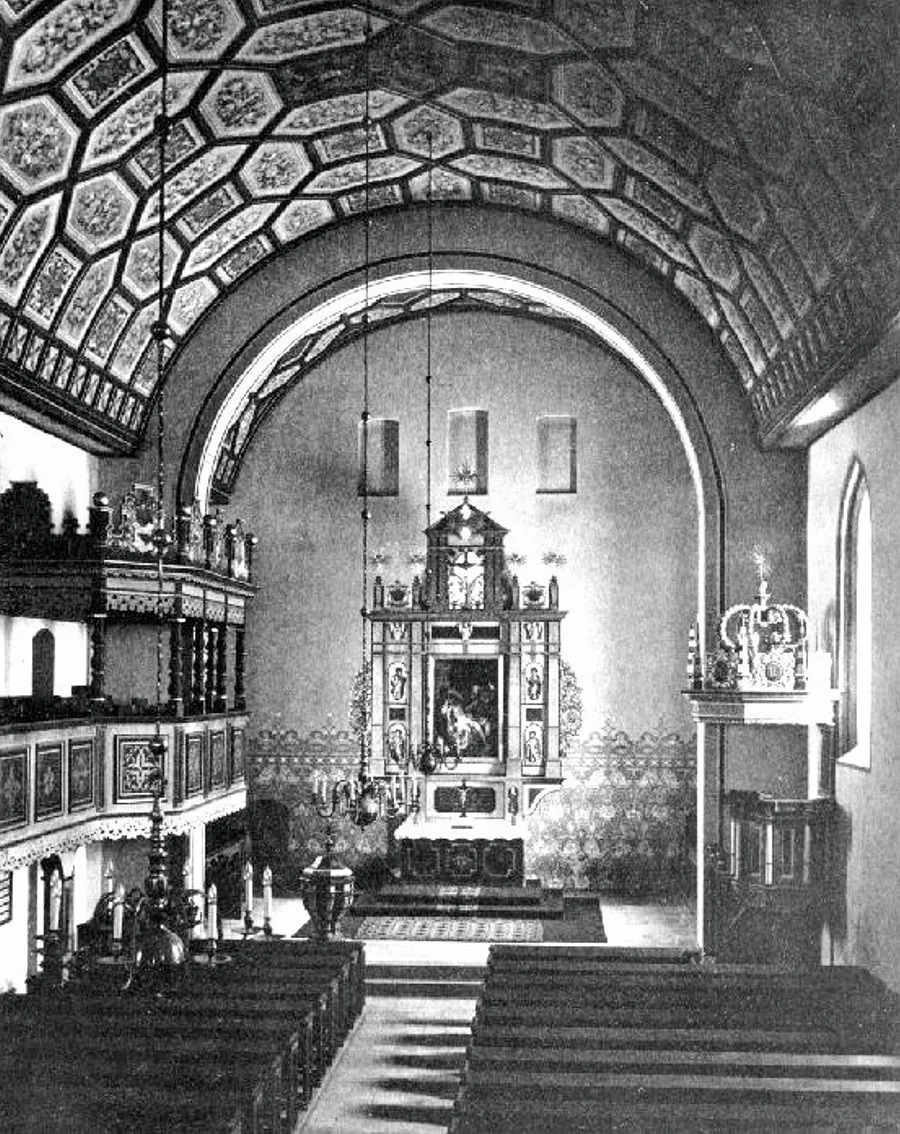
After the Second World War the church remained undamaged. After the war it was used as a grain dryer and a storehouse. The roof of the nave was covered with asbestos-cement sheets. The sacristy was destroyed. The outward appearance of the church remained relatively good.
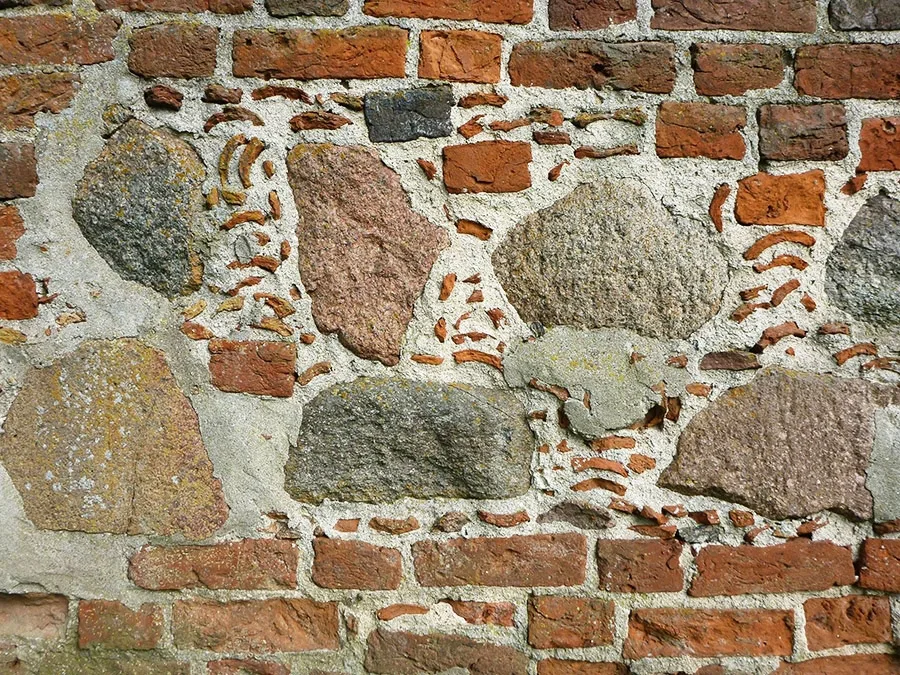
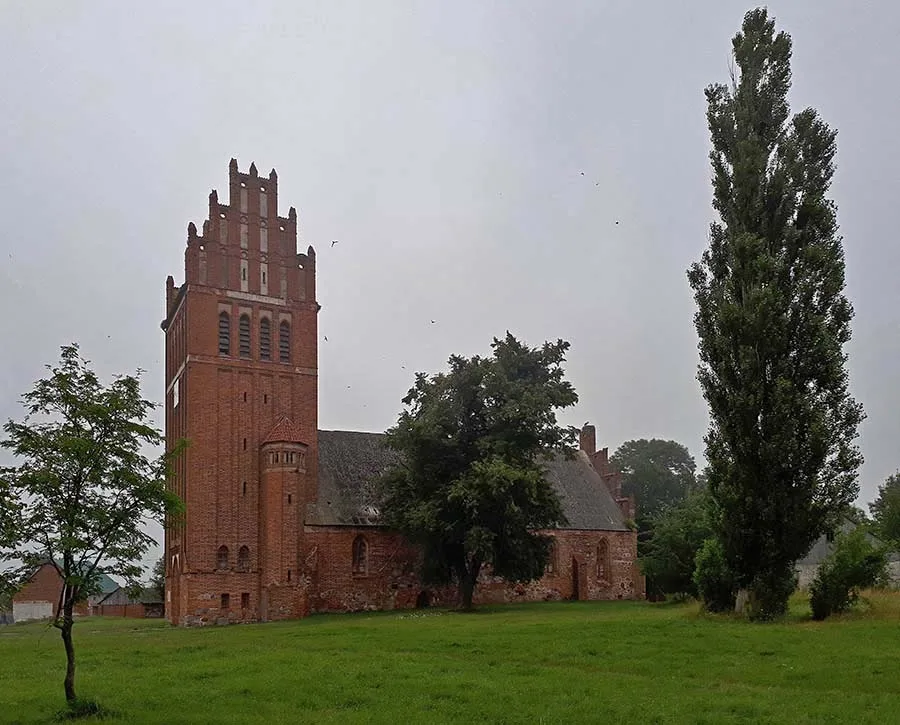
In 2005–2009 the church was restored through the efforts of the Prussian Landsmannschaft and the Lutheran congregation. By a resolution of the Government of the Kaliningrad Region of 23 March 2007 the church received the status of a cultural heritage site of regional significance, and in February 2010, by a resolution of the Government of the Russian Federation, it was transferred to the Russian Orthodox Church. In 2014, a striking clock paid for by the community of Allenburg's former residents was installed on the church tower. At present the building houses an amateur exhibition, and concerts are held there in summer.
Photos on this page: Bildarchiv Ostpreußen, bildarchiv-ostpreussen.de, Mikhail Ogorodnikov (2015–2022)
Translated from Russian with the help of AI (Claude, Anthropic), October 2026.