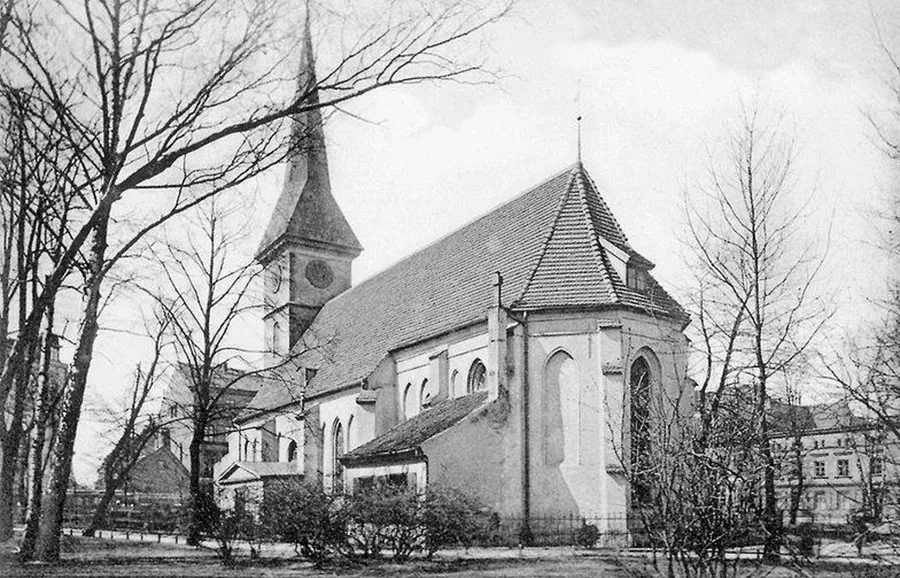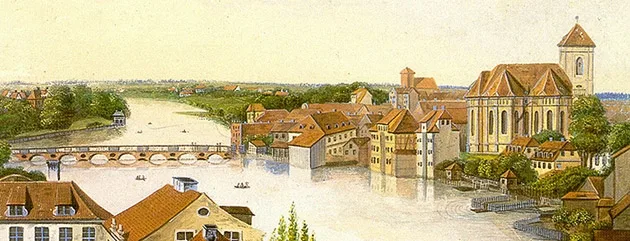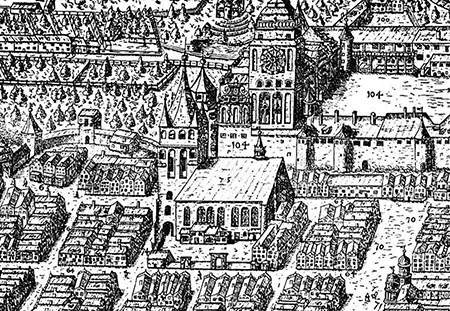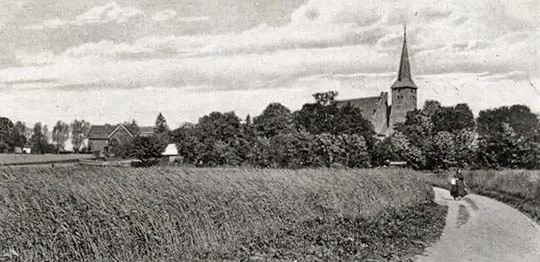
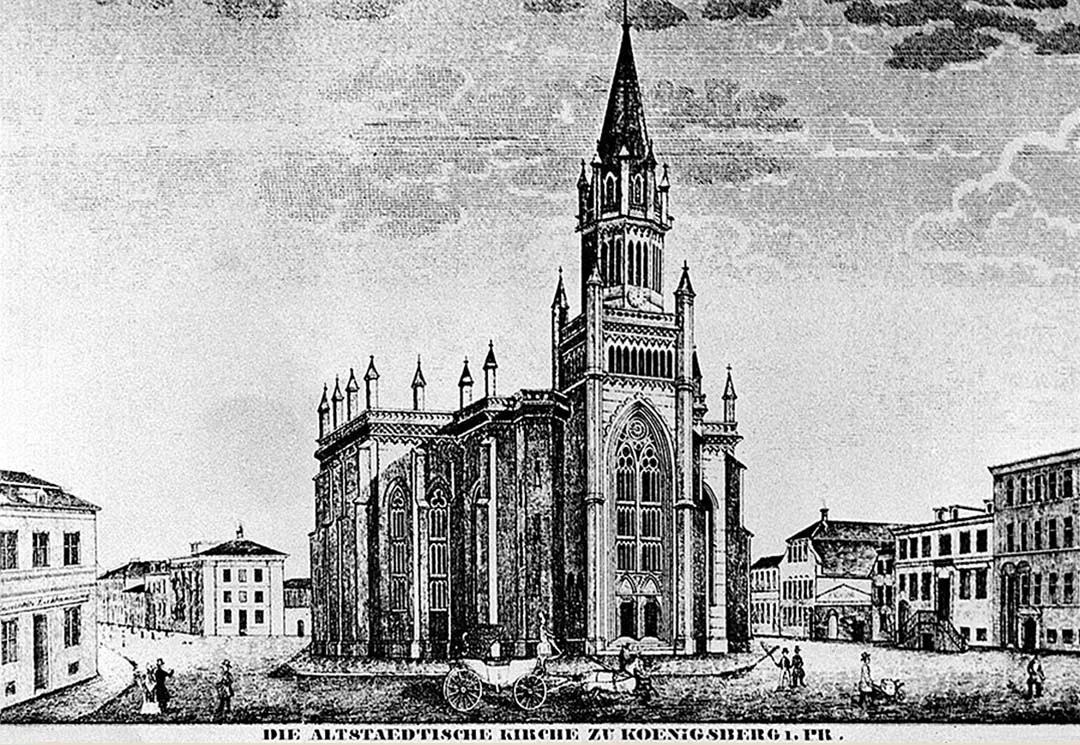
The new church was consecrated on 15 October 1845. It was a Neo-Gothic brick building in the English Late Gothic style, with a Greek-cross plan. The red brick was left unplastered both inside and out. The choir on the west was polygonal, the tower on the east. Buttresses ran around the entire perimeter, separating the tall lancet windows.
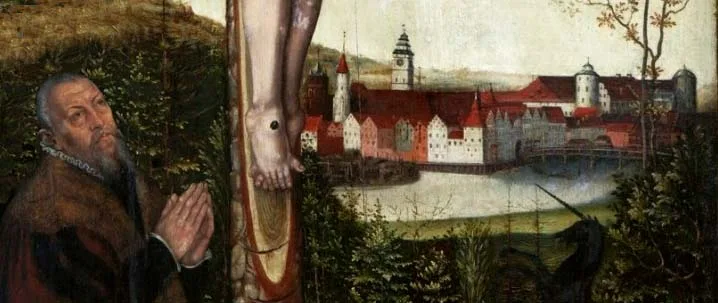
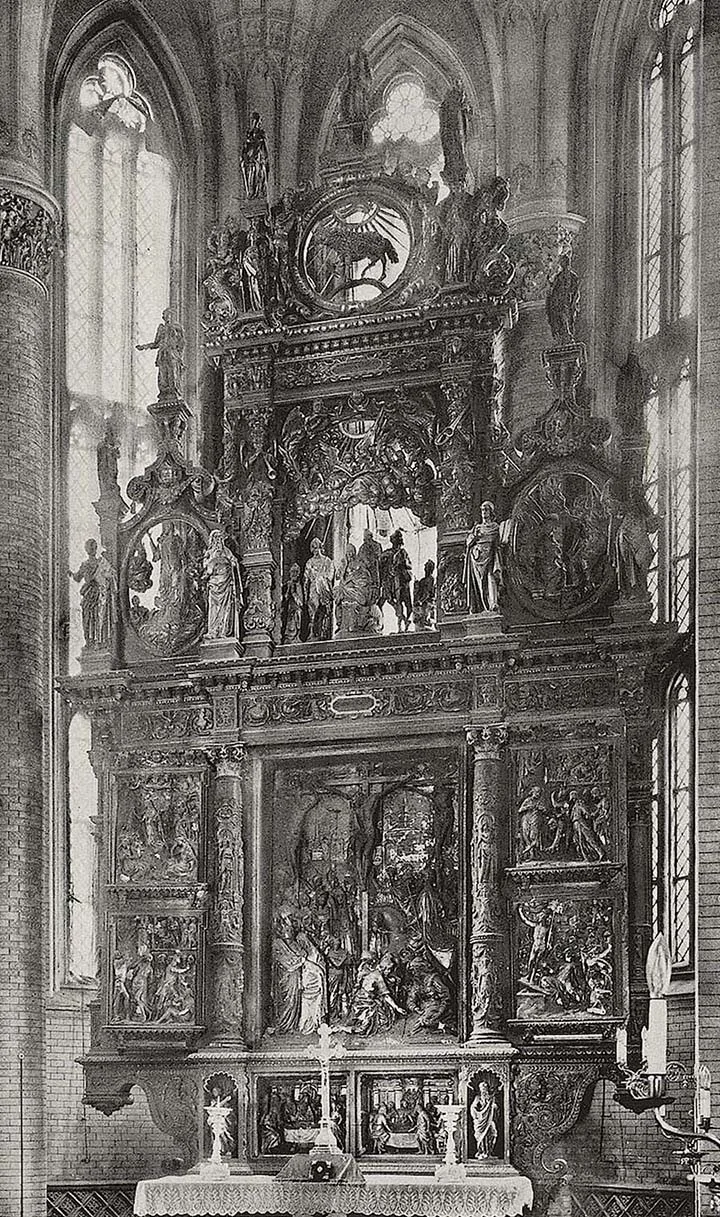 The altar from the Old Altstadt Church (1606).
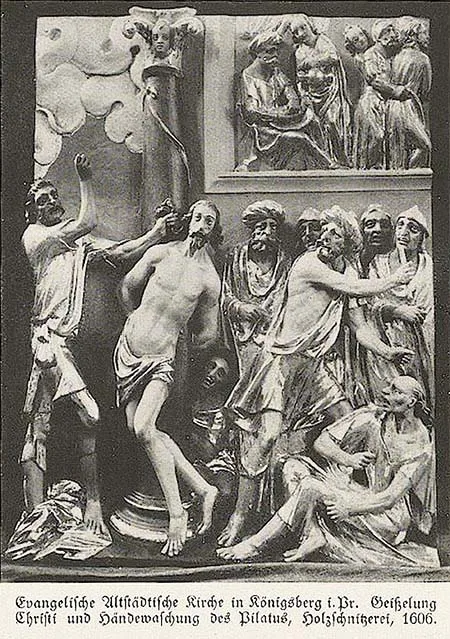
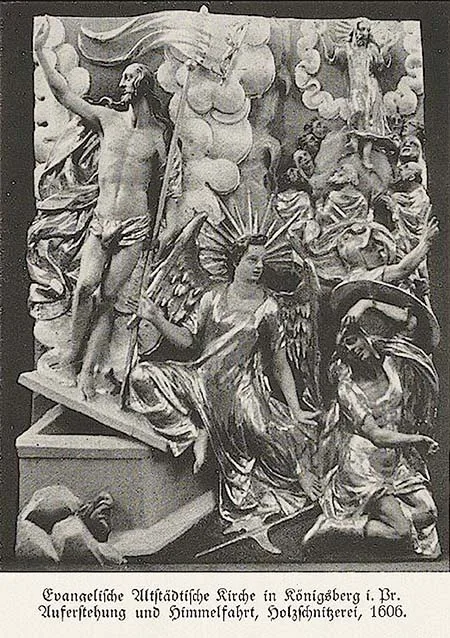
Of the exceptionally rich church furnishings of the Old Altstadt Church, little passed to the new one. First of all, the tall, 13-metre altar made in 1606 (later renewed, see above), with a carved central section. In 1943 the altar was taken to the Arnau area, where it was hidden in a farm outbuilding. It has not been seen since.
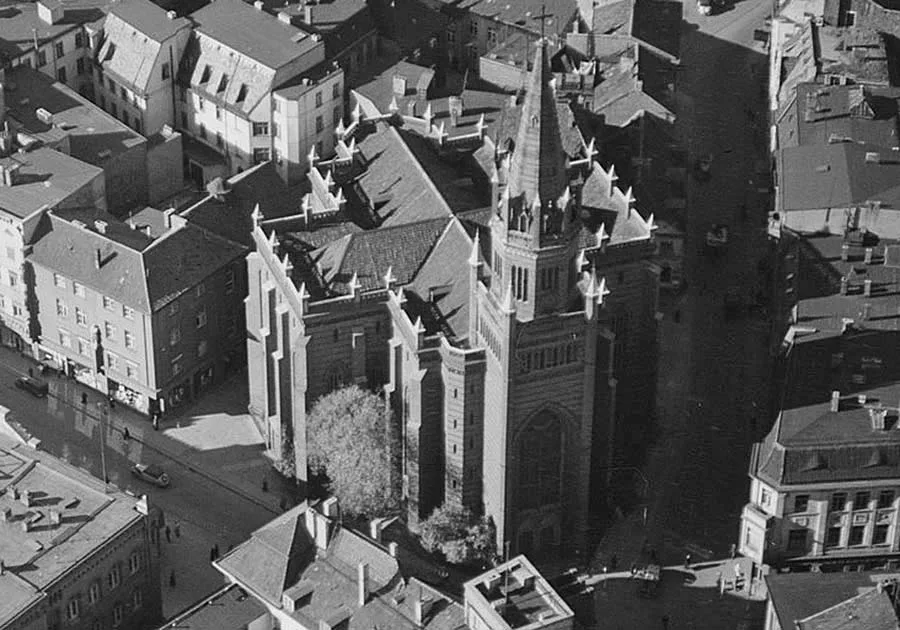 View of the church from a Zeppelin.
An epitaph to Pastor Dermau, 1639. Candlesticks in the form of antlers (the deer is a symbol of Christ the bringer of light), 1530. Two confessionals, 1690. Many 17th-century chandeliers. Rich and beautiful plate: a chalice of 1591, Wittenberg work; large Easter candlesticks of 1639; a wafer box of 1629; a font of 1670. Other items were transferred to the castle collection. The pulpit was made new.
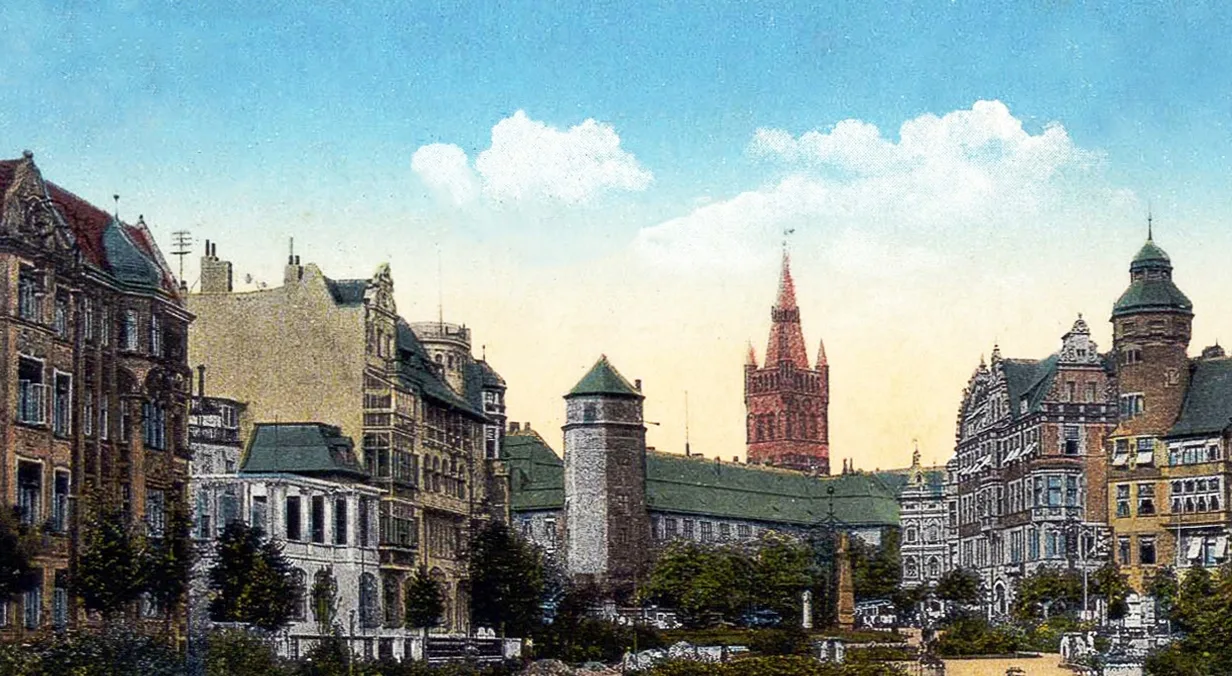
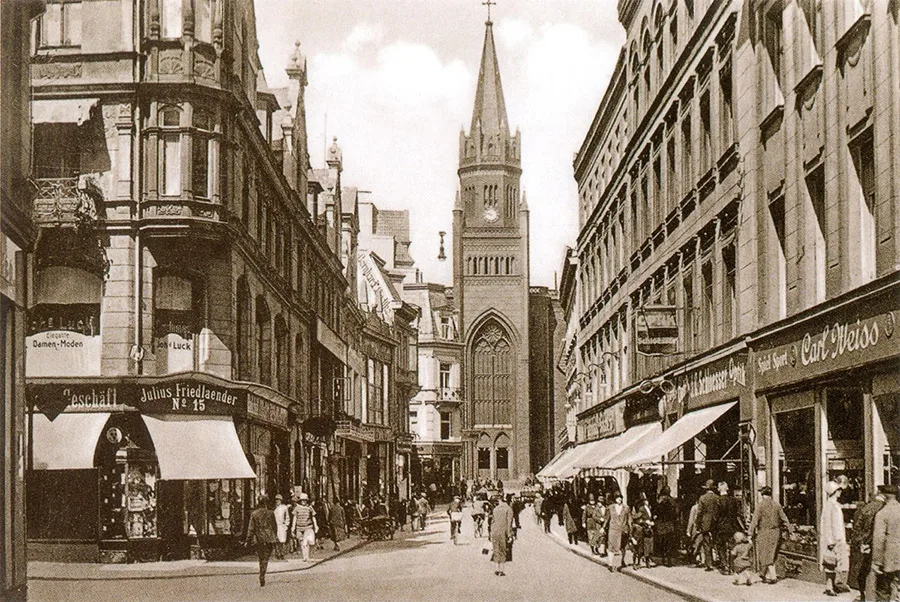 A view along Junkerstraße.
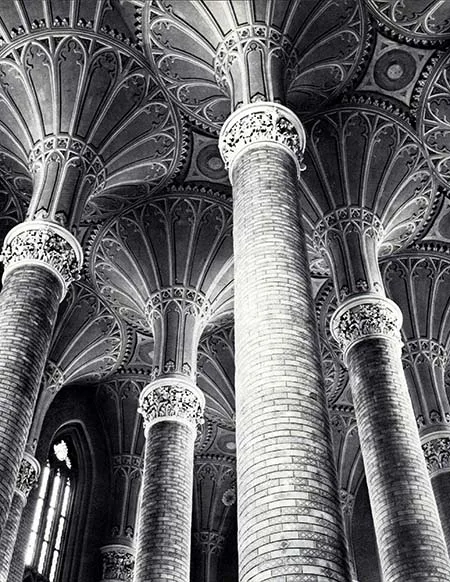
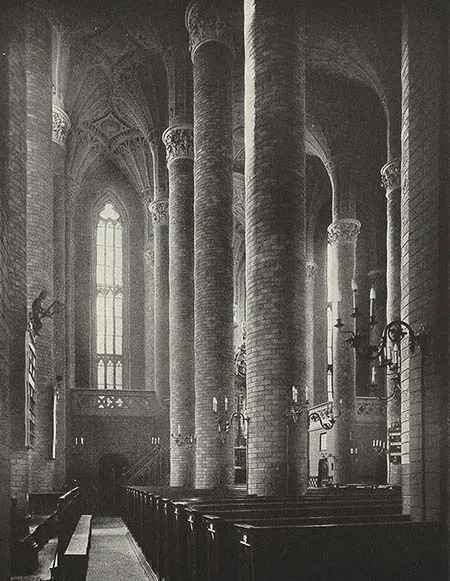
At the design stage the king asked for the area of the nave to be reduced to make the project cheaper; the architect reduced it but kept the number of columns the same. The result was a masterpiece (see above).
Inside, the vaults rested on closely spaced massive round columns (in the photo above), which made a very powerful impression on the congregation.
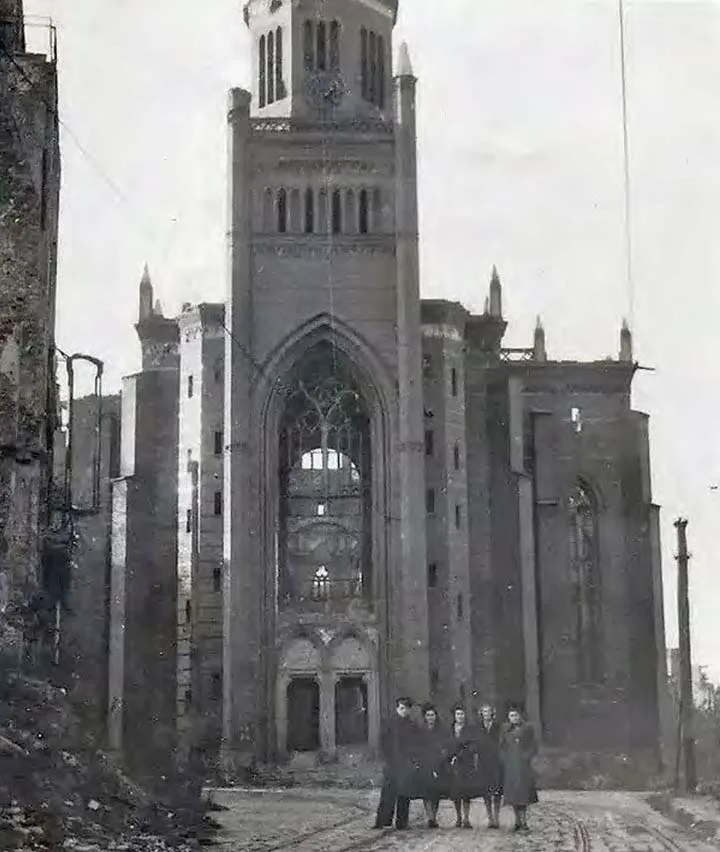 Ruins of the New Altstadt Church (1952).
A new organ was built by the Königsberg organ builder Terletzki in 1895. The church had three bells, of 1469, 1622 and 1711. The last pastors were: Kons, Councillor Lauden; Lenkeit, city superintendent Fritzewski and superintendent Gustav Wiel.
The church was badly damaged during the war. After the war it was gradually dismantled, and in the mid-1950s, when Leninsky Prospekt was being built, it was finally destroyed, since the avenue partly ran across the site where the church had stood.
Photo: Bildarchiv Ostpreußen bildarchiv-ostpreussen.de, Anton Ulbrich «Geschichte der Bildhauerkunst in Ostpreussen», Grafe und Unzer «Das malerische Ostpreußen».
Translated from Russian with the help of AI (Claude, Anthropic), October 2026.