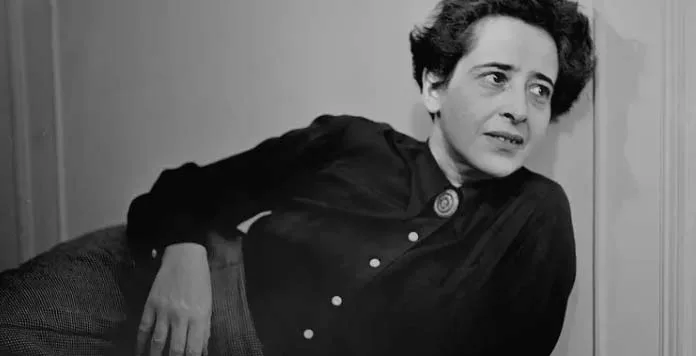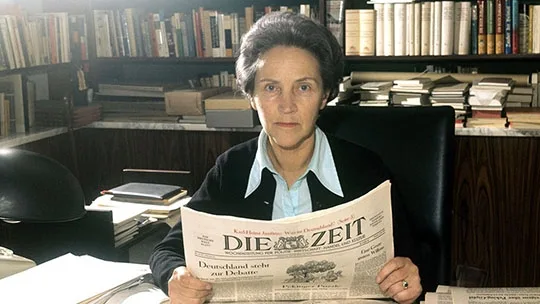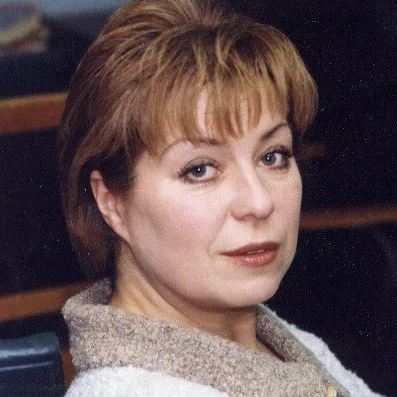
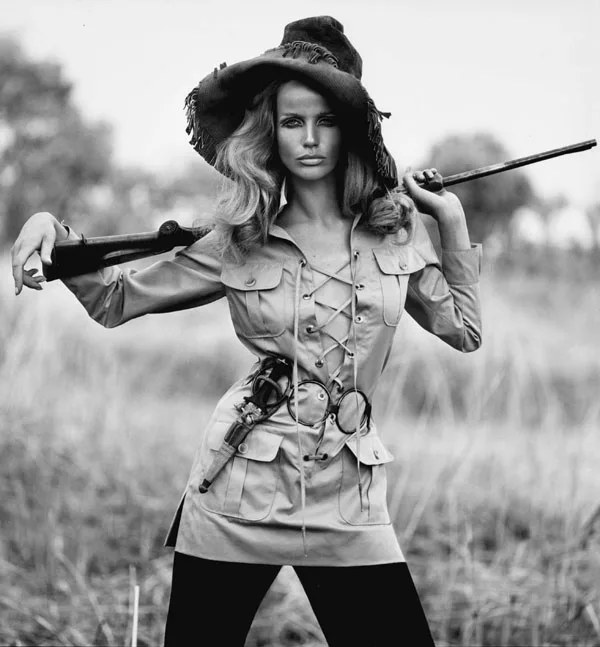
Fashion magazines devoted dozens of pages to her. Richard Avedon, the most celebrated photographer in the 20th-century fashion world, wrote in an essay: “Someone like her comes along only once… Every encounter with her is unfinished and unforgettable…”
Five Years at Steinort
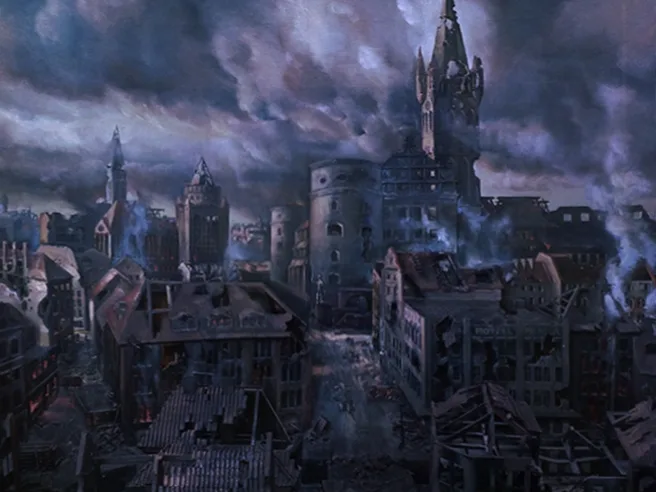
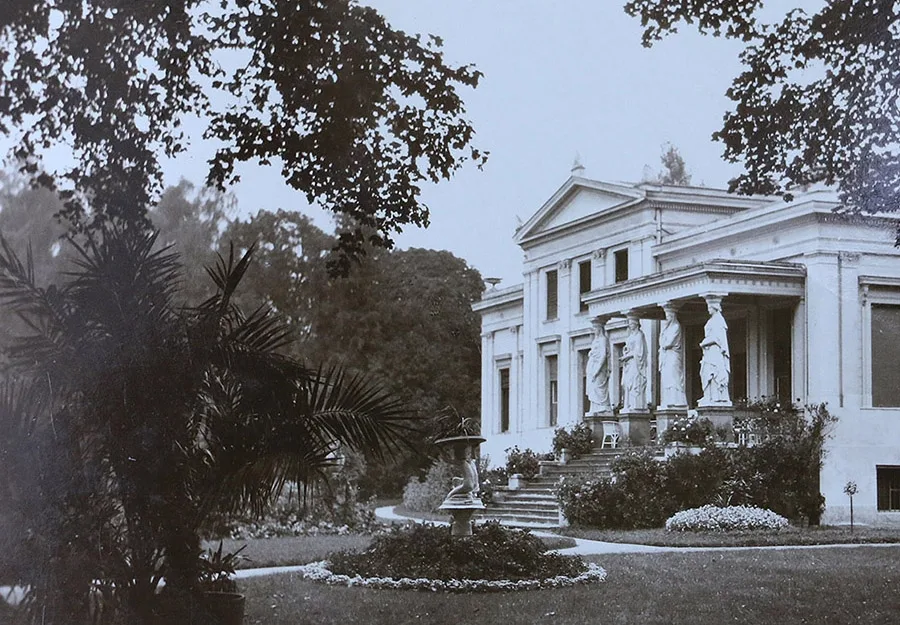
Vera Gottliebe Anna Gräfin von Lehndorff was born on 14 May 1939 in Königsberg. She spent the first five years of her life on the family estate of Steinort in Masuria (today Sztynort in Poland). As a descendant of ancient noble houses – the Lehndorffs on her father’s side, as well as the Kalneins, Dönhoffs and Oldenburgs – Veruschka considered herself different, unlike anyone else. Still, she never liked talking about her family, especially after her father’s execution. Until the 1950s, members of the Resistance were regarded as traitors.
Her father, Count Heinrich von Lehndorff-Steinort, was a liaison officer who took part in the famous Operation Valkyrie, which aimed to eliminate Hitler.
At the start of the war he had been released from military service. In 1941, after learning that the Germans had murdered 7,000 Jews in Soviet Borisov, and after seeing with his own eyes how the Nazis killed Jewish children by smashing their heads against lampposts, he became an active member of the anti-fascist Resistance. Several attempts on the Führer’s life failed, and in September 1944 he was executed in Berlin.
Vera remembered the moment her father jumped out of a window and ran away. Why? She did not understand it then, but she sensed fear and unease. For a long time the subject was off limits in the family. It was only after an incident at a school in Bremen, when a teacher called Vera the daughter of a murderer in front of the whole class, that her mother, Gottliebe von Lehndorff, née von Kalnein, told the girl about the tragedy and explained that her father was a true hero.
A few other memories, drawn from the grown-ups’ conversations, stayed etched in little Vera’s mind: Hitler’s headquarters, the Wolf’s Lair, lay close to their estate, and in 1942 part of their castle was confiscated and refurbished for Ribbentrop. He often went walking in the woods with the little countesses, and the girls thought him a kindly sort of man.
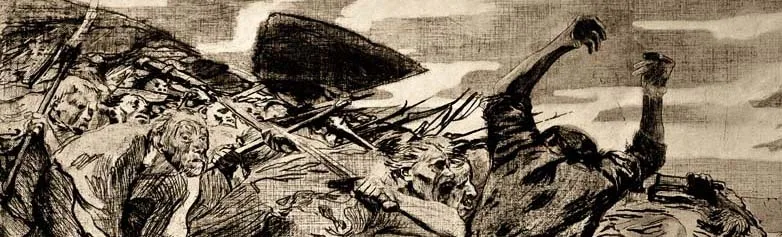
But once the truth came out about the master of the estate’s involvement in the Resistance and the plot against Hitler, the goodwill of “kind Uncle Ribbentrop” vanished overnight. On 23 July 1944 the Lehndorff family lost not only their estate but their homeland, for good. The fascists drove the pregnant Gottliebe out of Steinort, and she went with her three little daughters to her father in Graditz. That is where they were arrested: at the time, the principle of collective responsibility meant that a crime committed by one family member was visited on all the others, children included. The little countesses went through sheer hell.
As the children of a traitor, they were sent first to a Nazi children’s home in Bad Sachsa and then, like their mother, to the Buchenwald concentration camp.
After the war came years of wandering from relatives to acquaintances. Finding a new home was no easy matter. With all the moving around, Vera had to change schools many times. She was not keen on studying, often feigned illness and clashed with her teachers. In Fichtenhof, for instance, where Vera started first grade, a strict class mistress ordered her to write with her right hand, no matter what. It practically blew the child’s mind – a left-hander simply cannot be retrained!
From the Street into a Fairy Tale
Vera was embarrassed by her looks. In the mirror she saw an ugly duckling, 183 cm tall, with size 45 feet. She described herself as a lanky, skinny fright with disproportionate arms, legs, hands and feet, a big mouth and a nose like a cork. A complete disaster. Her dreams of elegance quietly died. Nor was she dressed the way a young lady ought to be. But while the wardrobe problem could be solved, ladies’ shoes in such a gigantic size were another matter… Even made-to-measure pumps looked like skis.
Vera hated herself. She wanted men to like her, but with looks like hers she felt she had practically no chance. That is what she believed – and she was wrong.
Her self-confidence came with her first trip abroad, to London, to stay with a friend of her mother’s who was an artist. He took a great liking to Vera and drew her constantly. His compliments did much to change the way she saw herself.
Back in Hamburg from foggy Albion, Vera enrolled at an art school. There she was called a beauty, and people admired her height and long legs. Yet after completing her art training she did not go on to work in her field – drawing patterns for curtains was boring. Vera was determined to become a model.
The young woman could not shake off the desire to leave Germany and her old life behind. Later, while working in America, she would write to her mother: “I was born in Germany… It is the only country that seems to me unfit to live in… In Germany I think in shades of grey… Here there is grey bourgeois respectability, no charm, no sexuality – only fat people, Mercedes-Benzes, greasy roast chickens, … snobbery, vanity and no sense of humour.”
In 1959, in Florence, Vera met the French top model Denise Sarrault, who worked for Givenchy. Proving remarkably perceptive, Sarrault soon invited Vera to Paris, where she introduced her to Richard Avedon, the most famous American photographer of the day. Serious work began, and it bore fruit: the first photographs of Vera von Lehndorff were published in Vogue. A nomadic life began – new trips, new acquaintances, new romances…
Simply Veruschka
Once in New York, Vera radically changed her image, becoming Veruschka – a blonde dressed entirely in black. It was then that she decided she would pose only for the best photographers. Meeting Irving Penn brought her a contract with the American Marlborough Gallery. Next came work for the Plaza Five model agency, where she was already earning five times as much as at Vogue. Her finances became steadier still as celebrities from the fashion world entered her circle. One of them, Bert Stern, who had photographed Marilyn Monroe herself and other great screen divas, offered her work. Bert had a weakness for blondes in general, and he could not resist Veruschka’s beauty either.
Working with him was a pure pleasure. He liked to create at night, and she enjoyed that routine, and enjoyed living in his studio.
But don’t imagine, Countess von Lehndorff warns in her memoirs, that a model necessarily has to sleep with the photographer.
“Such things are possible, why not,” she writes in her book “Veruschka: My Life”. “But it never happened to me personally, and I regret that.”
In 1965 came an event that opened up new possibilities: she met Salvador Dalí, who invited her to take part in an art project of his. On the banks of the Hudson, on a cool, overcast day, he staged a real show. To the delight of onlookers, Dalí dressed Vera in a white robe and covered her from head to toe in shaving foam. The living sculpture shivered with cold while the Master was in a state of euphoria. Yet it was at that very moment that Vera realised she could use her body as an instrument for body art. She drew on this experience many times afterwards – notably during a trip to Africa, where she was photographed with her face painted black against a backdrop of huge rhinoceroses.
At the Height of Fame
In the mid-1960s there was no model in the world more popular than Veruschka. The most famous photographers sought her out, and she was the centre of public attention. Diana Vreeland, the editor-in-chief of Vogue, saw the young model as a person of a new era. A permanent stylist was hired for her, and the crowd of photographers was so large that some renowned masters had to wait their turn for weeks. As a result, Diana and Veruschka achieved unheard-of success. Every cover became an event: Vera appeared on the cover of Vogue eleven times and on those of other publications more than 800 times. It was a kind of record for popularity.
The journalist Eve Pollard wrote of her with admiration: “Veruschka is the supermodel of all time … She is extraordinary … I have seen thousands of top-class models. But I have never met such a magnificent Amazon with a German accent.”
And here is one more proof of her incredible popularity. Once, at a Valentino show, Veruschka sat in the front row. Her long legs had nowhere to go and ended up pressed against the catwalk. She was rather modestly dressed, in a knitted trouser suit, a poncho and knee-high suede boots. A few seats away sat Gina Lollobrigida in a luxurious sable coat and Princess Pignatelli. “They had every reason to turn pale with envy: more paparazzi flashbulbs blazed around her, the world-class cover girl, than around their artificial curls and pretentious outfits…,” wrote the illustrated magazine “Madame” at the time. —
“Men have mixed feelings about her, the scion of an ancient noble family from East Prussia: some consider her ‘the most beautiful woman in the world’
… For others, with her excessively long arms and legs, she is the embodiment of the man-eating female praying mantis from some terrifying age of matriarchy.”
By this time Vera had grown tired of being merely a striking illustration. She began turning down many offers, preferring to work only with Franco Rubartelli, who was open to her own creative ideas. He photographed her without the help of stylists, exactly as she herself wished. When she received invitations to act in films, Veruschka agreed to work with only a select few directors. Yet she accepted without hesitation Michelangelo Antonioni's offer to appear in what would later become his famous "Blow-Up".
The high point of her career was her work with Richard Avedon. Thanks to their collaboration, 23 pages of the March 1967 issue of Vogue were filled with photographs of Veruschka. Before long, however, she had to give up working with Avedon, as well as her acting school in New York, because of Rubartelli's fierce jealousy. He was the first man she lived with, and they stayed together for several years. Family life demanded too many sacrifices: Veruschka found herself trapped.
The Career Ended, but the Work Goes On
Time is relentless. It changes not only one's views but also one's looks. Vera understood that sooner or later she would have to yield her place in the sun to younger women. She had to seek new forms of self-expression.
Help came from an old friend of the family, the artist Holger Trülzsch. In an interview with an American newspaper he once admitted: "Vera gave me an amazing opportunity to return to painting – and on the skin of the woman I loved, no less… Everyone called her the most beautiful woman in the world. And we decided to take that image to the point of absurdity." Thus, in 1973, the series "Mimicry – Dress Art" came into being, followed by "Oxidation", "Sirius"… While art of this kind was alien to the Germany of the time, in America the works caused a real sensation.
Her success lasted until 1975, when Vogue's new editor demanded a change of image.
The aristocratic von Lehndorff refused to adopt the hairstyle that was fashionable at the time or to adapt to the new trends.
And so she disappeared from the covers. But her eventful life did not end there. She continued to act in films, to paint and to hold exhibitions.
Today Vera von Lehndorff lives in Berlin. In 2010 the family's heirlooms were returned to its ownership: furniture, paintings, silverware and porcelain, books. The von Lehndorff sisters received almost everything the Nazi state had confiscated – albeit 65 years late. All these items are soon to return to the ancestral estate of Steinort, but only once the restoration of the castle, which is now managed by the Polish Foundation for Culture and the Protection of Monuments, is complete. Vera von Lehndorff hopes that one day the family's works of art will be open to the public.
Photo: Bert Stern for Vogue (1960)
Translated from Russian with the help of AI (Claude, Anthropic), October 2026.