LEGENDS OF PRUSSIA in the blog of Tatyana Kolivay.
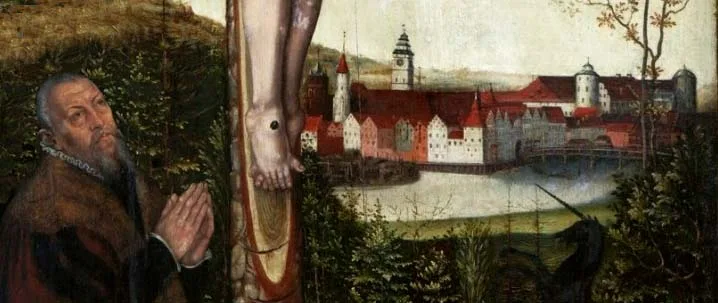
When it comes to architecture, Königsberg is a rather remarkable city. To someone seeing it for the first time it is unattractive, and if you ask the locals, it is a rather uncomfortable place to live. There is another problem besides. The fact is that the soil here is cold and damp. It is what in Germany is called kaltgründig, "cold ground." The local dialect even has a special word for it: sprindig. Groundwater seeps into the walls of cellars and lower stories of buildings all over the place. The situation is saved to some extent only by high semi-basement stories and foundations of rough, undressed stone. In winter and early spring most cellars are full of water.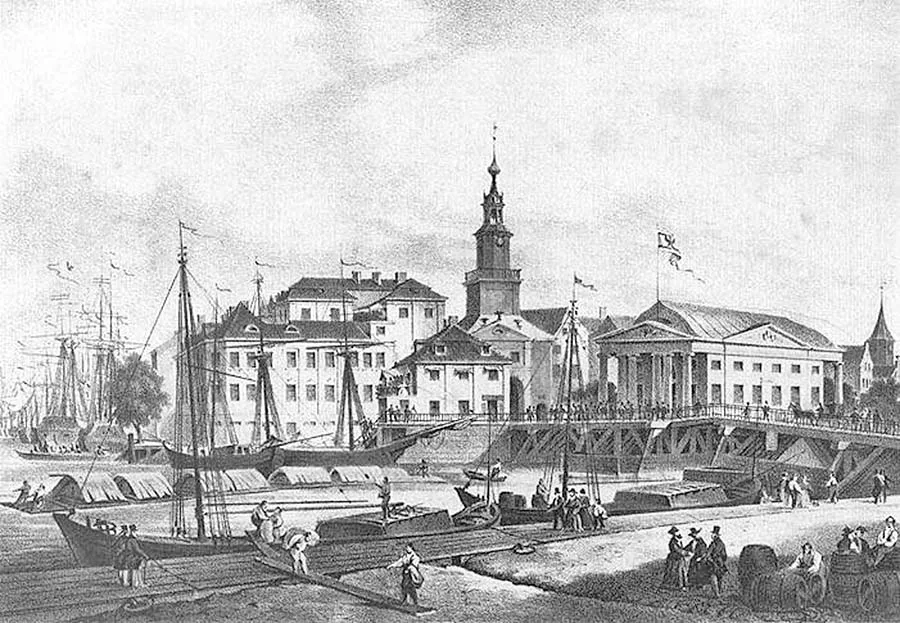 View from the Vorstadt bank of the southwestern corner of the Kneiphof. In the center, the tower over the Green Gate; on the right, the old Exchange; in the distance, the Cathedral.
Pumps stick out of almost every cellar window like the barrels of cannon. In many parts of the city water has to be pumped out of the cellars for at least an hour every day all year round.
Damp walls covered with patches of mold naturally have a harmful effect on the health of the occupants, contributing at the very least to rheumatism. A newcomer must take this into account when looking for a suitable apartment.
If one tries to define the architectural style of Königsberg, three main styles can be distinguished:
1) the Hanseatic;
2) the burgher, or petty-bourgeois;
3) the modern style.
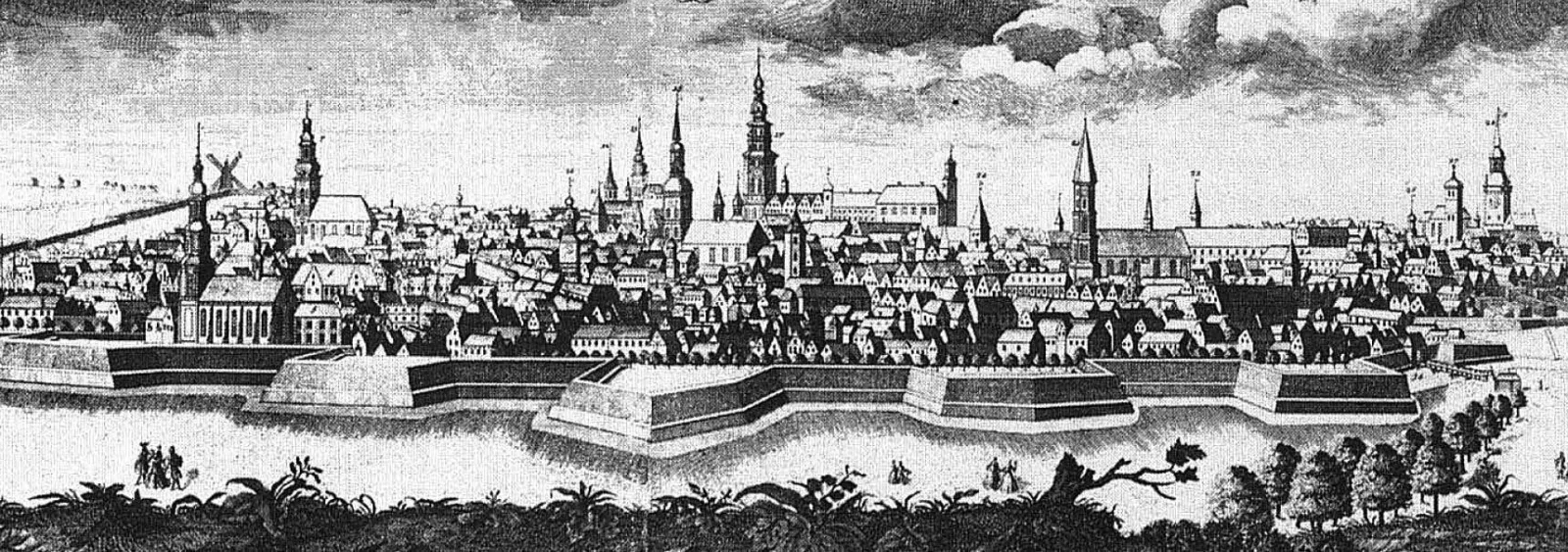
Hanseatic architecture is undoubtedly the oldest1. It is the same style of which we see abundant examples in Danzig, for instance. Here it is found in the Kneiphof, the Altstadt and the Löbenicht, that is, in the three towns from which the development of Königsberg once began. As late as the beginning of the last century they were separated from one another by walls with gates.
At night only doctors, clergymen and midwives were allowed to pass from one town to another.
Today you will see neither the gates nor the walls; they have been demolished. The Löbenicht, the Altstadt and the Kneiphof, as well as the suburbs of Tragheim, Sackheim and others, have merged into a single whole.
The Hanseatic style has been preserved most fully in the architecture of the Kneiphof Langgasse (German: Kneiphössche Langgasse). When in summer its terraces and steps are decorated with greenery and flowers, it is hard to believe that we are in a northern city. Moreover, because of the peculiarities of this style, the roofs of the houses look flat, which is reminiscent of southern buildings.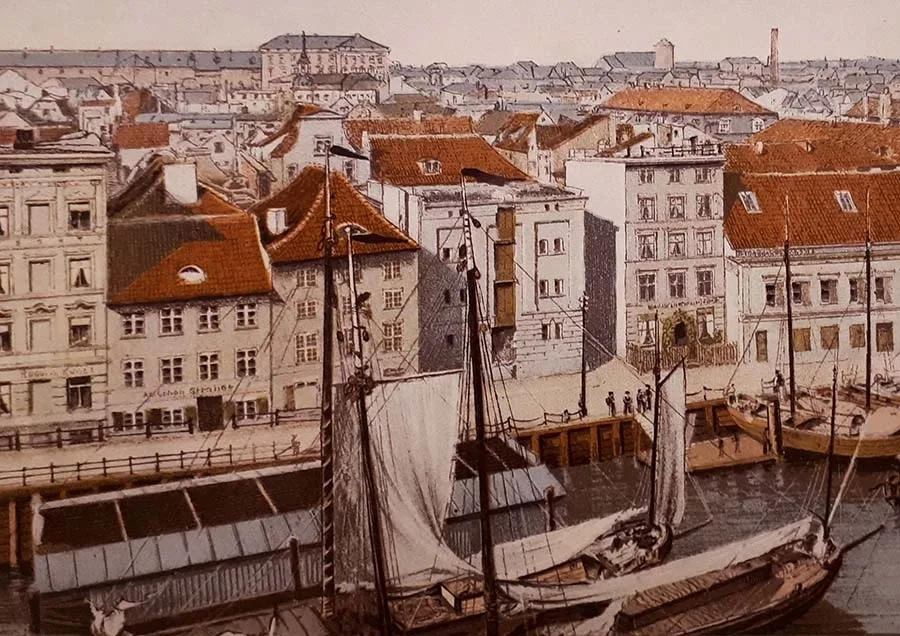 The southern embankment of the Kneiphof. 19th c.: Pregelstraße. 20th c.: At the Blue Tower (German: Am blauen Turm).
Little courtyards, often located not at ground level but at the height of the second and third stories, are a common sight in these old parts of the city, since the houses, squeezed into a small space, could only grow upward.
So the occupants of the upper stories set up little courtyards for themselves on the neighbors' roofs, with tarred surfaces and iron railings, and use them for drying laundry, beating clothes, sunbathing, or simply for being out in the fresh air. In the Altstadt such quasi-terraces are very common and, as a rule, very picturesque.
Entering a Hanseatic-style house, you pass through a door in the projecting bay that adorns the entrance into a spacious, bright hall with a large window. With its cupboards, a couple of chairs and a small table by the window, the hall looks like a living room. As everywhere in Germany, the hall here is also a living space. In the warm season dinners and suppers are held there, attended by the whole family together with the servants and apprentices. The master of the house opens and closes the meal with a prayer.
The kitchen in Königsberg houses is located right there and resembles a cupboard in its construction.
The narrow hearth under the chimney is only nominally separated by a board partition with little cut-out windows. The light of the open fire on the hearth and of a small lamp is enough to illuminate the room.
Such an arrangement of the kitchen, squeezed into a far corner without a window of its own, seems dreadful to me. Keeping such kitchens in old houses clean takes a great deal of effort: one must prevent unpleasant smells from kitchen waste, dirty water and cooking, keep the chimney constantly in order, and so on.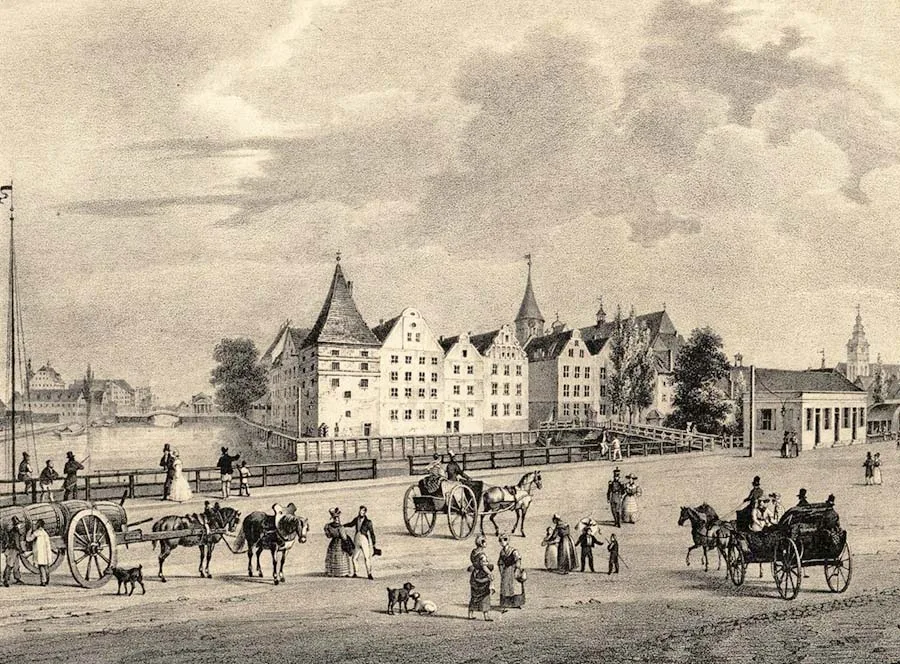 View from the Lomse of the southeastern corner of the Kneiphof, adorned by the Blue Tower.
Such a hall can be compared to the deck of a ship. The adjoining room with a single large window, extending into the depths of the house, is the cabin.
Just as a ship's length is much greater than its width, so these old houses are very deep and hide their best rooms there. And just as on a ship, light from the windows in passages and doors reaches all the inner rooms. True, one has to climb the stairs in semi-darkness, but in the corridors of each story the saving rays of the daystar break through the white curtains of the room windows or through the skylights in the roof, preventing one, God forbid, from stumbling and accidentally twisting an ankle.
This architectural style is characterized by abundant sandstone decoration on doors, windows and gables. Such decoration is related to sculptural forms, which are rarely seen in Königsberg. One example is the scholarship house of the von Gröben foundation in the Kneiphof (German: am Stipendienhause der v. Gröbenschen Stiftung im Kneiphof).
I call this architectural style Hanseatic because it took shape during the heyday of the Hanseatic League.
The burgher, or petty-bourgeois, style of architecture can be found in the suburbs, which from the 16th century grew out of villages, settlements, farmsteads and the like, and then gradually merged with the three old towns of Königsberg. The petty-bourgeois style is notable for its poverty of detail and is designed only to meet basic needs.
The hall is narrow and often combined with the kitchen, which is not set apart as a separate area. To the left or right there is a large room, and next to it a couple of small chambers. Upstairs, if there is another story, the same layout is repeated.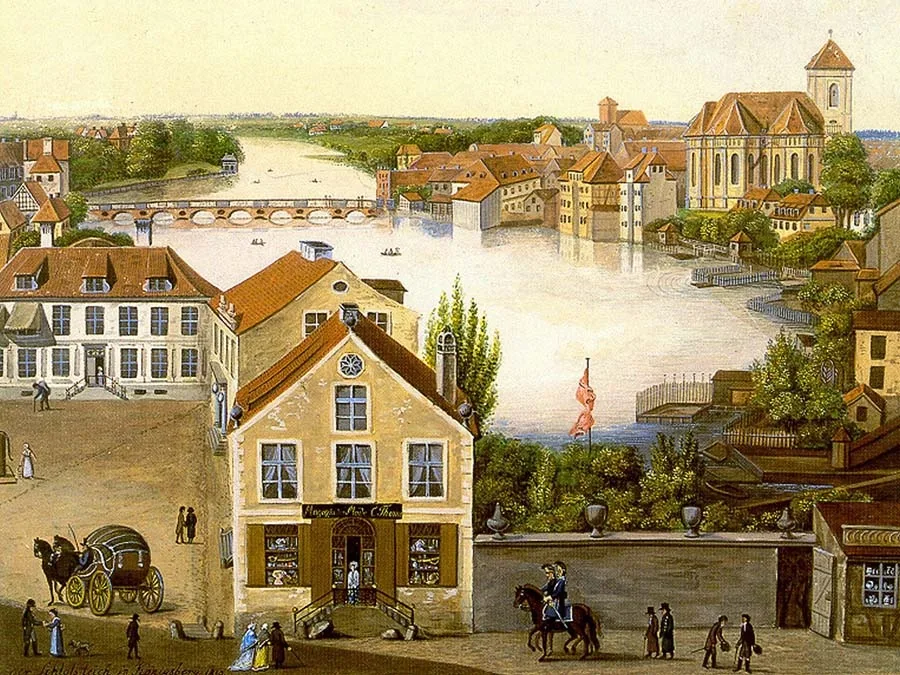 View of the Castle Pond, the Burgkirche and the Tragheim Church.
Most of the houses have one story, two at most, and are designed for one family. If necessary (when the family grows), an attic story is added to the house.
As a rule, these houses were occupied by masons, carpenters, butchers, potters, painters, turners, joiners and tailors. Many houses on the outskirts of the city were home to the families of day laborers, and usually behind the house they had a small plot of land that the whole family cultivated.
As for the three historic towns of Königsberg, the Kneiphof was home mainly to merchants engaged in overseas trade; the Altstadt was where the craftsmen who made clothing lived, the elite among them being the furriers who worked with valuable pelts, and the shoemakers. The Löbenicht (or "Löwening," as it was called in the local dialect) was inhabited by brewers, who brewed beer according to the strict rules of their guild. In the suburbs, as mentioned earlier, there was no such clear division by estate. There one found a mixture of representatives of various trades.
In the Sackheim there are small shops catering to peasants who come here from the neighboring villages. Next to them are numerous beer and wine cellars, whose emblem has recently become three brass kegs painted green and joined in a triangle.
Craftsmen have been pushed out of Königstraße (German: die Königsstraße) and Neuensorge (German: die Neuensorge). Many imposing houses in the modern style have been built there. Here too are the French Church; the cemetery of the Castle Church, which, contrary to the law, has not yet been moved to the gates; the Dönhoff Palace (German: das Dönhof'sche Palais) with a very large garden; the Royal Library, housed in a former hunting lodge; and so on.
The Rossgarten has two completely different faces. As far as the Bork Garden (German: der Bork'sche Garten) it is lined with imposing buildings, shops and hotels, and looks quite cheerful, but then we see the city hospital on one side of the street and the military hospital on the other, and the atmosphere that prevails here becomes rather dreary.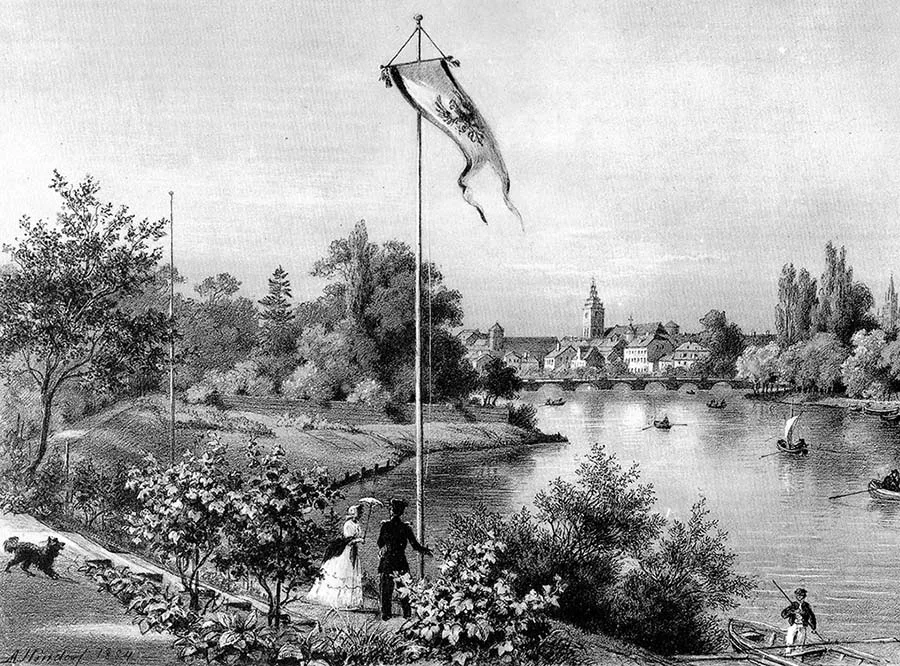 View of the Castle Pond toward the castle.
Beyond the city gates the houses become fewer and fewer, and finally, where a large field opens up along the line of the ramparts, reminiscent of the landscape of the Berlin district of Köpenick, they disappear altogether.
The Tragheim, on the edge of which lies the Castle Pond, is of course a place of country houses and summer residences. Large manor houses stand in spacious yards enclosed by picket fences and buried in the greenery of magnificent trees. Closer to the Castle Pond there are beautiful, spacious gardens. But right next to them, small craftsmen and day laborers live in very modest dwellings.
The Steindamm is the most motley street in Königsberg. Its architecture, with a few worthy exceptions, is rather ordinary. Many grocers and butchers live here, as well as wholesale merchants and officials. The Steindamm is a very wide street, and it has sidewalks besides. It is a promenade leading to the country houses and places of amusement, and so you will always meet well-dressed strollers and elegant carriages there.
Here people try to make up for the inadequate size and very modest beauty of the houses by carefully plastering their facades.
If the Sackheim is characterized by plebeian liveliness, Königstraße by aristocratic dryness, the Rossgarten by the contrast of life and death, and the Tragheim by a rural, idyllic mood, then the Steindamm is the center of social street life. If you want to meet an acquaintance, come here several days in a row, preferably in the evening, when crowds stroll to the city rampart and back. And you are sure to meet the person you are looking for.
The Brandenburg Vorstadt (German: die Brandenburger Vorstadt), separated by the Pregel from the rest of the city's streets, breaks up into many groups of houses standing apart from one another. All the way to the bridge that connects the Vorstadt with its outskirts, the houses are built in the new style, which an extensive fire unwittingly helped to bring about. These houses are inhabited almost exclusively by Jewish merchants. And the numerous inns also host only Jewish guests.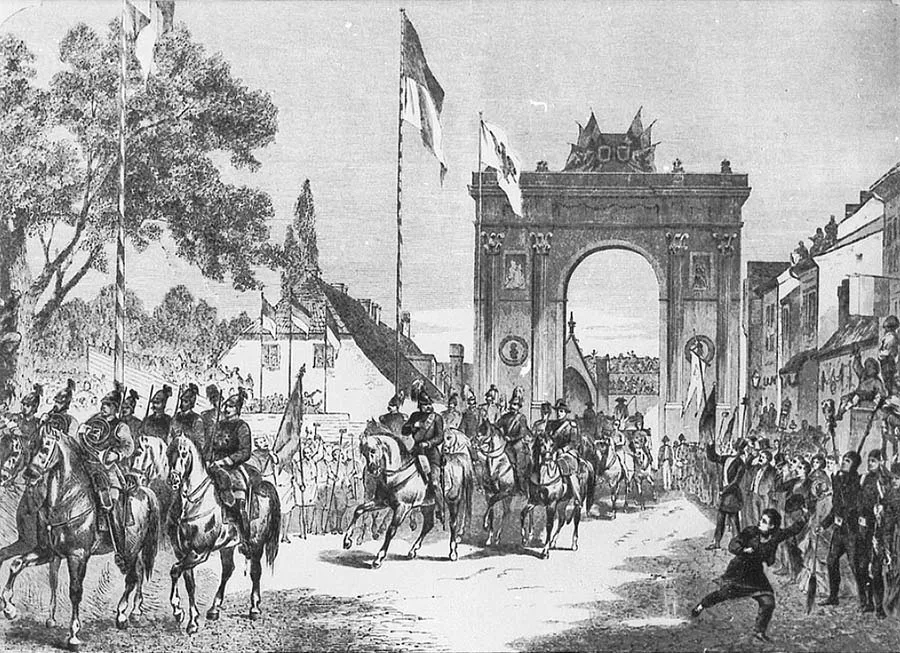 A triumphal arch at the Brandenburg Gate for the returning army.
The sidewalk here is the widest in the city, and Jews constantly gather on it in groups or, puffing on their pipes, have heart-to-heart talks with one another on the benches.
On the Hintere Vorstadt (German: die Hintere Vorstadt) stand the spacious houses of several charitable foundations, the artillery stables and craftsmen's houses. The so-called Upper Haberberg (German: der Obere Haberberg), running toward the Friedland Gate (German: das Friedländer Tor), consists almost entirely of single-story buildings. Between the district's main street and the city wall run little streets lined with warehouses. Between them and the Philosophers' Dam (der Philosophendamm) lies the island of Venice (German: die Insel Venedig), whose main street is the Klapperwiese (German: die Klapperwiese), which makes a very pleasant impression. The houses here are built in the modern style and well kept, and between them runs a poplar avenue with four rows of trees and beds of low shrubs. It is inhabited mainly by wholesale merchants (German: An Kersch, Toussaint and others).
The modern style of architecture2 arose, in my opinion, in the last century, in the time of the so-called Enlightenment, but has been actively refined since then. Its principle is comfortable, bright rooms combined with simple and attractive exteriors. The staircase and kitchen are quite bright, and the rooms are connected with one another while also enjoying a certain privacy thanks to their own doors onto the corridor. The rooms are of a comfortable height and airy, whereas in the style I have called burgher, or petty-bourgeois, the ceilings are usually very low. The window openings are large. If the windows are single-glazed, their weak point is that they open outward rather than inward, a drawback all the more serious in Königsberg, with its frequent strong winds, when windows can be kept open only by securing them with a latch. This arrangement justifies itself when double windows are installed, which is common here, but even then they can only be opened outward.
The burgher, or petty-bourgeois, style usually means frame houses, half-timbered ones, which in former times were simply called the "Prussian wall"3 (Polish: Mur pruski), as distinct from the buildings of the Teutonic Order's time, which were built of fired brick.
Modern-style houses are solid masonry. Their only ornaments are stucco moldings, gutters and friezes.
Recently people have begun painting houses in the Pompeian style, a fashion that has lately been much overused in Berlin, and Königsberg seems to be going the same way.
I do not think that ornaments originally intended for decorating interiors can be used so widely to adorn facades, if only because they distract attention from the architectural appearance of the building.
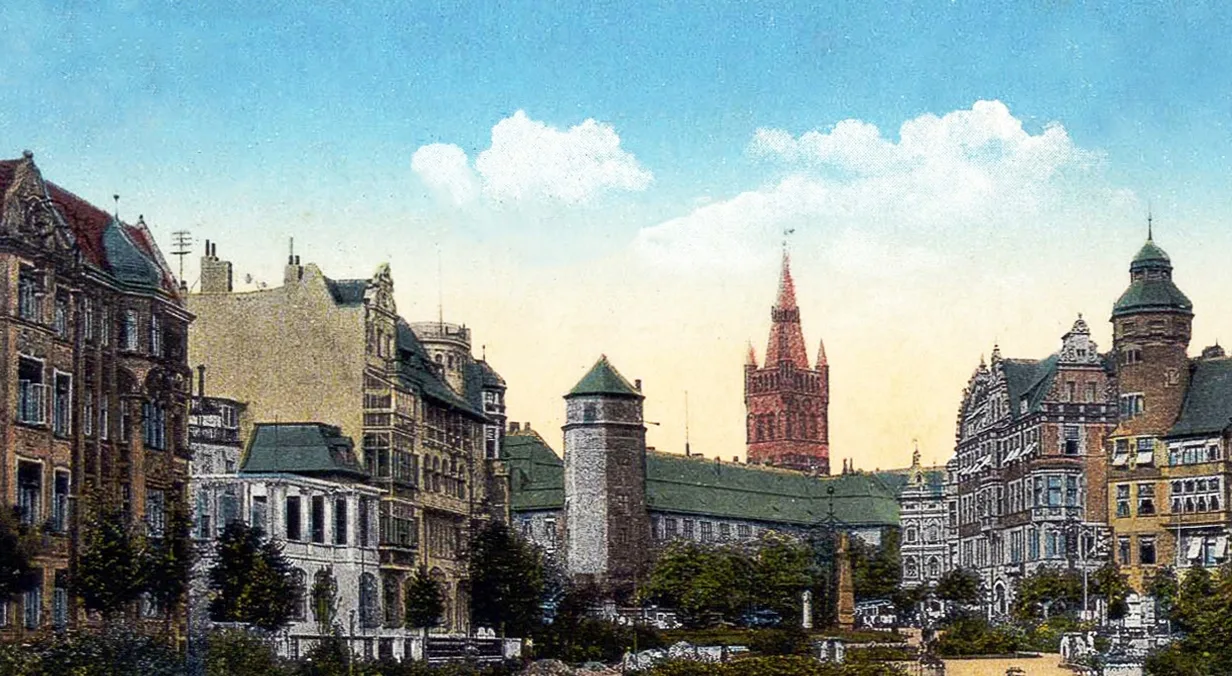
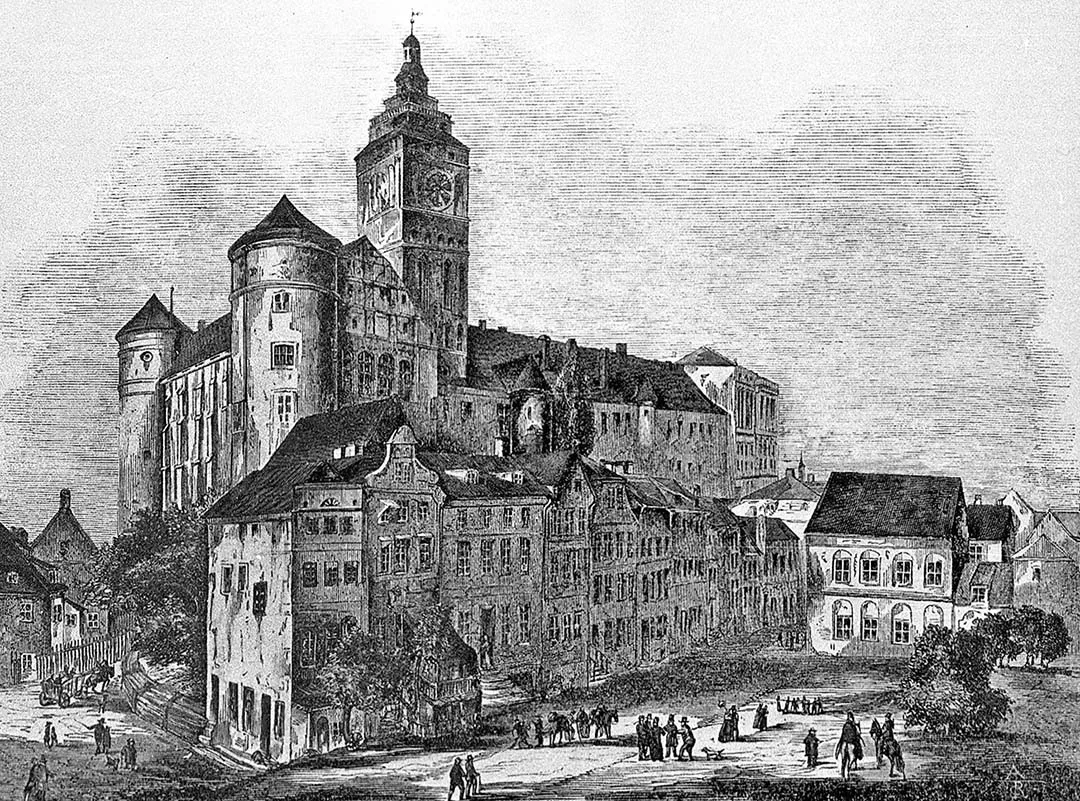
Modern-style houses are scattered across Königsberg like outposts of its architectural future. Examples of older buildings of this type include the building of the "Die Gramatzkische Stift" foundation on the Schiefer Berg (German: auf dem Schiefen Berge), the house of Government Councillor Hagen on Catholic Church Street, the houses of the Front Brandenburg Vorstadt (German: die Vordere Vorstadt Brandenburg), and so on. Among the most recent are the Exchange building, Meyer's confectionery, the house at the Danziger Keller (German: am Danziger Keller), the house on Wasserstraße (German: die Wasserstraße), whose windows face the Pregel, and so on.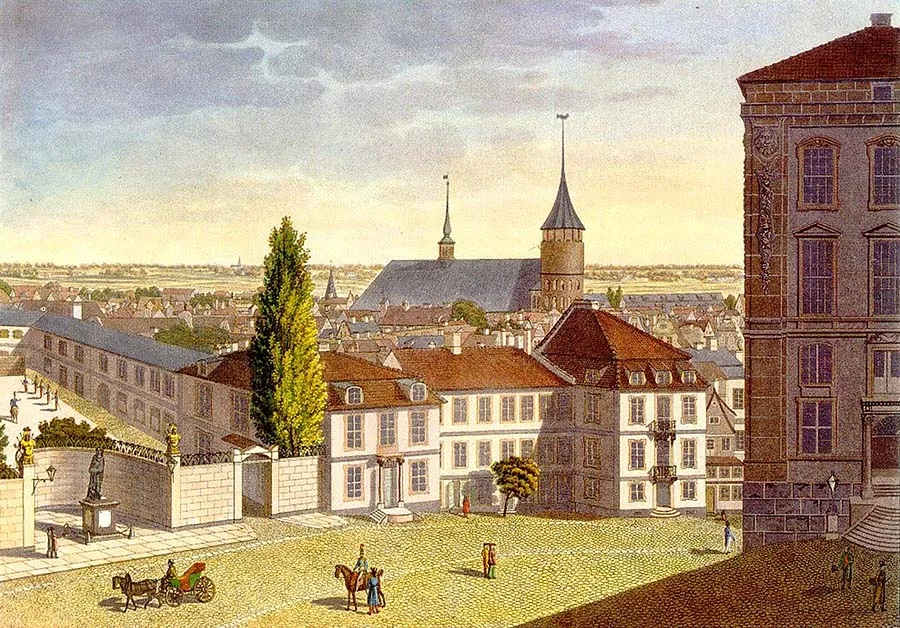 Castle Square, the Cathedral on the Kneiphof and a corner of the castle.
Thus the architecture of Königsberg is extraordinarily varied. I find great appeal in this. A stranger will at first think that Königsberg is a badly and haphazardly built city. He will be right. But when a person has to live in one place for many years, a certain negligence becomes an important factor in preserving his mental health.
Absolute uniformity is harder to live with. In Berlin, for example, some quarters make a depressing impression. Thus the long Krausenstraße (German: Krausenstraße) looks exactly like Münzstraße (German: Münzstraße), which looks just like Taubenstraße (German: Taubenstraße), which in turn resembles Mohrenstraße (German: Mohrenstraße). Only public spaces, majestic buildings, statues and beautifully decorated fountains can reconcile us with this barracks style.
In Königsberg one can always find places to suit every taste: here, at every turn, the Middle Ages give way to modernity, taste follows bad taste, impressive dimensions give way to intimate buildings, and the well-kept luxury of palaces stands next to the dirt and poverty of hovels.
There are houses here so small that they consist of nothing but a door and a chance hint of a window.
You cannot help laughing heartily when you see such houses bearing their own number on the facade, just like the neighboring mansion that belongs to a banker.
There are houses, for example in a corner of the Münchenhof (German: der Münchenhof), that seem to exist only by magic, since they are held together by a prayer. The cracked walls stand crooked, the roof sags menacingly, the windowpanes, where they are not made of oiled paper, are so dull that they barely let light through and rattle in their frames at every gust of wind, the stairs are worn down beyond belief, and the doors hang on their one remaining hinge. Truly, one regrets not having the talent of the artist Charles Mozin4 to capture this Court of Miracles5.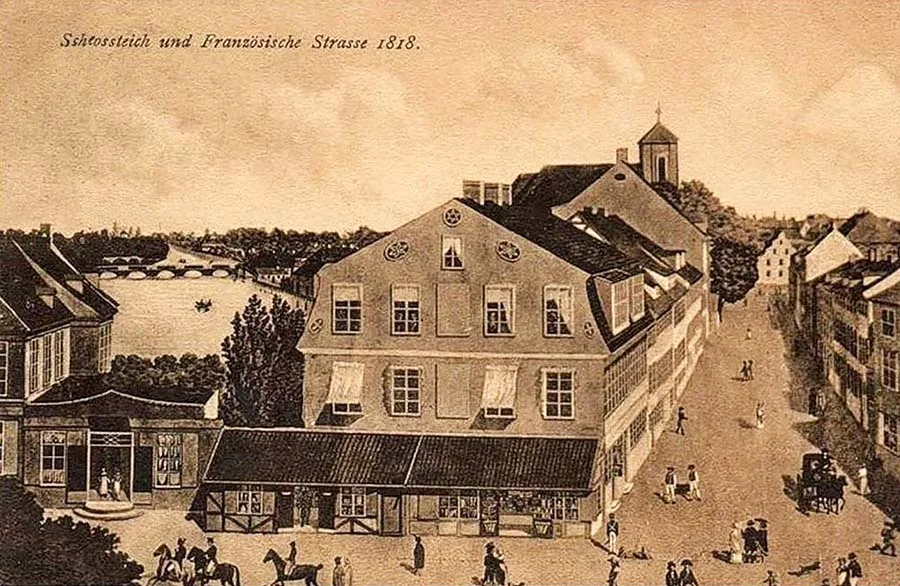 Französische Straße, the Burgkirche and the Castle Pond (left).
Französische Straße is something like our Palais-Royal. Here bookshops, clothing stores, hat shops and hardware stores alternate with wine bars, restaurants and confectioneries, and at first glance it really does seem thoroughly metropolitan.
But one must keep one's feet on the ground and not be deceived by the glitter of the shop windows, since, with the exception of a few buildings (Rabe, Krikhan and Bornträger), the architecture of the houses here is unattractive and dull.
I will not even speak of the Königsberg churches, because there is practically nothing to say about them. Only the Castle Church and the Cathedral are architecturally significant. I will speak of the former in the chapter on the castle itself. The latter has been described in detail and thoroughly by A. Hagen, with an accompanying atlas of very beautiful lithographs. The Cathedral is quite large, but rather bare on the outside, without any articulation. Inside it is beautiful and full of curious monuments, to which Hagen gave careful attention in his book. But it lacks airiness. There is something compressed about its proportions.
The cathedral at Frauenburg has the same system of naves, but how boldly it soars upward, how gracefully it joins its vaults!
On the other hand, the Königsberg Cathedral seems to give us some mystical promise. At least, so it seems to me. The city's other churches are ordinary buildings.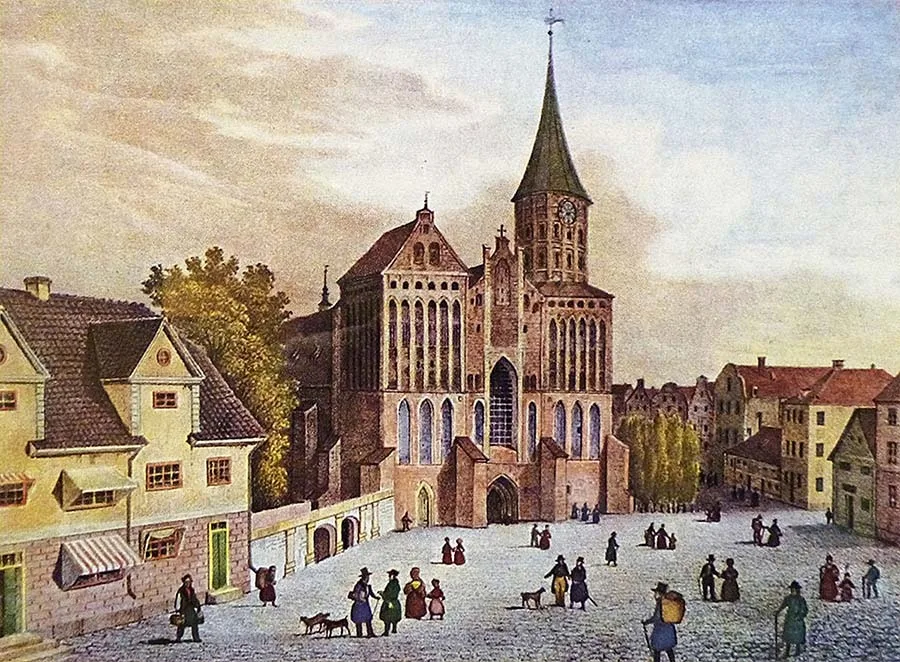 The Cathedral on the Kneiphof.
The best built are the Catholic Church, the Altrossgarten Church, the Tragheim Church and the very elegant French Church. The Castle Church is large and has clear but clumsy forms. The Löbenicht Church is simply a church, just like the churches in the Haberberg, the Sackheim and the Neurossgarten.
Except in the last of these, the board ceilings are covered with poor paintings; in particular, the area around the organ is tastelessly overloaded with clouds. Curiously, not a single church in Königsberg is named after a saint; all are named after the place where they stand.
In Danzig everything is quite different. There you have the churches of St. Catherine, St. Bridget and St. Mary, the Church of the Holy Trinity, the Church of Corpus Christi, and so on. In Königsberg the Protestant origin of the churches is reflected in the names of the congregations.
TRANSLATOR'S NOTES
1. By the Hanseatic style the author most likely means the Renaissance. There are indeed many [reconstructed] Renaissance monuments in Gdańsk (Danzig), and evidently there were many in Königsberg.
2. By the modern style the author of course means Classicism, which came to be called so long after the first half of the 19th century, being in the 1830s–40s the most current, that is, modern, style.
3. Half-timbered (frame) buildings are known in northern Poland (i.e., the former part of Prussia). Poles call half-timbered buildings the "Prussian wall" and regard them as typically German. For this reason, especially in the period after the Second World War, numerous half-timbered houses in the Oder/Neisse areas (near the Polish-German border) were plastered over to hide the timber framing. LINK
4. Charles Louis Mozin (1806–1862): French painter and lithographer. LINK
5. The Court of Miracles (French: La Cour des Miracles): in the Middle Ages, the name of several Parisian quarters inhabited by beggars, vagabonds, prostitutes, defrocked monks and poets. Though often physically healthy, the beggars pretended to be sick and crippled when asking for alms. At night, when they returned to their quarter, their infirmities miraculously disappeared, which apparently gave the courts of miracles their name. LINK
LEGENDS OF PRUSSIA in the blog of Tatyana Kolivay.
Translated from Russian with the help of AI (Claude, Anthropic), October 2026.