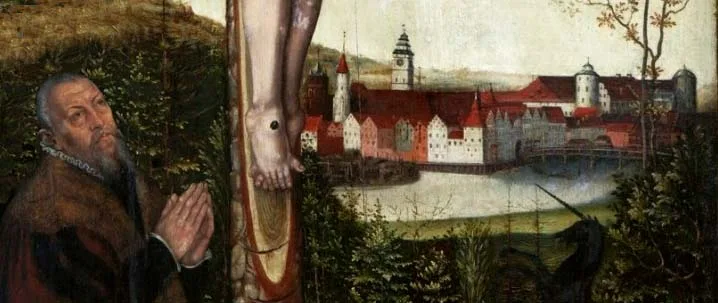
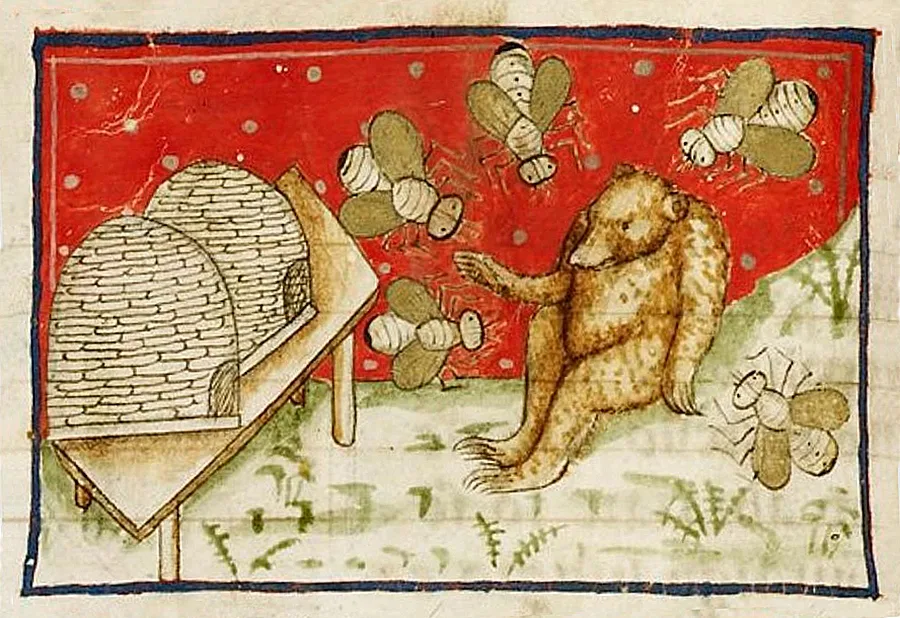
There is another legend as well. Before the appearance of the domesticated bees we are used to seeing in hives, people gathered the honey of wild bees. Over time, tree beekeeping emerged (the Russian word "bort" means a tree hollow): swarms of bees were caught and placed in natural or specially carved hollows, which the tree beekeepers guarded against plunder. As the honey accumulated, it was harvested. One day an old beekeeper decided to take honey from a hollow, but because of his bad knees he could not climb the tree and asked a young man for help. Even the young man did not succeed at first, however, because a bear had come along just then to feast on the honey. To distract the animal, the old man "treated" it to spirits into which he had mixed honey. The tipsy bear was unable to climb the tree, and the young man safely reached the hollow.
Whether the legend tells the truth, no one knows. It all happened far too long ago, in the 15th century. But it is generally believed that this is roughly how Bärenfang, or Meschkinnes (Lith. meškinis, from meška, “bear”), came into being in the Renaissance.
In days gone by, this fragrant alcoholic drink, which has “settled” in the local cuisine for good, was credited with miraculous properties. In firm alliance with vodka, it not only cured all manner of ailments, warmed people in the cold and saved them in the heat, but was also reputed to be a great unifying force among the peoples who lived between the Vistula and the Neman. If the old books are to be believed, there was hardly a family in Prussia without a bottle or two of Bärenfang stashed away, to give to friends and relatives at Christmas or to knock back properly on some other suitable occasion.
For family celebrations and holidays, Bärenfang was prepared well in advance so that it had time to steep properly and soak up the aromas of honey and spices — usually the zest of an unwaxed lemon, vanilla pods, cinnamon, cloves and even anise. Here, as the saying goes, the master of the house decides — everyone to their own taste. That is why every household had its own recipe, kept strictly secret and handed down from generation to generation.
Although Bärenfang is produced industrially today, making the traditional East Prussian honey liqueur at home is not at all difficult — but you will need patience until it is ready to be enjoyed as intended.
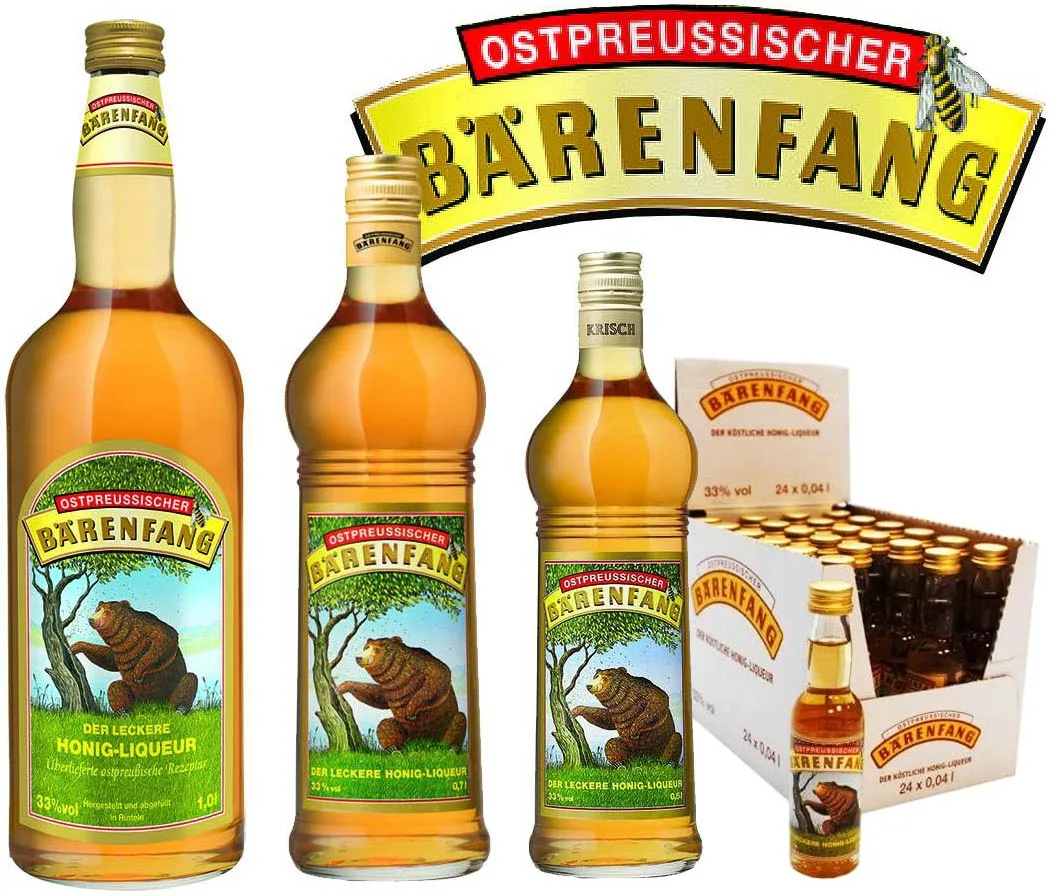
You will need 1 litre of good vodka (in Germany, Doppelkorn is usually used — what matters is that the alcohol is of good quality and not full of fusel oil, as it was at the dawn of Prussian distilling!), 500 g of honey (blossom honey will do, but heather or linden honey is better), 2 cinnamon sticks, 2 vanilla pods and the zest of two lemons. Pour a little of the vodka into an enamel pot, add the honey and melt it over a low heat, stirring constantly. Then add the vanilla pods, split lengthwise, the cinnamon and the lemon zest, and keep on a low heat for another couple of minutes. On no account let it boil! The temperature must not exceed 39 degrees, otherwise the honey will lose its unique flavour and aroma, and the alcohol will turn to water. Once the mixture has cooled, combine it with the rest of the vodka and pour it into two larger bottles — one-litre or 0.7-litre ones — dividing the spices equally between them. Seal the bottles tightly and put them in a dark but not cold place, so that the honey does not crystallise (for example, in the farthest corner of a kitchen cupboard), for at least 10 days. The ideal period is six weeks, which gives the drink a rich body and aroma. Shake the bottles from time to time. Once the time is up, remove the spices from the matured liqueur, then strain it (a coffee filter will do, but the coffee should be coarsely ground) and pour it into fresh bottles.
As connoisseurs assure us, after two years of ageing Bärenfang becomes even better, richer and more fragrant. But where is one to find that much patience? Some people manage to drink it while it is still only half-made. And that is perhaps the only problem in the whole process.
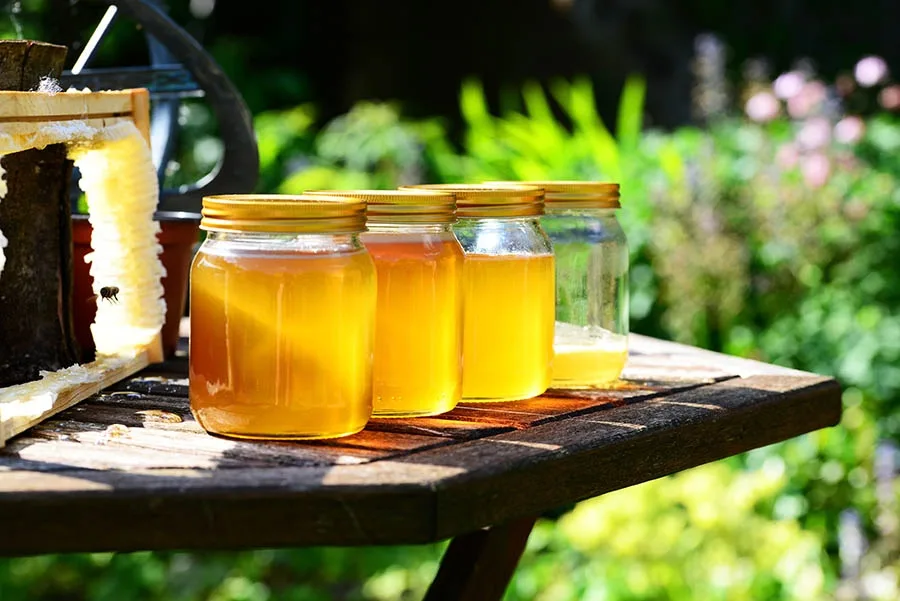
There is also a “stronger” recipe, which calls for 500 g of fragrant honey, 500 ml of vodka, 500 ml of 96-percent spirit, 2 cinnamon sticks, 1 vanilla pod and the peel of two lemons, pared very thinly. The result is far from a ladies’ drink. So for the fair sex there is an old recipe for a mild (but no less treacherous) liqueur of no more than 20 percent strength (it can even be made without spices, which is also acceptable): 500 ml of vodka, 500 ml of water and 500 g of honey. The method is the traditional one, with just one difference: the honey is dissolved in the water over a low heat, and the cooled mixture is then combined with the vodka. The finished drink need not be strained, unless you mind a slight sediment of pollen in the bottle, which sometimes forms when certain blossom honeys are used.
A rather unusual liqueur can be made from 500 g of honey, 500 ml of pure spirit and a quarter of a litre of Moselle wine. The proportions of the ingredients can be adjusted to suit your personal taste.
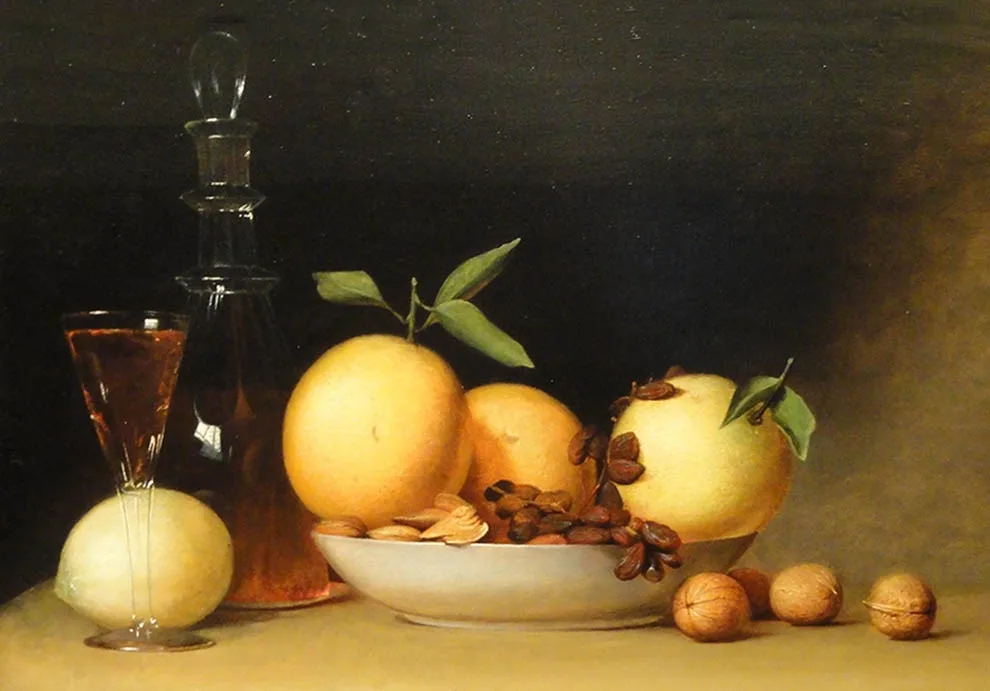 “Still Life with Liqueur and Fruit” Raphaelle Peale (1814)
Bärenfang, in which honey must make up at least 25% of the drink’s weight, usually has an alcohol content of 20% to 45%. This depends on the amount of honey and on whether water is included. The type of honey also affects the taste. If wild honey is used for steeping, the liqueur acquires a slightly bitter note. Wild fir honey is considered the least suitable of all for making Bärenfang, precisely because of its bitterness.
Beekeepers have their own recipe with just three ingredients: a quarter of a litre of water and a quarter of a litre of pure spirit, mixed with the same amount of honey. It is left to mature for three weeks and strained through a coffee filter — and a fragrant 33-percent liqueur is ready.
East Prussian tree beekeepers made their first Bärenfang to much the same recipe, long before anyone had even thought of keeping domesticated bees. Admittedly, before the era of pure spirit they used moonshine full of fusel oil (which told on the quality of the drink), distilled from grain until the potato arrived. And even later, when Prussian spirit went into production, its quality could hardly be taken seriously. Witness Friedrich Engels, who wrote in his article “Prussian Schnapps in the German Reichstag”, published in the newspaper Der Volksstaat on 25 and 27 February and 1 March 1876:
“Wherever one turns, one comes across Prussian spirit. Prussian spirit reaches incomparably further than the arm of the German imperial government. And wherever we find this spirit, it serves above all… for adulteration … Spirit distilled from potatoes is to Prussia what iron and cotton goods are to England.”
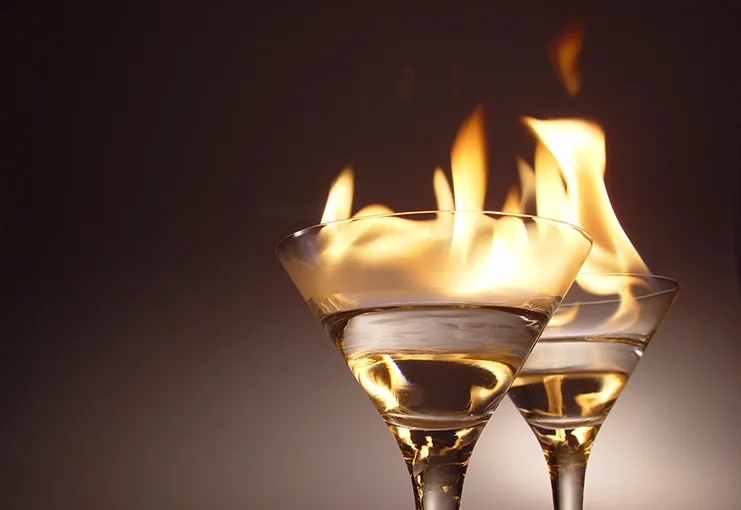
Since Bärenfang is fairly strong and sweet, it is not recommended for people with diabetes or other chronic illnesses — despite the benefits of honey, which since ancient times has been regarded as all but a cure for every ailment. In moderation, of course, the honey liqueur helps against insomnia, relieves tension and eases certain digestive complaints. The people of East Prussia drank it warm when they had a cold, or added a couple of spoonfuls to their tea. The treachery of Bärenfang lies in how easily it goes down and how imperceptibly the bottle empties. And the amount drunk has a marked effect not only on one’s ability to think, but also on one’s gait. Have a drop too much, and you start walking like a bear, your legs no longer obeying you. And the Ministry of Health did warn you…
Translated from Russian with the help of AI (Claude, Anthropic), October 2026.