Wilhelm Brämer was something of a local celebrity in Pillkallen (now Dobrovolsk) thanks to his talent as a cook. After graduating from a culinary school in Königsberg he travelled widely, gaining experience in the kitchens of the best hotels in East Prussia and Germany. But fortune did not always smile on him. In 1930 he found himself without steady work and decided to open a small business of his own – or rather a little sideline. Brämer made Königsberg marzipan to his own recipe. It tasted "just like the real thing". He sold his culinary "invention" to friends and acquaintances. Among his best customers was Oskar Komm, the owner of one of the restaurants in Pillkallen.
Brämer was forced to halt production of his marzipan at the very peak of its sales – just when his product had come into enormous demand even beyond Pillkallen. Rudolf Amende, a maker of genuine Königsberg marzipan, a prosperous businessman and owner of a trading house on the Hufenallee in Königsberg, reported the counterfeiter to the police.
It was foolish of Amende, of course, to "set" the Pillkallen gendarmes on his competitor. Naturally, they found nothing criminal in Brämer's house. The encounter with the officers of the law, who were keen to have a drink, cost the "marzipan forger" very little – some beer and Bärenfang. Still better than paying a hefty fine. By the end of the party the "guests" were utterly convinced that Brämer's marzipan was far tastier than the Königsberg kind.
Marzipan to Wilhelm Brämer's recipe
500 g sweet almonds, 3 – 4 bitter almonds or 2 – 3 drops of bitter almond oil, 350 g icing sugar, 2 – 3 tbsp rose water, 2 – 3 egg whites.
Blanch the almonds: pour boiling water over them and leave them to stand for a little while, then dry the peeled almonds, grind them as finely as possible and mix with the icing sugar and almond oil. Add the rose water to the mixture drop by drop and knead thoroughly. Put the paste in a cold place for 12 – 24 hours. Then roll it out thinly, cut out shapes and put them in the oven. Bake with top heat at 160 – 180 degrees until the marzipan is golden. Brush with egg white immediately after baking.
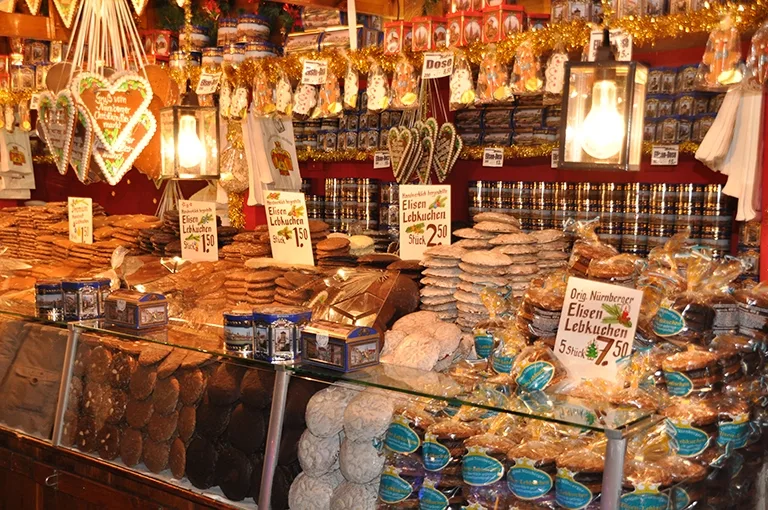
No Christmas in East Prussia was complete without making marzipan. And every family made it in its own way – each housewife had her own unique recipe.
So we should hardly judge the enterprising Brämer too harshly for tampering with the traditional classic recipe.
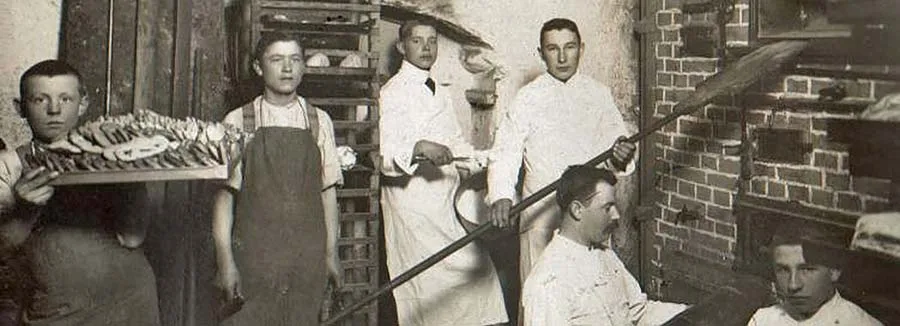
Marzipan was considered a festive treat. But that did not make the everyday East Prussian table any poorer. Although people lived rather modestly, there was always something tasty to offer an unexpected guest – be it a couple of aniseed biscuits or a slice of apple strudel. In practically every family it was customary to bake once a week. This rule applied to housewives in town and country alike. Even though there was a confectioner's or a bakery on every corner, it was considered good form to treat the household to one's own baking.
The art of baking was, one might say, a matter of national East Prussian pride.
People baked for any occasion. And for family celebrations or the first snowfall it was simply a must. The number of recipes was enormous. Some were written down, some kept in memory. Descendants of East Prussians recall that there were so many recipes that some were never even "tried out". People wanted to bake everything at once, which was physically impossible. Below are those that have stood the test of time and are without doubt characteristic and emblematic:
Cinnamon streusel cake
150 ml milk, 25 g yeast, 350 g flour, 1 egg, a pinch of salt, 40 g sugar, 80 g butter, a handful of raisins.
For the topping:
200 g butter, 200 g sugar, 250 g flour, a pinch of ground cinnamon.
You will also need:
10 g butter, 3 tbsp cream.
Warm the milk slightly, add the yeast and a little flour and leave the starter to rise. Sift the rest of the flour and make a dough with the remaining ingredients (egg, salt, sugar, butter and raisins), adding the risen starter. Knead the dough until it starts to form bubbles, then cover with a tea towel and put in a warm place. The dough should double in size. Grease a baking tray with butter, lay the rolled-out dough on it, cover with a cloth and leave in a warm place for another 30 minutes.
To make the topping, chop the butter with a knife, mix it with the other ingredients, knead into a dough and rub between your hands into crumbs. Sprinkle the risen cake dough with cream and scatter the crumbs over it.
Bake the cake in an oven preheated to 180 degrees for about 30 minutes.
Aniseed biscuits
500 g flour, 500 g sugar, 1 teaspoon aniseed, 6 eggs.
Beat the eggs with the sugar until frothy, gradually add the flour and finally the aniseed. Mix the dough very well. Take small lumps of dough with a teaspoon and place them on a greased baking tray. Leave overnight in a cool place (the refrigerator) so that a crust forms on the dough. Bake the biscuits the next day over a moderate heat until light golden.
Maundy Thursday pretzels
500 g flour, 40 g yeast, 2 eggs, 1/8 l milk, 250 g butter, 150 g sugar, 300 g sultanas, 125 g almonds, a lemon, an egg for glazing.
Make a starter from flour, milk and yeast. Knead a dough from the flour, eggs, sugar and remaining milk, adding grated lemon zest. The dough should be fairly firm. Put it in a warm place. Once the dough has risen, roll it out, spread the chopped butter evenly over one half of the sheet, cover with the other half and roll out again. Repeat this three times.
Cut the dough into strips 10 cm wide, put almonds and sultanas on them and pinch the edges together; roll up, cut into slices and shape into pretzels. Brush them with egg, decorate with almonds and put in the oven. Bake over a high heat until light brown.
Tilsit cherry waffles
125 g butter, 100 g sugar, 1 sachet vanilla sugar, 3 eggs, 150 g flour, a pinch of salt, a little butter or fat for greasing the waffle iron, 500 g sour cherries, 125 g soft cream cheese, 200 g cream, 2 tablespoons sugar, ground cinnamon to taste.
Beat the softened butter, sugar, vanilla sugar and eggs until frothy, add the flour and a pinch of salt and mix everything thoroughly. Let the batter stand for a few minutes. Bake in a greased metal waffle iron.
Pit the cherries and blend them with the cream cheese, then mix with the whipped cream, sugar and cinnamon. Spread each waffle with the cherry cream and stack them on top of one another.
Easter cake
200 g flour, 200 g sugar, 4 eggs, 1 teaspoon baking powder.
For the cream:
2 eggs, 75 g sugar, a lemon, a sachet of powdered gelatine, 2 oranges or 1 cup pineapple pieces, 50 g almonds, ¼ l sweet cream.
Thoroughly beat the egg yolks with 2/3 of the sugar using a mixer, then add the egg whites beaten with the rest of the sugar. Add the flour mixed with baking powder to the egg and sugar mixture and mix thoroughly.
Butter the bottom of a cake tin, line it with greased baking parchment, fill with the batter and bake for 20 minutes over a medium heat. Do not move the tin! As soon as the cake is done, take it out of the oven, let it cool, turn it out, peel off the parchment and leave it to stand overnight. Then cut it into 3 layers. Make the cream: beat the sugar with the egg yolks until frothy, add the lemon juice, gelatine and pieces of fruit. Then fold in the whipped cream and the beaten egg whites. Spread the layers with the cream and sprinkle with almonds.
Almond cake
500 g sugar, 500 g almonds, 1 cup (approx. 140 ml) fine breadcrumbs, 3 tablespoons rose water, 10 egg whites.
Mix the finely grated almonds with the sugar and breadcrumbs (1 teaspoon baking powder may be added). Pour in the rose water and the beaten egg whites. Bake in a buttered cake tin over a low heat for 45 minutes.
Gingerbread
500 g honey, 700 g sugar, 500 g flour, 100 g butter, 3 eggs, 50 g ground hazelnuts, 1 sachet gingerbread spice, 2 tablespoons chopped candied peel, 16 g potash, 2 g ammonium carbonate, 50 g almonds, a little rose water.
Gently heat the honey with the sugar and leave to cool. Mix the flour with the ginger and the melted fat. Mix the eggs with the nuts. Knead a dough from all these ingredients. Then dissolve the potash and ammonium carbonate in 6 spoonfuls of rose water and work them into the dough. Roll the dough in flour and leave it alone for 8 days. Before baking, grease a baking tray and dust it lightly with flour. Roll the dough out into a sheet 1 cm thick, brush with water or egg and decorate with almonds and candied peel. Bake over a moderate heat for 20 – 30 minutes. When the gingerbread is done, cut it into pieces.
Honey cake
500 g flour, 150 g starch, 50 g honey, 250 g sugar, 100 g lard, 100 g vegetable oil, 3 eggs, 250 g almonds, a sachet of baking powder, a sachet of gingerbread spice, grated lemon zest – to taste.
Beat the eggs and sugar until frothy, then add just enough flour for the mixture to "bind". Heat the honey with the fat and, once cooled, add it to the egg and sugar mixture. Mix the remaining flour with the baking powder, spice and chopped almonds and add to the same egg, sugar and honey mixture. Lay buttered foil on a greased baking tray, spread the dough on it, brush with egg yolk and decorate with halved almonds and lemon zest. Bake over a medium heat for 50 – 60 minutes. Cut the cooled cake into pieces.
This dough is also suitable for biscuits, gingerbread men and other small baked goods.
Wedding cakes
500 g butter, 500 g sugar, 12 eggs, 500 g almonds, 500 g flour, 1 cup (approx. 140 ml) rum, sugar icing.
Beat the butter with the sugar until frothy. Gradually add the eggs one at a time, then the ground almonds and finally the flour and rum. Knead the dough thoroughly, fill 2 medium-sized tins and bake over a moderate heat until golden brown. Cover the finished cakes with white lemon icing and candied (glacé) fruit, and decorate with little hearts made from shortcrust pastry.
Two cakes "from the same batch", made to an old family recipe, were baked for a wedding.
Sources:
Rezepte aus der Ostpreußischen Kueche. Margarete Haslinger, Ruth Maria Wagner.
Alte Familienrezepte aus Ostpreußen. Harald Saul.
Doennigs Kochbuch
Translated from Russian with the help of AI (Claude, Anthropic), October 2026.