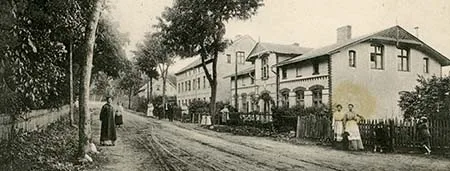
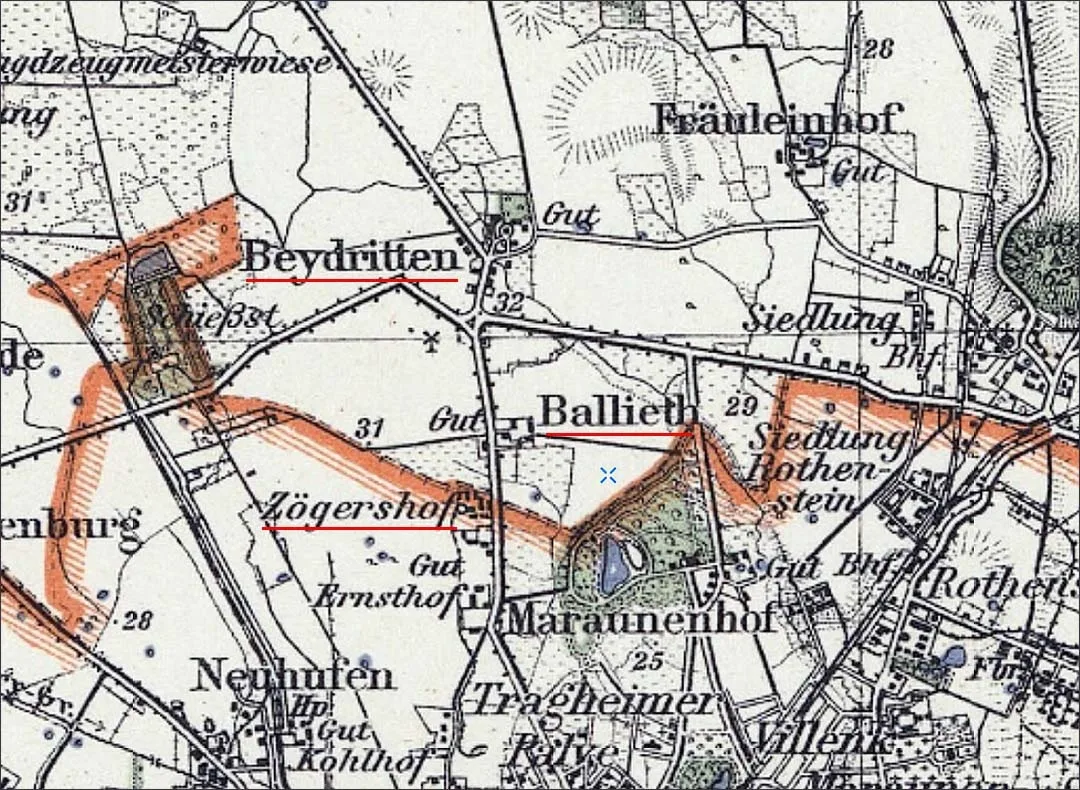
Ballieth from 1785 was called Balide or Palide. The name then changed to Balitt (from 1820), Balit (in 1860) and Balieth (after 1871). In 1785 and 1818 Ballieth was classified as a noble Vorwerk (Adelich Vorwerk) with two households. In 1785 the Vorwerk belonged to the Beydritten estate (Pervomaysky).
In the mid-19th century Ballieth was an estate which from 1867 formed a Gutsbezirk in Landkreis Königsberg (merged into Landkreis Samland in 1939). The estate belonged to the parish of Quednau (Kaliningrad, Severnaya Gora settlement). In 1871 Ballieth had three residential houses, in which 10 families lived. On 30.04.1874 the Gutsbezirk of Ballieth was incorporated into the newly established Amtsbezirk of Quednau (Kaliningrad, Severnaya Gora settlement). In 1879 the Ballieth estate owned 126 ha of land; its annual net profit amounted to 1,820 marks.
On 29.03.1906 the Gutsbezirk of Ballieth passed to the newly formed Amtsbezirk of Beydritten (Pervomaysky).
On 15.11.1928 the Gutsbezirk of Ballieth was abolished and incorporated into the municipality of Königsberg.
Beydritten is mentioned in 1540 as Baydritten and Baytriten. After 1540 it was called Baytritten, and after 1565 Beidritten. In 1785 Beydritten was classified as a noble estate (Adelich Gut) with the Vorwerk of Palide and 14 households (apparently two of which belonged to the Vorwerk). In 1818 Beydritten was classified as a noble estate with 12 households.
In the mid-19th century Beydritten was a knight's estate (Rittergut) which from 1867 formed a Gutsbezirk in Landkreis Königsberg (merged into Landkreis Samland in 1939). The estate belonged to the church parish of Quednau (Kaliningrad, Severnaya Gora settlement). In 1871 Beydritten had 12 residential houses, in which 41 families and four single men lived. On 30.04.1874 the Gutsbezirk of Beydritten was incorporated into the newly established Amtsbezirk of Quednau (Kaliningrad, Severnaya Gora settlement). In 1879 the Beydritten estate owned 468 ha of land; the estate's annual net profit amounted to 7,032 marks.
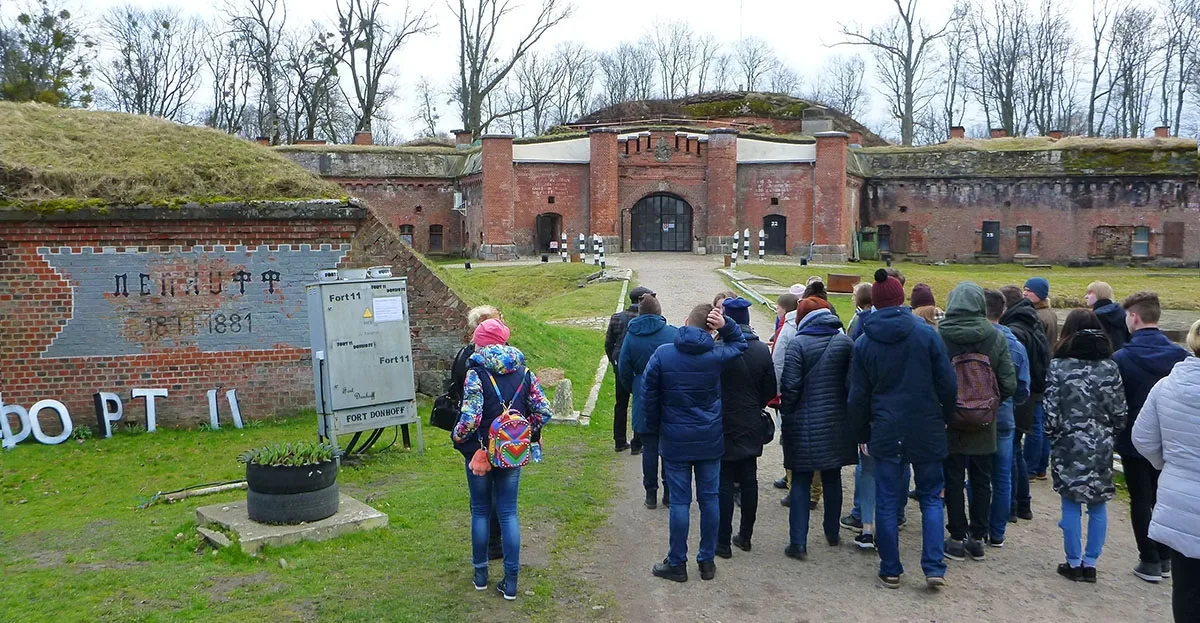
At the end of the 1870s Fort No. 4 was built north of Beydritten; it was at first named "Beydritten" and later renamed "Gneisenau" in honour of the field marshal and hero of the wars against Napoleon, Count August Wilhelm Antonius Neidhardt von Gneisenau (1760–1831).
On 29.03.1906 the Gutsbezirk of Beydritten passed to the newly formed Amtsbezirk of Beydritten (Pervomaysky). The owner of the Beydritten estate, Ackermann, headed the Amtsbezirk throughout its existence — until 1939.
On 15.11.1928 the Gutsbezirk of Beydritten was abolished, and the estate became part of the new rural community of Beydritten, which also included the Gutsbezirke of Adlig Sudau (Maykovo) and Samitten (officially Dubosekovo), as well as part of the forest Gutsbezirk of Fritzen, Forst from the Amtsbezirk of Powunden (Khrabrovo).
In 1932 the Beydritten knight's estate owned 489 ha of land, including 304 ha of arable land, 50 ha of meadows, 80 ha of pastures and 7 ha of orchards and vegetable gardens. The farm had 60 horses, 300 head of cattle (including 100 cows) and 25 pigs. The estate was a member of the East Prussian Breeding Association. The estate was owned by Burchard Ackermann.
On 01.04.1939 the community of Beydritten became part of the municipality of Königsberg.
The Amtsbezirk of Beydritten was created on 29.03.1906 and originally consisted of the rural community of Neuhufen (Kaliningrad, Selma microdistrict) and five Gutsbezirke: Adlig Sudau (Maykovo), Ballieth (Pervomaysky, part), Charlottenburg (Lermontovo) and Samitten (officially Dubosekovo). On 16.06.1927 the rural community of Neuhufen was incorporated into the municipality of Königsberg. On 30.09.1928 the Gutsbezirk of Charlottenburg was converted into a rural community of the same name, which also absorbed the abolished Gutsbezirk of Waldgarten from the Amtsbezirk of Moditten (A. Kosmodemyanskogo settlement, part). On 15.11.1928 the rural community of Beydritten was formed from the Gutsbezirke of Beydritten (Pervomaysky, part), Adlig Sudau (Maykovo) and Sammitten (officially Dubosekovo), as well as part of the forest Gutsbezirk of Fritzen, Forst from the Amtsbezirk of Powunden (Khrabrovo). At the same time the Gutsbezirk of Ballieth was abolished and incorporated into the municipality of Königsberg. The Amtsbezirk of Beydritten now consisted of two rural communities: Beydritten (Pervomayskoye) and Charlottenburg (Lermontovo). Its composition did not change thereafter.
On 01.04.1939 the communities of the Amtsbezirk of Beydritten passed to the municipality of Königsberg, and the Amtsbezirk itself was dissolved.
Zögershof was an estate which from 1867 formed a Gutsbezirk in Landkreis Königsberg (merged into Landkreis Samland in 1939). The estate belonged to the parish of Quednau (Kaliningrad, Severnaya Gora settlement). In 1871 Zögershof had two residential houses, in which four families lived. On 30.04.1874 the Gutsbezirk of Beydritten was incorporated into the newly established Amtsbezirk of Quednau (Kaliningrad, Severnaya Gora settlement). In 1879 the Zögershof estate owned 62 ha of land; the estate's annual net profit amounted to 921 marks. These figures made Zögershof one of the smallest estates in Landkreis Königsberg. By them it ranked 134th and 130th respectively out of 143 in the Landkreis.
By 1885 the Gutsbezirk of Zögershof had been reorganised into a rural community of the same name. In 1905 the rural community of Zögershof was abolished and incorporated into the rural community of Neuhufen (Kaliningrad, "Selma" microdistrict). By this time Zögershof had come to belong to the church parish of the Tragheim Church of Königsberg (Tragheimer Kirche). On 16.06.1927 Zögershof, together with the whole rural community of Neuhufen, was incorporated into the municipality of Königsberg.
On 29.07.1948, by decision of the Kaliningrad city executive committee, Ballieth was renamed Severny Gorodok. By a new decision of the city executive committee of 18.08.1949, Ballieth, Beydritten and Zögershof received the name Pervomayskoye settlement. Later the name changed to Pervomaysky.
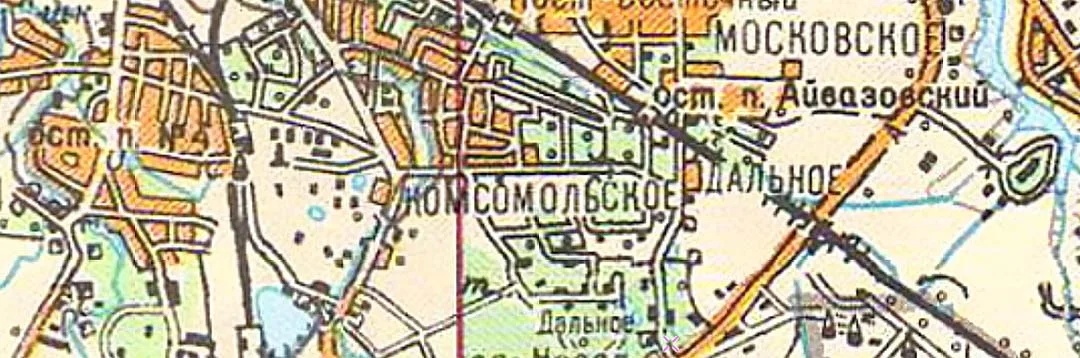
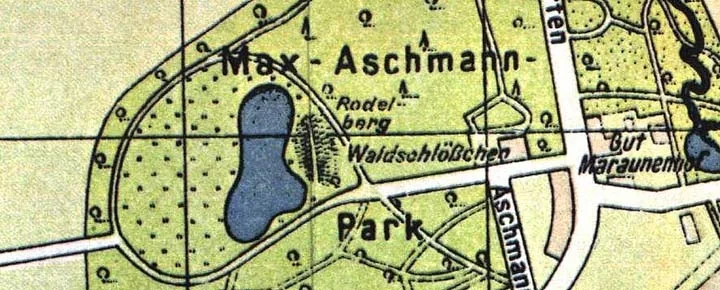
Until the 1990s Pervomaysky really did resemble a village, separated from the rest of the city by wasteland to the south-west and by Max Aschmann Park to the south-east. The southern boundary ran along Rassvetnaya and Mariny Tsvetayevoy streets. To the east, the dividing line with the Severnaya Gora settlement ran along Malaya Lesnaya Street. There was no northern boundary as such; notionally it ran along 3rd Bolshaya Okruzhnaya and Ukrainskaya streets. Traditionally the settlement also included the "Pobeda" gardening partnership, whose northern part extended to the Bolshaya Okruzhnaya road (Northern Bypass). The Military Town was also counted as part of Pervomaysky — military unit 61863, a motor rifle regiment, and the repair battalion of the 1st Tank Division of the 11th Army. The name of the settlement appeared on city plans and maps and in public transport routes and was quite widely used by the population. In official documents (the city map and the general plan) the settlement was last marked in 2004. At present (2024) the name of the settlement is rarely used by townspeople. Pervomaysky includes the following streets: 3rd Bolshaya Okruzhnaya (part), Bilibina, Valdayskaya, Vdokhnoveniya, Vladimirskaya, Georginovaya, Goncharnaya, Gorkogo (part), Zhivopisnaya, Ivana Susanina, Luchistaya, Luchisty Lane, Mariny Tsvetayevoy (part), Minomyotnaya, Monetnaya, Poselkovaya, Pritselnaya, Pulemyotnaya, Rassvetnaya, Severnaya, Senokosnaya, Ukrainskaya, Chernomorskaya.
Sights: Fort No. 4, mass grave of Soviet soldiers (4 people, memorial 1955).
Population of Ballieth: 1818 – 28, 1867 – 64, 1871 – 51, 1885 – 57, 1905 – 64. 1910 – 74 inhabitants.
Population of Beydritten: 1818 – 169, 1867 – 192, 1871 – 202, 1885 – 216, 1905 – 218 inhabitants.
Population of Zögershof: 1867 – 28, 1871 – 21, 1885 – 59, 1905 – 51.
Composition of the population of Ballieth in 1871: all 51 Protestant Christians, children under 10 – 19, literate – 23 (72%).
Composition of the population of Beydritten in 1871: all 202 Protestant Christians, children under 10 – 62, literate – 87 (63%).
Composition of the population of Zögershof in 1871: all 21 Protestant Christians, children under 10 – 5, literate – 9 (56%).
Translated from Russian with the help of AI (Claude, Anthropic), October 2026.