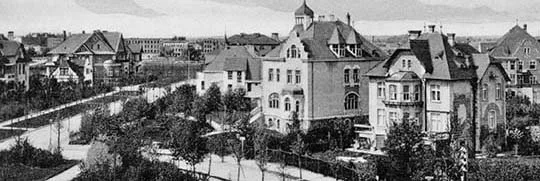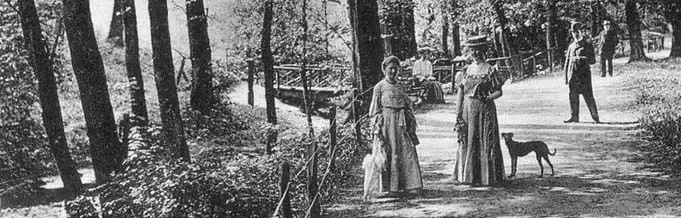
The grounds of today's Botanical Garden, one of the divisions of Kaliningrad State University, appeared on the map of Königsberg in 1904, when the City Garden Nursery (Stadtgärtnerei) was founded in the north-eastern suburb of Maraunenhof.
In the Botanical Garden of the Baltic Federal University, which has taken over the grounds of the City Horticulture, you can see a memorial — a large granite boulder set up in 1919 on an avenue in the eastern part of the garden in honour of Paul Kaeber (1869–1919), professor at the University of Königsberg and head of the department of higher plant systematics, the creator of the City Horticulture and its first director, thanks to whose energetic work a significant collection of plants from various climatic zones of the world was assembled here. The inscription on the memorial stone is laconic: † 25.03.1919 garden director Kaeber. Paul Kaeber devoted more than fifteen years of his life to founding, shaping, expanding and improving the garden, and to the practical acclimatisation of introduced plants not native to the flora of East Prussia, with a view to using them later for the needs of urban greening.
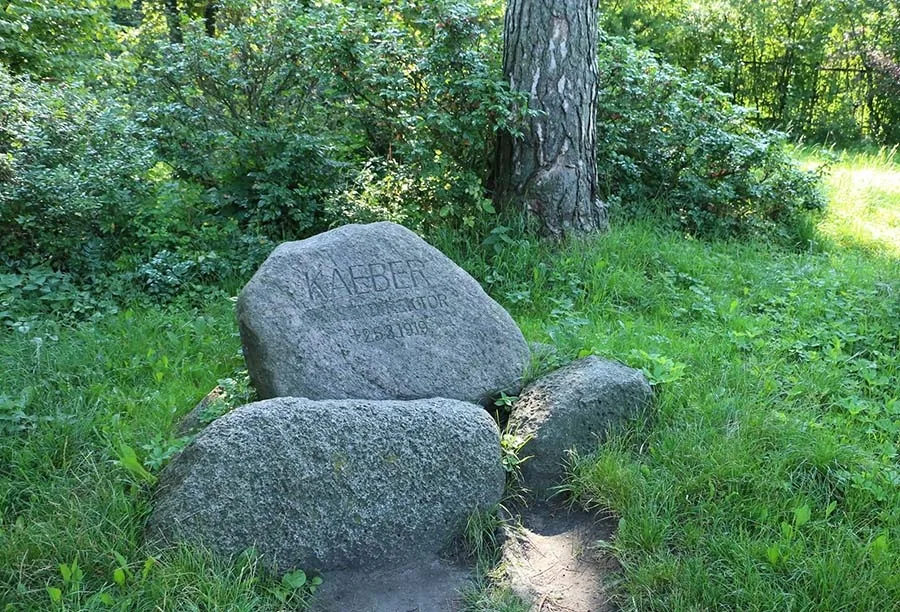 The memorial to Paul Kaeber.
In 1901 a Directorate of City Gardens and Parks was set up in Königsberg, headed by Paul Kaeber. His appointment to this post was no accident: Kaeber was one of the active members of Kessel's Society for the Embellishment of the City, which had been operating in Königsberg since 1838, and by the time the Directorate was created he held, at the age of thirty-three, the post of garden inspector.
He directed the work of landscaping the old People's Garden, which helped turn this area of natural vegetation into a public green space pleasant for walking. In 1907, having in fact already headed the work of the garden nursery for three years, he was officially appointed director of horticulture. With Paul Kaeber's participation, the first allotment garden colonies were laid out in 1912–1913 on the Upper Pond, beyond the Rossgarten Gate.
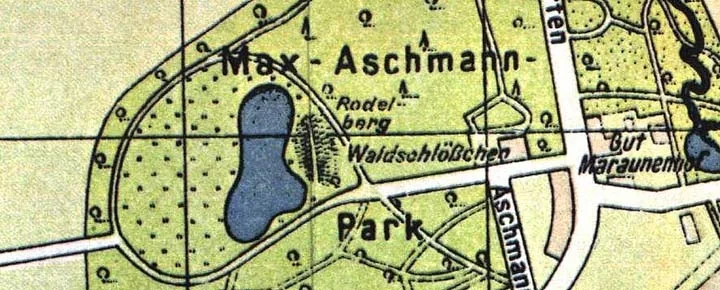
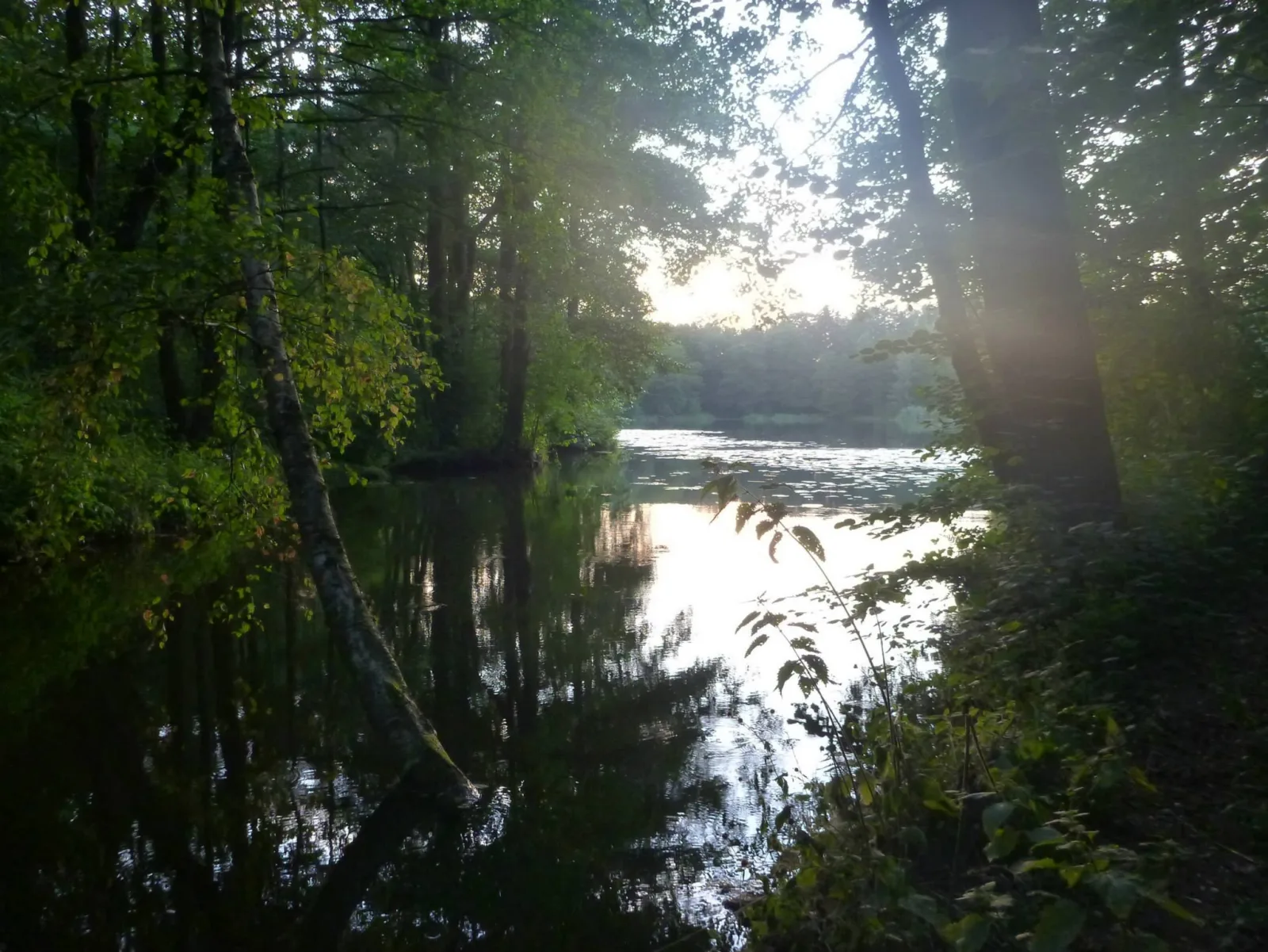
The City Horticulture began operating three years after the nursery was founded, i.e. in 1907. The heavy sod-gley soils of the marshy terrain created certain difficulties for growing plants. However, when a large pond with an area of one hectare was dug here to supply the garden with water for irrigation, the excavated material turned out to be peat and was successfully used to improve the soil structure, which subsequently had a beneficial effect on the growth and development of the garden's plants. The pond was fed by groundwater, and this helped to drain the waterlogged soils somewhat. Later, pipes were laid along the bottom of the pond and a fountain was installed, which undoubtedly adorned this corner of the garden.
From the pond flows a stream that crosses the garden and at its southern boundary meekly dives into a pipe laid under the railway embankment, so that at the end of its journey, not far from the Yunost park, it can top up the waters of the western arm of the Upper Pond.
The creation of the garden nursery was preceded by a memorandum dated 1900 from Gramberg, the rector of one of Königsberg's schools, which pointed to the need to set up an establishment growing plants to supply the city's schools with visual teaching material (cuttings, seedlings, systematic plant collections) for lessons in the natural sciences, in particular botany and natural history. In addition, the small garden that existed by then at the Drisen charitable foundation (Drisensche Stiftung) on Yorckstrasse (1812 Goda Street), with a nursery of tree saplings intended for greening the city, had very limited capacity and could not meet the growing demands of urban greening, which greatly worried the city's self-government. By opening a new nursery with an area of 123,350 m2 (12.3 ha) the municipality planned to solve the problems of greening the city and to meet the needs of school, vocational and university education.
The functions assigned to the horticultural establishment in Maraunenhof were quite diverse.
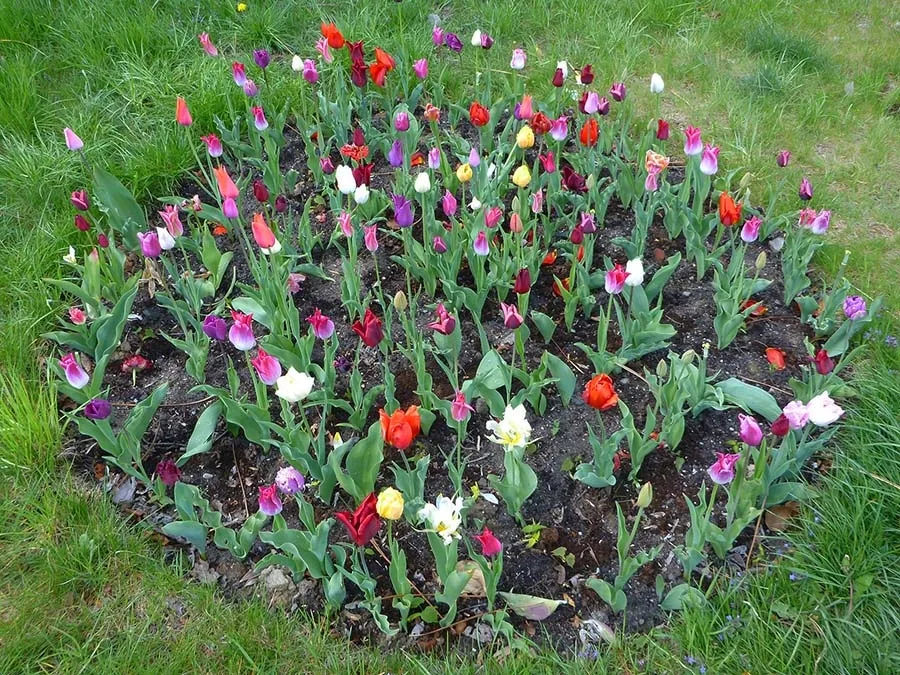
The City Horticulture was to supply tree and shrub saplings, flower seedlings, roses and flowering climbers for the new squares, parks, plazas and avenues that were being intensively created in Königsberg in those early years of the 20th century.
The garden was to become the supplier of visual material for Königsberg's 80 schools. For many years this was organised as follows: every Saturday a list of the plants the horticulture could provide was sent out to the schools. The teachers underlined in this list what they needed for their current lessons and sent the list back. Every Wednesday and Friday a special cart delivered packages of plants to set places in the city, where representatives of the schools came to collect them.
The garden served as a teaching and educational centre for professional and amateur gardeners — friends of the garden. Here one could buy plants and obtain practical knowledge, advice and consultations on plant growing, gardening, greening and the landscaping of urban house plots and country villas. The garden city of Königsberg-Kaliningrad owes much of its distinctive character to the work of the City Horticulture and its significant contribution to shaping the city's new appearance. In the "Communications of the German Dendrological Society" for 1922 its chairman, Dr Fritz Graf von Schwerin (F. Graf v. Schwerin), notes that "in former years Königsberg had extremely little greenery, few beds, flower gardens and avenues along the streets, but now, thanks to the work of the City Horticulture under the direction of P. Kaeber, the city is adorned with bright flower parterres, avenues, promenades, green footpaths, rockeries by the villas, and exotic trees with crowns of unusual shape and colour".
The City Horticulture carried out the difficult and painstaking work of introducing and acclimatising plants. In those years, as before, it was extremely fashionable to adorn gardens and parks not only with local tree species but also with various exotic (relict, endemic) deciduous and coniferous plants from other floras of the globe. The climate of East Prussia, rather harsh owing to constant damp, sharp, cold north-easterly winds, considerable temperature fluctuations in winter and spring, and late spring frosts, hindered the acclimatisation of plants from the floras of warmer regions.
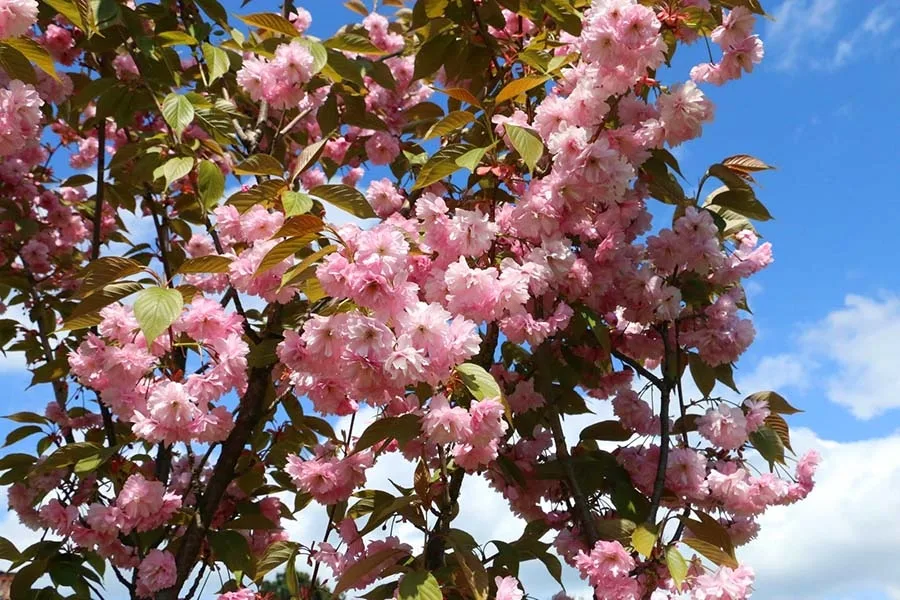
Many of the deciduous and coniferous plants planted in private collections in and around Königsberg perished despite good care and protection. Later, however, thanks to the work of the horticulture, the acclimatisation of many species of trees and shrubs and of rose varieties succeeded, and saplings of exotic and fruit trees and of numerous shrubs were recommended for planting in the climate of East Prussia.
Every acclimatised plant was recorded, observed, described and entered in a list, which was published in Königsberg by the Hartung publishing house for the information of gardeners and was also reproduced, though not in full, in the "Communications of the German Dendrological Society" for 1922. This list includes many species of deciduous and coniferous trees of the extratropical zone and their diverse forms with pyramidal, drooping, spreading and other crowns, and with leaves of unusual colour and shape.
From the gymnosperm division the list counts 60 species, including the ginkgo, the common yew, the silver form of the eastern hemlock, the Douglas fir, the white fir, grand fir, subalpine fir, Siberian fir, Sakhalin fir and Veitch's fir (11 species and forms of fir in all); the Norway spruce, black spruce, white spruce, blue spruce, Ayan spruce and Sitka spruce (30 species and forms in all); the lodgepole pine, Korean pine, Austrian pine and ponderosa pine (11 species, 1 form); the Japanese larch, European larch, Siberian larch and tamarack; the golden larch, the hiba, the bald cypress, the eastern arborvitae in its forms 'Rheingold', globe, 'Rosenthalii' and 'Wagneriana'; the Sawara cypress, Lawson cypress and others, and 8 species and 5 forms of juniper, including the Savin, Chinese and Virginian junipers. Of the angiosperm division 44 families are mentioned, including the willow family (26 species and 20 hybrids, of which 21 species are poplars), the walnut family (6 species — 3 species of walnut, 3 species of hickory), the birch family (15 species and forms of birch, including the Monarch birch, river birch, Carpathian birch, paper birch, Erman's birch and grey birch), alder — 8 species, 9 forms, including the grey alder, weeping grey alder, Japanese alder, black alder and speckled alder), 3 species and 3 forms of hornbeam; the beech family (2 species and 4 forms of beech; 16 species and 8 forms of oak, including the red oak, Mongolian oak, bur oak, sessile oak, pin oak and Persian oak); the maple family (16 species and 22 forms of maple, including the Tatar maple, the sycamore in eight forms, the Manchurian maple, the hornbeam maple, the Norway maple in ten forms, the field maple and the silver maple), the horse chestnut family (7 species), the elm family (22 species and forms); the linden family (14 species of lime, including the Mongolian lime, large-leaved lime, vine-leaved lime, American basswood, Moltke's lime, Manchurian lime and white basswood); the olive family (ash — 3 species, 7 forms).
From the remaining families on the list we shall cite only individual plants known to non-specialists as well: the tree peony, 10 species of clematis, the London plane, the Canadian, Asian and Amur barberries (10 species in all), magnolia (2 species), liriodendron (the tulip tree), the American witch hazel, actinidia (3 species), spiraea (82 species and forms), rowan (10 species, 5 forms), Dahurian cinquefoil, the Sakhalin cork tree, Japanese orixa, the honey locust, robinia, caragana (7 species), ailanthus, and so on and so forth.
Thus the City Horticulture built up on its grounds a rich and varied nursery of exotic plants: everything that was advanced for its time in gardening, vegetable growing and floriculture, everything that might encourage plant lovers to acquire ornaments for their garden, park or small house plot, found its place in the nursery.
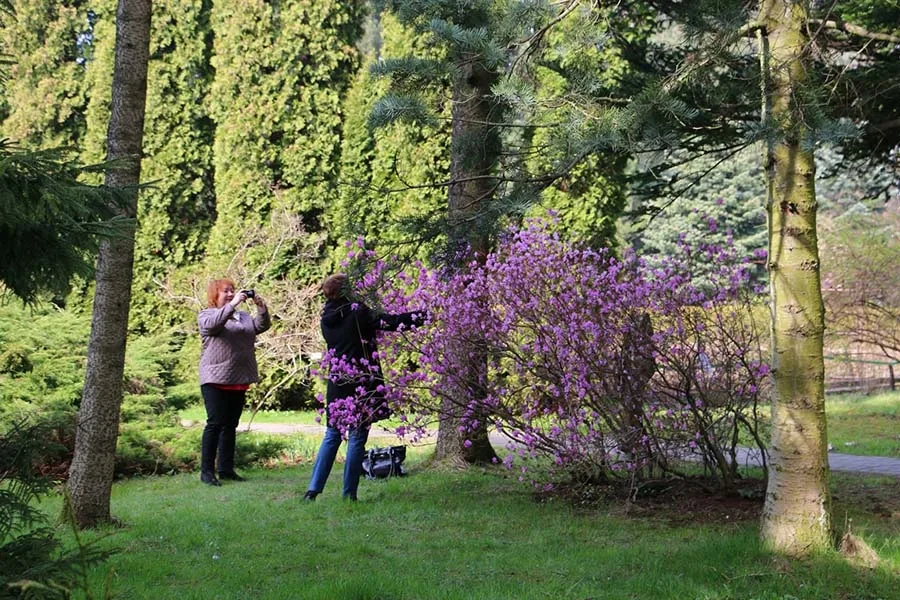
The function of a city garden and open-air museum was not originally planned, but the nursery's management, together with many enthusiastic like-minded professionals and amateurs, improving the garden's layout and range of plants, gradually turned the City Horticulture into a priceless collection and one of the sights of Königsberg.
Visitors to the garden could get to know a wide variety of plants from other countries and climatic zones (even exotic vegetable crops were grown here) and buy saplings and seedlings. The Königsberg guidebooks of 1910 and 1928 state that the garden was open to visitors on weekdays from 8 a.m. to 6 p.m., and in summer on Sundays and holidays from 8 to 12. The extensive collection had not only aesthetic and practical value but also educational value. The garden was used for training university students, students of secondary vocational schools, including the art school, and pupils of general schools. Students of the art school came here for "plein air" (working in the open air), learning composition and how to render colour and the light that played on the variegated foliage of the trees and the bright flower beds.
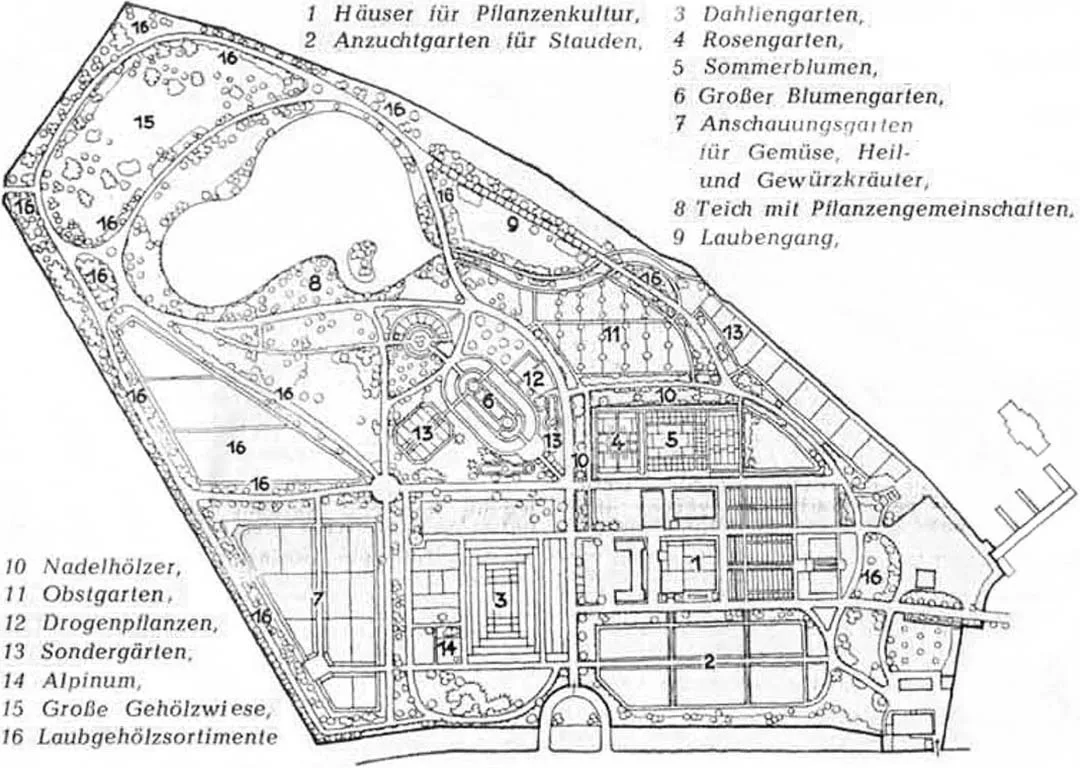
In accordance with the original goals set for the horticulture, its grounds were divided into plots with different purposes:
- The tree nursery, consisting of a sapling school of 1.5 ha and a plot of 5 ha for growing on the saplings. Besides trees, shrubs, flowering climbers, roses and herbaceous annuals and perennials were grown here, for which hotbeds and greenhouses were built;
- The "School Garden" (1 ha) provided visual material for botany lessons in the city's schools. It contained mainly field, meadow and woodland herbs, weeds and useful plants, annuals and perennials with different forms of flowers, seeds, leaves, roots, bulbs, root crops and rhizomes;
- The "Botanical Garden for Schoolchildren" (3 ha), intended for children's lessons held during visits to the horticulture. Part of this area (1 ha) was taken up by a pond with fountains. Children could be brought here for an open-air lesson or simply to contemplate the flora, to observe plants and to draw in this attractive and instructive part of the garden. The plants here were arranged by habitat and soil type: plant communities of coniferous and deciduous forest, peat bog, meadow and seashore. A second arrangement made it possible to emphasise the usefulness of plants and show the different ways they are used: medicinal plants, poisonous plants, pot herbs, flowering plants and other useful greenery. Everywhere the labels gave the folk names of the plants, their Latin names and the ways they were used;
- The experimental collection section of the garden — the arboretum — covered 2 ha and was divided into a biological and a systematic part. The first (biological) plot contained plants with different growth forms (upright, creeping, twining, etc.), as well as plants demonstrating various adaptations to drought, damp, attracting insects, dispersing their seeds and so on. In the centre of the plot, in a sunny glade, was a "sundial" made up of plants that open or close their flowers at particular hours. Of course it did not show the time to the minute, but the hours of the day could easily be determined by it "with sufficient reliability". The systematic part of the arboretum (the arboretum proper) was an extremely rich collection of deciduous and coniferous woody species, most of them introduced.
After Paul Kaeber retired, the post of director of horticulture was held for some time by the dendrologist and garden inspector Ludwig Butz (1879–1966), but by 1922 Ernst Schneider (1874–1968), a well-known landscape architect and the creator of Königsberg's green belt, who devoted more than a quarter of a century to dendrology, had become director of all of Königsberg's city gardens and parks, including, of course, the horticulture in Maraunenhof.
By the end of the 1930s the City Horticulture's collection of greenhouse plants alone numbered about 4,000 items.
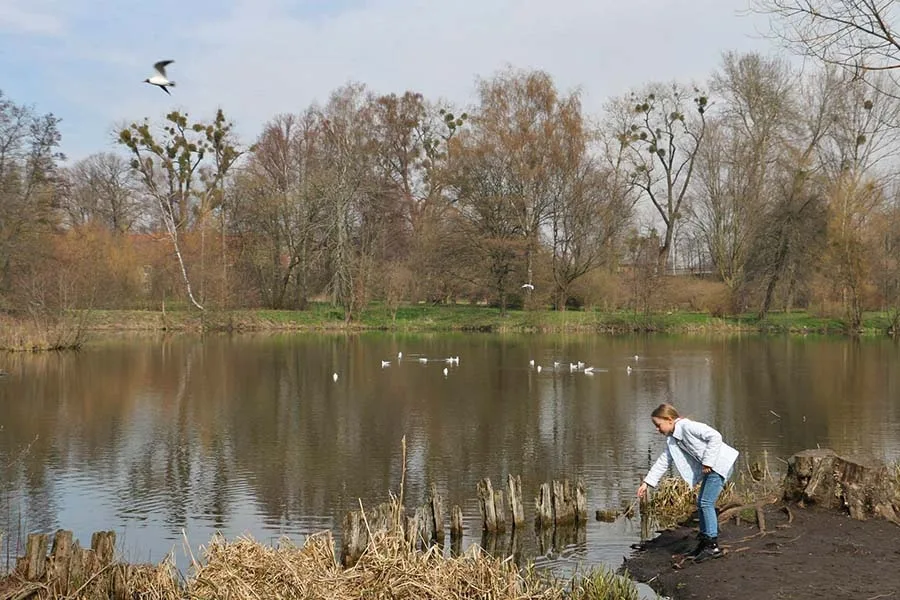
After the Second World War the City Horticulture survived only in part. In 1948 the grounds of the former Königsberg horticulture, with its partly preserved plant collection, were turned into a Botanical Garden under the Kaliningrad Green Spaces Trust; then, from 1949, for 18 years the garden belonged to the Kaliningrad Research Station for Urban Greening of the Plekhanov Academy of Municipal Economy.
The first inventory of the garden took place in 1950–1951, when all the surviving plants were recorded. The second inventory, in 1958, found only 400 plant items, mostly the remains of the dendrological collection. The outdoor flowers, the school botanical garden and the greenhouse plants had perished completely, and the former layout of the garden could hardly be made out.
In 1967 the Botanical Garden became one of the divisions of Kaliningrad State University and to a certain extent continues the scientific traditions of the Königsberg horticulture. The main focus of the modern Botanical Garden's research is the introduction of representatives of the floras of various regions of the globe that are not native to the southern Baltic, as well as work with tropical greenhouse plants. The Botanical Garden has kept its function as a place of recreation for the city, but its educational role for schoolchildren, the practice of advising gardeners and the sale of saplings for greening the city have been practically lost.
The garden's new layout in the 1970s helped create new landscapes in which the exotic trees of the Königsberg horticulture occupy a worthy place. The strict geometric layout of the open parterre space at the entrance to the Botanical Garden recalls the formal style of many European parks: elegant rectangular flower beds and a straight main avenue leading to two ponds — a large one and a small one — which reflect the silvery green of the drooping willows and are surrounded by green lawns with delicate, exquisite wild irises, the ancestors of the luxuriant European cultivars. In this composition of green waters and the green space around the ponds, features of the romantic park style can be discerned. Unfortunately, the small pond, which came into being as a result of the replanning and cleaning of the large pond, is gradually becoming shallower and starting to silt up. The fountains of the large pond have not been restored, nor are there the water lilies of the pre-war period, but the ubiquitous ducks swim there, undeterred by the overgrown pond.
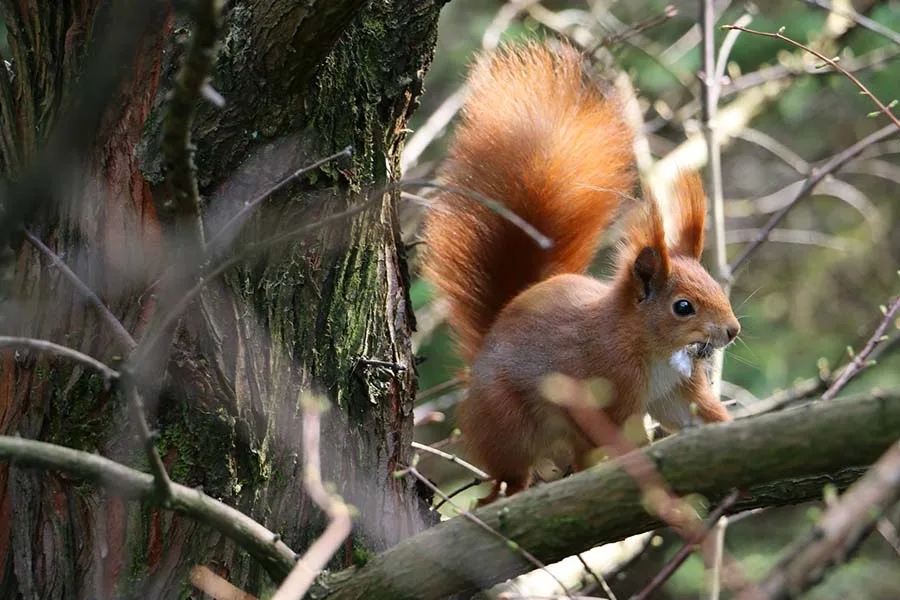
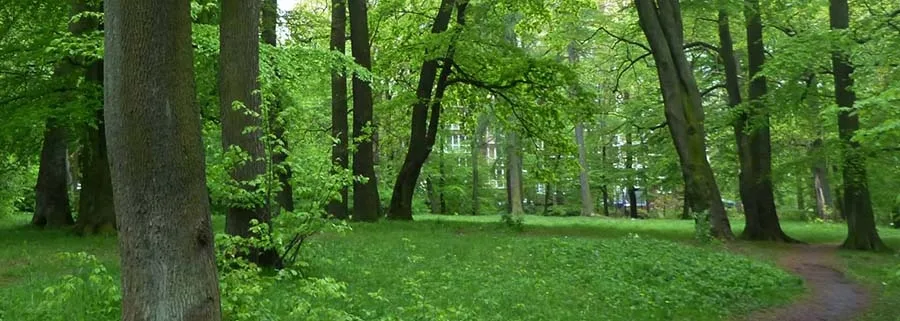
The central part of the garden is enclosed around its perimeter by old shady avenues — of oak, poplar, walnut, lime, beech and conifers. Some of them survive only in fragments; some have been renewed, with new trees planted. The overall impression of the park's style speaks in favour of the landscape "English" park. It was precisely this style that was highly characteristic of Königsberg's parks.
In the design of the garden, as a reminder of its past, a major role is still played by the successful combination of trees with crowns of different colours and shapes, and by compositions of different forms of related plant species — upright, prostrate and drooping.
The placing of plants across the garden, taking into account its soil, hydrological and microclimatic conditions and the requirements of the plants themselves, together with the features of the landscape layout, is reflected in the garden's most interesting compositions: the rock garden; the avenue of climbing plants — vines belonging to various families, genera and species: Virginia creeper, fox grape and Amur grape, kolomikta, hardy kiwi, Chinese magnolia vine, Dutchman's pipe, old man's beard, the German caprifole or common caprifolium honeysuckle; a composition of conifers of more than 80 items; groups and avenues of trees with crowns of unusual shape (weeping, pyramidal, globular, spreading, candelabra-shaped, serpentine) or with leaves of unusual colour and shape (purple, golden, red, variegated, cut-leaved, laciniate, fern-leaved, heterophyllous).
* * *
The Botanical Garden has more than a dozen species and forms of pine (Pinus): the Scots pine (Pinus silvestris), Weymouth pine (P. Strobus), mountain pine (P. montana) and its form P. m. var pumilio, pitch pine (P. rigida), Austrian pine (P. nigra), jack pine (P. banksiana), Koch's pine (P. cochinna), Crimean pine (P. pallasiana), Macedonian pine (P. peuce), Swiss stone pine (P. cembra), Korean pine (P. koraiennsis) and Siberian pine (P. c. sibirica).
In the spruce collection (Picea) we may note the Ayan spruce (Picea ajanensis), the Oriental spruce (P. orientalis), the blue Colorado spruce (P. pungens Glauca), the silver Colorado spruce (P. p. Argentea), the Norway spruce (P. exelsa) and its forms — dense-needled (P. e. Parviformis) and dwarf (P. e. nana), the Serbian spruce with its narrow spire-like crown (P. omorica), the Siberian spruce (P. obovata), and the white spruce (P. canadensis), whose little cones are bright red at flowering time.
The garden's chestnuts (Aesculus L) vary both in the colour of their lush candles — the flower clusters — and in the shape of their crowns: the common horse chestnut with pale pink, almost white flowers (Aesculus hippocastanium), its forms — weeping (A. h. Pendula) and globular (A. h. umbraculifera), the red buckeye with bright pink flower clusters (A. pavia) and its dark red form (A. p. Atrosanguinea), the bottlebrush buckeye (A. parviflora) and its flesh-red form (A. p. carnea). The familiar and unfamiliar lime (Tilia L) appears in various guises: the common lime (T. europaea) and its vine-leaved form (T. e. vitifolia), the small-leaved lime (T. cordata) and its form distinguished by the shape of its crown — weeping (T. c. pendula), the white basswood (T. heterophylla), the Crimean lime (T. caucasica Euchlora), the large-leaved lime (T. platyphyllos) and its forms — golden (T. p. aurea), weeping (T. p. pendula) and cut-leaved (T. p. laciniata).
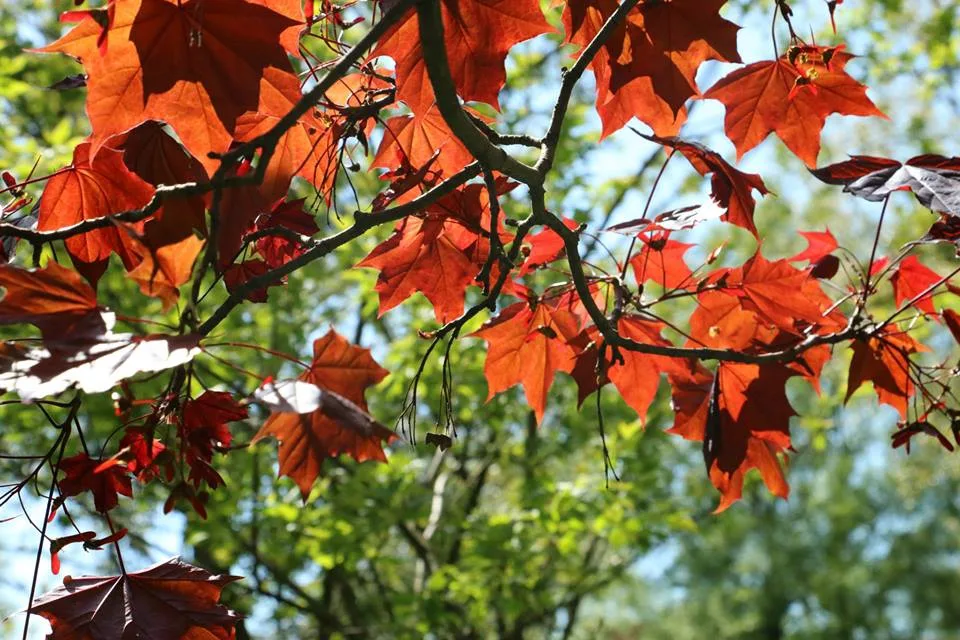
The maple collection (Acer) numbers at least 15 species and forms: the red maple (Acer rubrum), the sycamore maple (A. pseudoplatanus) and its forms — purple (A. p. Purpureum), red-fruited (A. p. Erythrocarpum) and 'Nizetii' (A. p. Nizeti), the Norway maple (A. platanoides) and its forms — palmate-leaved (A. pl. Palmatifidum), Crimson King (A. pl. Crimson King Drummondii), globe (A. pl. Globosum) and Schwedler's (A. pl. Schwedleri), the sugar maple (A. saccharum), Semenov's maple (A. semenovi), the silver maple (A. saccharinum), the box elder, or ash-leaved maple (A. negundo), and its silver-variegated or white-variegated form (A. n. Variegatum).
The species and forms of oak along the garden's avenue make up a fine composition: the well-known pedunculate oak (Quercus robur), also called the English or common oak, and its remarkable forms — fern-leaved (Q. r. Filicifolia), pyramidal (Q. r. Fastigiata) and weeping (Q. r. Pendula), the Turkey oak (Q. cerris), the North American natives scarlet oak (Q. coecinea), pin oak (Q. palustris) and red oak (Q. rubra), Hartwiss's oak (Q. hartwissiana), the sessile, or durmast, oak (Q. petraea) and its medlar-leaved form (Q. p. Mespilifolia).
Too bright for this garden are the birches — the Monarch birch (Betula maximowisziana), a native of Japan, the silver birch (B. pendula) and its forms — Karelian (B. p. Carelica), Young's (B. p. Joungii) and the remarkable weeping pyramidal form (B. p. Fastigiata).
Of the nine existing species of beech (Fagus), only two species and their forms are represented in the garden's collection, in a single avenue, but how fine they are: the American beech (Fagus grandifolia), the European beech (F. silvatica) and its forms — golden (F. c. Aurea), cut-leaved (F. s. laciniata) and dark purple (F. s. Purpurea).
…And this is only the beginning of the list of species and ornamental forms in the dendrological collection of today's Botanical Garden. One cannot fail to mention the poplars and ashes, as well as more exotic plants: mockernut hickory (Carya alba) and bitternut hickory (C. cordiformis), the Amur cork tree (Phellodendron amurense), Sakhalin cork tree (Ph. sachalinense) and Japanese cork tree (Ph. japonicum), the American sycamore (Platanum occidentalis), the wedge-leaved plane (P. cuneata), the bald cypress (Taxodium distichum), the cut-leaved black elder (Sambucus nigra Laciniata), the staghorn sumac (Phus typhina), the Himalayan cedar (Cedrus deodare), the Caucasian wingnut (Pterocarya pterocarpa), the northern catalpa (Catalpa speciosa), the tulip tree (Liriodendron tulipifera), the magnolias: cucumber tree (Magnolia acuminata), star magnolia (M. stellata), kobushi magnolia (M. cobus), saucer magnolia (M. Soulangeana) and Japanese bigleaf magnolia (M. obovata), the ginkgo (Gincgo biloba), the walnuts — English walnut (Juglans regia) and butternut (J. cinerea), the clammy locust (Robinia viscosa), the black locust (R. pseudoacacia) and its single-leaved form (R. ps. unifolia).
The dendrological collection of the IKBFU Botanical Garden was created through the efforts of generations of its staff on the basis of the surviving pre-war range of tree and shrub species.
As a result, on 1 January 1997 the collection of trees and shrubs numbered 475 species, 7 varieties, 174 forms, 40 hybrids and 27 cultivars — 723 taxa in all, belonging to 160 genera and 62 families from 3 classes. Introduced plants account for 616 taxa (85%), and native (local) plants for 107 taxa (15%).
The gymnosperm division is represented by 57 species, 3 varieties, 62 forms and 1 hybrid — 126 taxa in all from 16 genera and 5 families. Introduced plants account for 108 taxa (86%), and native plants for 18 taxa (14%). The genera with the largest number of taxa are Abies — fir (7 species, 1 variety, 2 ornamental forms), Chamaecyparis — false cypress (4 species, 11 forms), Juniperus — juniper (5 species, 10 forms), Picea — spruce (9 species, 11 forms), Pinus — pine (16 species) and Thuja — arborvitae (3 species, 24 forms).
The angiosperm division is represented by 418 species, 4 varieties, 112 forms, 39 hybrids and 19 cultivars — 579 taxa belonging to 144 genera and 57 families. Introduced plants account for 490 taxa (84%), and native plants are represented by 89 taxa (16%). The genera with the largest number of taxa are: Acer (maple) — 15 species, 1 variety, 21 forms; Berberis (barberry) — 26 species, 6 forms, 4 hybrids; Lonicera (honeysuckle) — 12 species, 4 forms, 3 cultivars; Siringa (lilac) — 18 species, 3 hybrids, 13 cultivars; Spirea (spiraea) — 14 species, 3 forms, 6 hybrids. The remaining genera are represented by fewer taxa or by a single species. Among the plants of the arboretum are 9 species protected or recommended for protection in the Kaliningrad Region, and 20 species listed in the Red Data Book of the USSR. The list of rare exotic trees includes the tamarack, the Kentucky coffeetree, Japanese orixa, the Amur cork tree, the London plane, the northern catalpa, the katsura tree, the tulip tree, the cucumber tree and star magnolia, the bald cypress, the ginkgo, the golden European beech, the fern-leaved pedunculate oak and a number of others.
The garden's greenhouses, in their tropical, subtropical and cactus sections, house a collection of 500–600 plants. Outdoors, about 900 species and cultivars of collection flowering plants are planted: annuals (180 cultivars), small bulbs (260 cultivars), narcissi and tulips (130–150 cultivars), irises (52 cultivars), peonies (30 cultivars), gladioli (about 200 cultivars), dahlias (116 cultivars) and roses — more than 100 cultivars — so that collections in continuous bloom adorn the garden from spring to autumn.
* * *
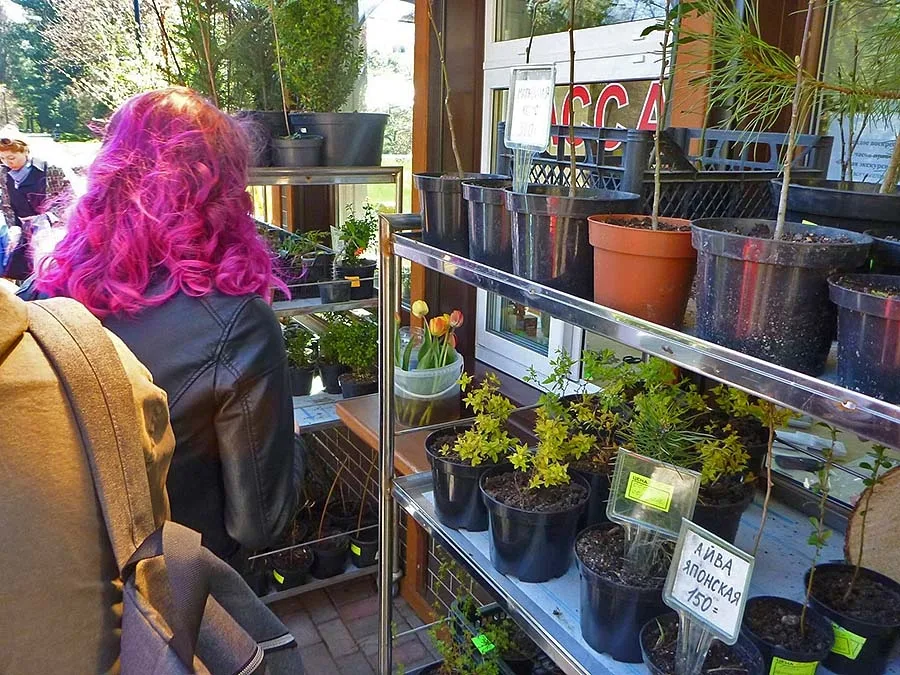
Today the total area of the garden is 13.754 ha; the arboretum occupies 8.5 ha, the arboretum nursery 0.5 ha and the outdoor flower collection 1.5 ha. The rest of the grounds is taken up by collection greenhouses, hotbeds, lawns, two ponds, a utility yard and the path network. The Botanical Garden's collection numbers over 2,500 plant items — representatives of almost all the natural zones of the world.
A botanical garden is a living collection: some plants die for one reason or another, others are planted. Treacherous climatic conditions and a lack of sufficient funds to maintain the collection — two factors that invariably dog all of Kaliningrad's parks — threaten to simplify and impoverish the range of plant species, a threat that the management of the Botanical Garden bravely fights year after year.
…The flight of time and its hardships go unnoticed by those strolling unhurriedly beneath the crowns of old and growing trees, which whisper to people only of eternity and beauty. A tree cannot wish evil, complain or sigh in vague fits of discontent. A mysterious, pure, timeless aura of the plants' life force and waves of benign magic descend here upon restless and bustling human souls.
In 2024 the Immanuel Kant Baltic Federal University Botanical Garden is open to visitors from April to November daily, with no lunch break or days off. The ticket offices are open from 10:00 to 18:00, and you can walk in the garden until 19:00. The greenhouses are open to visitors on Tuesdays, Wednesdays, Thursdays, Saturdays and Sundays (Monday and Friday are closing days). The greenhouses are open from 12:00 to 16:00. Ticket prices:
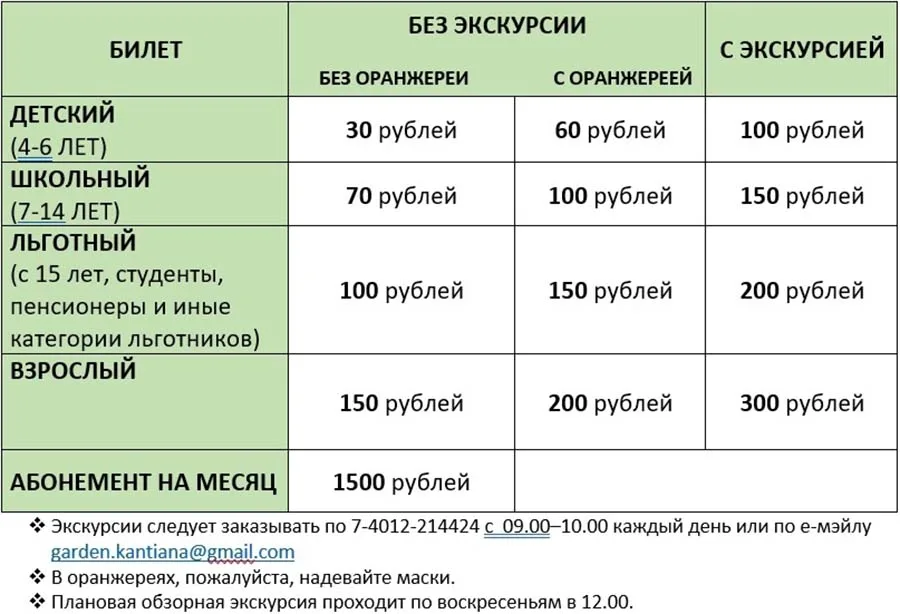 Photo by Mikhail Ogorodnikov.
Translated from Russian with the help of AI (Claude, Anthropic), October 2026.