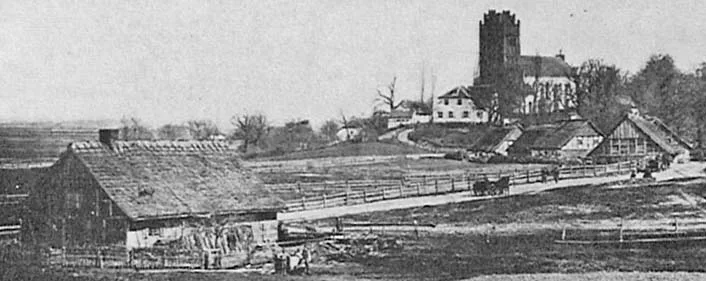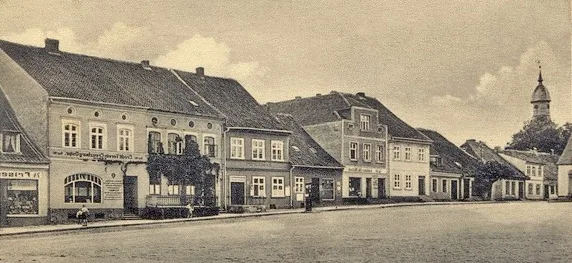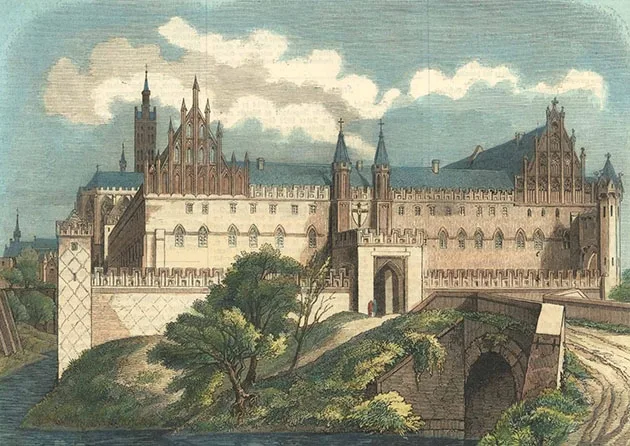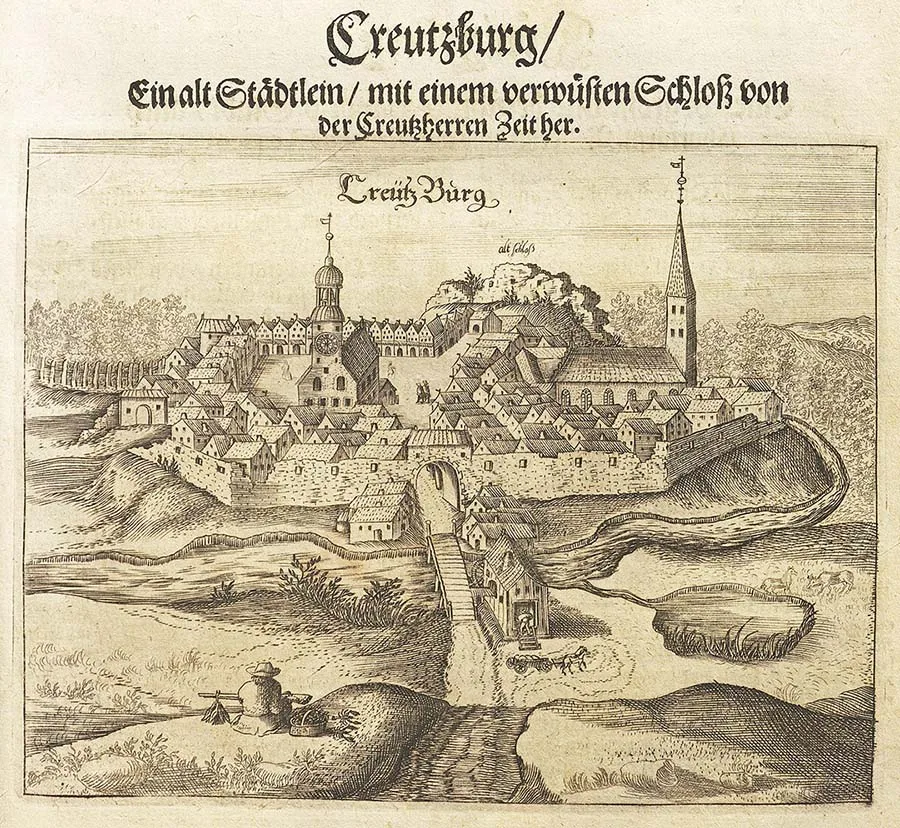
Kreuzburg Castle was founded in 1241 by Otto von Braunschweig on the site of the Prussian fortress of Witige. In 1243 it was burned by rebellious Prussians, but it had been rebuilt by 1253. In 1260–1263, during the Second Prussian Uprising, the castle was besieged. When the besieged ran out of provisions, they tried to abandon the castle, but since the horses had been eaten too, the Prussians caught up with the fugitives and killed them all except two knights, who managed to reach Balga. In 1273 the castle was rebuilt once more, and in 1309 it was reconstructed in stone. During this period, for a short time (1275–1277), Kreuzburg served as a commander's seat and as the castle of the Vogt of Natangia, but the seat was soon moved to Brandenburg (Ushakovo).
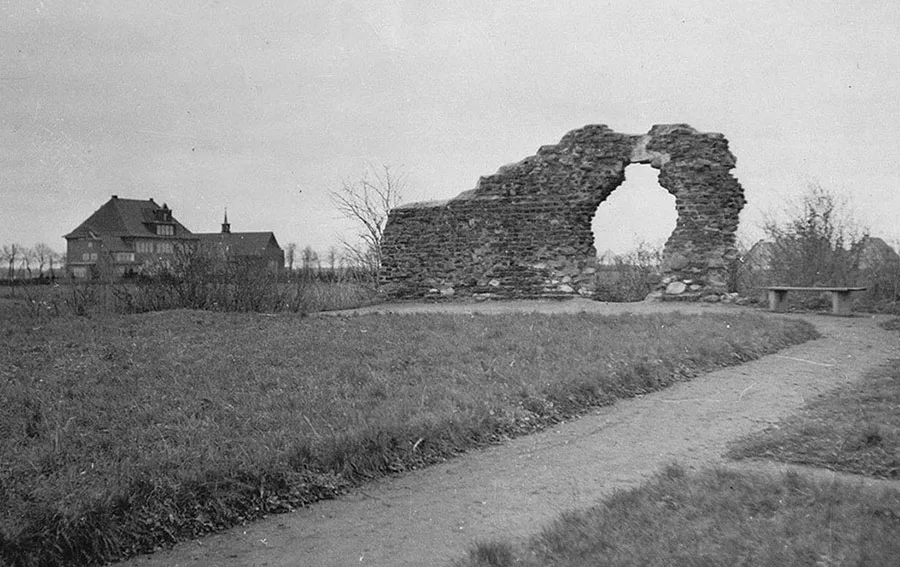 Ruins of Kreuzburg Castle.
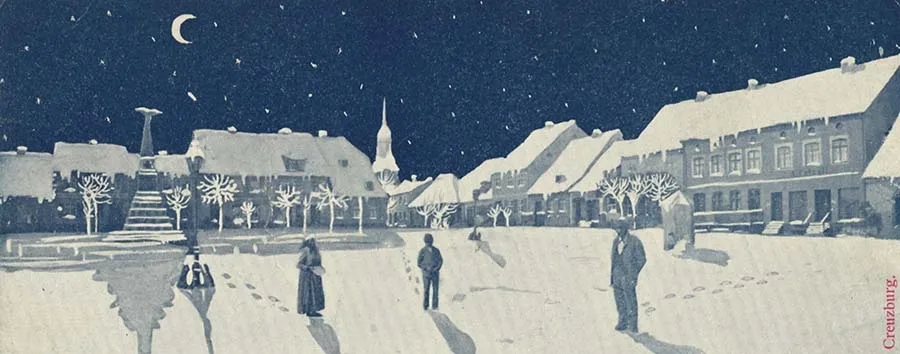
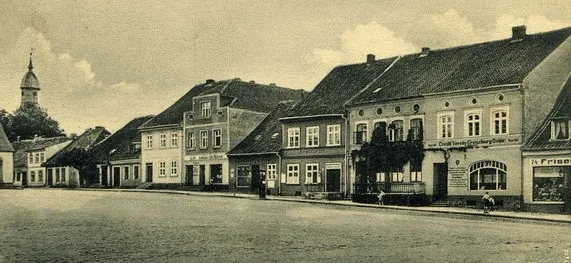
On 31 January 1315, the settlement by Kreuzburg Castle was granted Kulm town rights by the Marshal of the Order, Heinrich Plotzke. In that same year, 1315, a church was built in Kreuzburg.
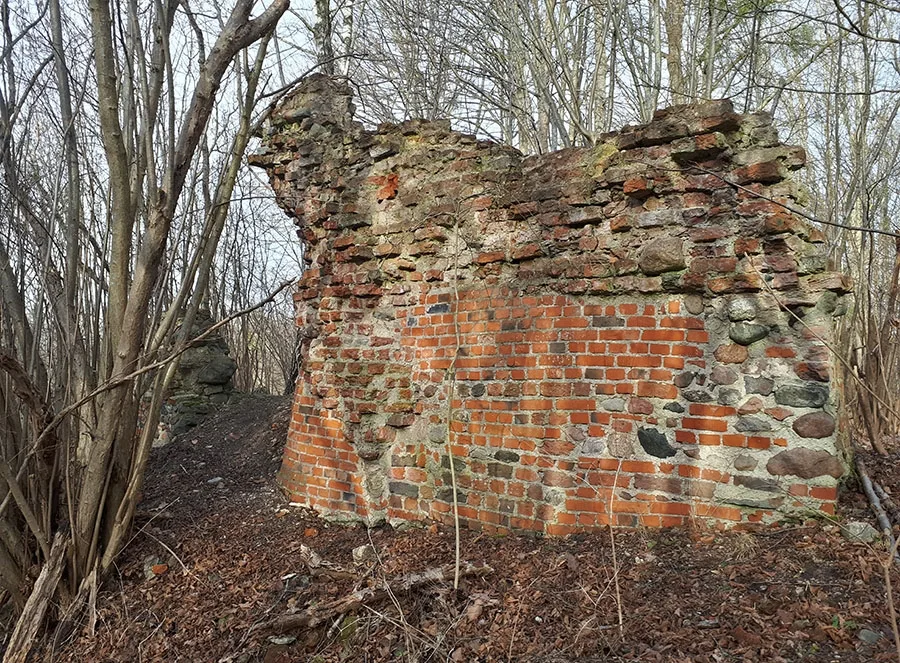 What was left of Kreuzburg Castle in 2023.
In the first year of the Thirteen Years' War (1454–1466), the castle was captured by forces of the Prussian Confederation. As early as 1455, however, the Order won it back. Kreuzburg came under attack several times after that, and the town was repeatedly plundered and burned, but the Poles and the supporters of the Prussian Confederation never managed to take the castle itself. The Second Peace of Thorn lists Kreuzburg Castle among the possessions that remained with the Teutonic Order. The debts the Order was left with after the Second Peace of Thorn forced Grand Master Ludwig von Erlichshausen to pledge Kreuzburg for 2,383 marks to the mercenary captains Anselm Tettau and Michael Greusing. In 1497 it was bought back by Bishop Johannes of Riesenburg, and in 1505 it passed to his successor, Hiob von Dobeneck.
In 1520, during the Horsemen's War (1519–1521), Kreuzburg was attacked by the Poles but held out. After the secularization of the Order, Kreuzburg Castle changed hands several times until, in 1565, Duke Albrecht gave it to his favourite, the adventurer Paul Skalich.
After Skalich fled in 1566, the castle was left without proper care and began to fall into ruin. Several Prussian noblemen owned it in turn, but none of them stayed long. In 1585 the state bought Kreuzburg back. In the 17th and 18th centuries Kreuzburg finally settled into the life of a provincial town. The castle was steadily taken apart for building material. By the end of the 18th century only small remnants of walls and the foundations were left. In 1881 the owner of the local mill, a man named Reichermann, organized archaeological excavations at the castle. Today all that remains of Kreuzburg Castle is a small fragment of wall and the hill on which it once stood. Like Balga Castle, it is recommended to visitors armed with old plans of the castle and a vivid imagination. Alas, standing on the castle hill, you can imagine far more than you can actually see.
Photos on this page: Bildarchiv Ostpreußen, bildarchiv-ostpreussen.de
Translated from Russian with the help of AI (Claude, Anthropic), October 2026.