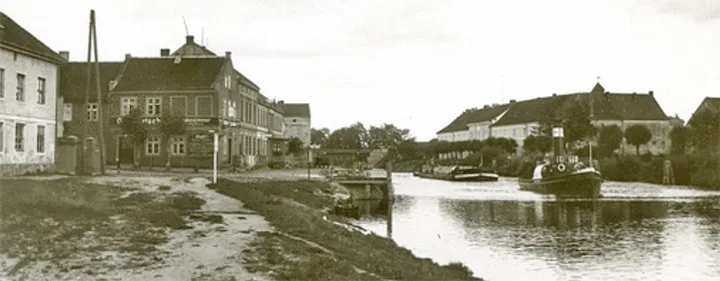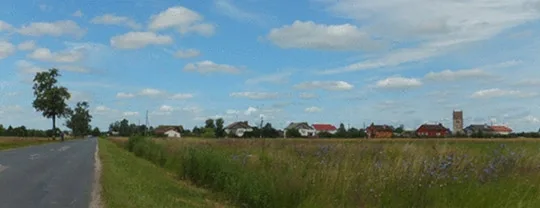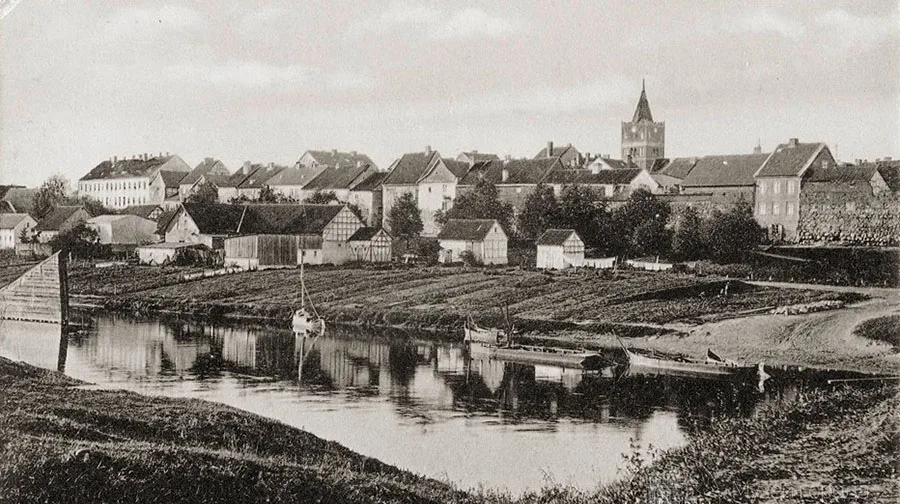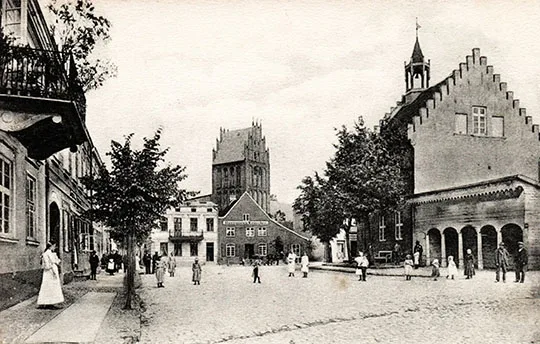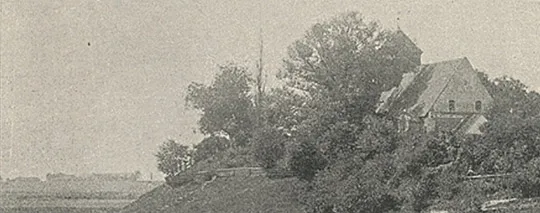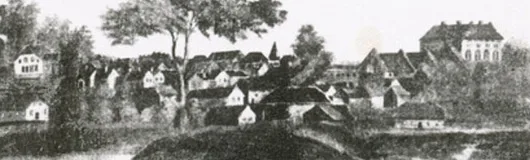
The Order's troops were guided to the fortress by Tirsko, a Prussian who had converted to Christianity. The stronghold occupied an exceptionally favourable position — a plateau overhanging the Alle (Lava), with a stream nearby on which a mill could be built. It is hardly surprising, then, that in that same year, 1256, the Order founded a timber-and-earth castle here. Until the mid-14th century the castle buildings remained wooden, and so in 1319 and 1347 the castle was burned twice by the Lithuanians during raids on the Order's lands. After this second failed defence, and given that in 1348 the castle had become the seat of a local administrator, the Kammerer, it was decided to rebuild Gross Wohnsdorf in stone. This happened in 1356 — or at least so the foundation documents that have been found state.
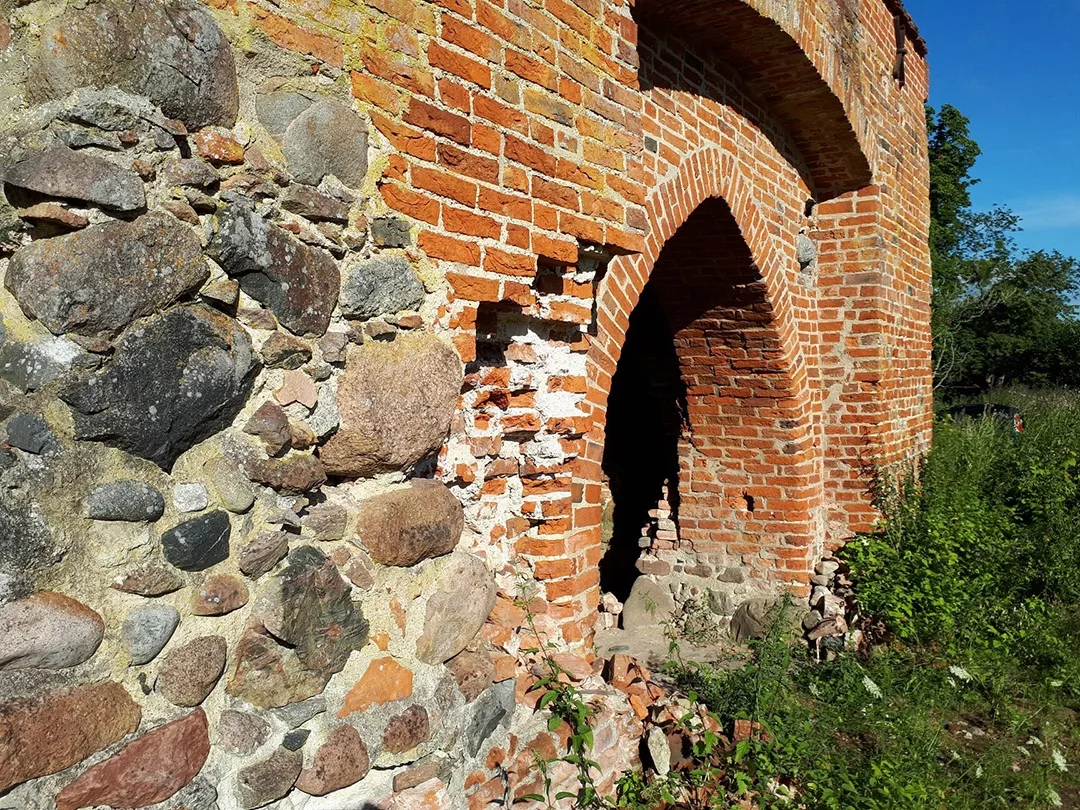
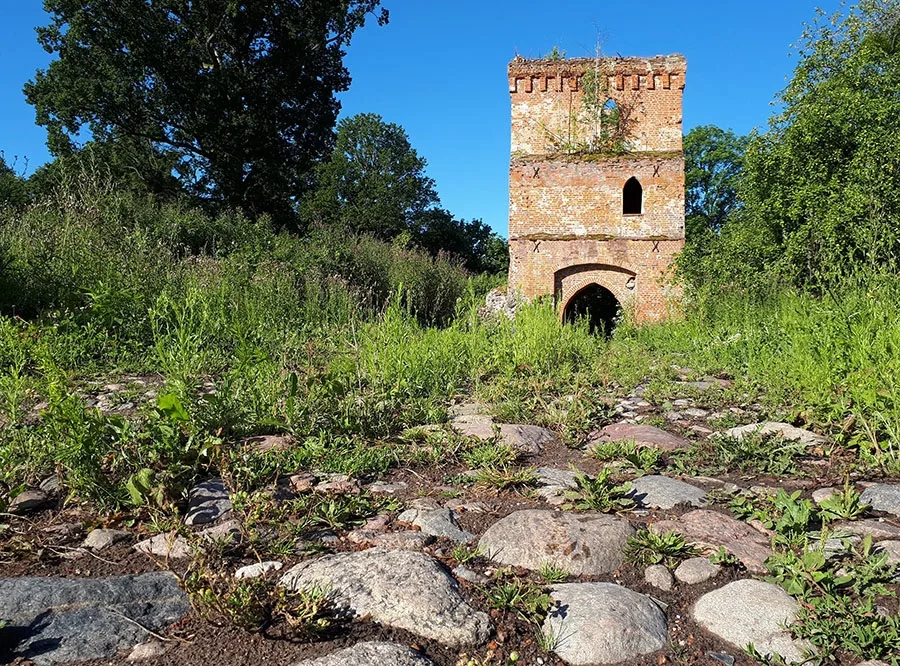 The picturesque ruins of Gross Wohnsdorf Castle in the village of Kurortnoye, Pravdinsk Urban District.
The new castle was a quadrangle with a gate and a gate tower (pictured above). Adjoining it was an extensive outer bailey, roughly three times the size of the castle proper. At about the same time a settlement grew up next to the castle; today it is the village of Kurortnoye in the Pravdinsk Urban District.
After the Thirteen Years' War (1454–1466), the castle was handed over to the mercenary commander Hans von Weyr in settlement of debts. Gross Wohnsdorf subsequently changed hands a couple more times until, in 1702, it became the property of the von Schrötter family. The outer bailey was demolished and an estate was built in its place, whose buildings have survived to this day. After a fire in 1790 the castle was restored and given elements of the classical style. Immanuel Kant was a frequent visitor here, coming to see the von Schrötter family, including Friedrich Leopold, the future Oberpräsident of East Prussia, whose rooms were located in the gate tower itself. In 1830 the castle suffered a devastating fire, after which it was never rebuilt. Only the gate tower was repaired; the remaining buildings were dismantled for building materials. The tower survived the war and passed to the Soviet settlers in quite tolerable condition, but complete neglect meant that over time first the tiled roof and then the floors between storeys collapsed. Fishermen and tourists who came to the Lava lit campfires inside the tower. In 2007 the tower of Gross Wohnsdorf Castle was granted the status of a cultural heritage site. And not long ago an enthusiast settled next to the site; he guards Gross Wohnsdorf and restores it as far as his means allow.
Photos on this page: Mikhail Ogorodnikov (2020)
Translated from Russian with the help of AI (Claude, Anthropic), October 2026.