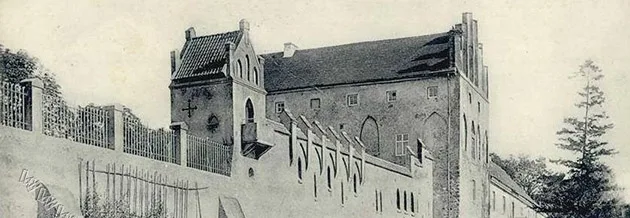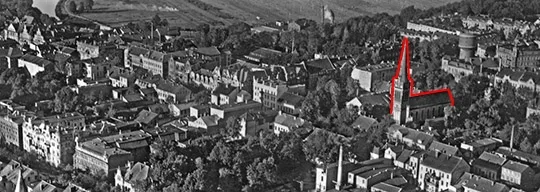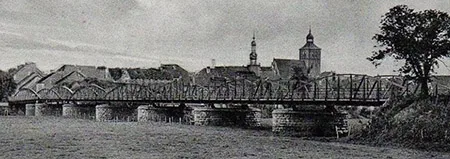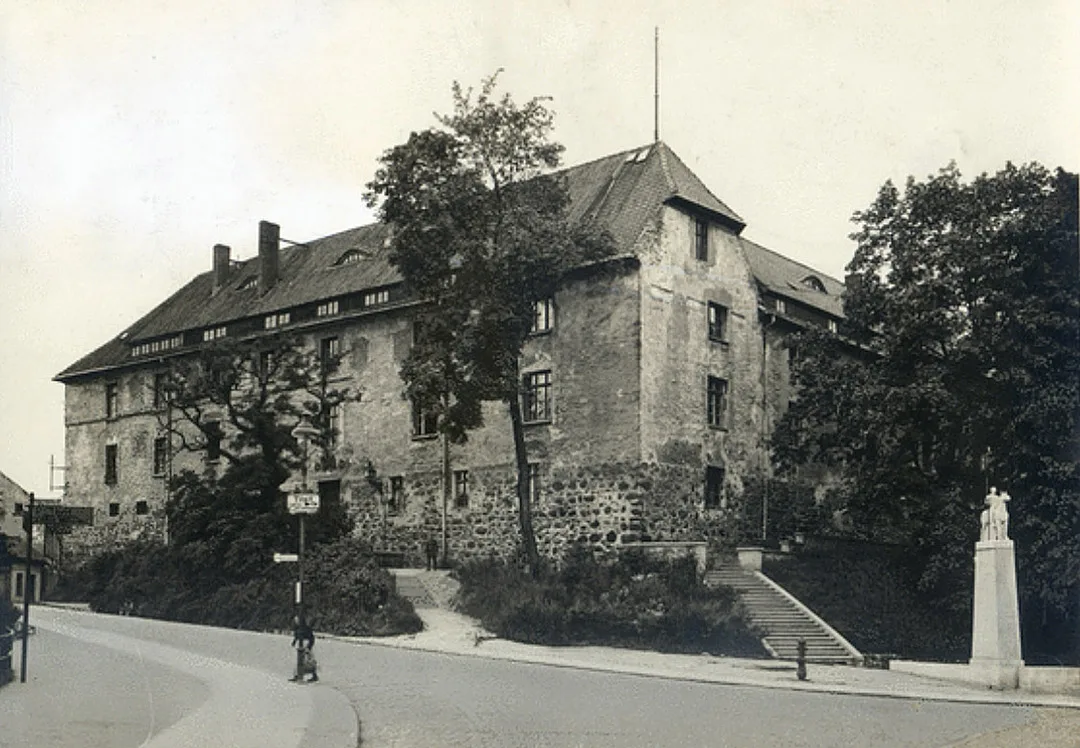
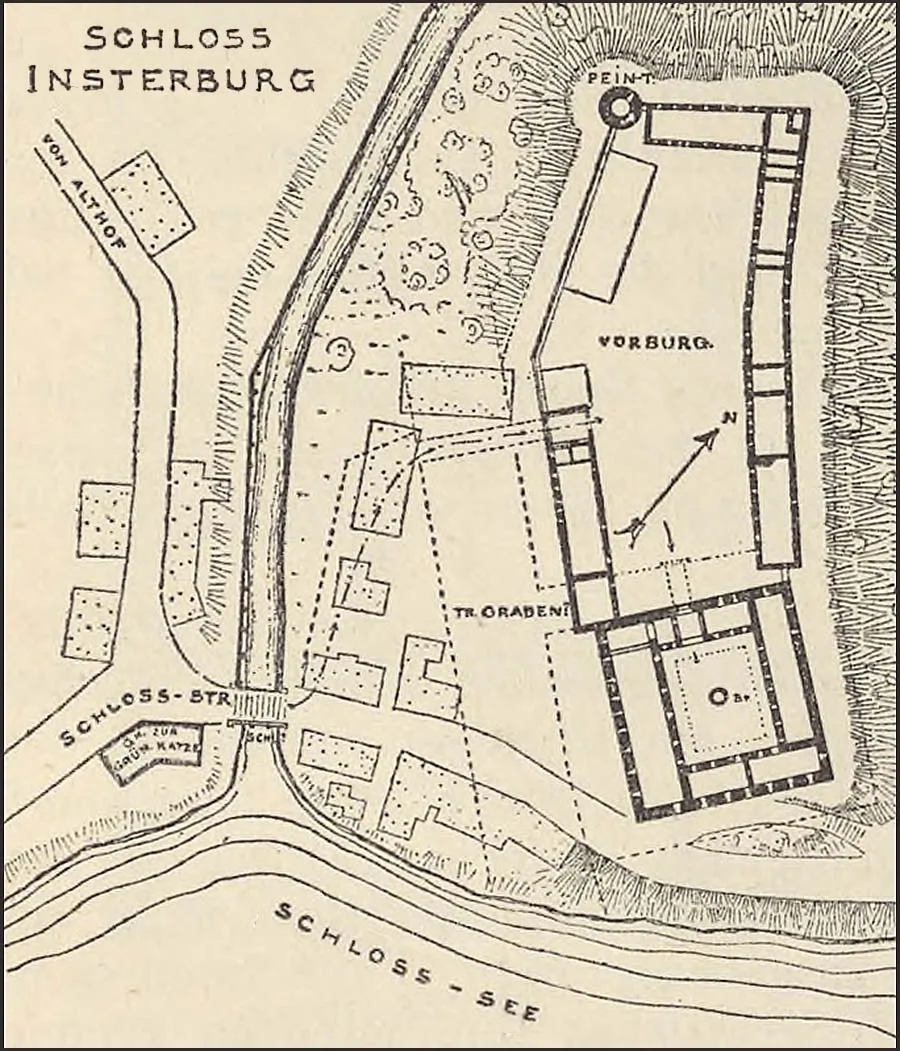
Once the main phase of construction was complete, the castle formed a quadrangular, almost square (45 x 44 m) complex of four buildings. The height and thickness of the walls, as well as the width of the castle buildings themselves, indicate that they were not built at the same time but over a fairly long period.
Adjoining the castle was a Vorburg roughly two and a half times its size. By founding a new commandery and building a fairly large castle as the commander's residence, the Order probably hoped to settle the lands of Nadrovia with colonists and Prussian peasants.
But constant Lithuanian raids and the availability of vacant land in other parts of Prussia prevented these plans from being realised. It soon became clear that the sparse peasantry of the subject territories could not adequately support an entire commandery, and so in 1347, after a powerful and devastating Lithuanian attack, it was abolished. The castle became the seat of a Pfleger, that is, one rank lower in status, and was now subordinate to the commandery in Königsberg. Even so, Insterburg played an important role in the life of the Order in the 14th century. On the one hand, it was a staging post for the knights of the Order and its "guests" – crusading knights from Europe who came to Prussia to take part in campaigns against Lithuania – on their way to the Lithuanian border near Ragnit (Neman). There is evidence that the future King Henry IV of England stayed at Insterburg before one such campaign. On the other hand, Insterburg was a forward stronghold of the Order that bore the brunt of Lithuanian invasions. And while the first role brought the Pfleger's district some income, the second threatened it with ruin.
For a long time Insterburg remained a very dangerous posting. Suffice it to say that the castle was attacked by the Lithuanians in 1347, 1366, 1367, 1376 and 1403, and on at least two occasions, in 1367 and 1376, it was captured and burned. It was once again besieged and destroyed in 1457, during the Thirteen Years' War (1454–1466) between the Order and the Prussian towns.
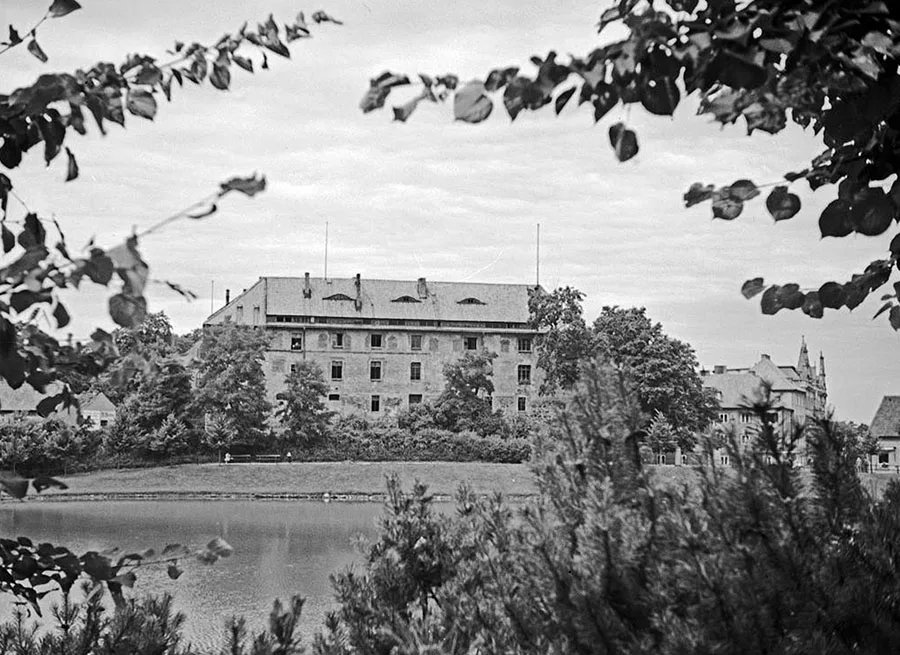
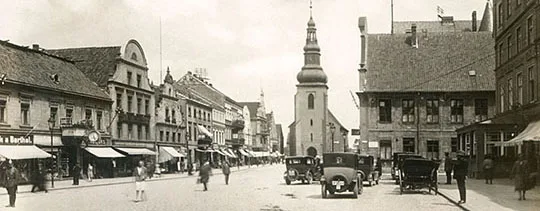
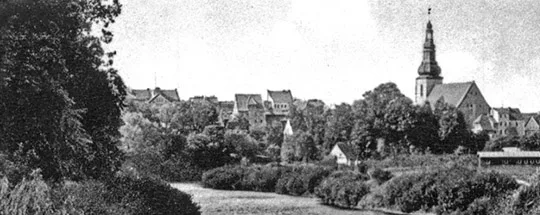
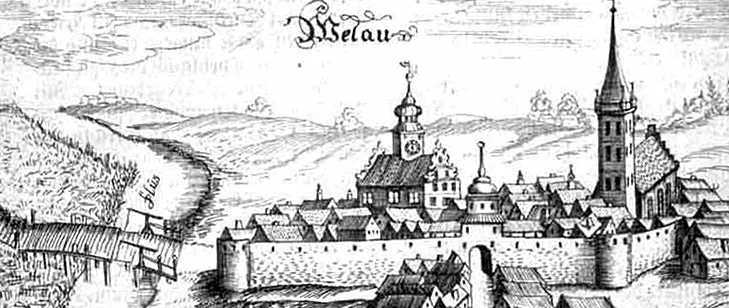
After the secularisation of the Teutonic Order, Insterburg lost its military importance but gained an administrative one. The settlement near the castle grew and received town rights in 1583. At the end of the 16th century the castle itself became the centre of a Kammeramt, which administered 13 districts known as Schulzenämter. The castle housed administrative bodies, including a court, with a prison in the tower of the Vorburg. The need to accommodate officials here led to repeated alterations of the castle buildings. During the Napoleonic Wars the castle was converted into barracks for the French corps of Marshal Ney, and in 1812 Napoleon ordered the premises to be turned into a hospital.
From the late 19th century Insterburg Castle housed the barracks of an uhlan regiment and judicial bodies, while some of the rooms were given over to a museum.
When the Red Army took Insterburg in 1945, the castle came under fire and partly burned down. After the war the surviving rooms were used for utility purposes; they were never repaired and continued to deteriorate. In the mid-1960s extensive demolition of the dilapidated buildings was carried out at the castle, and part of the castle walls and the tower of the Vorburg were pulled down. This state of affairs lasted until the 1990s, by which time the north wing of the castle had collapsed completely, while of the others only parts of the load-bearing walls remained. The buildings of the Vorburg fared better and have survived to the present day.
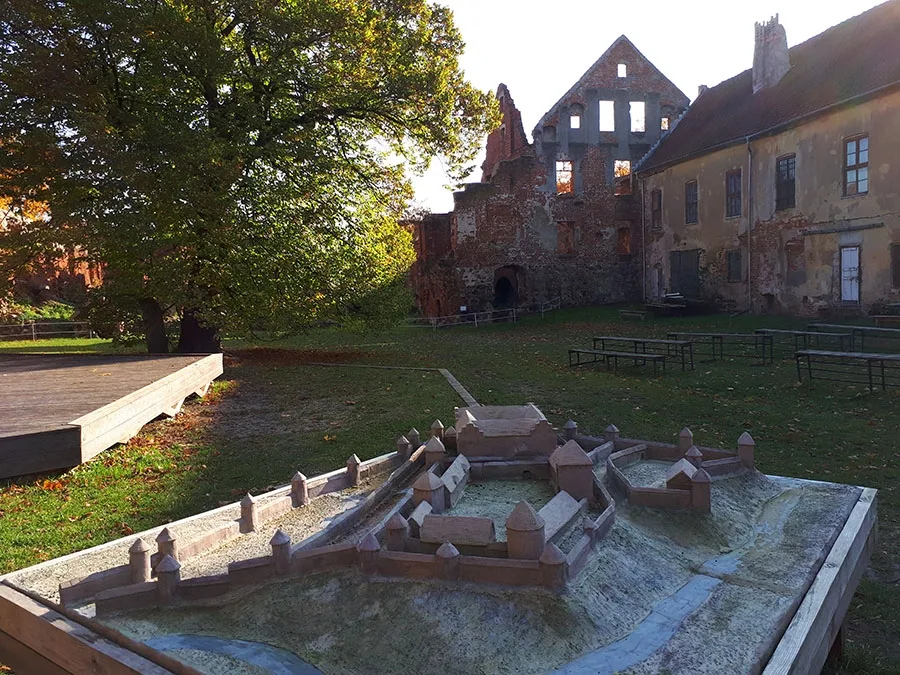
Today the castle is home to the non-profit Dom-Zamok (House-Castle) Foundation. The organisation develops and runs educational, cultural and academic projects, and also experiments with new forms of activity in tourism and leisure.
The castle hosts a number of permanent institutions: a history laboratory, a centre for applied cultural studies, a centre for international cooperation, an art gallery and a history and arts club. The museum exhibition presenting the history of the town includes a diorama of the Battle of Gross-Jägersdorf.
Illustrations: Bildarchiv Ostpreußen, bildarchiv-ostpreussen.de, Mikhail Ogorodnikov
Translated from Russian with the help of AI (Claude, Anthropic), October 2026.