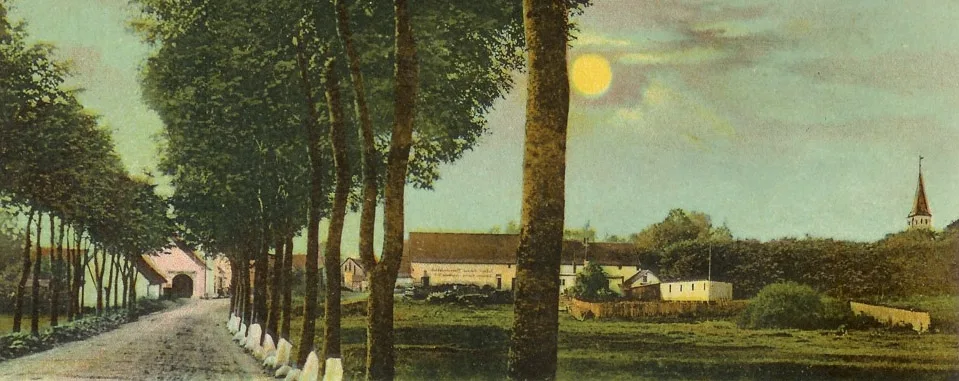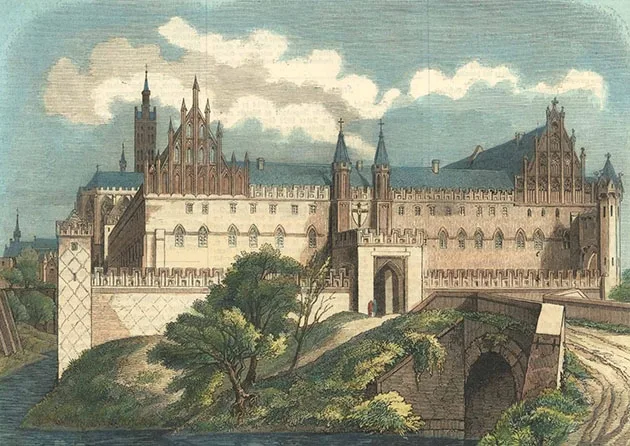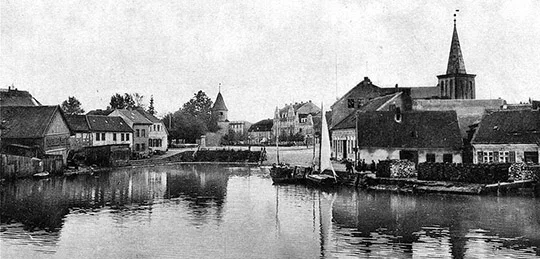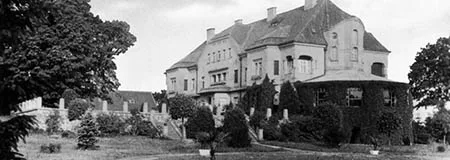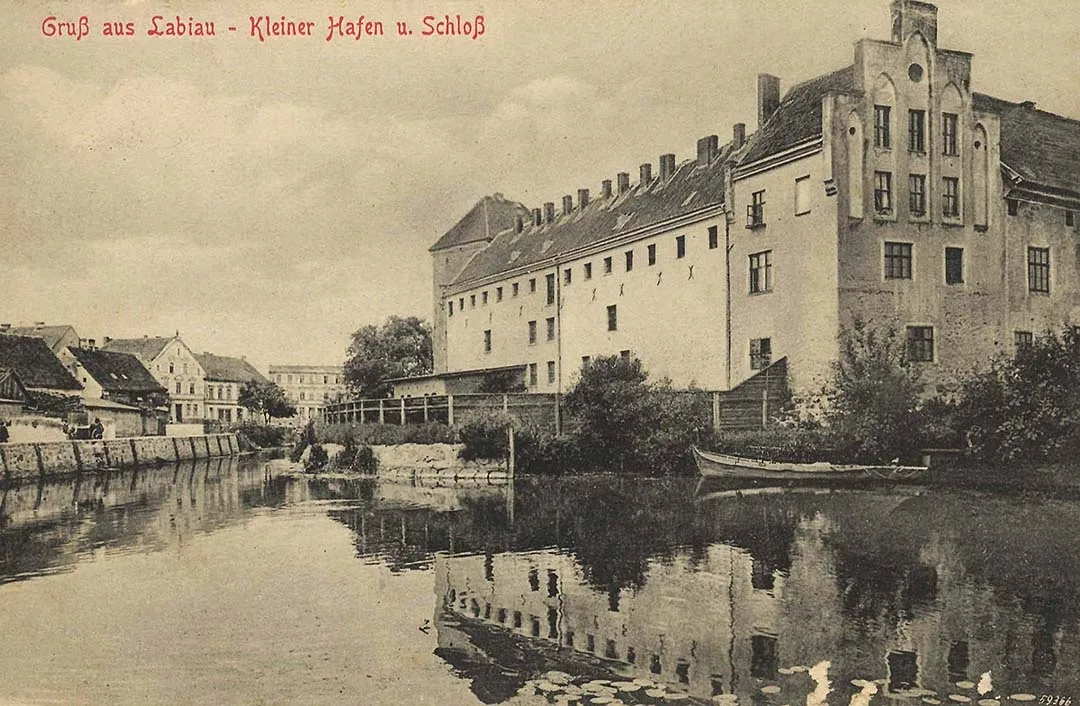
In the early 14th century the Order began to acquire substantial funds for modernising its fortifications, while a new adversary, the Lithuanian princes, whose forces were reinforced by warriors from the Russian lands and the Horde, made it plain that wooden castles posed no serious obstacle to them. So in 1360, after two devastating Lithuanian raids in 1347 and 1352, Labiau Castle was rebuilt in stone “with all the trimmings”. The castle was not very large, but it had four wings and two square towers. At the same time an irregularly shaped outer bailey (Vorburg), vaguely resembling a quarter circle, was built at Labiau Castle. The Vorburg contained a gate with a gate tower, and the Church of St George was also built there; it survived as a utility building until 1880. The dansker of Labiau Castle was built into the wall. The ground floors housed the domestic and service rooms, including the kitchen and the bakery. The upper floor held the living quarters and the remter, a hall for assemblies and ceremonies.
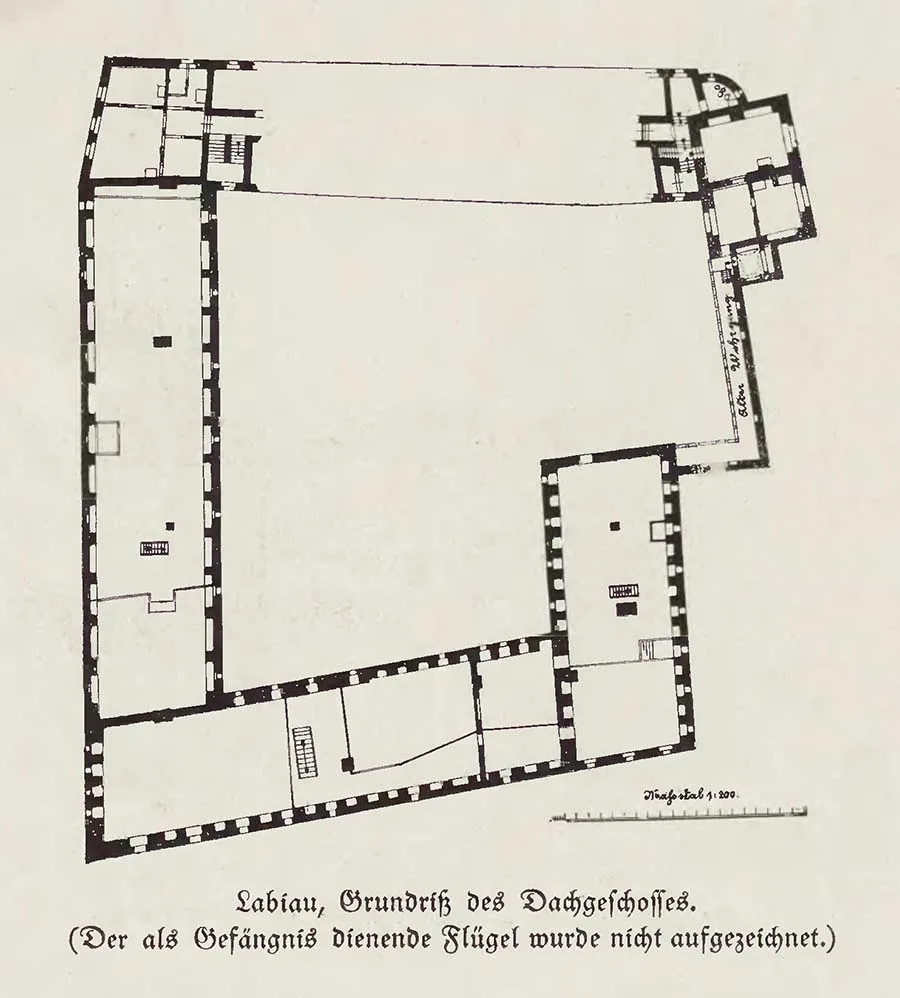
In the 14th–16th centuries Labiau Castle housed the administration overseeing the construction of the canal later named the Grosser Friedrichsgraben (Polessk Canal).
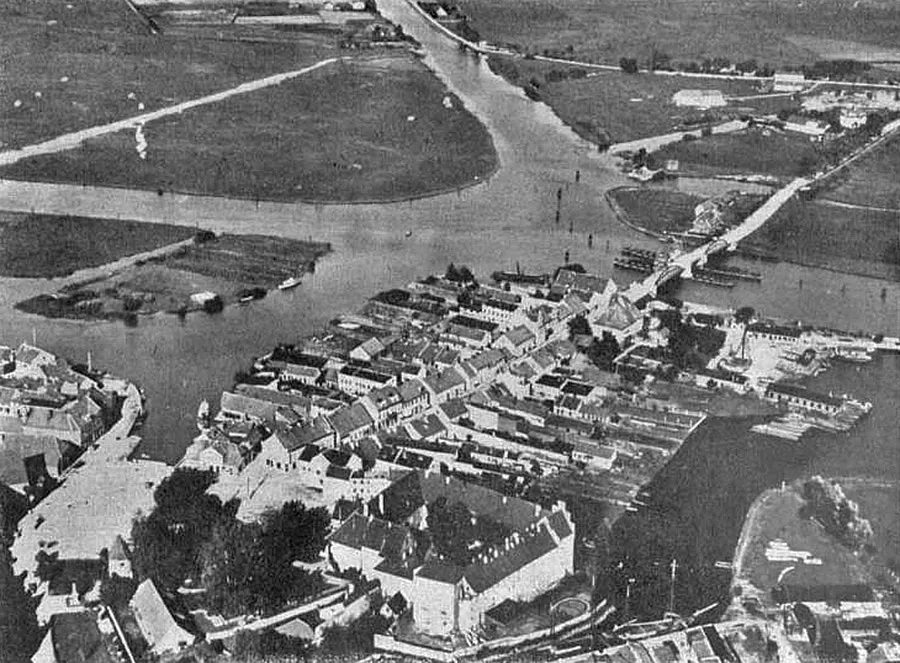
The canal was completed by 1410, but for another 120 years it continued to be widened and periodically dredged. It was a unique undertaking for its time, intended to ensure reliable navigation from Königsberg to Ragnit without having to go out into the sea or the lagoon. Interestingly, for a time the work on the canal was directed by a woman named Katharina Truchsess von Wetzhausen (d. 1526).
During the Thirteen Years' War (1454–1466) Labiau remained loyal to the Order. Troops of the Prussian Confederation from Wehlau (Znamensk) and Allenburg (Druzhba), who attacked the castle at the very start of the war, met stout resistance from its garrison. They failed to take the castle.
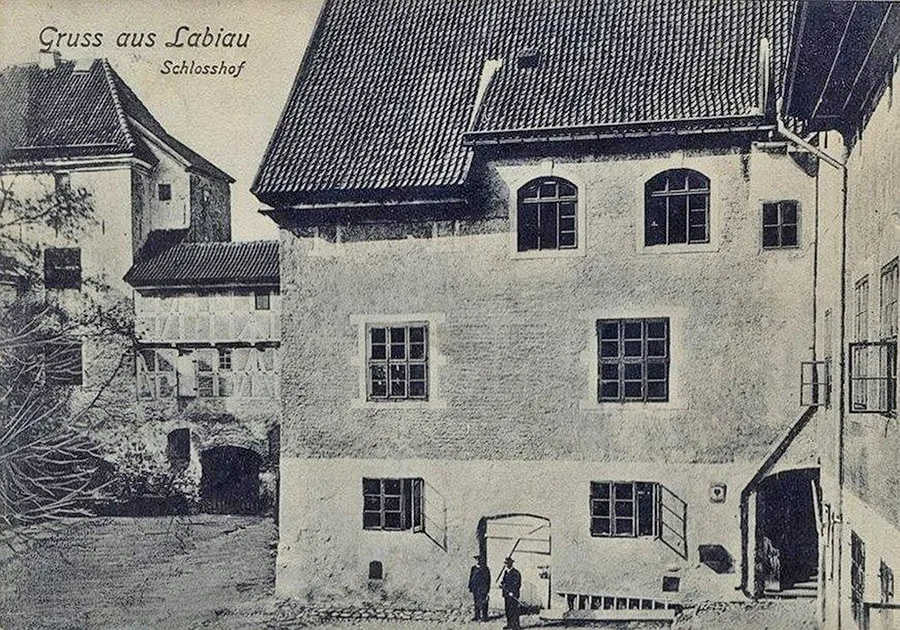
After the secularisation of the Order the town of Labiau became the seat of an Amt, and the castle of the same name was given as a wedding present to Albrecht's first wife, Dorothea; then, after Dorothea's death and Albrecht's remarriage, it passed to his second wife, Anna Maria.
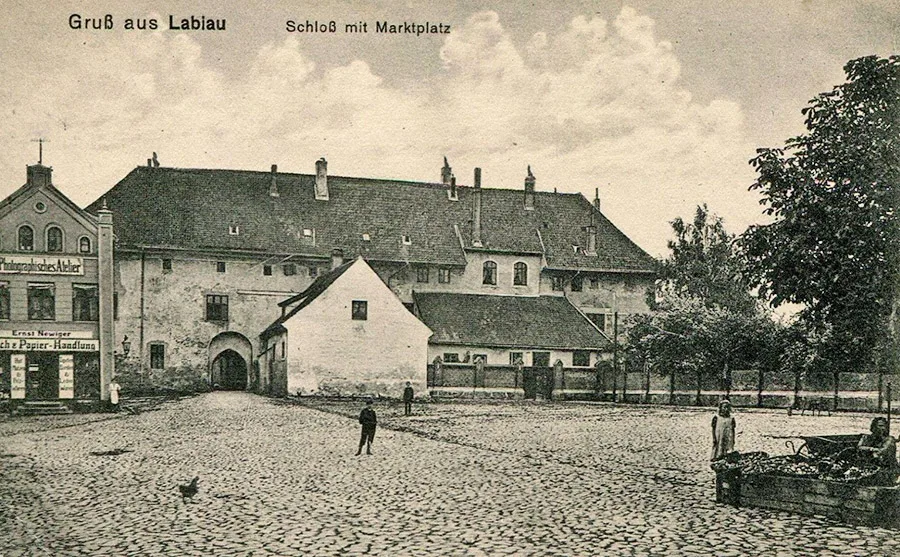
Under the Great Elector Frederick William, Labiau Castle became the citadel of the fortress of the same name built around it. From 1818 it served as the residence of the Landrat, the head of Labiau District, and the castle also housed a court and a prison. The Vorburg was partly demolished and the moats were partly filled in. Yet the castle itself remained quite attractive from an architectural and historical point of view.
In 1945 the castle was converted into a prison. It served this purpose until 1963, when a fire broke out there. But even after the fire, as photographs show, the half-timbered walls and part of the tiled roof survived. Of the Vorburg, the gate tower and the remains of the defensive walls were still standing. Later the building was used by the Polessk branch of the Leningrad Agricultural Institute, and then it was handed over to the Yantar factory as production premises. When the castle was converted into workshops, the interiors and the outer walls suffered, and the defensive walls and the gate tower were demolished. In the 1990s the castle became municipal property. One corner of it was given over to the town museum, and the rest was occupied by various commercial businesses. At present the museum is effectively closed. The cellars from the Order's time and some elements of the Order-era rooms have survived.
Photos on this page: Bildarchiv Ostpreußen, bildarchiv-ostpreussen.de
Translated from Russian with the help of AI (Claude, Anthropic), October 2026.