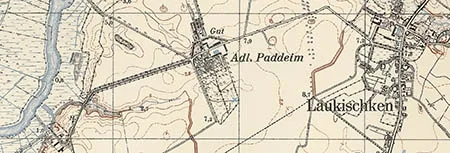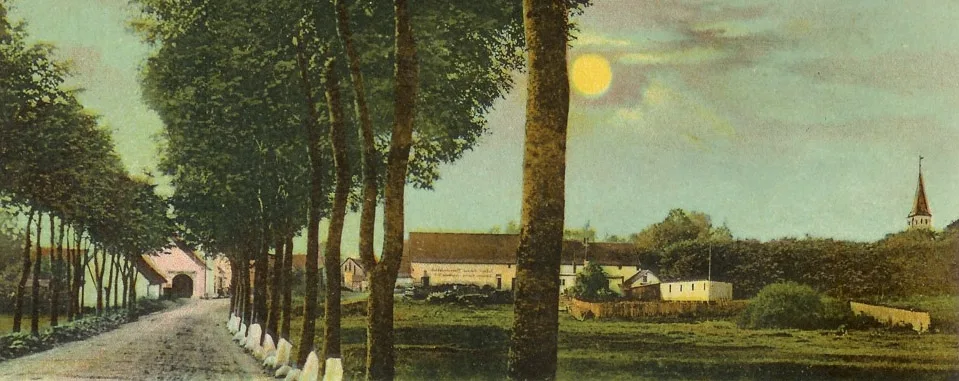
Curiously, the present-day town of Polessk (Labiau) and the settlement of Saranskoye (Laukischken) share the same official founding date: 1258. This, however, is connected not with the castles but with the mention of Prussian villages on these sites in the treaty dividing the Prussian lands between the Order and the bishop.
In the 1270s both castles were erected as earthwork fortifications with timber buildings. In the early 14th century the Order began to have substantial funds available for modernising its fortifications, while a new enemy — the Lithuanian princes, whose forces were reinforced by warriors from the Russian lands and the Horde — clearly demonstrated that wooden castles posed no serious obstacle to them. And so, as early as 1327, Lauken was rebuilt in stone. From then on it differed considerably from Labiau in its layout and in its importance to the life of the Order's state.
Lauken was built as a small castle amounting to a quarter of the full standard quadrangle; that is, it had a single wing, with the rectangular outline completed by three defensive walls. The castle had one square tower in its south-eastern corner. It appears from time to time in lists of castles right up to the secularization of the Order (including in the Treaty of Kraków of 1525), but no events of any significance took place around it.
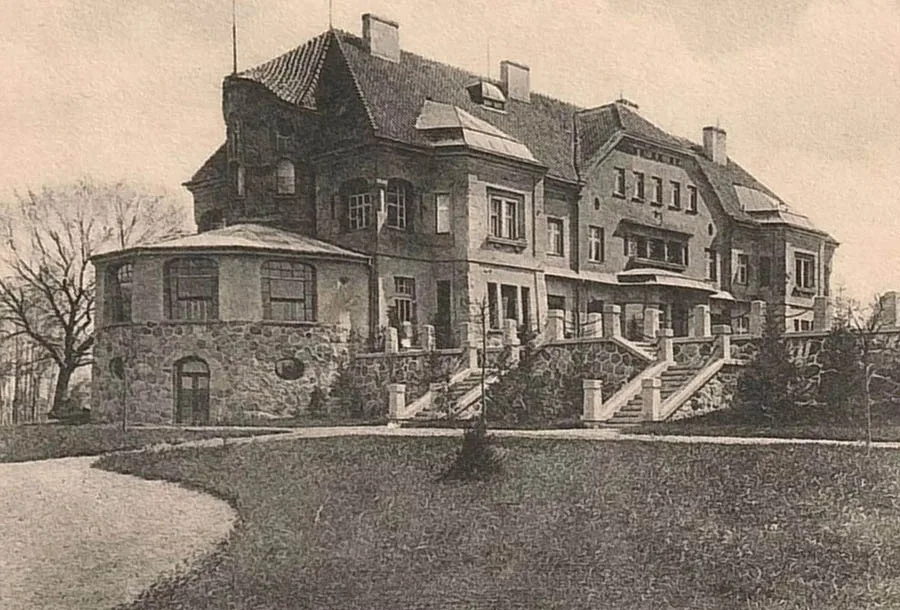
In Duke Albrecht's time, partially rebuilt for civilian use, it served as a hunting lodge.
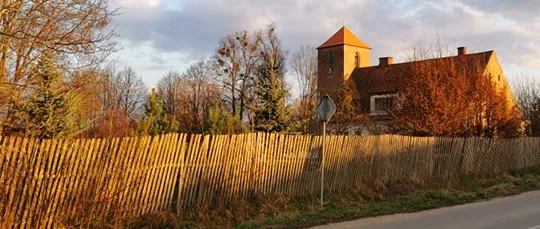
In 1581–1584 the castle was rebuilt once again, this time as a country residence. On this occasion the reconstruction was radical: of the knights' castle, only the cellars and foundations survived. The work was directed by the court architect Blasius Berwart.
At the end of the 19th century Lauken was acquired by the von Biberstein family. The castle's last owner was Ludwig von Biberstein, who was imprisoned as a political opponent of the Nazi regime (in our terms, a member of the opposition) and was soon found hanged in his cell.
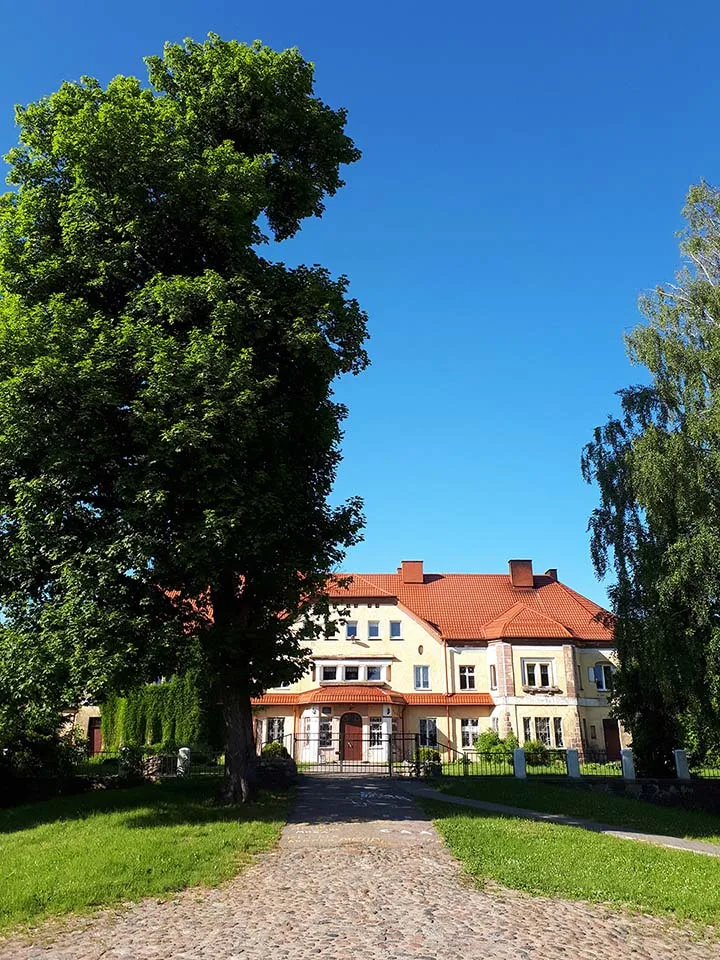
After 1945, a school was opened in the former estate at Lauken, and the castle has kept this role to this day. The original cellars and foundations are still preserved, and the school even has an amateur museum devoted to the history of Lauken Castle.
Photos on this page: Bildarchiv Ostpreußen, bildarchiv-ostpreussen.de, Mikhail Ogorodnikov (2021)
Translated from Russian with the help of AI (Claude, Anthropic), October 2026.