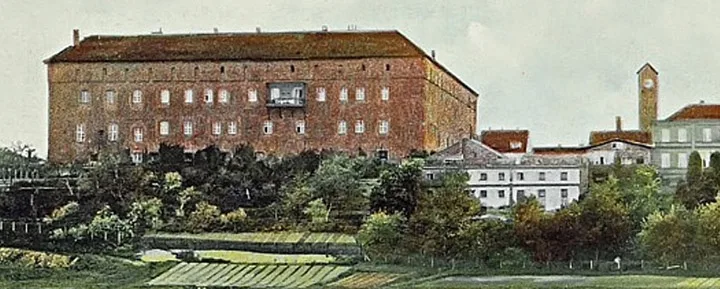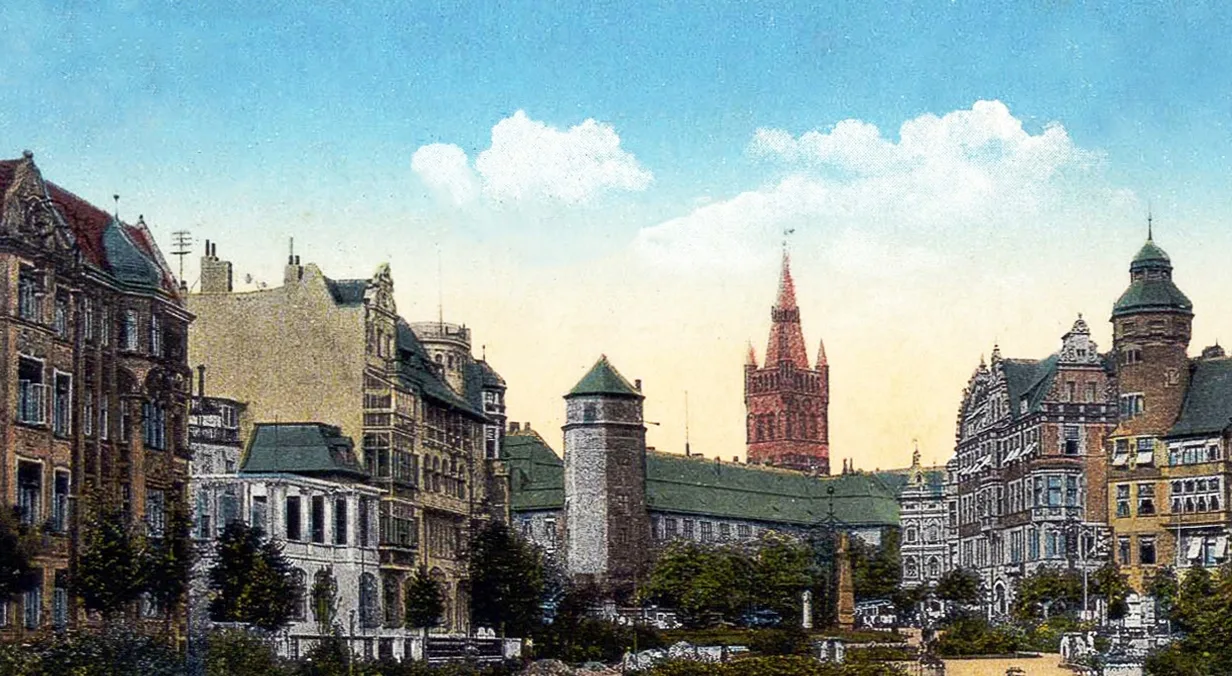
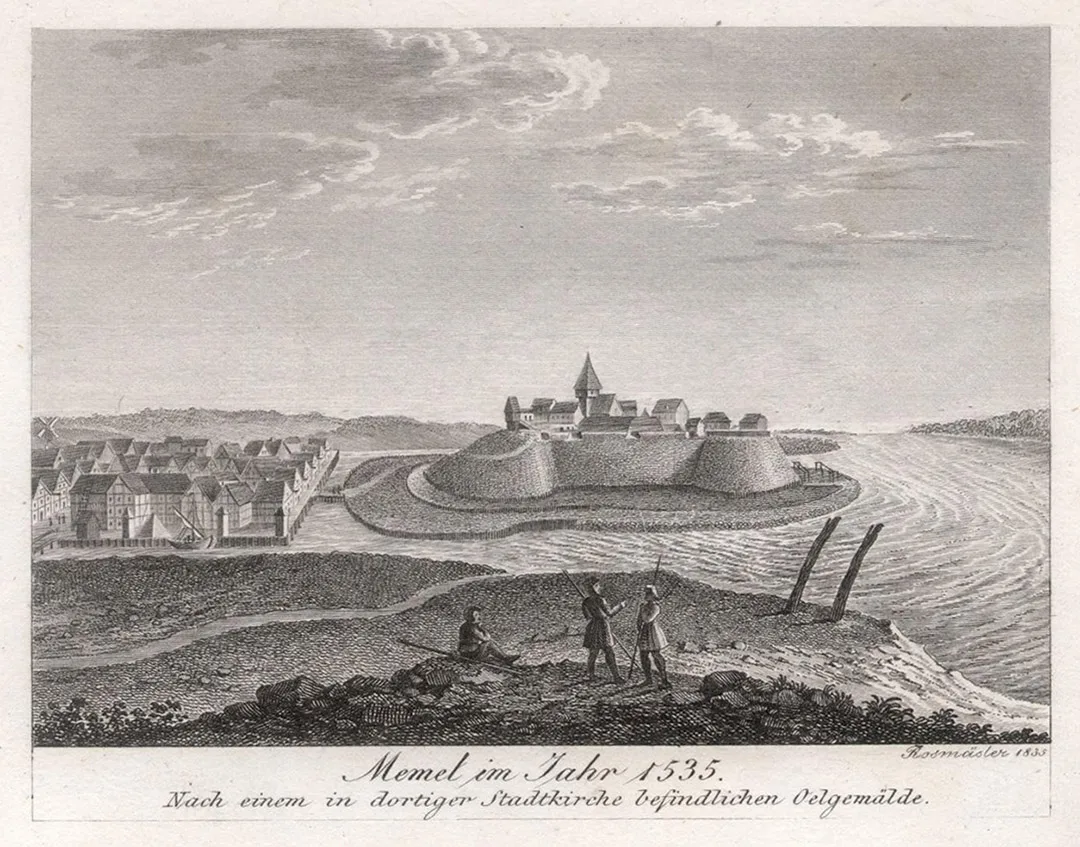
On 1 August 1252, the bishopric's chancery issued a document confirming the agreement of 29 July. Under it, the bishop undertook to support the Order financially for 5 years, counting from the day construction began, and to provide 500 men for the work over the course of a year. Once that term had expired, the parties were to divide the castle, the town and the adjoining lands between them: two parts to the Order and one part to the bishopric. The castle was completed that same year, 1252. It was a rather cumbersome wooden structure, and it soon burned down during a Samogitian attack. A stone castle was built in its place fairly quickly, and beneath its walls rose the town of Memel, named after the river at whose mouth it was founded (today the Neman, German: Memel).
Under the agreement, coins were to be minted at Memel Castle and to circulate throughout the Diocese of Courland, and the subjects of the Order and of the bishop were to enjoy the right of free trade throughout Courland.
On 8 February 1253, the town's boundaries were formally confirmed, and, in accordance with the agreement, a third of the town passed to the bishop. This unanimity between spiritual and secular authority was of strategic importance. It stemmed from Memel's highly advantageous location, which made the town a link between the Teutonic Order's Prussian possessions and the Livonian Order's Baltic lands. In the summer of that year, Samogitian and Sambian forces besieged Memel Castle but failed to take it. In response, Master von Sayn laid waste to the Samogitian lands, and in the autumn he rebuilt and strengthened the castle.
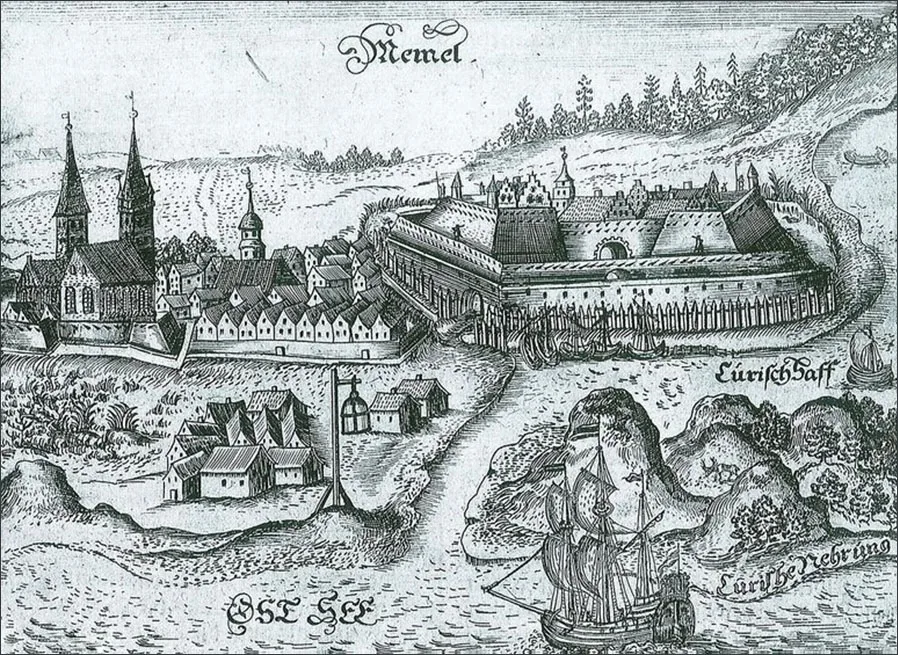
Memel was originally destined to become the capital of all Courland. The plan was to house there not only the province's sole mint but also the seat of the Courland cathedral chapter. As for the internal organisation of the new community, the original intention was to grant it Dortmund town law. The Order even considered naming the town Neu-Dortmund. In 1257, however, Memel received Lübeck law instead. This law was rather harsh, especially in its punishments for crimes against the state. Counterfeiters, for example, were executed “by boiling in water or by scalping.” Memel was also meant to become a place of settlement for colonists and to serve as a “gateway” to Livonia. By 1258 the town already had two churches. One, St John's, served the still small number of colonists, the German townspeople, while the other, St Nicholas's, served Lithuanians from the surrounding area. The castle church of St Mary appeared somewhat later and stood on the grounds of the cathedral chapter.
Lübeck was assigned the leading role in organising colonisation, as shown by a charter sent on 27 April 1261 by the Order's Vice-Landmeister in Livonia to the authorities and inhabitants of Lübeck. It called on them to come to Memel by sea before the onset of winter. The Order promised to grant settlers in fief “the vacant lands that formerly belonged to the slain apostate Curonians.” The size of the allotment depended on the colonists' social estate. The largest holding, 40 Saxon hides, was granted to a knight or to an “honest burgher arriving with a horse clad in armour.” For townspeople, then, taking part in colonisation offered a chance to raise their social standing and draw closer to the position of knights.
The first German colonists came to Memel from Holstein, Westphalia (Dortmund) and Lübeck. Their numbers, however, long remained small. At the beginning of the 16th century, some twenty families lived within the town limits, roughly 100–150 people. The suburbs were more populous: 143 families of non-German origin were registered there, and in the Middle Ages such families were denied town rights. Members of various ethnic groups settled outside the castle, but only Germans were permitted to live within the town limits.
According to the original plan, the town was to be the centre of the bishopric. Because of constant raids by the Samogitians, who inhabited western Lithuania, it held that status only very briefly. Peter of Dusburg, a 14th-century priest-brother of the Teutonic Order and author of the “Chronicle of the Prussian Land,” described the tragedy of 1323: “... The Lithuanians of Samogitia with their army took the stronghold of Memel ... the town itself and three nearby castles of the newly converted, the boats and other vessels, and all that could be consumed by fire, save only the castle in which the brethren lived, they reduced to ashes ...”.
In 1328 (according to other sources, in 1326), the Livonian Order, no longer able to defend Memel and its surroundings against the Samogitians, handed the castle and town over to the Teutonic Order in exchange for possessions in Estonia. The bishop was forced to leave the town together with the brethren of the Livonian Order. At the same time, the Teutonic Knights made a decision that would shape the fate of the Memel region for a long time to come. The border between the two provinces of the Order was moved north of the Neman, which meant that Memel passed from Livonia (the territory of future Latvia and Estonia) to East Prussia. The new rulers stepped up the recruitment of German settlers for Memel. German peasants, however, were reluctant to move to this foreign, distant and still undeveloped land, so the Order had to invite Lithuanian refugees who had been driven out of Lithuania for converting to Christianity, as well as Christianised Curonians, who were Germanised fairly quickly.
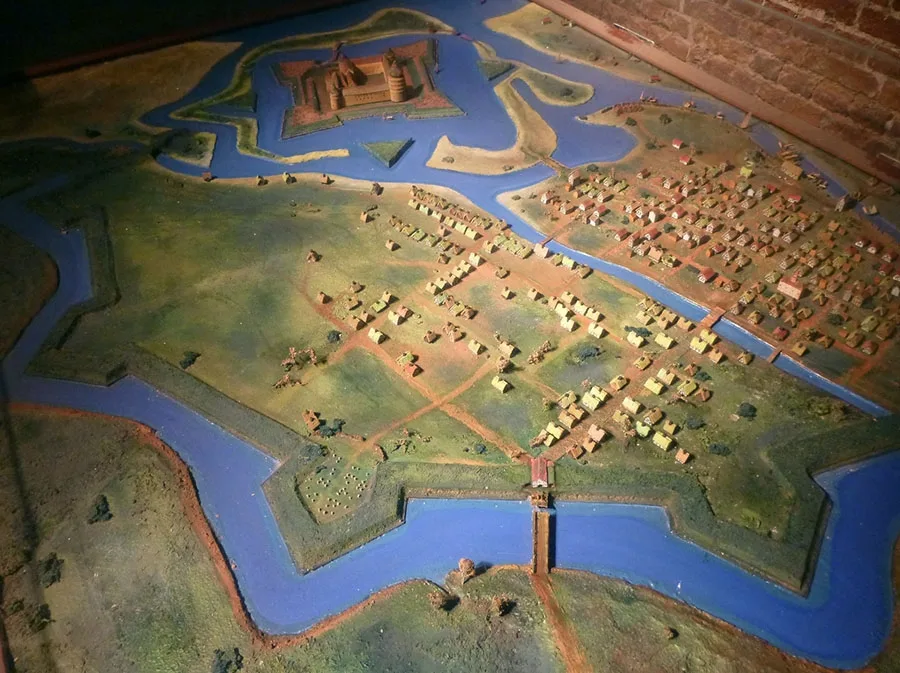
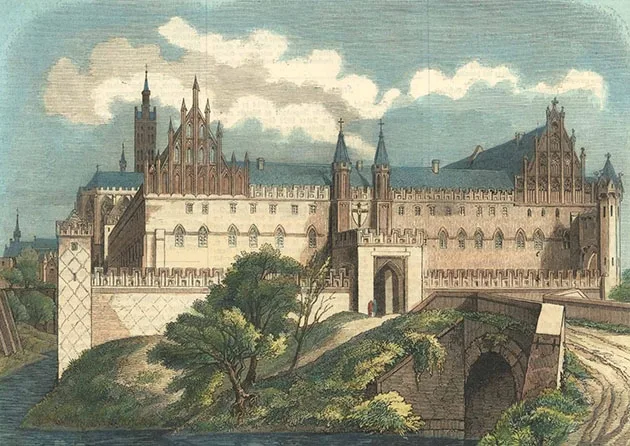
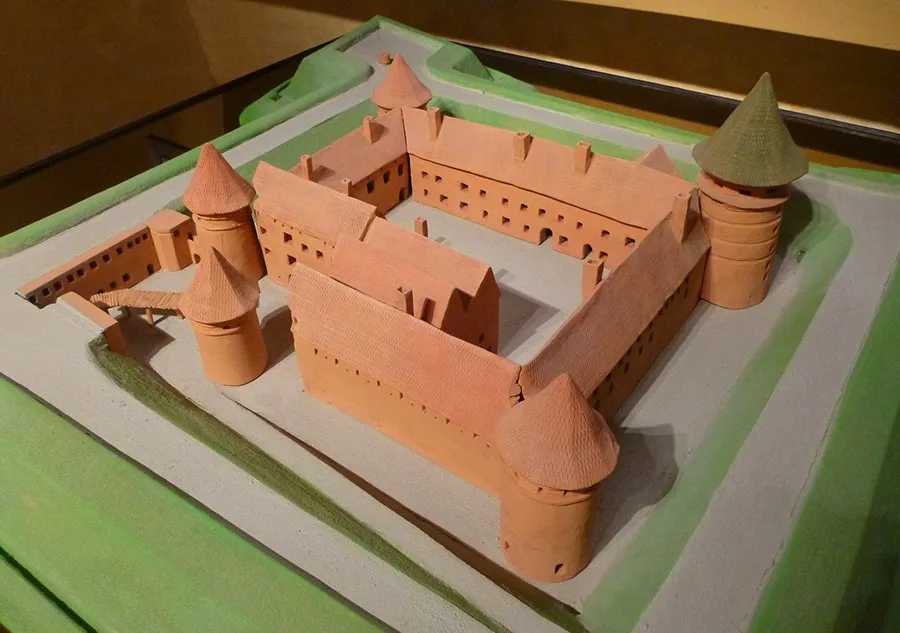
A model of medieval Memel in the Memel Castle Museum (top) and a model of the castle in the Museum of Lithuania Minor.
The Teutonic Knights knew all about this tribe's warlike nature from experience. Not only had the Curonians plundered the Swedish island of Öland in 1170 and captured and sacked Sigtuna, the political and religious centre of Sweden, in 1187; in 1193 they also dealt a heavy blow to a crusader army of Bremen Germans, Danes and Swedes that had landed in Courland. So heavy, in fact, that the Danes even came up with a prayer: “Lord, preserve us from the plague and the Curonians.” Adam of Bremen, the medieval North German chronicler, canon and scholasticus, advised Christians to keep well away from their shores, for Curonian pirates were considered the most merciless on the Baltic Sea.
Translated from Russian with the help of AI (Claude, Anthropic), October 2026.