In 1276, under the will of the Pomeranian duke Sambor, the lands of Mewe passed to the Order. The Commandery of Mewe was established at once, and after the Treaty of Milicz (1282) construction of the castle began, at first as a temporary wooden fortification. The work was directed by the first Komtur of Mewe, Dietrich von Spira (Dietrich von Spira). The builders used timber structures from the dismantled Potterberg stronghold in Kulmerland, which were brought to Mewe by water.
Almost immediately after the wooden fortification was completed, its rebuilding in stone began.
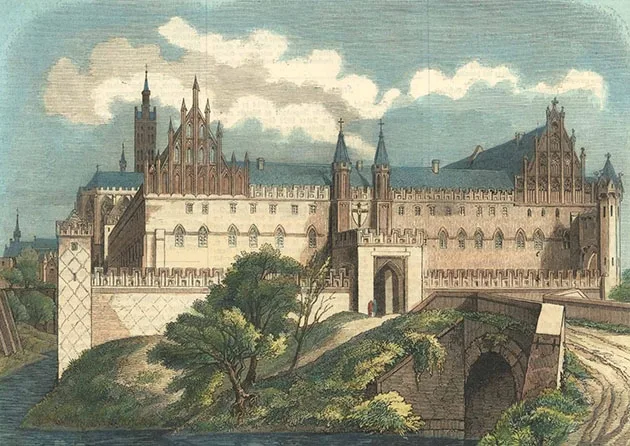
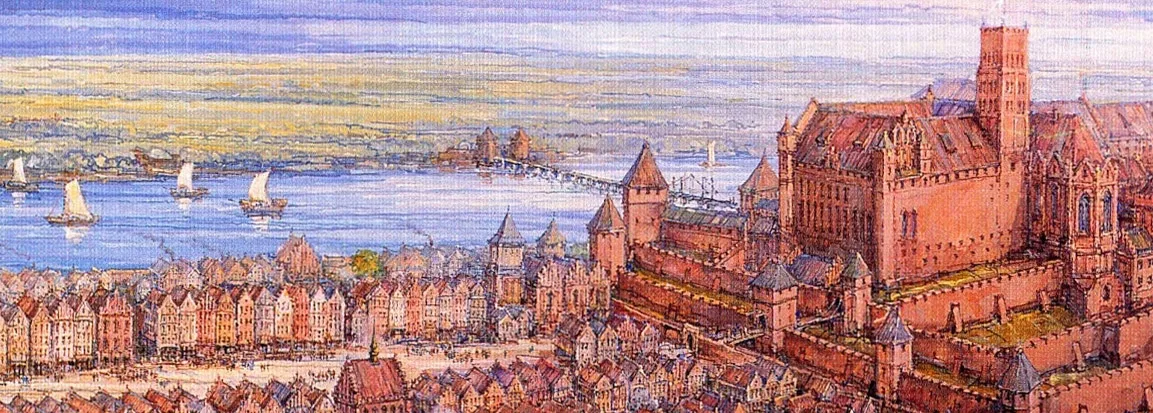
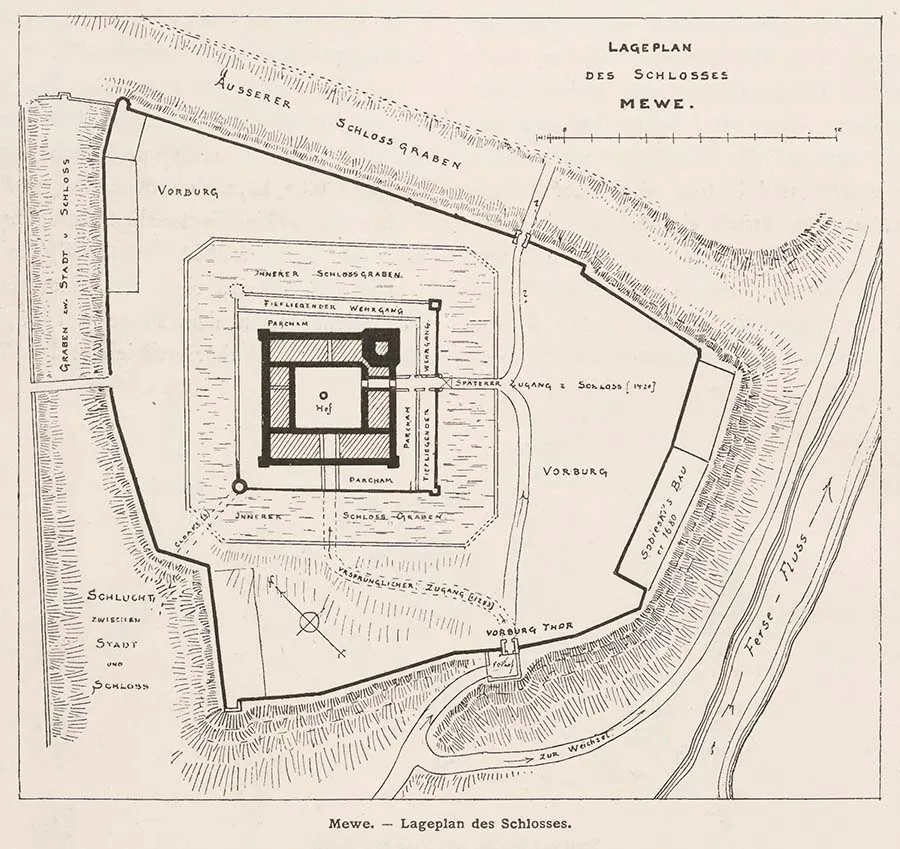
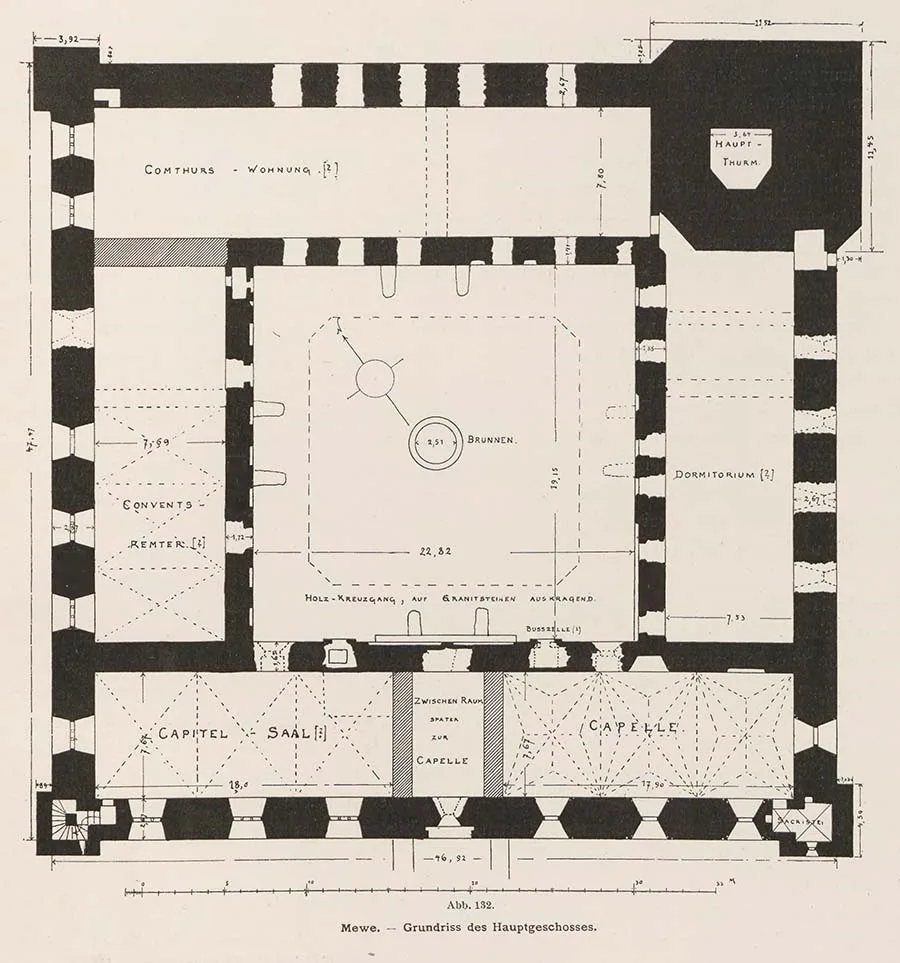
Work started with the defensive moats and the laying out of a quadrangle of defensive walls up to six metres high. At the corners of this quadrangle, towers were built projecting beyond the perimeter: three of roughly equal size and one considerably larger. Then the residential quarters were built. By that time German colonists had founded a settlement at the foot of the castle walls, and on 25 September 1297 the Landmeister of Prussia, Meinhard von Querfurt (Meinhard von Querfurt), granted it town rights under Kulm law.
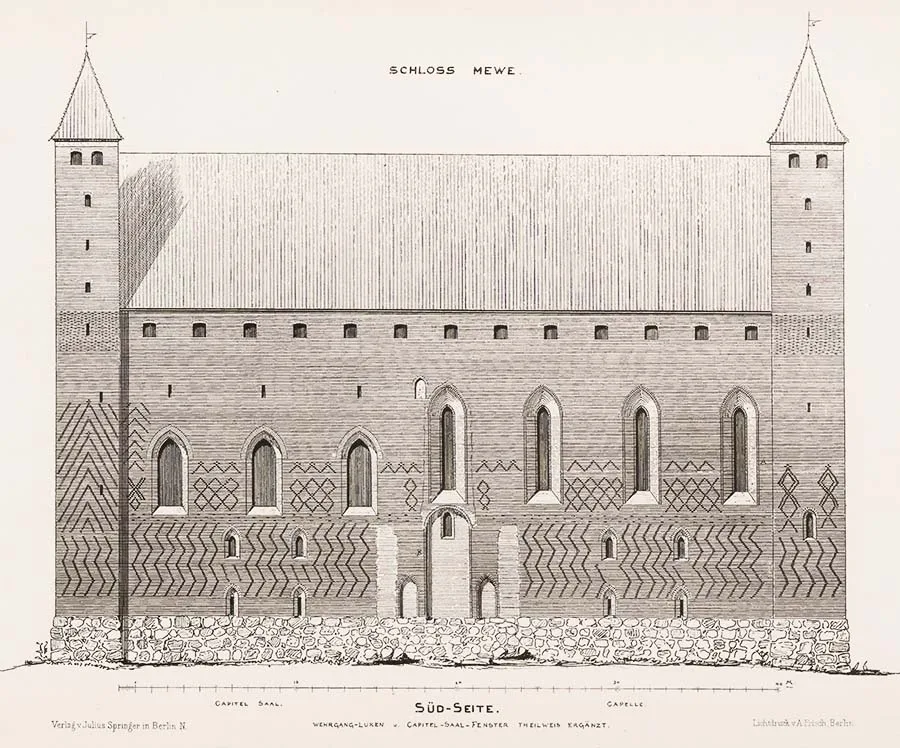
At the beginning of the 14th century, Mewe Castle was rebuilt: the walls and towers were raised, two wings were added to the main building, and wooden defensive galleries were built along the walls. At the height of the Order's power in the second half of the 14th century, Mewe Castle was its most important stronghold in the west of the state.
On the eve of the Great War (1409–1411) against Poland and Lithuania, the arsenal of Mewe Castle held 162 crossbows and 40,000 bolts (arrows) for them, along with a certain number of firearms; 105 warhorses stood saddled, and another 405 horses could be used for the baggage train. Yet neither the castle's fortifications nor its arsenal helped it hold out in the Great War (1409–1411): after the Battle of Grunwald, in which the Komtur of Mewe, Sigismund von Ramungen (Sigismund von Ramungen), was killed, Mewe Castle was taken by Polish troops without a fight. Under the First Peace of Thorn in 1411, however, Mewe was returned to the Order. In the period between the Great War and the Thirteen Years' War, Mewe became the residence of Michael Küchmeister von Sternberg, who had resigned as Grand Master in 1422. The castle even underwent some rebuilding, as a result of which apartments for the former Grand Master were built in the north wing and the castle acquired an imposing outer bailey. A year and a half later, however, the residence's occupant died, and the castle returned to its former life.
During the Thirteen Years' War (1454–1466), the town of Mewe beneath the castle walls went over to the Prussian Confederation. The town militia, which was nevertheless led by a Polish commander, Jan of Jani, laid siege to the castle as early as February 1454.
After a week of continuous fighting, the garrison realized that the insurgents would take the castle sooner or later. To the besiegers' surprise, it set fire to the castle's wooden structures and fled to Marienburg. Jan received the castle as a royal reward for the successful siege, but by then the people of Mewe could no longer be stopped. They plundered the castle even though it was effectively Polish by that point and on their side. The oddities of the Thirteen Years' War did not end there for Mewe Castle. By September 1454 the Order had recovered from its first defeats and begun to turn the tide of the war in its favour. The townspeople of Mewe then went over to its side and helped the Order's troops retake the castle. The castle was left with a garrison made up of knights of the Order proper, led by Grand Commander Ulrich von Isenhofen, and of the Order's mercenaries. This garrison soon came under attack from a Polish army that greatly outnumbered the castle's defenders.
On top of that, an epidemic broke out in the castle, and the mercenaries, who had mutinied over unpaid wages, began bargaining with the Poles over the terms of surrender. Nevertheless, the Polish army soon lifted the siege and returned to Poland. As it later emerged, Fritz von Raveneck, one of the leaders of the castle's defence, had simply bribed some of the enemy soldiers through a Polish knight.
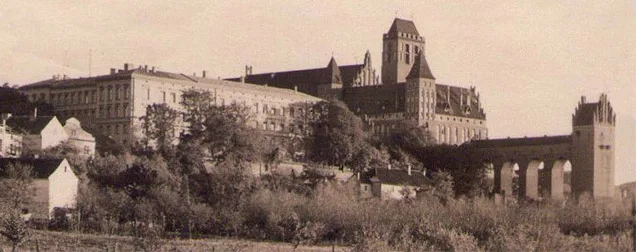
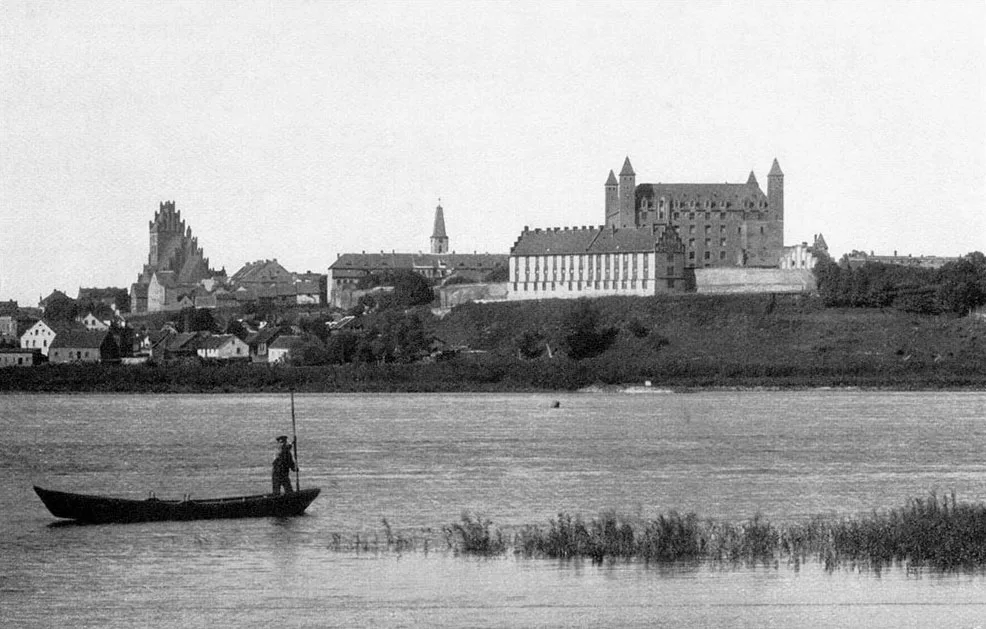 View of the castle and town of Mewe from the Vistula in the first half of the 20th century.
In 1457 the Polish army besieged Mewe once more, and once more it failed. Finally, in 1463, Mewe was surrounded by an army reinforced with artillery under the command of Hetman Piotr Dunin. This army began a methodical siege, blockading the castle completely and building earthworks around it. After a nine-month siege, Mewe Castle capitulated. Two years later the Thirteen Years' War came to an end. Under the Second Peace of Thorn, Mewe found itself in the territory annexed to the Kingdom of Poland. The castle became an administrative centre governed by a starosta and a stronghold against a possible Teutonic offensive.
In 1625 the castle, by then already called Gniew, was taken by the Swedish army under King Gustav II Adolf during the Polish–Swedish War of 1621–1626. The truce expired and the next Polish–Swedish war (1626–1629) broke out, and in 1627 the Poles recaptured the castle.
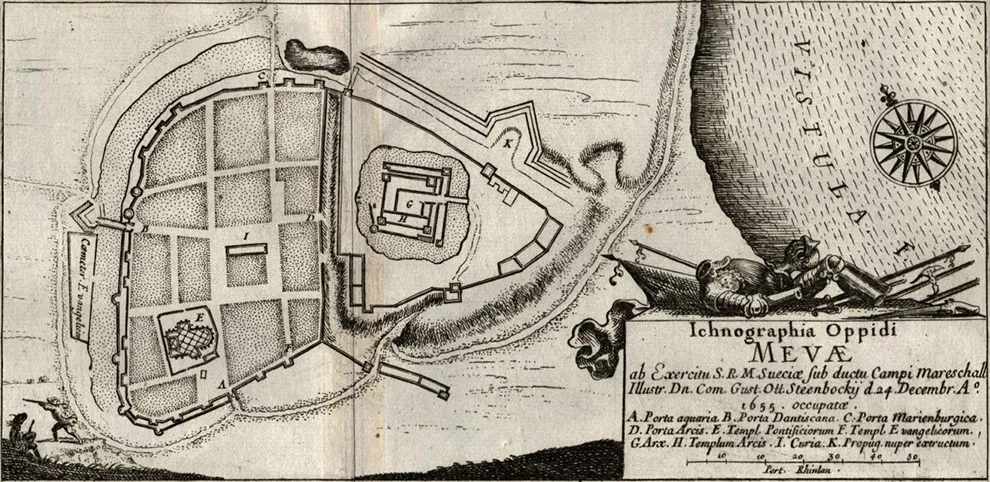
By then, however, this was no longer really part of the castle's military history. The castle had lost its military significance and simply changed hands as the surrounding territory was seized (or liberated). During the next Polish–Swedish war (the "Swedish Deluge", 1655–1660), Gniew Castle was captured by the Swedes in 1655 and returned to Poland in 1657. This war caused Gniew considerable destruction: the outer bailey and sections of the defensive walls were lost entirely.
From the second half of the 17th century, the castle became the residence of Jan Sobieski, the hetman and starosta of Gniew and future King of Poland. During his time in Gniew he helped the town recover after the wars. He also rebuilt the castle somewhat to suit his own needs; among other things, a wing was added for his wife and children. After Jan Sobieski's death, Gniew passed to his widow, Marie Casimire.
In 1772, after the First Partition of Poland, Gniew became a Prussian town once again. A use was found for the castle as well: it was rebuilt yet again, this time to store military equipment and fodder and to house soldiers.
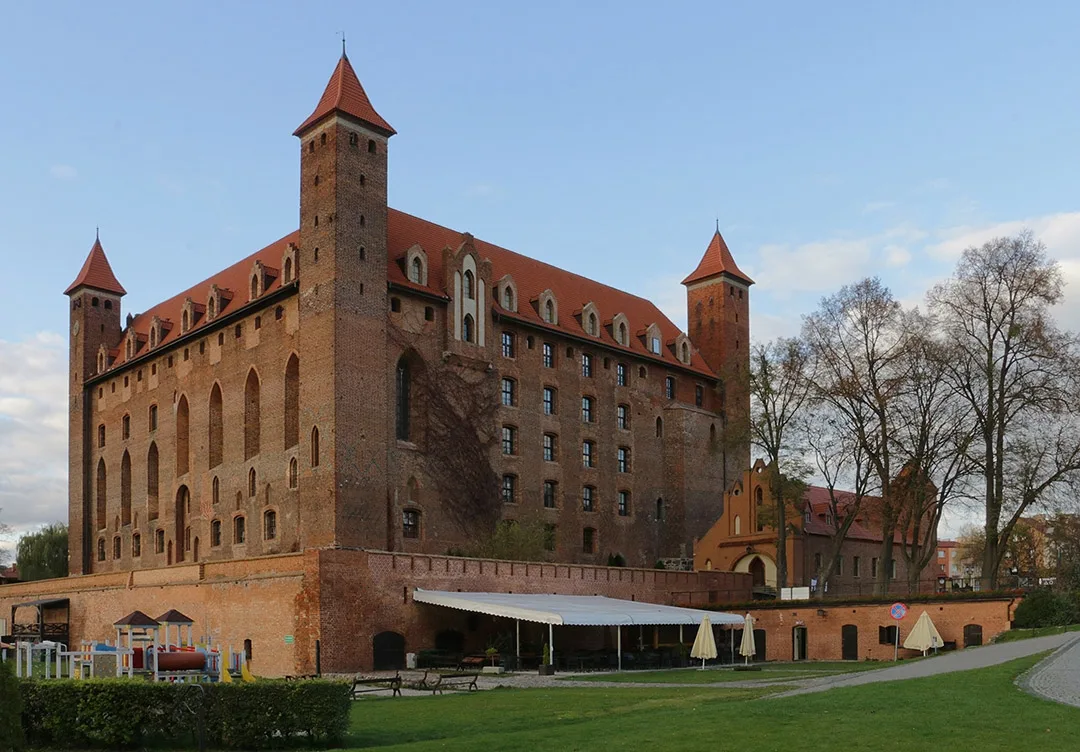
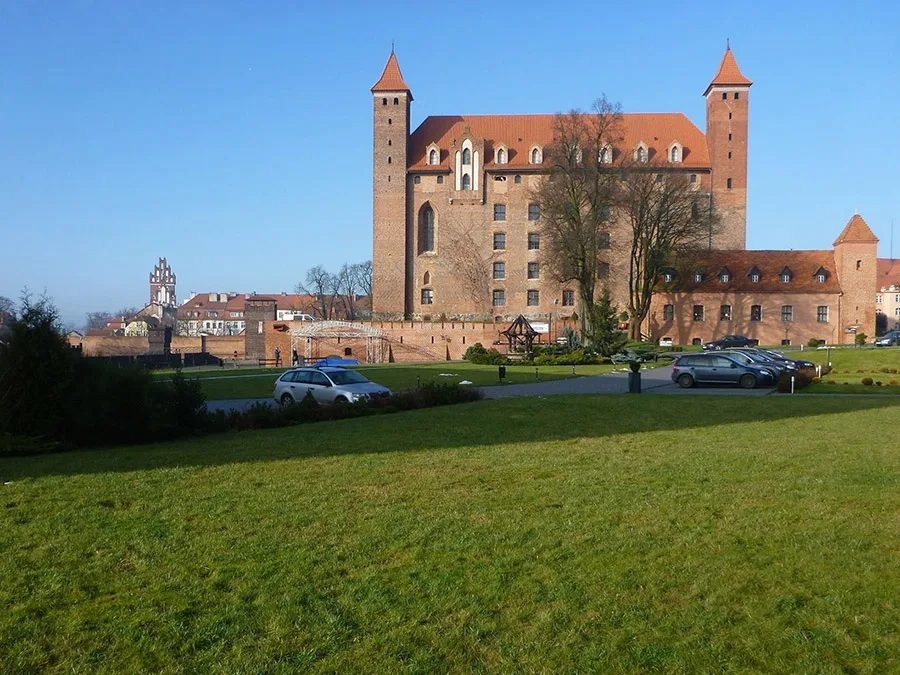 Gniew Castle in the first half of the 21st century.
It served as barracks and storehouses until 1856. That year it was handed over to the Ministry of the Interior, and work began on converting it into a prison. A number of old structures and features were lost during the conversion; the dansker, for instance, was dismantled. On the other hand, in keeping with the fashion for the Gothic Revival, the pointed arches and windows were restored, as were the corner turrets. The outer bailey was remodelled and rebuilt from scratch, and skylights appeared in the roof. Gniew (Mewe) remained a prison until the outbreak of the First World War, when it was once again given over to house soldiers.
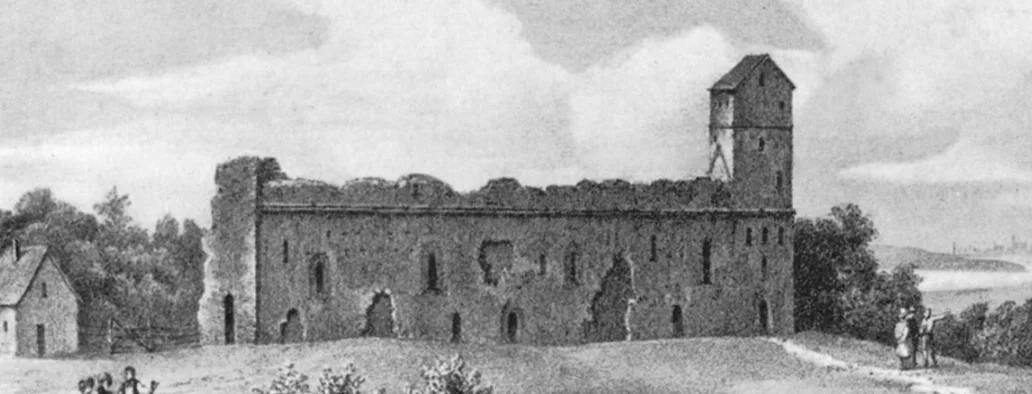
The year 1921 proved fatal for the castle. By then the territory had passed to Poland once again. According to legend, the castle was set on fire by a German saboteur, but in fact the causes of the great fire remain unknown to this day. The fire brought down the floors in three of the four wings. The walls held, but they were completely blackened with soot.
During the Second World War, the castle housed a Hitler Youth unit and served as an assembly point for conscripts and as a transit camp for prisoners of war. After the war, the castle ruins were occupied first by a Polish sapper battalion and then by a prison.
Finally, in 1967, it was decided to restore the castle as a historic building with a museum complex. The first stage of restoration took place in 1968–1975. During this stage the rubble was cleared, and some of the floors and the roofs of two wings were restored.
The second stage of restoration began in 1992. Today the castle is home to a branch of the Archaeological Museum in Gdańsk, as well as historical, equestrian and hunting clubs, a choir studio, a smithy and a school of magic. The castle and its surroundings host traditional re-enactments and tournaments, among them the Battle of Gniew (1625) and "Sobieski's Sword". It also hosts a wide range of events, from academic symposia to weddings.
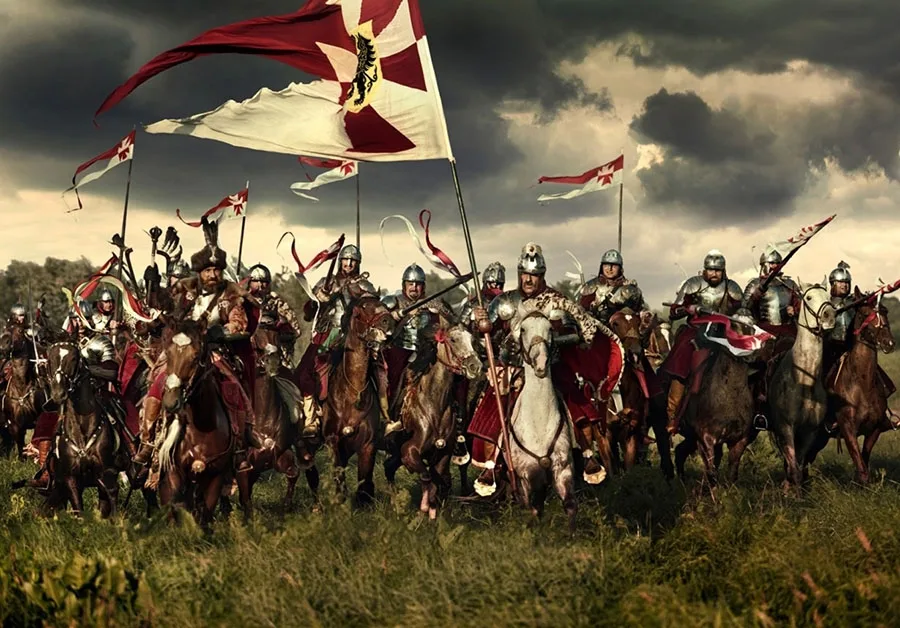
Two splendid historical re-enactment festivals are held at the walls of Gniew (Mewe) Castle every year.
(Photo from the castle's Facebook page.)
Illustrations: Bildarchiv Ostpreußen, bildarchiv-ostpreussen.de, Mikhail Ogorodnikov
Translated from Russian with the help of AI (Claude, Anthropic), October 2026.