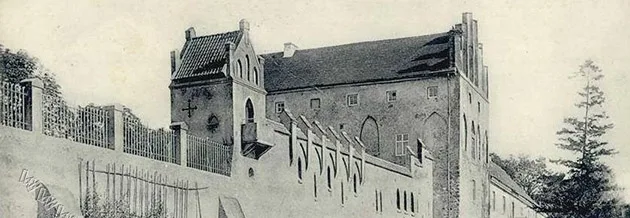
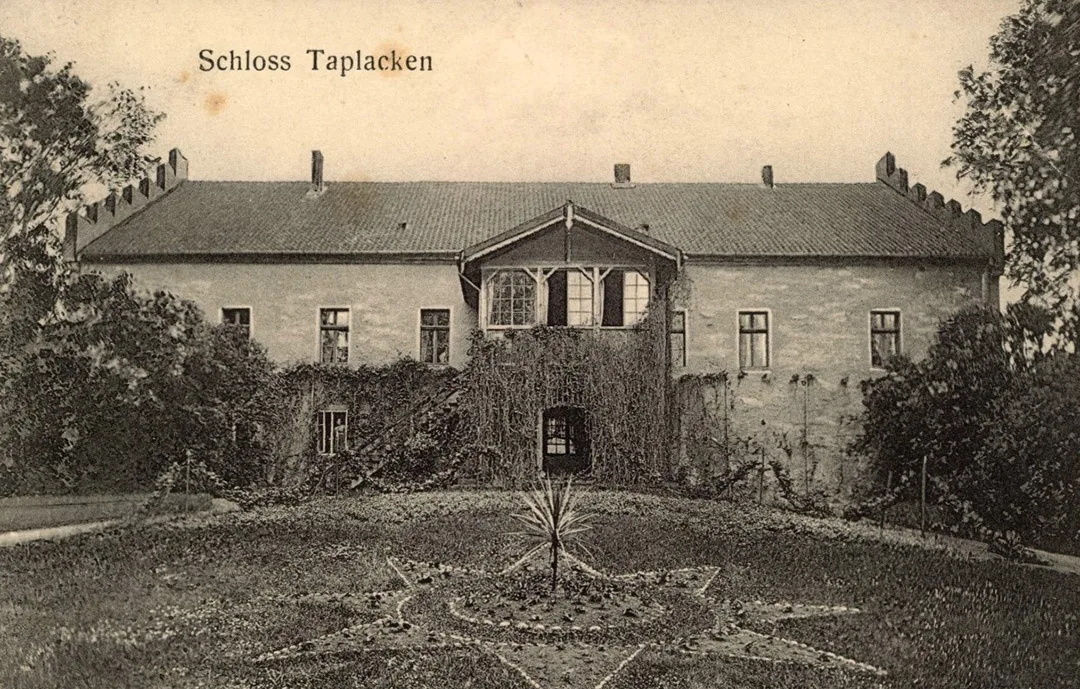
In 1376 Duke Kęstutis, who was already 79 years old at the time, marched on Taplacken with his army and burned it, taking the castle's Pfleger and part of the garrison prisoner. That same year, however, the crusaders began rebuilding the castle in stone. After the secularization of the Order in 1530, Taplacken was remodelled and thereafter used for administrative purposes. Its advantageous location on the road leading to Lithuania and Russia meant that it housed not only the local administration but also the postal service.
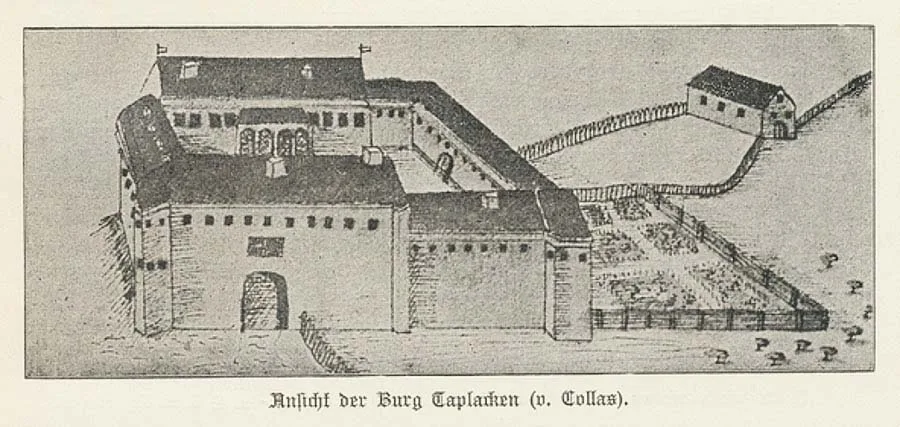
Couriers usually changed horses for the last time at Taplacken before riding into Königsberg.
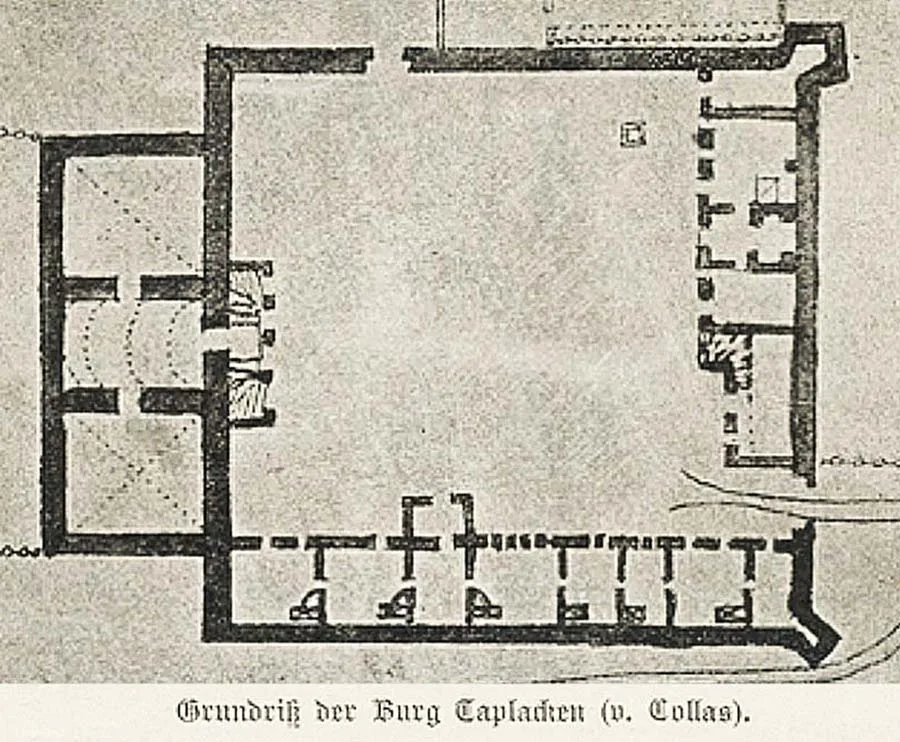
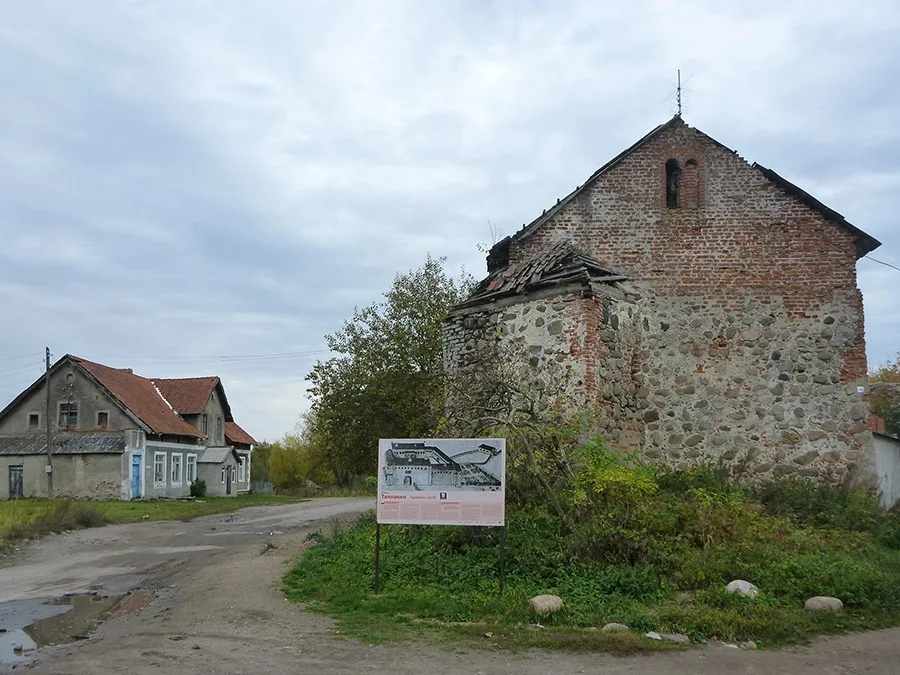
In the 19th century Taplacken was let to tenants, who altered the building somewhat and put up brick structures in the courtyard. On the whole, though, the castle had survived fairly well into the 20th century. In 1945, however, it found itself in the path of the Soviet troops' main thrust and was badly damaged in the fighting. Further destruction was caused in 1946 by a fire started through the carelessness of soldiers quartered in the castle. From 1948 the remains of the castle were used as housing for collective farm workers. The building was neither protected nor repaired, and as a result several parts of the structure were lost. In 2007 the remains of the castle were granted the status of a historical and architectural monument, yet in 2019 the building was still being used as a residential house — a documentary film was even made about it.
Translated from Russian with the help of AI (Claude, Anthropic), October 2026.