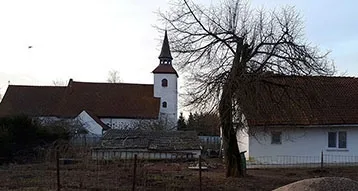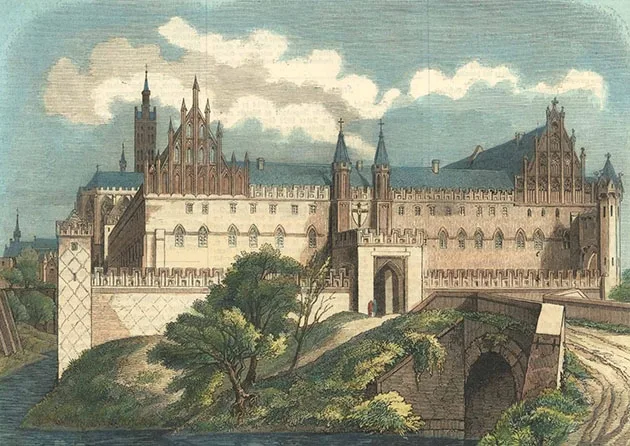
Its construction began fairly late — around 1309. Before that, a Prussian stronghold had stood on or near the site, but the Order did not use it. The decision to build the castle pursued three main aims: to establish an administrative centre for governing the territory, to protect the near eastern approaches to Königsberg from Lithuanian raids, and to create the first staging post where the Order's troops could halt on campaigns against Lithuania.
The structure was a rectangle in which only the southern and western sides were formed by wings with rooms, while on the east and north it was closed off by a defensive wall. The result was, so to speak, ½ of a standard four-wing building. In addition, the castle itself was surrounded by the outer wall of a Parcham. The castle's Pfleger was subordinate to the Komtur in Königsberg.
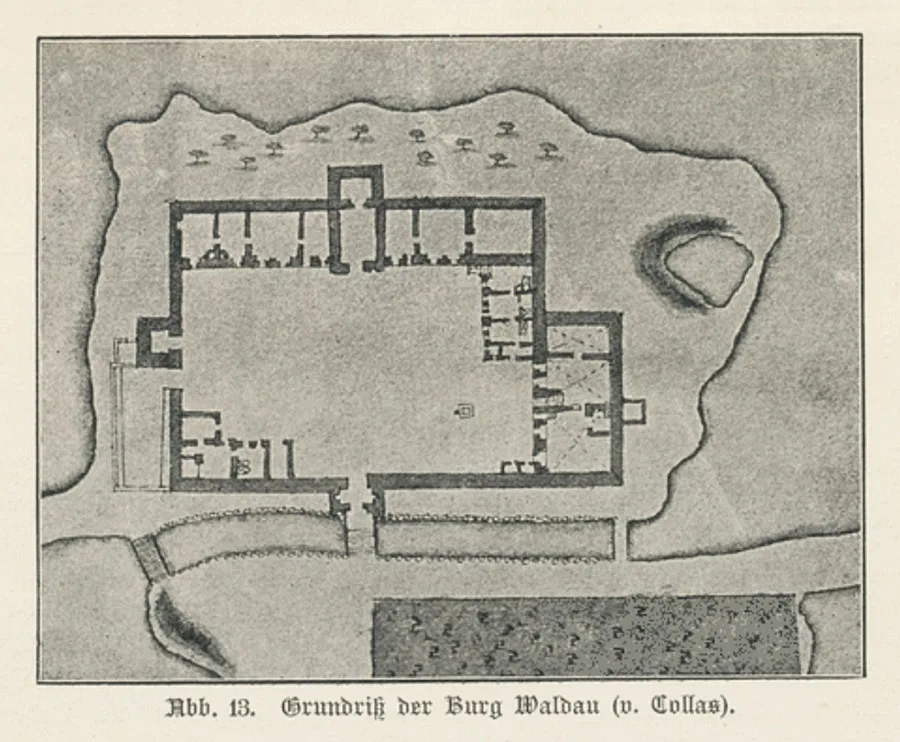
Throughout the entire period of the Order, the castle successfully fulfilled the tasks assigned to it; there is no record of it ever being taken by the Lithuanians.
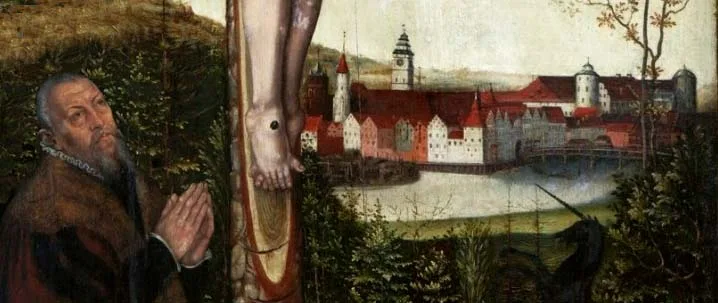
After the secularization of the Order, the castle passed into the possession of Duke Albrecht, and after his second marriage it was given to Duchess Anna Maria. Albrecht's relationship with Anna Maria was difficult: in effect there were two parallel courts, the Duke's and the Duchess's, and much of their property was likewise kept separate. In 1550, Waldau Castle underwent its first major rebuilding to meet the Duchess's needs, overseen by the architect Christoph Römer. Later, in 1630, the castle became the property of the Dönhoff family, but only 20 years after that it was bought back by the state.
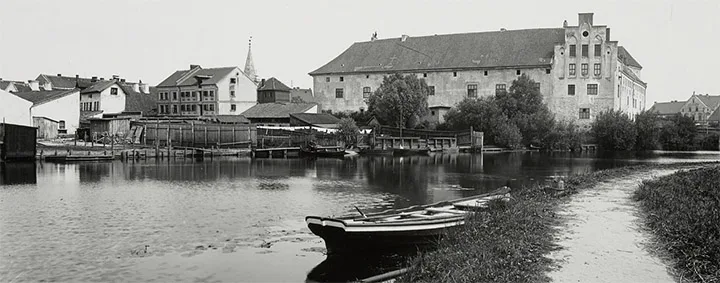
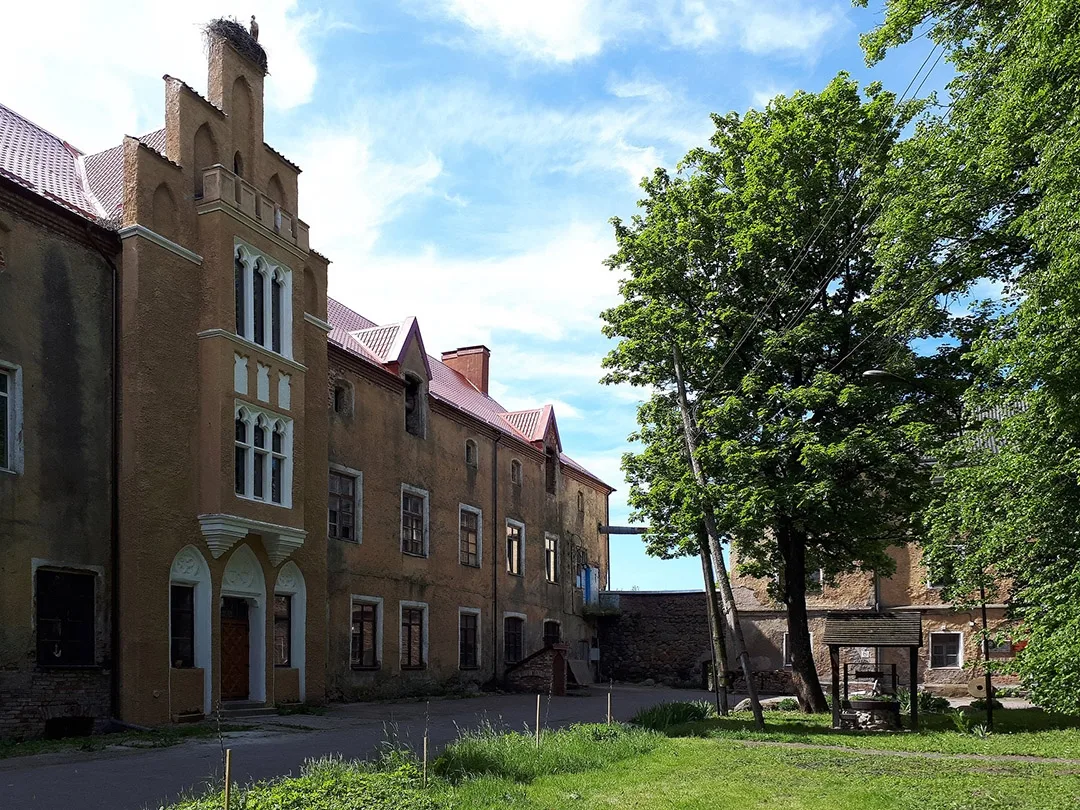
The next rebuilding of the castle took place in 1700 under Elector Frederick III, who shortly afterwards became King Frederick I. The parcham walls were demolished and the inner walls were stripped of their defensive features. In their place, farm buildings and service quarters were added, as required for the castle's administrative functions. From 1720 the castle was leased out together with the surrounding lands. By 1858, however, Waldau had once again been turned over to state use: an agricultural academy opened in the castle, followed in 1870 by a seminary training teachers for rural schools. In the course of this use, the remains of the defensive towers were destroyed, and by the early 20th century the castle had taken on the appearance it has to this day, with only the south and west wings surviving, linked by a short stretch of defensive wall.
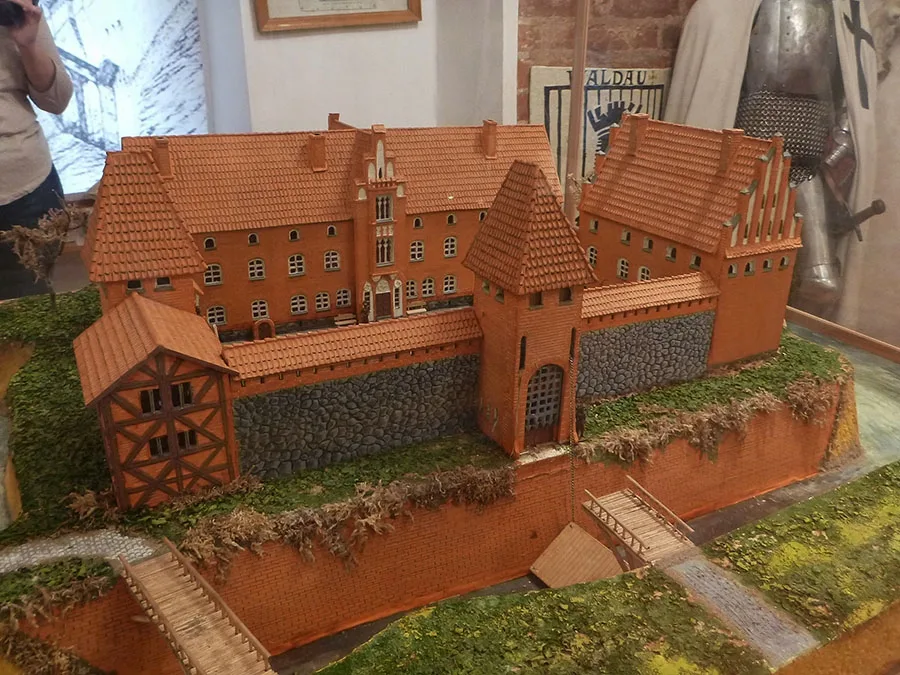 A model of Waldau Castle shows how strongly it was defended.
After the war, from 1947, Waldau, renamed Nizovye, became home to a rural vocational school (SPTU) that trained skilled workers for agriculture. The castle itself housed a dormitory for the students and a number of the school's administrative offices.
The castle remained in this state until 2009, when the SPTU (which had later taken to calling itself by the fashionable name of "college") was closed. In 2010, Waldau Castle was handed over to the Russian Orthodox Church (Moscow Patriarchate) on the far-fetched pretext that it had supposedly once been church property. In 2013, the family of Andrey Ivanovich Barinov, a former teacher at the SPTU, restored the cellars of the castle's west wing, and a local history museum was later established in that wing. Yet until 2014, the family of the school's caretaker, including an underage grandson, was still living in the castle without basic amenities; the author of this article was among those who worked to have them rehoused in proper accommodation. In 2016, the Sorokin family took on the restoration of the other wing of Waldau Castle, having received a presidential grant for a programme to revive the castle. As a result, the castle is now being looked after, and both wings house museums that are popular with tourists.
Photos on this page: Bildarchiv Ostpreußen, bildarchiv-ostpreussen.de, Mikhail Ogorodnikov
Translated from Russian with the help of AI (Claude, Anthropic), October 2026.