The story of Altes Haus*, a small private museum that first opened its doors to visitors in April 2014, has proved once again what many already took for granted: you can never have too much Königsberg in Kaliningrad. In a very short time, an ordinary pre-war flat with ordinary pre-war furniture has become one of the city's most striking local attractions, almost on a par with the Amber Museum, the Cathedral and the Fishing Village.
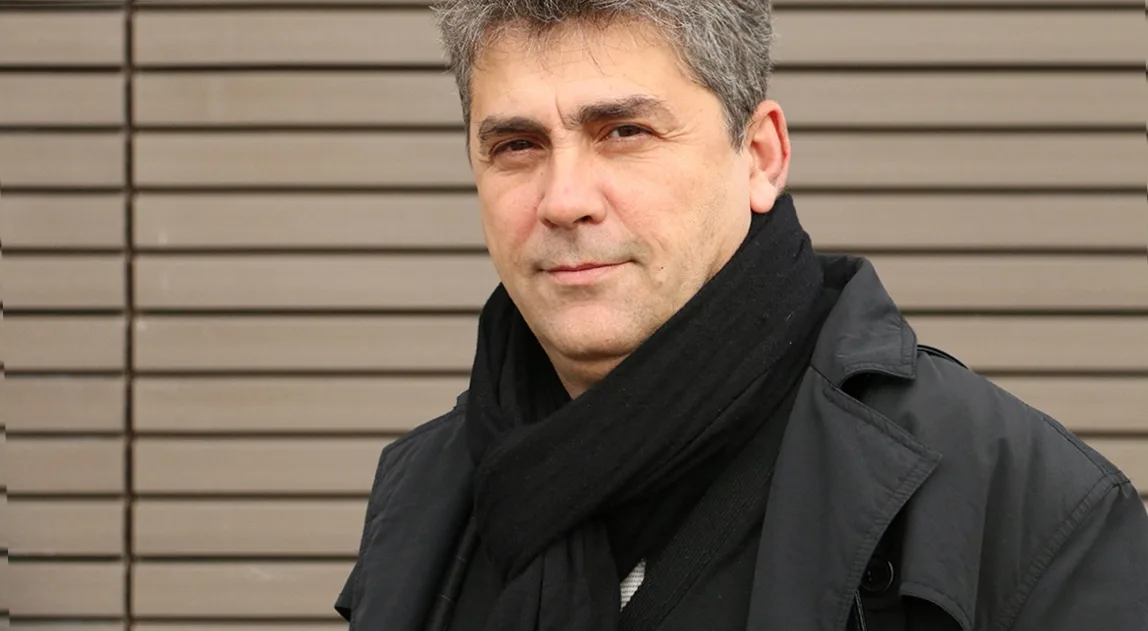
The door of Altes Haus is practically never shut. One tour follows another, and the hosts barely have time to greet guests and see them off. Everyone is curious about how the people of Königsberg lived in the first half of the last century. The couple behind the idea, Kaliningrad businessman Aleksandr Bychenko and his wife Natalya, have, quite unexpectedly even to themselves, turned into media personalities and well-known figures in the city.
– Are you glad things have turned out this way? – I ask Aleksandr as I sit in his "German flat" on a German chair at a round German table. – After all, you now have far more to worry about and far more problems to deal with…
– But even more enjoyment! Even more positive emotions. I have a business that earns me a living. I sell packaging and disposable tableware. It would be very hard to call that exciting. The museum, though, is a kind of outlet. It's something that gives me a great many positive emotions and helps me get to know interesting people.
– How long had you been nurturing the idea of creating a museum?
– I never nurtured it at all. It all happened completely by chance. Then again, if you think about it, you can see a certain logic in it all. I was surrounded by old things from my earliest childhood. I was born in Kaliningrad, in a neighbourhood called "Fort". The local boys played at war with real weapons dug up out of the ground. Playing with toy guns bought in a shop was simply not done…
Later, as an adult, I realised I was drawn to everything to do with Königsberg.
I bought heavy cast-iron irons, German furniture, tableware. You couldn't really call it collecting. I simply wanted to surround myself with things of that kind.
In time my wife and I bought part of a German villa and gradually began filling it with things we liked.
I wouldn't say we bought expensive antiques. Mostly they were ordinary things, but with a certain aura, a certain sense of having been cherished, if you like…
A good friend of mine once said: "Listen, none of us here have any roots; we were all blown onto this land by the winds of change. Hardly anyone has an armchair their grandfather sat in or a mug their grandmother drank from. But why can't that story begin with us?" So I decided: let my daughter have things like that. And it doesn't have to be an armchair that her own grandfather sat in. Let it be an armchair that someone else's grandfather sat in. The main thing is that the armchair has some kind of history…
– And what is the history of the flat we're talking in now?
– We know that this house was built around 1907. It housed a Stiftung, which is something like a charitable foundation. In other words, elderly Königsberg residents in need of care lived here. The Stiftung itself was founded as far back as 1821. At first it was based in the Altstadt, but at the beginning of the 20th century it moved to a prestigious new district, Amalienau.
Unfortunately, the flats on the ground floor are not numbered in the German address book, so it's hard to tell which one belonged to whom. We know that the curator of the Stiftung, a Herr Hagedorn, lived there, as did two widows. For a long time my wife and I believed that Altes Haus had been Hagedorn's apartment. But now we're no longer so sure. The thing is, when several layers of wallpaper were stripped off the walls, the original colour of the living room was revealed – pink. Naturally, when the flat was restored, the room's original appearance was recreated.
Once the well-known fashion historian Aleksandr Vasilyev came to our museum. When he heard the Hagedorn theory, he said: "Come on, don't make things up – no man would ever allow his living room to be painted pink." So, by all appearances, one of the widows lived here…
– And who lived here after the war?
– I have to say this house was very lucky. It's one of the few in the area that was practically undamaged, so the families of junior officers were housed here, and the small (64-square-metre) flats were turned into communal apartments.
This living room, where we're sitting now, was occupied by an elderly woman, Lidiya Grigoryevna, who had moved in with her father, a serviceman, as far back as 1946. Then in the early 2000s a friend of mine bought the place from her. … As for my wife and me, we ended up living here entirely by chance. We had started renovating our own home and needed somewhere to stay while the work was going on. Renting a flat turned out to be far from easy, because we have a big dog and nobody would take us with it. Then I remembered that an acquaintance of mine who is keen on antiques had a guest flat standing empty. I rang him, and he kindly agreed to let it to us. We planned to live here for three months, but ended up staying nine, because our renovation dragged on.
– But how did it come to be a museum?
As I said, the acquaintance who owns the flat is also passionate about antiques and pre-war history. Much of what you see here is down to him. In particular, it was he who restored the flat and began furnishing it with German furniture. While we were living here, our friends were constantly dropping in.
Everyone was curious to see a flat where everything was German. Then our friends asked if they could bring along people they knew, and then those people brought along people they knew. And somehow it just took off from there.
Before we knew it, giving tours of the flat and continuing to furnish it was taking up 80 per cent of my wife's and my time. But the most important thing was that we realised we really loved it all. So when our renovation was finished, we extended the lease on the flat and started thinking about how to use it next. At first the idea was to set up an antiques shop here, but then we decided to combine the shop with a museum.
The thing is, in Kaliningrad (and everywhere else, for that matter) antiques are sold the wrong way, in my opinion. People try to sell old things. But what you need to sell is a dream. You need to sell a scent, you need to sell a feeling.
We thought we would go on inviting people into the flat as before, telling stories and showing them things. Perhaps someone would buy something.
But then the antiques-shop side of things all but died away. In all this time we've sold maybe five items.
On the other hand, the museum really has become a phenomenon in Kaliningrad's cultural life, which makes my wife and me immensely happy. The number of our new friends has multiplied several times over. We've come to know people we would never have met without the museum. For instance, Neil MacGregor, the director of the British Museum, came to visit us, and he liked it here very much.
– Who visits you more often – locals or out-of-towners?
– Hard to say. We don't really divide our visitors that way. We divide them into those who are interested and those who aren't particularly interested.
– What, people come who aren't interested?
– That happens too. Someone has simply read somewhere that Altes Haus is a must-see in Kaliningrad. So they come, look round everything with a bored expression and leave with a sense of duty done.
But there are very few people who come just to tick a box. Most visitors – locals and out-of-towners alike – know perfectly well why they've come.
They want Königsberg. They want to see a fragment of it, to understand how people lived here, what they felt, what they thought about.
And I think it's somewhat easier to satisfy that kind of curiosity here than in a conventional museum. We have no display cases, no barriers, no stern old ladies making sure visitors don't touch anything. Here people can, as they say, let the things pass through them, feel them. And in that way learn more about those who used these things before.
– Among other things, your museum organises all sorts of interesting events.
– Yes, the atmosphere of Altes Haus lends itself to spending time in a leisurely yet engaging way. For instance, every now and then we hold wine tastings here.
Lectures are held here often, too. For example, the young historian Roman Shiroukhov regularly talks about the everyday life, traditions and beliefs of the Prussians. Together with him we organise trips to places connected with the history of East Prussia, and these excursions are very popular.
… Not long ago my wife and I attended a forum on social entrepreneurship. At first we thought it had nothing to do with us, but then we realised that what we do at the museum is social entrepreneurship.
Using the means available to us, we tackle social tasks that, in theory, the state should be handling but for reasons of its own doesn't, or doesn't do well enough. I mean spreading knowledge about the past of this land and preserving its historical heritage.
Take, for example, those excursions around the region with Roman Shiroukhov. Each of us does what we're good at: Roman shares his extensive knowledge, and my wife and I organise transport, meals and so on. In the end, together we fulfil a function that matters to society, and which, incidentally, helps the museum pay its way.
– As I understand it, you're planning to open another museum, this time an apartment from the 1960s and 70s…
– About a year ago we found ourselves in Kolomna, near Moscow, where some enterprising people have built an entire museum empire with a staff of 150 and a payroll of 15–20 million roubles.
Among other things, it includes an apartment museum furnished in the style of the 1960s and 70s.
We were very inspired by this example and decided to create something similar in Kaliningrad. We have an apartment with pre-war furnishings. Why not open a museum with post-war ones?
I think there is a certain nostalgia for that era in society. I don't mean nostalgia for Soviet ideology or the Communist Party, but nostalgia for one's own youth and childhood.
People of my generation (I was born in 1969) will definitely find it interesting.
And I hope young people won't pass this museum by either. After all, there were many things back then that today's children and teenagers have no idea about. My daughter, for instance, was thrilled by a rotary telephone. She had simply never seen one before…
– Will it be just an apartment from the 1960s and 70s, or a Kaliningrad apartment of that time?
– A Kaliningrad one, of course! Just as Altes Haus is not simply a German apartment from 1907 but a 1907 apartment in Königsberg, East Prussia, on Hardenbergstraße, everything in the Soviet apartment will be specific and recognisable. Among other things, we plan to draw on a fishing theme, because a lot of people here went to sea.
I don't know yet where the new museum will be. We were thinking of putting it right above the "German apartment" on Pugacheva Street, but we had to change our plans because Altes Haus has moved.
– Why?
– The thing is, as I said, the apartment doesn't belong to us. We wanted to buy it, but we couldn't come to an agreement with the owner.
So we bought another apartment, at Krasnaya Street 11, and once the restoration work was finished our museum moved there.
– But the place at Pugacheva 12 already had its own "aura". People had grown used to it…
– That's no problem. We'll give the new place an aura too. A museum isn't a place or a collection of things. A museum is first and foremost people…
Besides, in fitting out the new museum we're reaching a new level of authenticity. I hope that everything there will be pre-war German, right down to the bathtub and the radiators.
– You were involved in publishing Michael Wieck's book "The Decline of Königsberg". Could you tell us about that?
– I read the book about two years ago, and it made a very strong impression on me. I decided then that one day I would republish it. That wish grew stronger after I met Wieck in person. Once Gerfried Horst, chairman of the Society of Friends of Kant, brought several acquaintances to our museum, many of them born in Königsberg. Among them was the author of "The Decline of Königsberg", Michael Wieck.
…When I took up the museum, I got to know Max Popov, the owner of Piktorika, who was also very keen to republish Wieck. So we began looking for a way to do it together. For a long time we couldn't reach the holders of the rights to the Russian text, but eventually we did. They had no objection to a new edition but said we needed official permission from Wieck himself.
I contacted the author through Gerfried Horst, he sent his consent very quickly, and Max got down to work. I must say that he and his team did a great deal. Since the text had not survived in electronic form, every page of the old printed book had to be scanned.
The book has many fine illustrations. Some were provided by Wieck, others by Max Popov from his extensive collection. All in all, I think the result is a worthy one. It's nothing to be ashamed of. By and large, my view is that "The Decline of Königsberg" should be in every Kaliningrad household.
*Altes Haus – old house (German)
Museum website: alteshaus.ru
Translated from Russian with the help of AI (Claude, Anthropic), October 2026.