Charlottenburg was founded in 1810. From 1867 the estate of Charlottenburg, held under Kulm law (Cöllmischgut), formed a Gutsbezirk (estate district) in the Landkreis Königsberg (merged into the Landkreis Samland in 1939). The estate belonged to the parish of Juditten (now part of Mendeleyevo). Besides the estate itself, the Charlottenburg Gutsbezirk also included the Vorwerk (outlying farm) of Neukrug. In 1871 the Charlottenburg Gutsbezirk had seven residential buildings, home to 18 families. Six of these houses belonged to the Charlottenburg estate, while one more house made up the Neukrug Vorwerk. On 30.04.1874 the Charlottenburg Gutsbezirk was incorporated into the newly established Amtsbezirk (administrative district) of Juditten (now part of Mendeleyevo). Part of the Charlottenburg Gutsbezirk, however, lay territorially within the Amtsbezirk of Hufen (Kaliningrad, the Prospekt Mira area).
In 1879 the Charlottenburg Gutsbezirk comprised 297 hectares of land; the estate’s annual net profit amounted to 4,815 marks.
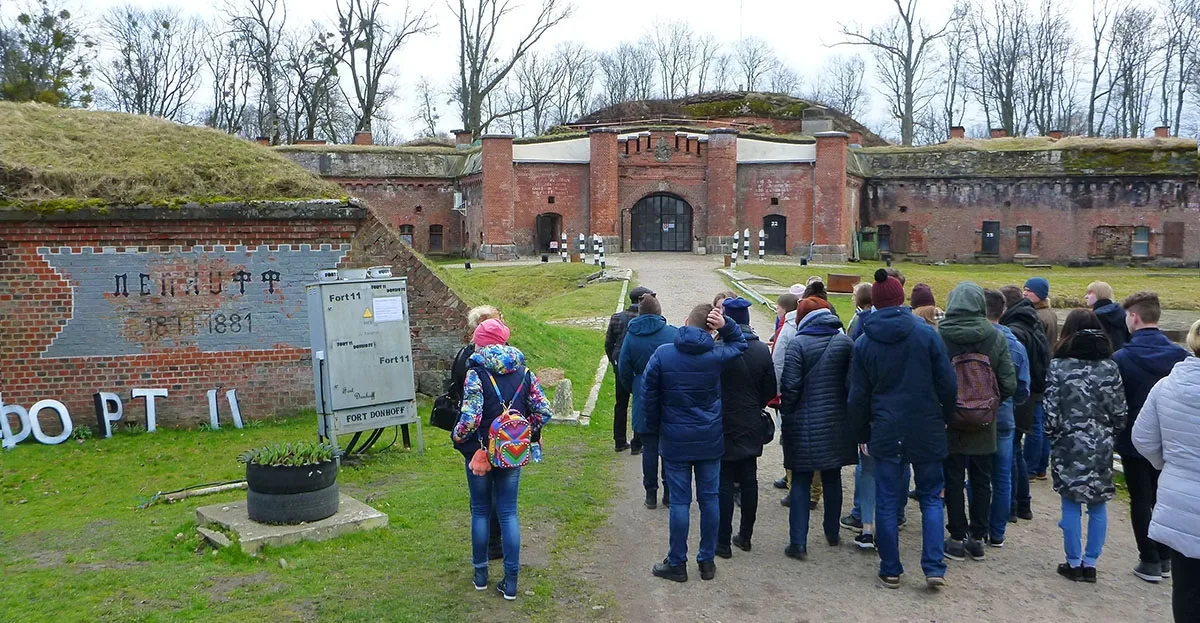
In the 1870s construction of Fort No. 5 began near the Charlottenburg estate. It was fully completed in 1886. The fort was named Charlottenburg, but was later renamed “King Frederick William III”.
On 01.04.1905 the Charlottenburg Gutsbezirk passed to the Amtsbezirk of Hufen (Kaliningrad, the Prospekt Mira area). Its Vorwerk of Neukrug had ceased to exist by then. On 30.09.1928 the Charlottenburg Gutsbezirk was abolished and merged into the new rural municipality of Charlottenburg, which also took in the Gutsbezirk of Waldgarten (Kaliningrad, the Vishnyovy Sad garden cooperative, 54°44'27'' N 20°26'06'' E) from the Amtsbezirk of Moditten (now part of the Settlement named after A. Kosmodemyansky).
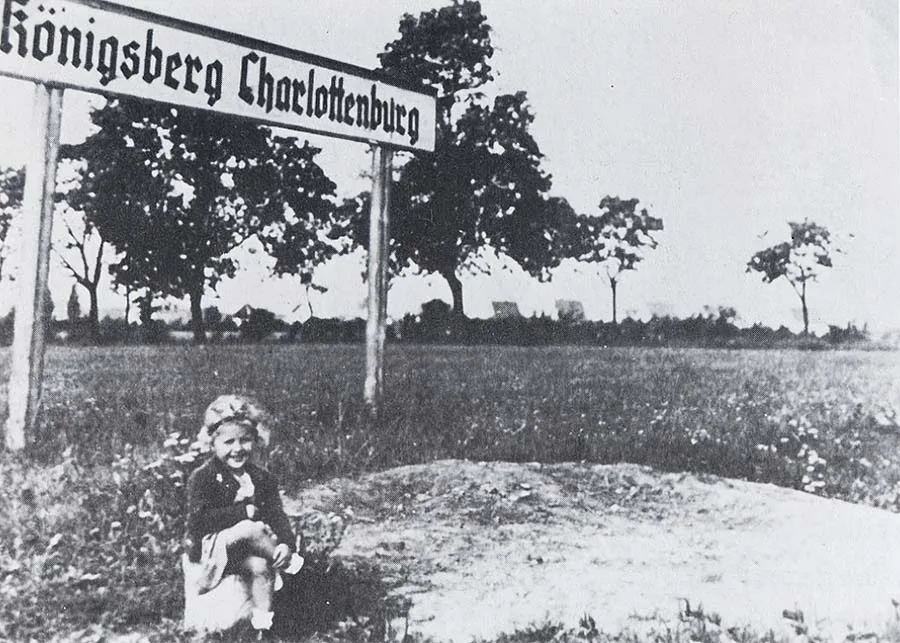
On 01.04.1939 the municipality of Charlottenburg was dissolved, and the localities belonging to it were incorporated into the municipality of Königsberg.
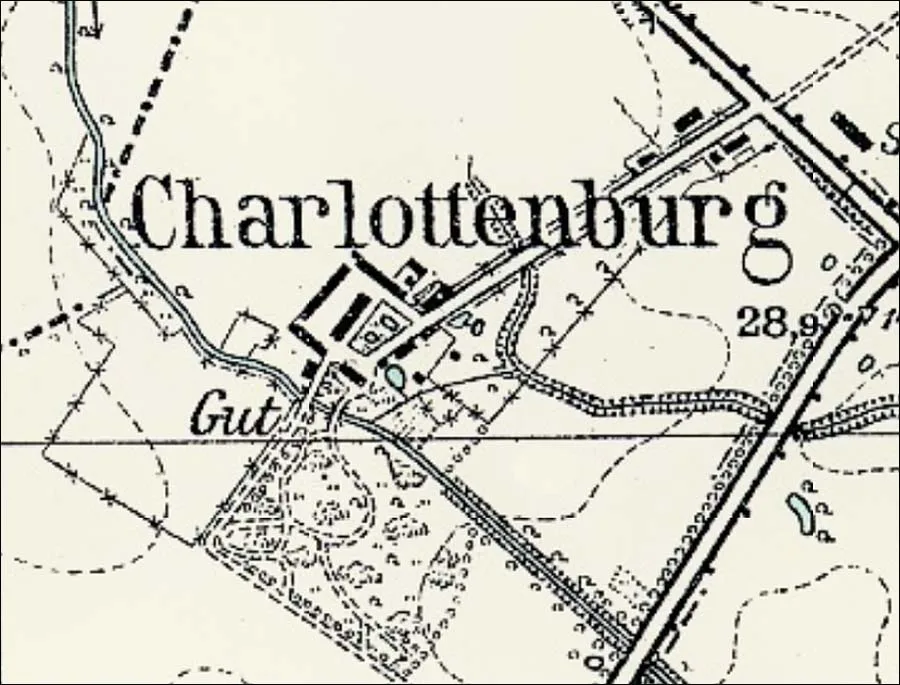
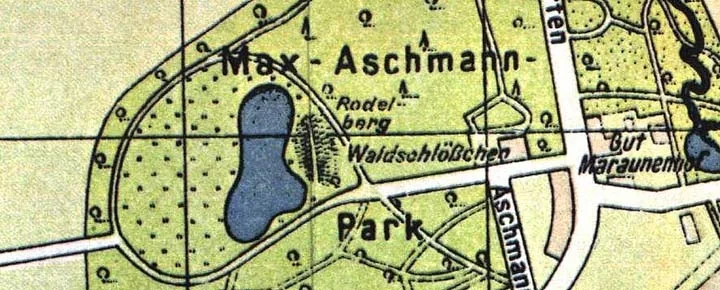
On part of the Charlottenburg estate lands, the Charlottenburg garden city (Garten-Stadt) project was carried out. The garden city was built up mainly with detached houses, each with its own garden plot, along narrow streets. Ringstraße (2-ya Bolshaya Okruzhnaya Street) divided Charlottenburg almost in half. The western boundary ran along the Fuchsberger Chaussee (renamed General-Litzmann-Straße in 1933, now part of Sovetsky Prospekt). The Charlottenburg area also included Alex Straße (Laureatnaya Street), Bahnstraße (Belorusskaya Street), Charlottenburger Straße (Guryeva Street), Feldzeugmeisterstraße (Sokolinaya Street), Haynstraße (part of Poletskogo Street), Mittelstraße (Belostokskaya Street), Schlageterstraße (Kirovogradskaya Street), Schulstraße (part of Lomonosova Street) and part of Walzenstraße (Pskovskaya Street).
Before the storming of Königsberg, from 02.04.1945, Fort No. 5 came under fire from extra-heavy artillery. On 06.04.1945 the Charlottenburg estate found itself in the path of the main thrust of the 43rd Army of the 3rd Belorussian Front and was completely destroyed in the fighting.
Fort No. 5 itself was stormed by detachments of the 801st Regiment (Col. A.M. Khokhlov) and the 806th Regiment (Col. P.I. Zapashnev) of the 235th Rifle Division.
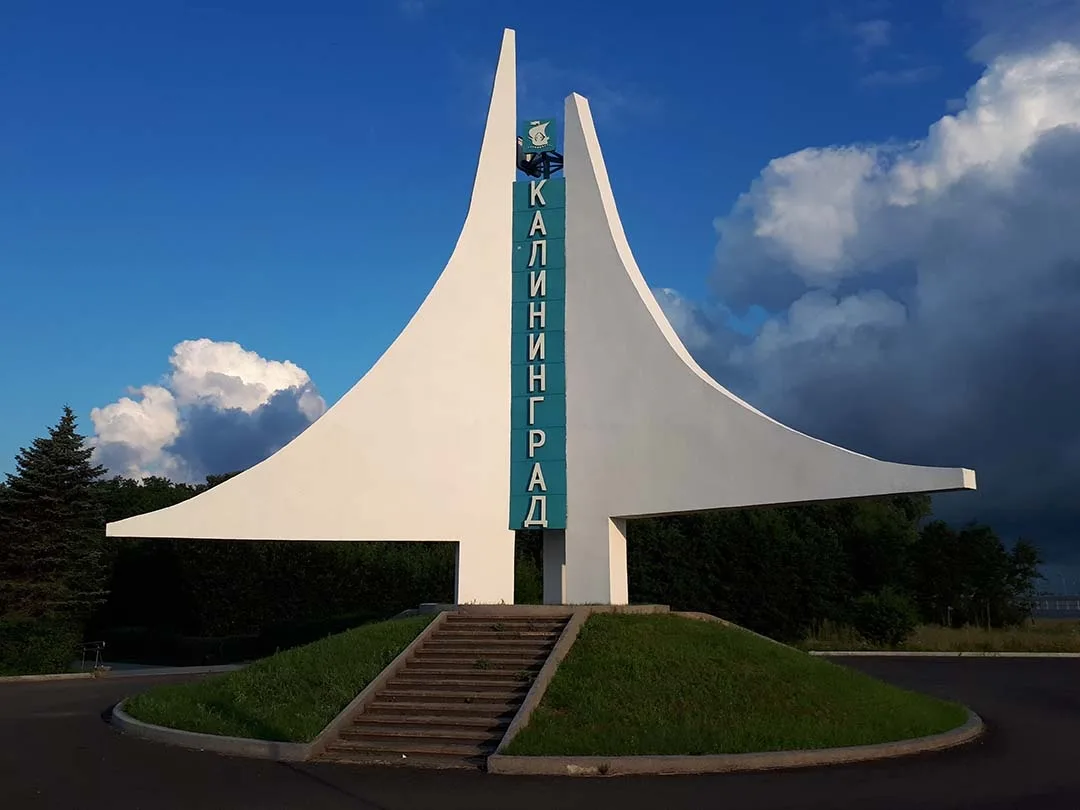
On 29.07.1948, by decision of the Kaliningrad City Executive Committee, Charlottenburg and the Kohlhof brickworks (Ziegelei Kohlhof; Kaliningrad, the Soldatskaya Street area) were renamed Teatralny Gorodok. On 18.08.1949, by a new decision, the City Executive Committee renamed Teatralny Gorodok – Charlottenburg (with Neuhufen) and Kohlhof (called “Kaltgof” in the text of the decision) – the settlement of Lermontovo in the Central District. At different times the settlement of Lermontovo covered different areas on city maps: sometimes it included the area between Pskovskaya and Okulovskaya Streets, sometimes the Dachnoye garden cooperative was added, or the area between Sovetsky Prospekt and Berdyanskaya Street (the former Westend residential district). But the classic boundaries of the settlement are considered to be precisely those of the former Charlottenburg.
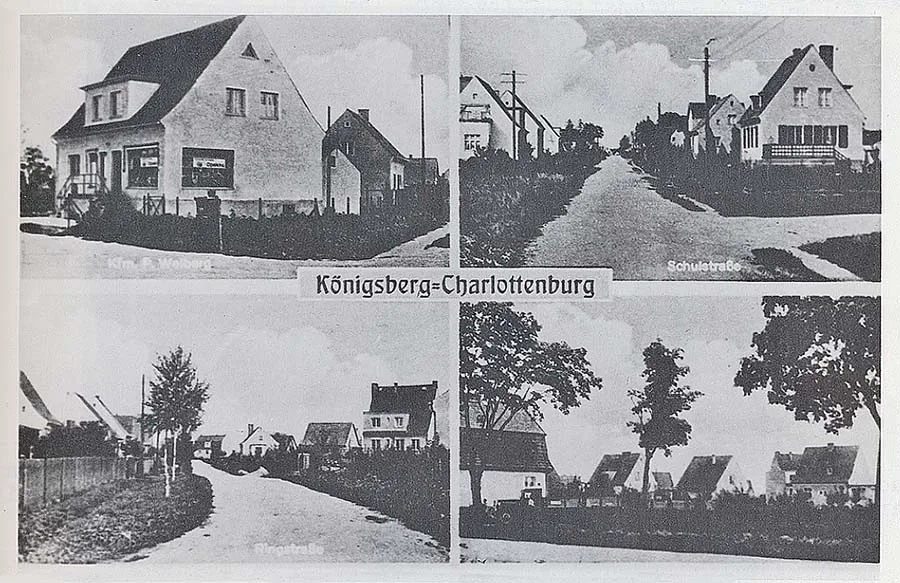
Less than a quarter of the pre-war buildings survive in Lermontovo; most of them are detached houses or houses for two to four families restored in the post-war years. The other houses were built after the war on the site of ruins.
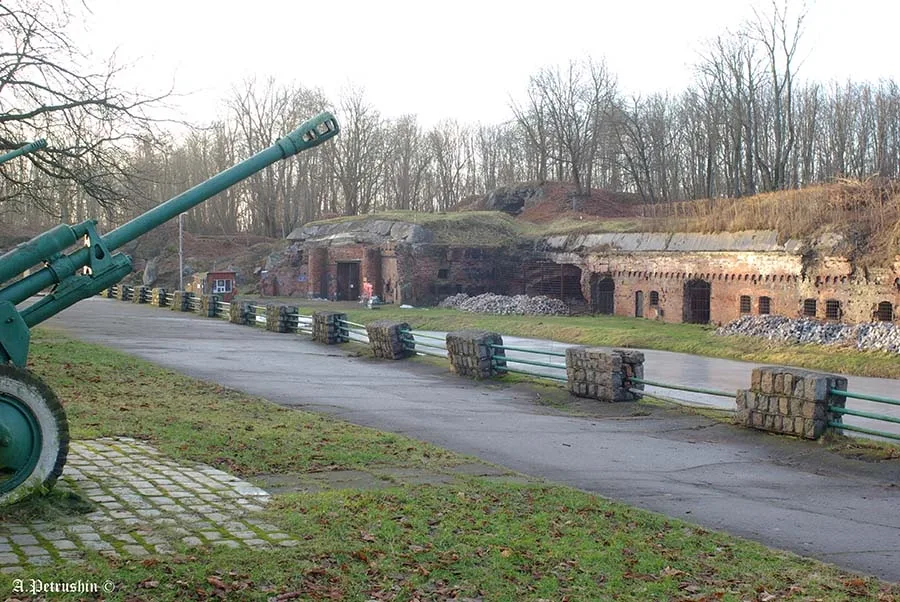 Entrance to Fort No. 5 King Frederick William III.
In 1976 trolleybus route No. 1 was added to the bus service in the settlement of Lermontovo. In 1979 Fort No. 5, declared a monument of history and architecture as early as 1974, became a branch of the Kaliningrad Museum of Local History and an open-air display of artillery weapons from the Great Patriotic War. At the same time a memorial was created to the soldiers who fell in the storming of the fort. Fort No. 5 became a popular place among Kaliningraders: people came here on Victory Day, school excursions were held at the fort, and the display in front of the fort traditionally became a place visited by wedding processions. The settlement of Lermontovo itself remained an area of low-rise housing with gardens on the house plots.
It may well be that the proximity of the popular Fort No. 5 is why the place name Lermontovo did not fall out of use and was widely used by Kaliningraders.
In 2001 the fort and the surrounding grounds became the Kaliningrad Non-State Museum of Fortification and Military Equipment. Since 2010 the fort’s interiors have been open to visitors on guided tours.
In August 2021 trolleybus route No. 1 was shortened, and as a result the settlement of Lermontovo lost this form of public transport.
Within its classic boundaries Lermontovo includes the following streets: 2-ya Bolshaya Okruzhnaya, Belorusskaya, Belostokskaya, Graviynaya, Guryeva, Kirovogradskaya, Laureatnaya, Lomonosova (part), Poletskogo (part), Pskovskaya, Sovetsky Prospekt (part), Sokolinaya, Khersonskaya, Khersonsky Lane.
Population of the Charlottenburg estate: 1871 – 86, 1905 – 107 inhabitants.
Population of the Charlottenburg Gutsbezirk: 1867 – 79, 1871 – 125, 1885 – 131, 1905 – 113, 1910 – 113 inhabitants.
Population of the Charlottenburg municipality: 1925 – 236, 1939 – 490 inhabitants.
Composition of the population of the Charlottenburg Gutsbezirk in 1871: Protestants – 117, Catholics – 1, other Christians – 7, children under 10 – 30, literate – 77 (83%), deaf-mute – 1, insane – 1.
Population of Neukrug: 1871 – 39 inhabitants.
Photos on this page: Bildarchiv Ostpreußen, Mikhail Ogorodnikov, Aleksey Petrushin.
Translated from Russian with the help of AI (Claude, Anthropic), October 2026.