Why does Kaliningrad need a Chopin Square? I'm serious. What is it – a reminder of some past anniversary, with gifts to match the roundness of the date? No, Chopin is not an amber painting or a Chinese fountain shimmering in all the colours of the rainbow (though the city has plenty of that sort of thing already). The monument itself does not sing or dance and makes a perfectly pleasant impression, but that does not answer the main question: why is it this particular great composer whose memory we honour here, in Kaliningrad?
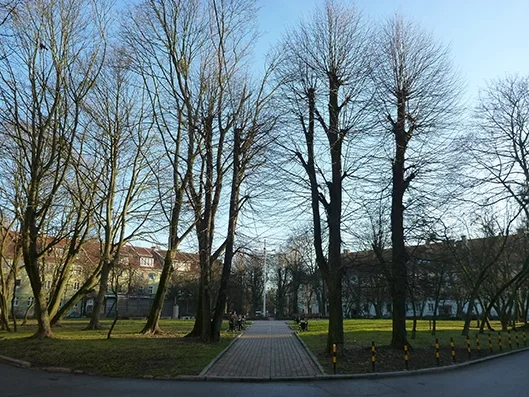
How does the junction of Stepana Razina and Kommunalnaya streets, whose names allude to anything from the Paris Commune to the problems of today's municipal utilities, strike a spark of music and harmony? Granted, there is some sense in the fact that the church on Komsomolskaya Street is framed by Chekistov Street and Karla Marksa Street, but what links Stenka Razin and Chopin?
If you find yourself in Riga or Vilnius, you are struck by the rigour and inflexibility with which the "small but proud" Baltic democracies go about constructing their historical memory – you get the feeling that every courtyard and square has been allocated in advance. Even among the ardent fighters for freedom there is a queue to see which hero gets hammered into our historical memory first. Outsiders have no place here. And that is probably right.
True, here too, of late, preference has been given to the ideologically correct content of monuments.
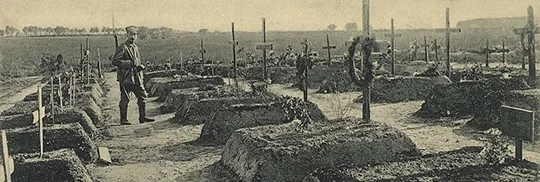
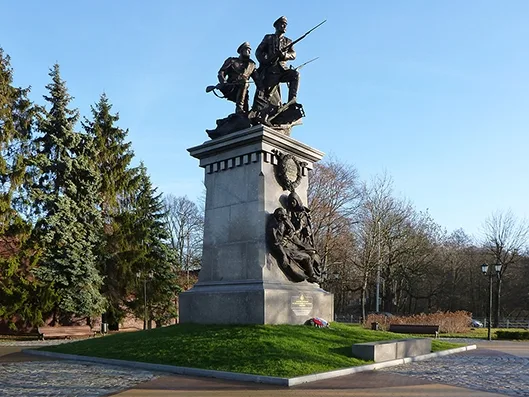
There are some clearly successful plot twists – the erection in Kaliningrad of a monument to the heroes of the First World War deserves nothing but praise.
And even the fact that the monument on Gvardeysky Prospekt has a sculptural group reminiscent of something Muscovite about the 1905 revolution, while the bas-relief on the pedestal clearly alludes to the iconographic subject of the Entombment – all this looks perfectly natural and organic. After all, you have to speak to people in languages they understand.
With Kaliningrad's historical monuments dedicated to specific events or professions, everything is usually more or less clear: both the subject and the reason for their appearance in a particular place. For instance, to take a recent one, the monument "To the Shipbuilders of Kaliningrad" raises no questions: it is clear why it was put up in that place and at that time.
However, in our bursts of enthusiasm our sense of proportion fails us rather often.
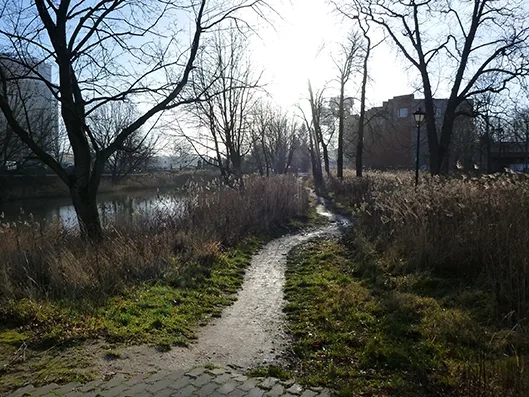
Go into Victory Park, which, duplicating Kaliningrad's monument to the 1,200 Guardsmen, is in a sense redundantly tautological. And the most unpleasant thing is that it shows very clearly that our memory is only as long as the funding lasts. Walk deeper in and tell me what the overgrown paths and lonely lamp posts have to do with victory – is this a Victory Park, after all, or a place to play Narnia?
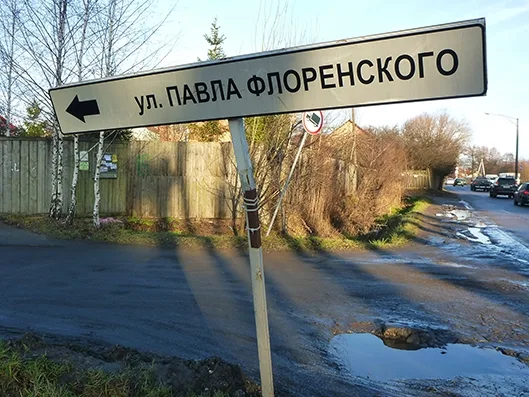
Or why does Kaliningrad need SUCH a Pavla Florenskogo Street*? I mean, is it not enough for us that he suffered a martyr's death on Solovki – are we evidently taking revenge on him for what he wrote about Kant? Ivana Susanina Street at least runs into a little swamp, so there is some sense in that. But what did Florensky do to deserve all this?
If we try to understand what is happening to the urban environment, we will see a picture that is interesting to a visiting anthropologist but devastating for the local cultural landscape. No, taken individually, every new building in the city and every new Kaliningrad monument is unobjectionable – in that same Europe, now almost out of reach, there are even scarier ones – but where we truly lead the planet is in the art of washing down pickled cucumbers with milk, or, if you prefer to hear it put this way, in a special penchant for eclecticism, in which alone, for reasons unknown to me, the minds of our city planners can find peace.
The itch to memorialise is so strong that we manage to put up monuments where monuments already stand, whipping the remnants of a coherent cultural and historical text into a hellish postmodern smoothie.
An example. The monument to the pioneers of ocean fishing, the one next to the Yunost sports complex, which in the days of my youth was known as the "monument to the broken bottle". One can feel differently about Soviet architecture, but this ensemble – and it is undoubtedly an ensemble, culturally and historically – is unified and even fitting. Yunost ("Youth") and pioneers, even if not those pioneers but others, still lie within the same semantic field. That is to say, this text, put simply, is written in one language.
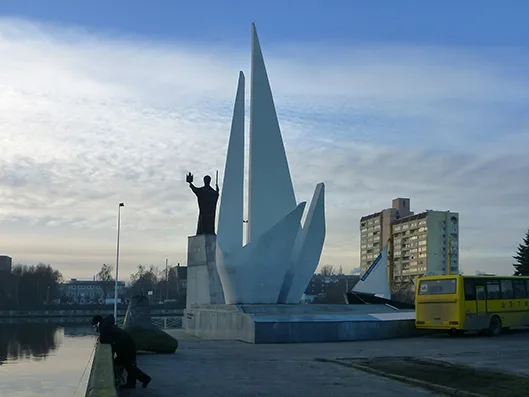
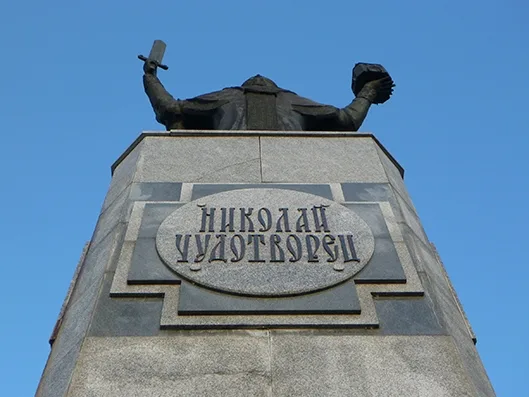
And what happens next? Next comes a disaster: beneath the sails rises the figure of St Nicholas the Wonderworker. No, there is nothing disastrous about Nicholas himself. He is the patron of seafarers, he is this, he is that, he is, after all, Santa Claus in other worlds less perfect than ours. But is it really not obvious that bringing together at one point two – not even monuments, but languages, cultural codes, you could pick many words here – is it really not clear that this robs both languages of meaning? Not only is the Soviet idea of labour as heroic feat profaned, but so is everything connected with the image of this newly minted Kolya the Pioneer.
The problem, by the way, is more serious than it seems: in the struggle between two cock-and-bull ideas – the first, that Kaliningrad is Königsberg, and the second, that our city is more Orthodox than Orthodoxy itself – we are erasing the main thing.
Kaliningrad is a Soviet city. Its heart is Soviet, the soldiers who took it by storm were Soviet, and the hands that raised it from the ruins were Soviet.
I remember when, at Easter, people painted you-know-what on Kaliningrad's "Bulls monument", and it didn't earn anyone a two-year stretch.
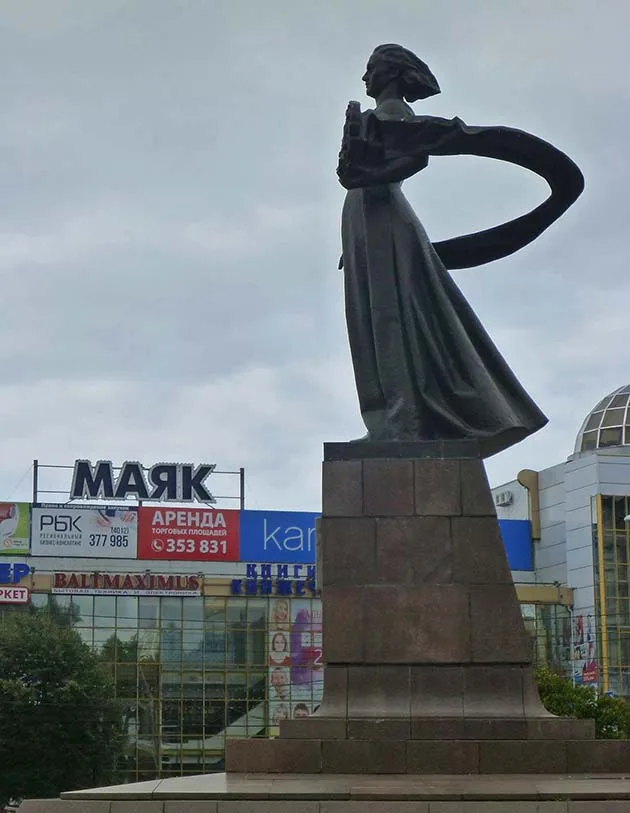
Why destroy the memory of what was? Really, why? I don't know – after all, nothing was even built here: no shop, no hundred-storey building. So it wasn't for profit, it was from the heart? In short, teach a fool to pray and he'll break his forehead. Again. Well, it happens. Although, of course, it would have been better to move Kaliningrad's "Mother Russia" monument there, or the Lenin monument, or the only monument to Kalinin in Kaliningrad – that is, all of "ours". Even that wouldn't have been so dreadful.
For some reason businessmen with a Komsomol past donate generously to churches but avoid recalling what it was that made their talents blossom so luxuriantly. I understand that talking about working people is somehow awkward nowadays, because it would turn out that Soviet Kaliningrad is not only dreary five-storey blocks that will have to be demolished some day – it is also education, the idea of social equality, of justice, of everything that is not sold in today's shops. To immortalise that would mean branding oneself. Oh no, we'd rather build another church. For good measure.
But if things go on at this rate, we will wear our memory through to holes and forget what really happened to us and what existed only in our fantasies.
And then it will turn out that the main monument to Kaliningrad already stands in the Central Park. And the city will be like Kaliningrad's monument to Münchhausen: everything around it is there, but he himself is not.
Photos by Mikhail Ogorodnikov.
____________
* Pavel Florensky was a Russian philosopher who considered Kant's philosophy hypocritical and sly, and Kant himself "a pillar of God-opposing malice".
Translated from Russian with the help of AI (Claude, Anthropic), October 2026.