This is an excerpt from Nikolai Karamzin's book "Letters of a Russian Traveller". Karamzin visited our Cathedral on 19 July 1789, which means that the question of whether secret underground passages – or even a whole underground city – exist in Königsberg is at least two centuries old. Unfortunately, Nikolai Mikhailovich did not specify which miles he used to measure this distance: French land miles of 4,444 metres, German miles of 7,420 metres, or any of the 44 other miles then in use in Europe. And so the question of which church on the outskirts of the city this was remains unanswered.
Nikolai, a bookkeeper at one of the port administrations, had hardly read this book by the great Russian historian and man of letters, let alone known the passage quoted above by heart. One hundred and sixty years after Karamzin's visit to the city on the Pregel, the various little doors in the cellars of the ruined Königsberg quarters interested him for other reasons: the Germans, who until recently had been huddling in these cellars after the storming of the city, had almost all left the former East Prussia, leaving behind many household items that could be used at home or sold at the flea market. He was not, however, the only one in the city digging up usable objects, and so nobody was surprised by this pursuit. But one weekend Nikolai went out foraging as usual and did not turn up at work until Tuesday. Despite the obvious trouble that absenteeism from his main job promised, Nikolai did not look downcast, and he answered evasively when asked what had caused such a gross breach of labour discipline. A few days later, however, the neighbours spotted him at the same flea market, selling German tinned food on the side. When keeping the secret became unbearable, Nikolai, over a bottle of "Extra" in the kitchen, told his neighbours in the communal flat that he had gone into an ordinary cellar on Barbarastraße (now Pavlika Morozova Street) and found himself in a real underground labyrinth. At first it was simply an underground passage. Then came side branches and rooms. In some of them tinned food was stored, others held supplies of kerosene, in still others there were sets of bedding and rows of kerosene lamps.
Nikolai claimed that the corridors and rooms had electric wiring and light fittings, but he was afraid to switch on the light because, as he put it, he constantly felt someone's presence nearby.
In the end, having walked more than a kilometre through the underground labyrinths and completely lost his way, he was forced to spend two nights (as far as he could tell) on shelves with mattresses. Only on the third day did our bookkeeper manage to come out to the surface somewhere near Bagrationa Street. The neighbours were sceptical about his story but nevertheless reported it to the proper quarters. Nikolai spent the next two days in the company of militiamen, but the visit to the site did not confirm the denunciation. Nevertheless, the tinned food kept turning up at the market at weekends. Until, a month later, Nikolai vanished without a trace…
Do not try to find documentary confirmation of this story in the city archive – it is just one of many urban legends. But, as we know, every legend grows from some real roots. And so it would be worth working out what really lies behind the numerous stories about underground factories and depots, tunnels you could drive a car through, or even an underground railway to Berlin. Who commissioned and built these underground structures: the Teutonic Order, Prussian military engineers, or secret Nazi organisations?
The Legacy of the Grand Masters
In the minds of people today, the Teutonic Order has always had an aura of mystery and mysticism. Its strict hierarchy and rule, its closedness to the uninitiated, the grim ruins of its castles embodied for us the very "Dark Ages", and the mysterious-sounding words "grand master", "convent" and "komtur" go perfectly with underground galleries, dungeons and heavy brick vaults. At the height of its power the Order's state differed from the rest of Europe in having no system of vassalage: all resources – military, economic, financial – were directly under the central authority of the Order. This concentration of resources under a single command made it possible to carry out the most complex projects.
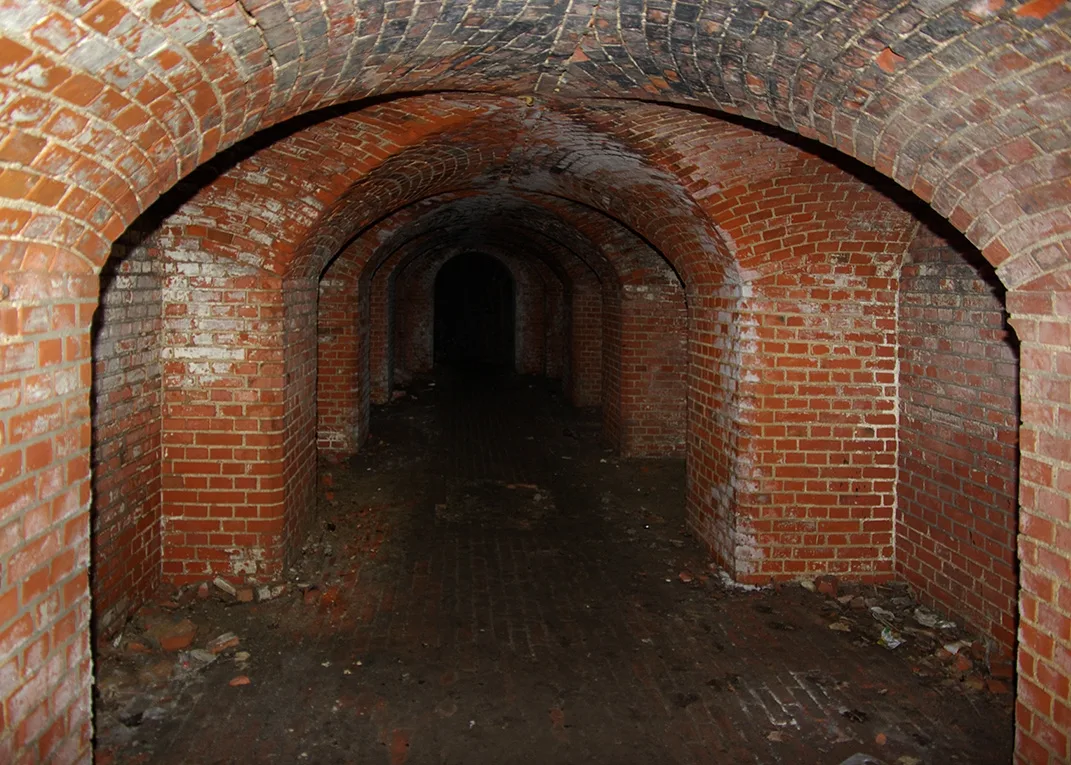
So what of the Order's legacy that has survived to our time could have earned the name of an "underground city" in legend? Well, first of all, the cellars of the knights' buildings, above all of castles and churches.
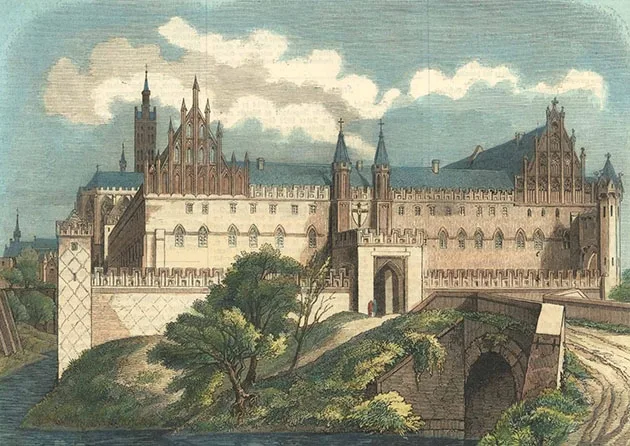
Many readers have seen the excavated cellars of the west wing of Königsberg Castle. No doubt there are also some who, as boys or girls, were lucky enough to visit these cellars before the well-known blowing-up of the remains of the Teutonic stronghold. Both the size of the rooms and the quality of their construction were impressive. True, we do not find such cellars in the Cathedral or in most churches of the Order period, nor do we see them in castles such as Balga, Saalau (the village of Kamenskoye, Chernyakhovsk District), Ragnit (the town of Neman) and a number of others, but that does not mean they were not there. Quite simply, several centuries after construction the cellars of the Order's buildings were deliberately filled with sand or soil in order to make the foundations more stable and prevent the old walls from collapsing. For the same reason, incidentally, many window openings of Gothic buildings were bricked up. To one degree or another, cellars exist almost everywhere. But today they can be discovered only through archaeological work.
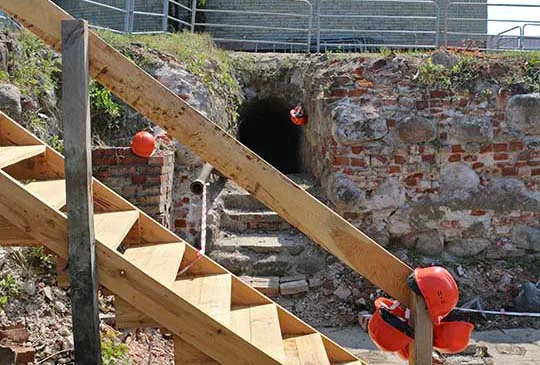
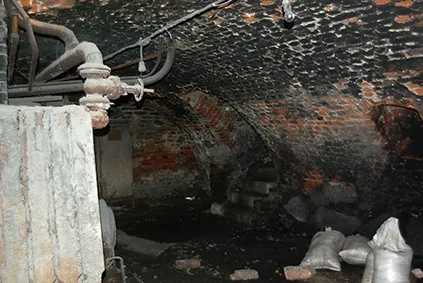
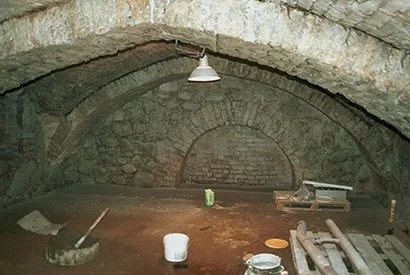
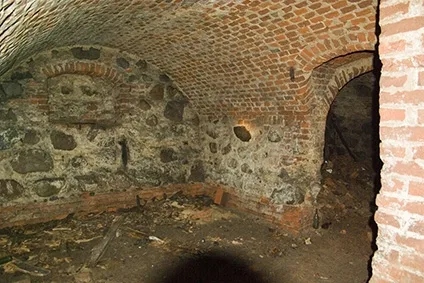
And yet cellars are not at all what we call "real dungeons". Could there not have been secret underground passages and galleries in medieval Königsberg? To answer this question, one must bear in mind that the Order knew how to count money, and so underground communications had to have a clear and comprehensible purpose. Moreover, the specific nature of Königsberg's soils, with their high groundwater level, and the engineering technology of the time did not allow any significant network of underground structures to be built. But a secret passage leading out of the castle – that was quite possible.
Such passages have been described at other castles, and one could certainly have existed at Königsberg too. Both by logic and by the experience of other similar passages, it would have had to lead to the Pregel.
Should the Order's leadership find itself in a critical situation, such a passage would have allowed them to leave the castle secretly, board a boat hidden at the exit to the river and escape danger. It is just such a passage – or rather the remains of its masonry – that archaeologists may have found during excavations on the site of Königsberg Castle. "May" – because the archaeologists followed it for no more than 30 metres. Beyond that the passage had completely collapsed and turned into a mixture of earth and broken brickwork. The point is that such structures need constant maintenance to be kept in proper condition. And if we see everywhere how German buildings above ground fall into disrepair and collapse within just a few decades without proper care, one can only imagine what happened to underground tunnels forgotten for several centuries. Reports that flashed through several media outlets claiming that a mysterious passage from the castle to the Cathedral had been found can be left to the conscience and imagination of their authors. No one has ever given a convincing explanation of why the knights would have needed to build an underground passage between these two buildings. And of course no evidence has been found that the passage went any further than the bank of the Pregel.
So what do we end up with? In the end, regarding the Order period in the history of Königsberg's underground, we can say that beneath the city lie the earth-filled remains of the cellars of Königsberg Castle and of old churches, and (possibly) traces of one or more underground passages leading out of the castle. But no one will be able to walk through them unless archaeologists open them up.
Secret Passages in Bastions and Forts
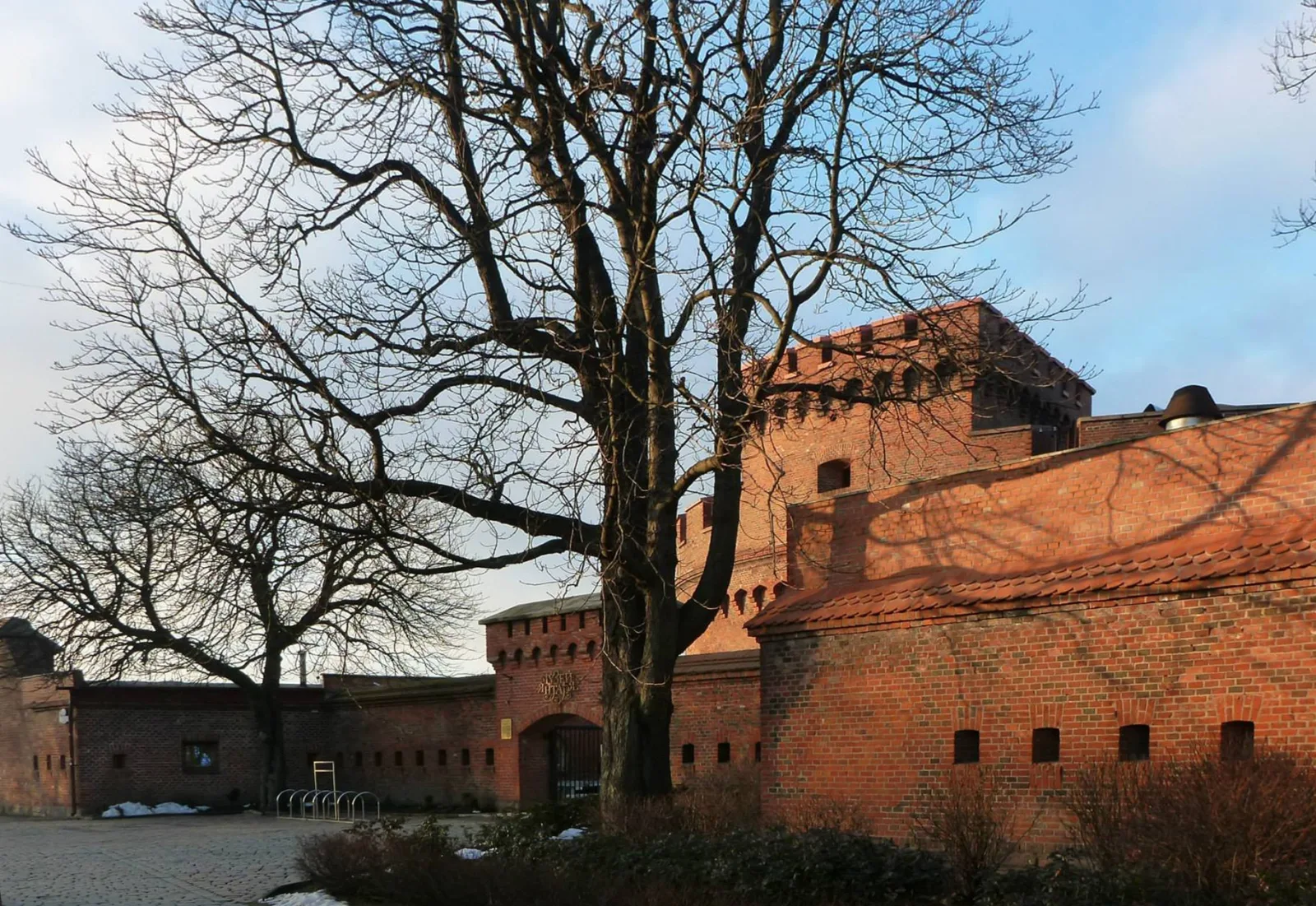
Anyone who has walked along the old fortifications on Litovsky Val will have noticed that the body of the rampart contains underground rooms. Some of them are isolated, some are connected to each other. And that is only what is visible to the naked eye. Similar underground structures exist at the opposite end of the old city along Kalinina Avenue, where the city's bastioned rampart also ran. It is quite possible that these structures played their part in the legends of the underground city. After all, one can imagine that if there are passages and cellars here, they must also exist in the rest of the city and lead to the "Kronprinz" barracks or even to the castle – why not? Moreover, this bastioned ring, built in 1843–62, is the second in the city's history and was erected in some sections along the line of the 17th-century bastion fortifications, which in turn might also have had underground chambers.
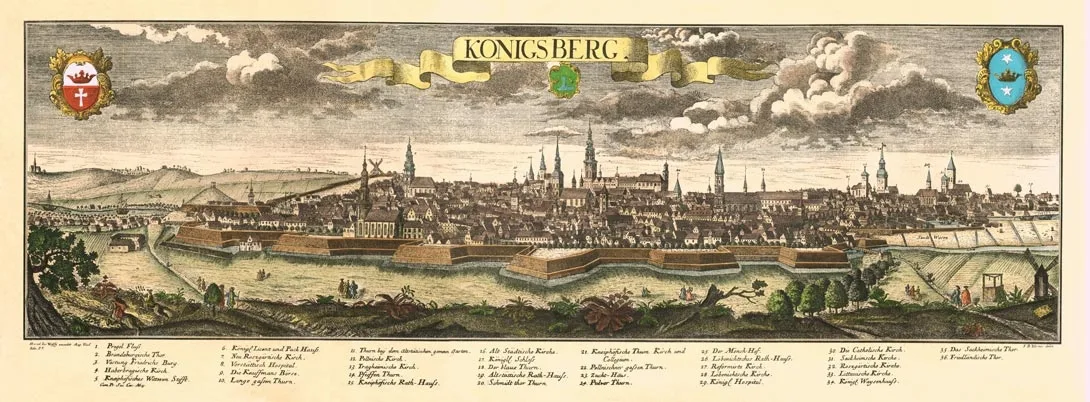 Bastions of Königsberg's first rampart ring.
Alas, a careful examination of the history of the city's fortifications leaves no room for these assumptions. The first bastioned ring, which the city acquired under Duke George William under pressure from the Swedes during the Thirty Years' War, was made entirely of timber and earth. It was built in 1626–34 according to the canons of bastion fortification of the time and comprised bastions and demi-bastions without any casemates inside. The surviving cross-section drawings of the city rampart and bastions fully confirm this. With the second bastioned ring everything is even clearer, since construction drawings survive in the archives. And even the casemates inside Litovsky Val that we can see today are, strictly speaking, not underground chambers but structures that were covered with earth after construction to increase their resistance to artillery fire.
Only one underground passage between fortifications of that era is reliably known – the underground passage from the "Grolman" bastion to the "Kronprinz" defensive barracks under today's Litovsky Val Street.
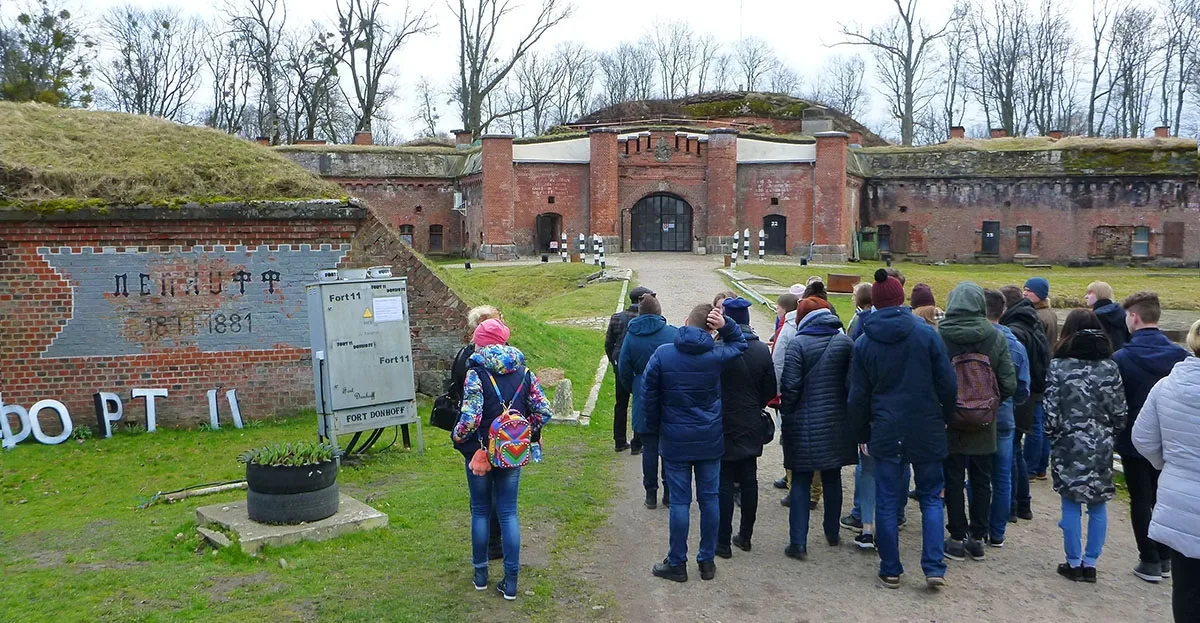
True, it was built by the open-cut method and only then covered with earth, and it did not last long: as early as the end of the 19th century the passage was filled in during the reconstruction of the street. The very principle of organising the defence of a bastioned fortress did not require a network of underground communications. The same applies to the later system of forts. German thoroughness and strict adherence to the designs of the so-called "German standard forts" dispel all doubts: the forts had only shallow cellars or semi-basements and were never linked by an underground railway, as yet another urban legend insists.
The Underground Industry of Nazism
Believers in an underground Königsberg are left with one saving hope – the buildings of the Third Reich. There are certain grounds for this: totalitarian regimes, as we know, have always produced something out of the ordinary. This was made possible by the ability to mobilise any resources within the country for the sake of the most fantastic idea. This was especially true of Hitler's leadership, which until its last days believed in some miracle weapon capable of saving the system from inevitable collapse at a stroke. So perhaps, out of fear of the Red Army's advance and the Allied bombing raids, the "ground floor" of the legends really was created in Königsberg? Only the question of a real underground city can be answered categorically: no, nothing of the kind has been found.
There are no underground tank factories, no underground bases for midget submarines with an outlet into the Pregel, no secret, countless weapons depots. There are none, because there is not a single reliable piece of evidence that they were ever built.
There is plenty of evidence about the Führer's secret bunkers, but not a single piece about underground factories in Königsberg. Facilities of this kind inevitably generate documents: for the supply of building materials and steel structures, for the construction of power lines, for installing equipment and staffing with specialists, and finally for the incoming raw materials and the finished products shipped out. But nothing of the sort has been found, which is a sure sign that there were no underground factories.
Hope Dies Last!
Nevertheless, it cannot be said that there is nothing at all under the ground in our city. First of all, we have inherited an extensive network of underground utilities. These are not underground passages originally intended for the covert movement of people. But many of the city's collectors and water conduits are so large that a person can walk through them upright. Through one such tunnel water from the Upper Lake flows into the moat by Victory Park, and through its branch it passes under the tracks of the North Station and emerges beyond Sovetsky Avenue, forming the Parkovy Stream. In some collectors walled-up branches have been found. Where they lead and what they were intended for is still unknown. It is said that at the very beginning of the 1950s, after numerous rumours that Soviet citizens were freely strolling about underground Königsberg, a commission with broad powers was sent to Kaliningrad from Lavrentiy Pavlovich Beria's department. The commission enlisted local conscript soldiers, who bricked up tunnels of unknown purpose, leaving only those whose functions were clear and which served the city's utilities. In confirmation of this story, local diggers a few years ago even published a photograph of one such walled-up passage with a handprint in the cement and the inscription "DMB 1953". Incidentally, the commission found no underground factories either.
One real underground passage is also known. It ran from the railway tunnel under Victory Square to the Polizeipräsidium building (now the building of the FSB directorate).
The purpose of the underground passage was to avoid shocking the public travelling by train to the resorts with the sight of arrested persons being delivered to the Polizeipräsidium. To this end, the carriage with the prisoners stopped in the railway tunnel, and the escort took the prisoners along the underground passage to their destination. Today the passage is not in use, and its entrances have been bricked up and plastered over.
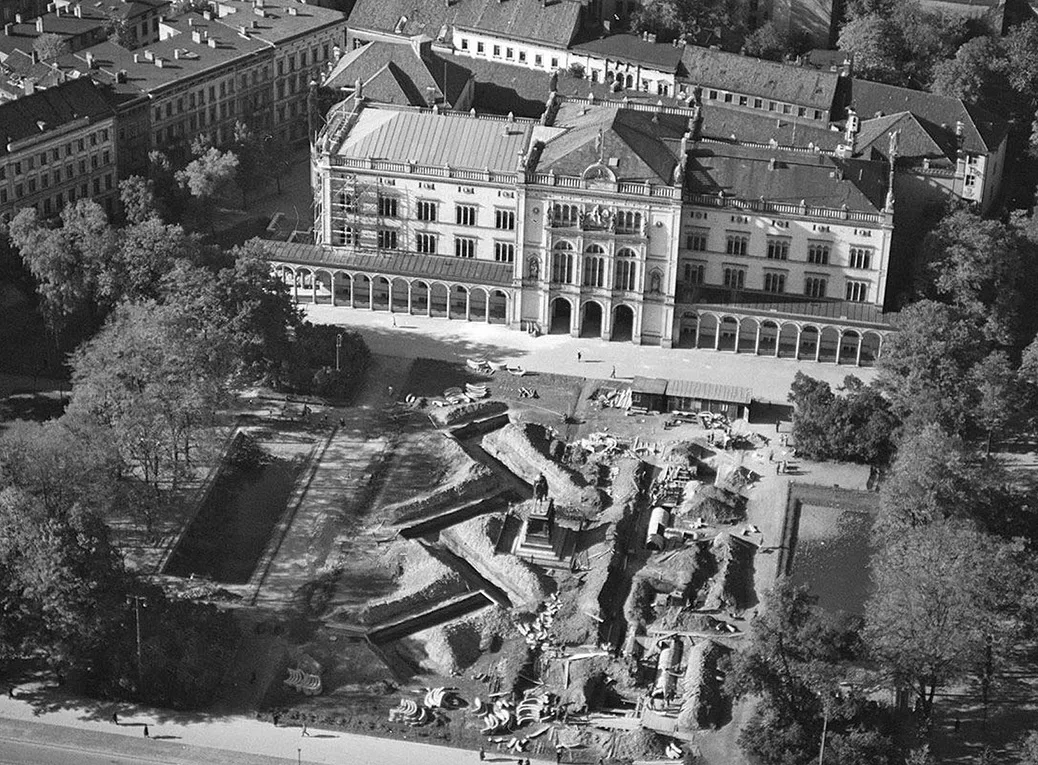 Construction of an air-raid shelter in the form of a W-shaped gallery in front of the university building.
Another type of underground structure is air-raid shelters and bunkers. The air-raid shelters were built by the open-cut method, as can be seen in numerous wartime photographs. They were mostly standard W-shaped galleries. The number of shelters surviving in one state or another is quite large, but none of them has passages connecting it with other underground facilities. With bunkers things are a little more complicated, because most of them exist only in eyewitness accounts of certain valuables being stored in them. Witnesses described in detail how they went down the stairs, how on intermediate levels they saw beds standing, food supplies and mysterious crates. But in the overwhelming majority of cases, although the witnesses were prepared to point out the exact location of the bunker entrance, no underground structures were found. The hypothetical bunkers in witnesses' accounts most often appear in the area of Kopernika, Vagnera and Barnaulskaya streets, which suggests that there is at least one underground facility in this part of the city; but the witnesses disagree about its exact location, since they were in a state of stress at the time of their visit. In any case, from a geological point of view the area between Kopernika Street and Leninsky Avenue is the most favourable for building underground structures, and so it remains for future researchers to settle once and for all whether or not there are secret underground chambers here.
And a Little More about Underground Passages
Repeated childhood memories from the 1950s of how children got from one cellar through an underground passage into another, and from there into a third and a fourth, probably also played a part in the formation of the legend of underground Königsberg. These underground passages really did exist; they were built by the Germans during the war so that people could get out of a house's cellar if the entrances were blocked during a bombing raid. True, they were more like trenches covered with timber and earth and hardly ever connected more than two or three houses, but in children's imaginations they turned into tunnels many kilometres long with brick ceilings.
Other children of the 1950s noticed such passages in the cellars of Königsberg Castle. According to eyewitnesses, the passages ran for several metres or several dozen metres and ended in rubble.
And these childhood impressions may also have a real basis. There is evidence that just before the storming of the city some earthworks were carried out in the castle, and that the underground passages from the cellars were intended for hiding certain valuables or archives. And if such passages have not been found to this day, it is only because the search for them was carried out unsystematically, with too little time and money.
Summing Up
It is for the reader alone to judge how far we have advanced in our knowledge of underground Königsberg since the days of Nikolai Karamzin and his "Whether this is true or not, I do not know…". Yes, relying on logic, documentary evidence and analogies, we have refuted only the most fantastic of the legends about the city's underground. But another thing is equally certain: not everything that remains below the level of Kaliningrad's pavements has been reliably and thoroughly studied. The famous "Bryusov bunker" on Rosenstraße (now the courtyard of the building at Nos. 2–8 Vagnera Street) or "Turlygina's underground passage" under Lange Reihe (Barnaulskaya Street) seem like myths today, but then Homer's Troy was also once a myth, and more than one historian had doubted its existence. And one can only guess what will be revealed to the researchers who manage to solve these mysteries of Königsberg's underground.
Translated from Russian with the help of AI (Claude, Anthropic), October 2026.