A city where it rains all the time
Natalya N., 28, insurance company specialist, moved from Kyrgyzstan in 2014:

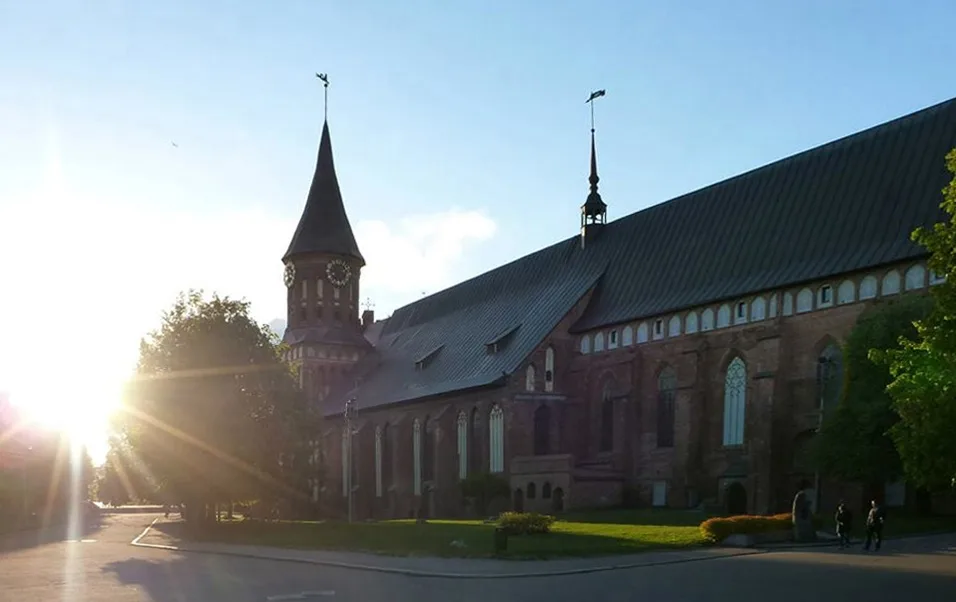
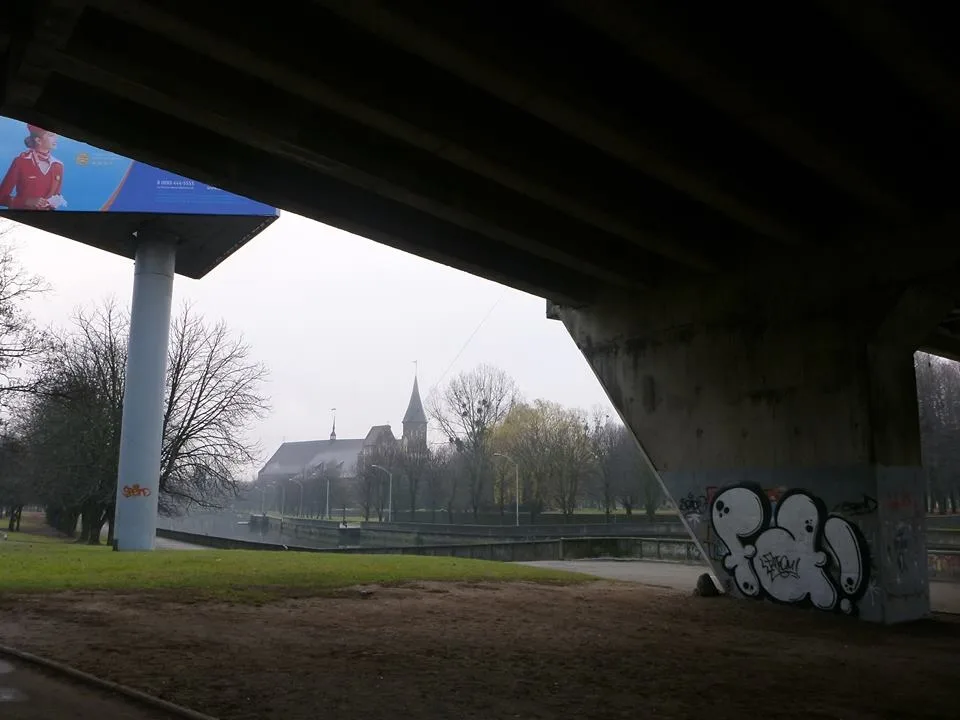
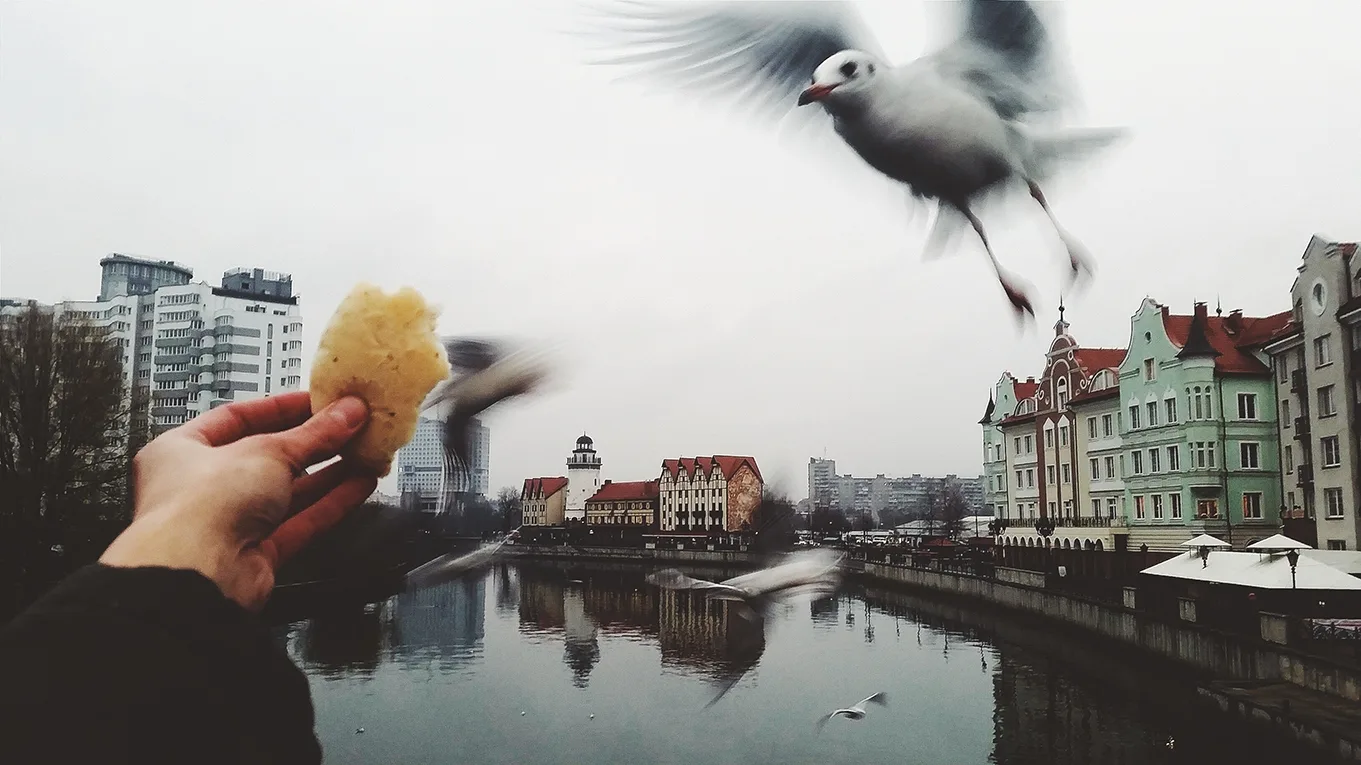
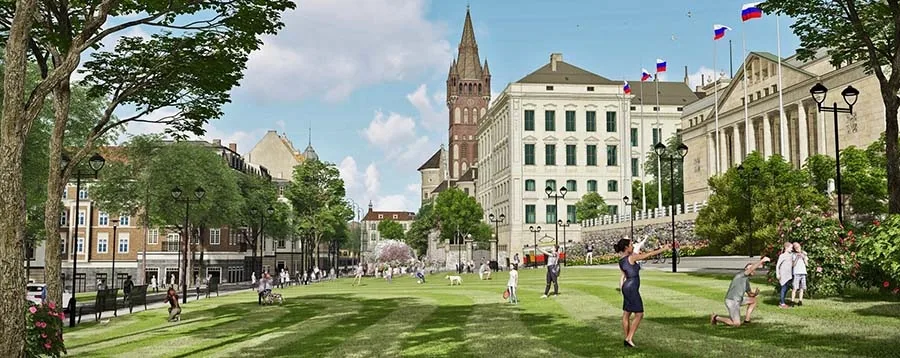
"In September 2014 my husband, our two children and I made up our minds to move from Kyrgyzstan to Russia, to Kaliningrad. The reasons were the growing nationalism among the Kyrgyz, the economic decline and the mass departure of the Russian population from the country. Since I have relatives and many friends living in Kaliningrad, I decided to take advantage of the state resettlement programme. I had never been to Kaliningrad before the move, so my family and I pictured the city in our imagination from our friends' stories and photos on the Internet. When we arrived, the first thing that struck us was the wealth of architectural monuments. And at last we found out for ourselves what it means when it rains all the time. Incidentally, we were surprised that you rarely see bars on ground-floor windows, and that people themselves look after the lovely flower beds outside their homes."
In the city as if in the countryside
Karen G., 35, chief engineer in IT, moved from Armenia (Yerevan) in January 2015:

"I wanted some change in my life, so I decided to take a chance and change my surroundings completely – to move to another country. I chose Kaliningrad because my relatives live there. And I imagined it would be just like my native Yerevan. But when I first got to know the city, I thought: 'So many people and so little going on!' The weather was no joy either: overcast, crazy and unpredictable. On the other hand, I was delighted by all the greenery: lots of gardens, parks, trees — it's wonderful. You can relax as if you were out in the countryside while living in the city centre. I've heard that trees are gradually being cut down here to make way for shopping centres. Yerevan has the same problem. And it's sad. I'm also upset by the poor standard of medical care in Kaliningrad and the useless service, especially at the airport. But doing business, as it turned out, is much easier here than anywhere else."
I found friends and I treasure them
Yelena K., 33, photographer, moved from Ivanovo in December 2005:

"In Ivanovo I lived with the man I loved, but it didn't work out. And since I had no friends in that city, I decided to move to Kaliningrad, closer to my family. Given that I'm an easy-going and fairly adventurous person, I didn't worry about what kind of city I was going to or whether I would like it; I was simply curious to see it. And it charmed me. I especially admired Kaliningrad's architecture. And the house numbering surprised me: every entrance is a separate house number. So European! So I decided this place was perfectly suitable to live in for good. The people I met, and still meet, are friendly and wonderful; I have found many good friends whom I treasure. Now my parents are moving to Krasnodar and want me to come with them, but I doubt I'll leave; Kaliningrad has become my home town."
I realised I was home
Sergey M., 35, artist, moved from Chelyabinsk in 2010:

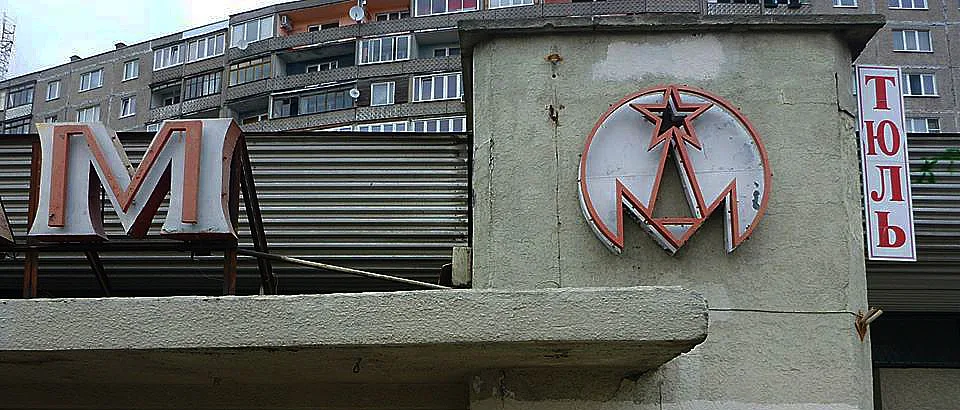
"I always wanted to move closer to my relatives in Germany. And Kaliningrad turned out to be the best option. Like most resettlers, I first got to know the region through photos and videos on the Internet. It's impossible not to fall in love with Kaliningrad: interesting architecture, a rich history, a clean environment, a mild climate and, of course, the sea. I spent a long time on Kaliningrad websites and forums, talked a lot with locals and studied the information. So by the time I moved I was fairly well prepared and didn't come across any big surprises. But however well you prepare, you can't avoid a surprise or two. For instance, I was struck by the high prices — for food, property and utility bills. And I also had the feeling that I had travelled back in time, by about ten years. True, that feeling soon passed, because year after year the region changes for the better, and Kaliningrad is becoming an ever more European city — a kind of homegrown abroad.
Over time I got to know many Kaliningraders, and surprisingly most of them were newcomers too. This is probably the only region where you can meet people from every corner of the Soviet Union, and that has a charm of its own.
People often ask me whether I regret coming here and whether I feel drawn back. No, not in the least! I have been to many places in my life and changed my place of residence more than once, but only when I came here did I finally realise that I was home."
This city has everything ahead of it
Yelena B., 24, accountant, moved from Kazakhstan (Almaty) in September 2013:

"When everything in Almaty started being switched to the state language, I began looking for somewhere to move. After much thought my choice fell on Kaliningrad. Why? Firstly, there's access to the sea here — and that's a plus; secondly, you can use the resettlement programme, which provides both cash payments and help with paperwork.
But I had no relatives here, not even acquaintances — no one at all. And I didn't learn about the city from friends' stories but simply from photos on the Internet. Of course, I liked it. I still remember my first impression: lots of greenery and warm, pleasant rain. And the puddles were so clean, reflecting the sky. I walked through them happily, not noticing that my feet had long since got soaked.
The city seemed quiet to me compared with Almaty, calm, with not so many people. And compared with a metropolis the air is very clean. The townspeople were friendly and helpful; they were glad to show me the way when I got lost in the streets, and once someone even walked me to the place I needed so that I wouldn't lose my way.
What I didn't like was how hard it is to rent a flat. There are offers, but you have to use expensive estate agents. That's not very convenient!
Over time I got used to things. Kaliningrad has a very mild winter but a short summer. On the other hand, you can admire the nature endlessly and at any time of year. The sea, forests, fields, clouds racing across the sky at dizzying speed. And the weather, which changes so quickly — now sunshine, now a shower — makes me very happy.
I don't regret moving; my home is here now. And it seems to me that this city still has everything ahead of it: it is developing, and that's what matters most!"
We had to queue to sign up for the electronic queue
Denis R., 34, IT specialist, moved from Kazakhstan in April 2011:

"I always wanted to live in Russia – to feel that I belonged, rather than being 'some Russian in Kazakhstan'. And although my family and I lived very well, the thought of moving never left me. I wanted to move to a relatively small city (I was tired of living in a metropolis) with a pleasant climate, and when the time came to decide, the choice fell on Kaliningrad.
My first impression of Kaliningrad – so many Slavs! And the people I met were friendly (although maybe it's just that I'm very sociable). What seemed odd to us was that the streets here are crooked, because we were used to all streets being parallel and perpendicular. Here you can turn into one street, end up on another and come out on a third.
What we didn't like was the bureaucracy, which we still can't get used to. Everywhere you need a huge pile of documents, there are queues everywhere; once we even had to queue to sign up for the electronic queue.
And we still don't like the ratio of prices to wages. My wife and I worked hard for a long time to bring our family back up to the level we had before the move. Yet despite a fairly stable financial position, there's a lot we can't afford. Comparing Kaliningrad and Almaty in terms of prices is like comparing Petersburg and Tver."
I've already been "Kaliningradised"
Olga, 22, journalist by training, moved in August 2014:
"Before I moved, I imagined Kaliningrad as a beautiful city inhabited by people with snooty faces. They were what I feared. The residents turned out to be 'cold', selfish, arrogant and sullen. At first nothing worked out for me! The beauty of the city did not solve the problem of finding a job, and cheap, good-quality food did nothing to ease my growing pessimism. Even though, in essence, these two things are the main reasons for migrating from the Far East. After a while I myself became, so to speak, 'Kaliningradised' and grew like the locals."
Why are they removing the tram tracks?
Aleksandr K., 23, journalist, moved from Votkinsk in 2014:

"The reason for my move is simple: act while you're young! People naturally want more and regret what never happened. Before moving I watched a lot of travel programmes about Kaliningrad and the region and imagined the city as a resort town with unique buildings and unusual nature. But above all I dreamt of seeing the sea and swimming in it. I also wanted to see Europe, so to speak, just down the street. Standing in Sovetsk on the bank of the Neman, I very nearly managed it.
I spent the first two months walking not only around Kaliningrad but also around the small towns of the region. I liked absolutely everything, especially the German neighbourhoods with their houses and other remnants of the past from before the era of Soviet construction.
As for the people, they are all completely different here. Because people moved here from all over the Soviet Union, there is no shared culture or set of values specific to this territory left. Of course, there are plenty of books, objects and relics, but the true heirs and followers of the way of thinking people lived by 80–90 years ago are gone. And without them it's only a theory of life in Königsberg. But the city is popular with tourists from all over the world, so you hear foreign languages everywhere. And if you ask passers-by for help, they won't leave you in trouble.
What surprised me most of all was the Kaliningrad weather. I arrived in August, and until the end of September it was not just sunny and warm but actually hot, while all over Russia the thermometer didn't rise above 15 degrees and it was rather chilly. Then again, a week before New Year I was walking through the city in pouring rain, and to me that was nonsense. Another surprise was that everyone here says "Greater Russia". I think readers will understand what that means.
True, over time the city's drawbacks began to show. The transport system is simply unfit for living with. The incessant sound of car horns and the eternal bus jams at the stops are a familiar sight in Kaliningrad. On top of that, the regional government's obvious determination to do away with the city's tram lines — the oldest in Russia, by the way — simply gives me no peace. The history of this kind of transport is very rich, especially in this city, and it's a pity no one cares about such a heritage.
But on the whole I'm very happy with the city and don't regret moving at all. And now, when my friends go on holiday to the south of Russia, I often feel upset, because here the conditions for a comfortable holiday are not only no worse but even better."
Winter without snow
Oksana G., 23, office manager, moved from the Khanty-Mansi Okrug in the summer of 2009:

"There were several reasons for moving to Kaliningrad: firstly, it turned out that studying in this city is much cheaper than in the Khanty-Mansi Autonomous Okrug; secondly, my aunt lives here; thirdly, I often came to Kaliningrad with my parents when I was little, and I have been in love with the city ever since.
Kaliningrad is very green, and you notice it the moment you get here: parks, public gardens, avenues – it's all very beautiful. Of course, the sea isn't as warm as one would like, but even just strolling along the promenade, breathing the sea air and clearing your head is a huge plus. And the atmosphere of the place is indescribable: everything feels familiar and warm, yet at the same time mysterious, with the spirit of bygone times.
It took me a long time to get used to the traffic, because I couldn't work out how to judge when the bus I needed would arrive: either you come too early and wait, or you're a minute late and you've missed it. I also had to get used to the crowds, as I had lived in a town of about 50,000 inhabitants, no more. And I still haven't got used to the fact that there's no snow here. How can there be winter without snow?
I'm still discovering Kaliningrad. I think that even if you've lived here since birth, you can always find something new: streets, interesting places, sweet and cosy cafés. Whenever I can, I also try to visit the various small towns of the region; they are unusual too and keep the secrets of their history. I don't regret coming to Kaliningrad; it's a wonderful city!"
Kaliningrad does not throw itself at the first comer, does not wag its tail or beg to become your best friend. It is proud of its history, its beauty and its grandeur, and you must first come to respect it, hear the city's heartbeat and catch its rhythm before you feel it is home. Kaliningrad is beautiful, I know that for sure. We simply forget it, caught up in the daily bustle. Stop for a moment, look at Kaliningrad through a stranger's eyes, and believe me, it will light up in bright new colours.
The photographs used in this publication come from the personal archives of the survey participants.
Translated from Russian with the help of AI (Claude, Anthropic), October 2026.