LEGENDS OF PRUSSIA in the blog of Tatyana Kolivay.
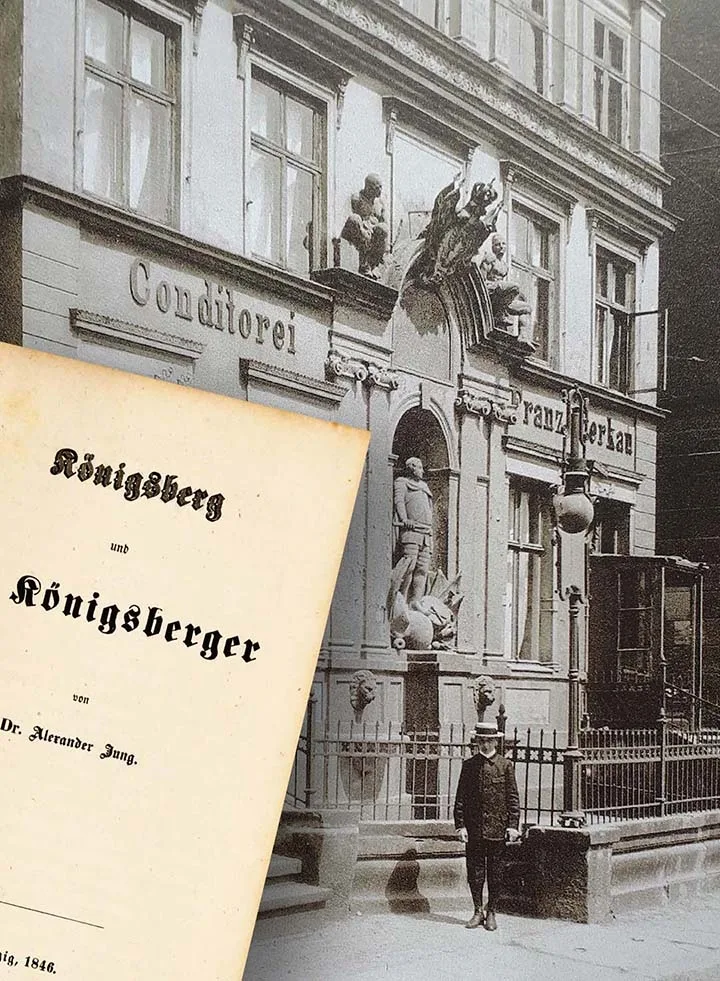
Königsberg is not only the capital of Prussia but also the capital of confectioners. Who has not tasted Königsberg marzipan? Of all the cities of Europe and the world, Königsberg certainly has the most workshops – yet what they produce are not monumental statues of marble or granite, but small-scale "sculpture" made of almond meal and icing sugar.
There are roughly as many confectioners in Königsberg as there are booksellers in Leipzig. There is a saying that Winter spends the summer resting in its palace in the mountains of Switzerland. I, however, believe that Winter has its summer palace here, in Königsberg, because the local confectioners – or "Swiss", as they were once called here – have the most spacious ice cellars, such as hardly any European sovereign possesses.
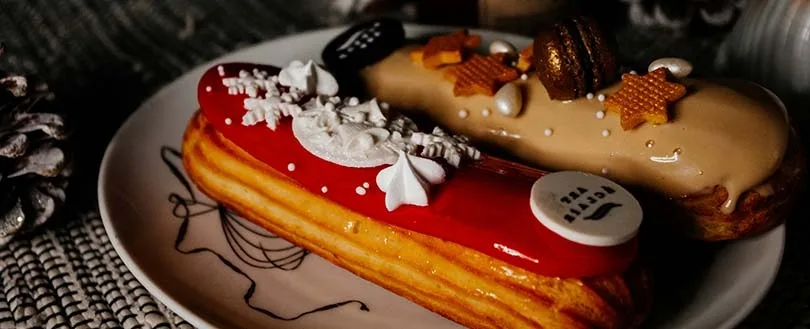
Anyone who crosses the threshold of the local confectioneries is greeted by pyramids of ice cream, pastries and all manner of sweets, temptingly displayed in glass cases.
And I am not even speaking of the ice cream sold in cups or crystal glasses in the summer heat on the streets of Königsberg to refresh sun-wearied passers-by.
Incidentally, you will not find more appetising and telling names in any novel than those of some of the confectioners here. Thus the name of the confectionery Feige, that is, "fig", conjures up in our imagination the sweetness of that well-known southern fruit; Pomatti reminds us of the Latin word pomum – "fruit" – melodiously clothed in the Italian softness of this famous confectioner's name; and finally, the name of the confectionery Dölitscher (now Maurizio) conceals the exclamation of gourmets the world over: Délicieux! – "Delicious!"
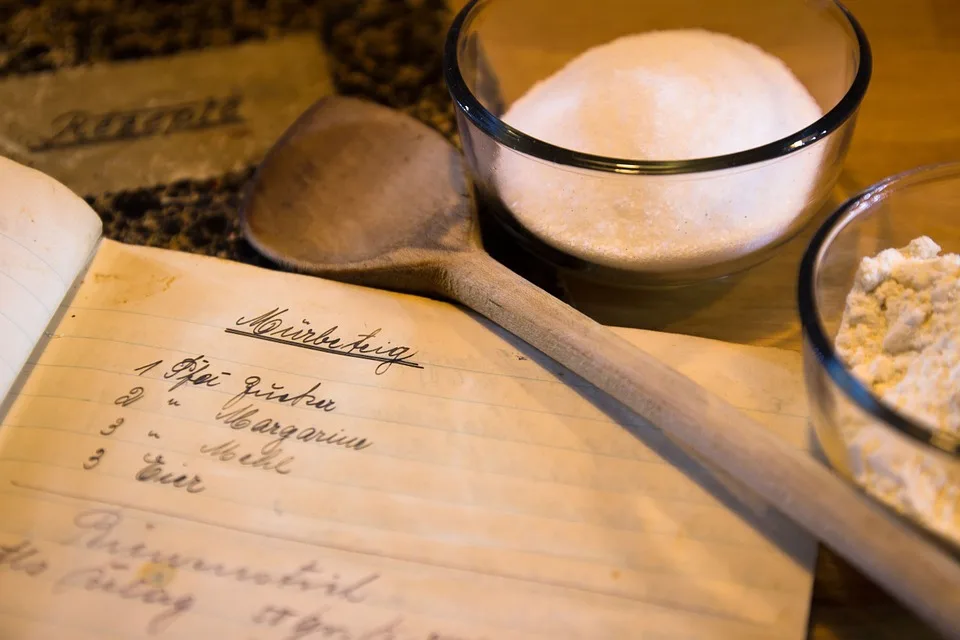
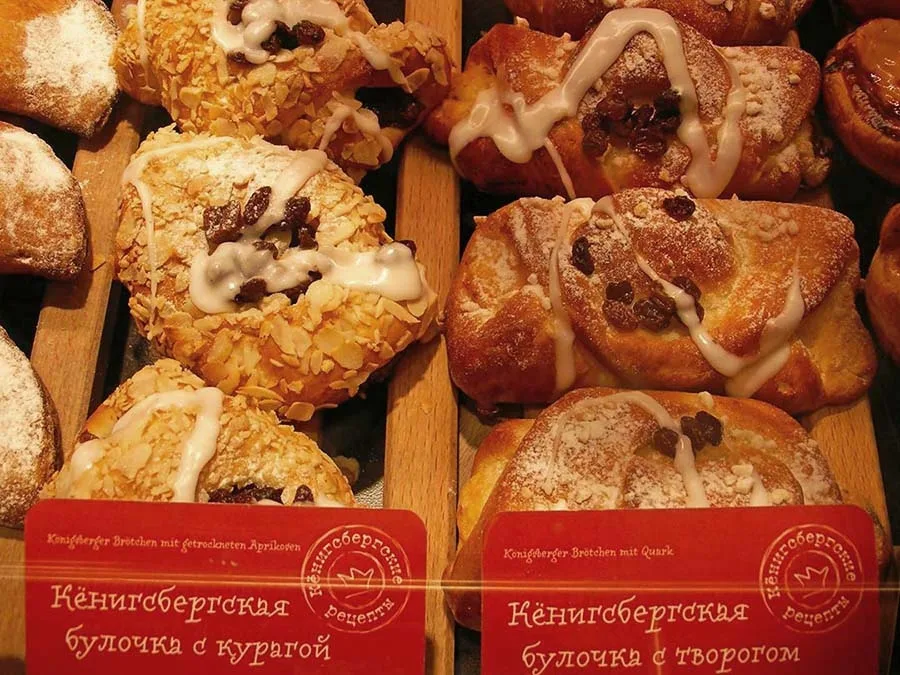 The Kaliningrad bakery chain "Königsbacker" experiments with old recipes from time to time.
On Französische Straße is the best coffee house in town, that of Herr Siegel. It is also a very large confectionery. This outstanding establishment is a meeting place for many local men of letters.
Anyone who wishes to observe the true elite of the Königsberg intelligentsia in all its manifestations and its changeable liveliness, anyone who wishes to become better acquainted with writers, scholars, artists, politicians, as well as actors, travellers and poets – in short, all those who strive in their work to break out of the bounds of the commonplace – must be sure to visit the Siegel coffee house at different times of day, for each time they will find a new company here with its own subcultural peculiarities.
The owner of our coffee house is Swiss by birth. He lived in Paris during his apprenticeship and, it seems, took his first lessons in the craft from Tortoni1 himself. Herr Siegel is one of the most amiable and attentive of men, a credit to his profession, and also the keeper of one of Königsberg's great secrets, which many have tried in vain to unravel to this day. For the coffee this man makes does not merely surprise – it astounds even seasoned connoisseurs, among them Prince Pückler2 and the Grand Sultan of Constantinople himself.
NOTE
1. Café Tortoni de Paris was a Parisian café that enjoyed great success in the 19th century. The author is most probably referring to François Aldegonde Tortoni (1800–1876), the second owner of the café from the famous Tortoni dynasty, under whom the establishment became the most fashionable place in Paris. It reached its peak in 1830–1848. At that time its reputation was unrivalled and its name resounded throughout Europe.
"There is no foreigner who would not go on a summer evening to relax at the brightly lit Café Tortoni. It is the general meeting place of beautiful people, an obligatory stop on leaving the Opéra. Here, in the grand café of this Italian wizard, ice cream comes under every name and in every conceivable shape. More than a thousand portions are eaten in a single summer evening.
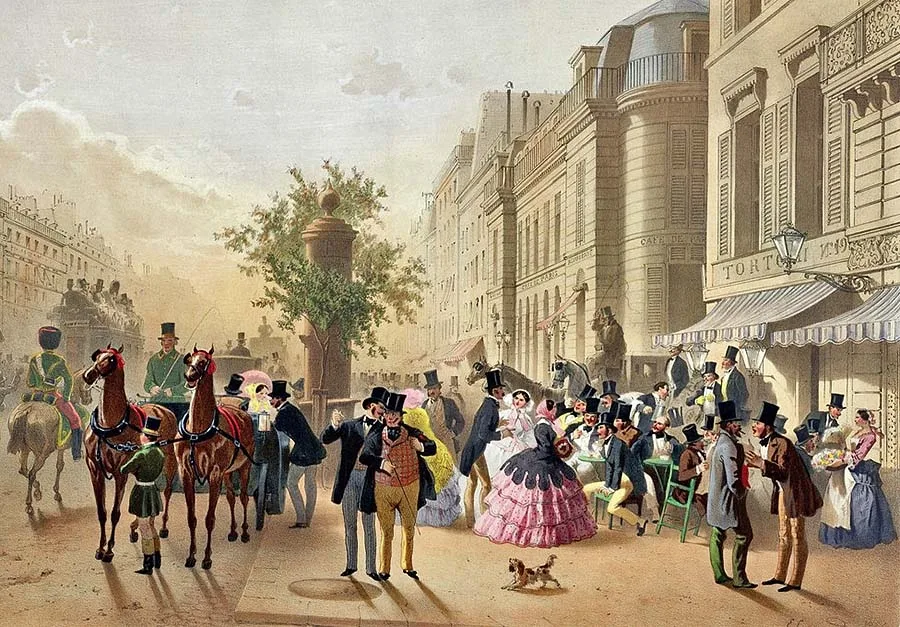
"Café Tortoni" (1856), lithograph by the French artist Eugène Guérard (1821–1866).
The richest carriages stand around the café in a triple ring. Wherever you look there are footmen's liveries and teams of thoroughbred horses. This is Tortoni's in the evening.
But Tortoni's in the morning is quite a different sight. It is nothing less than a branch of the stock exchange, where stockbrokers, bankers and speculators come to lunch, comment on the latest high-society gossip and, of course, discuss the current quotations. But suddenly a certain hour strikes. Everyone gets into their carriages, the horses gallop away, and soon it has all vanished.
At noon precisely the dandies arrive: they enter Tortoni's through the back door from the rue Taitbout, since the stockbrokers are still crowding the steps of the main entrance. Dressed in the latest Parisian fashion, shaved and coiffed, the crowd of dandies lunches noisily until two o'clock and then flies off just as noisily..."
(René Héron de Villefosse, Histoire et géographie gourmande de Paris, les Éditions de Paris, 1956, p.86.)
2. Prince Hermann Ludwig Heinrich von Pückler-Muskau (Hermann Ludwig Heinrich von Pückler-Muskau, 1785–1871) was a German writer, gardener and traveller, and one of the largest landowners in Prussia. He was a gourmet and coffee connoisseur famous throughout Prussia. Today an echo of his fame, from the days when his name was on everyone's lips, is the three-coloured cream cake named in his honour. According to one version, the prince brought the recipe back from Arabia; according to another, he created this layered cake himself.
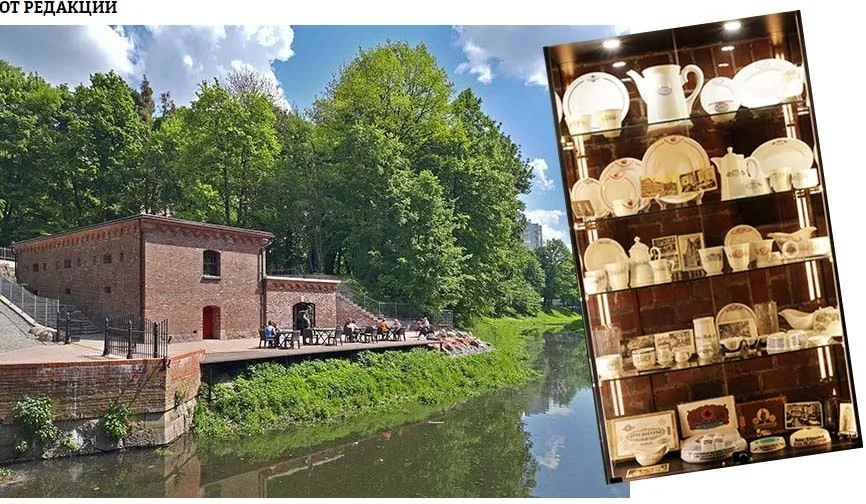
In 2023 a museum devoted to the restaurants, cafés and confectioneries of Königsberg and all of East Prussia opened in Kaliningrad at Litovsky Val 21d. The museum is open daily from 10.00 to 18.00. You can get a first look at the project online: LINK.
LEGENDS OF PRUSSIA in the blog of Tatyana Kolivay.
Translated from Russian with the help of AI (Claude, Anthropic), October 2026.