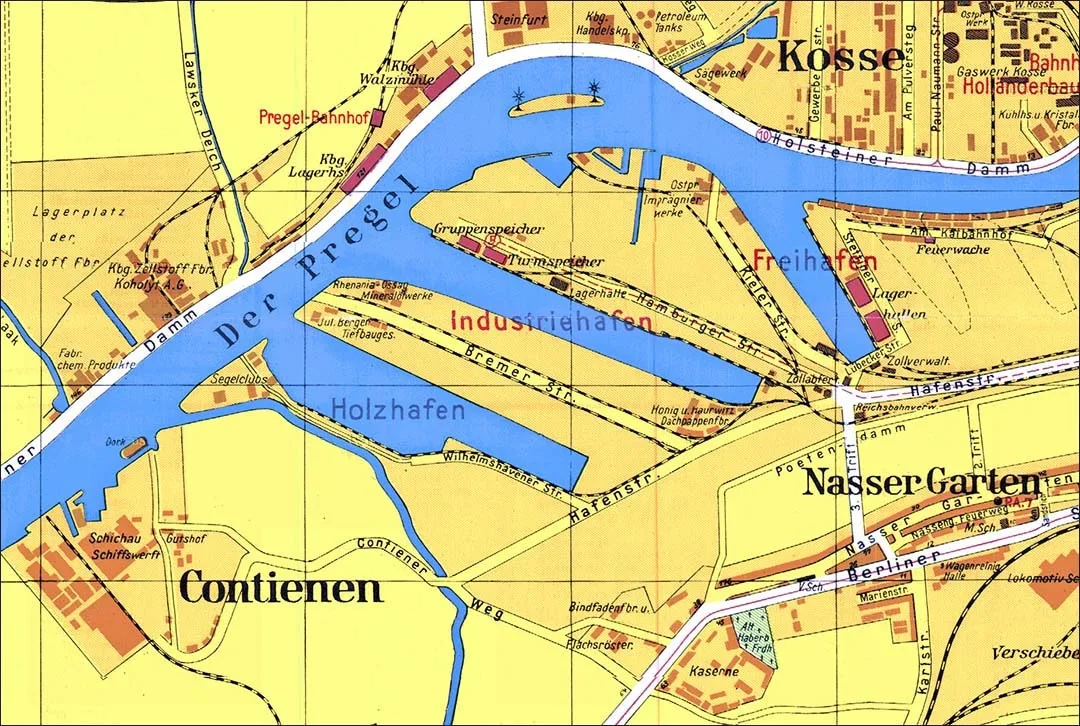
A number of documents state that Contienen appeared in 1684, when the first shipyard was opened on this spot on the orders of Elector Frederick William. The Elector commissioned Wybrand von Workum to begin building a Prussian fleet there. Soon four galleons were built, after which shipbuilding ceased.
In 1785 Contienen is classified as a royal Amt Vorwerk (Amtsvorwerk) with five households. By 1818 the number of households had not changed, but Contienen became an estate leased out on hereditary tenure (Erbpacht Gut).
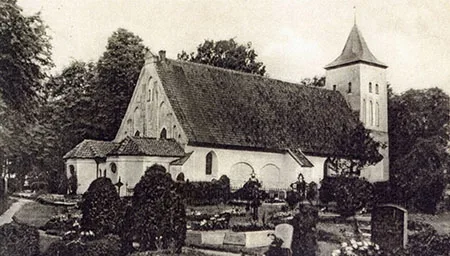
In the mid-19th century Contienen was an estate which from 1867 formed a Gutsbezirk in the Landkreis Königsberg (merged in 1939 into the Landkreis Samland). The estate belonged to the parish of Haffstrom (part of Shosseynoye).
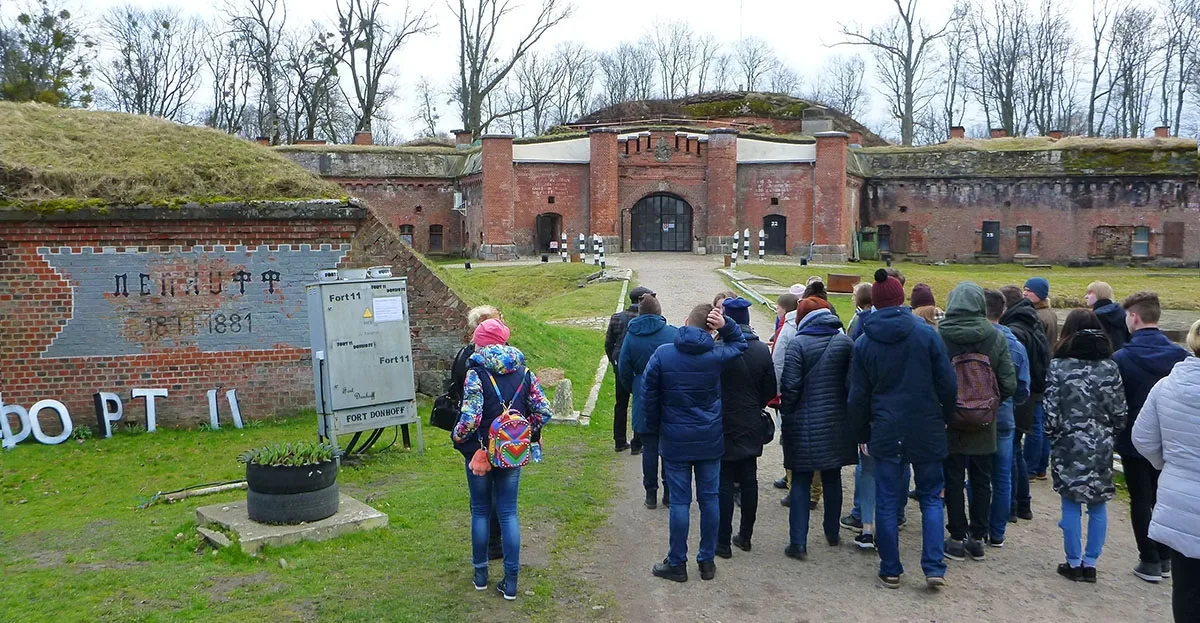
Around 1860 the Contienen redoubt (fort) was built near the Contienen estate. This fort was an earthen fortification pushed forward into the glacis. After the Königsberg ring of forts was built in the 1870s, Fort Contienen lost its defensive importance.
In 1871 Contienen had three dwelling houses, in which 11 families lived. On 1 September 1895 a new Gutsbezirk Contienen was created, comprising the Contienen estate, Fort Contienen and state land belonging to the triangulation authority.
The Gutsbezirk Contienen was included in the Amtsbezirk Ponarth. As of 1895 the Gutsbezirk Contienen owned 198.5 ha of land; the estate still had three dwelling houses, but the number of families living in them had fallen to ten.
By 1905 Contienen already had four houses, and the population consisted of 12 families and two citizens keeping their own households. Property tax revenue per hectare of land amounted to 26.78 marks, a very high figure, twice the average for the Gutsbezirke of the Landkreis Königsberg. After the Amtsbezirk Ponarth was dissolved on 29 March 1906, the Gutsbezirk Contienen came to belong to the new Amtsbezirk Groß Karschau (Vishenka horticultural partnership, 54°39'39'' N 20°27'44'' E).
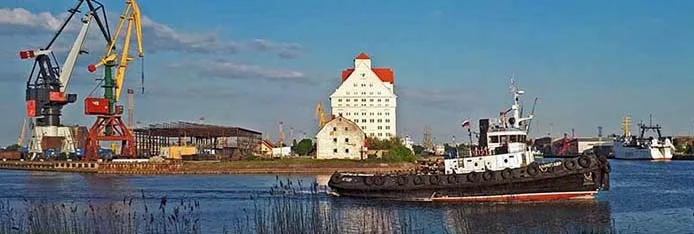
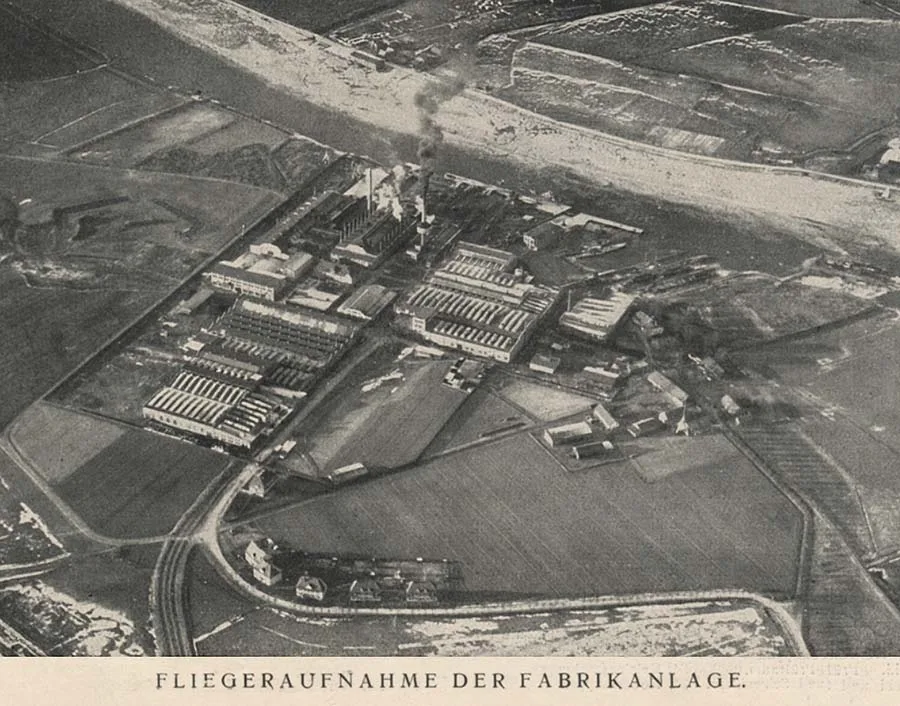
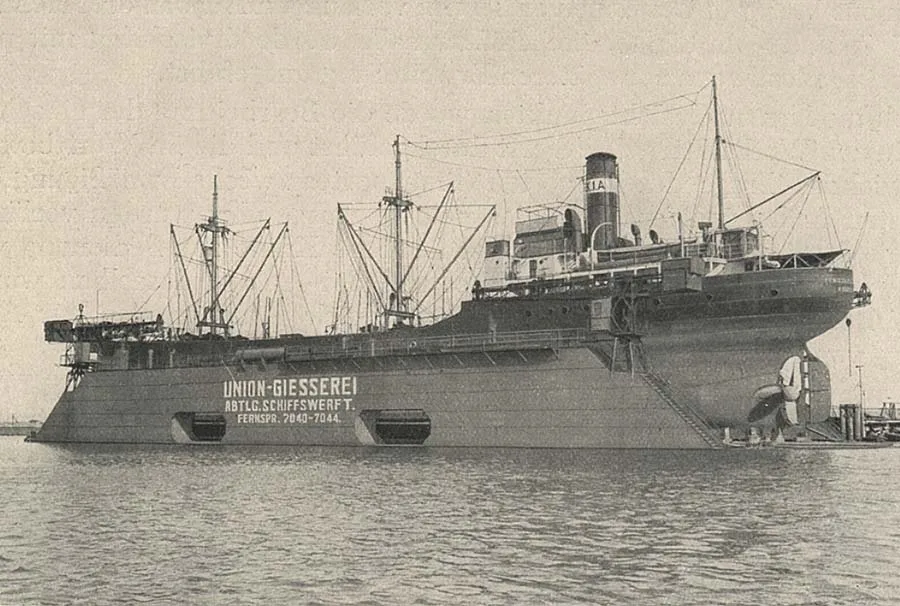
In 1907 the Union-Gießerei AG company opened an engineering works and a shipyard in Contienen.
On 12 March 1924 the Amtsbezirk Contienen was created in the Landkreis Königsberg, and its sole constituent, the Gutsbezirk Contienen, passed into it.
On 16 June 1927 the Gutsbezirk Contienen was abolished and incorporated into the municipality of Königsberg, becoming one of its urban districts. The Amtsbezirk Contienen was dissolved at the same time.
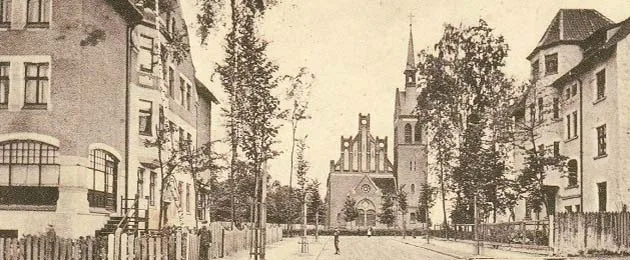
In 1930 the Union-Gießerei shipyard was merged with the Schichau shipyard from Elbing (Elbląg, Poland). The Schichau management built houses for the shipyard workers in Contienen along the Contiener Weg (Transportnaya Street).
After the end of the storming of Königsberg, Commandant's Office No. 6 was set up in a house on Contiener Weg (Transportnaya Street) in Contienen. The former Schichau shipyard was among the enterprises designated for priority restoration.
The overall destruction of the Schichau shipyard did not exceed 10%, but the most valuable equipment had been evacuated to Germany. By a resolution of the USSR State Defence Committee of 8 July 1945 a shipbuilding plant was created, which on 2 August 1945 was given the number 820.
On 23 November 1945, by a resolution of the Military Council of the Special Military District, the "Shikhau" district (so spelled in the document) was renamed the settlement of Sudostroitelny. By a decision of the Kaliningrad City Executive Committee of 29 July 1948 Contienen was renamed Zavodskoy Gorodok. By a new decision of 18 August 1949 the City Executive Committee renamed Zavodskoy Gorodok the settlement of Voroshilovo within the Baltiysky District of Kaliningrad.
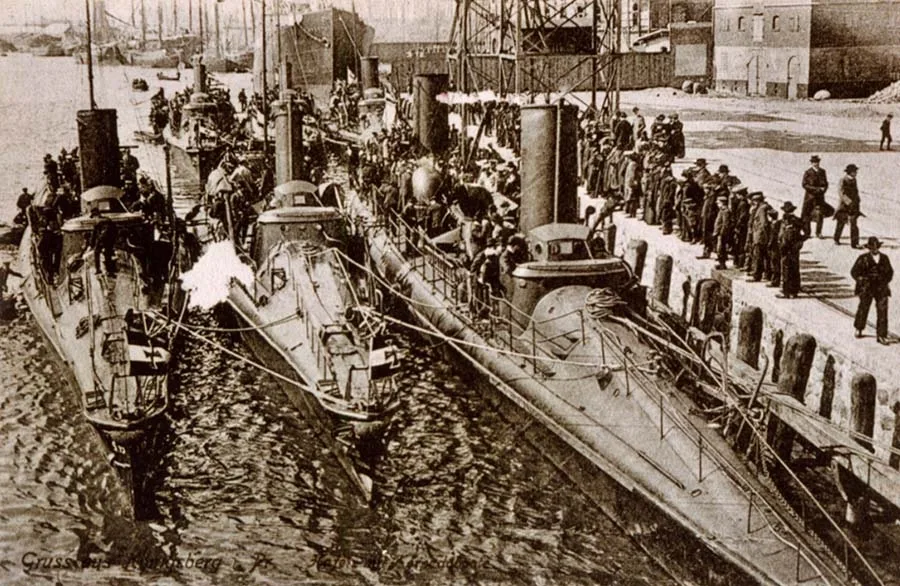
The name of the settlement never became popular with the city's residents; although it appeared in the directories of 1976 and 1983, it was already absent from the 1997 city plan. Townspeople simply called this area "the Yantar plant".
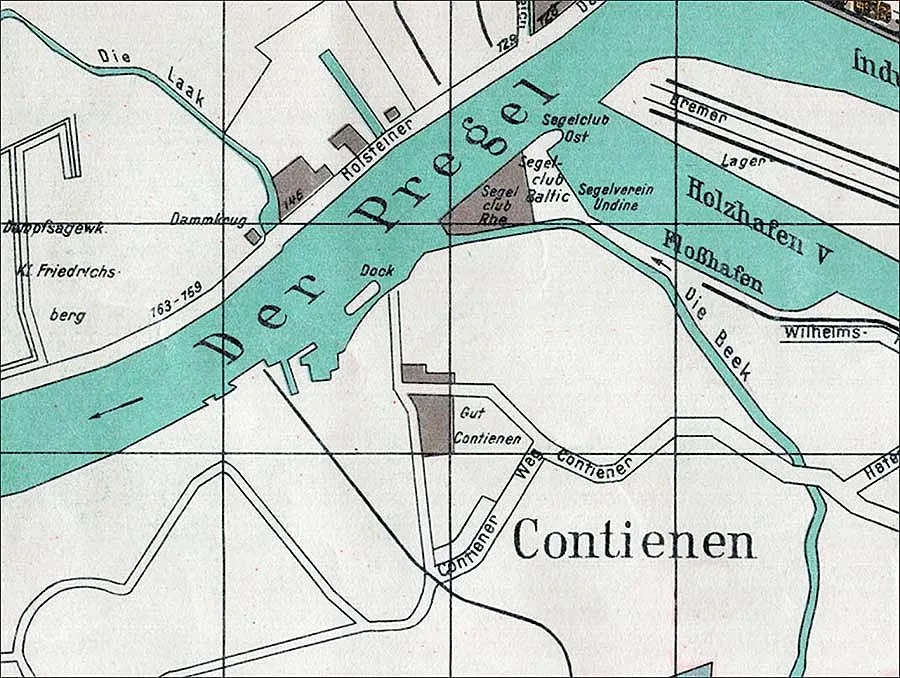
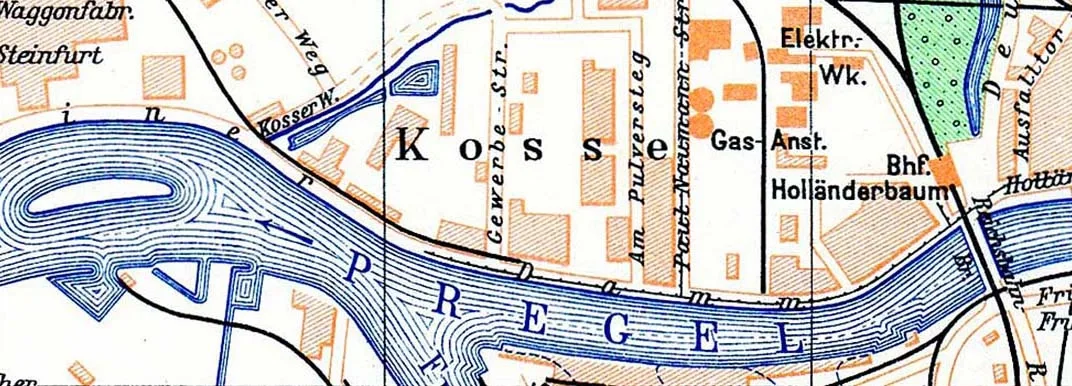
The settlement of Voroshilovo took in the territory of the former Schichau shipbuilding plant, the residential buildings on Transportnaya Street and Transportny Lane, and also Petrozavodskaya Street, along which its western boundary ran. The northern boundary of the settlement ran along the bank of the Pregel, and the eastern one along the Tovarny Stream. The southern boundary had no significant landmarks; there the territory of the settlement ended in marshland. In 1966 Plant No. 820 was renamed the Yantar Baltic Shipbuilding Plant. The residential complex for the plant's workers had been largely destroyed: of 40 buildings only 27 remained.
In the 1970s a tram line was extended to the settlement of Voroshilovo. In the heyday of the Kaliningrad tram, the loop of routes Nos. 2, 7 and 9 was located here. At the end of the 1980s a loop for trolleybus route No. 5 was also built by the Yantar plant.
The Yantar plant, like many other enterprises in the region, went through hard times in the transition from planned to market methods of management, several times finding itself on the verge of a complete halt in production. In 2003 a large workshop of the plant was handed over to the Avtotor company for car assembly. But by 2010 the situation at the shipbuilding plant had on the whole recovered, and it continues to turn out its core products to this day.
The tram tracks in the settlement of Voroshilovo were the very first to be dismantled, in 2001, marking the beginning of the shrinking of the city's tram network.
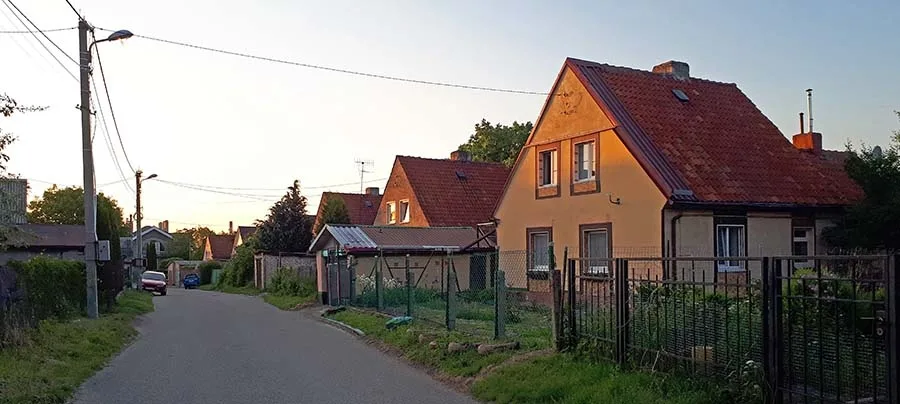
In 2010 trolleybus route No. 5 was closed. After 2014 the demolition of residential buildings on Transportnaya Street and in Transportny Dead End began. As of 2022, 22 houses remained on these streets.
Sights: the buildings of the Schichau plant, the mass grave of Soviet soldiers on the territory of the Yantar Baltic Shipbuilding Plant, the building of Commandant's Office No. 6 (10 Transportnaya Street).
Population change: 1818 – 32, 1867 – 56, 1871 – 59, 1885 – 54, 1895 – 56, 1905 – 63, 1910 – 68 inhabitants.
Composition of the population of Contienen in 1871: all 59 — Evangelical Christians, children under 10 — 19, literate — 19 (of 38 surveyed, 50%).
Photos: Bildarchiv Ostpreußen / bildarchiv-ostpreussen.de, Mikhail Ogorodnikov.
Translated from Russian with the help of AI (Claude, Anthropic), October 2026.