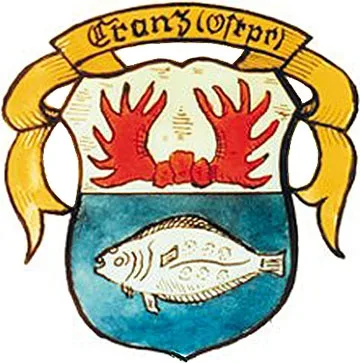
Coat of arms of Cranz
The first people appeared on the coast near present-day Zelenogradsk around 7,000–8,000 years BC, as Mesolithic finds attest. This culture, also represented in north-eastern Estonia, was characterised by a settled way of life, hunting and fishing. Later finds belong to the Neolithic and date from the 4th–2nd millennium BC. In the lowland by the Curonian Lagoon and in Friedrichswalde (Dubki forest), flint axes were found that belonged to bearers of a culture widespread in Great Britain and in Southern and Central Europe. Its representatives practised stock-breeding, gathering and hunting, and were familiar with the rudiments of farming and metallurgy.
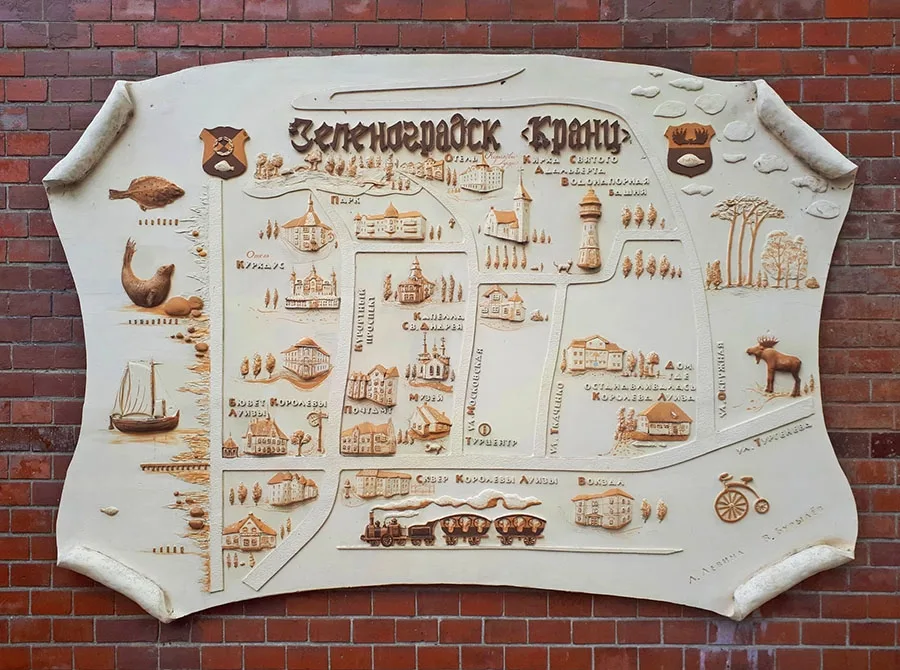
At the end of the Neolithic, the Corded Ware culture appears in the area of the future Cranz (and in the south-eastern Baltic generally). It owes its name to the ornamentation of its clay vessels. The origin of this culture remains a mystery to this day.
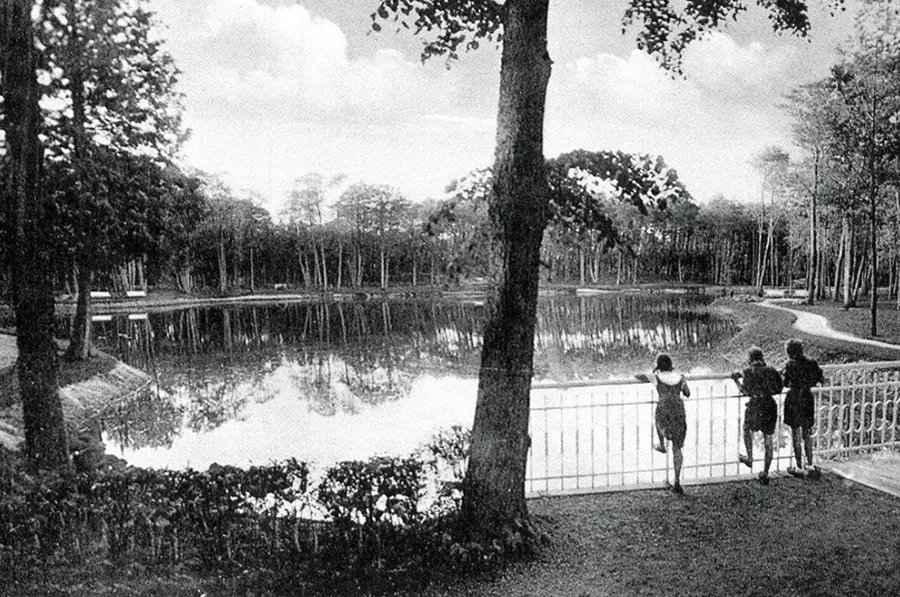 Children on the bank of the Stork Pond (Storchenteich) in Plantage Park.
It is assumed that its bearers may have come to the south-eastern Baltic from Denmark, Central Germany, eastern Poland or Ukraine. These people practised primitive farming. Their characteristic weapons were stone battle-axes. Members of the Corded Ware culture buried their dead in single graves under small barrows. In the Cranz area stone axes were found during excavations at Wosegau (Vishnyovoye), Mülsen (Kholmy), Friedrichswalde (Dubki forest) and Weischkitten (Sokolniki).
But the most interesting finds awaited archaeologists in the Kaup forest. Burial mounds dating to roughly the 2nd millennium BC were discovered here. One of them contained two skeletons in a sitting position.
It can be said with certainty that the Corded Ware culture believed in an afterlife, since the barrow contained household objects (chisels, awls, bone fittings) and weapons (stone axes).
Finds from the Cranz area belonging to the Bronze Age (2nd millennium BC - 5th century BC) and the Early Iron Age (5th century BC – the beginning of the Common Era) are few: among them are several axes and a spiral bracelet from a hoard near Mülsen (Kholmy), and barrow burials in the Kaup forest and near the village of Laptau (Muromskoye). The local people cremated their dead and placed the ashes in a clay pot – a funerary urn – which was set in a cist built of large stones. All this was covered over with earth, and so a barrow was formed.
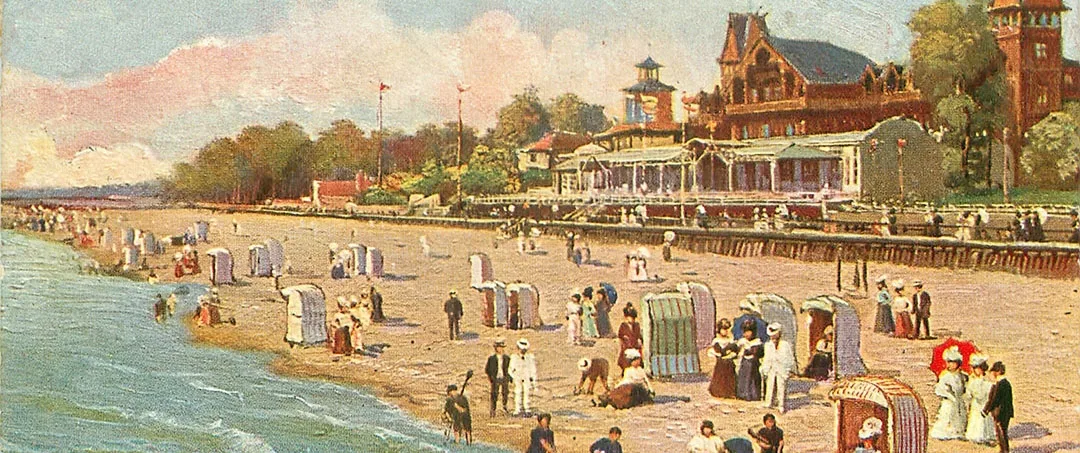
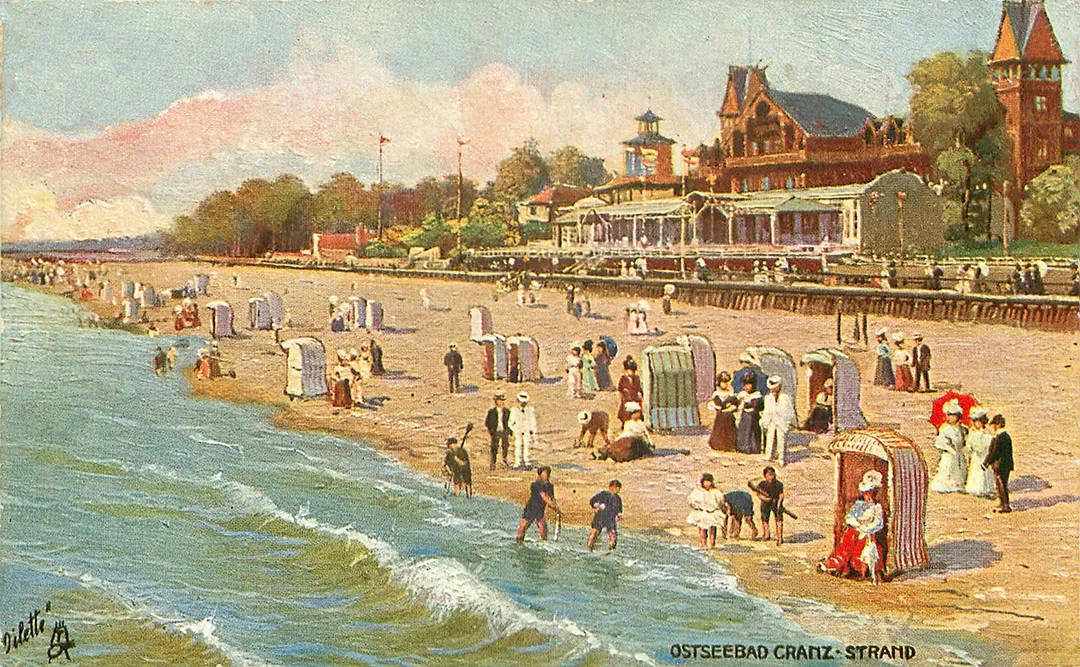
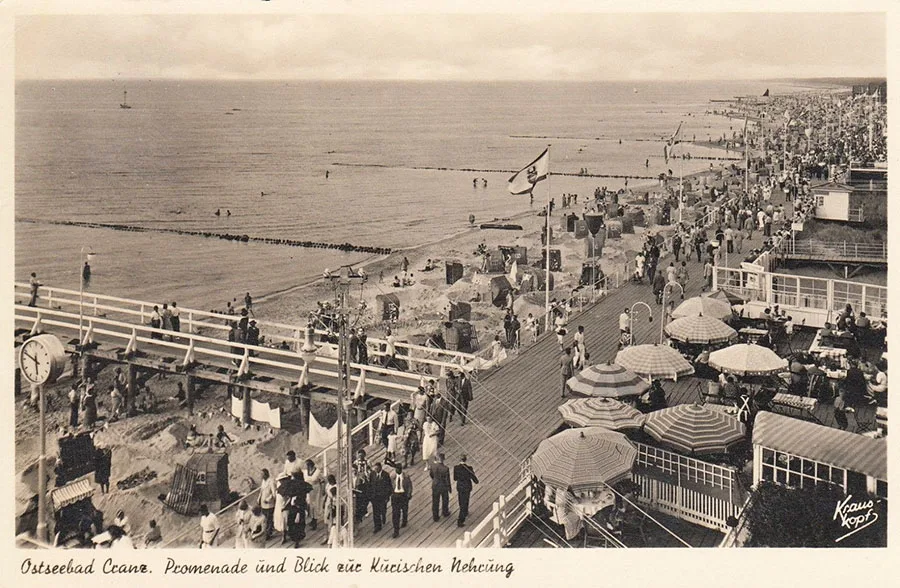 The promenade and beach of good old Cranz.
If one traces the find-spots of individual objects of this period, they stretch from the Kaliningrad Peninsula towards the Curonian Spit, which may have served as a trade route.
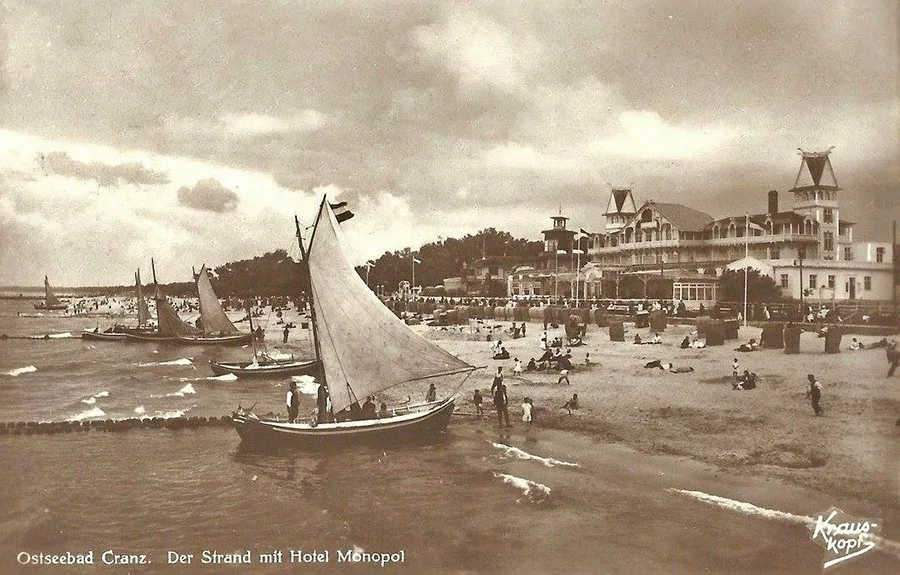 A postcard by Fritz Krauskopf showing the Hotel Monopol by the beach.
From then on people lived here permanently, but no particular activity or prosperity can be seen either in the Bronze Age or later. Life in the area picked up somewhat only in the period of Roman influence: since the Romans greatly valued amber, archaeological excavations point to a considerable increase in the density of the local population, brought about by an active amber trade.
The culture of the local population in this period has been studied through traces of its burial rites. Both inhumation and cremation have been identified. In inhumations the remains lay in log coffins, and sometimes directly on the ground, with the head to the north. In cremations the dead were burned at special sites, and the ashes were placed in a funerary urn, which was put into a small dug pit lined with stones on top.
The graves contain numerous grave goods that testify to the wealth of the people who lived here: weapons, jewellery, horse harness, Roman coins (even gold ones among them!) dated 81–192.
Some of these objects were obtained in exchange for amber. In the works of ancient authors the local population appeared under the name of "Aestii".
In the Migration Period (5th–8th centuries) the area again appears deserted, which may be due to how poorly it has been studied. Proof that people did live here after all comes from finds of this period at the Dollkeim (Kovrovo) burial ground: fibulae, twisted bracelets and neck rings, pottery. In this period the burial rite changed. The dead were still cremated, but the ashes were buried not in urns but in the ground, in specially dug pits surrounded by stone settings. At the bottom of the grave pit there is usually a horse skeleton lying on its belly with its legs tucked under.
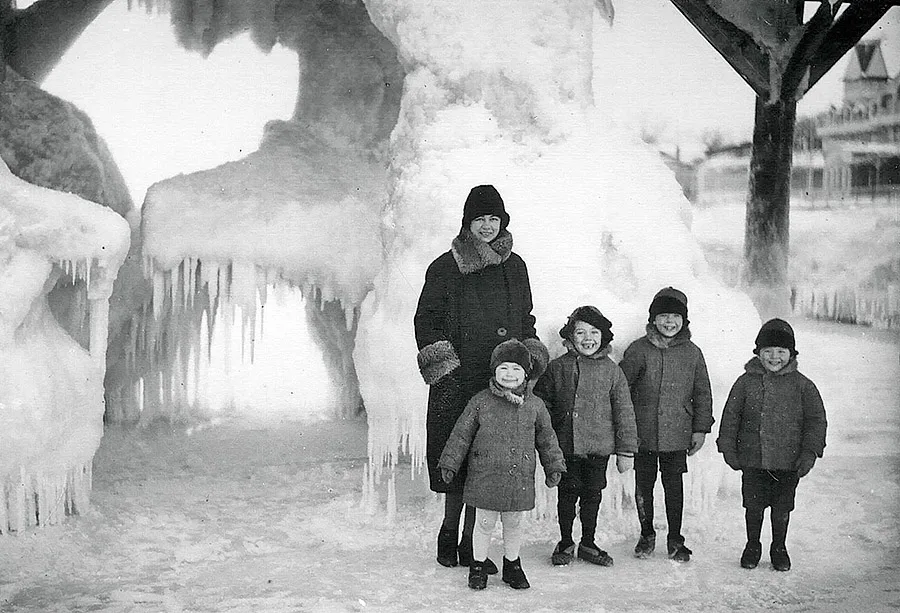 A family photo by the iced-up piles of the pier.
In the 9th century new settlers appeared in the vicinity of the future Cranz – the Vikings. Here, as elsewhere on the Baltic coast, they set up a trading post. Relations between the Vikings and the local population were not always peaceful. The cause of the enmity was amber, the trade in which the Vikings wanted to control.
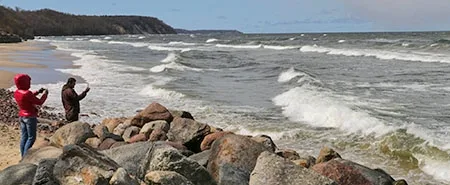
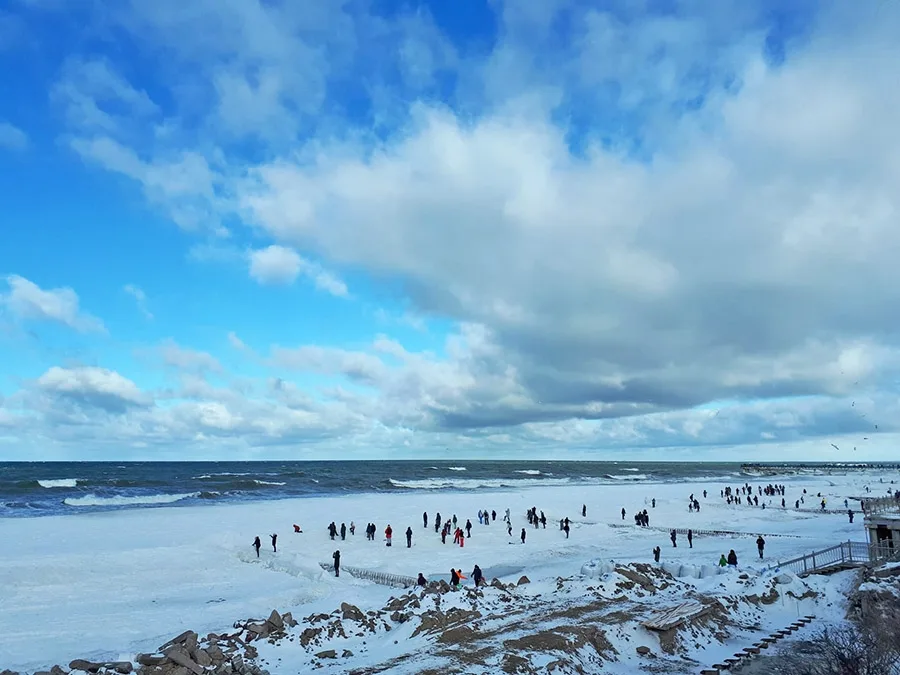 The frozen sea at Zelenogradsk (2021).
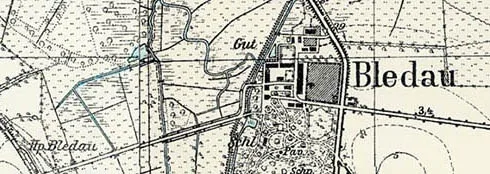
From the 10th century on they made repeated attempts to conquer Samland. Historical sources such as Saxo Grammaticus also tell us about events of a thousand years ago: "Haakon, the son of King Harald, called Bluetooth, subdued the Sembians. The Danes took possession of Samland, married the women of the vanquished Prussians and lived together with their enemies." The Prussians themselves lived in fortified settlements – hillforts – one of which, Garbeck, was not far from the village of Sosnovka (Bledau).
In the mid-13th century the Teutonic Order opened the Cranza-Krug inn at the base of the Curonian Spit.
The inns (Krug) of those times were coaching inns where travellers could stop for the night and for food, and rest their horses. Some of these inns were fortified for protection against attacks by pagans. The year of Cranz's foundation – 1252 – is usually linked with the founding of the Cranza-Krug inn. In time the village of Cranzkuhren grew up by the inn; its inhabitants were mostly Lithuanians and Prussians, who lived by fishing and bird-catching. This settlement is mentioned in 1258, when the territory was divided between the Teutonic Order and the Bishop of Samland. As a result, the lands around Cranza-Krug remained with the Order and became part of the Kammeramt of Rudau (Melnikovo).
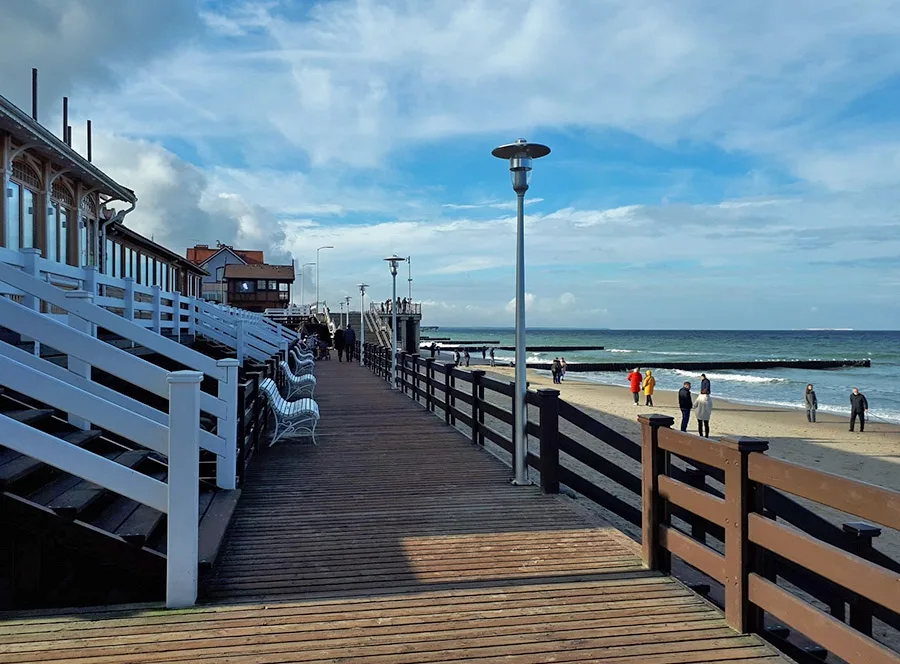 The promenade and beach in Zelenogradsk.
In the winter of 1283 the Lithuanians made a large raid on the lands of Sambia. 800 horsemen (according to the chronicle of Peter of Dusburg) passed along the Kurisch spit (the Curonian Spit) and ravaged the lands of Powunden (the area of the village of Khrabrovo) and Pobethen (the area of the village of Romanovo), killing 150 Christians and taking many more prisoner.
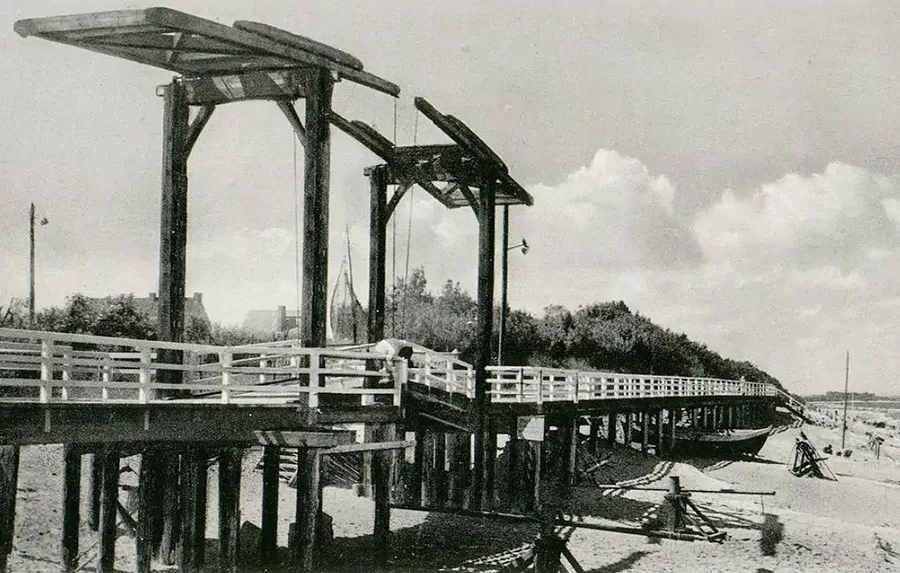 The drawbridge on the Cranz promenade.
To protect this approach, the timber-and-earth castle of Neuhaus was built at the base of the spit on the orders of Landmeister Konrad von Thierberg the Younger (d. after 1287). The exact location of Neuhaus is unknown, but the fact of its existence is not in doubt, since it appears in a number of documents that have survived to our day.
In 1308, led by the chieftains Sugard and Mansto, the Samogitians made another large campaign into Sambia. Neuhaus Castle was blockaded and its surroundings ravaged. The Samogitians moved on and again ravaged the lands of Powunden and Rudau (the areas around the villages of Khrabrovo and Melnikovo). An army of the Order came out to meet them, and on learning of it the attackers hurried back to Lithuania. It is noted that by this time Neuhaus Castle had already lost its key importance, since Rossitten Castle (Rybachy) had been built further north on the spit in 1290. Over the following 500 years no significant events took place in the area, and all mentions of Cranz are only sporadic.
Cranzkrug was marked in 1584 on the map of Caspar Hennenberger (1529–1600), mentioned in the same year by the historian Caspar Stein, and also noted in the records of an unknown traveller (1700).
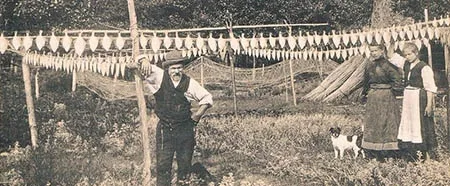
Clearly, throughout all this time Cranz was an ordinary fishing village. The abundance of fish off the Samland coast favoured exactly this kind of economic development in the coastal localities. The only thing that set Cranz apart from other fishing villages was its special geographical position. Until the 18th century the local population spoke mainly Old Prussian. By 1785 the name form Kranzkuhren had become established for the fishing village. Before it acquired a parish of its own, the village belonged to the parish of Rudau (Melnikovo).
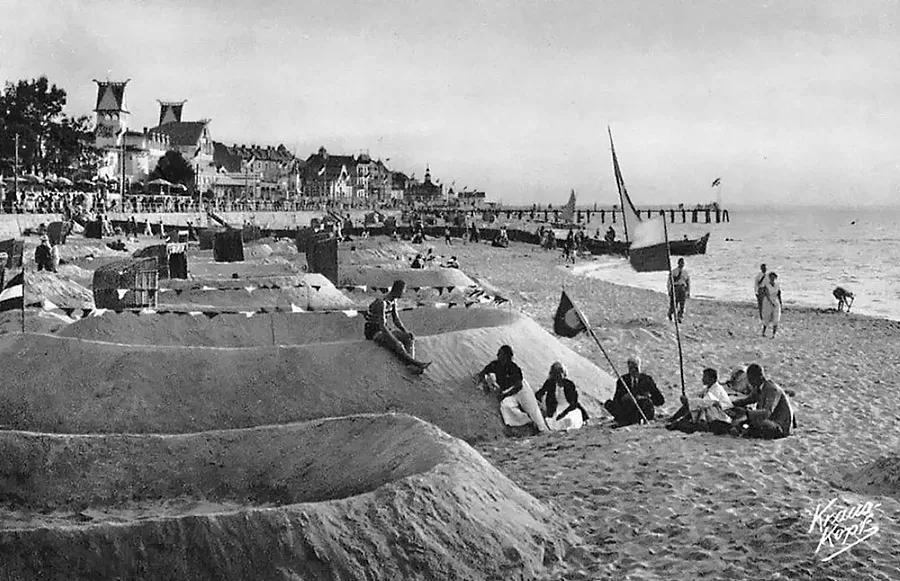 On the beach at Cranz there was sand in plenty.
In the late 18th and early 19th centuries sea bathing came into fashion among Europeans. A number of physiologists noted the beneficial effect on the body of sea water, sunbathing and fresh air, especially near coniferous forests. These developments allowed East Prussia to remind its compatriots and neighbours of itself once again.
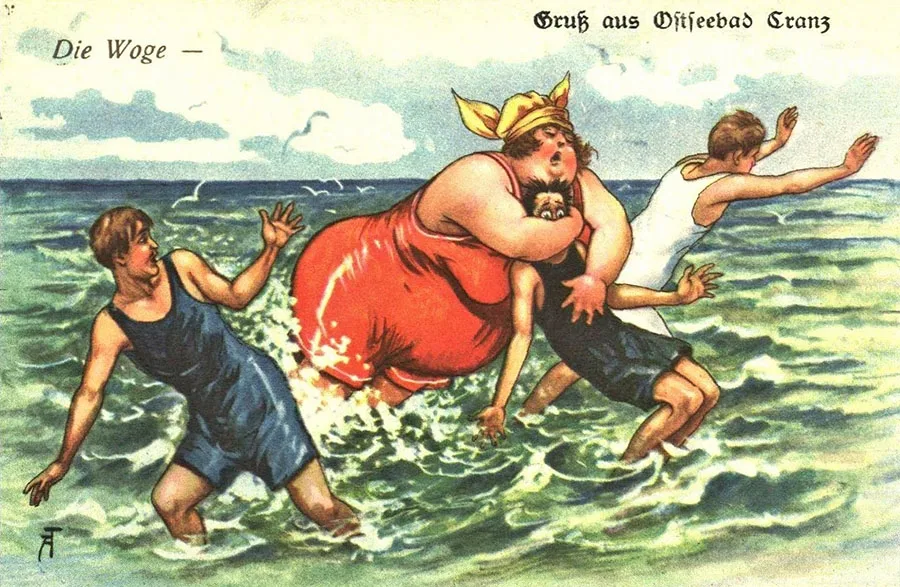 "The Wave" – greetings from Cranz (a humorous postcard from the early 20th century)
The Königsberg scholar Ludwig von Baczko (1756–1823) noted that many elderly people lived in Cranzkuhren. He attributed this to the extraordinary benefit of sea bathing for the body and proposed building a resort on the seashore. In 1793 the Königsberg professor of medicine Johann Daniel Metzger (1739–1805), in an article in the famous "Preußisches Archiv", tried to win his fellow citizens over to the idea of a resort on the Samland coast, pointing to Cranzkuhren, Palmnicken (Yantarny) and Groß Dirschkeim (Donskoye).
The first government programme for establishing a resort in Cranzkuhren was drawn up by Frederick William III in 1800. But it was not destined to be carried out because of the wars with Napoleon that then began.
Queen Louise, on the other hand, was able to appreciate the beauty of the place when she stopped in this village in 1807 on her way from Königsberg to Memel. The house in Zelenogradsk at 10 Turgenev Street, where the queen rested, survives to this day.
The idea of a resort was taken up again only after the war, in 1813. The task of setting up the resort was entrusted to the chief medical councillor of the Königsberg district, Friedrich Christian Kessel (1765–1844). In 1816 Cranz was opened to the public as a state resort. In its first season it received 35 visitors, who had two bathing cabins on the beach at their disposal.
In 1817 a house with warm baths was added to the existing "resort infrastructure". In the first years of the resort only a few Königsberg families came to Cranzkuhren in summer to improve their health by sea bathing. To save money, the visitors stayed in the fishermen's huts, while the owners moved into their sheds for the duration.
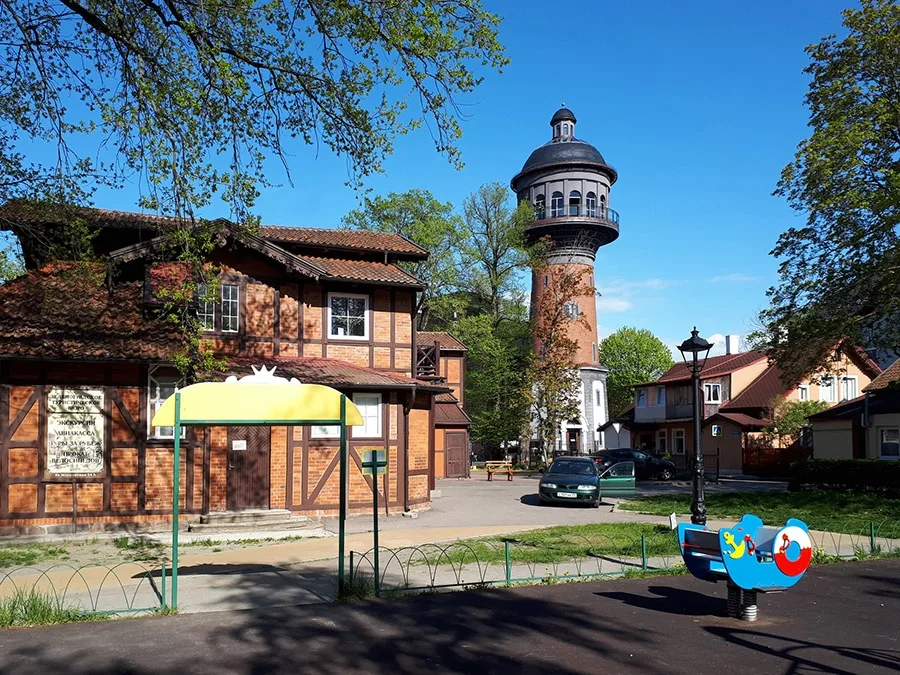 View of the water tower, which now houses Zelenogradsk's cat museum, the "Murarium".
In 1820 activists of the resort movement set up a special committee, which later became the "Kessel Beautification Society". In 1823 construction began on a highway from Königsberg to Cranz, which dragged on for 30 years.
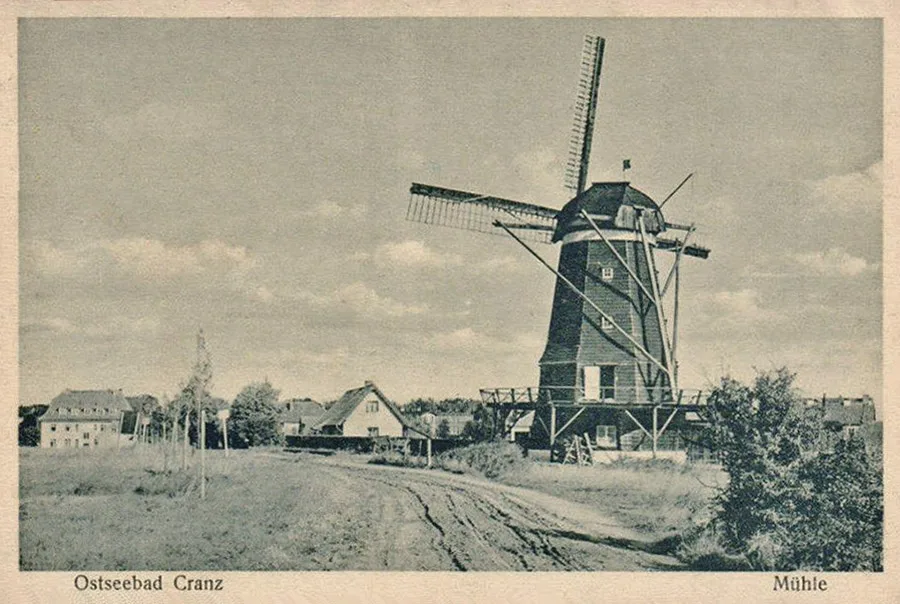 Old Cranz had a mill, but present-day Zelenogradsk has no windmills.
Unlike the old dirt road, the new highway bypassed Quednau (Severnaya Gora) on the west side and, after Laptau (Muromskoye), ran through Bledau (Sosnovka). The people of Königsberg travelled to Cranz both in their own horse-drawn carriages (private or hired) and by the stagecoaches that ran to the sea (from 1852). The resort itself was increasingly called "Cranz", as if to stress that one was going to the sea, not to a fishing village. At the same time it was the holidaymakers who made the local flounder, smoked over pine cones, famous, claiming that nowhere else was it prepared so deliciously. As a result the flounder later even found its way onto the coat of arms of Cranz (see above), and from there onto that of Zelenogradsk.
In 1821 the first guest house, the "Logierhaus" (literally "lodging house"), was built in Cranz; sadly, it burned down in 1835. In 1824 Cranz already had 220 holiday visitors. In 1842 the "Konversations- und Logierhaus" ("House for lodging and conversation") was rebuilt near Corso Square.
Real popularity came to the resort with the visit of King Frederick William IV on 9 July 1843. The king was pleased with what he saw and allocated funds for the further development of the resort business in Cranzkuhren.
From then on Cranz held the status of a "Royal Bath", which it kept until 1895. In 1854 the resort of Cranz already received 1,714 visitors. In 1856, following the fashion for mineral waters, a colonnade with mineral-water taps was opened in Plantage Park. In 1859 a summer theatre was built, with performances almost daily. In 1864 a telegraph link between Cranzkuhren and Königsberg was opened. In 1871 Cranzkuhren had 173 houses; two more houses belonged to Cranzkrug and one to the Grenz forester's lodge, which was part of the municipality of Cranzkuhren.
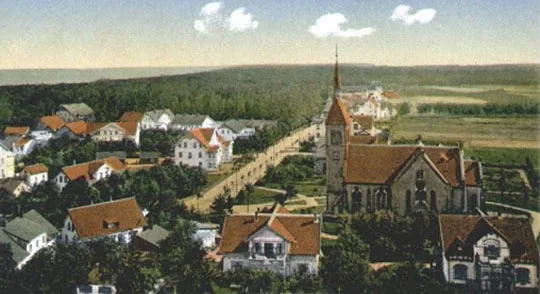
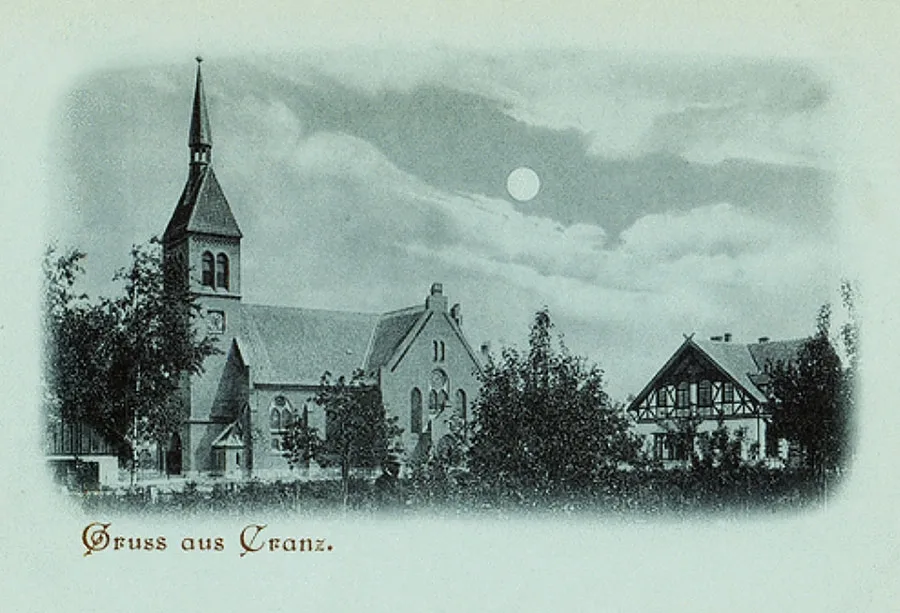 The Cranz church now serves the town as an Orthodox church.
In 1877 Cranz got a parish of its own. In 1885 the parish of Cranz was merged with the parish of Sarkau (Lesnoy).
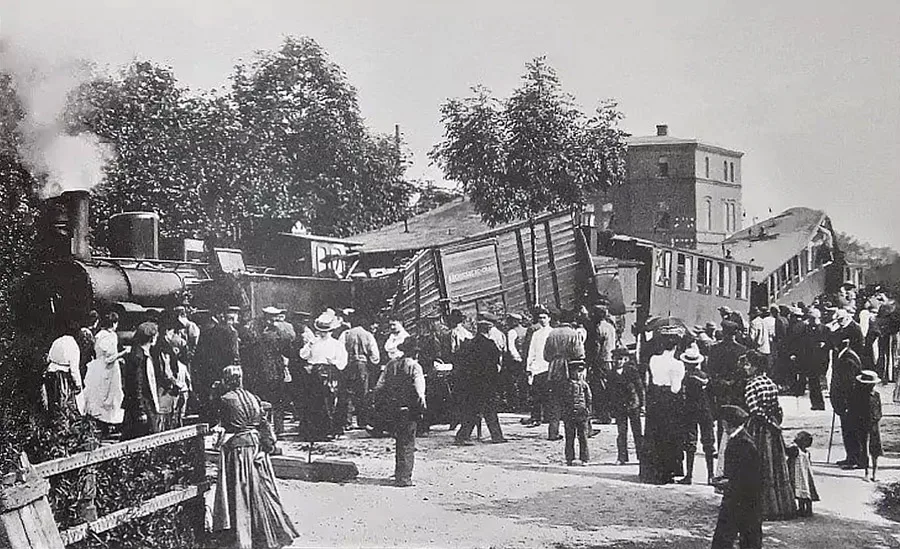 The railway accident at Cranz station on 27 June 1906.
Services were held in a small half-timbered building, which soon became insufficient, and in 1896–97 the brick church of St Adalbert was built in Cranz. In 1899 the old church was dismantled and sold to the parish of Medenau (Logvino) to set up a "branch" in Zimmerbude (Svetly).
On 31.12.1885 the railway connection with Königsberg was ceremonially opened, which made a visit to Cranz affordable for a wide range of people. The number of trains on the line varied with the season and between weekdays and holidays, and at the beginning of the 20th century amounted to 13 to 19 trains in each direction. Contemporaries note that at the height of the season the number of people wishing to go to the sea exceeded the number of seats on the trains, and many travelled standing.
Surprisingly, the journey time of the steam trains was the same as that of today's electric trains – from 24 minutes for the fast trains to 49 minutes for those stopping at every station: Maraunenhof station (Pervomayskaya Street), Rothenstein station (Kutuzovo-Novoye), Quednau station (Severnaya Gora), Stiegehnen halt (Orlovka), Groß Raum station (Ryabinovka), Mollehnen station (Kashtanovka), Laptau station (Muromskoye), Bledau halt (Sosnovka).
The opening of the railway immediately affected the number of visitors to the resort – in 1889 they already numbered 8,183, not counting day-trippers. On 8 July 1889 a new station building was ceremonially opened in Cranz; it is still in good working order today. Since trains at that time were hauled by a single locomotive, a turntable was installed next to the station building. The locomotive was uncoupled from the train, ran onto the turntable, was turned through 180 degrees, ran round the train on the second track and was then coupled up again to travel in the opposite direction – to Königsberg. On 08.07.1895 traffic opened on a two-kilometre stretch of track from Cranz to Cranzbeek on the shore of the Curonian Lagoon, so that holidaymakers could take a steamer from there to Memel (Klaipėda, Lithuania).
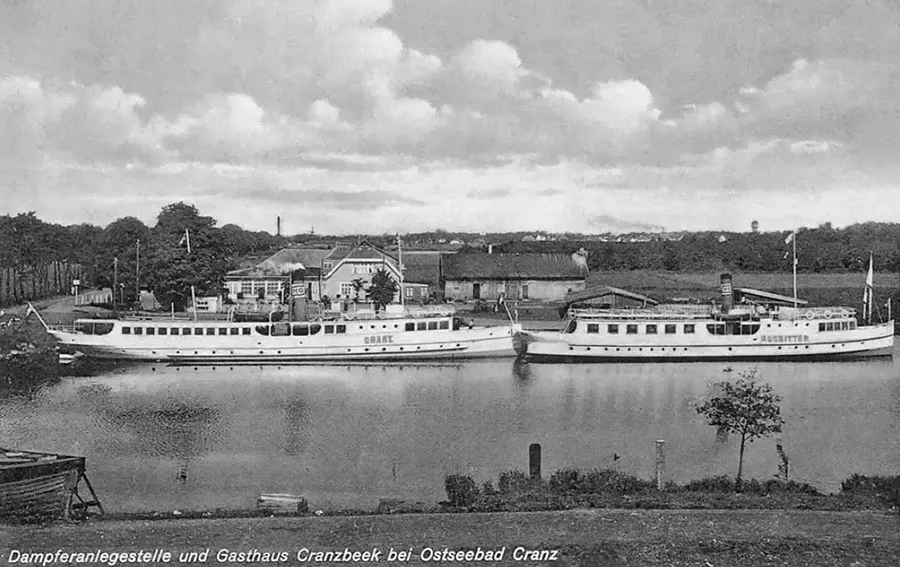 The steamers "Cranz" and "Rossitten" at the Cranzbeek pier.
From 1893 the name of the village and the resort was exclusively Cranz.
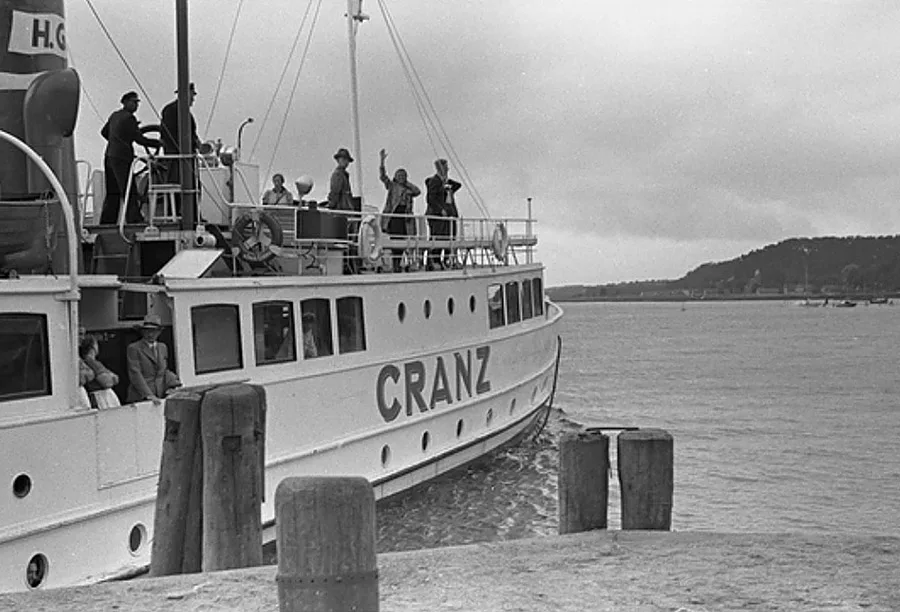
The "Cranz" casts off.
In 1896 a new post office building was built in Cranz. The storm of 1899 destroyed the promenade and the buildings on the shore. After that, Cranz began measures to reinforce the shore and to build breakwaters.
In 1904 the Catholic chapel of St Andrew was opened for Catholic visitors. Also in 1904 the water tower was built, which in the post-war period became the symbol of Zelenogradsk.
By the beginning of the 20th century the town had become a popular resort both for Germans and for visitors from abroad. In 1901 the railway line was extended from Cranz to Neukuhren (Pionersky).
In 1907 the resort of Cranz was completely re-equipped to the standards of the day: the first family bathing establishment in Samland was built, shielded from outsiders' eyes by a high board fence, and the entrance to the baths was adorned with a main portal. The family baths, with separate men's and women's sections, had 190 cabins.
In the summer of 1911 a synagogue was opened in Cranz on the grounds of the Kurhaus, with the active participation of the councillor and banker Georg Marx (1843–1927). In 1938, for obvious reasons, it was closed and turned into a Hitler Youth facility. On the southern outskirts of Cranz a track for dog racing was laid out. The last races were held here in 1920.
One of the consequences of the First World War was stagnation in the development of Cranz, above all as a resort. There were no holidaymakers; hotels, guest houses and sanatoriums stood empty. Nothing was done to maintain and renew the facilities and structures, and after the inflation the resort administration faced enormous problems, above all financial ones. However, as the economy recovered from the crisis, the state of Cranz gradually improved. In the 1921 season Cranz received 10,250 visitors, including 4,860 from Königsberg, 3,870 from the province, 425 from Berlin and 179 Russians.
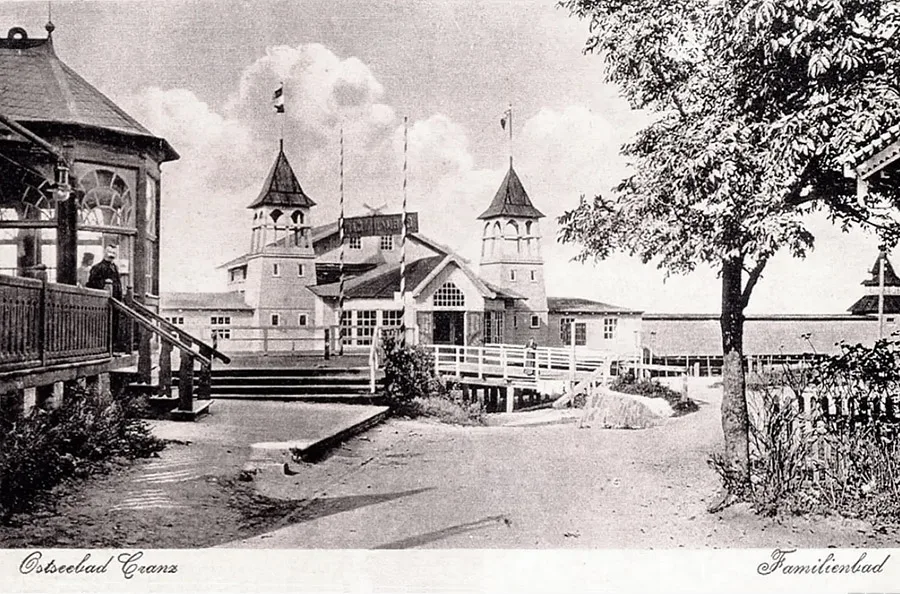 The family baths and mysterious objects on the right.
In 1927 a new school building was built in Cranz, which is still used for its original purpose today.
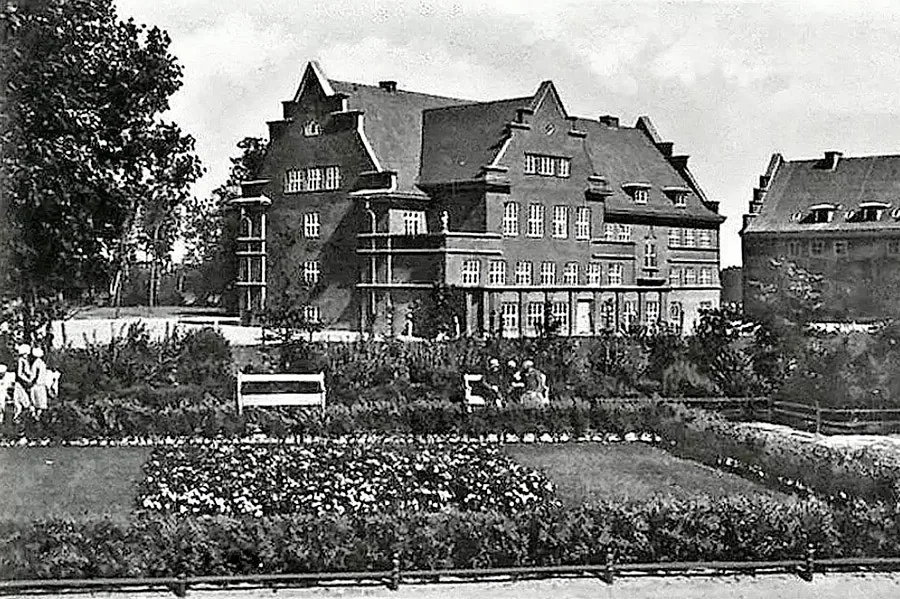
The school in Cranz. You will still find it in the same place today
On 1 January 1929 Cranz ceased to be regarded as a village, but did not receive town rights. It was given a kind of intermediate status of a municipality (Gemeinde) between an urban municipality (Stadtgemeinde) and a rural municipality (Landgemeinde). At the same time the villages of Wickiau (Klintsovka) and Wiskiauten (Mokhovoye), which had previously belonged to the abolished Gutsbezirk of Wosegau (Vishnyovoye), were incorporated into the municipality of Cranz. On 30.09.1929 forest areas of 33.6 ha around Cranz, including some on the Kurische Nehrung spit, were transferred to the municipality of Cranz from the forest Gutsbezirk of Fritzen. The municipality then came to include the Cranz forester's lodge (Forsthaus Cranz; Zelenogradsk, 10 Turgenev Street), the Grenz forester's lodge (Forsthaus Grenz), the Fichtenhein forest restaurant (Waldrestaurant Fichtenhein) and the Waldhaus forest restaurant (Waldrestaurant Waldhaus).
In 1934 a Baptist chapel was built in Cranz. In the 1930s there was another wave of renewal of the resort's infrastructure, and by 1939 it was a small German idyll, standing apart from the events that were shaking Europe.
Cranz first felt the war in 1940, when, after the end of the French campaign, the bowling alley in the "Ostseehotel" was converted to house Belgian prisoners of war. Nevertheless, resort life remained practically unchanged until 1944. After the bombing raids of August 1944, Königsberg residents who had lost their homes began to make their way from Königsberg to Cranz. Warships manoeuvred off the coast, and a military radio station and a field hospital were set up in the forest near Bledau (Sosnovka).
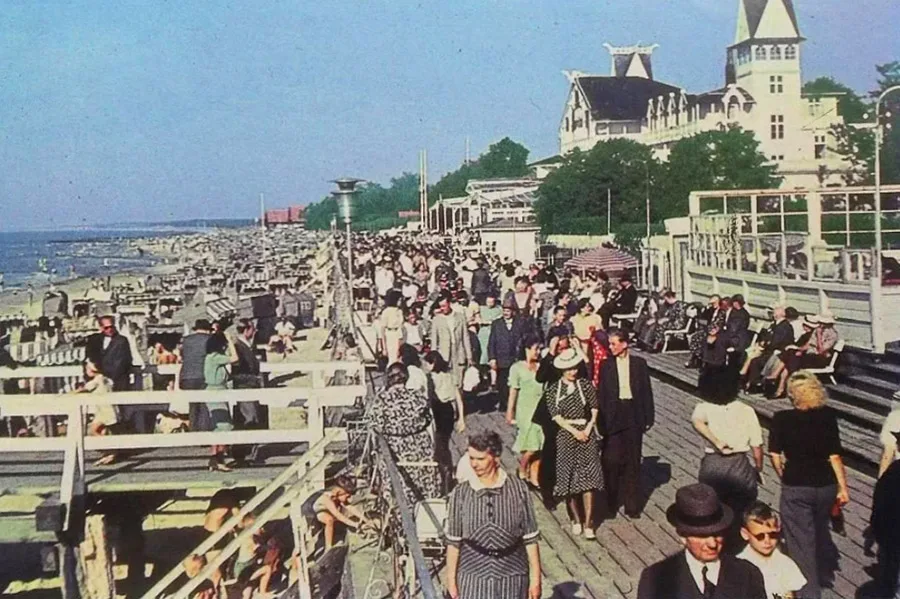 On the seashore in the period between the First and Second World Wars (late 1930s).
Cranz was taken by troops of the 43rd Army under General A. P. Beloborodov (1903–90). 7–8 km from Cranz, around the village of Laptau (Muromskoye), the German forces had set up their main defensive line, which had several echelons and extended as far as Bledau (Sosnovka).
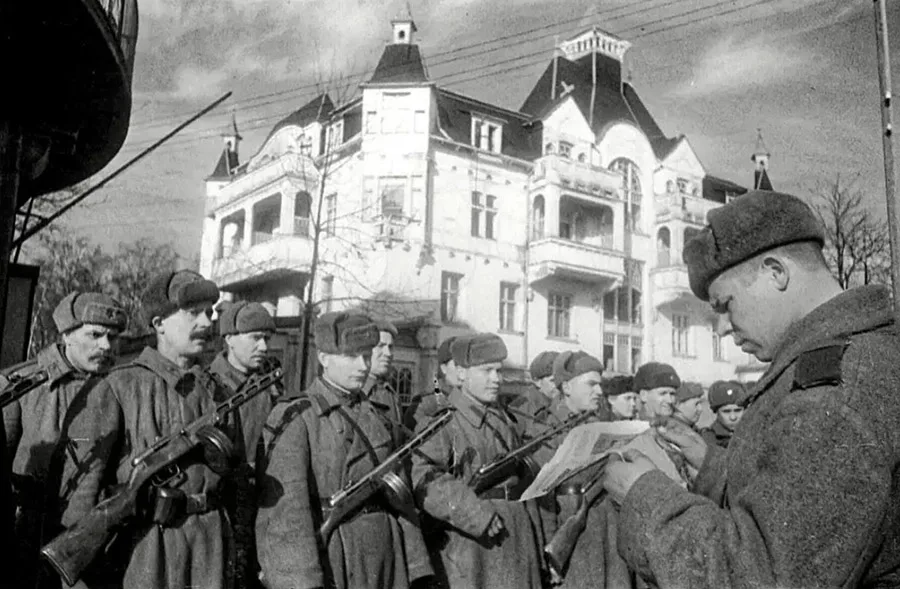 A formal photo of Red Army soldiers on Königsberger Straße in 1945.
This line was reached by the 115th Kholm Red Banner Rifle Division (the 292nd, 576th and 638th Rifle Regiments and the 313th Artillery Regiment; 2,326 men in all), the 325th Dvinsk Red Banner Rifle Division and other Red Army units. The Soviet troops' attempts to break through the enemy defences on the move were unsuccessful. From 29 January to 2 February 1945 German ships joined the fighting on land. The heavy cruiser "Prinz Eugen", escorted by the destroyers Z5 "Paul Jacobi" and Z25 and the torpedo boats T33 and T36, lay in the roadstead off Cranz. The ships fired from beyond visual range on the advancing Red Army units. According to German eyewitnesses, the heavy cruisers "Lützow" and "Admiral Scheer" with their escort ships were also used in the defence of Cranz, but these reports are not confirmed by verified sources.
The Soviet troops were ordered to break through the enemy defences in the Laptau–Bledau area (Muromskoye–Sosnovka) in a night attack (on the night of 2–3 Feb.) and reach the Baltic coast in the Cranz area. The assault on the positions was carried out by the 2nd Rifle Battalion (M. V. Vasilyev) of the 114th Rifle Regiment of the 325th Rifle Division. After this strongpoint fell, the fate of the Cranz defences was sealed.
On Saturday 03.02.1945 German infantry, motorised and horse-drawn artillery, and individual assault guns moved along Königsberger Straße in Cranz in the direction of Wargenau (Malinovka). Early in the morning of 4 February the 292nd Rifle Regiment of the Red Army was the first to enter Cranz. According to Red Army officers, the appearance of Soviet troops in the town came as a complete surprise to the Germans. Shops in the town were still open, and people were out walking or going about their business. On seeing the Soviet soldiers, local residents hastily shut their shops, while others left them open and fled. The troops, apart from the occupation units, followed the retreating enemy. A military commandant's office was set up in the town. The screening of the population began in order to identify NSDAP activists and SS men. On 18.02.1945 the residents of Cranz who had not managed to evacuate were sent to Schloßberg (Dobrovolsk).
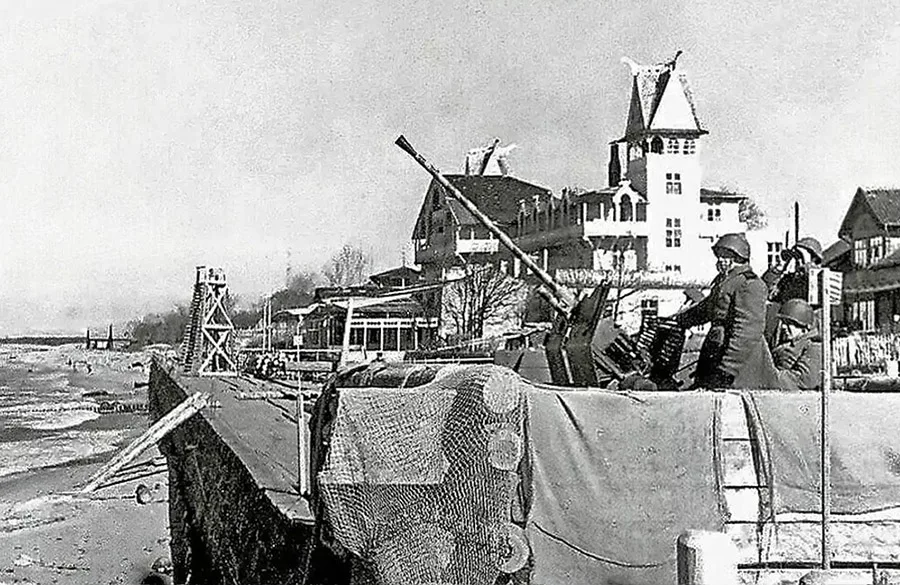 Soviet anti-aircraft gunners in front of the Hotel "Monopol".
On 07.04.1946 Cranz became part of Samland District, with its administrative centre in Fischhausen (Primorsk). On 07.09.1946 the district was renamed Primorsky. By this time Cranz had acquired the unofficial name of Nakhimovsk.
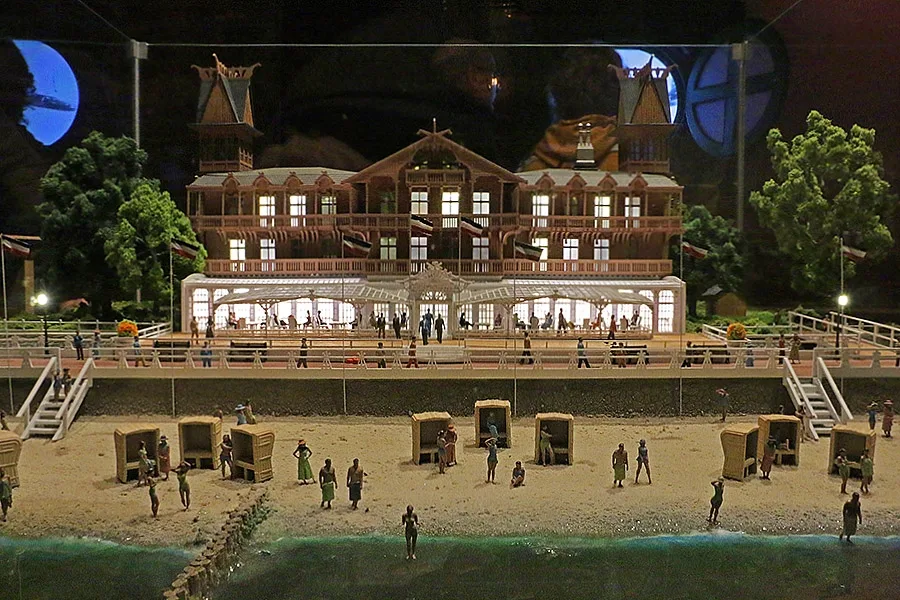 A model of the Hotel Monopol in the "Königsberg" Museum of History and Architecture in Zelenogradsk.
A hospital, a school and a fire station were already operating in the town. In December 1946 the USSR Council of Ministers issued an order to set up a military sanatorium in the town. On 17.06.1947 Cranz was renamed the town of Zelenogradsk, and on 27.07.1947 Zelenogradsk became the district centre of Primorsky District.
In 1947 the water supply and (partly) the sewerage system were restored in Zelenogradsk, and a bakery began operating. The Zelenogradsk sanatorium then consisted of 3 buildings and could accommodate up to 300 guests. They had at their disposal a hydrotherapy unit, a mud-cure unit, a physiotherapy room and an X-ray machine. Operating in the town were the "Universal" artel (tailoring clothes and shoes, repairing farm implements, procuring firewood), a tile and brick works, a library and a House of Culture. In June 1947 a rail link with Kaliningrad was opened.
In October 1947 the first issue of the district newspaper "Primorsky Bolshevik" came out. In 1947 the first 35 street lamps went into operation.
But it seems that the process of getting life back to normal in Zelenogradsk lagged behind the planned pace, since the first chairman of the town Council of Deputies, M. I. Voznesensky, was removed from office on 17.07.1948 after less than a year in the post, and M. I. Sidorkin, appointed after him, lasted only until May 1949 and was likewise removed "for the unsatisfactory state of work".
In 1950 a sanatorium for bone tuberculosis was opened in Zelenogradsk. In 1958 a children's psychoneurological sanatorium began receiving patients. In the same year a children's art school opened in the town. In the 1950s the seafront was improved, paths down to the sea were laid out, roads and pavements were repaired, and street lighting was restored.
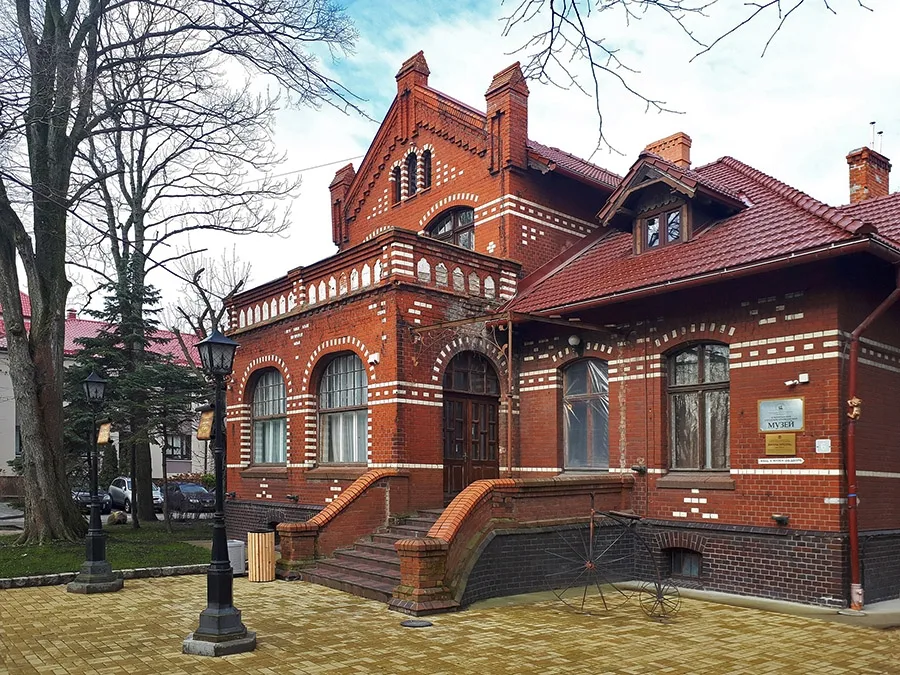 Villa Krell, which now houses the Zelenogradsk local history museum.
On 1 February 1963 Zelenogradsk became a town of regional subordination. In 1965 Zelenogradsk District was formed within the boundaries of Primorsky District, and Zelenogradsk once again became a town of district subordination.
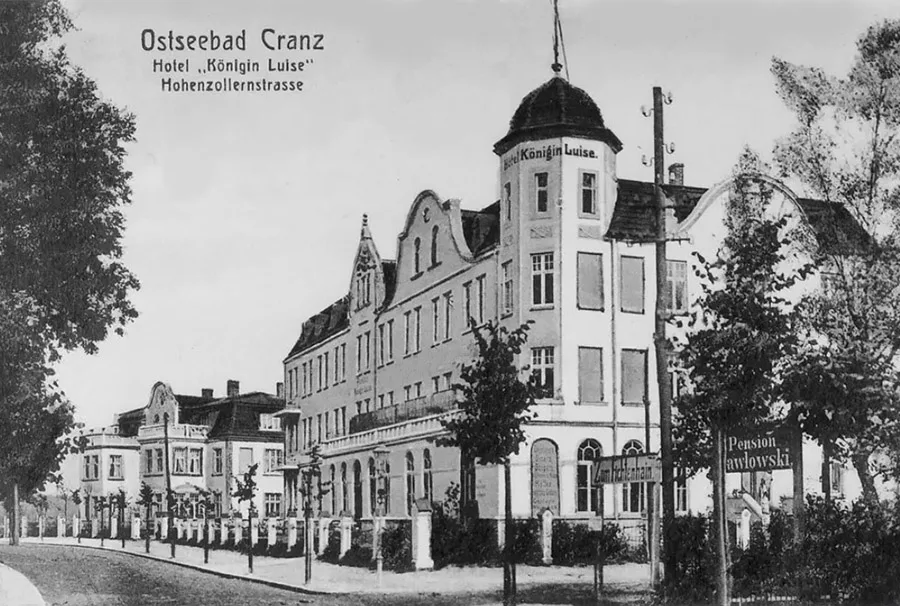 The Hotel "Queen Louise" is still in operation today.
In 1964 additional suburban trains to Kaliningrad-Severny station were introduced. In the same year kindergarten No. 5 and a cinema opened. By 1975 Zelenogradsk had five holiday establishments: the "Zelenogradsk" sanatorium, two specialised sanatoriums, the Trade Union Holiday Home (680 places) and the "Chayka" preventive-care sanatorium of the Kaliningrad trawler fleet base.
In 1976 the "Priboy" restaurant complex opened; besides a 200-seat restaurant, it included a canteen, a delicatessen, a bar, a beer bar, a café and an ice-cream parlour. The "Priboy" restaurant had the only variety show in the region.
From the late 1970s departmental guest houses, holiday homes and holiday centres began to open on a large scale in Zelenogradsk: "Stroitel" (the "Kaliningradselstroy" trust), "Neringa" (1981), "Topaz" (1986). There were also the children's sanatorium "Teremok" and 4 Young Pioneer camps (named after Yu. Gagarin, G. Titov and L. Golikov, and "Solnechny").
The town had a considerable number of catering establishments: the "Priboy" restaurant complex, the "Turist" restaurant, the cafés "Vstrecha", "Mayak", "Parus", "Teremok" and "Chayka", and an ice-cream parlour. In 1981 a new bookshop opened. At the same time the "Detsky Mir" children's store began trading.
In addition there were a department store, specialised meat, dairy and greengrocery shops, four grocery stores, shops selling photographic goods, cultural goods and sports goods, and a market. In 1988 five artesian wells were drilled and connected to the water supply. In 1989 one of the first Orthodox parishes in the region was opened in Zelenogradsk. As of 1991 the town had 39 streets, 19 shops, three sanatoriums, two holiday centres, six kindergartens, two schools, a cinema, a House of Culture, two libraries, a video parlour, nine cafés, bars and restaurants, three Young Pioneer camps and six hotels. Medical facilities consisted of a hospital and two outpatient clinics. In 1995 production of "Zelenogradskaya" mineral water began. By the end of the 1990s 212 commercial enterprises were registered in the town. Also in the 1990s tourists began to take an interest not only in the town's beach and resort side but also in the pre-war past of these places.
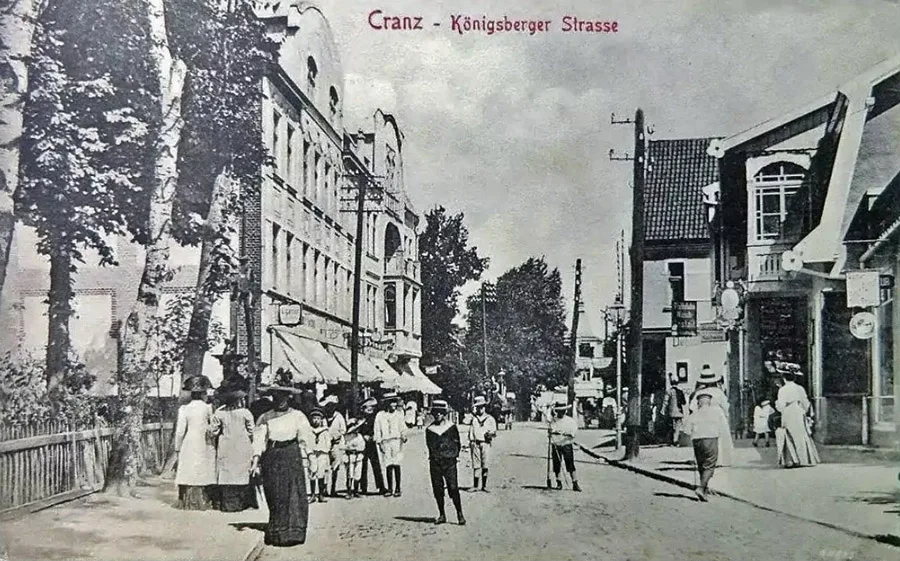 Königsberger Straße spent some time as Lenin Street before becoming Kurortny Prospekt.
On 26.12.2000 part of Lenin Street was turned into the pedestrian Kurortny Prospekt. In 2006 the Queen Louise pump room was opened on the promenade. In 2008 reconstruction of the Cranz water tower began, as a result of which the "Murarium" cat museum opened in it in 2012.
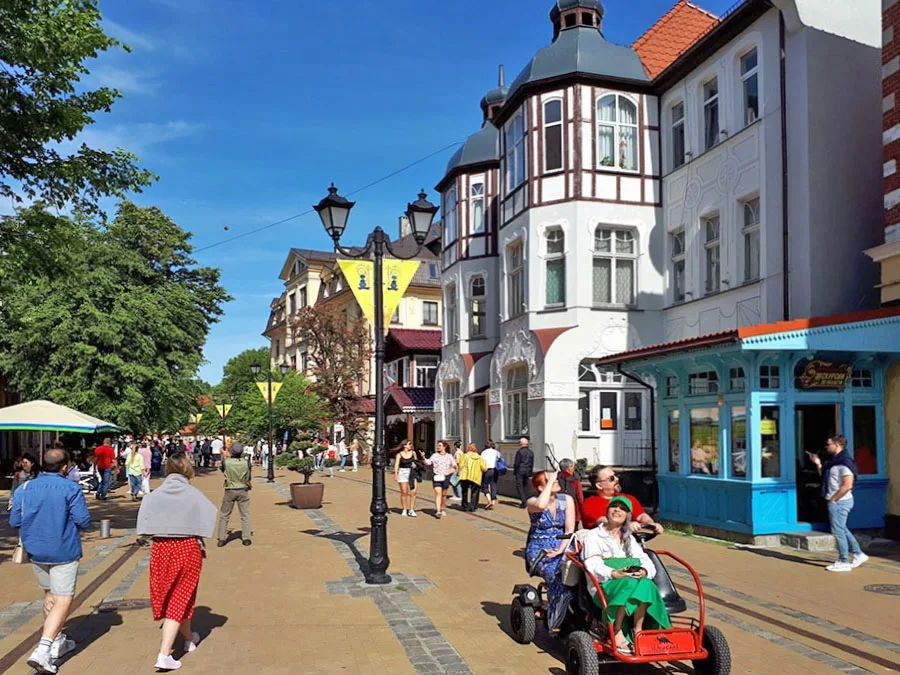 Kurortny Prospekt in Zelenogradsk – the best pedestrian street in the region.
In 2014 a monument to the cats of Zelenogradsk was unveiled, and the town itself began to promote itself as the "City of Cats". Numerous art objects depicting tomcats and cats were created, and little houses and feeders were set up for the local cats.
In 2015 a monument to Adam Mickiewicz was unveiled in Zelenogradsk. In 2021 the "Eye of the Baltic" Ferris wheel was built on the promenade. In the same year the Zelenogradsk Doll Museum opened. In 2022 Alexander Vasiliev's Museum of Resort Fashion opened on Kurortny Prospekt, which had been smartened up by then.
Sights: the church of St Adalbert (1897, now the Orthodox Church of the Transfiguration), the Catholic chapel (1904), the water tower (1904), the railway water tower (1865), the post-station house where Queen Louise spent the night (late 17th century), the "Logierhaus" building (1842, rebuilt), the railway station building (1889), the post office building (1896), numerous pre-war buildings of the late 19th – early 20th centuries, the wooden bread shop (1905, restored 2019), the park, the sculptural group by the local history museum, a memorial on the mass grave of Soviet soldiers (633 people, monument 1950), archaeological sites, the "Emperor's Oak" planted in 1872, municipal and private museums (local history, cats, resort fashion, dolls, owls, angels), Queen Louise Square (2000s) with a tree planted in her honour (1843), and numerous modern art objects.
For reference
On 13.06.1874 Amtsbezirk No. 31 Cranz was established in Kreis Fischhausen (Primorsk), comprising a single rural municipality, Cranz. The first head of the Amtsbezirk, in 1874–78, was the postal agent Hüge. Gradually, lands of the Gutsbezirk of Wosegau (Vishnyovoye) passed to the municipality of Cranz. The Wickiau manor farm (Klintsovka) and the Wiskiauten estate (Mokhovoye) were incorporated into the municipality of Cranz. On 01.10.1932 a new municipality of Wosegau was created from Wosegau (Vishnyovoye), Wickiau (Klintsovka) and Wiskiauten (Mokhovoye), and became part of the Amtsbezirk of Cranz. After that the composition of the Amtsbezirk did not change.
Cranzbeek was founded in 1895 as a settlement of several farmsteads and a harbour. Cranzbeek belonged to the rural municipality of Cranz and to the parish of Cranz. Cranzbeek was connected with Cranz by a railway branch line. From Cranzbeek one could take a steamer across the Curonian Lagoon to Memel (Klaipėda, Lithuania). The steamers "Cranz", "Rossitten" and "Memel" served the line. They ran along the shore of the Spit, calling on the way at Rossitten (Rybachy), Nidden (Nida, Lithuania), Preil (Preila, Lithuania) and Schwarzort (Juodkrantė, Lithuania).
The Westende colony arose around 1915–16 not far from the Cranz mill. The history of the villa colony (Villencolonie) began when several wealthy residents of Königsberg built country villas on leased land then belonging to the von Batocki-Friebe family. Originally Westende belonged to the rural municipality of Michelau (Kamenka). Its parish was Cranz.
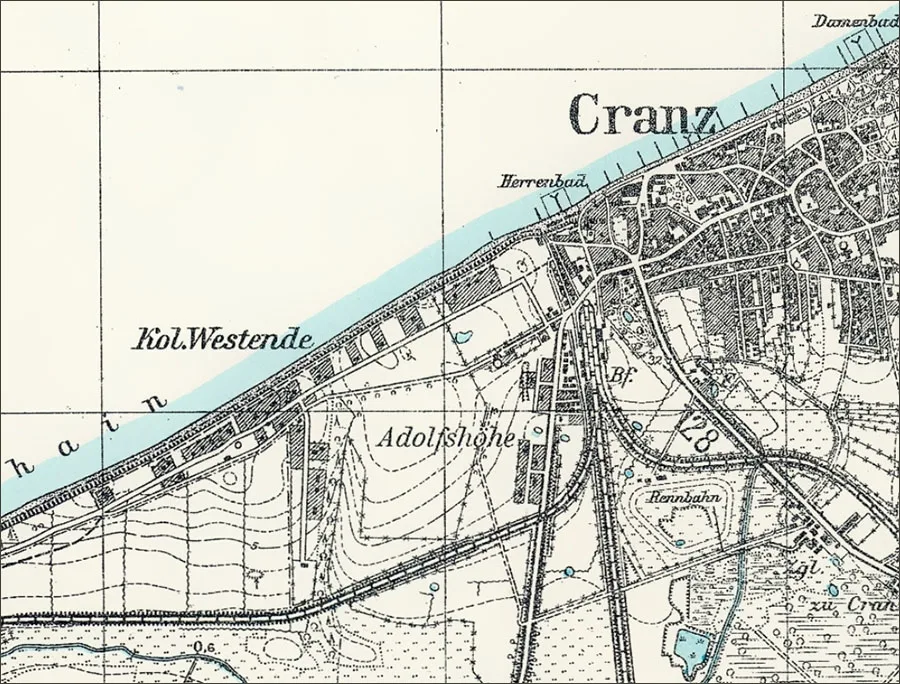 The Westende colony and Adolfshöh on a map of the coast around Cranz.
After the end of the First World War the colony became popular, and local industrialists and officials, as well as several professors of the Albertina, Königsberg's university, began to build villas here. On 22.03.1929 the Westende colony, together with some other areas of the rural municipality of Michelau (Kamenka), was attached to the municipality of Cranz. In the 1930s a children's boarding house operated in the Westende colony.
 Present-day Zelenogradsk – a city of cats.
Adolfshöh arose in 1922 as an extension of the Westende colony, which had begun to expand inland from the coast between the former estates of Ziegenfeld and Seewäldchen. It originally belonged to the rural municipality of Michelau (Kamenka). Its parish was Cranz. On 22.03.1929 the residential area of Adolfshöh, together with some other areas of the rural municipality of Michelau (Kamenka), was attached to the municipality of Cranz.
The Cranz forester's lodge is first mentioned in 1729, when it became the seat of the head forester who administered the forest districts in the territory from Cranzkuhren to Nidden (Nida, Lithuania). In the 19th century the Cranz forester's lodge was an ordinary forestry belonging to the forest Gutsbezirk of Fritzen, Forst, administered from the Fritzen head forestry (Oberförsterei Fritzen; Sosnovka). From 1877 the Cranz forester's lodge belonged to the parish of Cranz-Sarkau. On 30.09.1929 the Cranz forester's lodge passed to the municipality of Cranz.
Population trends: 1816 – 268, 1831 – 314, 1840 – 402, 1858 – 782, 1864 – 925, 1867 – 993, 1871 – 9911, 1900 – 2093, 1905 – 2598, 1910 – 2570, 1933 – 4667, 1939 – 5089, 1959 – 6886, 1970 – 9781, 1989 – 10,786, 1998 – 12,200, 2002 – 12,509, 2010 – 13,026 inhabitants.
Population trends of Cranzkrug: 1867 – 13, 1871 – 19 inhabitants.
Population of Cranzbeek: 1905 – 6 inhabitants.
Population of Schlachthof: 1905 – 6 inhabitants.
Population of the Cranz hospital: 1905 – 8 inhabitants.
Population of the Cranz forester's lodge: 1905 – 8 inhabitants.
Population of the mill: 1905 – 20 inhabitants.
Population trends of the Grenz forester's lodge: 1871 – 5, 1905 – 8 inhabitants.
Population of Schwendlung: 1905 – 10 inhabitants.
1 — including 5 people at the Grenz forester's lodge.
Composition of the population of Cranzkrug in 1871: Protestant Christians – 17, Catholics – 2, literate – 19 (100%).
Composition of the population of Cranzkuhren in 1871: Protestant Christians – 914, Catholics – 8, other Christians – 47, Jews – 2, children under 10 – 213, literate – 627 (85%), blind – 3, deaf-mute – 1.
The parish of Cranz-Sarkau comprised: Beekinsel (Rybachy Island, 54°57'19'' N 20°31'23'' E), Bledau (Sosnovka), Cranz (Zelenogradsk), Cranzbeek (part of Zelenogradsk), the Cranz forester's lodge (Zelenogradsk, 10 Turgenev Street), the Grenz forester's lodge / Forsthaus Grenz (54°58'56'' N 20°33'50'' E), Garbeck (part of Zelenogradsk), the Cranz hospital / Krankenhaus (Zelenogradsk, district hospital), the mill / Mühle (part of Zelenogradsk), Rodahn (part of Sosnovka), Rosehnen (Priboy), Sarkau (Lesnoy), Schlachthof (part of Zelenogradsk), Schwendlung (54°57'44'' N 20°31'49'' E), Wargenau (Malinovka), Wosegau (Vishnyovoye), the Wosegau brickworks / Ziegelei Wosegau (part of Zelenogradsk).
Historical photographs: pastvu.com.
Present-day photos by Mikhail Ogorodnikov.
Translated from Russian with the help of AI (Claude, Anthropic), October 2026.