 Coat of arms
of Darkehmen.
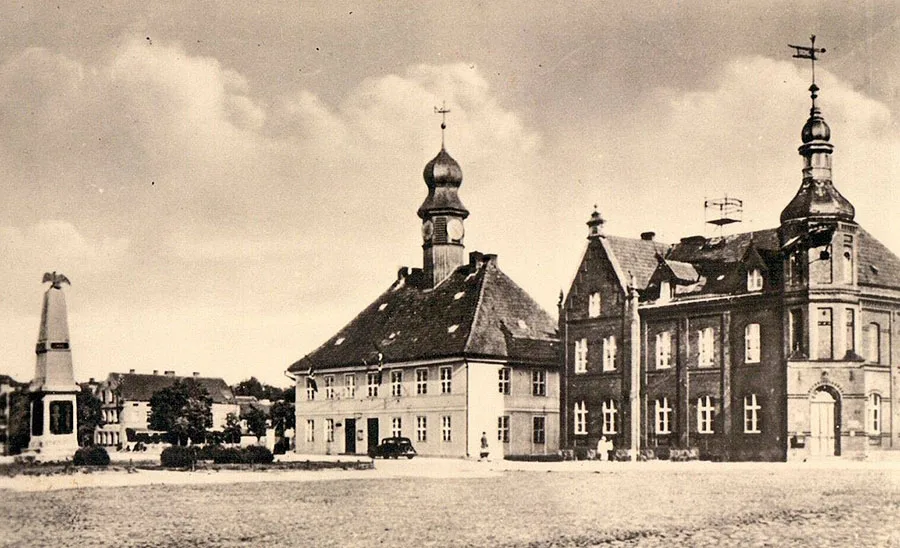 The town hall and post office (right, still operating in this building today) on the main square of Darkehmen.
Darkehmen is first mentioned as Darkyem in 1539. In 1554 the spelling changes to Darkiem, and in 1557 to Darkeimen. The forms Dargekinn (1564) and Dargekiem (1565) were also used. In 1615 it appears in documents as Dorekheim in connection with the construction of the first wooden church here. At that time the village also had a water mill with a crossing over the Angerapp River, and an inn. In 1706 a school was opened at the church.
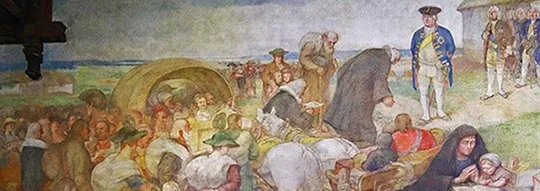
The plague epidemic of 1709–11 left the surrounding lands deserted. About 60% of the townspeople died in Darkehmen. To make up for the population losses and improve the economic situation, King Frederick William I invited settlers from Nassau, Salzburg, Switzerland and elsewhere who wished to leave their homelands for religious reasons. Some of these settlers came to Darkehmen as well.
In 1725 a new church was founded in Darkehmen and the first brewery was built. On 10 September of that same year, 1725, King Frederick William I granted Darkehmen town rights. In connection with this, the court architect Joachim Ludwig Schultheiß von Unfriedt drew up a plan for the centre of the new town with two squares and parallel streets ending at the town fortifications. In the end, however, they made do with a single market square. In 1754 the church in Darkehmen was completed and consecrated on 15 September. The settlers who had arrived from Switzerland began to develop cloth-making in Darkehmen. In the 18th century, large enterprises for wool spinning, leather tanning and linen production appeared on the banks of the Angerapp, but this industry later declined. From 1736 the town had a military garrison.
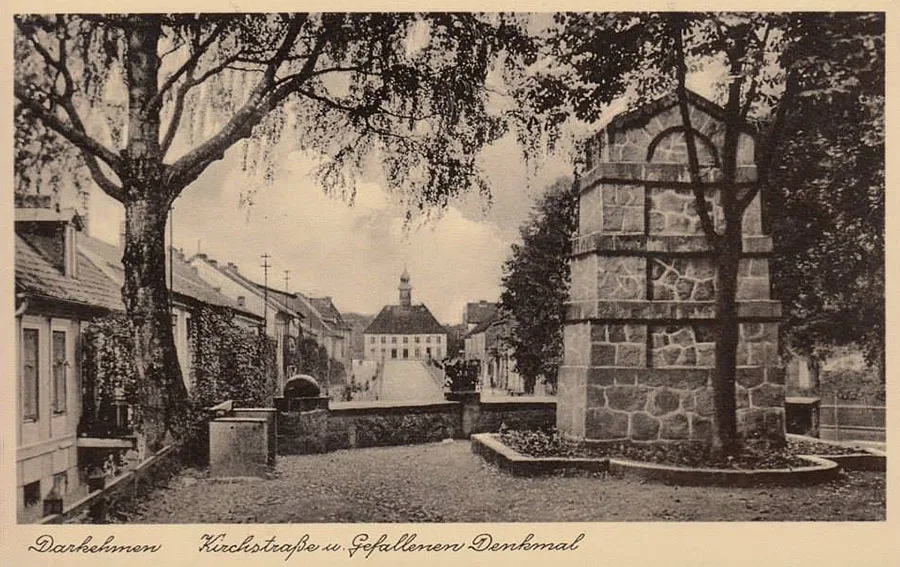 View of the town hall (not preserved) from the church.
As a result of the administrative reform, from 1818 Darkehmen became the centre of the district of the same name (Kreis, later Landkreis). In 1836 the church built in the 18th century was declared unsafe and closed. A new one was completed by 1842 (consecrated on 9 September).
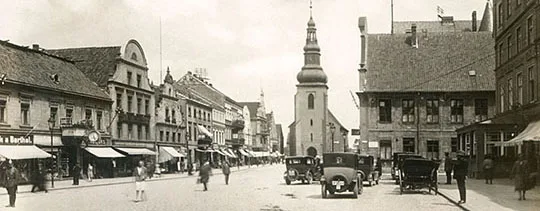
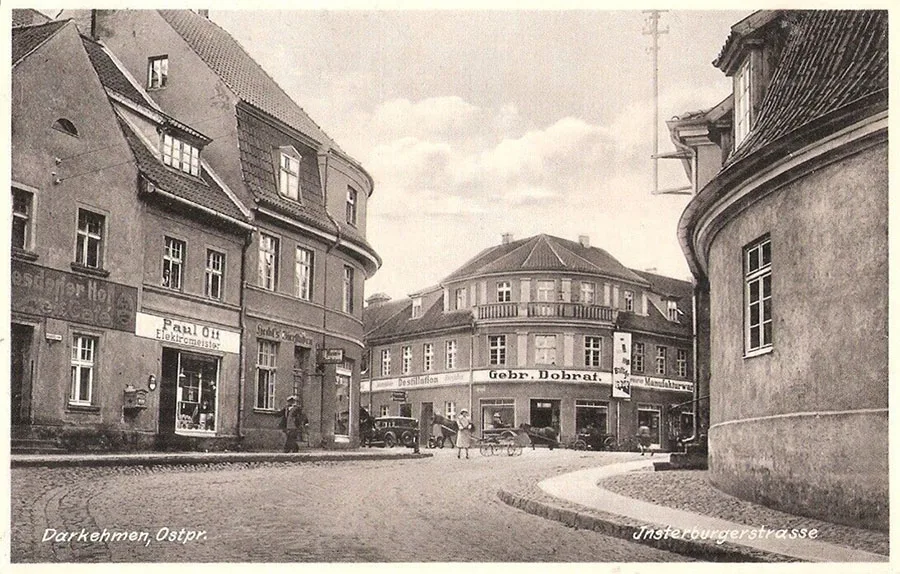 A Darkehmen street: Insterburger Strasse.
In 1879 the Insterburg–Lyck railway (Chernyakhovsk – Ełk, Poland) was built, passing near Darkehmen. Its station was in Ströpken (Ushakovo), the settlement closest to Darkehmen. In 1880 the mill dam was adapted for a power station. In 1886 Darkehmen acquired municipal street lighting. Remarkably, Darkehmen became the first town in East Prussia to be lit by electricity. Initially the town's street lighting consisted of 16 lamps. A further 107 lamps in the magistrate's building, the hotel and some houses were also connected to the power station. In 1907 a municipal electrical substation was built, which integrated the local grid into the provincial one. In 1906 a new school building was erected in Darkehmen, which still faithfully serves its purpose today (2022). In 1913–14 another railway was built through Darkehmen – Gumbinnen–Angerburg (Gusev – Węgorzewo, Poland). A separate West Station was built on it in the town.
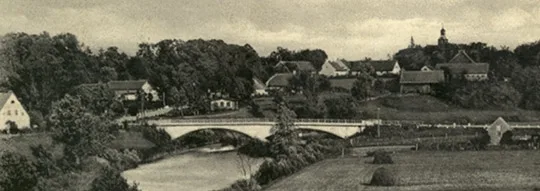
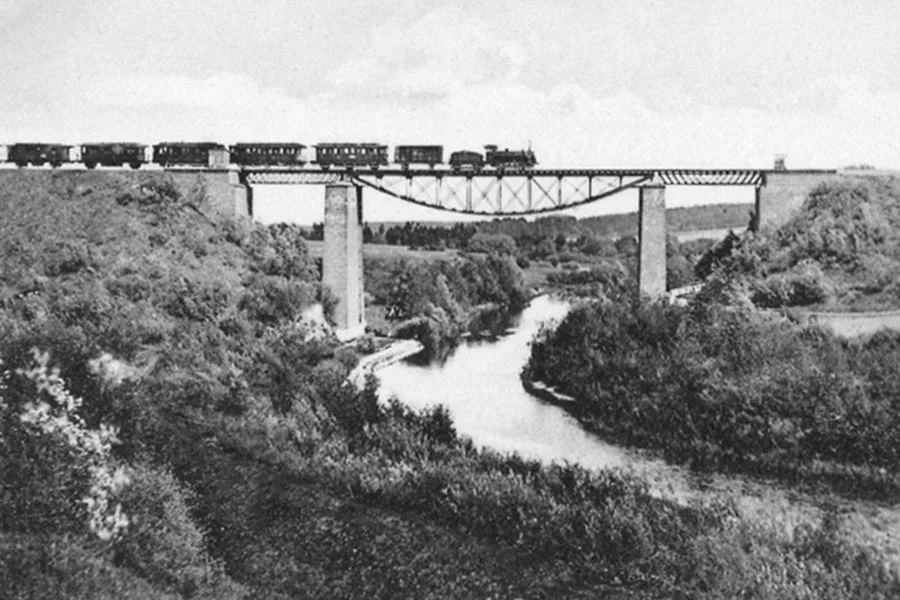 Railway bridge over the Angerapp near Darkehmen.
During the East Prussian operation of the Russian army (1914), fighting around Darkehmen began as early as the 3rd day after the border was crossed, i.e. on 20.08.1914. On 22 August the 2nd Brigade (Major General S. P. Sokolov) of the 30th Infantry Division of the Russian 1st Army fought its way into the town. The retreat of the Russian army that followed in September 1914 drew the town into the fighting once again. The 54th Infantry Division (Major General M. I. Chizhov) and the 72nd Infantry Division (Major General D. D. Orlov) fought defensive battles near Darkehmen for several days, but on 11.09.1914 German army units occupied Darkehmen.
The fighting caused considerable damage to the town's buildings. Dresden helped Darkehmen with the reconstruction, and by 1922 the work of repairing the destruction had been completed.
By 1931 the municipality of Darkehmen included four settlements; in total the town had 217 residential houses and 888 farm buildings. In the 1930s Darkehmen had an engineering factory, a dairy, a power station, a mill and a slaughterhouse. The town had a central water supply with a water tower.
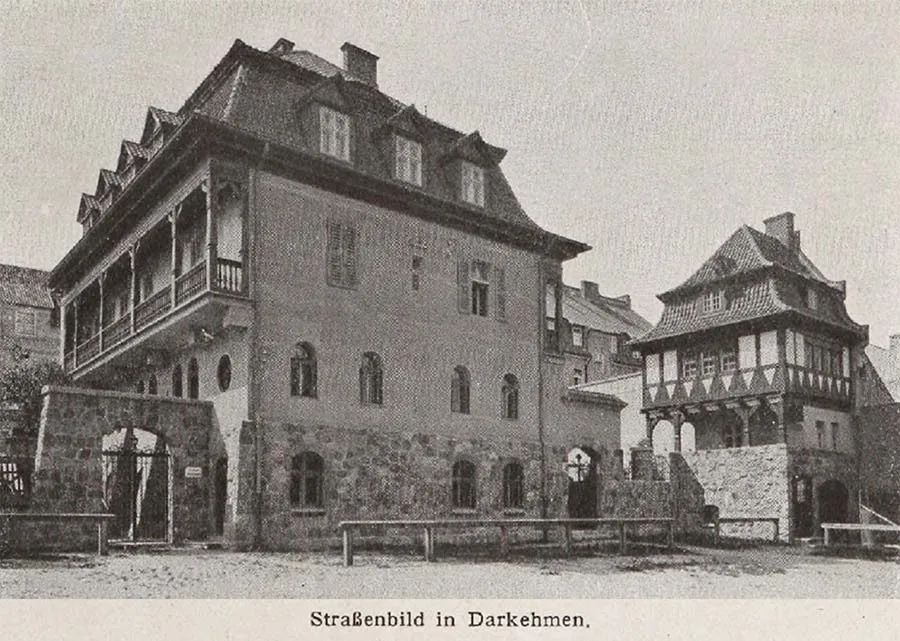
Besides the town hall, administrative and financial offices, courts and post office standard for a district centre, Darkehmen had three schools (including one Realschule), two hospitals, two old people's homes and a local history museum.
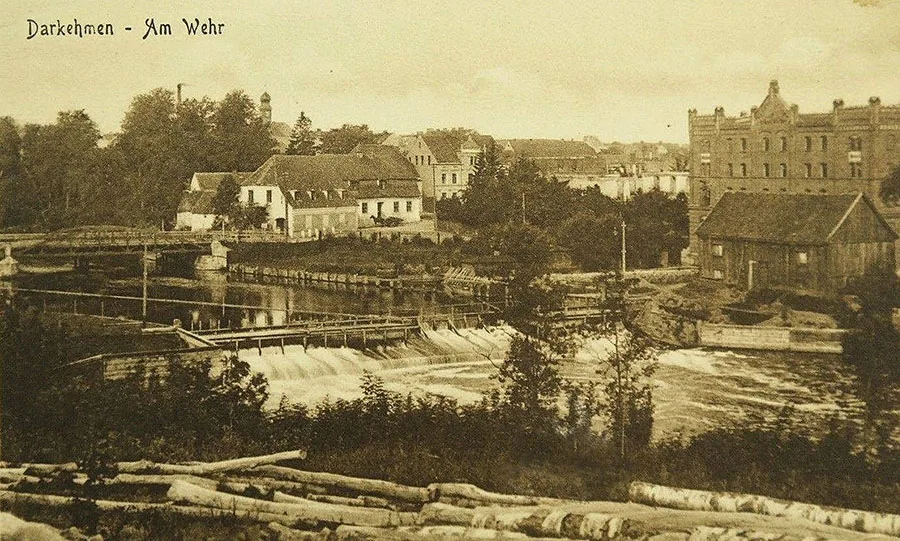 The Darkehmen power station and the bridge over the Angerapp.
On 22.10.1944, during the Gumbinnen–Goldap operation, units of the 11th Guards Army reached the approaches to Angerapp. On 23.10.1944 Soviet soldiers had already entered the outskirts of the town, but were ordered to withdraw because considerable Wehrmacht forces were advancing towards them. Angerapp was taken only on 23.01.1945 by the 32nd Guards Rifle Division (Major General N. K. Zakurenkov) of the 2nd Guards Army. Less than 10% of all the town's buildings were damaged in the fighting.
On 07.09.1946 Darkehmen was renamed Ozyorsk. On 01.10.1946 the Ozyorsk school opened; the following year it became a secondary school. In its first year it had 35 pupils. The town had 400 houses, 40 of which needed repair or demolition. The first priorities were getting the machine and tractor station, a joinery and a metalworking shop up and running, and installing a telephone exchange for 40 numbers. Also in 1946 an industrial plant was set up. Two hospitals were opened (including one for the German population). A primary school for German children with 78 pupils was opened as well. The townspeople were also served by an outpatient clinic, two shops and a tea room. In 1948 an agricultural technical college was founded.
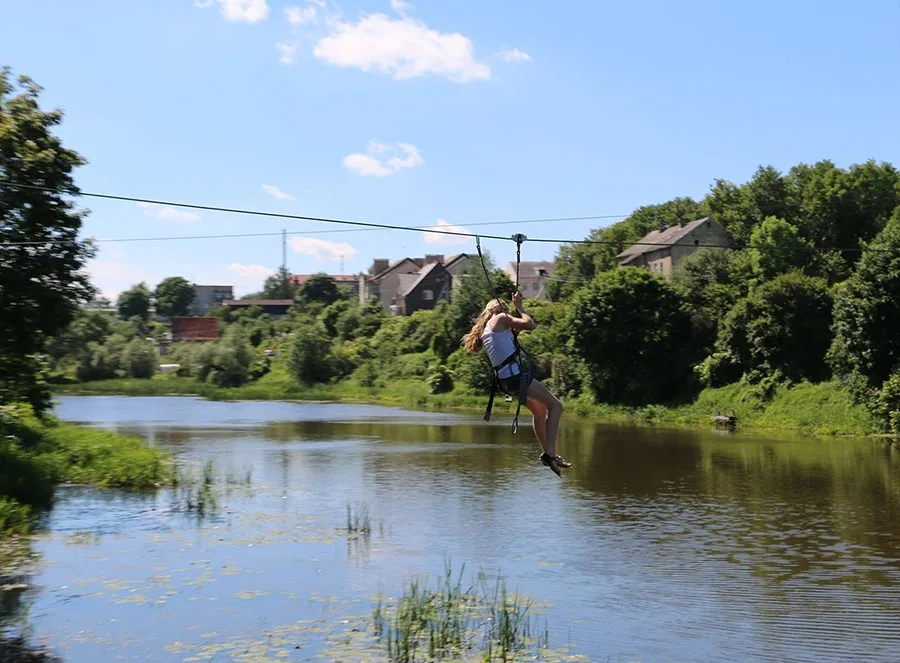 The main entertainment in modern Ozyorsk is swinging across the Angrapa on a rope swing.
That same year the square was landscaped and a monument to Stalin was unveiled on it. The former theatre building was converted into a House of Culture, where in 1948 Lyubov Orlova gave a concert. The 1.5 MW power station was dismantled and taken away. Power equipment of 0.35 MW remained in operation, supplying Ozyorsk, Gusev, five sovkhozes and two kolkhozes. Nevertheless, as early as 1949 the power grid was overhauled and lighting was restored to 60 street lamps. In 1949 the Pobeda cinema was built and a memorial was erected on the mass grave of Soviet soldiers.
In 1950 the industrial plant had a sewing shop. Also in 1950 a new district hospital was opened. In 1953 a diagnostic laboratory began operating there. The railway lines had been badly damaged; between Ozyorsk and Chernyakhovsk alone, 22 bridges needed to be rebuilt. The repairs required investment and were constantly postponed, and as a result Ozyorsk never became a railway junction.
In 1961 the town's park of culture and recreation was opened. In 1961–63 the Ozyorsk district was merged with the Chernyakhovsk district, but the innovation quickly proved a failure, and the districts were restored almost within their former boundaries.
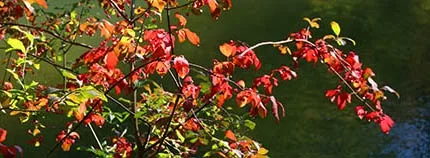
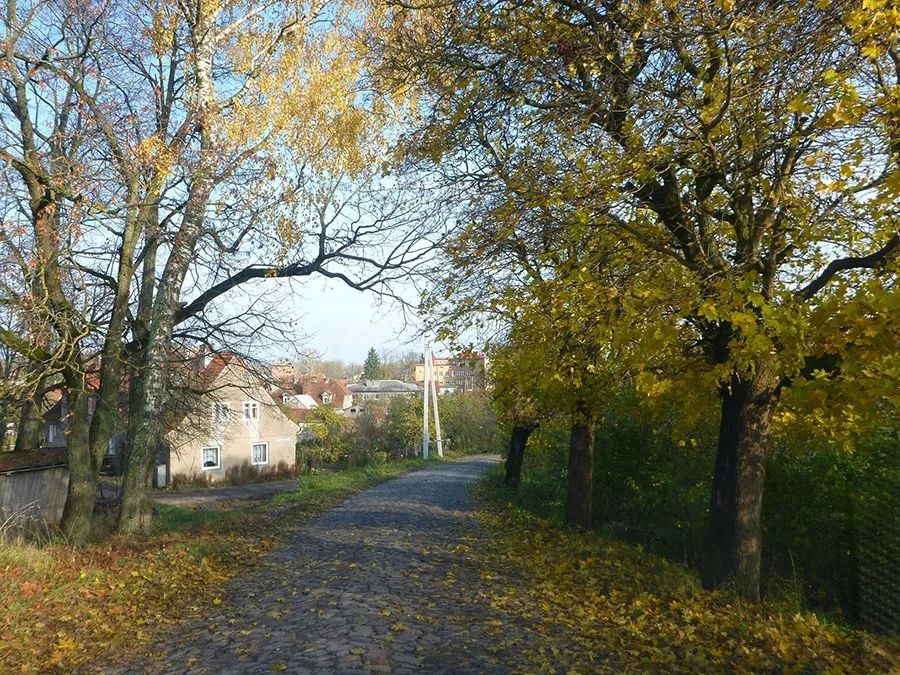 The quiet provincial charm of Ozyorsk in autumn.
In 1961 a passenger pavilion was built at the Ozyorsk airfield, and regular An-2 flights to Kaliningrad began. This air route, however, did not last long.
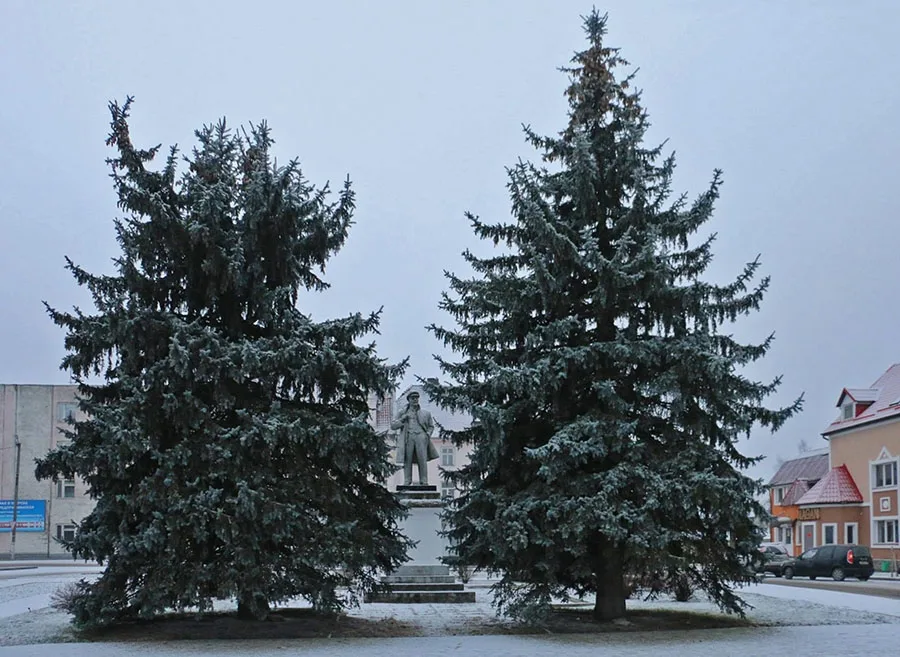 The Lenin monument on the central square of Ozyorsk is well hidden.
By 1961 the town had a children's music school, a kindergarten, a sanitary and epidemiological station and a library. Enterprises included a cheese factory, an asphalt and bitumen plant, an industrial plant, a municipal utility, a district consumer cooperative, a bus station and an agricultural aviation flight unit. There was a fire brigade. In 1961 television broadcasting began in Ozyorsk, although the signal quality in the town left much to be desired.
In 1970 a branch of the Vilnius radio measuring instruments plant opened in Ozyorsk; it was later converted into a printed circuit board factory. In 1979 the new Svetlyachok kindergarten and the Raduga tailoring studio opened. In 1980 the Pobeda cinema moved to a new building. After 1990 the dismantling of the railway lines began, which finally deprived Ozyorsk of any chance of becoming a transport hub.
The onset of Perestroika and then the transition to a market economy brought changes to town life. The well-established and stable operation of the town's enterprises came under serious threat, as most of them were not ready for market competition.
In 1996 an Orthodox church opened in the Catholic chapel. In 2000 the 0.5 MW Ozyorsk hydroelectric power station on the Angrapa began operating. In those same years the printed circuit board factory began cooperating with the Czech company Brisk in the production of spark plugs. In 2003 a local history museum was opened in Ozyorsk. In 2004 a children's and youth sports school was founded. In 2006 a monument to the first street lamp was erected.
In 2008 the printed circuit board factory ceased operations. The butter and cheese factory was turned into a milk collection point, and production there was stopped. In 2018 the former butter and cheese factory was liquidated as an organisation. In 2021–22 repair and conservation work was carried out in the Darkehmen church. Today education is provided by a secondary school, a college of agricultural technology and land management, a kindergarten and a children's creativity centre. There is a central library and a children's library. Healthcare is provided by an outpatient clinic and a hospital with 55 beds and 20 day places. Efforts are being made in the district to develop various kinds of tourism.
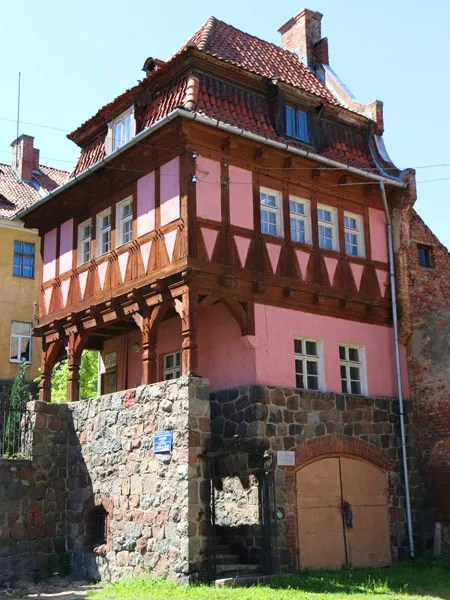
Sights: church (1842), Catholic chapel (early 20th c., residential house), Catholic chapel (early 20th c., Orthodox church), hydroelectric power station building (1880), post office building (1897, post office), brewery building (late 19th – early 20th c.), barracks complex (late 19th c.), West Station (1913, residential house), school building (1906, school), U. Wiechert's villa (1921, town administration), U. Wiechert's mansion (early 20th c.), Gustav Kort's house (1903), garrison infirmary building (outpatient clinic, 1901), courthouse (early 20th c.), monument to the first street lamp (2006), burial site of 47 Russian and 113 German soldiers (1914–15), monument to those who fell in the First World War, memorial on the mass grave of Soviet soldiers (2,080 people, memorial 1949), Lenin monument on the pedestal of a pre-war monument commemorating the victory in the Franco-Prussian War, archaeological monuments, pre-war buildings.
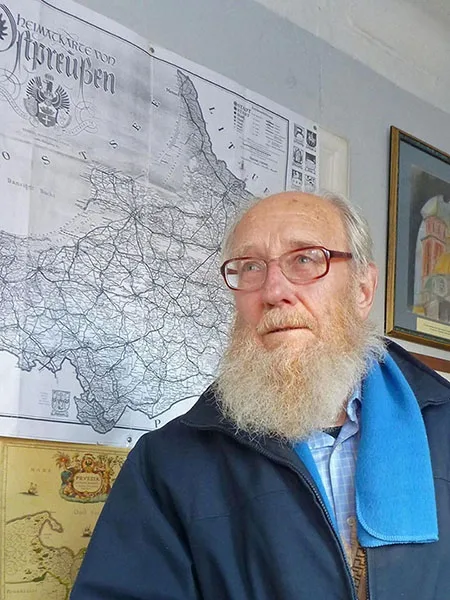
Notable natives of Darkehmen: August Wilhelm Wlochatius (1744–1815), Prussian philosopher, associate professor at the Albertina (from 1795); Gustav Adolf Bauer (1870–1944), German politician, Chancellor of the Weimar Republic in 1919–20; Constanz Berneker (1844–1906), German organist; Manfred Peter Hein (born 1931), German writer and translator.
For reference
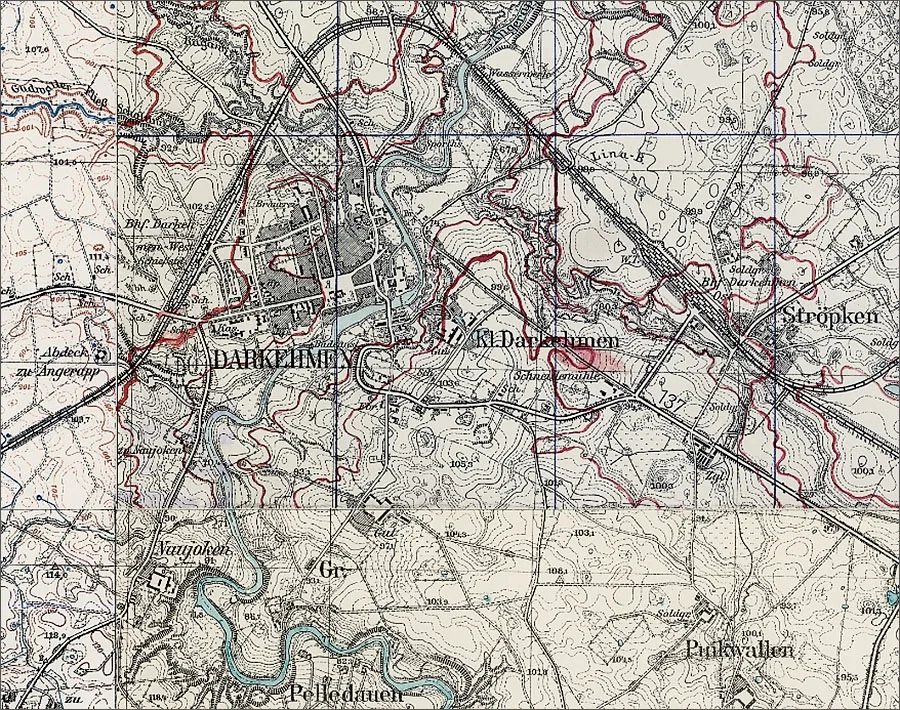
Klein Darkehmen is mentioned in 1589 as Klein Dharkeym. After 1603 the name Klein Darkem was used, and after 1785 Klein Darckehmen. From 1818 Klein Darkehmen was a village forming a rural municipality in the Landkreis Darkehmen (Ozyorsk). The village belonged to the Darkehmen parish. The municipality also included the settlement of Schneidemühle (part of Ozyorsk). On 06.05.1874 the rural municipality of Klein Darkehmen was incorporated into the newly established Gutsbezirk of Weedern (Suvorovka).
Schneidemühle was a small village that took its name from the sawmill located there. The village of Schneidemühle belonged to the Darkehmen parish and was part of the rural municipality of Klein Darkehmen.
Schaumburgsfelde was an estate and the centre of the Gutsbezirk of the same name in the Landkreis Darkehmen (from 1938 Angerapp, Ozyorsk). The estate belonged to the Darkehmen parish (Ozyorsk). On 06.05.1874 the Gutsbezirk of Schaumburgsfelde was incorporated into the newly established Amtsbezirk of Gailboden (Guryevskoye). On 30.09.1928 the Gutsbezirk was abolished, and the Schaumburgsfelde estate (together with the Gutsbezirke of Gailboden (Guryevskoye) and Ottoberg (Nechayevo)) became part of the rural municipality of Mallenuppen (from 1938 Gembern, Zadorozhye).
On 05.07.1950 Schaumburgsfelde was renamed the settlement of Stavropolskoye, which became part of the Bagrationovsky village council of the Ozyorsk district. No later than 1975, when only two households remained there, it was removed from the register as an independent settlement and became part of the town of Ozyorsk, sometimes referred to as the urban settlement of Sechenovo. Klein Darkehmen was not mentioned in the decrees at all and immediately became part of Ozyorsk.
Population of Darkehmen/Ozyorsk: 1725 – 742, 1736 – 1,072, 1775 – 1,555, 1782 – 1,600, 1800 – 2,383, 1867 – 3,081, 1875 – 2,924, 1895 – 3,541, 1910 – 3,448, 1925 – 3,375, 1933 – 3,652, 1937 – 4,221, 1939 – 4,377, 1946 – 1,5001, 1947 – 1,7832, 1959 – 3,832, 1970 – 4,517, 1979 – 6,047, 1989 – 6,219, 2002 – 5,801, 2010 – 4,740, 2011 – 4,717, 2012 – 4,642, 2013 – 4,542, 2014 – 4,443, 2015 – 4,357, 2016 – 4,255, 2017 – 4,108, 2018 – 3,935, 2019 – 3,837, 2020 – 3,821 inhabitants.
Population of Schaumburgsfelde: 1905 – 25, 1910 – 24 inhabitants.
Population of the Klein Darkehmen municipality: 1885 – 119, 1905 – 121, 1910 – 117, 1925 – 83, 1933 – 88, 1939 – 90 inhabitants.
1 — including 340 Germans.
2 — including 148 Germans.
The Darkehmen parish included: Alt Thalau (Mezhdulesye), Auerfluß (Mezhdurechye), Awiszen (Fastovo, part), Bagdohnen (from 1938 Kleinsausreppen, Peski), Balschkehmen (from 1938 Balsken, Porechye), Bidszuhnen (from 1938 Bidenteich, Prigorodnoye), Camanten (from 1938 Kamanten, Klimovka), Darkehmen (Ozyorsk), Demildszen (from 1938 Kleinkamanten, Sebzhskoye), Emmahof (Bogdanovo), Endruschen (from 1938 Maiden, Lesnoye), Friedrichsfelde (Zapolye), Gailboden (Guryevskoye), Groß Grobienen (Malaya Klimovka), Groß Pelledauen (from 1938 Jungferngrund, Minskoye), Gudwallen (Lvovskoye), Hallwischken (from 1938 Hallweg, Ryazanskoye), Kallnen (from 1938 Drachenberg, Novo-Guryevskoye), Klein Bretschkehmen (from 1938 Kleinbrettken, Chelyuskino), Klein Darkehmen (from 1938 Schimmelhof, part of Ozyorsk), Klein Grobienen (Porechye), Klein Pelledauen (from 1938 Kreuzstein, Fastovo), Klein Skirlack (Opochenskoye, part), Kundszicken (from 1938 Sandeck, Shishkino), Kunigehlen (from 1938 Stroppau, Otradnoye), Mallenuppen (from 1938 Gembern, Zadorozhye), Menturren (Sechenovo), Menzelswalde (Lvovskoye, part), Milchbude (Lesnichye), Muldszählen (from 1938 Finkenwalde, Rechkalovo, part), Naujeningken (from 1938 Kleingudwallen, 54°23'15'' N 21°57'31'' E), Naujocken (from 1938 Kleinauerfluß, Minskoye), Neu Gudwallen (Ilyino), Neu Thalau (54°22'28'' N 21°58'14'' E), Ottoberg (Nechayevo), Puikwallen (from 1938 Schönwall, Timofeyevka), Schaumburgsfelde (Stavropolskoye), Schniepseln (from 1938 Schniepen, Guryevskoye, part), Schunkarinn (from 1938 Schlieben, Dorozhnoye), Schneidemühle (part of Ozyorsk), Ströpken (Ushakovo), Szameitschen (from 1923 Waldhorst, Konevo), Weedern (Suvorovka), Wollehlen (Volnoye).
Contemporary photos by Mikhail Ogorodnikov.
Translated from Russian with the help of AI (Claude, Anthropic), October 2026.