It is an indisputable fact that these changes have had a negative effect on the state of its green spaces: their planning and structural features have been erased, many trees have died or been deliberately felled, the ecological condition of the plantings has deteriorated without gardeners to look after them, the distinctive character of squares and parks has become a thing of the past, and some of them have lost their function. In Soviet times the tragedy of the last war produced a perfectly understandable rejection of everything German, a refusal to accept an "alien", "hostile" culture.
But this concept of ruthlessly destroying the face of Königsberg, strange as it may seem, lives on in the Kaliningrad of our own day.
It severs ties not only with the past (that could still be explained) but also with the future: Kaliningrad presents itself as a tourist centre. So what will Kaliningrad have to show in the near future? What will it attract people with? And whom will it attract?
What makes Kaliningrad distinctive
Tourists from the Russian Federation come to see a city that is unusual for Russia – to see its cultural heritage. Much Soviet soldiers' blood was shed for this city. With their unlived lives they paid in full for the lives of today's Russians in the new city. Despite the hard years of rebuilding Kaliningrad, the settlers remembered the city's marvellous green attire: well-tended gardens, household plots, shady promenades. It was a "City amid green gardens".
Dmitry Likhachev observes: "Each of our historic cities has an individual face and is beautiful in its own way..."
Indeed, the key indicators of an attractive urban environment are its distinctiveness, uniqueness, individuality… A city that loses its history and its nature becomes faceless.
So why, in our time, distort and destroy, detail by detail, what remains of the historical face of today's Kaliningrad?
One example of these appalling actions is the shrinking of the green areas of the harmonious "garden city" as it was conceived a hundred years ago by the predecessors of our landscape architects.
"A clean and green city… I often dream of it..." – wrote the cosmonaut Aleksey Leonov about Kaliningrad.
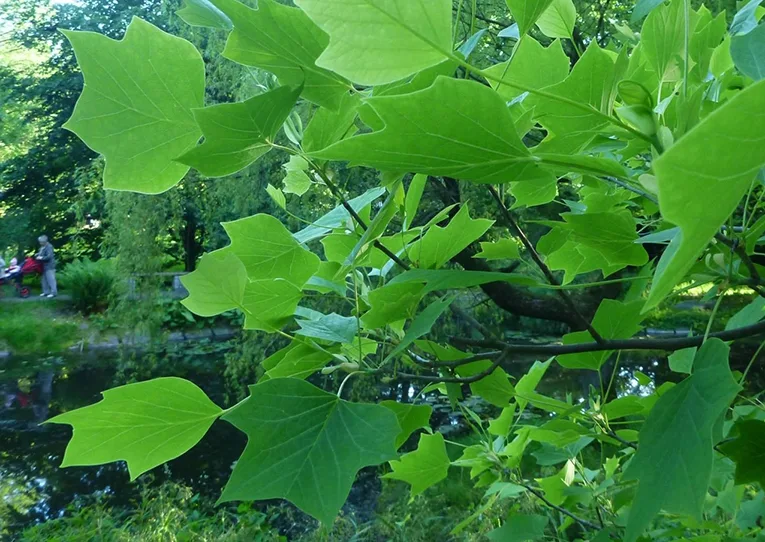
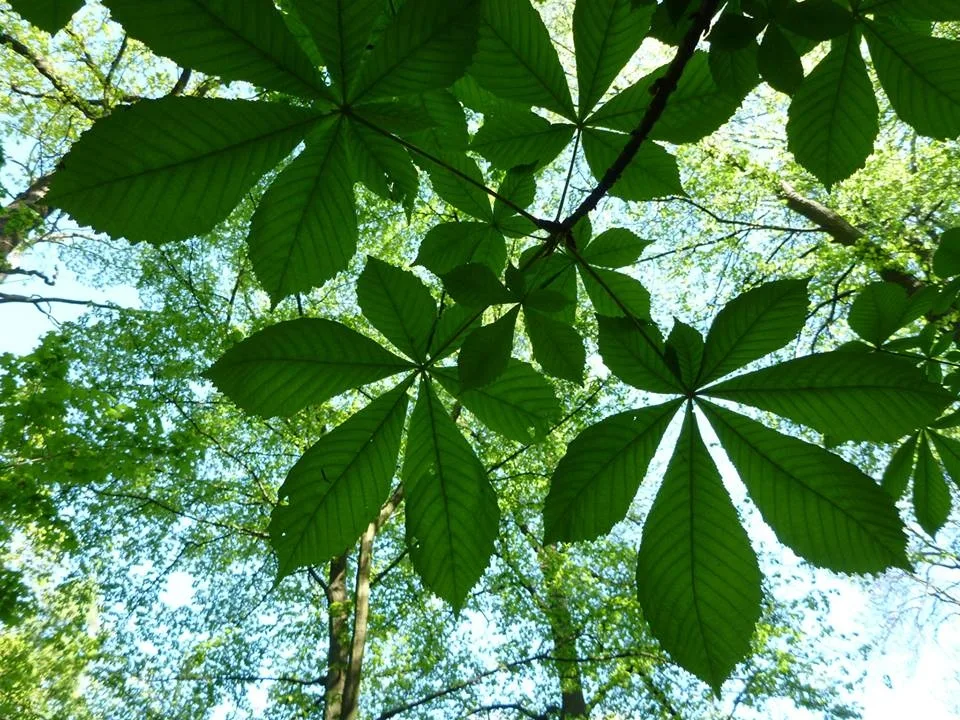
A tulip tree at the Kaliningrad Regional Ecological and Biological Centre.
One could go on at length listing the facts and addresses of green spaces that have been reduced or lost altogether after being converted into shopping, entertainment and commercial sites. One could name every loss… However, since today's burning question concerns not all gardens and parks but just one ornament of our city – "Schneider's Belt" – I will give only the figures, which, as they say, are stubborn things.
So, the figures
The inhabitants of Prussia were considered perhaps the most thrifty – not to say tight-fisted – Europeans (so one of the kings of Prussia wrote of his subjects in a private letter), and yet during the building boom that came to Königsberg in the 1920s they spared no expense on planting greenery on vacant land, with the aim of making the urban environment healthier. It is precisely these trees that are being cut down today in the squares, parks, promenades and streets of our city. For instance, quite recently in Tsentralny Park, for no clear reason and without any expert assessment, five beeches were felled on the slope of the hill with Queen Louise's half-rotunda. And this sad list would be long if one were to continue it…
In the Königsberg conquered by Soviet soldiers the total area of green zones was 787.2 ha, the area of well-kept parks just over 200 ha, and in the Juditten district (now the Brusnichka residential complex) there were 21 ha of well-kept forest park.
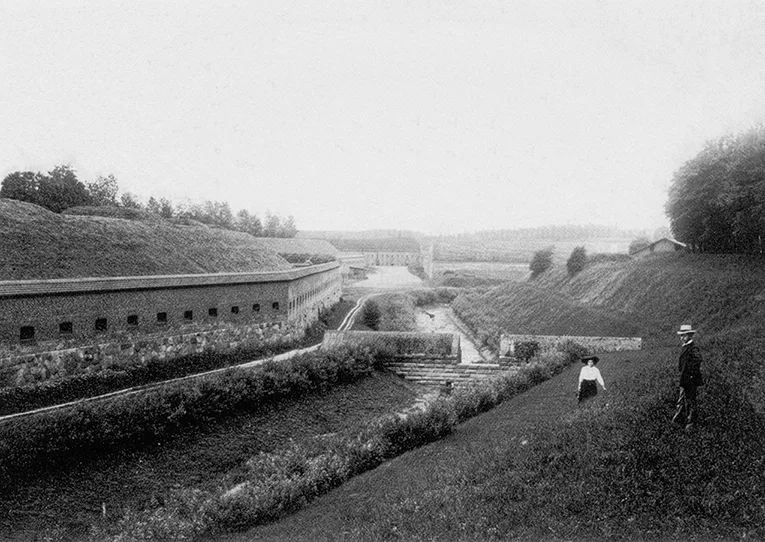
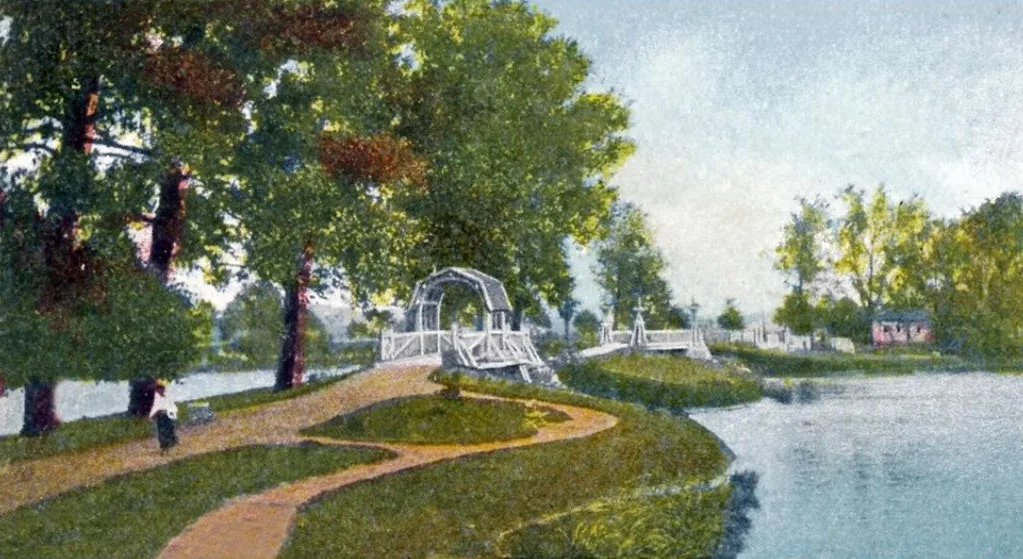
To relax in the open air, the residents of pre-war Königsberg did not need to leave the city.
Photo: bildarchiv-ostpreussen.de
Thanks to the efforts of the Kaliningrad authorities over the last couple of decades, the area of parks, park zones, gardens and squares now stands at 289 ha, of which park land accounts for 101.3 ha (after these figures were provided in response to a deputy's inquiry they were never published anywhere, and the area of all the parks has shrunk further since…). A figure is given for some "protective and decorative plantings" (what are they?! where exactly can one see them?) – 181.5 ha. That makes 470.5 ha in total.
The total area of well-kept green plantings, which we calculated from Google maps, amounts to just over 2% of the area of the modern city.
Since then, no fewer than 18 green areas have ceased to exist, having turned into zones for public, business and commercial use… Not bad results, are they?
One can understand it when a city simply has no money for new planting. But the city entrusted to the administration was known 20–30 years ago as a "garden city", and the authorities are spending money on felling trees, on tearing this green lace apart!.. I would like to remind the authorities that about eight years ago, according to official data, plans were made to create a total of 501.5 ha of new parks, 253.5 ha of squares and 745 ha of protective and decorative plantings across all districts of the city. Where are they?
Instead – tree felling and construction on the edges of old parks.
"The river of time in its flowing carries away all the deeds of men..." But one would like to think that the townspeople will not forget deeds such as these. According to information provided by the Kaliningrad administration to the public environmental organisation "Kaliningrad Green Cross", between January 2012 and December 2013 the mayor's office issued 432 felling permits, authorising the felling of 3,147 trees; in 2014 permits were issued for 3,661 trees, and in January 2015 for 1,118. The felling is carried out by five firms. No compensatory planting followed…
"Schneider's Green Belt"
Königsberg was founded as a fortress, it developed within fortress walls, it was defeated as a fortress – and yet it was not the castles, walls or towers but Königsberg's gardens and parks that were its "genius loci", the charming feature of the urban landscape.
To create a healthy living environment for the townspeople in a city overloaded with cars, one should not fell hundreds of trees but restore the greenery wherever possible, returning to the landscape-architectural principles that were laid down in our city's system of green spaces and that are recommended for greening modern cities as well.
A hundred years ago a unique system of green spaces took shape in our city, and its backbone was "Schneider's Green Belt" – Königsberg's defensive ramparts, which had lost their military function and been planted with greenery.
This "Green Belt", named after the landscape architect who headed the "Directorate of Gardens and Parks" and the greening of Königsberg, was 15 km in circumference and covered 140 ha. 140 ha of greenery on a landscaped promenade along the terraced slopes of artificially raised ground, accompanied by the water-and-green areas of the former rampart moats, with rose gardens, beaches, lawns and sports grounds. One should not think that "Schneider's Belt" is merely the remnants of the green zone on Litovsky Val. It is a far more extensive and complex network of large and small green spaces.
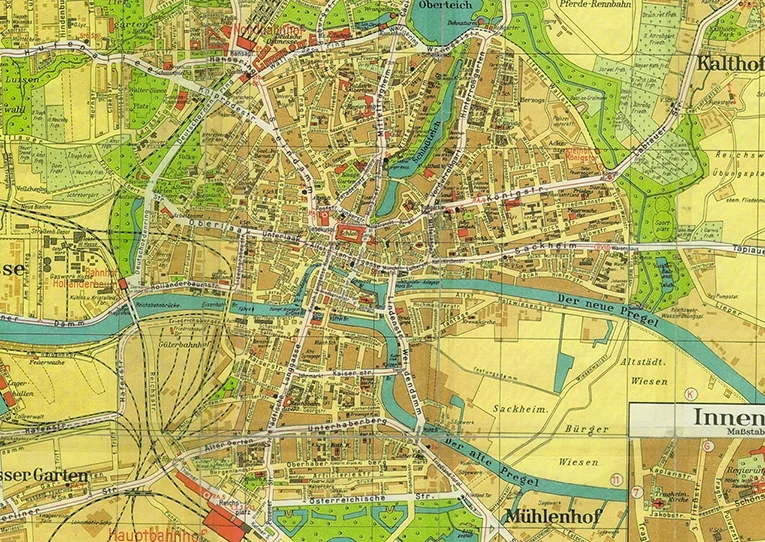
A fragment of a 1938 map – greenery encircles the central part of the city.
Ernst Schneider realised in the city a grandiose greening project that united all the city's local green spaces, inside and outside the defensive ring, into a single whole. The system rested on two landscape and town-planning solutions: planting the glacis – dilapidated but interesting historical fortifications – with greenery while preserving their architectural fragments (towers, bastions, gates), and creating extended water-and-green complexes that cut into the urban fabric, accompanied by flowerbeds, small squares, avenues and ponds.
On schematic maps the "Green Belt" looks like a child's drawing of the sun, with green rays radiating from it – the promenades for walking.
A guidebook to Königsberg reports that, thanks to this greening system, it was precisely the densely populated districts that were enriched with green plantings, and that all the city's large and small green spaces were linked together by the "Green Belt", which, as a through route, was accessible from every district of the city and allowed one to stroll unhurriedly for hours without hearing the clanging of trams, enjoying the shade of the trees. The city drew closer to people, it let nature into its blocks; it was a joyful alternative to living in the densely built old town with its medieval layout.
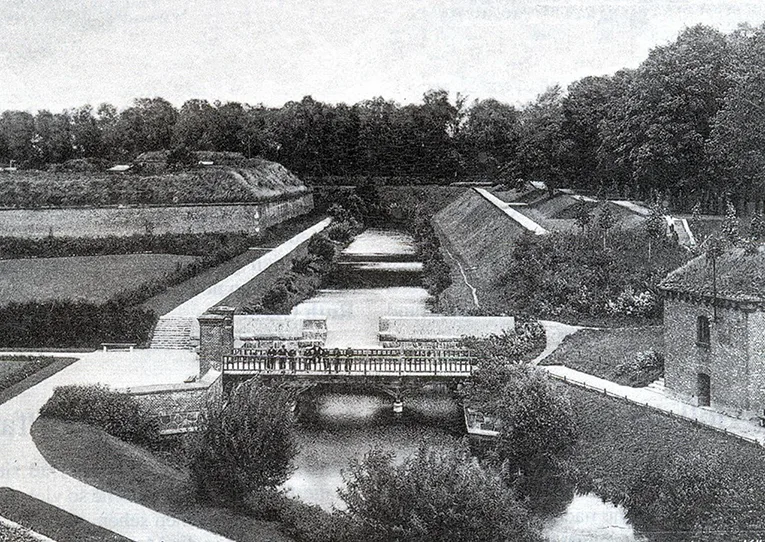
The terraced banks of the rampart moat at the Grolman Bastion near the King's Gate.
Photo: bildarchiv-ostpreussen.de
In the 1920s Le Corbusier wrote of the old-plan cities of his day: "The ever-growing anarchy of cities is an affront to our sense of dignity..." Is this not what we feel too, watching the growing anarchy of infill development that deprives us of open and green spaces and drags us back into a medieval, anti-ecological environment?!
The natural environment of today's Kaliningrad
Today almost the entire "Green Belt" has been built over (the areas of Rakitnaya and Yunosheskaya streets, Partizanskaya Street, the northern part of Litovsky Val, the 13 cemeteries adjoining it, the banks of the Lithuanian Stream; the "Valley of Lilies" along Gvardeysky Prospekt is being prepared for development, and many more addresses could be named). Of "Schneider's Green Belt", in essence, only the southern section on the Lithuanian Stream from the Rossgarten Gate to the King's Gate (about 600 m) has remained more or less untouched. It is impossible to imagine the city losing this beautiful historic stretch as well. The illusion of being freed from the need to reckon with nature and history has undoubtedly already led the Kaliningrad of 2016 to lose important aesthetic and ecological qualities of its urban environment.
For many decades the city's "Green Belt", this living historical object, defined the architectural and artistic image of Kaliningrad and shaped its ecological environment, bringing the urban landscape closer to the notion of an "ecopolis".
An ecopolis is a city built with human needs in mind; one of its principles is the unity of water and green areas, which create the illusion of nature entering the city blocks and divide the urban space into sub-cities surrounded by greenery and threaded with arteries of nature – gardens, promenades, forest parks, streams and ponds.
In 1999, commissioned by the mayor's office, Kaliningrad scientists from various disciplines prepared an "Ecological Atlas of the City" consisting of a dozen maps. The map giving a comprehensive assessment of the state of our city's environment, which included data on air, soil and noise pollution, shows that a vast area of central Kaliningrad falls into the category "pollution exceeding current standards", interspersed with "dirty" and "very dirty" patches. At the same time, the stretch of Litovsky Val and the cemeteries near the King's Gate that had not been built over is marked as "relatively clean". The outskirts of the city with their gardens and household plots also turned out to be clean.
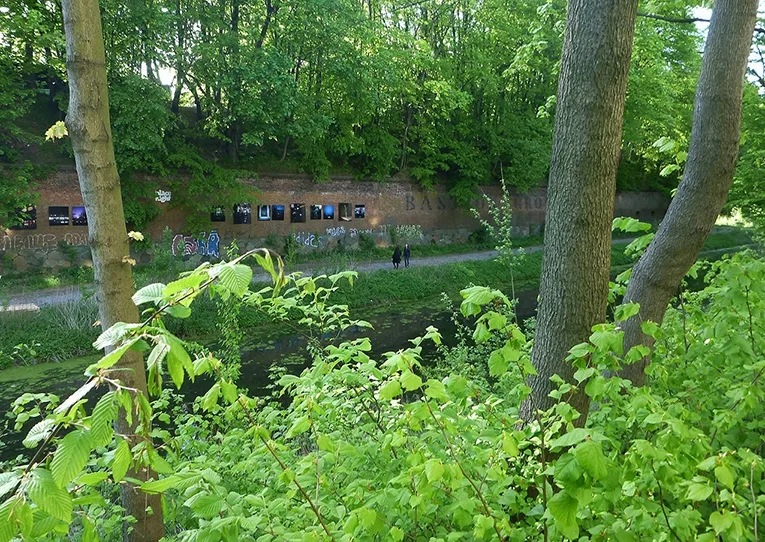
An amateur photo exhibition on the wall of the Grolman Bastion.
Today brings us a surprise in the form of statements by officials in power that the "Green Belt" has lost its significance.
Of course, in fact the "belt" no longer exists: over the past decade those very officials handed its green plots over for the construction of glass-and-concrete "sheds". And now they hypocritically lament and acknowledge the loss of this belt of greenery.
And, of course, scattered, isolated green patches hemmed in by dense development perform, at best, aesthetic functions within the urban landscape – and not always even that. Only an integral system of green spaces can play an ecological role in maintaining the stability and development of the city's ecosystem, and Kaliningrad has already lost it for want of an ecologically sound strategy for planning and developing its territory.
The problems of forming and shrinking the ecological framework of a city are the subject of numerous scientific studies and carefully weighed decisions, because the goal is a healthy environment for people to live in. Of course, the interests of town planners and those of urban nature management very often collide, so local conflicts are inevitable – but destroying an integral system of urban greenery is going too far!
Modern town-planning standards still require a city to be provided with open and green spaces, and a city's vegetation cover should be
a) represented by large areas in the city centre;
b) linked by "green corridors" to suburban green zones;
c) have many ecological axes with large green zones;
d) penetrate all the structural units of the city: its residential areas (housing stock), transport, transport-and-residential and industrial zones.
The destruction of Kaliningrad's green spaces must be brought to an end. I want to convey to decision-makers how ruinous it is to shrink and fragment green areas.
We need a moratorium on felling in the green areas that still survive, even those without the status of a park or square, and all the more so on what remains of the "Green Belt" along Litovsky Val. Besides, it would be good if the authorities kept their promises and invested not only in the murderous "pollarding" of trees but also in the promised new 501.5 ha of parks and 235.5 ha of squares…
In conclusion
I would like to draw attention to three aspects of the problem of urban greenery.
- The art of park building and greening is the privilege of enlightened nations.
- The sanitary and hygienic functions of the ecological framework in shaping and protecting the environment can hardly be overestimated: vegetation in a city reduces dust, gas pollution and smoke, increases air humidity, drains waterlogged soil, protects streets and blocks from wind and noise, cools and ionises the air, and protects buildings and road surfaces from overheating.
- The level of greening of urban development – that is, the total area of green spaces relative to the whole area of the city, expressed as a percentage and characterising the hygienic effectiveness of the greening system in a city of up to 500,000 inhabitants – should be no less than 40% (in Kaliningrad, let me remind you, it is 2%).
The standard of green space per resident – the area (in m2) needed to meet the need for recreation and to improve living conditions – is from 16 m2 to 21 m2, with a city-wide average of no less than 13 m2 (in Kaliningrad, according to the administration, 6–7 m2).
Enforcing the demands to stop felling and to continue greening the urban environment is, of course, the job of the authorities, but, as life shows, whether this job gets done depends on the activity of townspeople, of the public – on our own activity in improving the quality of our lives.
Translated from Russian with the help of AI (Claude, Anthropic), October 2026.