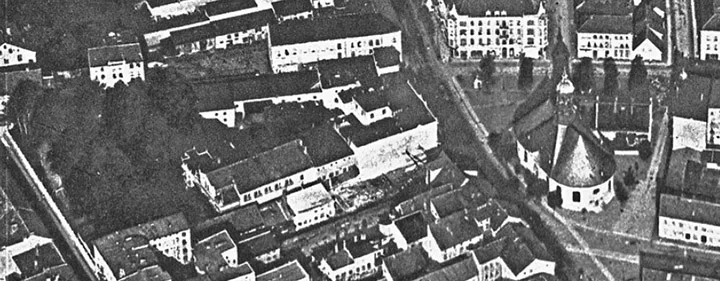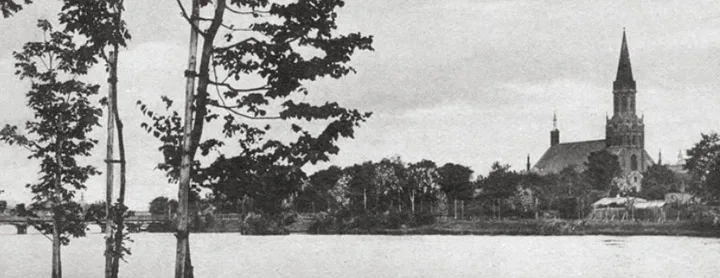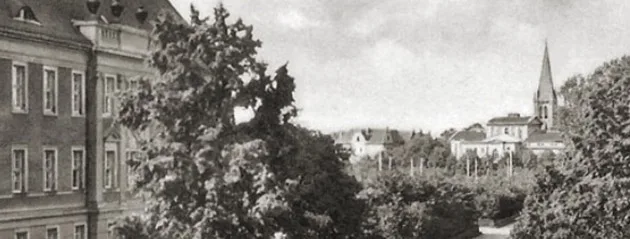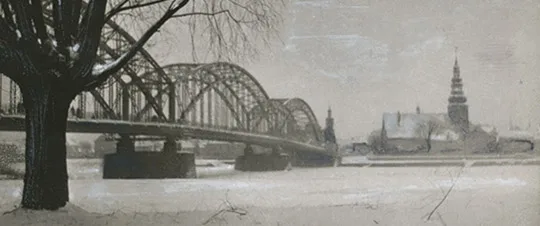
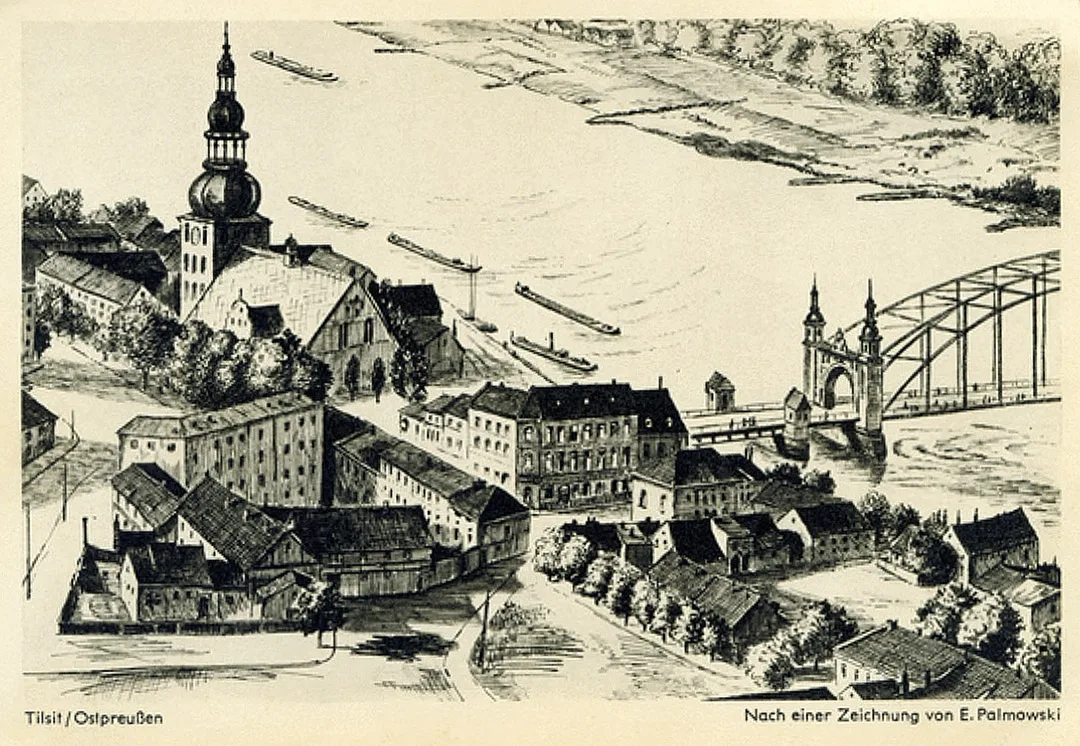
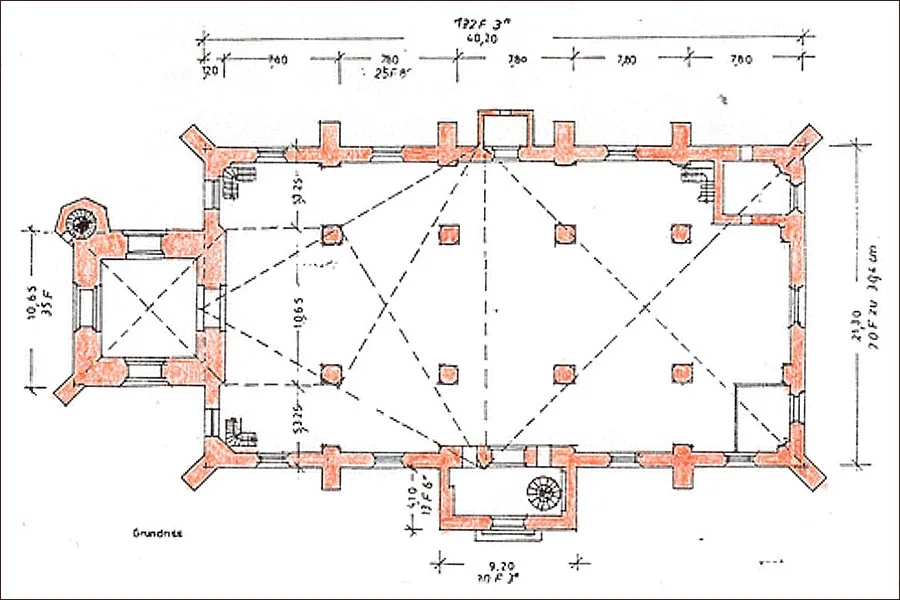
It was a rectangular brick building with straight and diagonal buttresses and no chancel. The tower stood at the west end, had a triple-tiered cupola with a gallery and was built in 1702. The east gable of the church had three rows of paired blind windows and two pointed-arch windows reaching up to the frieze, with three large pointed-arch windows below. The porch was on the south side and had a gable built around 1700.
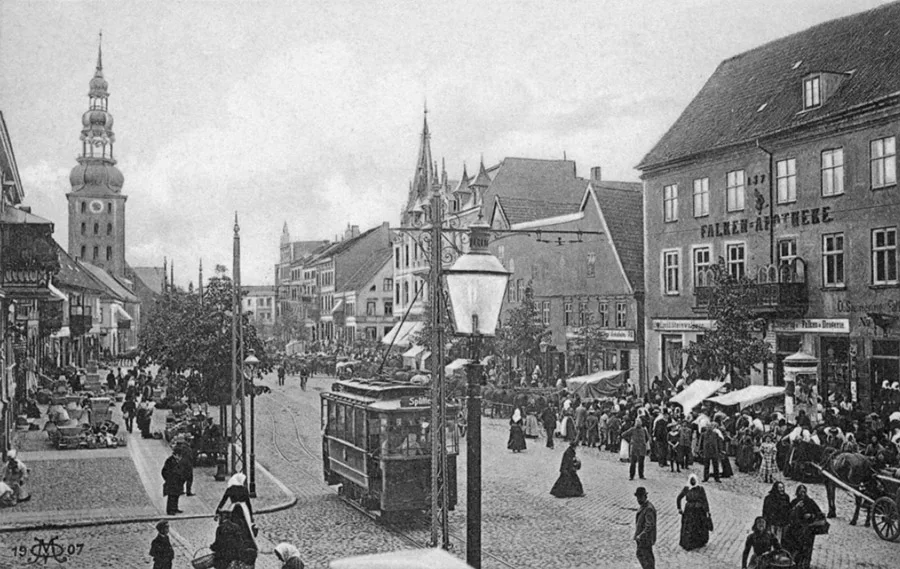
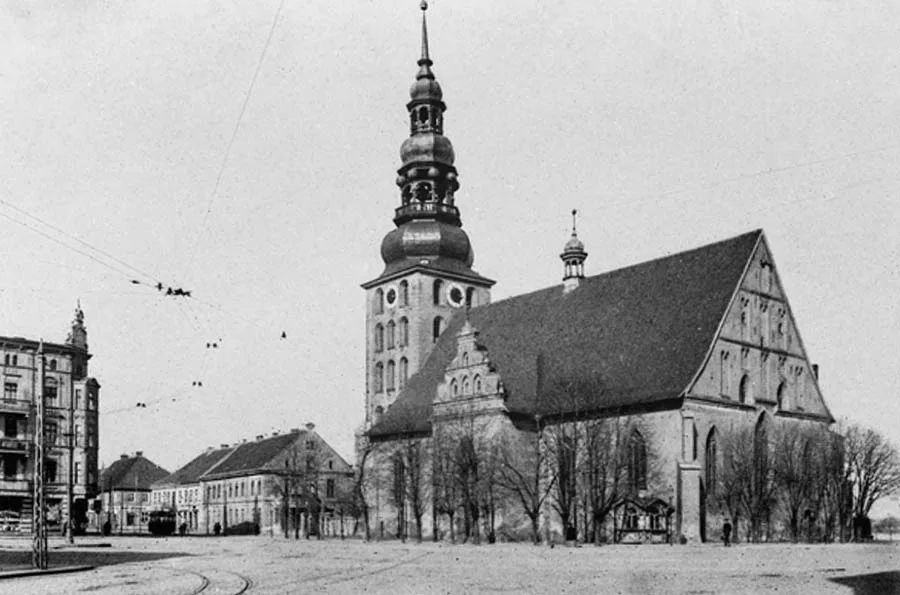
Inside, the church had a nave and two aisles with board-clad ceilings. The nave had a vaulted ceiling, the aisles flat ceilings.
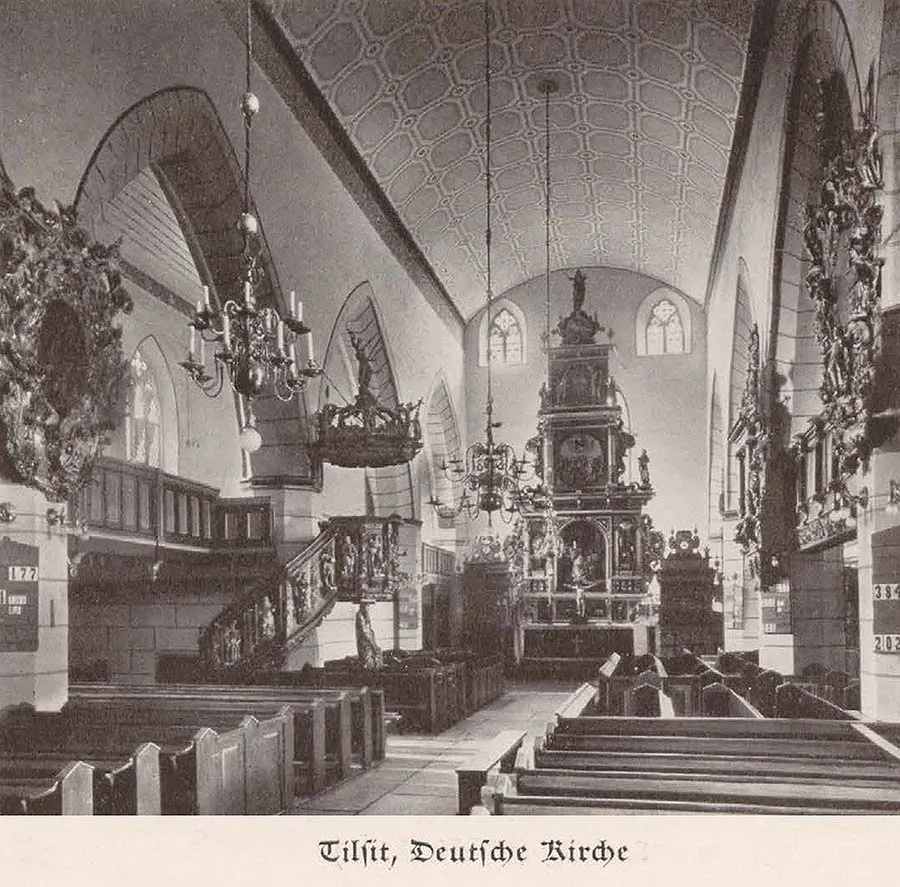
The ceiling of the nave was supported by octagonal columns. The aisles had galleries.
The altar was made in 1611. The lower tier of the altar bore a painting of Jesus with Mary and Martha, executed in 1833. The middle tier showed the “Ascension of Christ”. The crucifix on the altar was added in 1610. The pulpit was built in 1677; in 1706 a figure of Moses was placed at its base. The large confessionals were made in 1638 and 1662. The baptismal chapel dates from around 1620. Epitaphs of the 17th–18th centuries. Of particular value was the organ installed in 1755. In 1880 it was restored and enlarged. The church had three bells.
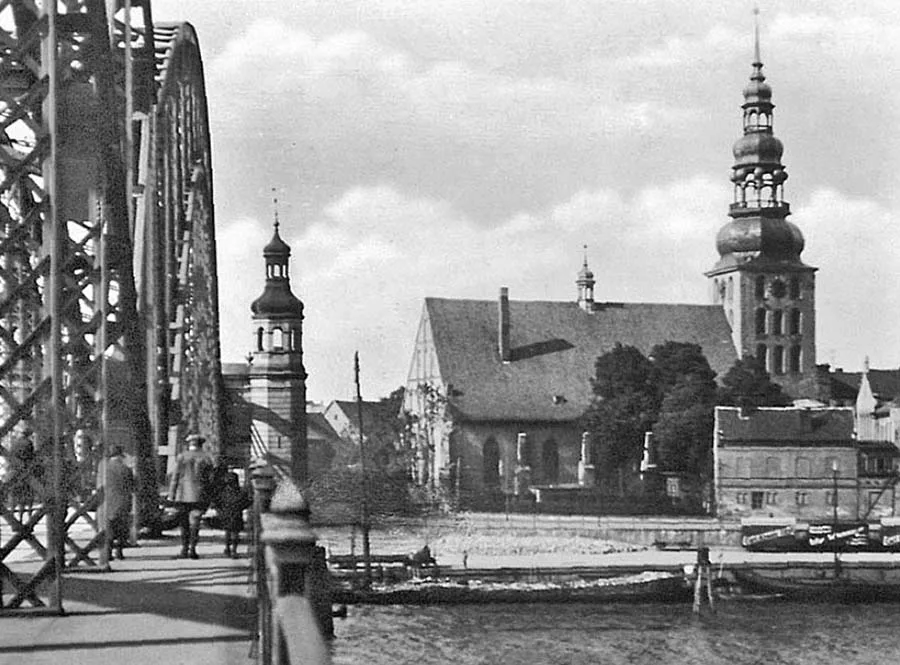
After 1945 the church was intact apart from minor damage. Inside, too, practically everything had survived.
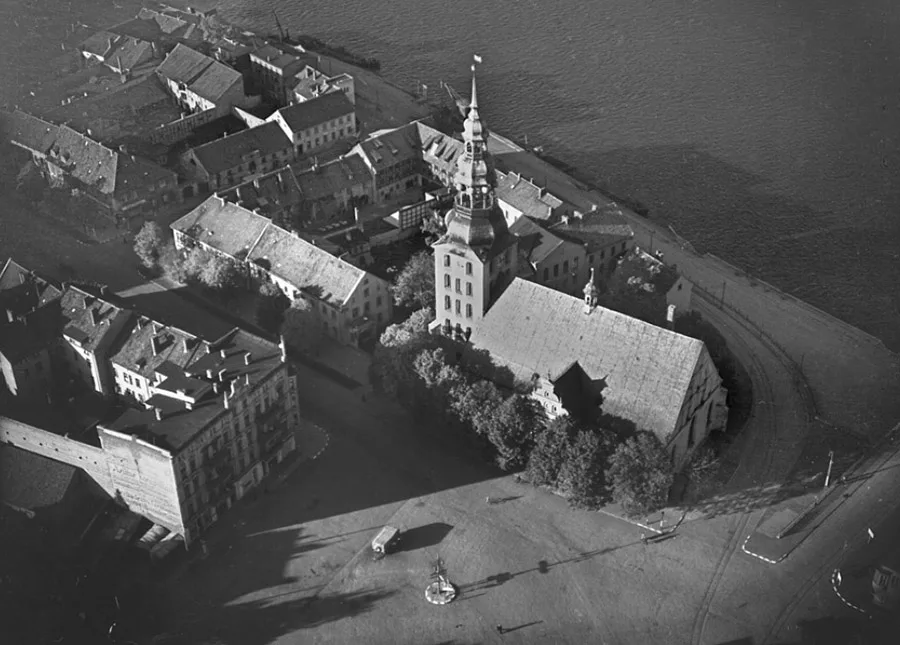
By 1950 all the wooden structures had been dismantled for fuel. The cupola (spire) of the tower was toppled in 1952; gold coins were allegedly found inside it. With no repairs, the church roof fell into ruin: the tiles began to slide off, the rafters rotted, rainwater got inside, and the church deteriorated rapidly. During the filming of “Father of a Soldier” it was set on fire. By then the roof was already gone. In the mid-1960s the German Church in Sovetsk was finally demolished.
Photos on this page: Bildarchiv Ostpreußen, bildarchiv-ostpreussen.de
Translated from Russian with the help of AI (Claude, Anthropic), October 2026.