First of all it should be known that at the time when pagan superstition still prevailed in Livonia, by the will of Divine mercy, merchants came on ships with goods into the harbour of the river Düna, and with the merchants there came a venerable old priest named Meinhard. He devoted himself to preaching solely for the sake of eternal reward, and spread the word of our Lord Jesus Christ among the idolatrous Livs. Then, in the course of time, the said merchants, with the permission of the Livs, founded the very first church in the village of Üxküll. After that, at the request of the Livs themselves, they built a castle there as well. And so, after the church there had been founded for the salutary guidance of the Livs, the venerable father Meinhard was consecrated bishop and named Bishop of Livonia in the year of the Lord 1143. And he lived twenty-three years [1186] in this office, which he governed faithfully, and died in peace (1). [1196, 12 October.]
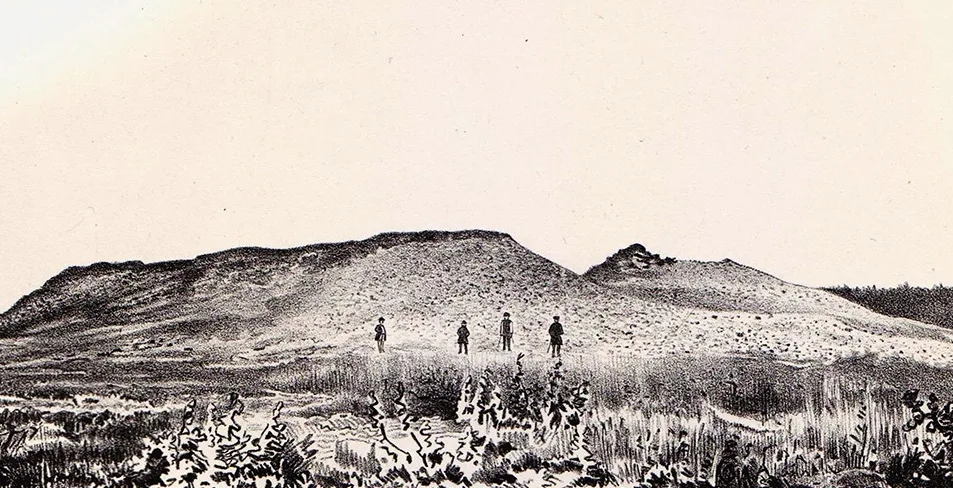
In the year of the Lord 1167 [1196] the Bishop of Livonia was the Right Reverend Berthold, whom the Livs, having treacherously gathered an army once again, savagely killed at the Sand Hill [1198, 24 July] (2).
In the year 1178 the Right Reverend Albert was bishop in Livonia. When in his time Pope Innocent III observed that the spiritual sword was of too little avail among the infidels, he joined to it the visible sword as well, namely the Order of the Brethren of the Knighthood of Christ [1202], to whom he assigned a third of the lands of the whole bishopric (diocese), seeing that without the help of the Order those countries could neither be subdued nor held once subdued. Therefore the Holy Father graciously took this Order, after its foundation, under the protection of St Peter the Apostle and his own, and commanded it to observe the rule of the Brethren of the Temple, but to wear a different sign on their garments, namely a sword and a cross, to show that they (the new knights) were not subject to the brethren of the Knights Templar. The said brethren then chose as their master a skilful man named Wenno, who was to "wage war upon men" (3) and faithfully govern their union. But the same Pope Innocent sent the Right Reverend William, Bishop of Modena [1225], as legate to the Livonian province; this legate, since the number of the faithful had increased, divided the land between the bishop and the brethren and assigned to each their share.
At that time there was only one bishop in Livonia, with the title of "Bishop of Livonia", the very one to whom Pope Innocent addressed the following decretals: "On the life and propriety of the clergy: The Lord God, who, etc., further: "On divorces"; further: "On church penalties and their remission".
Then the brethren, together with the pilgrims, jointly began building the city of Riga, and there, after a third of the city had been allotted and handed over to them, they built a fine and strong castle [summer 1201]. And after the city had been built, for the sake of the safety the site afforded, the church was transferred to Riga and the bishop was at the same time named "Bishop of Riga"; he was not yet an archbishop, but only a suffragan of the Archbishop of Bremen. This bishop chose his residence in the said city of Riga together with the aforementioned brethren, so that only a wall separated them from one another, as is still the case today. And neither then nor at any later time did the bishop have secular jurisdiction, or any officials whatsoever in the city of Riga; rather the inhabitants judged and governed themselves in Riga and to this day have always enforced the secular laws without restriction.
But the brethren of the said Knighthood of Christ promoted courageously and faithfully the cause of the faith for which they had been sent, and through many wars, with the help of the pilgrims and by God's protection, they subjected to the Church and the Christian faith not only Livonia but also the neighbouring lands of the Letts and the Estonians. As a result, the said legate, now a cardinal, on one of his visits established further cathedral churches, namely on Ösel and in Dorpat.
And the master of the said Knighthood of Christ, after subduing the Livs and the Letts, built several castles, namely Segewold, Wenden and Ascheraden. But he utterly destroyed and wiped out Kokenhusen and Gerzike, in which heretics (Russians) then lived.
In the year of the Lord 1198 the Bishop of Riga was Albert the Second, but fourth in order of succession. In the second year after his consecration, a Cistercian monastery called the Mount of St Nicholas, or Dünamünde, was founded and built [1202] at the mouth of the Düna.
At the same time the first Estonian bishop [1211], named Theoderich, was elected, since the church was growing and the number of the faithful had increased. And in Semgallia Lambert was elected bishop [1224].
Finally Wenno, master of the said Knighthood of Christ, together with his chaplain (priest) John, both wholly innocent, were savagely murdered by Wigbert, a brother of the same Order [early 1209]. This Wenno had governed his brethren and the country for 18 years.
In the year 1211 there lived the second master of the Brethren of the Knighthood of Christ, Volkwin, a man no less able, pious and honest. He wisely waged the wars of the Lord, and the brethren of the Order faithfully assisted him.
He also subjected the Estonians and the people of Ösel to the Christian faith and imposed tribute on them; he also built, and of stone at that, the castle of Fellin and the small castle of Reval, and fortified them in the best possible way with towers and deep moats. He also carried out other building works around Dorpat and Odenpäh, which for the sake of brevity I do not mention.
Further, he conquered Isborsk (4), a Russian castle [16 September 1249].
And the Russians of Pleskau (the Pskovians) submitted to him after he had burnt their city. To guard the castle, as well as to increase the number of converts, the master left two brethren of the Order here with a small number of men. But when the Novgorodians learned of this, they suddenly seized the brethren who had remained, together with their men. [1242, March]
Further, he built a castle among the Russians named Koporye, and at the same time imposed tribute on the Russians of Watland (1). [1241]
In his time the lands of the Letts and the Livs were divided; the part assigned to the brethren passed to them together with the tithes, churches and all secular revenues, and the brethren were also not obliged to pay the cathedral tax (Kathedraticum) from it (5). [1210]
In the same year, on 19 December, the church of St George in Riga was consecrated by the above-named cardinal, the Right Reverend William of Modena, with three other bishops concelebrating [1225 - ?].
Further, an agreement was concluded with Bishop Hermann of Leal concerning the lands of Sackala, Mohe and Normekunde with their appurtenances [1224, 23 July].
Then in 1225 the legate of the Apostolic See, the Right Reverend William of Modena, carried out the ordering of the churches in Riga [1225, 5 April].
He also made useful dispositions concerning the boundary of the city of Riga on both sides of the Düna, and concerning much else besides [1226, 15 March].
Further, in the year of the Lord 1228, on Friday, 18 August, the Curonians and the Semgallians took the castle of Dünamünde, and the monks were inhumanly murdered in various ways.
At that time Courland was not yet Christian or converted to the orthodox teaching, and therefore the master and his brethren, together with a multitude of pilgrims, roused by zeal for God, gathered into a large army to avenge the death of the monks, marched into the said land and subjected that savage people to Christianity. As a result, the cardinal who had received the title of priest of the church of St Sabina (6), and who had formerly been called "of Modena", during his frequent stays in Livonia at that time appointed Bishop Engelbert and subjected this country to him. With this bishop the Brethren of the Knighthood of Christ, with the consent of the said legate, concluded an agreement to the effect that the bishop would receive two parts and the brethren a third part of all the land in Courland.
When after that the master and the Brethren of the Knighthood of Christ had fought a battle at the stream Immerne (7) [1229], they urgently asked, through envoys and by letters, the grand master of the Order of the Brethren of the Hospital of St Mary of the Germans in Jerusalem, Hermann of Salza (von Salza), to unite them with his Order [1229]. This was delayed for certain reasons, namely because of the castles and lands of Reval, Harrien and Wierland, and also of Jerwen, to which Waldemar, King of Denmark, laid claim, asserting that they belonged to him.
After many glorious and successful battles with the infidels, Master Volkwin, on a campaign he had undertaken against the infidel Lithuanians, was killed by those Lithuanians, together with Lord Haseldorp and Count Dannenberg, fifty brethren of the Order and a multitude of the faithful, in the land of Saule (8), on the day of St Maurice and his fellow martyrs (22 September 1236).
After Bishop Engelbert, the clergy of the Courland church and the Christian people there had also been utterly destroyed, the Curonians relapsed into their former unbelief.
After this sad event the surviving Brethren of the Knighthood of Christ, together with the bishops of Riga, Dorpat and Ösel, repeated their earlier request in very plaintive letters to Pope Gregory IX, holding out to him the hope that, united into one flock, they would soon destroy the hostile forces of their adversaries with a victorious hand. And so the above-named Holy Father Gregory decided, at a general council of cardinals in the year 1235, to unite those brethren on condition that the lands mentioned above be returned to the above-named king [1237].
After the union had been accomplished, as has been said, the aforementioned grand master of the said hospital in Jerusalem, Brother Hermann of Salza, sent Brother Hermann Balk to Livonia, and with him Brother Dietrich of Grüningen, and appointed Brother Hermann Balk dignitary, or master, of the brethren in Livonia.
When the Brethren of the Knighthood of Christ had thus taken the habit of the said Order, and in the year 1238 from the Incarnation of the Lord God the castles and lands had been returned by the brethren to the king, while the land of Jerwen was ceded to the brethren by the oft-mentioned king as a gracious gift [1328, 7 June], the brethren in Livonia began to be very angry with their master, Brother Hermann Balk, over this cession. He therefore left Livonia, appointing Brother Dietrich of Grüningen as his deputy, and, having returned to the grand master, was relieved of his office.
In the year of the Lord 1240 Brother Dietrich of Grüningen, acting master, subdued Courland once again, built two castles in it, Goldingen and Amboten [1245], and induced the Curonians to accept holy baptism by kindness and by force, for which he received from the papal legate, the Right Reverend William, and then from the Holy Father Innocent, confirmation of the right to possess two thirds of Courland [7 and 9 February 1245], so that the earlier agreement on Courland concluded with the brethren of the Knighthood, or any other, no longer had force compared with this one. He also concluded an agreement with the Right Reverend Bishop of Ösel concerning the lands of Sworbe and Kotse, and further that the village of Legals should belong half to the brethren [1242].
It should be noted that in the bishopric of Semgallia the Right Reverend Lambert, mentioned above, was succeeded by Brother Heinrich of Lützelburg, who came from the Order of the Minorites. After the Right Reverend Engelbert, Bishop of Courland, had been killed with his clergy by the Lithuanians [1236], this Brother Heinrich of Semgallia was removed by the legate, Bishop William of Modena, and transferred to the church of Courland. And the Semgallian church was then joined to that of Riga.
Brother Dietrich of Grüningen, however, remained in Livonia, but all the while under the two masters mentioned below, performing by commission of the grand master the office of deputy master, and assisted them everywhere faithfully with counsel and deed.
In 1241 Andreas of Velven was master in Livonia. In his time the people of Ösel fell away from the faith and slaughtered the Christian people together with the clergy present there, and the Right Reverend Heinrich, their bishop, barely escaped death. But when the above-named master had subdued them again, he granted them certain rights and liberties, which this bishop later confirmed.
In the year 1245 the master in Livonia was Brother Heinrich of Hinnenberg, who suffered fierce attacks from the pagans. Then, relieved of his office, he withdrew to Germany.
In the year 1250 the master was Brother Andreas Stirland. In his time Mindaugas, King of Lithuania, and his wife Morta received baptism and obtained from the Holy Father Innocent IV the royal crown of Lithuania.
In the time of this master the Order's deputy in Germany, Eberhard of Sayn, was sent to Livonia with full powers from the grand master. In their time, in 1252, the castle of Memel was built. There were also foundations and orderings of churches in Courland, both in the bishop's share and in the brethren's territories [1253]; further, the division of the land of Courland took place [1254], further the division of the lands of Wiek and Ösel [1255]; further the allotment and division of the lands of Oppemele [1257]; then the gift of the lands of the Selonians, namely Wedden, Polone, Maleisin and Towrax with the holdings belonging to it, with the confirmation of the Holy Father [1260].
In 1255 Anno was master in Livonia. He undertook a great campaign into the land of the Samogitians. After their repeated apostasy he granted the people of Ösel certain rights, in order to bring them back to the faith more successfully by a gentle lure.
He also built the mill that lies near Mutin on the Danga. Later he was appointed grand master [at the end of 1256].
In 1256 Ludwig was deputy master in Livonia; he is said to have entered into a peaceful settlement with Archbishop Albert of Riga regarding a third of the castle of Gerzike and the land of the Selonians, as well as regarding the tithes from the castles of Segewold and Wenden; but he is blamed for much: first, because the settlement with the archbishop regarding the tithes was superfluous, since in any case the brethren of Riga and of the other bishoprics were to receive their share together with the tithes, churches and all secular revenues, and were also to administer justice over the townspeople; further, because he concluded this agreement without the confirmation of the chapter, being himself only deputy master, and for a short time at that. In the year 1257 the master in Livonia was Burchard of Hornhausen. He built first the castle at Doblen, then the castle of Karschowen. He also granted the burghers of Memelburg certain rights [1258], which the Right Reverend Bishop Heinrich of Courland later confirmed. There too a decision was made concerning the church of St John.
But together with 150 brethren he was killed by the pursuing Lithuanians on St Margaret's Day (13 July 1260, when the Curonians relapsed into their former unbelief for the second time (9). The marshal of the Order (the leader of the army) was killed in the same battle together with many pilgrims, and eight brethren, through treachery, suffered martyrdom in the castle of Wartajen (10). After the battle a certain Georg performed the office of master.
In the following year (1261), on St Blaise's Day (3 February), there was a battle with the Lithuanians at Lennewarden.
In 1261 Brother Werner was master. In his time Mindaugas, King of Lithuania, fell away from the faith. And the Russians occupied Dorpat and razed it to the ground. Further, that king drove the brethren and all Christians out of his lands. And the master destroyed two castles in Courland, namely Kertenn and Ampilten (11), burning them to the ground together with the people of both sexes and in general everything that was in them.
Then the same Master Werner was wounded by a madman among the brethren; relieved of his office, he returned to Germany by ship to be cured.
In 1263 the master was Brother Konrad of Mandern. In 1265 he built Mitau and the castle of Wittenstein (12). He remitted to the Livs the tithe on cattle, so that in return they would fight against the pagans with the most zealous faith [1265, 5 April]. He also received the land of Zomgafe from Bishop Edmund as a pledge for the expenses incurred in building the castle of Amboten. Further, he granted the burghers of Pernau certain liberties, which were confirmed by Gerhard of Jork, then Livonian master [1309].
In his time, too, Mindaugas, King of Lithuania, was killed by a Lithuanian noble who wished to seize the kingdom. But the king's son, who was among the Russians and heard of his father's murder, returned to Lithuania to avenge his father's murder. All the Christians he found as captives in his realm he graciously sent back to the master in Riga. But then he let himself be deceived by the Lithuanians, conspired with them and in the same year sent an army into Wiek and Pernau and laid waste these regions at Candlemas (2 February) [1263]. And a week after this feast a battle was given to the Lithuanians at Dünamünde (see the end, note 2) [February 1263].
In the time of this master the castle of Grese (13) in Courland was razed and burnt, and the cattle and all other goods were taken. Then he returned to Germany.
In 1267 the master was Brother Otto, to whose holiness many testimonies bear witness. He built the church on Mone.
In 1268 Dmitry, the Russian king (prince), gathered an army many thousands strong and boldly advanced into Wierland, laying it waste with plunder and fire. Fearlessly and courageously the Right Reverend Alexander, Bishop of Dorpat, went out against him with the vassals of his church, the brethren of the Order from Fellin, Wittenstein and Leal and their men and vassals [1268, 18 February], and also with the vassals of the King of Denmark, while Master Otto was fighting the Lithuanians on the Düna.
In the battle that took place at the church of Maholm, the Right Reverend Bishop Alexander fell together with two brethren of the Order; but the people gathered into the army, in a second clash at some stream, slew 5,000 Russians and put the rest to flight (see the end, note 3) [1268, 23 April].
And Master Otto was killed by the Lithuanians on the ice with 52 brethren of the Order and 600 Christians, at Karuse in Wiek, on St Juliana's Day (16 February).
In 1270, after this battle, a certain Brother Andreas performed the office of master in Livonia. And he too fell, together with 20 brethren of the Order, in the same year in a battle with the Lithuanians.
In the same year (1270) the master was Brother Walter of Nordeck [1272, after 21 April]. In his time the Semgallians were subdued and made tributary [1272, 7 October]. He carried out the division of Semgallia with the cathedral chapter of Riga, and further an agreement with the archbishop on the building of a castle there [1271, 27 August].
In 1274 the master was Brother Ernst. He built the castle of Dünaburg; he also concluded an agreement with Rudolf of Ungern [1277, 29 March]; further (he concluded an agreement) with the cathedral chapter of Riga on building a dam on the Irbe; further, together with the Right Reverend John, Archbishop of Riga, and the Right Reverend Hermann, Bishop of Ösel, he granted certain privileges to the merchants in Livonia. He undertook a great campaign into the country of the Lithuanians, into Kernov (14), and the Lithuanians, pursuing him, killed him on 5 March 1278 together with 71 brethren at Ascheraden; and likewise (they killed) Eilard of Hoberg, head of the land of Reval, together with his men, and further the knights Tiesenhausen and Heinrich Wrangel with many other inhabitants and pilgrims. After this the place of master was filled by Brother Gerhard of Katzenelnbogen.
In the year 1280 the master was Brother Konrad of Feuchtwangen [1279]; in his time the Semgallians fell away from the faith for the second time and killed 20 brethren together with their men, and razed to the foundations the castle of Terweten built by the brethren [spring 1279] (15). Later Konrad was grand master [1290].
In 1282 the master was Brother Willekin of Endorp. He built Heiligenberg in Semgallia. He also confirmed to the burghers of Fellin, on 29 June 1283, the boundaries of the town land with their rights (Awese and Wachterspe).
Further, together with the Right Reverend John, Archbishop of Riga, he founded and consecrated churches in Wolmar, Wenden, Burtneck and Trikaten in the brethren's districts (16). With the same archbishop he concluded a transaction concerning the peasants of Sidegunde.
When Willekin, on a campaign against the Semgallians, had reached a place called Grose (17), he was killed together with 34 brethren and others in the year 1287, on the day after the Annunciation (26 March).
In the year of the Lord 1288 Brother Kuno of Hattenstein was master. Little by little he laid waste the whole of Semgallia. The Semgallian castles of Ratten, Doblen, Sydobren and Terweten he razed to the foundations (18).
In 1290 the master was Brother Halt. He lived quietly and peaceably with all the bishops and the clergy, without harm to his Order [1290, 9 May].
In his first year he concluded an alliance with the Bishop of Courland, the Right Reverend Edmund, concerning the castle of Amboten, which Halt took over from Edmund with all the revenues belonging to the episcopal table, for its protection and upkeep, for the benefit and profit both of the lands of Courland and of the Catholic faith. This same bishop ceded to the same master 90 hooks of land in the district of Normes (19) as a pledge for the expenses already incurred and still foreseen on the said castle.
Halt concluded an alliance and an amicable settlement with the Archbishop of Riga, the Right Reverend John, concerning various questions that had arisen, as a result of which the archbishop granted him and the Order in the district of Wenden an island of three hooks, over which a dispute had arisen, since the brethren's boundaries had apparently gone beyond this limit.
He also concluded an agreement with the Right Reverend Heinrich, Bishop of Ösel, concerning a quarter of seven kilikunds (20) and a quarter of the fief in Wiek, and many other matters in dispute. He died in 1292.
In 1295 the master was Brother Heinrich of Dinklage [after 30 April]. He concluded with Bishop Bernhard of Dorpat and his chapter an alliance for all time. He died on 28 October 1296.
In the year 1297 the master was Brother Bruno. In his time the burghers of Riga for the first time began a war with the Order. Allied with the Lithuanians, they destroyed the court, that is, the castle built for 60 brethren, and the convent, which castle the Order had possessed since the first foundation of the city of Riga [29 and 30 September]; it was the usual residence of the master. The castle was destroyed together with the remaining houses built for the needs of the brethren, and with two strong and tall towers.
They also destroyed another tower, at the foot of which there was a mill with four wheels, called Bartold's mill; from it they led away six brethren and took them prisoner; all the rest was taken as booty [1298, June].
Further, the same burghers, in disguise, with the help of the Lithuanians, took by treachery the castle of Karkus (21), which they destroyed by fire with everything that was in it; in the course of this one priest brother of the Order and three other brethren with their men were killed.
In the year 1298, a week after Trinity (1 June), the same burghers, in league with the Lithuanians, killed Master Bruno together with 60 brethren and a countless multitude of people when he was pursuing them at the river Treider (22). After slaughtering more than 3,000 people, the Lithuanians shared the booty with the Rigans and returned home. Further, the same burghers built at the entrance to their city a castle for the infidels, which to this day is called the Lithuanian castle. In the same year, together with the Lithuanians, they besieged Neuermühlen, where on the day of the Apostles Peter and Paul (29 June) they were beaten and driven back into the water.
In 1299 the master was Brother Gottfried Rogge. In his time the strife with the Rigans continued.
In the year 1307, on the feast of Saints Processus and Martinian (2 July), there was fighting with the Lithuanians before Riga. Then the master concluded a truce and an agreement with the Rigans, under which he received from them the hooks of land that they had held in Courland and on Ösel in the brethren's districts.
In 1309 the master was Brother Gerhard Jork. In 1313 he rebuilt the castle of Dünaburg, which the brethren had destroyed in order to free the knight John Üxküll, who had been taken prisoner by the pagan Lithuanians in the castle of Gerzike.
In the same year some sea robbers from the city of Riga plundered the parish of Kilikunde on Ösel. On the way back a storm drove them ashore near Dondangen. Brother Eberhard of Monheim, commander of Windau, had them taken prisoner and, after their feet had been cut off, hanged by their mutilated legs from trees. As a result the inhabitants of Riga, through the Right Reverend Archbishop Friedrich (he was of the Order of Minorites), sent a complaint against the Order to the Roman court, whereupon the Holy Father ordered the said commander to appear at the court. When he arrived in Rome, the archbishop complained in a general assembly of the cardinals in the following words: "Holy Father, here is the commander who without any cause had my citizens of Riga hanged by the neck." The commander replied to this: "Holy Father, it was not so, that is a lie. I caught some sea robbers who had plundered a parish by the name of Kilekunde; I judged them by the law of that country and, as they deserved, hanged them by the feet from trees!" Then the Holy Father Clement said: "Oh, if only we had such judges here too!" And he imposed perpetual silence on the archbishop in this matter.
In the year 1315, in the time of this master, there was dearth and famine in Livonia, so that people killed their children out of hunger, dug the corpses of the dead out of their graves, took the hanged down from the gallows, cooked them and devoured them.
In the same year a bride was to be taken after the wedding from Kokenhusen to her husband's house with many escorts and great pomp; a band of Lithuanians who had come secretly into the country learned from an inhabitant of that town of the wedding procession. They laid an ambush in the forest and, when the burghers had driven out of the town, suddenly attacked them and took the girls and women prisoner; they killed some boys, while others ran away, and they carried off with them all whom they had seized.
In 1316, on the Saturday after Quasimodogeniti (24 April), the burghers of Riga, during a truce, completely burnt the suburb of Dünamünde; they killed a brother of the Order they found there together with all the Christian people, and thus began a second war and strife.
In 1318 the same Master Gerhard, together with the commanders of Fellin, Wenden and Dünamünde, appeared at the court of Avignon, having been summoned there, and found there already the grand master Karl, who had likewise been summoned with his dignitaries to defend himself against the Right Reverend Friedrich, Archbishop of Riga. After many negotiations and the happy conclusion of the Order's affairs, they received in the year 1327, on 1 August (more correctly 25 July 1319), the confirmation concerning the house (castle) of Dünamünde from the Holy Father John XXII.
In the year 1321, around Easter (19 April), he built the castle of Mesothen in Semgallia against the pagans.
In the period that followed a great strife arose among the Livonian dignitaries of the Order over the mastership of Brother (John) of Hohenhorst and Brother John called Ungenade; to put an end to it the grand master sent Brother Bartold Ketelhodt to Livonia as deputy master (23).
In the year 1323 the deputy master Ketelhodt undertook a great campaign against Pskov, and conquered the Pskov land and the city (see the end, note 4).
In 1323 the burghers of Riga sent letters in the name of the Lithuanian king to the maritime cities and to Pope John XXII, to the effect that the king wished to be baptised with all his people. For this purpose the pope sent to Livonia a bishop and an abbot (24), whom the brethren of the Order directed to the king together with the envoys of the bishops. But the king answered that he had never thought either of the faith or of baptism; if, however, they wished to negotiate peace, he was willing; otherwise they would see whether they would manage to get out of his land. In this way the king forced them to conclude a perpetual peace. When the peace had been signed and furnished with seals, the king called up his army and, safe from attack on the part of Livonia and Prussia, crossed the border, which he laid waste together with all the neighbouring lands (see the end, note 5) [1326].
At the same time Ketelhodt returned to the grand master.
In the year 1324 the master was Brother Reimar Hane. He held negotiations and consultations with the bishops and vassals of the Livonian lands, especially of the lands of Harrien and Wierland, about the malice and unbelief of the natives. He also renewed among the Livs and the Letts certain ordinances and institutions.
In 1328 the master was Brother Eberhard of Monheim. When around Trinity (after 21 May) he assumed the dignity of master, the Livonian brethren ceded to the Prussian brethren the castle of Memel with all its revenues and expenses for all time.
In the same year, on Thursday, the eve of the day of St John the Baptist (23 June), in the time of Brother Friedrich, Archbishop of Riga, successor of the Right Reverend John of Schwerin, Archbishop of Riga, the burghers of Riga attacked the castle of Dünamünde by night and, being unable to take it, burnt the fortifications, built with great labour and expense, together with the church. They killed more than a hundred people there, both men and women, and caused the brethren, without renouncing them, a loss of more than 400 marks.
In the autumn of the same year, during the Ember (Quatember) fast (21 September, more correctly 2 April 1329), the burghers of Riga, who had resolved to expel the brethren of the Order, sent two members of the town council, namely Heinrich Tralove and Bernhard Darsow, and two from the community, namely Gerlach Vlissenbart and Ertmar Redpennige, as their envoys to the Lithuanian king; they told him and promised that, in order to drive the Order and Christianity out of those countries, all the castles and fortresses of the diocese of Riga would be surrendered to him, the king. When the brethren learned of this, they took by force from the burghers five castles that lay near the Lithuanian lands. When the king arrived with his army on the river Düna, he learned that the castles were in the hands of the brethren. Inflamed with fury at this, he fell upon the said envoys with threatening words. But they answered him, to console him, that they would lead him to where he could do great harm to the Order.
And they did indeed lead him with his whole army forty miles in all through the district of Riga, providing him with guides and meeting his other needs. The Lithuanians laid waste the environs of Karkus on the day of the Exaltation of the Cross (15 September) [1329] and remained there until the following Wednesday (20 September). On the following Friday (22 September) they laid waste with fire the parish of Helmet, which possessed 400 hooks of land, whereby they caused the Order a loss of more than 6,000 marks of silver. On the following Saturday (23 September) they set out for the parish of Paistel, where the king with his two brothers for two nights used the church as a stable for their horses and committed countless shameful deeds in the presence of the Holy Sacrament; everything else they laid waste and burnt with fire. To this church belonged 300 hooks of land. More than 400 people were killed there, and the rest they took prisoner. Then they moved into the district of Sackala, where at Tarwast (25) they laid waste and burnt a parish which had 200 hooks of land, and also killed two priest brethren of the Order and the knight Nikolaus of Ropp, besides 400 people whom they killed or took prisoner and led away with them. This caused the Order a loss of 6,000 marks of pure silver and more. Compelled by such violence, the brethren besieged the city of Riga and in the end subdued it, and although the burghers deserved every punishment, the brethren nevertheless concluded a friendly agreement with them, in which the Right Reverend Archbishop and his church retained all their rights [30 March 1330]. The brethren also rebuilt by their own labour and at their own expense their house (castle) and the other buildings that had been plundered, on another site indicated to them by the burghers, over which the archbishop had no secular right, but on which there had stood a stable for the burghers' horses and a mill driven by horses, as well as a lime kiln. And had the brethren not come to live with the burghers, there is no doubt that the burghers would again, as before, have conspired with the pagans (see the end, note 6).
In 1330 the King of Cracow, with the help of troops of Germans, Hungarians, Poles and Lithuanians, with a numerous and powerful army, crossed the Kulm Land in hostile fashion around Michaelmas (29 September) and laid everything waste with plunder and fire.
In the year 1329 the Lithuanian king, for the benefit of the Rigans, appeared with a great army before the bishop's castle of Pilten [after 4 March 1330], which he attacked with various siege engines. When the town outside the castle was set on fire, one brother of the Order and two servants were killed. After laying waste the country, he withdrew again to his own land.
And when the agreement had been concluded with the burghers of Riga (1330, 30 March), Master Eberhard began to undertake a campaign against the Lithuanians, which previously could not be done because of the understanding between the burghers and the Lithuanians and the envy of the former.
In the year 1330 the same master advanced with his army into the Lithuanian land that is called Santegolm. Having plundered and burnt, they killed about 500 Lithuanians who resisted them. Of the Christians two brethren and 40 (servants?) were killed, a week after St Lawrence's Day (17 August).
In 1331, on the day of Saints Cosmas and Damian (27 September), the Prussian and Livonian brethren attacked the King of Cracow in his own Polish land, where they killed 5,000 people, though not without some loss to their own army. The brethren pressed on with such force that the pope (26), not knowing the matter in detail, at the request of their adversaries issued a harsh sentence against the brethren. Such are the enemies, and of such a kind!
In the year 1332 the same master undertook a campaign into the land of the infidel Samogitians, as far as the manors of Mazeika and Windeika (27).
In the year 1333 he concluded a friendly agreement with the deputy of the Archbishop of Riga, Markward, and with the cathedral chapter.
In the same year 1333, after Candlemas (2 February), the Livonian brethren, together with the Prussian forces, advanced in two detachments into the land of the Samogitians, which they laid waste with plunder and fire, putting the Lithuanians to flight.
In 1333 the same master was before Wilkenberg.
In the same year, with a numerous army in boats, he was before Polotsk.
In the year 1334 the same master led an army into the country of Dubingen and Sikkulen, where 1,200 Lithuanians of both sexes were killed. And at that time he and his men were only four miles from Welnen (28). Then he led a numerous army to Plotske; Count Arnsberg (29) also took part in this campaign.
In the year 1335, in Lent (1 March to 16 April), the same master built the castle of Doblen against the infidels (30).
In 1339, after Christmas (i.e. after 25 December 1338), he built the castle of Terweten.
In the same year, after Candlemas (after 2 February), the same master undertook a campaign against the Samogitians. He stayed there two nights, causing grievous damage. He returned home because of the severe cold, since many perished from frost or got their limbs frostbitten.
In 1340 he undertook his last campaign, which, however, he did not finish because of the changeable weather, and which was therefore called the wet one.
Having then built the castle in Riga, he was recalled by the grand master and left the country at peace.
In the year 1340, on the day of St John the Baptist (24 June), Burchard of Dreileben became master.
In his time the Pskovians were negotiating with the canons and with Woldemar Wrangel, the Vogt of Kokenhusen, and other dignitaries of the Archbishop of Riga; to make the negotiations more successful, the master sent to Pskov a brother of the Order, a certain Heinrich, who knew the Russian language. When they had already assembled and were deliberating, some Russians secretly made their way into the inns of the Germans, ate and drank there, and scattered what was left. Drunk, they began to abuse the Germans and attacked their men. An uproar arose; several Russians were killed, the shouting reaches those engaged in the negotiations, who scattered in all directions. When the Russians could not avenge themselves, they attacked the district of Dorpat. The Order sent at its own expense 400 men to assemble near Kirrumpäh (31). And when the direst need arose, they sent all their forces to help the people of Dorpat.
In the year 1341 Count Loen was in Livonia with 36 knights (32).
In the year 1342, on the day of the Annunciation (25 March), the same master built two castles against the heretics, namely Frauenburg (33), in the territory of the Bishop of Dorpat, and Marienburg, in the territory of the brethren; the latter castle was later fortified with walls by the commander Gerlach of Haren.
When in 1343 the same master went with an army on ships against the same heretics, on the eve of St George's Day (22 April), the newly baptised of the district of Reval fell away, renouncing the faith. They killed their own lords and all the Germans together with their little children, dashing the children against stones and casting them into fire or into water. They did things that it is shameful even to speak of, namely they cut women open with swords and pierced with spears the children in their wombs. They set fire to the houses and other buildings, and burnt the churches to the ground, and likewise the monastery of Padis; they killed 28 monks with various torments, while the abbot escaped with only a few. And those whom the men had spared were ferociously killed by the enraged women. The number of the slain of both sexes reached 1,800 people. Not content with this, they besieged those vassals and other Christians who had taken refuge together with the bishop and the clergy in the castle and town of Reval.
Moreover, as it is told, they stole the crucifix from the hospital outside the town and hanged it beside the corpses of the hanged, and even, as is asserted, nailed a Christian boy to a cross in the likeness of the way the Saviour was crucified.
In the same year the newly baptised of the diocese (bishopric) of Ösel, having renounced the Christian faith, besieged the bishop together with his clergy and other Christians in the castle of Hapsal, on the eve of St James's Day (24 July). They also besieged the castle of Peude on Ösel in the same way. When the castle was surrendered to them after negotiations, on condition of free withdrawal with limbs and property unharmed, the newly baptised stoned to death their Vogt, Brother Arnold, and the priest Brother John together with some other brethren and men of the Order; they also drowned several monks and several members of the secular clergy in the sea and killed a great many vassals and Christians of both sexes. In addition they built of large logs a fairly extensive and strong fortification, thinking to find refuge in it together with their wives, children and belongings.
However, when the master learned how great the danger was, he sent to the brethren's aid brave men skilled in battle, about 630 in number. The master and the brethren now rose with all their strength and fought the said apostates in two battles, one in Harrien and the other before Reval, in which about 12,000 non-Christians fell and the rest were put to flight; though also with loss to the brethren, for several brave noblemen were killed, not counting the common people.
On Wednesday in the first week of Lent, in 1344 (17 February), the said master advanced on Ösel, having joined his army with the Prussian auxiliary force, and destroyed the said log fortification there. About 10,000 pagans were killed, and their king, named Vesse, was hanged on a siege engine after his legs had been torn off. And inside the fortification the pagans killed 500 Christians.
When a thaw then set in, the master was compelled to leave the island with his men and return home, while the said people of Ösel persisted in their apostasy and unbelief. However, after a year had passed, the master again advanced with a large army onto the islands of Ösel [1345]. And after he had laid waste several places, the people of Ösel sent envoys who asked for peace and promised to accept the Christian faith again. They were received back into the bosom of the Church without the imposition of any further material punishment (34).
At the very time when the master was on Ösel on account of these events, in the year 1345 the Lithuanian king gathered a strong army and passed through the lands of the brethren, and through the treachery of a man named Pale he first seized the castle of Terweten, built by Brother Eberhard of Monheim when the latter was master, and burnt the castle to the ground, killing eight brethren with their men, not counting the common people. Then the king came to the castle of Mitau, which he had conquered before together with the adjoining land, but since the castle was built of slabs of stone, he could not destroy it; he did, however, carry off with him the priests together with eight brethren and about 600 of the common people.
Further, the King of Lithuania advanced towards Riga and through Neuermühlen into the area of Segewold, where he was met by a Liv, one of the elders, who assured him that he was one of the newly baptised and had been chosen king over the whole Liv people; if the Lithuanian king would follow his advice, he would subdue the whole country. The Lithuanian king asked him what should be done with the Livonian master. The Liv replied that they would drive him out together with all the Germans. But the king said: "Peasant! You will not be king here!" and ordered his head to be cut off in the field before the castle of Segewold. Then he moved into the district of Treiden and Cremon, where he destroyed all the churches and killed the priests. He caused great bloodshed, killing about 2,000 people and carrying many off into captivity.
But the same Master Burchard built on Ösel a good, strong castle, which Brother Goswin later enlarged (35) [1345 and following years].
In the time of this master a certain Lithuanian, with evil intent, pretended that he wished to accept Christianity with his whole household. He conducted this matter secretly with the commander of Ascheraden. Then the traitor himself went to the Lithuanian king and told him what he had agreed upon, and indicated to him the time and the hour of the meeting.
The king with his army came unnoticed straight to the appointed place and with his men fell upon ours, who were unwarned and unarmed, and fifteen brethren of the Order perished. He also killed and savagely murdered the most eminent men of the districts of Segewold, Wenden and Ascheraden and many others from the places along the Düna. Then he returned home rejoicing.
In the year 1345, on St Lucy's Day (13 December), a general chapter was held at the castle of Marienburg, at which Brother Heinrich Dusemer was elected grand master. On the following day (14 December) Brother Goswin was appointed by them Livonian master. In his time a happy event befell the Livonian brethren. For the said grand master, at Goswin's instigation, bought the lands of Harrien with the castles of Reval, Wesenberg and Narva for 19,000 marks of pure silver from the most serene King Waldemar of Denmark, in accordance with the royal charter (29 August 1346) and the confirmation of Pope Clement VI; these documents were handed over to the brethren together with the castles in the same year, on the day of the Beheading of St John the Baptist (29 August), and in the following year (1347), on All Saints' Day (1 November) (36).
The said master at once improved the said castles with walls and moats, spending a great deal of money on their fortification and the building of towers. He also built and improved the castles of Grobin, Doblen and Dünaburg, the last with four towers and with the town around it, besides other castles and fortresses.
In 1348 the same Master Goswin of Herike undertook a campaign against the Samogitian Lithuanians, to the settlement of Gedegiennen, which is now called Bussike (37).
In the same year, on St Valentine's Day (14 February), he laid waste to its foundations the land of Saulia with its castles, although it was populous, because the inhabitants, as it seemed, were devoted to the Lithuanians and supported them in their successes by paying tribute and with other things.
In the same year the Prussian brethren with an army laid waste the land of the pagan Lithuanians for a whole week. On the ninth day, at Candlemas (2 February), a battle was fought at the stream Strebe (38), in which more than 10,000 Lithuanians and Russians fell, who had been called to their aid from various places, such as Lantmar, Breizik (39), Vitebsk, Smolensk and Polotsk. Narimantas, the Russian king, brother of Algirdas and Kęstutis, the Lithuanian kings, was also killed in this battle. Of the Christians 8 brethren fell, with 42 good men (see the end, note 7).
In the same year there was a great harvest, so that after the day of St John the Baptist (24 June) there was already new grain and fruit. And wine was brought in such abundance that in Riga and other towns more barrels of wine than of beer were recorded (40).
In the first year of this master, around Easter (1346, after 16 April), the Lithuanians completely destroyed the castle of Mesothen, and the commander, Brother Richard of Bacheim, was killed together with several brethren of the Order and the household servants, as well as villagers of both sexes.
In the year 1350 the burghers of Dorpat killed before their city 30 of the villagers newly converted by the brethren of the Order, maimed two and wounded ten more, at the same time robbing them of their belongings by force. The Order let this pass for the people of Dorpat, although it could have taken revenge. And the people of Dorpat made peace with the kinsmen of the victims.
In the year 1351 a great pestilence prevailed (see the end, note 8).
Then Pope Innocent VI, on the denunciation of the Order by Archbishop Fromhold of Vifhusen, issued a public sentence (12 August 1353), as a result of which the Right Reverend Bishop of Västerås (41) excommunicated the Order (23 October 1354). However, this sentence was later mitigated by a declaration of the venerable father Francis, Cardinal of San Marco (30 December 1359).
At that time Lithuanians from Stripeiwe, Opiten, Mesewilte and Ansteiten wanted to move from Lithuania to Livonia, but the master refused them this (42).
In 1357 a kind of poisonous locust, flying in from across the sea in spring and summer, infected the air at night with its putrefaction, and also devoured all the leaves on the trees.
In the year 1358 the said Goswin went on campaign with an army and on the eve of the Conversion of St Paul (24 January) destroyed the finely built castle of Dobiten (43) in Saulia; about a hundred souls of those savage people perished there.
Two brethren of the Order as well, namely Johann Hane and Klavenbeke, were thrown from the walls and killed.
In the same year the grand master Winrich, as was said earlier, came to the aid of Master Goswin in the country of the infidel Samogitians. They caused the pagans much damage.
At that time it happened that a supposed relative of the emperor, a man named Plawe who had betrayed the Order, spread among the emperor's intimates, to bring the Order into disrepute, the rumour that the Lithuanians wished to be baptised into the Catholic faith. The emperor, credulously believing him, sent the Archbishop of Prague, the Duke of Troppau and the German master (44) to investigate the matter. The grand master, having provided reliable guides, conducted them at great expense to the Lithuanians, where they explained the purpose of their embassy. But the Lithuanians demanded the following boundary line: first, from Masovia to the upper reaches of the river Alle, then down the Alle to where the Alle flows into the river Pregel, then along the river Pregel to the Frisches Haff, further to the sea and from there along the sea to the place where the Düna flows into the sea, then up the Düna to the place where a stream flowing out of Lake Lubahn falls into the Düna, and from this stream along the said lake in a straight line to Russia.
Further, they demanded that the Order, to protect them from attacks by the Tatars, be moved into the wilderness between the Tatars and the Russians, and that the Order retain no right over the Russians, but that the whole of Russia belong entirely to the Lithuanians, and they said: "If we obtain what we demand, we shall fulfil the emperor's will."
As a result, the envoys returned having achieved nothing, since they found the demands of the Lithuanians disproportionately great.
In the year 1359 the same Goswin undertook a great campaign against the Lithuanians into the country of Popillen (45), during which the horses lost their hooves in very great numbers.
He died at last, at a great age, on 10 September.
In the year 1360 the master was Brother Arnold of Vietinghoff, a skilful warrior.
After the feast of St Matthias (25 February) he undertook a campaign against the manor of a boyar named Eginten, who boasted that he could and would drive all Christians and Germans out of Livonia, and had already assigned various castles to his relatives and friends. The master subdued this manor and the surrounding area.
In the same year, after the Exaltation of the Holy Cross (14 September), the Lithuanian kings with two detachments cruelly laid waste.... (46) and burnt the churches. Boasting, they returned home with booty.
In the year 1361, after the day of the Apostle Matthias (24 February), the Lithuanians took the church of Lennewarden by assault; with booty and prisoners they returned home. At the same time, having divided their army, they were before Mitau.
In the same year, on the Saturday before Judica (13 March), the Lithuanian king Kęstutis was taken prisoner in a battle between the Prussians and the Lithuanians and brought to Marienburg.
In the same year, in autumn, Master Arnold undertook a campaign in which he took prisoner all the servants of the Lithuanian Ziva. Sorrowfully Ziva followed his people and voluntarily became a good guide to the Livonian Christians.
In the same year, after Martinmas (after 11 November, namely on 16 November), the captive Kęstutis escaped unnoticed from the castle of Marienburg and returned home to his own land (see the end, note 9).
In 1362 Master Arnold undertook four campaigns against the pagans: the first on the day of the Conversion of Paul (25 January), as far as the so-called holy village of Seten; the second campaign he undertook immediately after the first (in February) with some guests from Germany; the third, on ships, at the request of the grand master, on Palm Sunday (after 16 April), to destroy the castle of Kauen (47). The grand master himself came to the said castle with an army on ships on the Tuesday before Judica (29 March) and besieged it, thinking that the fugitive king Kęstutis was inside. But the castle, built of stone and also fortified with high walls, was difficult to take, especially as at the same time both kings appeared with all their forces. Finally, after prolonged labours and battles repeated over a long time, the castle was subdued on Easter Eve (16 April). Taken prisoner in it were King Kęstutis's son, the commander of the castle with his son, and 37 others; the rest, about 2,000 picked and strong men, perished by fire and sword. Of the brethren 7 fell, and of the others 20.
The fourth campaign the master undertook in autumn.
In the same year, on the Friday of the week after Trinity (10 June), the said master took part in an assembly with the dignitaries of his Order and with the bishops Hermann of Ösel, Ludwig of Reval and John of Dorpat, with the provosts and canons of Riga and of other monasteries, with the abbots of Falkenau and Padis, and further with the knights, squires and burghers of the whole land, at the long bridge by the monastery of Dorpat. In their presence the master complained that the Right Reverend John, Bishop of Dorpat, was defaming him and the Order before kings and princes, as well as before the maritime cities, which he could prove by authentic letters; further, that this bishop had in his time done nothing, or only little, in the struggle with the Lithuanians, although the master had always sent him faithful help whenever he was waging war with the heretics; further, that he was considerably cheating the master's subjects in buying and selling, namely by giving the Order's subjects, if they sold anything in the town, six Lübeck shillings for a nogata (48), whereas when they bought anything they had to give 7 shillings of the same money for a nogata. Finally the matter was settled through the mediation of arbitrators, prelates and knights, and the bishop asked the master's forgiveness and promised that he would write to the kings and princes that the matter had been settled amicably, and that henceforth he would also be more diligent in giving help; further, he promised that the Lübeck shilling would circulate in Dorpat, as throughout Livonia, at 6 Lübeck marks to the nogata. All this the bishop promised; but when he returned home, he ordered his people to take from ours 7 Lübeck for a nogata. As a result the commander of Fellin ordered his people not to bring anything to Dorpat, but only to other lands of the Order, until the bishop gave up his whim. The said bishop had also promised, at the first Mass of the Right Reverend Bishop Konrad of Ösel and in his presence, as well as in the presence of the then master, Brother Burchard of Dreileben, and others, that he would be a friend of the Order. But afterwards he lodged a vile complaint with the Holy Father Urban V, alleging that the master and the Order were oppressing him and his people in hostile fashion and far more cruelly than the infidels, were restricting him in his right of coinage, and that furthermore the master had declared a feud against him and his people. The bishop even obtained the appointment of a commission on this matter, although this was incompatible with his dignity, for, as the saying goes: "Only the wicked man recalls with ill will a sin committed." (49).
In 1363, after Candlemas (2 February), the said master undertook a campaign into the land of Opiten and other places nearby, all of which he laid waste.
In the same year the grand master, after Easter (2 April), with an army on ships subdued several castles in Lithuania: first the castle of Kauen, whose restoration had been begun with astonishing and inexplicable zeal; then Pisten and Welun, which he razed to the foundations.
At the same time, when the ice broke up, there was a great flood, so that the surroundings of the castle of Riga became impassable.
In the same year, in autumn, the master undertook a campaign against the Lithuanians into the country of Opiten, which he laid waste, taking prisoners with him.
In 1364 the grand master Winrich and the Livonian master Arnold, after Candlemas (2 February), met with two armies in the land of the pagan Lithuanians at the castle of Wilkenbete (50), where for 9 days they laid waste and burnt, carrying many off into captivity, and slaughtered most of the people. Meanwhile King Kęstutis burnt and destroyed the provisions of our detachments and the fodder for the horses.
In the same year, at Marienburg in Prussia, the wall of a tower was secretly broken through and the treasure was stolen and carried off by thieves, though not entirely taken.
Master Arnold died on 11 July of that same year.
In the year 1364 the master was Brother Wilhelm of Vrimersheim; he took office on 29 September.
In the year 1365 he undertook a campaign into the country of Opiten, which he laid waste.
In the same year, after St Valentine's Day (14 February), the Lithuanians conquered three castles in Prussia, namely Schalauerburg at Ragnit, Kaustriten and Splittern. They led away all the people from them, killed one brother of the Order according to their superstitious custom, and burnt the castles.
In the same year, after the feast of St Peter's Chains (after 1 August), Brother Siegfried, commander of Goldingen, undertook a campaign with the Curonians against the Lithuanians, in which he killed 400 people, with the loss of one brother of the Order and eleven of his warriors.
In the same year, on St James's Day (25 June), the son of Kęstutis, King of Lithuania, came with fifteen pagan vassals to the castle of Königsberg, was baptised and received the name Heinrich. The emperor later raised him to the dignity of duke.
The German guests gave him many gifts [before 1372, 31 March]. Thereafter he remained an adherent of Christianity and, during a campaign undertaken immediately after the Assumption, led the grand master into the Lithuanian land near the castles of Wilnen and Wilkenberg, where the latter laid everything waste. He also burnt the castle of Kernov and Meisegal, staying there 12 days, and led many Christians out of captivity, as well as a multitude of other Lithuanians, and killed the rest.
In the same year Master Wilhelm was in Lithuania for six days and laid everything waste with plunder and fire.
In the year 1366 the same master, in mid-Lent (after 15 March), led an army against the Russians at Polotsk.
In the same year the Right Reverend Fromhold, Archbishop of Riga, wrote to the grand master that he wished to negotiate in his presence in Danzig concerning his dispute with the master and the Livonian brethren, and wished to invite the master with the dignitaries of the Order there. But first he had secretly managed to obtain from Pope Urban V letters to various bishops. The same pope also wrote to the grand master that he should bring the Livonian master to an agreement with the grand master. He also wrote to the Livonian master that he should make peace with the archbishop; otherwise the pope would be compelled to act more severely. When the masters with the dignitaries of the Order arrived at the assembly, they found the pope's letters already there. And the archbishop appeared with his brother, the Right Reverend John, Bishop of Dorpat, with the Bishop of Lübeck, and also with his suffragans from Pomerania, Kulm, Ermland and Samland. The Bishop of Reval was there too; further also the provosts, deans and canons of the said monasteries, and knights, squires, burghers of various towns, clergy and laymen, and many other trustworthy people. In their presence the Archbishop of Riga complained insistently and sharply against the master and the Livonian dignitaries of the Order for their lordship over the city, for disobedience and breach of the vassal's oath, for non-payment of the tithe and certain other dues, and about many other things, beginning with the spread of Christianity in Livonia, and he left nothing out in his case. So that is the man who wrote of his wish to negotiate amicably! Likewise his brother, the Right Reverend John, Bishop of Dorpat, complained all too spitefully and with exaggeration against the Livonian dignitaries of the Order over the episcopal money (revenues), over synodal visitations (he wanted the synods in the Order's churches to consist of two hundred and more companions), over the right of coinage, which he did not yet have at that time, and over much else that he spitefully wrote, slandering the Livonian brethren. However, Brother Hermann (51), the master's chaplain, answered all the reproaches and claims not insolently but with meekness, after the example of the Lord. Nevertheless the grand master, for the sake of preserving peace and quiet in Livonia, concluded an agreement, or amicable settlement, between the two parties, which the archbishop confirmed with his seal and the seal of the chapter of Riga (52), and the grand master with his seal and the Order's bull, as did the Livonian master. But that this agreement was not observed is not the fault of the Livonian brethren, but the fault of the archbishop and the chapter of Riga, who obtained at the Roman court permission not to act in accordance with it.
In the year 1367, on the Tuesday after Estomihi (i.e. 2 March), the same Livonian master led an army against the Lithuanians into the land of Opiten, which he laid waste with fire and sword for four days. As a result, the Lithuanian king put his army in the field and sent his son with the best boyars of the realm to reconnoitre. They were come upon by Brother Robin, the master's companion (kumpan), who had been sent with a small detachment to fetch fodder for the horses. Robin attacked them, killed several, took eighteen well-armed men prisoner, although he and his men were without (proper) arms, and then returned to his own people.
In the same year, on the Sunday before the preceding campaign (28 February), Brother Henning, marshal of the Order, fought in the northern parts of Lithuania.
Taking the Lithuanians by surprise, he divided his army into three parts. For two days he put them all to the sword; with fire and slaughter he laid waste the places Seten, Warlowe, Swinanen, Kaleinen and Salwissow near the old castle of Kauen, as well as the place Kalewiten as far as New Kauen, and led away 800 prisoners. He also took with him to Prussia the king's stud with 50 mares (53).
In the same year, on the Nativity of the Virgin (8 September), the grand master Winrich marched on the castle of Welun. When the garrison there learned of this, it burnt the castle itself. Then he went upstream to New Kauen. For six days in succession he laid waste the following places: Eragelen, Pernarwen, Gallen, Sobenow, Traken, Gesowe and Bastowe, and many lost their lives in the process (54).
At the same time the commander of Goldingen, Brother Siegfried, with the Curonians laid waste the land of Sare with plunder and fire, and led some prisoners away from it (55) [1367].
It should be known that the Russians for the third time hindered the brethren and the Bishop of Dorpat in their fishing on Lake Peipus. And when once the fishermen of the bishop and of the brethren met Russians on this lake, the fishermen drowned some of the Russians and hanged others, at the same time wrecking and burning their huts and nets.
As a result the Russians ravaged a village of the Vogt of Rositten (56) without first declaring war on the brethren. Then, after St Maurice's Day (22 Sept.), the master invaded the Pskov land with his army; on the first night he reached the castle of Isborsk, on the second he marched along the road to Pskov, on the third he reached the castle of Pskov, burning towns along the way.
On the day of St Cleophas (25 September) the master sent ahead the marshal, Brother Andreas of Steinberg, and the commander of Segewold with a small detachment of the army to reconnoitre the fords across the streams. Russians came out against them with banners, but were overthrown and cut down in the pursuit. The marshal returned to his own people, having captured the banners and weapons. Meanwhile the master laid waste for six days, with considerable plunder and fire, the land on both sides of the river Mode (57).
At the same time Brother Helmich of Depenbrock, commander of Reval, on the master's orders, together with the Vögte of Harrien and Wierland as well as of Jerwen and Oberpahlen, crossed the Narova into Watland. He laid waste their country (58) with fire for five days in succession.
At the same time the commander of Dünaburg, Dietrich Vriedach, with the Vogt of Rositten advanced against the Russians of Warnatz and Velie (59), whom they found unarmed, and laid waste their land for two days. On the way back the heretics pursued them. A battle took place in which ours were victorious and killed 29 armed men, whose arms they brought home as booty. The remaining Russians, covered with wounds, retreated home in fear.
In the same year, on the eve of the feast of the holy Apostles Simon and Jude (27 October), the Pskovians concentrated their forces before the new house (castle) of the Order, Frauenburg, and burnt the village in front of it. But the people of Dorpat gathered and killed 100 of their armed men. On the day after All Saints (2 November) the same Russians were with another army on ships before Narva, where they burnt the suburbs and everything lying outside the castle. With a third army they were at the parish church of Jewe (60), which they destroyed. There they were met by Brother Hermann of Vrilinghausen, Vogt of Wesenberg, and Odoard of Lode, whom they killed together with five others of ours. But at the same time they lost three hundred men at the mouth of the river Narova.
In 1368, on Judica Sunday (26 March), construction began of the castle of Schrunden in Courland, at a place called Bandowe.
In the same year, after the feast of St Barnabas (after 11 June), the master, together with the Right Reverend John, Bishop of Dorpat, led a large army against the Russians. For two weeks they besieged the castle of Isborsk with engines and other war machines, but had no success at all.
After their withdrawal the Novgorodians sent messengers as mediators for peace negotiations, but with treacherous intent. Neither the bishop nor the master knew of the embassy, and meanwhile these Novgorodians, provided with arms in advance, hurried secretly to Pskov and intended to free the Russians besieged in that castle.
In the same year, after Peter and Paul (after 29 June), the grand master, Brother Winrich, built a castle named Marienburg opposite the hill of Welun.
In the same year, on the day of St Bernard the Abbot (20 August), the Landmarschall, Brother Andreas of Steinberg, with the commanders of Courland and Segewold and brethren (....), laid waste the following places in Opiten, namely: Malowe, Wisewilte, Swainiken, Preiwisiken and Neweseniken (61); in the process Gerdeika, son of the noble boyar Stirpeika, was taken prisoner and brought to the castle of Riga, together with his wife Messe, his whole household and many others, while Messe himself, brother of the said Gerdeika and son of the said boyar, barely escaped.
In the same year, on the Nativity of the Virgin (8 September), the master, Brother Wilhelm, undertook a second campaign against the heretics into the land of Astrowe, stayed there five days and returned with booty and prisoners.
In the same year, on the same day (8 September), the Vogt of the Bishop of Dorpat was with his men before the castle of Isborsk. He took away with him much cattle and many prisoners.
In the same year and at the same time the marshal laid waste, on the far side of the Nawese in Lithuania, the following places, namely: Bastowe and Romagin (62), and when he came to the castle of Kauen, which had been rebuilt a second time without anyone noticing, he subdued and took it on the next day, and put to the sword the 600 armed men he found there, except for a few of the highest nobility, whom he led away with him as prisoners. Of ours three were killed, thrown from the walls; for the lives of the wounded there was hope.
In the same year the Right Reverend Konrad, Bishop of Ösel, came to Riga as deputy of the Right Reverend Fromhold, Archbishop of Riga, and celebrated his consecration during the Ember (Quatember) fast (20 Sept.). On the following Sunday (24 September) he gave a great dinner at the archbishop's court, to which he invited the master and the Landmarschall, as well as the commanders of Dünamünde, Segewold and Mitau. On the following Tuesday (26 September) the master invited him to his own house.
In the same year, after St Denis's Day (after 9 Oct.), the Landmarschall undertook a third campaign, with the men of Segewold, Rositten, Ascheraden and Dünaburg, against the heretics of Velie; although he found them forewarned, he stayed there two nights, killing and laying everything waste. He led away the cattle and about a hundred prisoners, while of ours six perished while foraging.
In 1369, on the Saturday of Reminiscere (24 Feb.), the master, with the Landmarschall and the inhabitants of Sacke (63) and Karkus, undertook a campaign against the Russians, namely against Warnatz, where for four nights there was great bloodshed and fifty people were led away into captivity.
At the same time the commander of Reval, Brother Helmich, with the inhabitants of Harrien, Wierland and Oberpahlen, as well as with the vassals and burghers of the Dorpat see, likewise laid waste the country of the same Russians for four nights, and, not counting the slain, 301 people were taken prisoner.
During these events Algirdas (Olgerd), King of Lithuania, while the master and the Landmarschall were away, laid waste the lands of Ascheraden and Zissegal, as well as the possessions of the nuns at Pebalg (64). A brother of the Order with his boy was also killed by them on the road. Then the king returned home with booty and prisoners.
In the same year, on Holy Easter Day (31 March), the Russians took Kirrumpäh, plundering and ravaging this little town, and led away booty and prisoners.
In the same year, on Misericordia Sunday (after 15 Apr.), the grand master, Brother Winrich, began building in the Lithuanian land a castle named Gotteswerder on an island on which King Kęstutis had previously three times built the castle of Kauen, which had, however, been destroyed by the same master. He finished building the castle after the feast of the Holy Trinity (after 20 May).
In the same year, after St James's Day (after 25 June) [1369], the Livonian master led an army against the Pskovians; it stayed 9 days in the Pskov land and caused the Pskovians much damage.
In the same year, on the day after Saints Protus and Hyacinth (12 September), the Lithuanian kings took the recently built castle of Gotteswerder. To subdue it they constructed, besides other war machines, 18 catapults and besieged the castle for five weeks. They did not, however, destroy it, but built yet another castle beside it on the same island. The brethren and the others who were there they led away into captivity.
In the same year the Landmarschall with the inhabitants of Segewold and Wenden, after St Matthew's Day (21 September), were before the Russian castle called Velie and caused damage there for two nights.
At the same time the Vogt of Grobin, with some Curonians whom he had gathered, was in Lithuania, where he burnt several villages and fields and killed many people. The Lithuanians, however, pursued him and killed a hundred men of his detachment.
At the same time the Vogt of Narva, while crossing the Narova, lost fifty of his men, killed by the Russians.
In the same year, on the night of St Matthew (20 to 21 September), the Russians burnt three villages of the Vogt of Narva and killed about a hundred souls of both sexes.
In the same year, after All Saints (1 November), the grand marshal of the Order, Brother Henning Schindekopf, negotiated with the Lithuanian foes over the ransom of the prisoners taken at the capture of the castle of Gotteswerder. When, after the agreement had been concluded, the marshal on his way back had reached Ragnit, he was met by a numerous army sent by the grand master. As a result he turned back with the army and, together with the freed prisoners, on St Martin's Day (11 November) arrived safely once again at the said island, on which he found two new castles built. When the Lithuanians caught sight of them, they abandoned the two new castles, set them on fire and moved into the old castle in order to defend it.
However, the old castle was nevertheless taken, and 309 warriors were captured and 54 killed; the rest, together with their commanders, perished in the flames. Six catapults and four other large war machines were also found there, all of which without exception were burnt. The Lithuanian kings watched all these losses from the opposite bank as if thunderstruck.
In 1370, on the day of Saints Fabian and Sebastian (20 January), the Landmarschall, Brother Andreas of Steinberg, with Curonians, Lithuanians and men of Kokenhusen, was in the Lithuanian land. First he invaded the land of Swainiken, then crossed with the army into Prewaisiniken, where he stayed two nights. He also visited other places, namely Malowe, Wensen, Minanen as far as Remgallen, Raden and Eginten (65), and 600 people of both sexes were killed and 300 taken prisoner; of ours three fell.
At the same time Brother Arnold of Altena, Vogt of Narva, crossed the Narova with his men to fight the Pskovians, who had caused him damage the previous autumn. He found them in Novgorodian villages, killed some of them and brought back 200 prisoners.
In the same year the Livonian master led an army against the heretics of Velie, whose castle he surrounded on all sides at Candlemas (2 February) and kept under siege until the fifth day, losing two of his men. And the men of Treiden and Cremon (66) lost 24 men while foraging. The land was heavily laid waste.
When that same winter a rumour spread of an alliance of the Lithuanians and the Russians with other allied peoples, the grand master sent the grand marshal to reconnoitre. The latter came upon them by surprise at Candlemas (2 February) and routed them utterly, taking 220 prisoners. But the prisoners gave him reliable news of the gathering of a large Lithuanian army. He stayed there only one night and returned at once to the grand master, who therefore immediately assembled at Königsberg the territorial levy of the brethren and the natives of those lands, though not all of it, since he did not know when and where the Lithuanians would invade the country. They came in full force, many thousands strong, on the Sunday Exsurge Domine, which fell on 17 February, early in the morning, into the land of the Samogitians, towards the castle of Rudau. At noon the grand master and the grand marshal went out against them, and a battle took place in which about 5,500 brave men fell, most of them Russians, not counting those who, scattering through the wilderness, perished from the cold. Thus Wesewilte, a noble boyar, died of frost. Of ours there fell the grand marshal, the commander and the castle commander of Brandenburg, the commander of Rhein with twenty other brethren of the Order and several other distinguished men from Prussia; of the foreigners three brave men fell, namely Arnold of Lareth with two other knights; the total loss on our side did not exceed 300 men.
In the same year, on the Saturday after Reminiscere (9 March), the commander of Goldingen together with the Curonians attacked the Lithuanian land, which he laid waste, namely: Pluten, Malowe, Warnen and Medeniken (67), in the direction of the so-called Pludden lake; he spent the night at Werzewen and led away 320 people of both sexes, as well as 430 head of horned cattle and horses, besides many that he ordered to be killed. He returned home with his men without losses.
Then the Lithuanians laid an ambush on the seashore, near the so-called Heilige Aa, of which the Vogt of Grobin was informed. He sent out scouts, who were, however, careless on the way. As a result the Lithuanians lying in ambush killed 20 of them.
In the summer of the same year the Livonian brethren could not undertake any campaign, owing to the unfavourable weather and all too frequent rains. However, Brother Rutger, the grand marshal, sent some men with the Vogt of Samland to help the commander of Ragnit, who, although the land had been forewarned, still remained in the Lithuanian land for two nights, laying waste the following lands, namely: Eragelen, Pernarwe and Gesowe.
In autumn the same marshal sent light detachments into the land of Drogotzen, where they stayed four nights, killing and laying waste, and led away into captivity 106 people, as well as 61 horses and 9 shocks (a shock is 60 head) of oxen and cows. The commander of Ragnit with 100 of his men went upstream on ships against the Lithuanians, destroyed two manors (farmsteads) with their inhabitants of both sexes in the land of Gesowe, and seized 20 horses and 9 oxen, which he led away with him.
In 1371 the winter was so wet and changeable that it was impossible either to bring the tribute from Karkus to Riga by sledge or to undertake any military campaign.
In the same year, on the eve of the Nativity of St John the Baptist (23 June), the Livonian master with the dignitaries of his Order and Bishop John of Dorpat with his canons held an assembly with the vicar and the provost of Riga, the vassals of both sides, the Lübeck councillor Johann Schepenstede, as well as with other German merchants and important high-ranking Russians, from both Novgorod and Pskov, before the castle of Frauenburg, which belonged to the Bishop of Dorpat. In their assembly, right up to the eve of Peter and Paul (28 July), negotiations were held and earlier disputes settled. The master and the Bishop of Dorpat, for the sake of precious peace, forgave the Russians all the injustices and losses they had caused before the start of the war. The master also returned to the merchants their goods worth 30,000 marks, which had been detained from them during the war, when unlawfully, secretly and against the master's permission, but with the knowledge of those merchants, these lands had been bargained for and bought by the Russians. Further, it was determined that both sides should keep their lands and boundaries in fishing, rivers and everything else as before.
In the same year, on the Tuesday after St Bartholomew's Day (26 August), Brother Winrich of Kniprode, the grand master, and the grand marshal set out on campaign with their men; then they separated, namely the grand master invaded the land of Rossiene, which he laid waste with all its surroundings, while the marshal advanced into the land of Widukelen (68), which he likewise laid waste. They were five miles apart. On the next day they met in the land of Waikene, went together as far as Eragelen, then into Pernarwe, Galwe, Gesow and Bastowe and into other neighbouring places, all of which they laid waste in the course of one week with plunder and fire, destroying the crops in the fields and leading many away into captivity.
At the same time Brother Wilhelm, the Livonian master, invaded the land of the Lithuanians and laid waste the following places, namely: Welze, Minanen, Malow, Preweistke, Swainike, the lands of Opiten, Lipkow, Zwien, Strengew, Opitelaken, Ase, Wake, Slappeberze and Kalleberze; then down the river Newese on both sides as far as the manor of Algeminen in the land of Arwist, where Algelminn, a great boyar, had chosen his place of residence (69). Here he stayed four days. Without losing any of his men, he returned home.
The same Livonian master enlarged the castle of Reval and fortified it with two very strong towers and high walls; further, he built in Riga a tower, or gatehouse, by the gate; further, he built there houses for sick brethren (70). He also incurred other great expenses for godly purposes.
In the year 1372, after Shrovetide (after 10 April), the master gathered an army against the Lithuanians, but returned to Riga because of illness, sending the Landmarschall and some other dignitaries of the Order into the land of Lankeniken (71). There they stayed two nights, laid waste the land together with its surroundings and led away many prisoners, horses and cattle.
In the same year, at the same time, there were in Prussia Leopold, Duke of Austria, with 1,500 horses, the counts (more correctly dukes) Stephen and Frederick of Bavaria, further (two?) dukes of (O)pole, further the Landgrave of Luttenberg and the Count of Halle (72), with many other brave men, all of whom would gladly have marched against the Lithuanians; but the weather did not permit it, as the rivers had not frozen. The Count of Halle with fifty others got as far as Riga after Judica Sunday (after 14 March); they returned, however, to Prussia for lack of provisions and fodder for the horses after Quasimodogeniti (after 4 April).
In the same year, after the Assumption (15 August), Brother Winrich of Kniprode, the grand master, undertook a successful campaign against the Lithuanians into the land of Medenike, in the area of Perstervize, and thus visited with the army all those countries on the far side of the Nawse as far as the places where the Nerge begins, and stayed there 10 days (73).
In the same year, at the same time, the Livonian master, although he set out with an army, was compelled to turn back because of illness, sending (in his place) the Landmarschall, Brother Andreas of Steinberg, who with the army attacked the lands of the pagans. The first rastach, i.e. halt, he made at Kistenas, where the following places were laid waste: namely Winapen, Welzen and Malu. The second halt he made at Wedenste, where the following places were laid waste, namely: Silnike, Barklene, Remigalle, Sukeine, Lisneinen, Zreibe. The third halt at Salkapen, when the places Weiseke, Waisewilte and Opiten were laid waste. The fourth rastach, in the direction of the Samogitians, was at Eginten [1372], and the places laid waste were: Dauden, Knien, Burwe, Linkowe, Sasen. The fifth rastach was Datinen; places laid waste: Berze, Ramoe, Slapniberze, Megene, Datiske, Sasati, Wergo. The sixth rastach was at Andigenkuti; here the places laid waste were: Rammine, Babine, Gaidine, Karianowe, Labunowe, Pedins, Kappliuss and Narmaine. The seventh rastach was at Kralinowe, when the places Ozitelake, Rady and Strenge were laid waste. The eighth rastach was Egglait, when there were laid waste: Swanike, Prewaisike and Newesenike. The ninth halt, Salweite, was on the Newese; the place laid waste there is called Wadachte (74).
When in the same year the Livonian master and the dignitaries of the Order, having been summoned, were at the great chapter in Marienburg in Prussia, on the day after St Denis (10 October), and on the way back had arrived at Rositten (75), the commander of Memel sent a letter to meet them with a warning that 350 Lithuanian robbers had laid an ambush against us on the seashore and that he had also written about this to the Vogt of Grobin. And when we, on the eve of the day of the 11,000 Virgins (20 October), arrived in Memel, we were met by the Vogt of Grobin with several brethren and warriors from Courland, with the statement that all was safe. The scouts sent out reported exactly the same. The same was asserted by Brother Heinrich of Rambow, who met us with some others at the river Heilige Aa. But lo! When the carts and some of our men had crossed the river, the enemy threw himself upon us, killed ten of ours and wounded the said Brother Heinrich. Forced to fall back and gather our forces, we took counsel on what to do next.
But when the enemies saw that we were no less brave, a war cry went up on both sides, lasting from nine o'clock until evening; our men measured themselves against the enemies, struck fear into them and put them to flight, and some of them were killed or perished in the river.
In the same year the grand master, Brother Winrich of Kniprode, on All Saints' Day (1 November), negotiated with the Lithuanian kings, namely with Algirdas and Kęstutis, and freed all the prisoners held in Lithuania, in exchange for whom Lithuanians were handed over.
In 1373 the Livonian master, Brother Wilhelm of Vrimersheim, after St Valentine's Day (14 February), led an army into the land of the pagan Lithuanians, where he stayed eight nights, since the inhabitants had not been forewarned. The first halt he made before the castle of Taurage, the second in the village of Gaweikene, the third in the village of Nadunei, the fourth at the manor of Girdemantes, the fifth in the village of Eipare, the sixth at Mulowe, the seventh at Labbenare, the eighth before the castle of Lengemene. The following places were laid waste: Taurage, then the district at Wittena, Antezelwe, Wideniske, the land of Enkretas, Silniks, Loumene, Gedereite, Oswiam Linnane, Dobinge, the district of Geidoiatten, Asdubingen, Ansteistirne with the district of Lengemene. About a thousand people of both sexes were taken prisoner, not counting the slain, and many horses were seized (76).
In the same year Brother Andreas, the Landmarschall, again gathered an army of 350 men, with whom, on the night of Oculi (19 to 20 March), at the hour of first sleep, he plundered a village near the castle of Uzupalle, killed all the inhabitants and burnt the village itself. Leading away 70 horses, he returned home unharmed.
At the same time Sirogaile (Švitrigaila), son of the Lithuanian king Algirdas (Olgerd), was with 600 armed men before the castle of Dünaburg, where, however, they burnt only a few houses in front of the town.
In the same year, after Easter (after 17 April), the commander of Mitau sent out eight waylayers (Wegelagerer) (77), who, having come to a Lithuanian village, found sixteen people in a tavern and burnt them in that very house, but took two prisoner and led them away with them.
In the same year, on the Saturday before Quasimodogeniti (24 April), Andrei, Prince of Polotsk, was with his men before the castle of Dünaburg, where he seized some of ours with their horses and led them away.
In the same year, a week after the Assumption (22 August), Brother Winrich, the grand master, led his men against the Lithuanians into the land of Austheiten, where King Kęstutis with his army did not let him pass. The grand master moved on into the land by the Nerge, where he hoped to get through. But the king prevented him here too, as well as at another crossing. And so the grand master laid waste the land around the Nerge as far as Walkenberg. Then he led his army into the land of Seimen (78) and stayed about ten nights in the country of the pagans, causing them much damage.
In the same year, at the same time, the brethren began building a castle in the land of the Selonians (79).
In the same year the master built a six-wheeled mill at the Sand Hill before the city of Riga.
In 1374 the commander of Dünaburg was with his men, on the eve of the Ascension of the Lord (10 May), in Russia before a new castle, where three Russians were killed on the castle bridge, nine others were taken prisoner, and 120 head of cattle were also seized, not counting the sheep that were led away or eaten.
In the same year, on the Nativity of the Virgin (8 September), the grand marshal was with two detachments in Austeiten, in the Lithuanian lands, which he laid waste with the army for three days and three nights.
In the same year, at the same time, the Livonian master was with an army for five days and five nights in the Lithuanian lands, which he laid waste heavily; he also killed some people and led others away with him. At that time in Livonia two brethren, namely Johann Lanzeberg and Friedrich of Meissen, brave men, treacherously fled to the Lithuanians, with a guide named Billene, and with all their weapons and belongings, of which they left nothing at home, and with many horses, not only those that properly belonged to them but also some they had stolen from the master and the Vogt of Candau.
In the same year, on the day of St Matthew the Apostle (21 September), the commander of Dünaburg with 100 of his men set out overland into Russia, and when he had left the Düna two miles behind him, the princes of Polotsk and Odrisk (80) meanwhile came up with an army to the castle of Dünaburg and seized all the cattle of the commander and of the peasants grazing in the meadow before the castle, such as cows, sheep, pigs and horses, as well as a man who told the princes of the said absence of the commander. As a result Prince Andrei of Polotsk with 250 of his best men hurried in pursuit of him. The commander had meanwhile left behind him two spies, who, as soon as they learned of this, at once hurried to the commander, who was five miles from the Düna at a place where he thought to spend the night, and told him everything. The commander went back across the wide and spacious steppe, but by another road. On the next day they arrived unharmed at the castle of Dünaburg. That same night, even before the commander's return, the rest of the Russian army also withdrew from the castle in fear. On the day after that, 50 armed men came here from the district of Rositten, where they had laid everything waste, and approached the castle of Dünaburg by a ford. The commander, for lack of horses, could not pursue them. When the castle of Dünaburg, as is told, was besieged by them, that same night a servant of the Prince of Polotsk fled into the castle and said that the princes had intended, had the commander stayed at home (in the castle), to stand three nights before the castle and meanwhile to send a detachment called a zarnik as far as Kreuzburg.
In 1375 the master and the officers of the Order from every corner of Livonia gathered into a large army and on St Agatha's Day (5 February) reached the following Lithuanian localities, namely Taurage, Utten, Balniwe, Nadiske, Sessolen, Widenwske, Gedereiten and parts of the lands of Dubingen and Asdubingen (81), where for ten days they laid everything waste with fire and sword, carried off 600 people of both sexes and then returned home unharmed, having lost only one man.
The cold was terrible and the snow deep and hard, so that the whole army could only advance in single file, one man behind another. Brother Andreas of Stenberg, the landmarshal, who had skilfully held his office for 21 years, died when a tree suddenly fell on him during this campaign.
In the same year the grand marshal, Brother Gottfried of Linden, was in Lithuania with the people of Elbing, Brandenburg, Balga and Christburg, as well as with both Samland vogts and several guests from Germany. On St Scholastica's Day (10 February) they laid waste the lands named below with plunder and fire. He divided his army into three detachments, so that those who had come from Christburg and Balga spent the night in a village called Swirdekeinendorp, the marshal himself and the guests from Germany with the Samland vogts in Swente-Azere, and those who had come from Elbing and Brandenburg in Stageniskene. The next day (11 February), having joined forces, they went to Saniliskene, where they spent their second night, turning the vanguard against the castle of Traken and half a mile beyond it to the village of Detargesdorp, where the whole army spent the night. The next day they returned to the said castle, where they found King Keinstut, who held parleys with the marshal. Then they laid waste the country around the Strebe as far as its mouth on the Memel. Thus they spent seven nights in the said Lithuanian lands and carried off with them 715 captives of both sexes, not counting those who fell to the share of the guests [1375].
In the same year, shortly after the Prussians had returned, Keinstut, King of Lithuania, invaded the Dvina districts with three sons of his brother King Algerd and with the son of the Prince of Smolensk, and further Andrew, Prince of Polotsk, with his people, on the Friday before Estomihi Sunday (2 March). Following the example of the Prussians, they divided their army into three detachments, laid waste the estates of the Most Reverend Archbishop of Riga and especially the domains of Tiesenhausen, namely first of all the district of Kreuzburg, then Lokschteen, Barsone, Erle, Pepalge and Kessowen as far as Baltowe, and carried off captives (82). They could do no harm to the Order, however, because of the difficult roads and the deep snow, but they stayed for a week in the archbishop's lands, though they themselves suffered heavy losses. For six Lithuanians caught by the commander of Dünaburg declared that, owing to the difficult roads, they had lost more than 100 horses and that 50 men had been killed. Another 50 drowned with all their arms at the castle of Gerzike, where they tried to swim across the river. Moreover, two Russians lay slain on the road near the castle of Dünaburg – one named Andrew, the son of a great boyar of Witenbeke, who bore himself like a king, the other a great boyar of Polotsk named Radeke, from the king's retinue.
In the same year the warden of Insterburg, with the inhabitants of Samland and Natangen, was in Lithuania on Laetare Sunday (after 1 April), where from early morning until the evening of the following day they wrought devastation and carried off 87 captives, not counting the slain.
In the same year, on the Friday before Judica (6 April), the vogt of Rositten with 400 natives and newly baptised men was in the land of Polotsk, which they laid waste, carrying off 86 people of both sexes and 100 horses. On Palm Sunday (15 April) they returned home unharmed.
In the same year 300 picked Lithuanians made themselves boats of tree bark on the bank of the Dvina, in which they sailed to the small town of Likstene (83). Here they hid their boats and penetrated overland as far as the district of Rositten. The commander of Dünaburg and his men, having learned of these Lithuanians, first destroyed their boats, then slew part of the Lithuanians, 200 men in all, taking from them their booty of 40 people, while the rest were put to flight and afterwards perished in the wilderness.
In the same year, after Peter and Paul (after 29 June), the commander of Ragnit with his men and with 300 men sent to him by the grand marshal invaded the Lithuanian land of Waiken, which he filled with plunder and slaughter. The Lithuanians, however, got behind them into the wilderness, and although the captives foretold this, the commander, scorning all the talk of the captives, pressed on. For this he suffered defeat. For when the Lithuanians had all gathered in the wilderness, they rushed upon them, trusting in their superior numbers, from the front, from behind and from both sides, so that our men were forced to abandon their booty and captives. How many heathens fell is unknown; of ours the commander perished with 11 brethren and 19 others. Besides, the Lithuanians took captive a brother of the Order and seven men-at-arms.
In the same year, after the Nativity of the Virgin (after 8 September), Brother Robin, the Livonian landmarshal, marched against the Lithuanians into Opiten. When he approached it, a few men of his army went ahead unnoticed as far as the Lithuanian abatises, where they found Lithuanians with their wives, children and belongings who had fled from the Prussian army, which, as will be told below, was in Lithuania at the same time. After the said skirmishers (struters) (84) had thus seized the booty, they killed some of those who were in the abatis.
But when the Lithuanians saw how few they were, they began to resist, took the booty back from them and killed about 25 of their common men. One of them, however, badly wounded, made his way back to the army with difficulty during the night and reported what had happened. When morning came, the landmarshal (with his men) found the bodies of the slain stripped and plundered; they burned the corpses and then went on. And they stayed in the said land of Opiten only one night, first because their army was very small, and secondly because the country had already been warned six days in advance.
In the same year, on the Saturday after All Saints (3 November), Prince Andrew of Polotsk advanced with all his cavalry and boats to the castle of Dünaburg. He burned all the hay of the commander and of the villagers, so that none of it survived, and he also carried off fifteen people and the villagers' horses. Further, he drove away the commander's slaughter cattle, which the commander then lacked for a whole year.
In the same year, on St Callixtus's Day (14 October), a great chapter was held at Marienburg in Prussia. It should be noted that the Livonian brethren had not yet fully repaid the grand master the money borrowed for the purchase of the land of Reval. When the Livonian brethren delayed payment, the grand master reminded them of it and ordered them to pay 10,000 (?) marks in Prussian coin, after which they would be entirely free of any claims on the part of the Prussian brethren. These 5,000 marks (85) were paid solely out of the income of his office by Brother Albert of Brenken, who was then vogt of Wenden. It should be noted that none of the Livonian officers of the Order had ever before this time, while in office, had such a sum of money at his disposal as he had.
In 1376, in the week after Easter (14–20 April), the foot brethren in Livonia banded together, after the manner of the struters, 600 strong (86), against the heathens. Their standard-bearer and leader was Brother Dietrich of Holtei, commander of Doblen. Having come into the lands of the heathens, they laid everything waste with fire and sword, seized 40 people of both sexes, as well as 59 horses and 40 head of cattle, all of which they carried off with them, and moreover killed a great many, although they stayed there only one night. They spent it in the manor of a boyar named Drinigailo, whom they also took captive and carried off with them.
In the same year, after the feast of St John the Baptist (24 June), Keinstut, King of Lithuania, laid waste the districts of Prussia on both sides of the river Memel as far as Velov, raiding the land not far from the castle of Nerweket (87), which lies in the district of Nadrauen, 3 miles from the town of Velov. From there they turned to the castle of Insterburg, where they made an attack and carried off about 400 people of both sexes together with children. They also took from the stud farm at the castle of Insterburg 50 mares with two breeding stallions and 60 other stallions and foals. The inhabitants of the villages lost all their cattle and all their other belongings.
In the same year, after the feast of St Peter in Chains (after 1 August), the same king appeared before the castle of Mitau, burned the outer town and drove off the horses and cattle left at pasture. During this campaign he was also before the castle of Doblen; and, having burned the hay in both castle districts, the Lithuanians carried off from them about 40 captives of both sexes.
In the same year, on the Tuesday before the Assumption of the Virgin (12 August), the commander of Dünaburg and the inhabitants of Rositten and Selburg, together with other men-at-arms of the Most Reverend Archbishop of Riga, were before the New Castle in Lithuania, beyond Dünaburg, where they killed 13 people and 20 horses and also burned the hay and grain around that castle together with the bridge. Meanwhile a brother of the Order, Johann Wlower, fled as a traitor to the said New Castle.
At the same time the Prince of Polotsk was before the castle of Rositten with all his army; in one night he burned everything in front of the castle, while the commander seized, near the New Castle, about a hundred vessels in which the prince had come by river, destroyed some of them and carried off the others with all their cargo.
In 1376 the Lithuanians passed through the land of the Duke of Masovia as far as the district of Soldau in the commandery of Osterode, where, appearing so unexpectedly, they killed or took captive about 800 people. It should be noted that the King of Hungary had granted to the Duke of Oppeln certain lands that belonged to the brothers of the Lithuanian kings, namely George of Belz and Lubert of Lutsik (88). In consequence the said duke began to feud with the said kings and to raid their lands. The kings, angered by this, called on their brother Keinstut, who came to their aid with all his army. Having joined forces, they invaded the Polish land as enemies on the Thursday before All Saints (30 October) and, laying waste, plundering and killing, advanced up the Vistula to within 4 ½ miles of Kraków. In doing so they wrought such slaughter and misery among knights, noblemen, maidens and honourable women as had never been heard of in times past.
In 1377 the grand marshal and the other Prussian officers of the Order set out against the Lithuanians at Candlemas (2 February); they spent 11 nights in the country and reached the castle and city of Vilnius, where King Algerd then lived, wrought devastation and also badly damaged the crops with fire and sword. Meanwhile some of the heathens plundered the mayas (89), that is, the huts in which provisions and fodder for the horses for four days were kept, and burned them. The marshal was therefore forced by the shortage of food to return with his men, which he managed to do without harm.
In the same year and at the same time the master and the Livonian brethren marched with their men against the Lithuanians, invaded their land on St Scholastica's Day (10 February), for four nights laid everything waste with slaughter and fire, and took captive or killed about 300 people. They could not, however, remain there longer because of the deep snow.
In the same year, on the eve of Palm Sunday (21 March), King Keinstut with his sons and the sons of Algerd, his cousins, with a large army that also included Russians, invaded Courland as an enemy (no one had been warned of it beforehand) and inflicted damage irreparable for many years in the district of Goldingen and on the estates of the canons of the Courland chapter, by devastation, plunder and the slaughter of cattle and people. The number of the slain and captured reached 700, and in the course of it several Lithuanians were also taken prisoner and put to death. At that time a boyar named Pekste was also captured – the Lithuanian king's vogt of Traken, a vile despiser and tormentor of captive Christians.
In the same year Brother Robin, the landmarshal, set out after Trinity (after 24 May) with the people of Wenden, Segewold, Kandau, Mitau and Doblen into the land of Opiten, where he laid everything waste with fire and sword, took 120 people captive and carried them off, and also drove away 280 war horses and 260 head of cattle. The wife of a boyar named Kantalge was also taken captive, together with his sons and his whole household. When this boyar judged that his loss was irreparable, he followed his wife and sons a few days later, having first obtained a safe-conduct from the master. He came to Riga and promised to become a Christian. A few days later Bivane, the son of Egint, a boyar of Opiten, came there too, with one servant and four horses.
In the same year Algarden, the chief king of Lithuania, died. At his funeral, in accordance with Lithuanian superstition, a solemn procession was held, with the burning of various things and of 18 war horses.
In the same year the master and the officers of the Order led a large army up the river Dvina to the New Castle of the Russians, which lay almost 11 miles beyond our castle of Dünaburg; they arrived there on St Bartholomew's Day (24 August) and set up four siege engines as well as two other war machines, so-called "hooks". For some thirteen days the master laboured bravely at the siege of this castle, but achieved nothing.
In the same year, on the Friday before the Nativity of the Virgin (4 September), Grand Master Winrich and other officers of the Order raided the Lithuanian lands of Widukelen and Krasien and other neighbouring lands in the kingdom of Samogitia, and for eight days they laid everything waste, killing and burning. In this army there was also the Duke of Austria with his people and captains, about 100 men in all.
In the same year, at the same time, the King of Hungary was with a large army in the lands of the unbelievers, namely those of Lademar (90). Having laid waste part of them, the king besieged the castle of Belz, which was the seat of George, the son of Narmante (91). However, when the king had stood before the castle for almost seven weeks, George began to fear for himself and his people and surrendered the castle to the king together with the land and the people. The king accepted the castle and gave it to his Polish councillors. And so this castle, in which heretics lived, now belongs to the Hungarian crown. The king then took George with his wife and sons with him and gave him in exchange a castle in Hungary with people, land and all the domains and property belonging to it. During the siege of the above-mentioned castle, the king sent a detachment that conquered two other Russian castles.
At the same time, while he was still besieging the castle, Koddere, the brother of the late Lithuanian king Algerd, and Lubert, the son of the same king, submitted to him of their own accord with their wives, children and all their households (92). They placed themselves at his mercy and swore fealty to him. The king gave them back several castles in Rus', but took their sons as hostages for security.
Towards the end of the same year Grand Master Winrich sent the commander of Balga with 600 men against the heretics. He attacked them on Christmas Eve (24 December) and routed them with great devastation, pitching his tents as far as the castle of Belitz (93). Having laid waste the country in one night, he took 200 people of both sexes captive. They would have carried off even more had not a thaw hindered them; and so these perished by the sword. They also took with them 1,000 head of cattle and 100 horses.
At the same time the said master sent the men of Ragnit and Insterburg with 500 men against the Lithuanians. When they reached the river Memel, they found it breaking up; the ice had cracked and was so weak that they could not cross there. So they went further down the river. Here they came upon such a mass of ice that they cautiously crossed one after another. Then, on Christmas Day (25 December), they invaded the land of Slawislow, where they did much damage by devastation, plunder and slaughter, and also carried off from there 100 heathens of both sexes and 200 horses. On the way back they were forced to build bridges from both banks, and they returned home unharmed (94).
In 1378 Brother Wilhelm, the Livonian master, sent the landmarshal Brother Robin against the Russians in the district of the castle of Mendelen, who were devoted to the heathens and supported them. He attacked on the Sunday after Epiphany (10 January) and laid waste the country for two days, killing people, burning dwellings and slaughtering cattle; and they also carried off with them 300 Russians of both sexes and 400 horses.
In the same year, on the Friday before St Valentine's Day (12 February), Brother Wilhelm, the Livonian master, bravely set out with his men against the Lithuanians, namely into Opiten, where for 9 days and nights he killed, burned and laid waste and destroyed everything. The first halt was at Linkowe, the second at Sandeniske, the third at Ruden, the fourth at Loken, then for two nights they stood before the castle of Wilkenberg, the seventh halt was at Ballellen, the eighth at Landukten, the ninth at Minanen (95).
The number of captives of both sexes reached 521, the number of horses 723. Also taken captive were the wife of the boyar Vilegailen with her daughter and three sons, as well as Schoweminne with her son, then Mapteminne, then Rankene and Dungele, Billene and Gegert.
In the same year the recent traitor Johann Lanzberg came back again.
ADDITIONAL NOTES TO THE CHRONICLE OF HERMANN OF WARTBERGE
(Compiled from the information set out in the third volume of S. M. Solovyov's "History of Russia").
I
He (Volkwin) conquered Isbork... imposed tribute on the Vatland Russians.
- - - - - - - - - - - - - - - - - - - -
With the fall of Yuryev (Dorpat) in 1224 (see Henry of Livonia XXVIII, 5; in Prib. Sborn., vol. I, p. 265) the subjugation of the lands of the Latvians and Estonians in the Baltic region was completed. The conquerors and the Pope understood very well, however, that their rule in the region could only be consolidated by completely eliminating the influence of the people of Polotsk, Pskov and Novgorod on the Livonian natives, and this influence had undoubtedly existed since the most ancient times (see e.g. Henry of Livonia I, 3; in Prib. Sborn., vol. I, p. 74). Such influence, however, could only be eliminated by further conquests – this time of purely Russian lands.
Open attempts at such conquests began to appear some 15 years after the baptism of Yuryev. The first to come forward were the Swedes, who, while Bishop Albert was still alive, tried to establish themselves in Livonia but did not succeed (Henry of Livonia XXIV, 3; in Prib. Sborn., p. 235).
In Sweden the struggle between the Gothic and the Swedish ruling houses ended by 1222, two years before the capture of Yuryev and the appearance of the Tatars in Russia. The struggle ended with the strengthening of the power of the magnates, among whom first place was taken by the Folkunga family, which held the dignity of jarl by inheritance. A representative of this family, Birger, urged on by the Pope, resolved to undertake a crusade against the Novgorod lands with the express aim of subjecting them to Catholicism. In 1240 the Swedish army appeared at the mouth of the Izhora. When the Novgorod prince Alexander Yaroslavich learned of Birger's intention to march on Ladoga, he did not wait either for help from his father or for a general levy of all the forces of the Novgorod land, but attacked the Swedes with a small retinue on 15 July 1240 and inflicted a decisive defeat on them on the banks of the Neva, for which he received the byname Nevsky. In the tale of Prince Alexander's deeds the Swedes are called nothing other than Romans. The Swedes had begun the war in the name of Catholicism, and that is why the victory on the Neva had a religious significance for Novgorod and the rest of Rus'.
The Swedes were repulsed, but it was not so easy to deal with the Livonian Germans, who were striving for further conquests, likewise in the name of Catholicism. After the fall of Yuryev they attacked the Pskov lands, and in 1233, in league with Russian princes who had been driven out of Novgorod (Boris Negochevich and others) and with Prince Yaroslav, son of Vladimir of Pskov, they seized Izborsk, but the people of Pskov took their town back. In the same year the Livonian Germans attacked the Novgorod lands; then the Novgorod prince Yaroslav, in 1234, having joined forces with the men of Pskov and the regiments of Pereyaslavl, himself invaded Livonia, took up position near Dorpat, defeated the Livonians and concluded peace with them "on all his terms" – of which mention has already been made in the introduction to this volume, on p. VII.
The peace on these terms lasted no more than six years. At the same time as Birger, the Livonians also rose up. In September 1240, that is, after the defeat of the Swedes, they again took Izborsk together with Prince Yaroslav Vladimirovich. The men of Pskov rushed to its relief but were defeated, lost their voivode Gavrila Gorislavich (Gerwolt according to the German sources) and fled, while the Germans, following on their heels, approached Pskov, burned the outer town and the surrounding villages and stood before the city for a whole week. The people of Pskov had to comply with all their demands, gave their children as hostages and admitted brethren of the Order to govern Pskov. Together with the brethren of the Order, Pskov came to be ruled by a certain Tverdilo Ivanovich, a Pskov traitor who, as the chronicler asserts, had led the Germans against Pskov.
The brethren of the Order were not content with taking Pskov: they attacked the Votskaya pyatina (the Vatland Russians in Wartberge), imposed tribute on its inhabitants and founded a fortress in the Koporye pogost (Kaporiya in Wartberge); they began to plunder and lay waste the Novgorod lands and appeared some 30 versts from Novgorod, killing merchants. The people of Novgorod were forced to turn to Yaroslav to send them his son Alexander (Nevsky) again, who, after his victory over Birger, had left Novgorod that same year, having quarrelled with the inhabitants of the city.
Prince Alexander Yaroslavich came to Novgorod in 1241 and at once marched against the Livonians to Koporye, took the fortress, brought its German garrison to Novgorod and hanged the traitors – the Vod and the Chud – who had fought against the Russians together with the Germans.
After taking Koporye, Alexander Nevsky, in the following year, 1242, when a Russian army arrived to help from the Lower Land, approached Pskov and took it, and 70 knights perished there together with a multitude of common soldiers. After that Alexander went into the Livonian lands and on 5 April 1242, at sunrise, gave battle to the Livonians on Lake Pskov, on the very ice. In the Russian chronicles this battle is called the Battle on the Ice. The Germans were utterly routed; they lost 500 men killed and 50 taken prisoner, while countless numbers of the Chud (more precisely, of common soldiers) perished. Alexander returned to Pskov in triumph; the captive knights were led on foot beside their horses, and the people of Pskov, the abbots and the priests with crosses came out to meet the prince.
After this Battle on the Ice Prince Alexander went to Vladimir to take leave of his father, who was setting off for the Horde. In his absence the Livonians sent envoys to Novgorod with a bow of submission, who said: "What we have entered with the sword – Vod, Luga, Pskov, Letgola – from all of that we withdraw; as many of your people as we have taken captive, we will exchange: we will release yours, and you release ours."
On that they made peace. The Livonian knights, repulsed from the Pskov and Novgorod lands, turned all their attention to completing the subjugation of Courland.
II
Mindow accepted baptism... The Curonians fell into unbelief for the second time... Mindow renounced the faith.
- - - - - - - - - - - - - - - - - - - -
Mindow is the Lithuanian prince Mindaugas. His acceptance of Christianity and his subsequent apostasy are an event worth recalling. The Teutonic (German) Order, at the invitation of Konrad, Duke of Masovia (see the introduction to this volume, p. VI), appeared in Prussia in 1228; the knights came out onto the right bank of the river Vistula at the place where the sacred oak of the heathens rose, and lost no time in fortifying themselves at this point. Here in 1231 they founded a fortified town and called it Thorn, as a sign that the gate to Prussia was opening for them (Thor – gate). The heathens rushed to destroy the new fortress, but in vain: the knights repulsed the attacks without particular difficulty and themselves gradually began to penetrate into the lands of the Prussians; the strongholds of the Prussian elders fell one after another, and in the lands occupied by the newcomers, at points of the slightest military importance, strong castles began to be founded and built.
The Teutonic Order established itself in Prussia thanks to the circumstance that the country (see the introduction to this volume, p. VII) was divided into 11 regions not bound to one another by any political union. Because of this division the Prussians could not give unity to their defence; they could not compete in warfare with a military brotherhood that received reinforcements from outside, and they suffered defeats even when they took the field in numbers twice as large as the knightly army.
To consolidate its power the Order acted as skilfully as it did energetically: it attracted German colonists to the newly founded towns with privileges, gave the conquered plots of land as fiefs to reliable German immigrants, and took children away from the forcibly baptised Prussians and sent them to Germany to study. In a word, while conquering the Prussian lands, the Order at the same time Germanised them.
The Prussians, embittered by oppression, by heavy labour and by the arrogance of their conquerors, left their homeland and fled in crowds either beyond the Neman to their kinsmen the Lithuanians, or to Swietopelk, Duke of Pomerania, who at first had been an active ally of the Order but soon realised that the knights were incomparably more dangerous than the predatory Prussians, and therefore took the side of the heathens. Swietopelk, having roused four Prussian regions to revolt, destroyed a multitude of the newcomers, led their wives and children into captivity, razed many castles of the Order to the ground and fought the knights for a full 12 years, but still could do nothing against a brotherhood that was easily replenished with fresh forces of crusaders coming from Western Europe to the aid of the Order. In 1253 he had to conclude a final peace with the Order and abandon the Prussians to their fate.
In the following year, 1254, a large host of crusaders arrived in Prussia under the command of Přemysl Ottokar, King of Bohemia, Otto, Margrave of Brandenburg, and Rudolf, Count of Habsburg, the founder of the Austrian house.
With these crusaders the Order undertook the conquest of the Prussian region of Sambia, which lay to the north beyond the Pregel. This region was terribly devastated, and the knights, in honour of the Bohemian king, founded in it a new town called Königsberg (Królewiec).
The knights seemed to be gaining a firm foothold in Prussia, but they soon had to reckon with those very predatory Lithuanians to whom the Prussians who did not wish to submit to the newcomers had fled. The Lithuanians, like the Prussians, lived separately in their lands, and their princes, like the Prussian ones, likewise knew no political union among themselves and occupied themselves only with predatory raids on their neighbours. Savage as the Lithuanians were, they nevertheless understood the danger advancing on them from beyond the Neman from the Teutonic Knights and from the north from the Livonian branch of that military brotherhood. The danger of losing their independence and becoming the prey of the Order prompted the Lithuanian princes to strive for sole rule, which alone could give unity to their actions. From among the Lithuanian princes, in the middle of the 13th century, Mindaugas began to rise – a cruel, cunning prince who was not particular about the means of achieving his aims and stopped at no villainy if it seemed advantageous to him.
For a long time Mindaugas waged a struggle inside Lithuania with his kinsmen. He might perhaps have finished them all off, but from the north he was constantly distracted by the Livonian Order, and from the south by Rus', above all by the famous Prince Daniel of Galicia, who was even related to Mindaugas, for Mindaugas's niece was married to this prince. The brothers of Daniel's wife, Tautvilas and Edivydas, were at enmity with Mindaugas, and when they learned that Mindaugas intended to kill them, they fled to Daniel, who took their side.
Around this time the Livonians (see note I above) made peace with the Russians and directed their efforts to the subjugation of Courland, whose inhabitants turned to Mindaugas with a request that he protect them from the knights and accept them as his subjects. Mindaugas willingly agreed to this request, but when he saw that his nephew Tautvilas had come to Riga, where he was baptised and began working to induce the Order to act together with Daniel of Galicia against Lithuania, Mindaugas resorted to the following means: he secretly sent rich gifts to the master of the Livonian Order, Andreas Stirland (von Stukland), with the proposal: "If you kill or drive out Tautvilas, you will receive even more." The Livonian master accepted the gifts but replied that, although he felt a strong friendship for Mindaugas, he could not enter into any agreements whatsoever with a heathen. Then Mindaugas asked for a meeting with the master, met him in person and was baptised into Catholicism, not in the least embarrassed by the fact that as early as 1246 he had been baptised into Orthodoxy.
As soon as the Pope received news of Mindaugas's baptism, he immediately took him under the protection of St Peter, instructed the Bishop of Riga that no one should dare to wrong the new convert, and charged the Bishop of Kulm with crowning Mindaugas with a royal crown.
Mindaugas received the royal title but remained the same heathen he had been: he made sacrifices to his gods as before and showed himself a zealous Catholic only in the eyes of the Order. Tautvilas fled to Samogitia to his uncle Vykintas and began to prepare for war with Mindaugas, to whose aid the Germans came.
Prince Daniel sent Tautvilas a Russian auxiliary force, but the war, which began in 1252, had no decisive results; the following year Daniel himself invaded Lithuania, but the Lithuanians did not stay at home either: Mindaugas's son laid waste the environs of Turiysk. At last the adversaries made peace in 1255: Prince Daniel's son Shvarn married Mindaugas's daughter, and his elder brother Roman received some lands.
Mindaugas still seemed a devoted son of the Pope and once even bequeathed the whole of Lithuania to the Teutonic Order, but at the same time, deceiving the Order and the Pope, by 1259 he incited the Prussians to a general revolt and flooded Courland with crowds of Lithuanians. The Lithuanians set about plundering the lands of the Order; a detachment of knights came out against the raiders but suffered a decisive defeat on the banks of the Dubra. The Lithuanians scattered the Order's detachment and burned the captured knights as a sacrifice to their gods. This victory served as the signal for the Prussians to rise up to exterminate the Christians. The inhabitants of each region chose leaders of their own, all of whom had been brought up in Germany, and on an agreed day in 1260 they fell upon the Christians, killed everyone who had not managed to take refuge in the castles, and burned Christian houses and churches.
Mindaugas kept waiting, and only when he saw that his kinsmen, the Prussians, had begun a general uprising did he decide to act openly: in 1260 he renounced Christianity and the royal title and invaded Prussia with an army, giving everything in his path to fire and sword, according to the military custom of the time. The knights, reinforced from Germany, marched against the rebels, but in two bloody battles suffered heavy defeats: only two regions, the first to have been occupied by the Order, remained loyal to it, for which they were utterly devastated by the Lithuanians and Prussians.
Thus began in Prussia an uprising that lasted 14 years. Having plundered the Prussian lands of the Order, Mindaugas returned to Lithuania and, as the chronicler says, grew so proud that he acknowledged no one as his equal.
In 1262 Mindaugas's wife died, and he grieved for her greatly. The late princess had a sister married to Daumantas, Prince of Nalšia; Mindaugas sent word to her: "Your sister has died; come here to mourn her." When she came, he said: "Your sister, as she was dying, told me to marry you, so that another woman would not torment her children" – and he married his sister-in-law. Daumantas, embittered by this, began to think how he might kill Mindaugas, and found an ally in the Samogitian prince Treniota, Mindaugas's nephew through his sister. In 1263 Mindaugas sent his whole army beyond the Dnieper against Prince Roman of Bryansk, and Daumantas, who was with the army, seizing a convenient moment, announced to the other leaders that the soothsayers had foretold him evil, and so returned to Lithuania to Mindaugas's court; he caught Mindaugas off guard and killed him together with two of his sons. Treniota began to rule in Lithuania in Mindaugas's place.
Meanwhile the Order, having received strong reinforcements from Germany, opened offensive operations against the rebellious Prussians. The struggle took on its former character: each region again defended itself separately and, of course, could not hold out against the knights. After the uprising of 1260 the Prussians rose four more times, but all in vain: by 1283, after a struggle that had lasted more than 50 years, the Teutonic Order had finally established itself in Prussia and immediately opened an offensive into Lithuania. From this time on the main scene of the knights' struggle with the Lithuanian tribes moves from the banks of the Vistula and the Pregel to the banks of the Neman.
III
The Russians occupied Dorpat... Dmitry, the Russian king, gathered an army many thousands strong... in the battle at the church of Maholm the Most Reverend Bishop Alexander fell.
- - - - - - - - - - - - - - - - - - - -
The peace concluded in 1242 (see note I) between the people of Pskov and Novgorod and the Livonians did not last long – only some ten years; open hostility, amid complete uncertainty of relations and borders, broke out in 1256. In that year the Swedes and the Danes with the Finns came along the Narova and began to build a town on that river. The people of Novgorod, who at that time had no prince, sent to Alexander (Nevsky) in the Suzdal land for troops and also sent word throughout their land to gather an army; the enemy took fright at these preparations and went back across the sea.
But even earlier, in 1253, the Livonian Germans, encouraged by their successes in Lithuania, broke the treaty, approached Pskov and burned its outer town, but could not take the city itself, and as soon as they heard that a Novgorod regiment was coming to Pskov's relief, they raised the siege and left. The people of Novgorod were not satisfied with such a withdrawal but themselves crossed the Narova and "laid the German land waste". The people of Pskov, for their part, also entered Livonia and defeated a German regiment that came out to meet them. Then the Germans sent to Pskov and Novgorod to ask for peace entirely on the terms of Novgorod and Pskov – and made peace.
The peace lasted until 1262. In that year the Russian princes – Nevsky's brother Yaroslav and his son Dmitry – together with Mindaugas of Lithuania, Treivit of Samogitia and Tautvilas of Polotsk agreed (this was the first time the Russians concluded an alliance with the Lithuanians) to strike at the Order together. Mindaugas appeared before Wenden but, without waiting for the Russians, returned to Lithuania after laying waste the country. The Russians, after the Lithuanians had withdrawn, besieged their old patrimony of Yuryev, took and burned the outer town and seized many captives and goods of every kind, but could not take the fortress of Yuryev, because the town of Yuryev, as the chronicle puts it, was strong with three walls, with a multitude of people of every kind within them, and they had built themselves a strong defence for the town.
The Russians left Livonia. Some 5 years passed during which there was neither peace nor war: the Livonians did not cross into the Pskov and Novgorod lands, nor did the Russians attack the lands of the Order. At this time fierce internecine strife was going on in Lithuania, and one of the Lithuanian princes, named Daumantas, came to Pskov with his retinue and his whole family, adopted Orthodoxy and the name Timothy, and was set by the people of Pskov on the throne of St Vsevolod. Daumantas soon became famous for his successful campaigns against his predatory kinsmen, against Lithuania. In 1267 the people of Novgorod gathered to march against the Lithuanians, but on the way changed their minds, went across the Narova to Rakovor (Wesenberg), laid waste much land, but did not take the town and, having lost seven men, went home; but they soon resolved to undertake a more important campaign. Having taken counsel with their posadnik Mikhail, they sent for Nevsky's son, Prince Dmitry Alexandrovich, to summon him from Pereyaslavl with his regiments, and they also sent to Grand Prince Yaroslav, who sent his sons with an army. Then the people of Novgorod found craftsmen who knew how to make siege engines and began to build battering machines in the archbishop's court. The Germans – the men of Riga, Fellin and Yuryev – hearing of such preparations, sent envoys to Novgorod, who declared to the citizens: "We are at peace with you; settle your accounts with the Danes of Kolyvan (Reval) and Rakovor (Wesenberg), and we will not join them, and on this we kiss the cross" – and indeed they kissed the cross.
The people of Novgorod, however, were not satisfied with this and sent to Livonia to bring all the biskups and God's noblemen (the knights) to the cross, and they swore that they would not help the Danes.
Having thus secured themselves on the German side, the people of Novgorod set out on the campaign under the command of seven princes, among whom was Daumantas with the men of Pskov. In January 1268 they went into the German land and began to lay it waste in the usual way: in one place the Russians found a huge impassable cave in which a multitude of the Chud had hidden; for three days the regiments stood before the cave and could not get at the Chud by any means; finally one of the craftsmen who were with the machines thought of letting water into it; by this means the Chud were forced to leave their refuge and were slaughtered. From the cave the Russians went on towards Rakovor, but when they reached the river Kegola, on 12 February 1268, they suddenly saw before them the German regiments, which stood like a dense forest, for the whole German land had gathered, having deceived the people of Novgorod with a false oath. The Russians, however, were not afraid; they crossed the river towards the Germans and began to draw up their regiments: the men of Pskov stood on the right hand, Prince Dmitry Alexandrovich with the men of Pereyaslavl and with the Grand Prince's son Svyatoslav also stood on the right hand, higher up; on the left stood the Grand Prince's other son, Mikhail, with the men of Tver, while the men of Novgorod stood face to face with the iron regiment, against the great swine (the German wedge formation), and in this order they came to grips with the Germans. There was a terrible slaughter, the chronicler says, such as neither fathers nor grandfathers had seen; the Russians broke the Germans and pursued them seven versts to the town of Rakovor, but this victory cost them dearly: the posadnik and 13 of the most eminent citizens fell, many other good boyars fell as well, and countless common people, while others went missing, among them the tysyatsky Kondrat. How many of the enemy fell can be seen from the fact that the Russian cavalry could not make its way over their corpses; but they still had fresh regiments, which, while the rest were fleeing, managed to cut like a swine into the Novgorod baggage train. Prince Dmitry wanted to attack them at once, but the other princes held him back: "It is already getting towards night," they said, "in the darkness we shall get mixed up and kill our own." Thus both armies halted facing each other, waiting for dawn to resume the battle; but when day broke, the German regiments were no longer to be seen: they had fled in the night. The people of Novgorod stood for three days on the bones (on the battlefield), and on the fourth they set off, carrying with them their slain brethren, who had honourably given up their lives, in the chronicler's words.
But Daumantas and the men of Pskov wanted to make use of the victory; they laid Livonia waste right up to the sea and, on returning, filled their land with a multitude of captives. The Latins (Germans), having gathered the remnant of their forces, hastened to take revenge on the men of Pskov: they came secretly to the border, burned several Pskov villages and went back, unable to undertake anything important: there were only 800 of them, but Daumantas pursued them with a retinue of 600 men and defeated them. In the following year, 1269, the master came before Pskov with a heavy force: for ten days the Germans stood before the city and were forced to retreat with losses. Meanwhile the people of Novgorod arrived to help and pursued the enemy, who, however, managed to get away across the river, and from there concluded peace entirely on Novgorod's terms.
It remained to finish with the Danes of Reval, and in that same year Grand Prince Yaroslav himself sent his son Svyatoslav to the Lower Land to gather troops: all the princes assembled and a countless army came to Novgorod; the great baskak of Vladimir, named Amragan, was there too, and all together they intended to march on Kolyvan. The Danes took fright and sent to ask for peace: "We swear to all your will, we withdraw from the whole of the Narova, only do not shed blood." The people of Novgorod considered it and made peace on these terms.
IV
In 1323 the deputy master Ketelgod undertook a great campaign against Pskov and conquered the Pskov land and the city.
- - - - - - - - - - - - - - - - - - - -
In 1269 the people of Novgorod and Pskov, as stated above in note 3, made peace with the Order, hostilities died down, and meanwhile in Lithuania circumstances were developing in such a way that the union of Rus', i.e. Western Russia, with Lithuania seemed about to take place. It was precisely at this time that Mindaugas's son Vaišvilkas, notorious for his inhumanity and cruelty and for the abrupt turns in his life, came onto the stage again. While his father was still alive, being Prince of Novogrudok and "abiding in paganism", in the chronicler's words, he killed three or four people every day; on a day when he killed no one he was sad, but as soon as he had killed someone, he would cheer up. It was this prince who adopted Orthodoxy, took monastic vows and set off for Mount Athos, but, because of disturbances in the Balkan Peninsula, returned home and built himself his own monastery on the river Neman, between Lithuania and Novogrudok.
It was told above, in the second note, how Mindaugas was killed and who began to rule in Lithuania after him. That was Treniota, the Samogitian prince. He sent word to his brother Tautvilas, who ruled in Polotsk: "Come here, let us divide the land and all of Mindaugas's possessions." The brother came, but they quarrelled over the division: Tautvilas began to think how he might kill Treniota, and Treniota how he might get rid of Tautvilas. Treniota did indeed get rid of him by killing Tautvilas; he began to rule alone, but did not rule for long: four of Mindaugas's grooms, avenging his death, killed Treniota as he was going to the bathhouse. Thus Mindaugas's son Vaišvilkas remained alive. Learning of the death of his father and fearing for his own life, he fled from the monastery to Pinsk, and when he learned there that Treniota too had been killed, he entered Novogrudok with the army of Pinsk and from there went into Lithuania, where, willingly received by his father's adherents, he began to rule over the whole Lithuanian land, exterminating his enemies. "And he slew countless numbers of them, and the others fled," says the chronicler.
Vaišvilkas established himself in Lithuania with the help of his brother-in-law Shvarn Danilovich and of Shvarn's uncle Vasilko Romanovich of Volhynia, recognising the latter as his father and lord, which by the notions of the time meant acknowledging dependence on Vasilko (the brother of the famous Daniel of Galicia). Lithuania was preparing to merge finally with Rus' under the rule of one of Daniel's sons, but such a merger was cut short at its very beginning.
In 1268 Vaišvilkas again shut himself up in a monastery, handing over all his domains to his brother-in-law Shvarn. But Shvarn died childless, and the Lithuanians again called Vaišvilkas out of the monastery to govern their country. Shvarn's brother, Lev Danilovich, wished to be his brother's heir in Lithuania himself, but Vaišvilkas did not want this. A quarrel arose, which ended when Vaišvilkas and Lev came to Vladimir-Volynsky at the invitation of Vasilko Romanovich to make peace, and at a feast in a monastery the enemies fell out, and Vaišvilkas was killed by Lev. The Lithuanians did not want Lev and chose a prince of their own people – Traidenis. From then on there was no longer any talk of a peaceful union with Rus'.
The whole second half of the 13th century passed in hostilities between the people of Novgorod and the Swedes, who still had not abandoned the idea of establishing themselves in the Novgorod lands, and between the people of Novgorod and Pskov and the Livonian Order and the Lithuanians, who gave no peace to the Russian lands along the Dvina and Lake Peipus.
The Swedes invaded the Novgorod lands in small bands in 1283, 1292, 1293 and 1295, but met with failure; finally, in 1300, they entered the Neva with a large army and built a town at the mouth of the Okhta, calling it Landskrona (the crown of the land). This was no longer a simple raid but a dangerous design, against which decisive measures had to be taken, and with all available forces. In 1301 Grand Prince Andrei came to the aid of the people of Novgorod, besieged Landskrona, took it, razed it to the ground, and partly destroyed and partly led into captivity the Swedish garrison. Thus the Swedes failed to establish themselves in the Novgorod lands, but the Danes also failed to establish themselves on the Russian side of the river Narova: in 1294 the people of Novgorod burned the small town the Danes had founded.
The people of Novgorod made peace with the Danes and the Swedes in 1302. The peace lasted, however, no more than 8 years. From 1310 mutual raids began again, in which both the Novgorod and the Swedish lands suffered devastation. The Swedes and the Danes tried to establish themselves in the Novgorod lands, and the Livonian knights likewise did not abandon their intention of seizing Pskov. In 1298 Daumantas drove the Livonian knights away from Pskov. This was his last feat: the following year this famous prince died, and the people of Pskov lost a leader as wise as he was valiant.
The Order made peace with the people of Pskov and left them alone for some 20 years, but in 1322 the Germans, in time of peace, killed Pskov merchants on the lake and fishermen on the river Narova and laid waste part of the Pskov region. The people of Pskov could not leave the Germans in peace after such an act, although they saw that they could not fight the Order with their own forces. It was impossible to obtain help from the people of Novgorod, first because the people of Novgorod were themselves busy with the war against the Swedes, and secondly because quarrels had already begun between Novgorod and Pskov, since Pskov did not wish to remain under the tutelage of its elder brother Novgorod. Nor could help be expected from the Russian princes, who were busy with their own internecine strife, and so the people of Pskov decided to turn to Lithuania for Prince David. When he arrived, the people of Pskov went with him across the Narova and laid the land waste right up to Reval.
The Germans did not stay in debt: in March 1323 they came before Pskov with all their strength, stood at the city for three days and three nights and departed in disgrace, but in May they appeared again, having grown proud, as the Pskov chronicler says, in heavy force, without God; they came in ships, in boats and on horseback, with siege engines, movable towers and many devices. In the first assault they killed the posadnik; they stood at the city for 18 days, battered the walls with machines, moved up the towers and set up ladders. At this time many messengers rode from Pskov to Grand Prince Yury Danilovich and to Novgorod, with much sorrow and grief, for things were very hard for Pskov at that time, when suddenly Prince David appeared from Lithuania with his retinue, struck at the Germans together with the men of Pskov, drove them beyond the river Velikaya, captured the machines and set fire to the towers. "And the Germans fled in shame; but the Grand Prince Yury and the people of Novgorod did not help," the Pskov chronicler adds.
While the people of Novgorod were fighting the Swedes and the people of Pskov the Order, very important events took place among the Lithuanians, who continued their devastating raids on all the surrounding Russian, Pskov and Order lands – events that for a long time determined the whole course of the development of Western Russia.
It was said above that after the murder of Vaišvilkas the Lithuanians chose a prince from their own people. Under Traidenis and his successors the establishment of Lithuanian rule over the Russian principalities – those of Polotsk, Turov and partly Volhynia – which had begun earlier, as far back as the time of Mindaugas, continued and was completed. In 1315 the famous Gediminas brought about a change in the dynasty of the Lithuanian princes. Some say that Gediminas was the groom of Prince Vytenis, killed him and seized the throne; others assert that Gediminas was the son of Vytenis and obtained the Lithuanian throne on the death of his father, who was struck by lightning. Be that as it may, in 1320 Gediminas took possession of the principality of Vladimir, then of the principality of Lutsk, and in 1321 he also took Kiev, which surrendered to him after a two-month siege. Other Russian towns followed Kiev's example. Gediminas thus gathered the western half of Russia under his rule at the time when its eastern half was gathering under the rule of the Moscow princes, the descendants of St Vladimir. Russia was divided into two halves: the eastern (the Rurikids) and the western (the Gediminids). The Lithuanian-Russian principality came into being, and from this time on the most important part of the Lithuanian army came to be made up of Russians – the people of Polotsk, the inhabitants of Novogrudok, Grodno and so on.
From this time on the Teutonic Order had to fight no longer against separate, small tribes, but against an entire principality that was steadily gaining in strength and importance.
V
In 1323 the burghers of Riga sent letters to Pope John XXII in the name of the Lithuanian king.
- - - - - - - - - - - - - - - - - - - -
In 1323 Gediminas did indeed send a letter to the Pope and expressed himself, among other things, as follows (see note 278 to vol. 4 of Karamzin's History of Russia): "Overcoming Christians in battle, I do not wish to destroy them but only to defend myself from enemies, like all other sovereigns. Dominican and Franciscan monks surround me: I give them freedom to teach and baptise people in my state; I myself believe in the Holy Trinity and wish to obey you, the head of the Church and shepherd of kings; I vouch for my nobles as well – only curb the malice of the Germans." The Pope immediately sent to Lithuania Bartholomew, Bishop of Alet, and Bernard, Abbot of Puy.
This embassy had no success whatsoever, because in 1324 the Teutonic Order again opened hostilities against the Lithuanians from beyond the Neman. Angered by this, Gediminas said to the envoys: "Your Pope I do not know and do not wish to know; I profess the faith of my ancestors and will remain in it until death."
VI
And if the brethren had not come to live with the burghers, there is no doubt that the burghers would again, as before, have conspired with the heathens.
- - - - - - - - - - - - - - - - - - - -
The account of the capture of Riga by the knights requires some explanation. Bishop Albert founded the Order of the Sword Brethren in the expectation of creating a military force which, being subordinate to him, would help to consolidate German and Catholic rule in Livonia. The knights did indeed help the bishop to establish himself in Livonia, but they did not wish to remain permanently subordinate to him. Peace between the two powers – the secular and the spiritual, between the two institutions, the bishoprics and the Order – could not be preserved, and the rivalry between them soon turned into open enmity. This enmity showed itself especially under Master Bruno and Archbishop Johann von der Vechte. Riga supported the archbishop, but since the military forces of the city and the archbishop were too small for a struggle with the knights, the heathen Lithuanians were called in for this struggle. In 1297 a devastating war began between the Order and the archbishop. In the course of 18 months nine battles were fought, in which the knights were almost always victorious, but in 1298 the Lithuanian prince Vytenis, the predecessor, if not the father, of Gediminas, invaded Livonia and inflicted a cruel defeat on the knights on the river Aa: Master Bruno, 60 knights and a multitude of common soldiers fell in this battle. The people of Riga and the Lithuanians besieged the Order's fortress of Neuermühlen, but here the brethren of the Order from Prussia came to the aid of the Livonian brethren and defeated the army of Riga and the Lithuanians.
The Livonian bishops, seeing that it was utterly impossible to fight the Teutonic Order by open force, decided to try to act in another way. At this time the trial of the Templars was in progress, which ended, as is well known, in the abolition of that order and the burning of its master. The Livonian bishops, hoping that the Teutonic Order might also suffer the fate of the Templars, in 1308 submitted to the Pope an indictment in which they blamed the Order for the failure to convert the Lithuanians, accused the knights of exterminating the inhabitants of Semigallia when they were already Christians, and finally – and this was apparently very dangerous for the Order – reported that when a knight was wounded in battle, the other knights would finish off the wounded man and burn his body according to the custom of the heathens. Pope Clement V set up a special commission to investigate the bishops' complaint, but the matter came to nothing.
The Livonian bishops, of course, could not be content with such a result, and therefore, as soon as the Archbishop of Gniezno and the Bishops of Kuyavia, Płock and Poznań rose against the Order, and when the King of Poland began a dispute with the Order over Pomerania, the Archbishop of Riga and the people of Riga immediately joined them, asserting, not without some grounds, that the Lithuanians would long ago have adopted Catholicism had the knights not prevented them. A new case arose and was brought before the Pope, who at that time had his residence in Avignon. The grand master won the case: he cleared himself of all the accusations and presented to the Pope the original letter of the Archbishop of Riga and the people of Riga in which they asked the Lithuanian prince to attack the Order's possessions.
Disappointed in their hope of harming the Order before the Pope, the people of Riga entered into new dealings with the Lithuanian heathens against the knights. Then the Livonian master resolved to settle the matter by arms. He besieged Riga, kept it under siege for a whole year and through hunger brought the people of Riga to the point where they asked for peace. The master forced them to come to the knights' camp and lay all their privileges at the master's feet. The people of Riga were forced to fill in part of their moats and lower their ramparts, while the master built a new castle that dominated the city and kept the people of Riga in check.
VII
Narmant, a Russian king, brother of the Lithuanian kings Algard and Keinstut...
- - - - - - - - - - - - - - - - - - - -
Narmant is Narimantas-Gleb, Prince of Turov and Pinsk; Algard and Keinstut are the famous Lithuanian princes Algirdas and Kęstutis.
From 1315 Gediminas was the foremost Lithuanian prince, and towards the end of his life he had some right to bear the title of Grand Prince of Lithuania and Russia, since south-western Russia (which was called Rus' par excellence) already recognised his authority over it. There is no doubt that Gediminas was a remarkable warrior and ruler, who knew how to adapt himself to the circumstances of the time. In the lands that submitted to him he left the old order everywhere, merely installing his governors and garrisons in the towns.
Living in Vilnius, a city he himself had founded, he sought to attract Hanseatic merchants to Lithuania and craftsmen and artisans to his towns, and in general took care of order in his lands, which he had in one way or another gathered into a single whole – he achieved in Western Russia the same thing that the Moscow princes had begun in Eastern Russia at the same time as he.
He died in 1339, leaving seven sons, namely: by his first wife, Manvydas, Prince of Karachev and Slonim, who died soon after his father, and Narimantas-Gleb, Prince of Turov and Pinsk, who was killed in action on the river Strava, as Wartberge writes; by his second wife Olga, a Russian princess, Gediminas left Algirdas, who, having married the daughter of the Prince of Vitebsk, received Vitebsk and the principality of Vitebsk as his wife's dowry, and Kęstutis, Prince of Trakai. By his third wife, Eva, also a Russian princess, Gediminas left Liubartas-Vladimir, Prince of Volhynia, Karijotas-Mikhail, Prince of Novogrudok, and finally Jaunutis, Prince of Vilnius.
Of the seven Gediminids the most capable and most energetic were Algirdas and Kęstutis. All their lives they lived together in great harmony, and a Russian chronicler (Nikon. III, 174) remarks of Algirdas that he was very clever, spoke various languages, did not care for amusements and occupied himself with affairs of government day and night; he abstained from wine, beer and mead and drank no intoxicating drink at all, and thereby acquired great wisdom and understanding; by his cunning he conquered many lands and enlarged his principality. Algirdas and Kęstutis, having come to an agreement between themselves, resolved to drive Jaunutis out of Vilnius. Kęstutis, without waiting for Algirdas to arrive, occupied Vilnius and took Jaunutis prisoner, and when Algirdas came from Vitebsk, he said: "You, Algirdas, should be grand prince in Vilnius; you are the elder brother, and I will live in concord with you." And Kęstutis set Algirdas on the grand princely throne in Vilnius, while Jaunutis was given Izyaslavl (according to Russian accounts, however, Jaunutis fled from Vilnius to Pskov, from there to Novgorod, and from Novgorod to Moscow to the then prince Simeon the Proud, where he was baptised and named Ivan). Then both princes agreed between themselves that all the brothers should obey Algirdas, and they stipulated that whatever they won – whether a town or a district – they would divide everything in half, and live in love until death, not plotting evil against each other. Algirdas and Kęstutis swore to this, and kept their word.
Algirdas proved to be the most dangerous adversary of Eastern Russia and might perhaps have become the actual prince of both halves of Russia (eastern and western) had the Teutonic Order from beyond the Neman and the Livonian branch of the Order from Courland not diverted him from Moscow and the Russian princes. But the point is precisely that the Livonian knights, after subduing the people of Riga in 1330, when they had freed themselves from their dangerous rival in the person of the townspeople, at once began intensified operations against Pskov and Lithuania, while the Teutonic Knights, after the final subjugation of Prussia in 1283, opened an offensive on Lithuania from beyond the Neman with the express aim of subjecting the Lithuanians to their rule in exactly the same way as they had subjected the Prussians. It is well known that the designs of the Order failed: the Livonian brethren did not subdue Pskov, and neither they nor the Prussian brethren were able to establish themselves in Lithuania; but in order to fight off the knights, Algirdas and Kęstutis had to strain all their forces and had to leave the Moscow princes in peace at the very moments most critical for them. The eastern half of Russia did not fall under the power of the enterprising Algirdas precisely because the Teutonic Knights, striving to conquer Lithuania, diverted Algirdas's forces from the Moscow borders to the Neman.
VIII
In 1351 there was a very great mortality.
- - - - - - - - - - - - - - - - - - - -
The mortality was caused, of course, by the infectious disease known in the Russian chronicles as the Black Death. It is written that this extremely swift disease, which manifested itself in inflammation of the glands and the spitting of blood, began in China, carried off as many as 13 million people there, penetrated into Greece and Egypt and around 1346 appeared in the Caspian and Black Sea lands. From Egypt Genoese ships brought the Black Death to Italy, from where it passed into France, England and Germany, everywhere causing extraordinary mortality; whole cities were literally emptied. In 1349 the Black Death appeared in Sweden, from there it penetrated into Livonia in 1351, and from Livonia, in the spring of 1352, into Pskov. In August 1352 the Black Death broke out in Novgorod, and in 1353 it appeared in Moscow. Metropolitan Theognostus of Moscow, Grand Prince Simeon the Proud, his two sons and his brother Andrei fell victim to the plague. The Black Death spread to other cities as well: Kiev, Chernigov, Smolensk, Suzdal. In Glukhov and Beloozersk not a single inhabitant remained.
IX
Keinstut was taken prisoner... escaped from Marienburg Castle…
- - - - - - - - - - - - - - - - - - - -
Throughout the whole period from the final subjugation of the Prussians in 1283 to Algirdas and Kęstutis, a fierce and bloody struggle between the Teutonic Knights and the Lithuanians raged on the banks of the Neman: the knights constantly invaded the Lithuanian lands, and the Lithuanians in their turn burst into the Order's possessions. These raids were accompanied by extraordinary devastation; nevertheless the Order never managed to gain a firm foothold on the Lithuanian bank of the Neman: its river campaigns were unsuccessful, and its land campaigns were not particularly successful either. To show what pitch of ferocity the struggle reached, we cite the following case, by no means a unique one:
In 1336 the Margrave of Brandenburg, the Count of Henneberg and the Count of Namur arrived in Prussia with troops to help the Order in its war against the heathens. The grand master took advantage of the occasion and, together with the newly arrived allies, entered Lithuania in order to destroy the Lithuanian stockade of Pilėnai, which served as a refuge for Lithuanians returning from raids into Prussia. Up to 4,000 Lithuanians took refuge in the stockade with their wives, children and all their belongings. The besieged defended themselves desperately, but the Christian army was also determined to take Pilėnai at any cost: they battered the walls with rams and dug under the stockade itself. Seeing that defence was impossible, the Lithuanians, when the walls of the stockade were already threatening to collapse, killed their wives and children, built a huge pyre in the middle of the stockade, set it alight and then began to kill one another. The commander of the stockade, Margiris, himself killed many of his comrades; he was helped by an old woman who killed a hundred warriors with an axe and then put herself to death. Meanwhile the Germans burst into the stockade. Margiris rushed at them with some of his surviving comrades and, when these had been killed to the last man, ran into an underground chamber where his wife was hidden; there he killed her and then himself. Pilėnai, with its heaps of Lithuanian bodies, fell to the Germans.
From 1345, when Heinrich of Arfberg (von Arfberg) was elected grand master, the struggle with the Lithuanians became much fiercer than before. Arfberg penetrated as far as Trakai and, encountering the Lithuanian-Russian regiments, inflicted a cruel defeat on them at the small river Streba (Strava) in 1348. Algirdas was quick to take revenge: he entered Prussia and plundered many of the Order's estates, but on the way back he was overtaken by the grand master and suffered another heavy defeat.
At the very time when a fierce struggle was going on along the banks of the Neman, the Livonian knights, having dealt with the people of Riga, began an offensive against Pskov: in 1341, without any declaration of war, the Germans killed Pskov envoys; in return the people of Pskov ravaged several Livonian villages. A petty war began: German bands burned and plundered the Pskov lands, and the people of Pskov the German ones. The Livonian knights finally began to prepare for a serious campaign; then the people of Pskov turned to Algirdas in Vitebsk for help. Meanwhile the Germans besieged Izborsk. Algirdas and Kęstutis and their men, "the Lithuanians", came to help, but gave no serious help: the Germans withdrew from Izborsk on their own.
In May 1343 the people of Pskov together with the people of Izborsk rode out to make war on the German land. For five days they made war on the villages around Odenpäh (Bear's Head) and with the booty they had plundered and the captives they had taken rode back to Pskov. The Germans overtook them not far from Novy Gorodok (Neuhausen), at Maly Borok. There was a great battle, says the Pskov chronicler, and God helped the people of Pskov: they defeated the Germans and stood on the bones. After this six years passed without mutual raids, but in 1348, when the Pskov army was fighting together with the people of Novgorod against the Swedes, the Livonians began to burn Pskov villages, and in the spring of 1349 they suddenly took up position before Izborsk and then built a new fortress above the river Narova. The people of Pskov raised their whole region, surrounded and burned this new fortress, and its garrison partly burned and was partly killed by the people of Pskov. No important consequences, however, came of these raids, just as nothing in particular came of the campaign undertaken by the Swedes against the Novgorod lands in 1348 (the Swedes did, however, take Oreshek).
Twenty years passed in incessant wars on the borders of the Pskov lands and along the Neman; during this time Algirdas repeatedly campaigned against Eastern Russia, but constantly and always had to hurry back to the Neman, where the knights gave the Lithuanians not a moment's rest. In 1360, on 13 March, Algirdas, Kęstutis and his son Patrikas met the Order's army on the Lithuanian border; they fought all day, and the knights won. In vain did Kęstutis try to stop those who were fleeing; he was knocked from his horse and dragged into captivity. Patrikas rushed to save his father but could do nothing: he was thrown from his horse and very nearly fell into captivity himself. The knights took Kęstutis to their capital, Marienburg, and put him in prison. Guards stood at the door day and night, and no one was admitted to the prisoner except the servant who brought him food. But this servant, a man close to the master, was a Lithuanian by birth, captured in his youth and baptised. The daily conversation with Kęstutis in his native tongue, and the evil fate and the deeds of the Lithuanian prince, awakened in this servant his long-dormant love for his fatherland: he gave Kęstutis the means to escape from prison to his son-in-law, the Duke of Masovia. Kęstutis, however, did not want to return home without taking revenge on the knights. He took two of their castles and plundered them; on the way back he was seized by a detachment of the Order, was taken prisoner a second time, escaped from captivity a second time, and began once more to prepare for the struggle with the knights, because in 1362 they had taken Kaunas.
This time Kęstutis did not have to settle accounts with his enemies in person. Algirdas Gediminovich, says the chronicler, had the custom that no one, neither his own people nor strangers, knew where he was planning to go or why he was gathering a large army; it was by this cunning that he took towns and lands and captured many countries; he made war not so much by force as by wisdom. Together with Kęstutis, helping the Prince of Tver, he rushed against Moscow in 1363, stood for three days before the Kremlin in November, terribly devastated all the surroundings and carried off countless numbers of people and cattle. The brothers left Moscow in order to fight off the Order, which, as can be seen from Wartberge's account, was acting more and more persistently.
X
Wartberge brought his chronicle down to 1378, when the Teutonic Order, both in Prussia and in Livonia, had attained considerable strength and power. How long Wartberge lived after this is unknown, but probably not very long, for he would not have failed to note that, with the death of Algirdas, a feud arose between the aged Kęstutis and his nephew Jogaila (Jakov in Orthodoxy); the Order interfered in this feud, and in 1379 Kęstutis was treacherously seized and strangled in prison.
- - - - - - - - - - - - - - - - - - - -
With the death of Kęstutis, its most implacable and most formidable enemy, the Order had a glimmer of hope of taking possession of the whole of Lithuania. The Order had already interfered in the feud that arose between Jogaila Algirdaitis and Vytautas Kęstutaitis; already in 1384 the Neman was covered with numerous ships of the Order carrying building materials of every kind for the restoration of old Kaunas (the key to Lithuania, which had more than once changed hands); the Order had already raised the walls of the new Kaunas, which received the name Ritterswerder; but the rival princes realised in time that the fate of Prussia was being prepared for Lithuania. They were reconciled; Vytautas, having received considerable domains, renounced his alliance with the Order, and both princes, uniting the Lithuanian-Russian regiments, besieged Ritterswerder. The siege lasted three weeks; fierce clashes took place every day, and finally the new fortress fell. The key to Lithuania was once again in the hands of the Lithuanians, and the Order suffered enormous losses: 150 brethren and noble knights fell in the fighting, and 55 brethren of the Order and 250 secular knights went into captivity. Besides the irreplaceable Ritterswerder, the Order lost three other strong castles and more than 100 square miles of newly acquired land. Hopes of conquering Lithuania weakened considerably, especially from the time when talk began of the union of Poland with Lithuania, which was accomplished in 1385, when Jogaila adopted Catholicism, promising to spread it in Lithuania and Rus', and married the heiress to the Polish throne, Jadwiga. Jogaila, crowned King of Poland, proved a zealous Catholic. The papal legates saw how Jogaila cared for the spread of Catholicism in his lands; they saw that paganism had disappeared everywhere and that only Samogitia stubbornly resisted Catholicism. The Order had to bring to an end its activity, which consisted precisely in the struggle against the heathens. In vain did the Order proclaim that Lithuania would turn the whole of Poland to paganism and that the new king was deceiving both the Pope and Christendom: no one believed such proclamations any longer. The Emperor entered into an alliance with Jogaila, and with every year it became harder and harder for the Order to recruit volunteers for the struggle against the Lithuanians. Western Europe left the Order to its own forces, which were far from sufficient for a struggle against the forces of Lithuania, Rus' and Poland.
For a time, however, the Order could count on triumph, when in 1394 a serious rift arose between the brothers Jogaila and Švitrigaila Algirdaitis over Vitebsk. Although the Order interfered in the feud, it achieved nothing; on the contrary, in 1398 it was forced to conclude an eternal peace with Vytautas, just to get out of Lithuania unhindered.
Samogitia, as an opponent of Catholicism, was excluded from the treaty. This Samogitia became the apple of discord between the Order and Vytautas. The discord continued, with some interruptions, until 1410, when at last Vytautas, having joined forces with Jogaila, gave battle to the Order at Grunwald (Tannenberg). The knights suffered a terrible defeat: they lost Grand Master Jungingen, 40,000 killed and 15,000 taken prisoner. The courage and skill of the military brotherhood proved powerless against the combined forces of three eastern peoples. With this battle Vytautas put an end to attempts to conquer Lithuania and undermined the strength of the Order to such an extent that its further existence, which nevertheless lasted more than another century, until 1525, was nothing but a prolonged agony. The Order's lost strength was no longer replenished by knights from Western Europe, because it no longer waged wars against the infidels, and its very existence had become pointless and unnecessary.
The Livonian branch of the Teutonic Order, whose purpose was likewise the struggle against the infidels, continued to exist until 1561, but it too fell, as a result of other causes and other events, an account of which the reader will find in the chronicle of Russow.
This text is also available, in full or in part, here:
http://lib.ru/INOOLD/BALTIA/livonia.txt
http://livonia.narod.ru/list.htm
Notes
1. Hermann of Wartberge's account of the beginning of German relations with Livonia, for whose history the chronicle of Henry of Livonia serves as the authority, suffers from considerable inaccuracies. The main error is that, in order to reconcile the year 1143, wrongly given in the rhymed chronicle, with the year of Bishop Albert's arrival after the death of the second bishop, Berthold – which Wartberge places in 1178, but which actually occurred in 1198 – a Bishop Albert I, who never existed, has been inserted. This gave rise to other errors as well, most of which, however, have been corrected in the margins. In reality, too, the activity of the bishops in Livonia at that time occupied a far more important place than Wartberge allows. Ikeskula is Üxküll, south-east of Riga, not far from the right bank of the Dvina.
2. The Sandy Hill was near Riga.
3. "And he (Judas Maccabeus) shall fight the battle of the people." See 1 Maccabees 2:66. The knights of the Teutonic Order were often called such champions of the faith in a great many documents, both their own and foreign ones.
4. Isbork is Izborsk, Pleskov is Pskov; Nogard is Novgorod; Kaporye is Koporye, between Narva and Oranienbaum.
5. Kathedraticum is an annual tribute to the local bishop in recognition of his spiritual authority.
6. William, the former Bishop of Modena, was not cardinal-priest of the Roman titular church of St Sabina, but rather cardinal-bishop of Sabina, one of the seven bishoprics near Rome governed by cardinals.
7. Imern, formerly Izhora, Emern, probably the present-day Sedde, which flows into Lake Burtneck from the east.
8. The land of Saule. The locality of Raden near Bauske is called Saule in Latvian.
9. Marsows is now Jurburg on the Memel. Memelburg is present-day Memel. The manuscript gives 200 instead of 150, but this is an error.
10. Wartaien is present-day Wartaev in the parish of Durben.
11. Kertenen and Ampilten are present-day Krottingen, Kretingen in Vilna Governorate, and probably Impelt on the Courland border with Lithuania.
12. Witensteen, now Weissenstein in High German.
13. Grese, present-day Gresen on the right bank of the Windau, where that river enters Courland.
14. Kernowe, now Kernovo, a residence of the Lithuanian princes on the Viliya.
15. The castles of Terweten and Heiligenburg lay at the present-day manor of Hofzumberge in Semigallia, on the Terwete, a tributary of the river Swehte or Schwehte.
16. Trikaten is two miles east of Wolmar. Sidegunde is present-day Siggunde, south of Segewold.
17. Grose. The small town of Grosen lies in Courland next to the estate of Weesaten.
18. The four Semigallian castles named seem to have been: Raketen, also Raken, perhaps present-day Raggenhof; or Ratten, present-day Raden near Bauske; Doblen, west of Mitau; according to Kallmeyer, near the manor (estate) of Sudrabbe, or on the Sudrabbe, a tributary of the Platone, which rises in Lithuania. On Terweten see note 15.
19. Normes, according to Kallmeyer, was near Schlek, south-east of Pelten.
20. The Seven Kilegunds are the so-called Strandwiek.
21. Karks, now Karkus, west of the southern end of Lake Wirzjerw.
22. The Treidera is the present-day Aa.
23. The name Johann is not in the manuscript; the name Bartold is a mistake either of the chronicler himself or of the copyist – it should be Konrad.
24. Bishop Bartholomew of Alet, of the archbishopric of Narbonne, and Abbot Bernard of Saint-Théofrède, of the bishopric of Le Puy in southern France.
25. Helmede is a little west of the southern end of Lake Wirzjerw; Neuetel is a little south of Fellin. Fellin lies in the district of Sakelne. Tarwest is near the western shore of the said lake.
26. Pope John XXII.
27. Maseike may be Mozeikishki near the Sventa (a tributary of the Viliya), two further miles from Windeiken, now Vindeiki, near the Shirvinta, which also flows into the Viliya.
28. Wilkenberge is Vilkomir on the Sventa, Plozke is Polotsk on the Dvina; Dubingen is Dubinki, six miles north-east of Kernovo; Sikkulen may be Sheshole, between Vilkomir and Dubinki; Welnen is Vilna.
29. The Count of Arensberg was called Wilhelm.
30. Dobbelen is present-day Doblen in Semigallia.
31. The castle of Kirimpe on the river Woo, which flows into Lake Peipus, belonged to the Bishop of Dorpat. At the end of the sentence the manuscript evidently contains an error, namely it says: then the people of Dorpat sent all their army to help.
32. The county of Loen or Loon was in Limburg.
33. Frauenburg or Neuhausen, south-east of Lake Pskov.
34. ...without further material punishment, i.e. probably without corporal punishment or the loss of life or property, since church penance, however insignificant, was always considered unavoidable.
35. The newly built castle on Ösel was, according to later information, probably Sonnenburg.
36. The confirmation by Pope Clement VI followed only on 8 February 1348, and therefore the chronicler wrongly combined the confirmation with the royal charter of 29 August 1346.
37. Bussike may be present-day Bauske in Courland.
38. The Strebene, usually Strebe in German, Strava in Lithuanian, a tributary of the Neman.
39. Lantmar is Vladimir, Breisike is Brest.
40. It was recorded – probably when customs duties were collected.
41. The Bishop of Västerås at that time was Magnus.
42. Strineike is present-day Stripeiki in Samogitia, eight miles south-west of Dünaburg; Opiten is now Upita, not far from the left bank of the Nevyazha (Nawese in German); Mesewilte is probably Veishvilty, quite close to the east of Upita. Ansstreiten, as opposed to the Lithuanian lowland or Samogitia, is the Lithuanian upland from the Viliya to the Neman.
43. Dobizen is probably present-day Podubis on the river Dubisa, Dobese in German. Saulin is a district named after Shavli, a small town north of Podubis.
44. Plane is probably one of the Reuss family, of Plauen. The Archbishop of Prague was Ernest of Pardubice, the Duke of Troppau was Johann; the German master was Wolfram of Nellenburg.
45. Popillen or Popeli, one mile from the Semigallian border, south of Radzivilishki, or Popilian on the Windau in Samogitia.
46. ...the names are not in the manuscript.
47. Seten is probably Shaty on the Viliya; Kauwe, Kauen in German, is now Kovno.
48. Nogata or nagata. Already in Henry of Livonia nogatas are mentioned as current coins.
49. This line is found in the moral distichs of Dionysius Cato, II, 15. The whole distich reads as follows:
Forget the angry words of a past quarrel!
Only the wicked recall with hostility a sin once committed!
50. Wilkenbete is probably present-day Vilkomir.
51. Brother Hermann is the chronicler himself.
52. In the original one ought to read: «cum sigillo suo et capituli Rigensis».
53. The localities listed are now called: Shatyle near the Viliya, Vorlovo, Svilany on the Viliya (Kaleinen no longer exists); Salwissowe must have lain not far from Kovno, between Eigule on the Viliya and Rumshishki on the Memel; Kalewiten was probably between Old and New Kovno (on the island of Wirgallen).
54. Welun is now Vileny on the Neman, Eiragoda on the Dubisa, Pernarov, Gilatsyna (Sobnov no longer exists), Trokini, Buda Gaichevska, or Goitsev, Pochtov.
55. Sare is probably Shorany, north-west of present-day Shavli.
56. Rositten, or Rezhitsa, in Polish Livonia.
57. The Mode is now the Velikaya.
58. "Their country" is put as if "the Vatland Russians" had already been mentioned before. Vatland is the Votskaya pyatina.
59. Warnaz and Welin, now Voronets and Veliya to the south-west of it. The word heretics (Irrglaubigen) everywhere refers to the Russians.
60. Iewi is now Jewe in Estland, in the district of Wierland.
61. Malowe may be Malaitsy near Ponevezh; Wisewilte is now Veishviltsy; Swainiken is present-day Zvoiniki; Preiwkisiken is present-day Prevochki near Novy Gorod (Novemiasto); Newesseniken is now Upper Ponevezh.
62. Astrowe is now Ostrov on the Velikaya. The Nawese is now the Nevyazha; Romagin is probably Romany, north of Vilki.
63. Sakke, otherwise Sakkala, is the district in which Fellin is located.
64. Zisegale is now Sisegal; Pefolt is probably Pebalg. The nuns belonged to the Cistercian convent of St Mary in Riga.
65. Bensen may be Vaivazy, north-east of Upper Ponevezh, between the Nesvyazha and the Lavenna; Raden is probably Rudy; Egintene may be Yagintovitse, opposite Lower Ponevezh, or Ogantse, west of Novy Gorod (Novemisto).
66. Toreiden and Kremun are Treyden and Kremon, two castles of the Archbishop of Riga.
67. Warnen is now Vorny, east of the town of Memel; next to it, Medemiken is now Midingany. The other places should be sought in the vicinity.
68. Widukelen is now Vindukle, two miles west of Rossieny.
69. Veltsy is a short way south of Upper Ponevezh. One Linkoven lies on the Nevyazha. Onitolokikhi on the same small river, a little above Keidany. Shlapobertse and Kolnobertse west of the river. Arwisten is now Orvistov, three quarters of a mile from Keidany.
70. Houses for sick brethren in the castles of the Order, otherwise known as Infirmaria, hospitals.
71. Lankeniken may be present-day Luknik, near Vorny.
72. The landgraviate of Leuchtenberg was in the Upper Palatinate near the river Raab, the county of Hals in Lower Bavaria on the Ilz.
73. The Nerge is another name for the Viliya; the Nause, Nawese, is the Nevyazha. Perstewise is probably Bershty, ¾ of a mile north-east of Medniki, which is near Rossieny.
74. It is now no longer possible to indicate where all these localities were. Some of them have already been identified above; some names have probably been distorted in the manuscript. In any case these localities lay for the most part around the upper and lower course of the Nevyazha, such as Borkloini and Barkloiniya, Upita, Vaskany, Veishviltsy, Linkove, Datnov, Bertsy, Slapobertsy, Megiany, Rominiya, Bobiyany, Keidany, Kornovo, Labunov, Narmoine, Karolinov near Ventsegola (?), Opitbloki, Radi, Zvoiniki, Prevechki, Ponevezh, Vodokty near Upita, but west of the Nesvyazha.
75. Rositten in the Courland lowland.
76. In the localities named, all of which lie between the upper course of the Sventa and the Viliya, we recognise present-day Tanrogini, Lebonary, Lingmyani, Vidzenishki, Lumyany, Gedroits, Dubinki, Podubinki.
77. Wegelagerer – a waylayer. The old name for such waylayers, no longer in use, was struter (Struter), from the word Strut – bush; struter therefore means one who creeps through the bushes; struten means to uproot.
78. Wolkenberge may now be Valinogrodek on the Viliya – or is it a slip of the pen for Wilkenberg, i.e. Vilkomir? Seimen is now Seimy.
79. The Selland castle is Selburg on the Dvina.
80. Odriske is probably present-day Drissa, at the confluence of the Drissa with the Dvina below Polotsk.
81. The Lithuanian localities mentioned here, in the region of the rivers Sventa and Viliya, have partly been mentioned above. The Teutonic Order made attacks from Livonia, while the Prussian knights with their troops often laid waste the Lithuanian lands to the east and west of these lands. Balnike is Bolniki, east of Vilkomir; Sessolen is Sheshole, south-east of Vilkomir; Swente Azore means Holy Lake; Stageliskene is Stolkliski, west of Vilna; Saniliskin is now Sumilishki; Traken is Troki; the Strebe is now the Strava.
82. with the son of the Prince of Smolensk, Svyatoslav Ioannovich I, 1386. The localities listed are Kreuzburg, Lasdohn, Bersohn, Erlma on the Oger, Pebalg, Selsau (or Sesswegen?), Biltop on the Oger. Gerzike lay opposite Selburg. Witenbeke is Vitebsk.
83. Likstene is probably present-day Liksna, below Dünaburg, on the right bank of the Dvina.
84. In the medieval sources of Prussia, struters were lightly armed men who always went ahead of the army in small numbers for military reconnaissance.
85. One of these figures, 10,000 or 5,000, is wrong.
86. The manuscript does not say "of their own men".
87. Velov is now Wehlau; Nerwekete is now Norkitten.
88. Belze is now Belz in Galicia; Lutsik is now Lutsk in Volhynia.
89. Maien, an Estonian word, means hut.
90. Widukelen and Krasien are now Vidukle and Krotse; Lademar is probably Lodomeria, Vladimir.
91. Narmante, who fell in the battle on the Strebe in 1348, was the brother of Algirdas and Kęstutis.
92. In the translation here, where the manuscript has brother, son has been put, and vice versa. It must be supposed that the copyist interchanged the words filius and frater. Karijotas-Mikhail is the same person as Koddere; in the Thorn chronicle under the year 1382 he appears under the name of Kodar – he was Algirdas's brother, while Lubert of Lutsk was the latter's son. It is of course more plausible that the chronicler named the uncle before the nephew.
93. The commander of Balga was called Dietrich of Elner. Belitz is present-day Belitsa.
94. The bridges were probably built over the water along the banks, as far as the firm ice in the middle of the river.
95. In the localities named we recognise: Upita on the upper Nesvyazha, Rudy, Lokiany, Vilkomir, Bolleli to the north of it, Mokiuny (?).
Translated from Russian with the help of AI (Claude, Anthropic), October 2026.