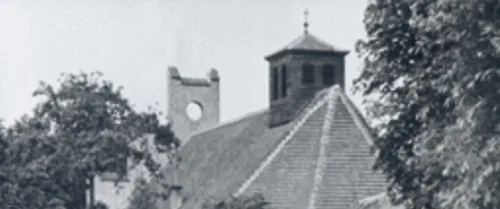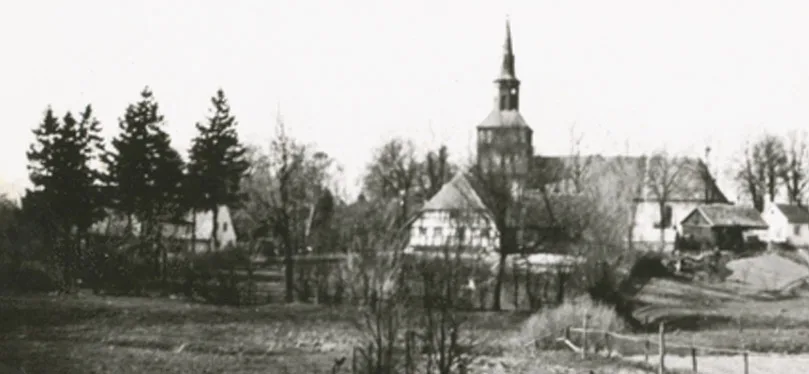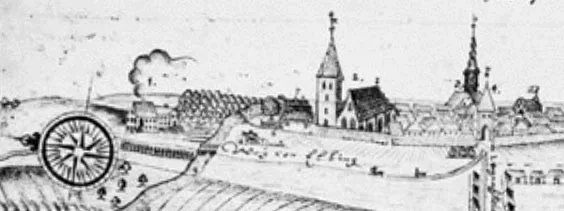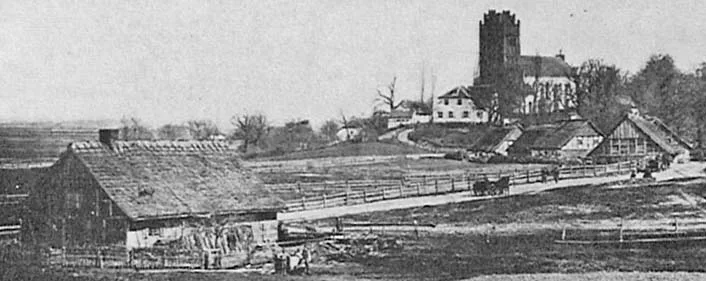
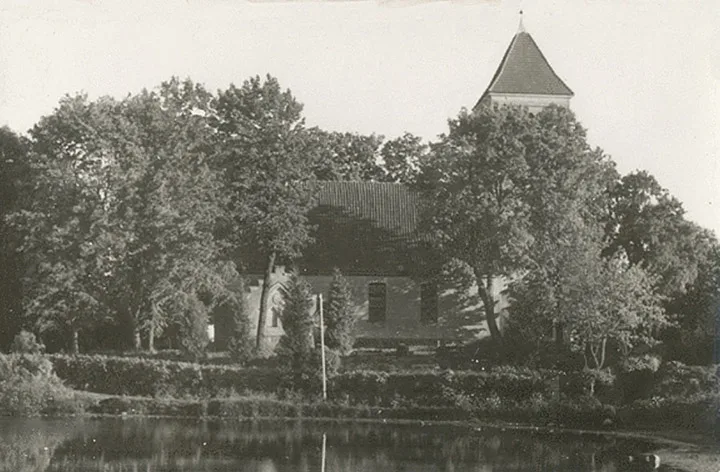
The later church was built on a 15th-century boulder foundation. A simple brick structure without a chancel. A porch on the south, a tower on the west. On the north and south sides, family vaults of the 18th and 19th centuries. Inside, a vaulted ceiling, restored in the mid-18th century. Paintings of 1742 under whitewash. Altar of 1632. Pulpit and confessional of 1712. Two bells.
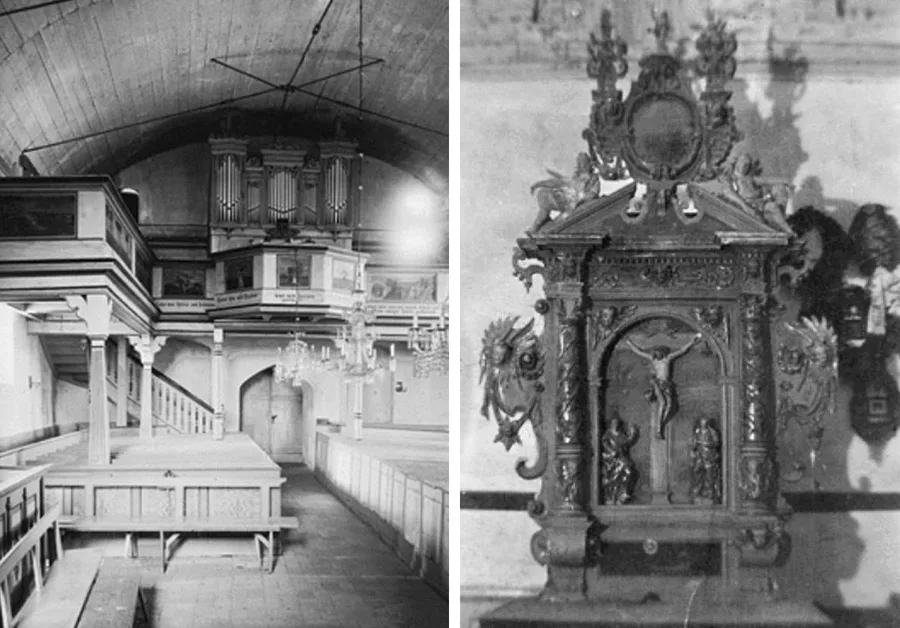
After the Second World War the church kept its pastor and remained in use. The cemetery survived too.
Then, from 1948 onwards, after the German population had been deported, the church gradually began to fall into ruin. In the first half of the 1980s the military neatly blew it up from all four sides for its bricks. In 1989 work began on repairing the school standing next to the church. The pastor's house is still intact. The cemetery has practically not survived.
Photos on this page: Bildarchiv Ostpreußen, bildarchiv-ostpreussen.de
Translated from Russian with the help of AI (Claude, Anthropic), October 2026.