The Swiss report, like the German one in Die Zeit Geschichte, is about history and attitudes to it, but pays more attention to the problems of the present. The report, headlined "A City in Amber", has a more telling subheading: "Many plans, little progress in Kaliningrad". And the amber of the headline is not even mentioned in the article.
Judith Leister, the author of the report, makes her "diagnosis" in the very first lines:
"Sometimes it seems that seventy years after the end of the war there are two cities on the Pregel: Königsberg and Kaliningrad. That both imaginary spaces exist side by side and without any connection is noticeable above all in the city centre."
From such an opening one can guess that the report will be about the outward appearance of modern Kaliningrad (a subject that troubles many Kaliningraders too) and about the picture that visitors form from their visual impressions. In the city centre Judith Leister saw the House of Soviets, a reminder of the "golden age of the Soviet Union". But the building, once conceived as the city's new symbol, is now in a terrible state: the ground floor is bricked up and the windows are broken. As reasons the Swiss journalist cites the boggy ground, which has left the House of Soviets structurally unsound, and the lack of money and investors. Next to the House of Soviets is the site where for years Königsberg Castle towered; it was destroyed during the war, and its partly surviving walls were blown up in 1968. "Nothing is happening on this site now," Leister concludes her reflection on the centre of Kaliningrad.
The journalist from the Neue Zürcher Zeitung also notes the duality of Kaliningrad/Königsberg in the way the city's – or rather the cities' – anniversaries are celebrated. In 2005 Kaliningrad celebrated the 750th anniversary of Königsberg and the 60th anniversary of Kaliningrad, as if it were impossible to settle on a single celebration. The Königsberg anniversary became, not without German involvement, as Judith Leister notes, a good opportunity to tidy up the historic parts of the city. The King's Gate and the South Station building were renovated, and the area around the Lower Lake was landscaped. Kaliningrad University was then named after Immanuel Kant, the Fishing Village project appeared, and excavations of Königsberg Castle began. The Swiss daily also recalls something many in Kaliningrad have probably forgotten by now: that Vladimir Putin promised at the time to allocate 1.5 billion roubles to the restoration of the castle in Kaliningrad.
But from 2006, in the author's view, everything went in the opposite direction – a symbolic Russification of the city began.
Evidence of this is the changing face of Victory Square, in the centre of which a column commemorating victory in the Great Patriotic War appeared. On the square, which became Kaliningrad's central one, shopping centres sprang up – the city has more of them, relative to its population, than other Russian cities. In 2006 construction of the Cathedral of Christ the Saviour began, and the Moscow Patriarch announced at the time that Kaliningrad "is Russian land, Orthodox land". Since perestroika, the author notes, the Russian Orthodox Church has, with some success, demanded that the plots and buildings of pre-war German churches be handed over to it.
It is fair to say that this is where the most interesting part of the Swiss journalist's report begins. She writes that not all religious communities have such good relations with the country's government as the Russian Orthodox Church. A paragraph on Kaliningrad's Jewish community quotes one of its representatives, who says that Kaliningrad Jews are afraid of ending up on the list of "foreign agents", especially as their projects rely on funding from international Jewish foundations.
Judith Leister evidently also visited Yantarny, where she noticed a St George's ribbon on the Holocaust memorial and added that this strip of two-coloured fabric has now also become a symbol of the separatists in Ukraine. Returning to the present situation of Kaliningrad's Jewish community, the author concludes that the construction of the synagogue on Oktyabrskaya Street in Kaliningrad – outwardly identical to Königsberg's New Liberal Synagogue, which stood on the same spot until 1938 – is being held up for political reasons.
Kaliningrad's Muslims also told the Swiss journalist about their problems. By their own estimate, some 100,000 Muslims live in the region, 10% of the total population. Yet they do not have a single place of worship. Projects submitted to the city authorities were rejected because of protests by some residents. Eventually construction of a mosque began in Yuzhny Park, but just before the building work was finished a court suspended it. As it turned out, the plot of land on which the Muslims are building the mosque overlaps with the grounds of the Friedland Gate Museum. This year the Muslim community filed a complaint with the European Court of Human Rights in Strasbourg. To hear the views of both sides of the conflict, Judith Leister talked to the director of the Museum of Old Königsberg in the Friedland Gate. What stuck in her mind from that conversation were the words:
"Kant and Herder are our fellow countrymen."
The mosque never came up. The museum itself, however, struck the Swiss journalist as incomprehensible.
She writes that it contains all sorts of pre-war objects, signboards with German inscriptions, for example, but there is no connection between them; they stand in the museum like archaeological finds.
There is also a lack of explanations of the exhibits for the predominantly Russian visitors.
Leister asked the museum director one interesting question: "Is an exhibition planned about the expulsion of the Germans from East Prussia?", and received a firm answer: "27 million people died. As long as I am director of this museum, there will be no exhibition on this subject."
The Neue Zürcher Zeitung reporter visited several other places in Kaliningrad: the Bunker Museum and Fort No. 5. Her impressions afterwards were much the same as after the Friedland Gate – strange. What the author calls the Russian politics of memory, reflected in Kaliningrad's museums, seemed to her a collection of assorted objects and elements of history, sometimes without any clear connection.
In the article the author did not forget to mention the Football World Cup either. When Judith Leister was in Kaliningrad, construction of the stadium had not yet begun. She also briefly lists the plans for reconstructing the historic centre, i.e. the famous Heart of the City project.
The subheading of the article spoke of plans for the city's development; in her conclusion the author returns to those same plans, stressing that there are very many of them and that their implementation is eagerly awaited.
But the readers' comments that appeared under the article in the newspaper's online edition may seem more interesting than the article itself. Attention is drawn to lengthy remarks by the Kaliningrad architect Dmitry Sukhin, to which Judith Leister replies at similar length. He points out that excavations on the castle site began back in the 1990s, not only in 2005, and that the House of Soviets' lack of structural soundness is just a senseless rumour, since a building of that size with a defect of that kind, if not looked after – as is the case with the House of Soviets – would have collapsed within 20–25 years. He also believes that the selection of elements of memory culture presented in the report is arbitrary and does not give the full picture. Sukhin also speaks in defence of the "foreign agents" law, citing similar measures in Germany as an example. "In every paragraph a little truth, but distorted all the same," writes Dmitry Sukhin. To Sukhin's charge that the choice of places, people and other elements of Kaliningrad reality described is random and biased, Judith Leister replies that it is impossible to write everything about everything; a journalist always has to choose.
Another Kaliningrader, the journalist Aleksey Shabunin, carries on a conversation in the comments with a Swiss – or perhaps German – reader who was indignant that Kaliningraders regard Kant as their fellow countryman. In the end Shabunin convinced his interlocutor that this makes sense, with a simple argument: "If I was born in the same city, even if not at the same time, can I not consider the famous philosopher Immanuel Kant my fellow countryman?" And the whole exchange was polite, without aggression; the discussion rested on substantive arguments. No trolls. And although some comments contain criticism of the article and its author, it is expressed civilly and to the point.
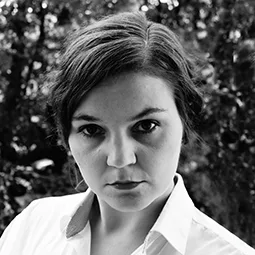
Judith Leister has a particular view of the Kaliningrad Region: she takes an interest in the region's history but does not focus solely on its past (although it is quite a common and understandable phenomenon that German journalists are drawn more to Königsberg than to Kaliningrad, and the author of the report is German). The overall feeling one gets after reading the Swiss report is that Judith Leister does not understand anything. She does not understand what the museum in the Friedland Gate is telling us, or the region's memory culture in general. To her it is all a mixture of random elements that in the end only underline the tension between the German and the Russian (Soviet) heritage. She does not understand why the Jews and Muslims cannot come to an agreement with the local authorities, and does not understand what the St George's ribbon has to do with the victims of the Holocaust.
There is no romantic journey to old Königsberg here; instead there is the question of present-day attitudes to one's own history. And, though not directly, the author gives an answer that is not encouraging: "Many plans, little progress".
One can argue with Judith Leister on some points, as Dmitry Sukhin does in his remarks, but her point of view is nonetheless very valuable. She does not embellish reality; she tries to convey it to the reader as she sees and feels it. Kaliningraders may like it or not, but learning how another person sees the place where you live should always be interesting.
Translated from Russian with the help of AI (Claude, Anthropic), October 2026.