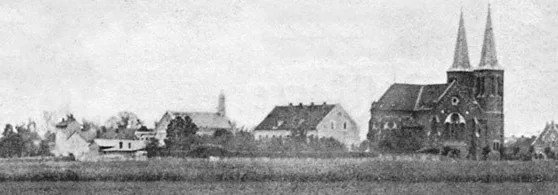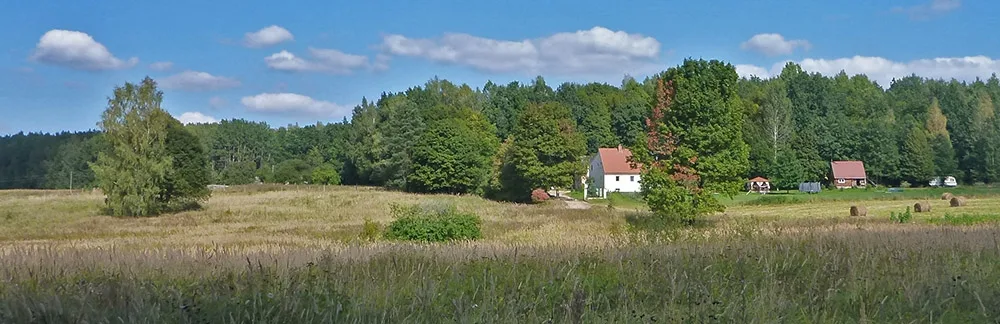
Eydtkuhnen is first mentioned in 1557 as the settlement of Eittkau. Eittkau arose when an even older village (known from 1539) was divided into three settlements, one of which became Eittkau. Around 1600 the settlement is first mentioned under the name Eydtkuhnen. The old road to Kowno (Kaunas) passed through Eydtkuhnen, but travellers preferred to make their last stop before the border in the better-appointed Stallupönen (from 1938 Ebenrode, Nesterov).
In 1708 the first inn with a coaching house appeared in Eydtkuhnen. However, the plague epidemic of 1709–1711 that followed devastated the area and led to the inn's closure. It reopened only in 1735.
In the 19th century Eydtkuhnen was a village that from 1818 formed a rural community in Kreis Stallupönen. Until 1883 the village belonged to the parish of Bilderweitschen (from 1938 Bilderweiten, Lugovoye).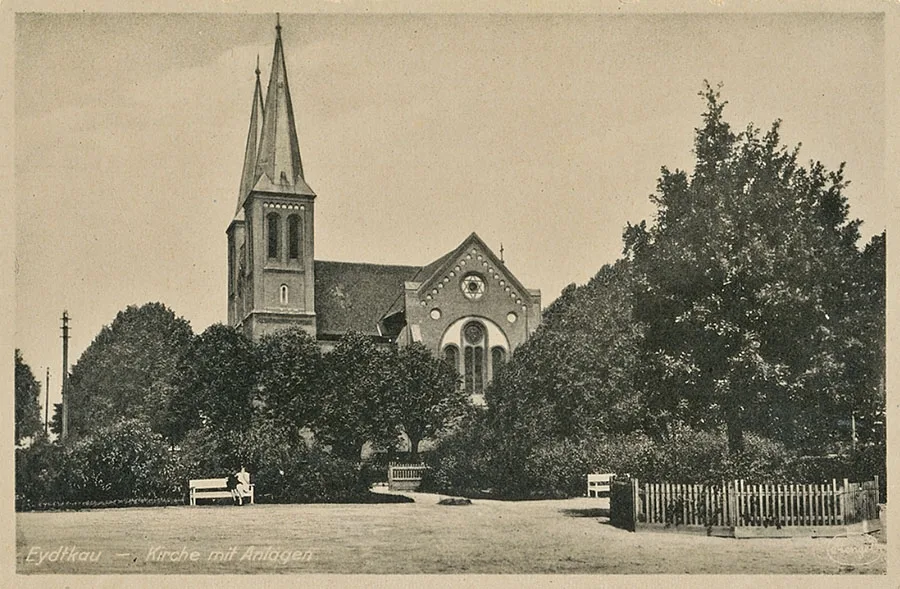 Eydtkuhnen Church.
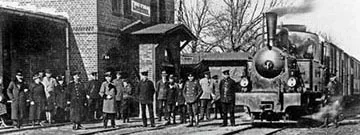
On 15 August 1860 the last section in East Prussia of the Prussian Eastern Railway (Preußische Ostbahn) was opened; it reached Eydtkuhnen and had a considerable influence on the village's future.
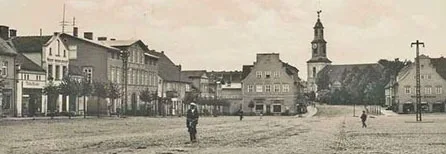
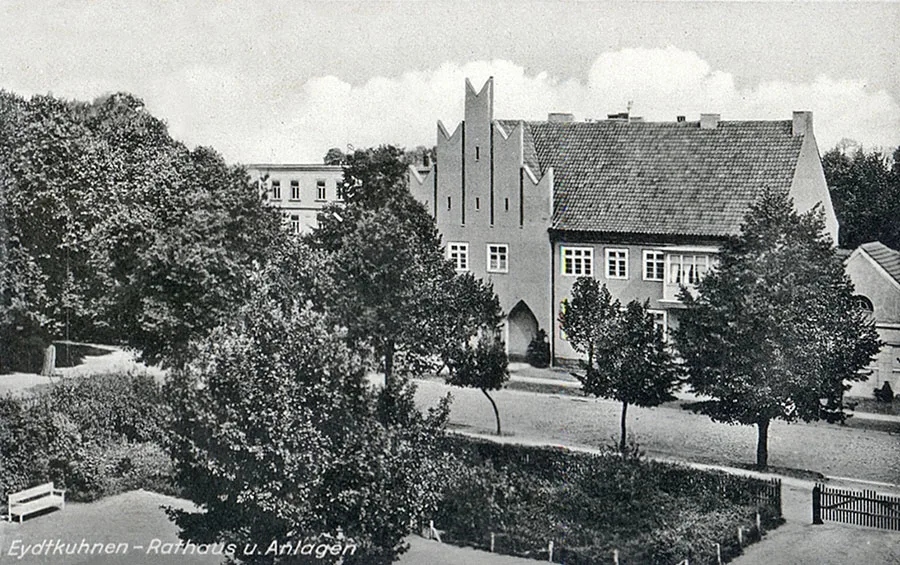 The façade of the Eydtkuhnen town hall resembled the crenellations of the walls of the Moscow Kremlin.
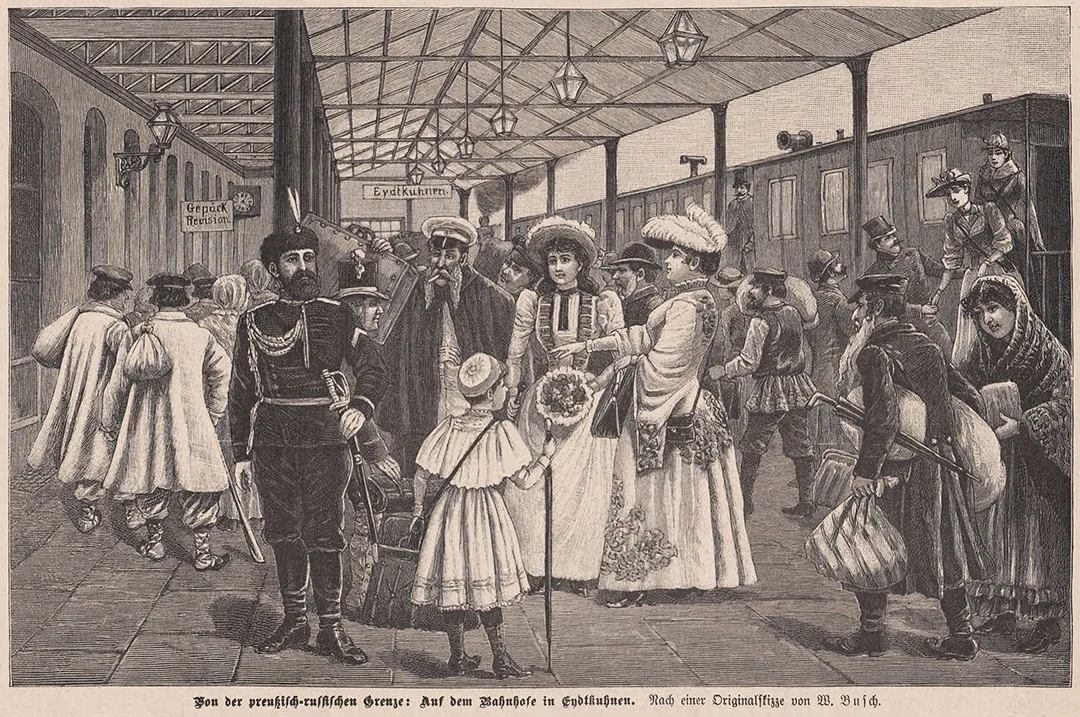
Eydtkuhnen became the last station on this line before the border with the Russian Empire. Here the European gauge gave way to the Russian one: passengers who had passed border control had to change trains. Freight had to be transshipped. As in most logistics hubs all over the world, it was more profitable to sell some of the goods on the spot. All this encouraged the opening of forwarding companies and trading and transport agencies, which led to the development of Eydtkuhnen.
By 1871 Eydtkuhnen was already listed with the status of a local rural centre (Flecken).
At that time Eydtkuhnen had 98 dwelling houses, in which 432 families and 19 single people lived.
On 24.06.1874 Amtsbezirk No. 1 Eydtkuhnen was established in Kreis Stallupönen; it comprised one single rural community, Eydtkuhnen.
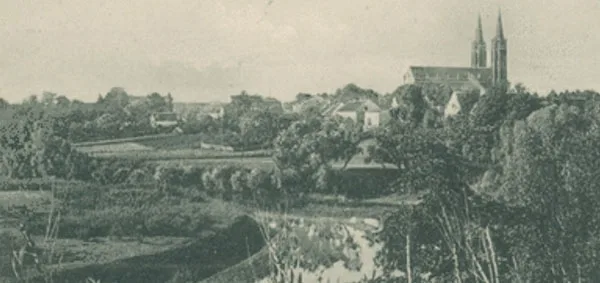
In 1883 the parish of Eydtkuhnen was created, although it did not yet have a building. In 1889 a parish church designed by the architect Friedrich Adler (1827–1905) was opened in Eydtkuhnen.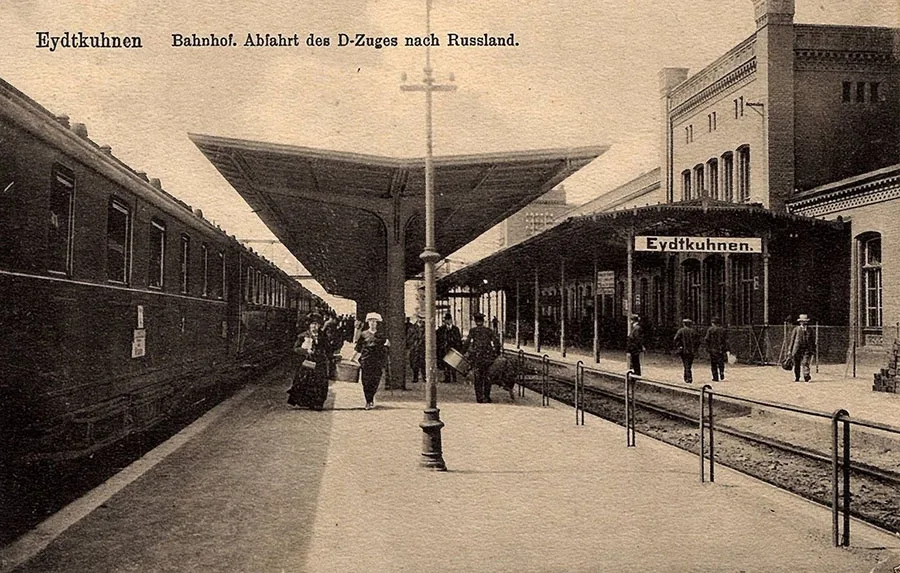 The famous platform of Eydtkuhnen station.
At the end of the 19th century, besides the station and the trading offices, Eydtkuhnen also had a brickworks and three windmills.
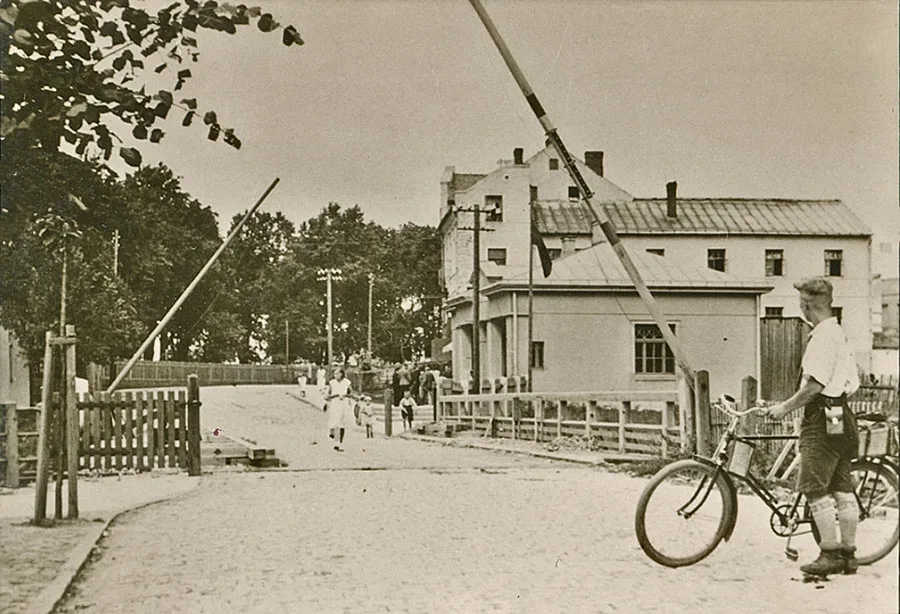 A young cyclist in front of the barrier at the Lithuanian border.
In 1905, according to a directory, Eydtkuhnen had a Lutheran church, a synagogue, a main customs office and an ordinary customs office. Brisk trade in goods from Russia — grain, horses, geese — went on at the border. By 1914 as many as 46 forwarding offices alone were registered here.
On the very first day of the First World War an incident occurred in Eydtkuhnen involving Russian subjects returning to Russia by train. The passengers of the morning train were taken off at the station and lined up for a document check, but in the end they were nevertheless sent on to the Russian border town of Verzhbolovo (Virbalis, Lithuania). The passengers of the evening train, after the document check, were sent to Verzhbolovo on foot (10 km) and without any guarantee of safety.
Fighting in Eydtkuhnen began even before the actual start of the Russian army's East Prussian operation. In the course of the preparations for it, as early as 3 August 1914, men of Khan Nakhichevansky's 2nd Cavalry Division entered Eydtkuhnen.
On 4 August infantrymen — one battalion of the 108th Volga Regiment — moved up to reinforce them. And when the latter came under German fire, soldiers of the 3rd Uhlan Regiment joined the fighting, and it was this regiment that eventually took Eydtkuhnen. The next day (05.08.1914) the Germans regained control of the town. But they too were forced to leave it after coming under fire. On 14 and 15 August the Russian troops in Eydtkuhnen beat off German attacks, and on 17.08.1914 the entire Russian 1st Army went over to the offensive, and Eydtkuhnen found itself in the Russian rear. Mass cases of looting were recorded in the town, reflected in Russian documents by entries on the punishments imposed on those involved.
The next time troops passed through Eydtkuhnen was in mid-September 1914, during the retreat of P.K. Rennenkampf's Russian 1st Army. The last Russian supply trains passed through it on 12.09.1914. In October 1914 the offensive of General N.A. Yepanchin's 3rd Corps began. Eydtkuhnen was again taken by Russian troops. On 10.02.1915 the retreating Russian units left Eydtkuhnen for good.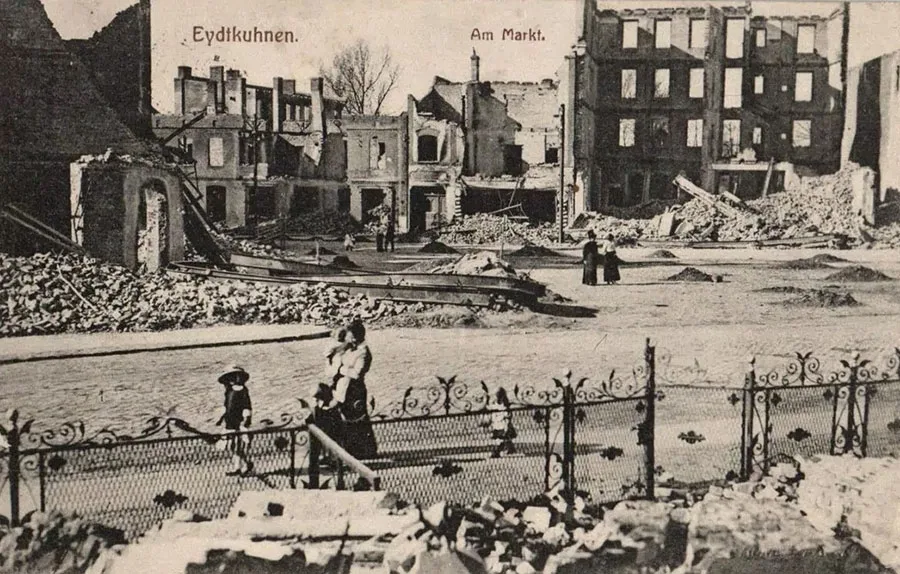 The ruins of Eydtkuhnen after the First World War.
In the battles of the First World War Eydtkuhnen was badly destroyed. It was rebuilt with the help of its twin town, Wiesbaden.
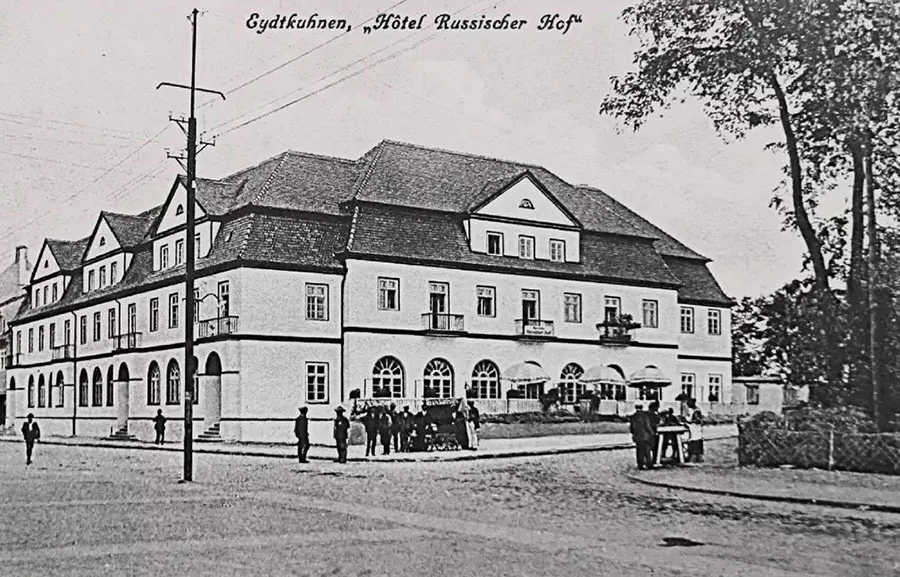 The "Russischer Hof" hotel in Eydtkuhnen.
After the reconstruction work was completed in 1922, Eydtkuhnen received town status. In 1923 Lithuania switched to the European gauge, so there was no longer any need to change trains and transship freight at Eydtkuhnen. This was the time when a through train from Berlin ran to Eydtkuhnen via Danzig and Königsberg, with through carriages Paris–Riga.
In 1931 the town had 31 dwelling houses and 1,616 outbuildings. In the pre-war years Eydtkuhnen had a secondary school, an elementary school and a vocational school, a hospital, a post office, a customs office, a power station, a mill, a dairy and a mineral water factory.
On 18 October 1944 Eydtkuhnen was taken by units of the 5th Army (Colonel General N.I. Krylov).
Soldiers of the 83rd Guards Rifle Division (Major General A.G. Maslov) of the 11th Guards Army also took part in capturing the town.
On 25.07.1947 Eydtkuhnen was renamed Chernyshevskoye. At the same time the Chernyshevskoye village council of the Nesterov District was created. Eydtkuhnen station and its building were destroyed during the fighting and were not rebuilt in Soviet times. On the whole, life in Chernyshevskoye in the Soviet years was bound up with the military unit stationed in the settlement and with the management of the surrounding collective farms. There was also a psychiatric hospital in the settlement.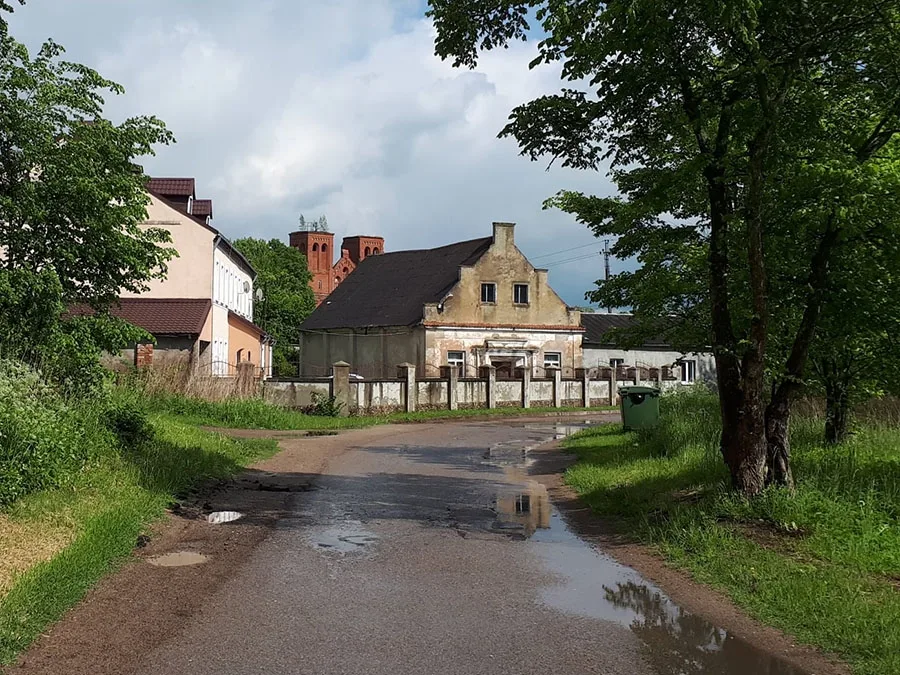 The entrance to Chernyshevskoye along Ozernaya Street (2022).
In 2003 construction of Chernyshevskoye station began; it was put into operation only on 2 October 2017.
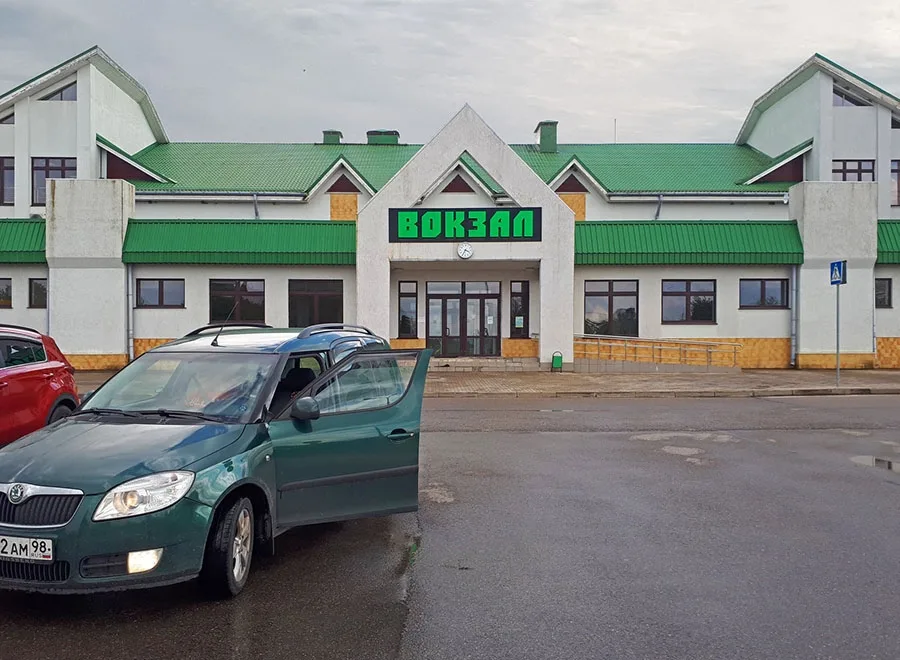
The station in Chernyshevskoye (2022).
In August 2009 the Chernyshevskoye road border crossing was opened. Since 2019 Chernyshevskoye station has also been handling passenger trains. In 2022 Regional Psychiatric Hospital No. 5 was closed. Its patients were transferred to Hospital No. 2 in the settlement of Pribrezhny within the city limits of Kaliningrad. At present (2023) Chernyshevskoye has a secondary school, a feldsher-midwife station and a post office.
Population: 1557 – 125, 1785 – 40, 1867 – 1996, 1871 – 2365, 1875 – 3253, 1880 – 3318, 1885 – 3281, 1890 – 3347, 1900 – 3707, 1905 – 5036, 1910 – 5539, 1925 – 6077, 1933 – 5679, 1939 – 4932, 1946 – 100, 1947 – 336, 1989 – 1205, 2002 – 1196, 2010 – 1139, 2011 – 1146 inhabitants.
Composition of the population of Eydtkuhnen in 1871: Protestants – 2059, Catholics – 76, other Christians – 29, Jews – 201, children under 10 – 718, literate – 1491 (92%), blind – 2, deaf-mute – 3, insane – 3.
Composition of the population of Eydtkuhnen in 1925: Protestants – 5549, Catholics – 194, Jews – 147, atheists – 7.
Famous people born in Eydtkuhnen
Marie Madeleine (1881–1944), real name Gertrud Marie Madeleine Baroness von Puttkamer, née Günter, a German writer and poet, author of stories and dramatic works as well as poems, including erotic ones.
Wilhelm Gaerte (1890–1958), German historian and philosopher, Doctor of Sciences, the last director of the Prussia Museum (from 1925), editor of the journal "Prussia" in 1925–45, chairman of the Prussia Antiquities Society.
Felix Bressart (1892–1949), German stage and film actor who appeared in 64 films. After the Nazis came to power he lived in exile in various countries, the last of which was the USA. He acted in Hollywood (37 films).
Friedrich Welter (1900–84), German composer and music critic.
Herbert Kirrinnis (1907–77), Doctor of Medicine and of Philosophy, state historian of East Prussia, who wrote numerous works on the history of the districts of Gumbinnen (Gusev) and Allenstein (Olsztyn, Poland). Author of studies on the history of Eydtkuhnen (Chernyshevskoye), Ragnit (Neman), Schirwindt (Kutuzovo), Gumbinnen and Goldap (Gołdap, Poland).
Photos on this page: Bildarchiv Ostpreußen, bildarchiv-ostpreussen.de, modern photos by Mikhail Ogorodnikov.
Translated from Russian with the help of AI (Claude, Anthropic), October 2026.