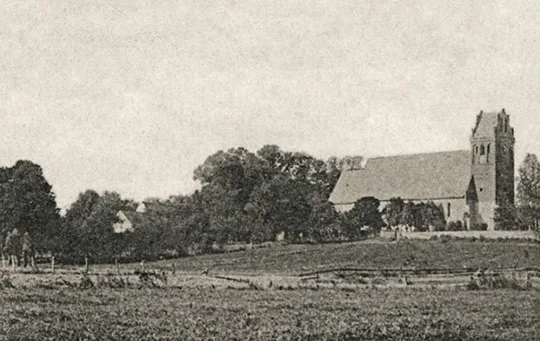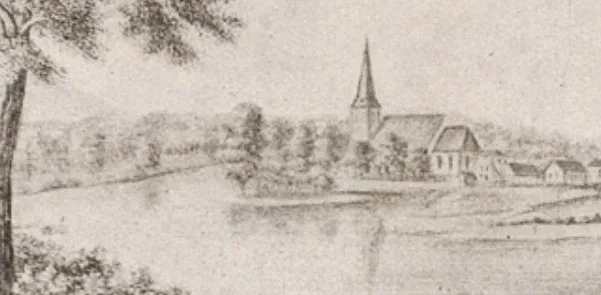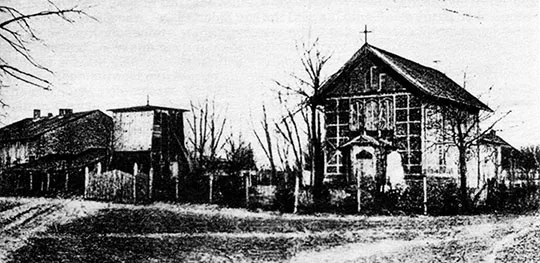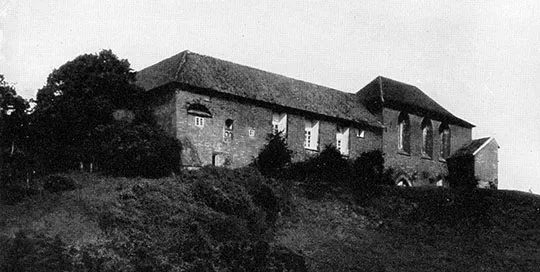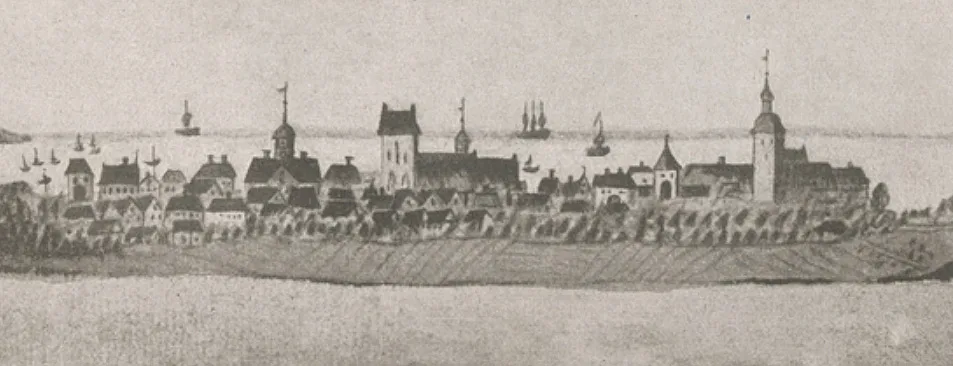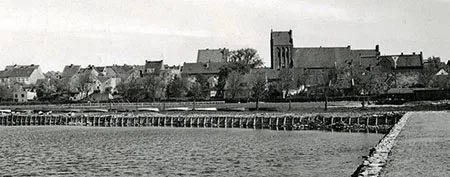
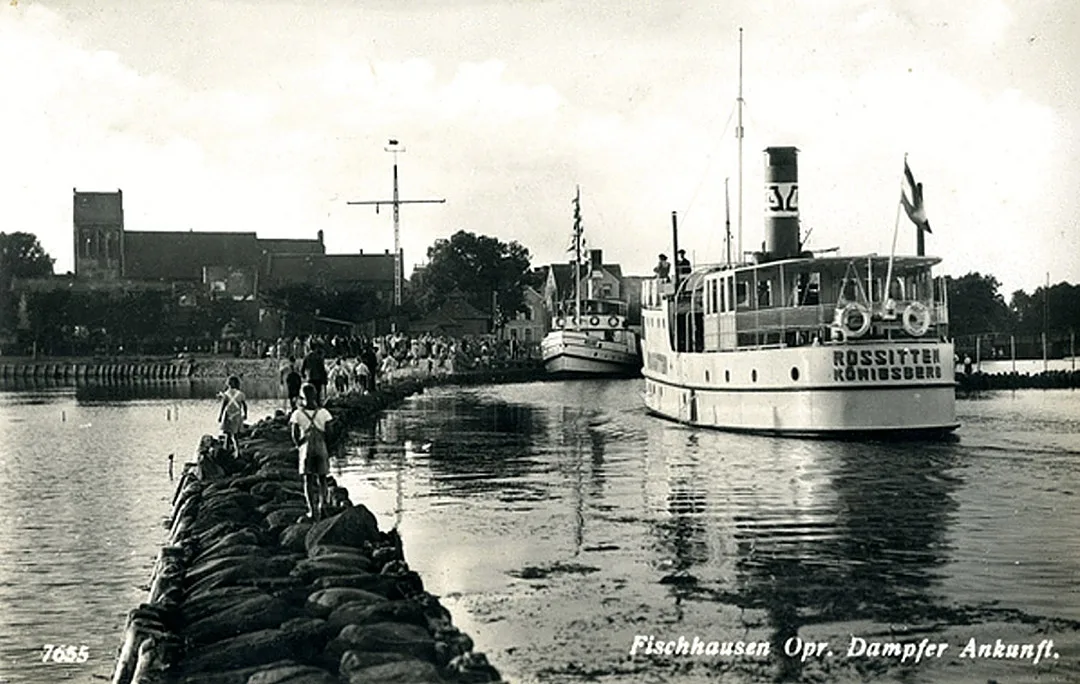
The church stood in the middle of the town. In 1852–56 it underwent a major restoration. In 1889 galleries were built. The four-bay nave had star vaults with ribs resting on corbels. Porches were added on both sides of the third bay. Beyond the Gothic triumphal arch lay the chancel with a straight end, to which a sacristy was attached.
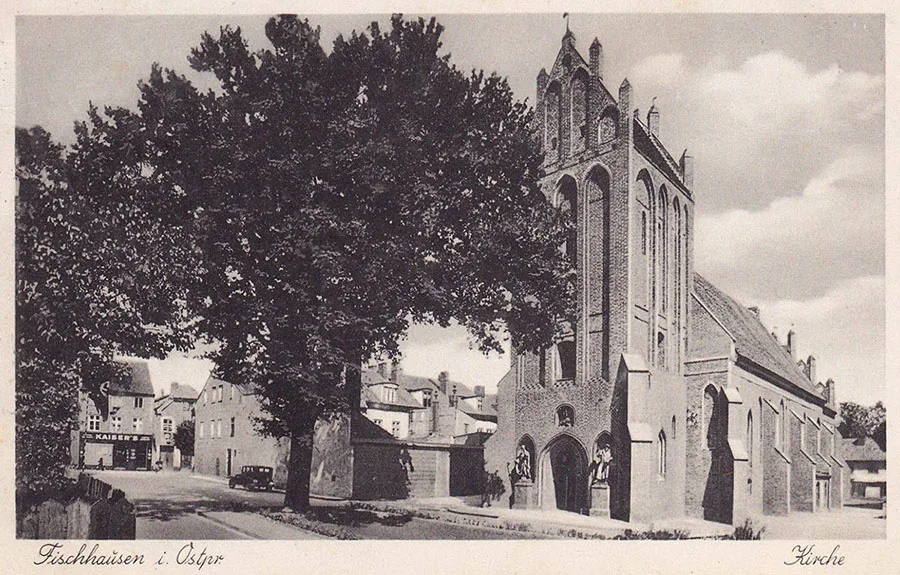
The tower was Gothic, with gables to the west and east and two buttresses.
The tower was 25.6 m high.
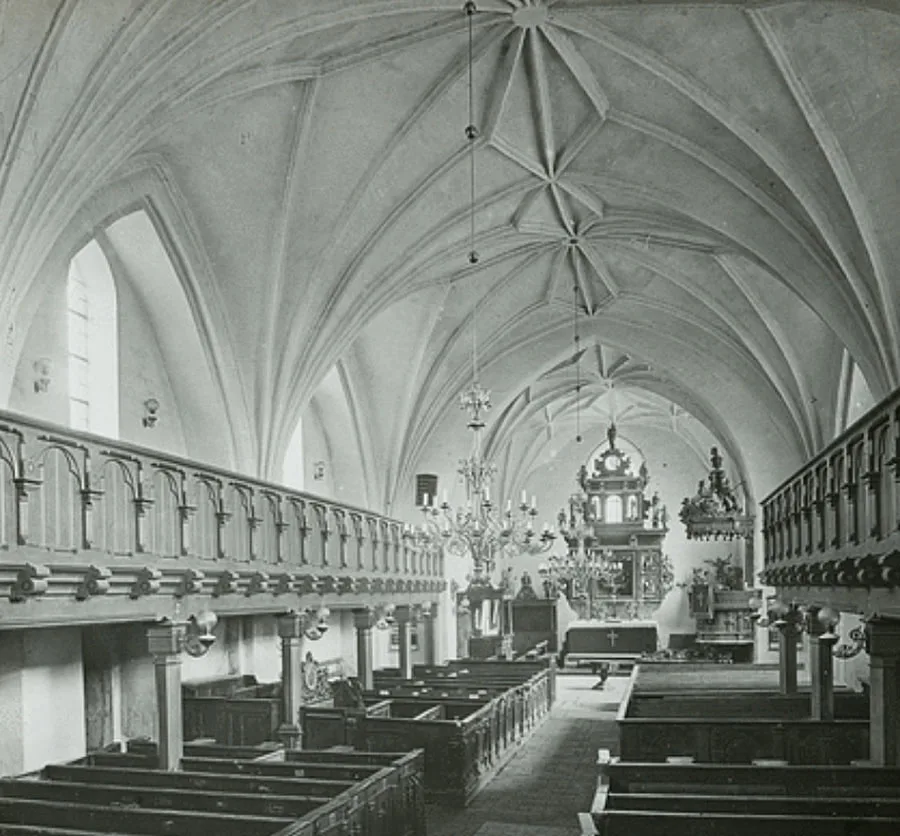
The length of the church, including tower, nave and chancel, was 48.6 m; the nave was 18.8 m high. The church had an altar screen of 1606, a copy of the one in Königsberg Cathedral. The pulpit, from the 17th century, was octagonal and carved. The organ dated from 1616 and was restored in 1727 and 1821. There were three bells, the largest from 1874.
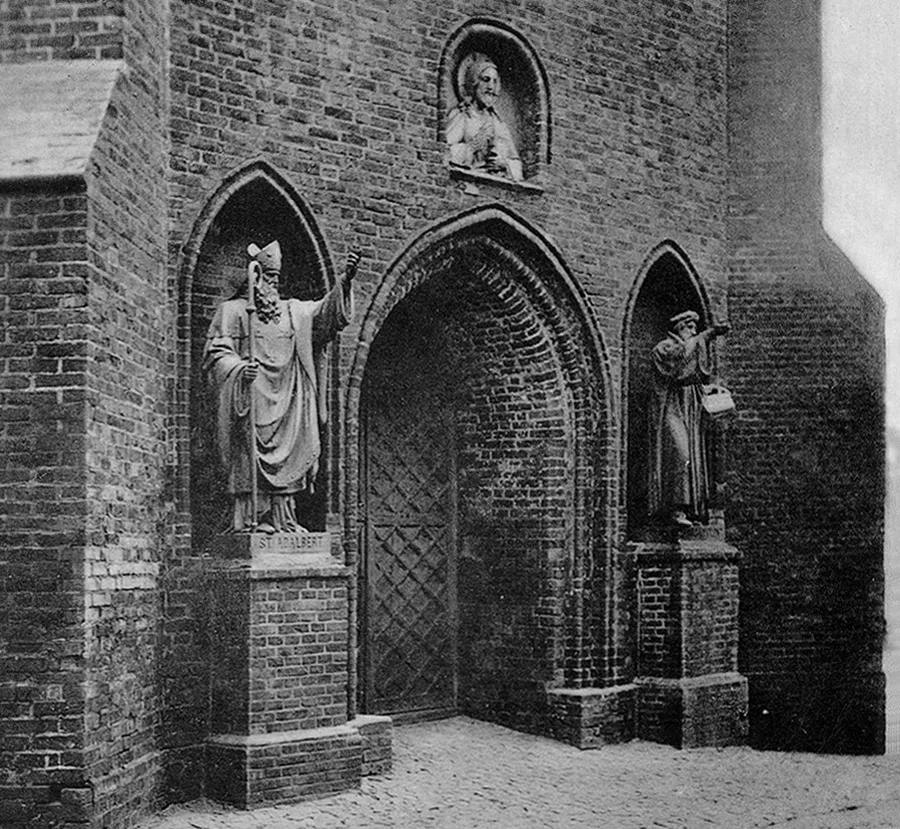
In 1864 the Prussian King Frederick William II presented the church with
three terracotta statues by the sculptor Siemering: Saint Adalbert,
Bishop Georg von Polenz and Christ (see above).
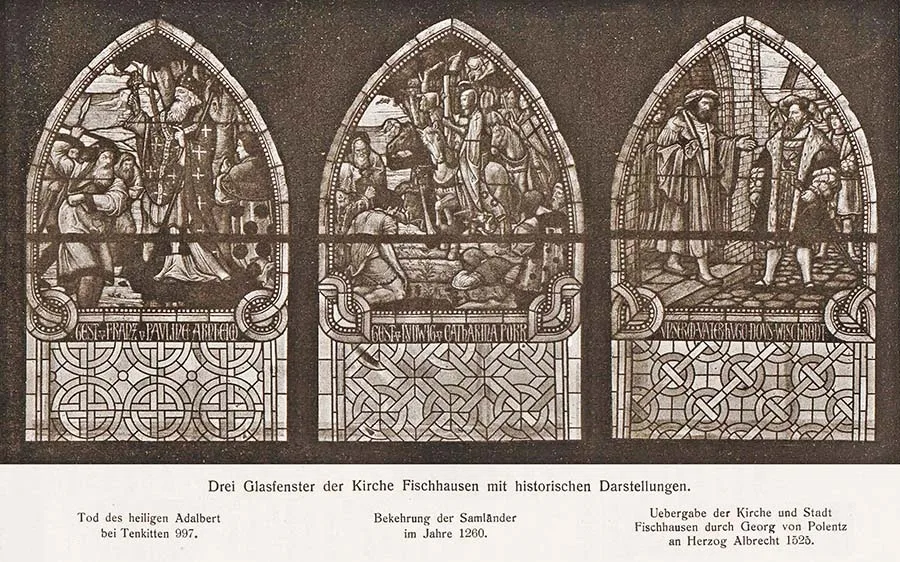 Stained-glass windows of Fischhausen Church
1. The death of Adalbert near Tenkitten in 997. 2. The conversion of the Samlanders [to the "true faith"] in 1260. 3. Georg von Polenz hands over the church and the town of Fischhausen to Duke Albrecht in 1525.
During the fighting of the Second World War on the Samland Peninsula, the town was badly destroyed. The old centre suffered particularly, including the church.
Its shell stood until about 1961, when N. S. Khrushchev's motorcade was due to pass along the Kaliningrad–Baltiysk road on its way to board a warship for his visit to England.
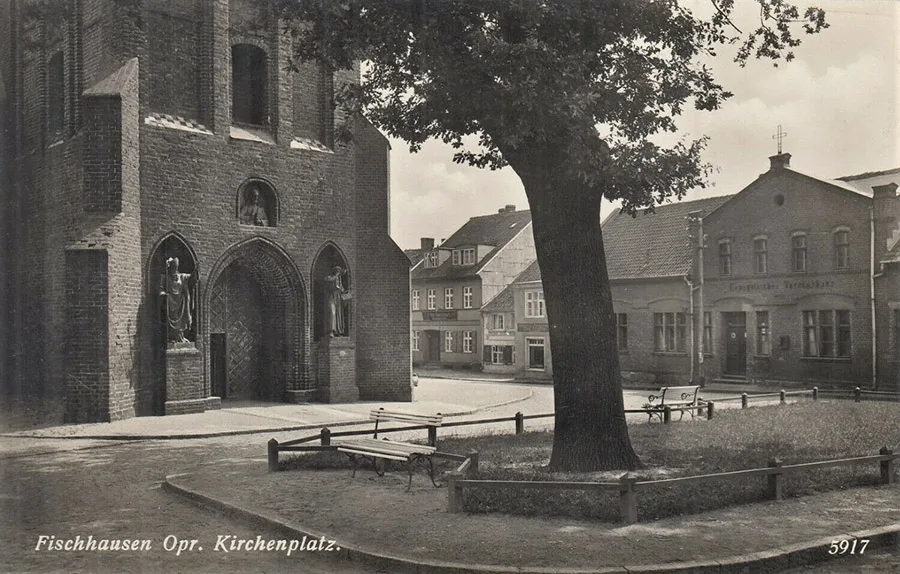
So that the ruins would not spoil the beautiful landscape, the town authorities ordered them to be levelled to the ground.
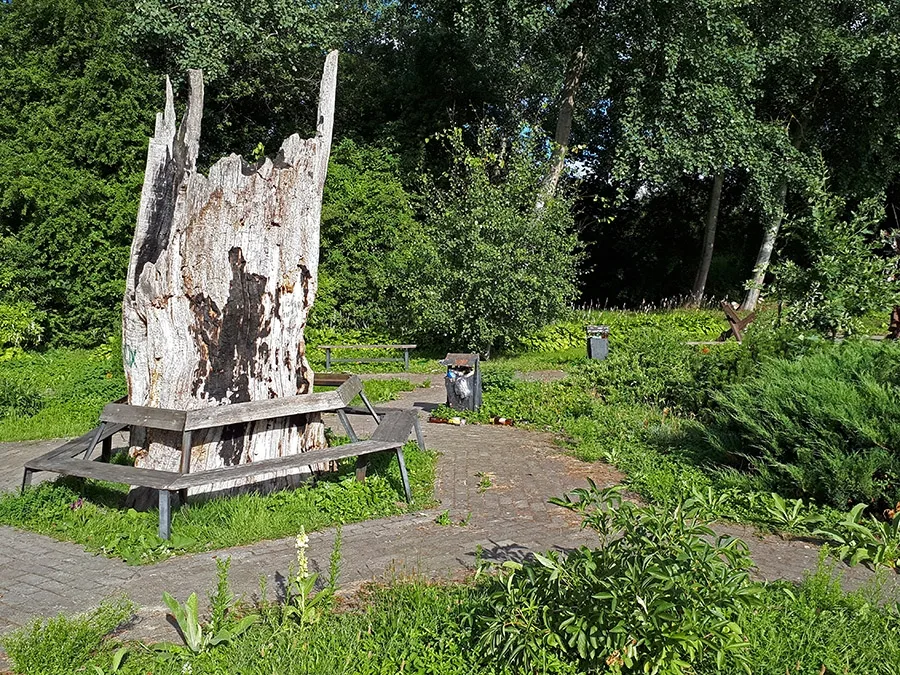
Today the site where the church stood can be identified only by what remains of the "Peace Oak" (see above), planted in front of its entrance after the war against Napoleon.
Photos: Bildarchiv Ostpreußen, bildarchiv-ostpreussen.de, Mikhail Ogorodnikov (2021).
Translated from Russian with the help of AI (Claude, Anthropic), October 2026.