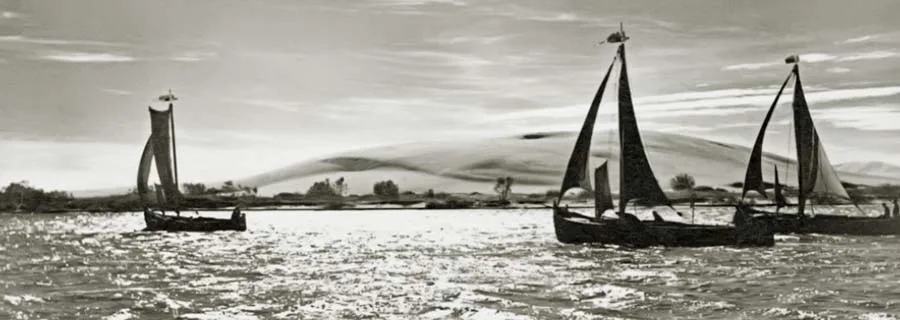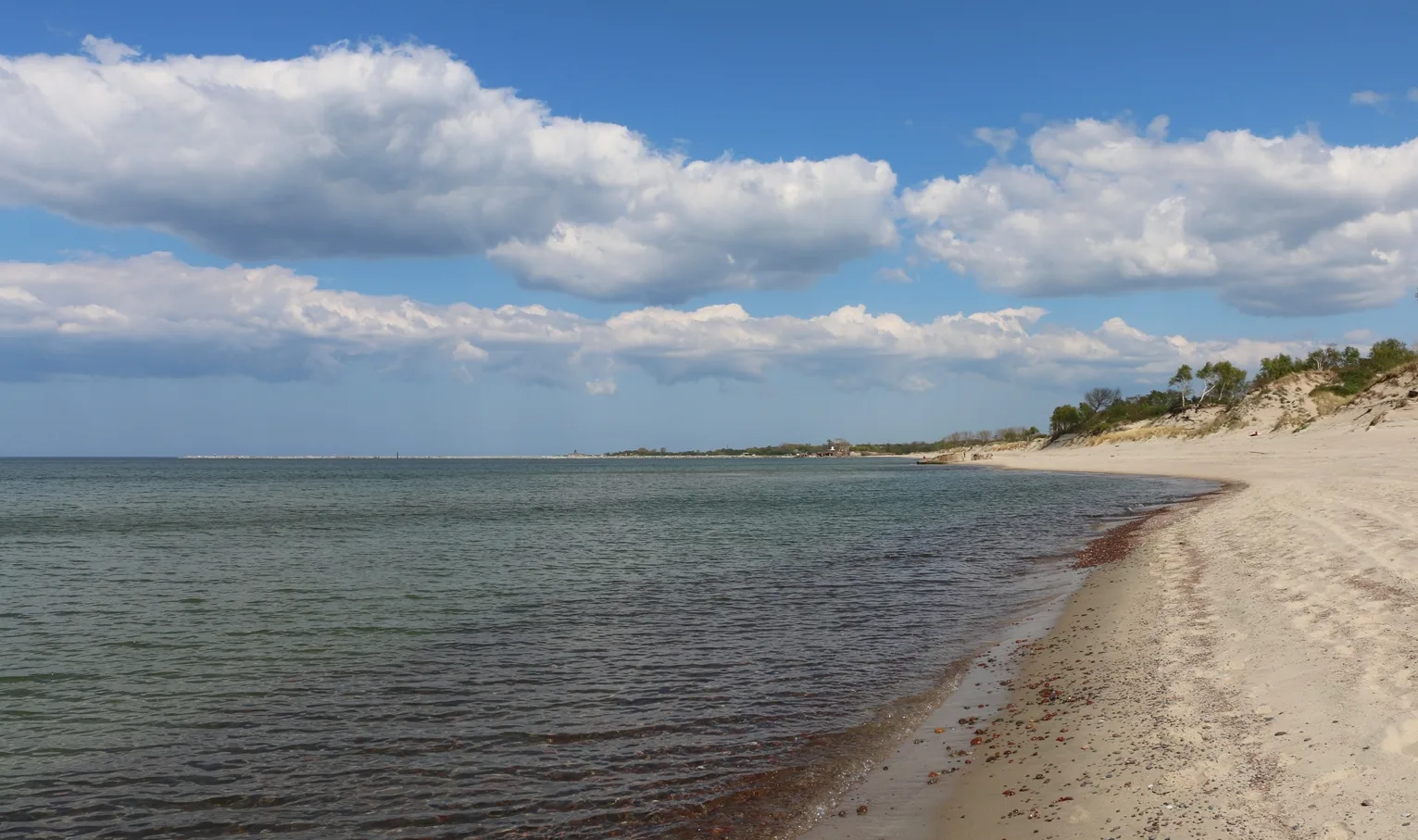
This bog is the largest little-altered oligotrophic raised bog in Central Europe (its total area, together with the adjoining forests, is about 2,600 hectares). In the Soviet period it was protected from harmful human impact because the land was set aside as a military training ground, and no one encroached on land belonging to the USSR Ministry of Defence. Even then, however, the bog repeatedly suffered from fires caused by artillery firing, as well as from drainage and geological prospecting. In 1998 the Zehlau bog was included in the list of sites of international importance under the Ramsar Convention on Wetlands.
The flora of a raised bog is shaped by the fact that the plants here receive few nutrients and their moisture comes mainly from precipitation. Bogs of this type are characterised by a variety of sphagnum mosses, and shrubs grow here: common heather, bog rosemary, marsh Labrador tea, bog bilberry, lingonberry and so on. There are insectivorous plants – the obovate sundew – as well as plants of the orchid family: the lesser butterfly orchid and the greater butterfly orchid.
The tree flora of raised bogs is not very diverse. Here one can find the Scots pine and an introduced species – the mountain pine, as well as downy birch and grey alder. Of particular value are the tracts of lime and hornbeam forest with oak adjoining the Zehlau bog to the north over an area of 5,000 hectares, which preserve the appearance and composition of the primeval broadleaf forests that once covered large parts of Eastern Europe.
These are among the last lime and hornbeam forests in Europe, a natural heritage of European importance.
The undergrowth, consisting mainly of spring ephemeroids, makes these forests especially beautiful in spring.
The flora of the Zehlau bog also includes some fifteen unique plants listed in the Red Data Book of the Russian Federation. One of them – a rare conifer – is the English yew, valuable specimens of which grow in the wild in the Ozersky Forest, which surrounds the Zehlau bog on the north, the east and partly the south. This tree also grows in western, central and southern Europe, north-western Africa, northern Iran and south-western Asia. In the former USSR, yew forests have survived in the Carpathians and in the mountains of Crimea (Chatyr-Dag), in the western part of the North Caucasus (the Caucasus Nature Reserve, the Yew and Box Grove), and also in the Southern Kurils (Shikotan Island).
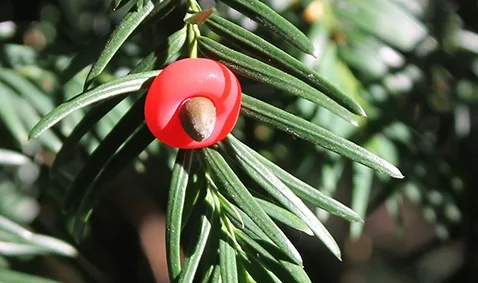
Close-up of an English yew fruit.
Photo by Natalya Antonova.
The English yew grows slowly but is remarkably long-lived – according to various sources, from one and a half to four thousand years. It is a dioecious tree: the male flowers are spherical, on short stalks, and the female ones are small, greenish and solitary. Yews flower at the end of April. From the age of 25–30 the trees produce seeds enclosed in a round, bright red aril every year until a great age. Yews often flower and bear fruit two years in a row, and then bear no fruit in the third year. Because of its strong, rot-resistant wood with powerful bactericidal properties, this tree, which once covered large areas, was almost entirely felled by man. In time, yew wood stopped being used for building and furniture-making, so expensive and rare had it become, but it continued to be used for religious objects: crosses, tabernacles and so on.
The English yew is still considered a powerful protective plant, despite the fact (or because of it?) that its seeds, leaves and wood are all poisonous.
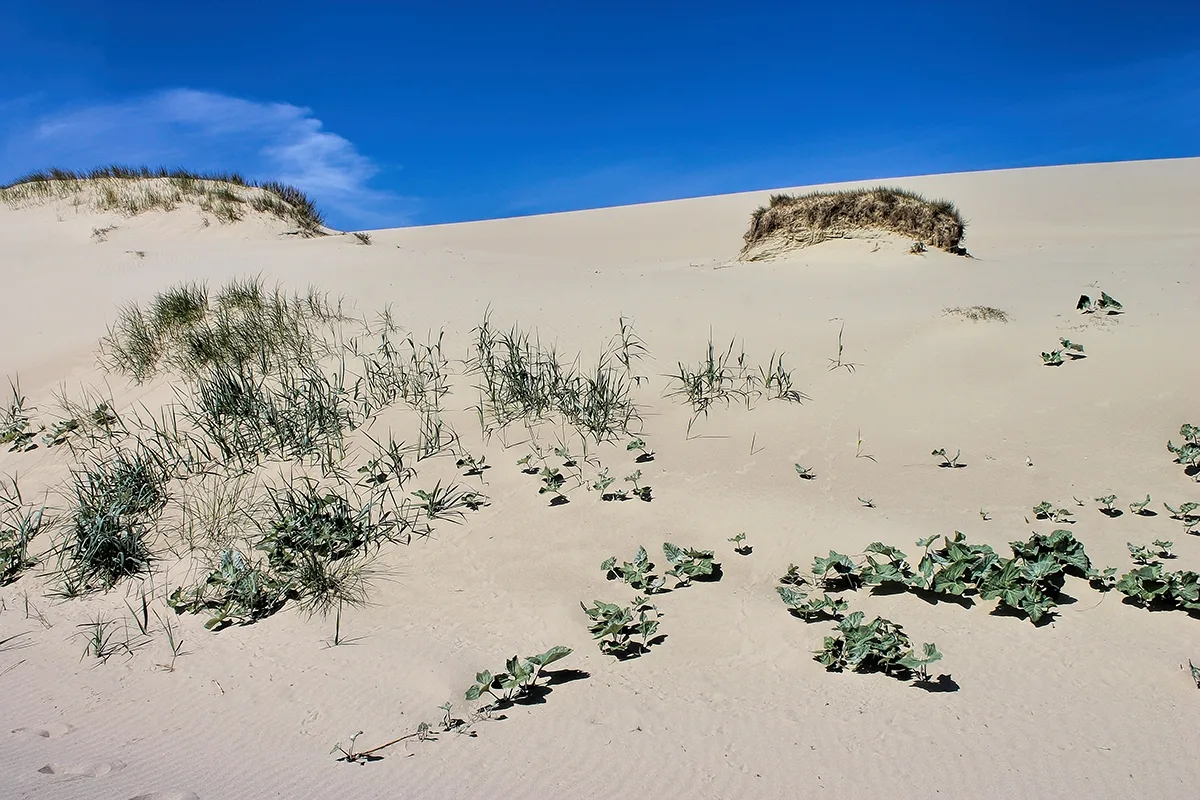
Among the specially protected areas of our region, the Curonian Spit of course stands out – a long, narrow, crescent-shaped strip of land between the Baltic Sea and the Curonian Lagoon, beginning at the town of Zelenogradsk. Geographically, the Curonian Spit is a peninsula because of the strait connecting the lagoon and the sea near Klaipėda in Lithuania. The main elements of the spit are mobile and stabilised dune massifs. On the Russian side they reach a height of 62 metres – the Efa Dune; on the Lithuanian side – 68. Anyone who has ever been on the dunes will agree that the surrounding landscape could well serve as a set for a science fiction film about distant desert planets.
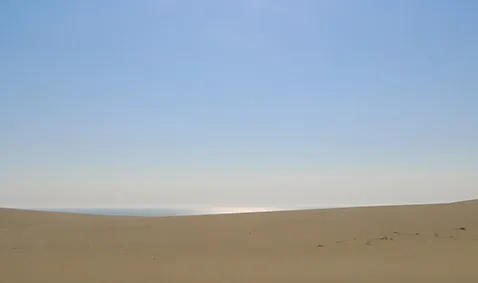
Landscape on the dunes of the Curonian Spit.
Photo by Mikhail Ogorodnikov.
That said, leaving aside the "dead" dunes, the vegetation of the Curonian Spit is astonishingly diverse, because over many years, in order to hold back the advance of the dunes on the villages, various species of trees and herbaceous plants from different parts of the world were brought to the spit and planted.
During flowering, fruiting and in autumn, visitors to the national park are struck by the smoke tree growing along the road that runs through the Curonian Spit. This deciduous, much-branched shrub (more rarely a tree) is an introduced species in the Kaliningrad Region; in its natural range it grows in southern Russia and the Mediterranean countries, Asia Minor, China and the Himalayas, where it mainly colonises stony slopes, surviving successfully even in the mountains. That is precisely why this plant, ornamental in every sense, is used to prevent soil erosion. The smoke tree flowers in mid-June with white flowers gathered in large panicles, but after flowering the plant becomes covered with long hairs: masses of thin flower stalks of bright red and white, sticking out in all directions, look like clown wigs.
Hence the smoke tree's other name – the wig tree.
In autumn the foliage of this plant turns warm shades of yellow, orange and red. The sunnier and drier the weather and the longer it stays free of hard frosts, the richer the colour of the smoke tree's leaves. It is the leaves of the smoke tree that have medicinal properties, but remember that collecting any parts of plants on the territory of the "Curonian Spit" nature reserve is strictly forbidden.
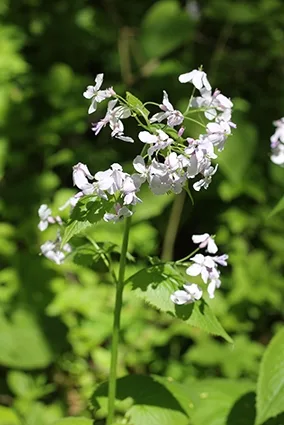
Perennial honesty.
Photo by Natalya Antonova.
In waterlogged hollows, where the black alder thrives, one can find whole glades of perennial honesty, a plant listed in the Red Data Book of Russia. Perennial honesty flowers from April to June with beautiful, fragrant, pale lilac, more rarely white, inflorescences. It is a tall (up to 100 cm) herbaceous perennial with large heart-shaped leaves. But it is the shape of its pod – flat, oval, pointed at both ends, which after the seeds drop leaves transparent white partitions glinting in the sunlight – that gave this plant its name in many of the countries where it grows. Even in Latin perennial honesty bears the majestic name "lunaria" (Lunaria rediviva). This beautiful perennial tolerates shade very well; in the wild it first flowers in its fifth to seventh year, in cultivation as early as the second.
Remember that perennial honesty needs special protection as a rare and endangered species.
Of course, it deserves to adorn our gardens, and if you want to help preserve this rare plant, you can find flowering and seed-bearing specimens of perennial honesty in the park of the town of Zelenogradsk, not far from the road leading to the Curonian Spit. Mature plants do not tolerate transplanting well and are best left alone, but seeds of perennial honesty, collected and sown in humus-rich, moist soil and given proper care, will make it possible – through your own efforts – to preserve it for future generations. Remember that when collecting seeds of any plant growing in the wild, you should leave at least half of all the seeds on each plant so that the population can renew itself.
Just as interesting, but less studied, is the flora of the Baltic Spit (as the Russian part of the spit is called; the Polish part is known as the Vistula Spit). According to one widespread theory, an important role in its formation in post-glacial times was played by the formation of the Vistula delta and by the coastal currents of the Baltic. It was dune, marine and estuarine sands with layers of freshwater silt that formed the foundation on which this spit took shape. At the end of the eighteenth – beginning of the nineteenth centuries the present Russian part of the Baltic Spit was covered with shifting sands and devoid of natural tree cover.
 Sea holly.
Photo by Mikhail Ogorodnikov.
As a result of deliberate mechanical stabilisation of the sands by people – sowing sand-loving grasses and planting trees able to live on bare sand – forest cover on the spit reached 80 per cent. The natural landscape and vegetation of the spit suffered considerably during the fighting of the Second World War. Today most of the forests of the Baltic Spit are pine plantations of Scots pine, mountain pine and Austrian black pine; about 20 per cent is occupied by birch woods interspersed with alder stands, and there are also oak, spruce, ash and individual introduced trees and shrubs.
Of particular value are the habitats of plant species found only on the Baltic coast – so-called endemic plants.
For example, protected orchid species thrive on the Baltic Spit: the early marsh orchid, the broad-leaved marsh orchid, the Baltic marsh orchid and the dark-red helleborine. Here, too, is one of the two known populations of adder's-tongue fern in the Kaliningrad Region; in addition, sea holly, listed in the Red Data Book of Russia, is very common. However, I would like to say a separate word about the only epiphytic fern growing in European Russia. This rare plant – common polypody – is also found on the Baltic Spit. A low-growing (up to 20 cm) evergreen fern with dense leathery fronds (lobed rather than pinnate), in the wild it grows in rock crevices, between stones, sometimes even on mossy tree trunks, on lime-poor forest soils and on sand; its rhizome tastes sweet, hence its popular name, "fern – sweet root". The ability of polypody to take root on a variety of surfaces allows it to cover large areas. This beautiful plant needs careful treatment by people.
The favourable climate and the geographical diversity of the Kaliningrad Region account for the richness of its plant life. The concluding part of this trilogy of overview articles on the flora of our region will be devoted to the relict forests of the Rominta Forest.
Translated from Russian with the help of AI (Claude, Anthropic), October 2026.