Of particular interest are introduced plants, brought from other parts of the planet and successfully established in cultivation to enrich the local flora. Plants from Japan, China, Tibet, the Russian Far East, North America, Central and Southern Europe, the Crimea, the Caucasus and elsewhere grow splendidly in the Kaliningrad Region and produce viable offspring. Local residents are not surprised by "exotics" that are rare even in their homeland, such as the ginkgo, or maidenhair tree. This "prehistoric" plant witnessed the age of the dinosaurs and remained the only tree, while the other tree-like plants of that period — clubmosses, ferns and horsetails — turned into herbs; in Japan and China specimens of it are considered sacred and grow mainly by Buddhist and Shinto temples, and relict groves of the plant survive only in eastern China.
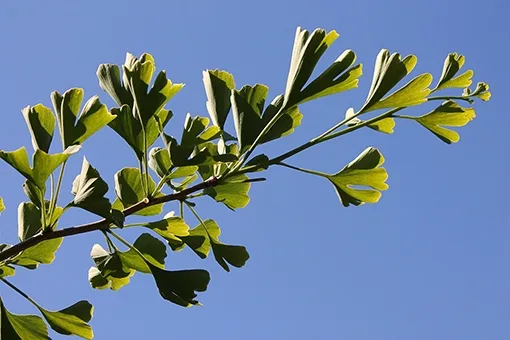 Ginkgo, or maidenhair tree
Photo by Natalya Antonova
One specimen of this dioecious deciduous tree, listed in the international Red List, was preserved when the Central Market was laid out in the very heart of Kaliningrad; it fruits regularly and delights passers-by in autumn with its golden fan-shaped leaves. Ginkgos of various ages can be seen in the Kant Baltic Federal University Botanical Garden, in Kaliningrad Zoo, around Prospekt Mira, and in the arboretum of the Kaliningrad Regional Children's Centre for Ecological Education and Tourism.
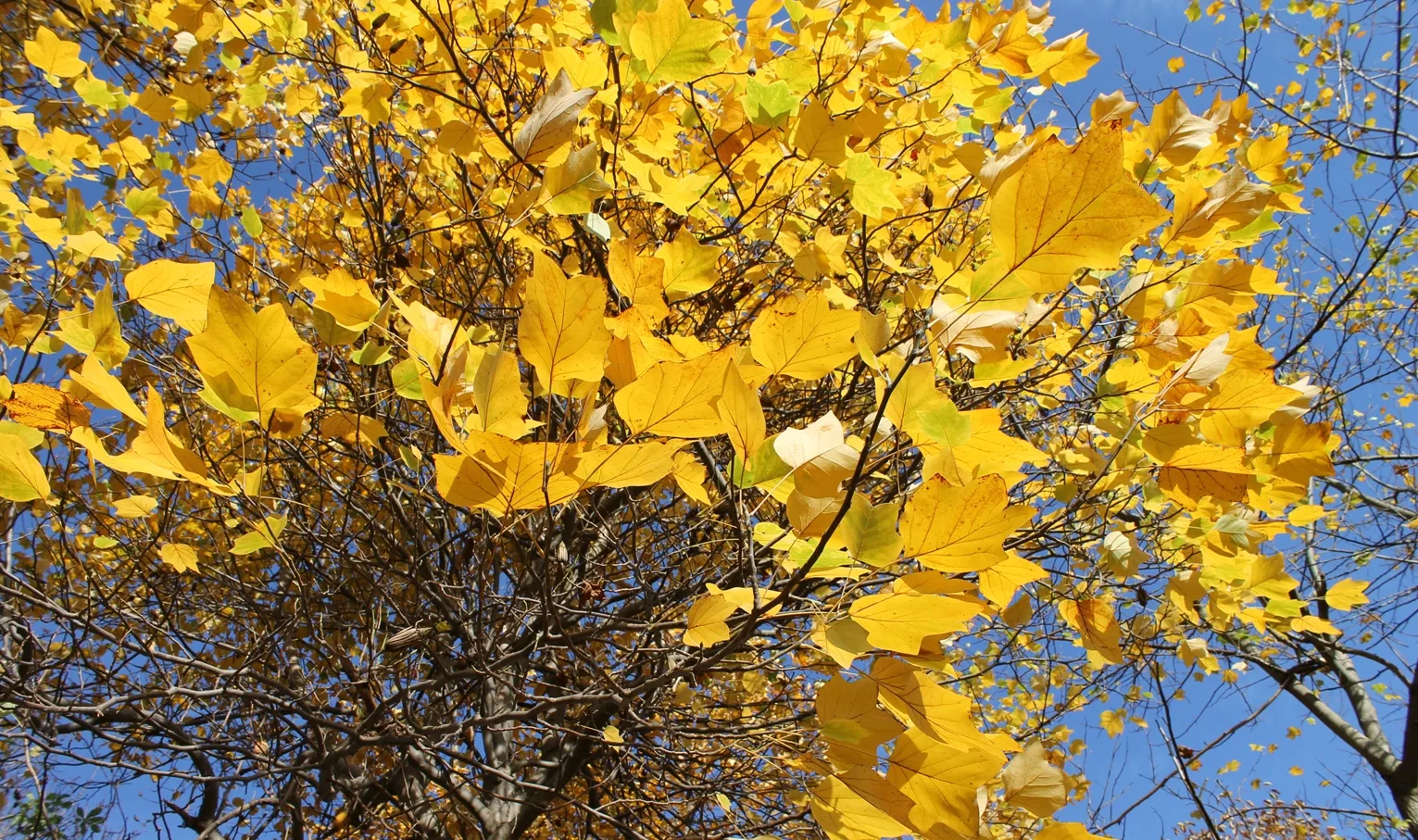
A two-hundred-year-old tulip tree, or liriodendron, another introduced species, grows in Moritz Becker Park in Yantarny, Kaliningrad Region.
This towering liriodendron has a distinctive forked trunk, large lyre-shaped leaves and yellow-orange flowers that appear at the end of June. Other specimens of this attractive giant, which lives on average 500–600 years in the wild, can be found in the Kant Baltic Federal University Botanical Garden, in Kaliningrad's Central Park, among the plants of the Museum of the World Ocean, and as single trees in Svetlogorsk, Yantarny and Nekrasovo. One can only wonder why neither Kaliningrad itself nor the region's towns have avenues planted in our own time with ginkgo and liriodendron, katsura trees and the various catalpas, whose large white candle-like flower clusters are strikingly beautiful enough to rival the familiar horse chestnut.
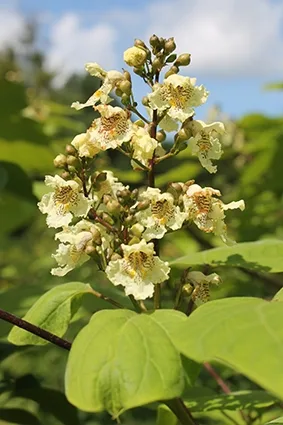
Chinese catalpa
Photo by Natalya Antonova
Why are the walls and arches of Kaliningrad's houses not adorned with Aristolochia, five-leaf akebia, the hard birthwort, or wisteria, with its sky-blue clusters in bloom? The lavish flowering of the wisterias, which begins at the end of May in the IKBFU Botanical Garden and in Kaliningrad Zoo, enchants anyone capable of seeing the beauty of the world around them.
According to statistics from the early 2000s, more than 400 species of introduced trees and shrubs grew in the Kaliningrad Region. Some of these plants are represented by single plantings in the region's towns, but there are also large stands growing in the region's forests, attractive from a decorative point of view or solely for their economic value.
Centuries of human activity to increase arable land on the territory of today's Kaliningrad Region have reduced the forests by almost half.
The pulp and paper industry of East Prussia developed rapidly from the end of the nineteenth century; timber suitable for paper-making was needed, and so the question arose of regenerating the forests artificially. Spruce plantations had previously been preferred, but artificial spruce plantings did not live up to expectations, as they often suffered windthrow and infestations of a dangerous pest of spruce — the nun moth. German foresters became interested in North American tree species, and soon experimental plantings of Douglas fir, red oak, red and yellow spruce, Sitka spruce, white fir, eastern white pine, western red cedar, eastern red cedar, mockernut hickory, Lawson cypress and white ash were established on the territory of the future Kaliningrad Region. The experimental plantings of these trees that survive today are of great scientific interest; they can also be used to obtain seeds of the introduced plants.
Unique artificial stands of white fir and western red cedar, reaching 30 metres in height, with trees more than 130 years old, can be found in the Matrosovo forest district of the Guryevsk district.
The eastern white pine turned out to be better adapted to wet, boggy soils and less demanding of light than the local pines.
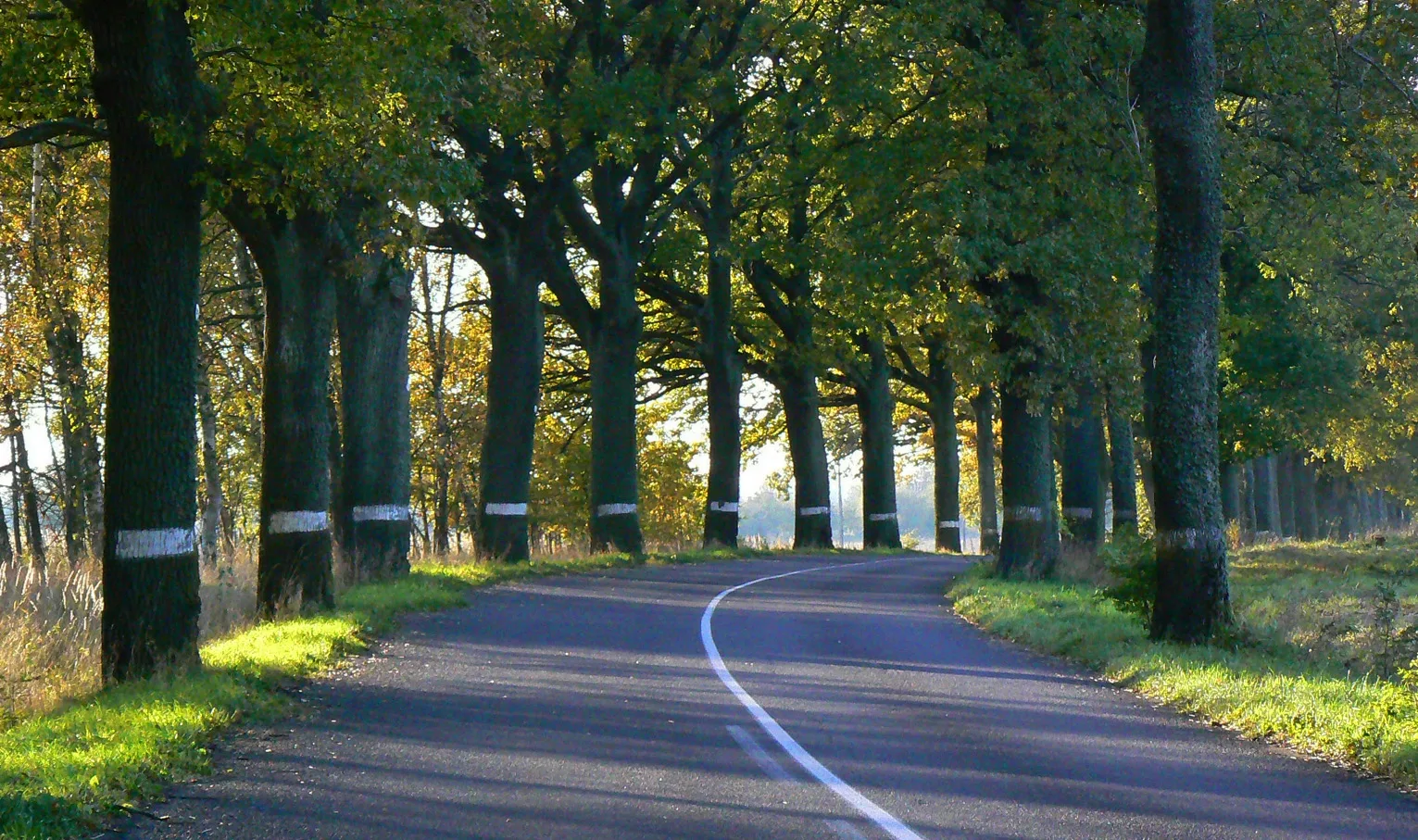
The red oak, native to the eastern United States and part of south-eastern Canada, can be found in century-old plantings in the Zheleznodorozhny forest district of the Pravdinsk district. This tree puts on timber several times faster than the local species — the pedunculate oak. The red oak is highly resistant to insect pests and fungal diseases, from which mainly the young seedlings suffer. Despite its foreign origin, in 2014 the red oak was declared the plant symbol of the Kaliningrad Region.
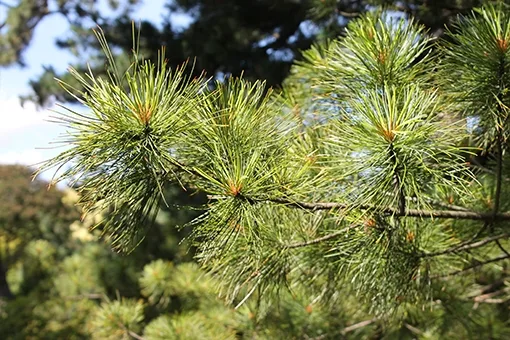
Macedonian pine
Photo by Natalya Antonova
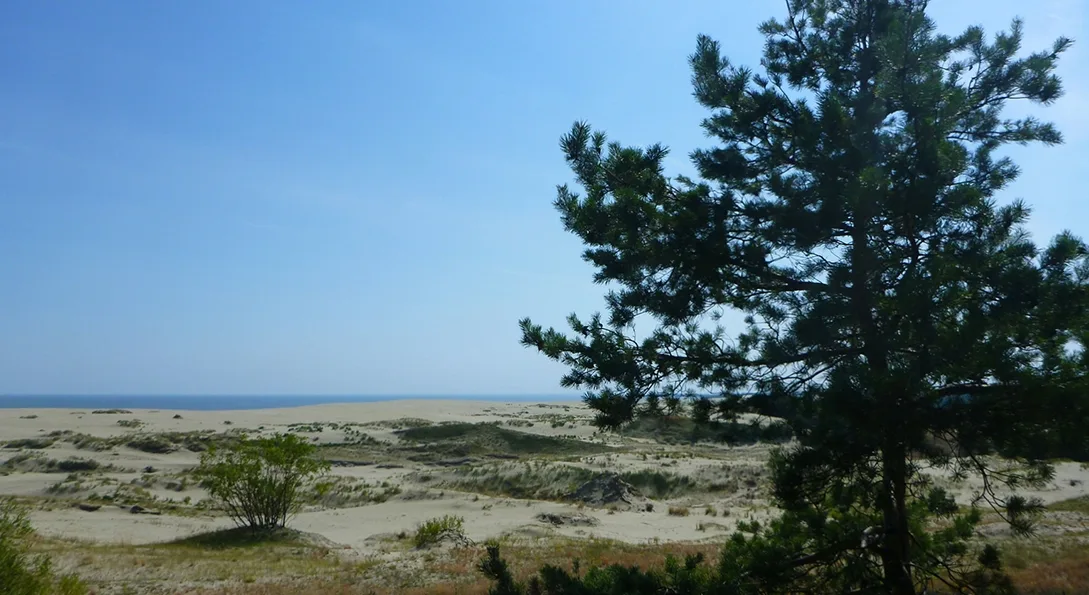
An example of viability in our climate is one of the most beautiful ornamental park pines – the Macedonian pine, native to the mountainous regions of southern and south-eastern Europe. While it freezes to death in the Moscow region, this pine thrives on our soil.
Another remarkable plant from North America has become familiar to the residents of Kaliningrad and the region — the black locust, or false acacia. This tree with a spreading crown and dark bark bears fragrant flowers gathered in racemes, and a little later brown seeds ripen in tough pods. In the speed with which it conquers new living space and in its hardiness, this tree has no equal: its deep-penetrating root allows the robinia to draw life-giving moisture in the harshest conditions, while enriching the soil with nitrogen compounds formed in special nodules on its roots.
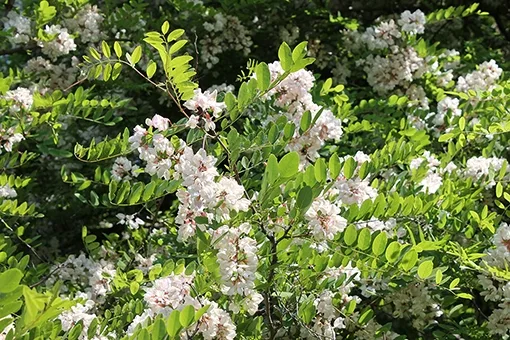 Black locust in bloom
Photo by Natalya Antonova
In our region this tree is found in town gardens and parks, and it has spread along the seaside beaches (Baltiysk, Donskoye, Yantarny). The Germans planted robinia around the edges of fields and along railways – in the first case to hold snow on the fields, in the second to keep it off the tracks. For these purposes robinia is far better suited than conifers, as it grows very fast. Besides, it is an excellent honey plant (bees can collect up to 8 kilograms of honey from one flowering robinia), its flowers contain an essential oil that can be used in perfumery, and its wood is valued even more highly than oak. But the decorative value of this introduced species alone is quite enough to count it among the most interesting plants of our region.
Of special interest to anyone studying the flora of the Kaliningrad Region are the local plant species, especially those that are rare or on the verge of extinction.
It should be said that in 2010 the Red Book of the Kaliningrad Region was created – a very timely step – listing 83 species of vascular plants recommended for protection.
This publication — is the result of long work by researchers at the local university; no such list existed either in East Prussia or in the Kaliningrad Region formed after the end of the Second World War. It includes, for example, common ivy, which can be found in the forests of our region (in the beech grove of the Matrosovo forest district, in Becker Park in Yantarny, around Svetlogorsk, Otradnoye, Zelenogradsk). In Kaliningrad itself, two abandoned German cemeteries have extensive areas overgrown with this ivy, one of them behind the Central Park, the other — near Nevsky Street.
Another plant listed in the local Red Book is sold every year in late April — early May at the city's markets. The tender leaves of ramsons (wild garlic), with their strong garlicky smell, really do contain vitamins and trace elements the human body needs and are extremely healthy. But if one takes the conservation recommendations into account, it is probably best not to pick a rare plant listed in the Red Book – especially as ramsons seeds can be sown in your own garden plot, and fresh salads made from the plant without harming nature.
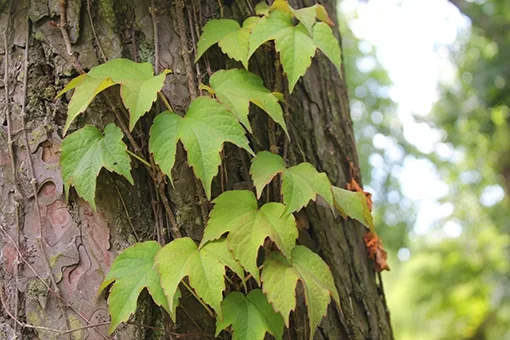
Boston ivy.
Photo by Natalya Antonova
Boston ivy, or three-pointed Virginia creeper, native to the Far East, Japan and the Korean Peninsula, is found in the Kaliningrad Region less often than the familiar Virginia creeper introduced from North America. Boston ivy grows more slowly, though it is no less decorative than its North American relative and differs only in the shape of its leaf and lower winter hardiness. It can be recognised by the three leaflets branching off the main leaf stalk, which turn a rich scarlet in autumn. This plant is listed in the Red Book of the Russian Federation. Try to find this rare species on the streets of Kaliningrad or Svetlogorsk; it may turn out a little easier to find it in the Botanical Garden, but even there, unfortunately, the plant does not yet have an information label.
To be continued.
Translated from Russian with the help of AI (Claude, Anthropic), October 2026.