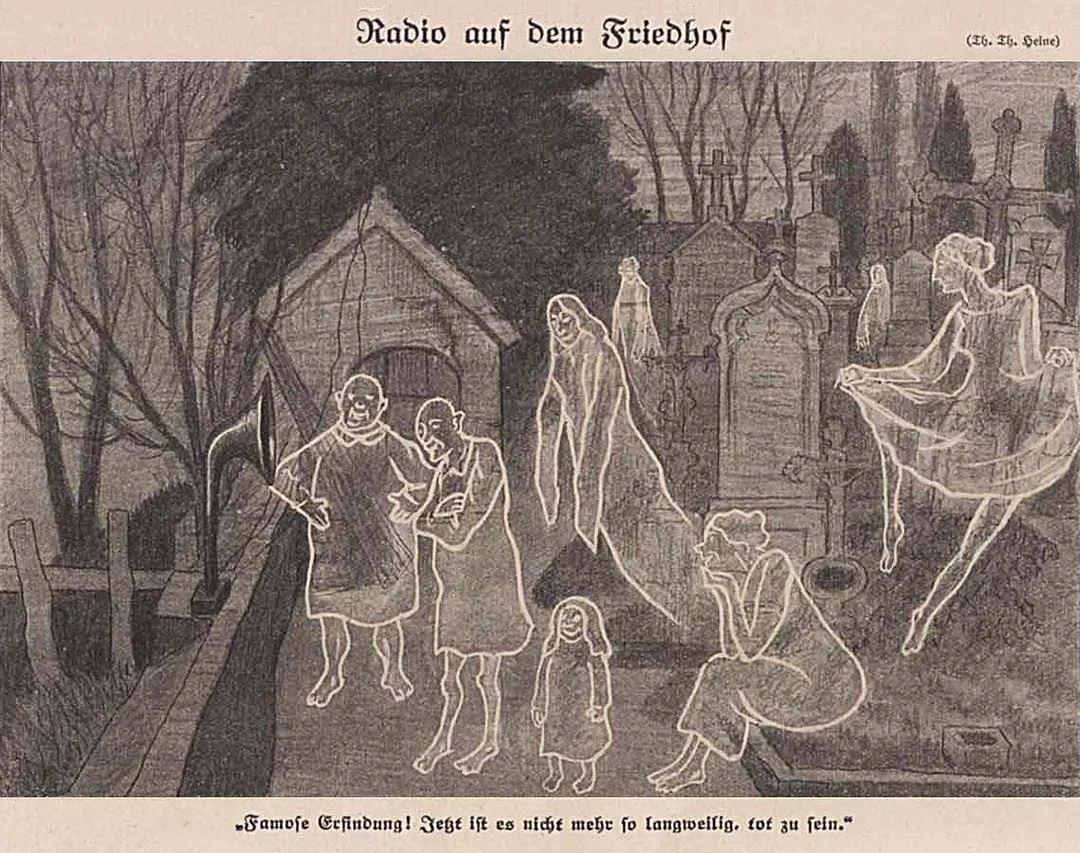
And it happens, especially on stormy nights, that the dead of both parishes who were friends in life visit one another, flying from one churchyard to the other in their hundreds, even thousands. They fly low, just above the ground, and in a straight line, never turning aside.
Not everyone is given to see them — only those born at midnight on a Sunday. They are the ones who see a grey, flowing band above the ground. And nothing can stop the flight of the dead.
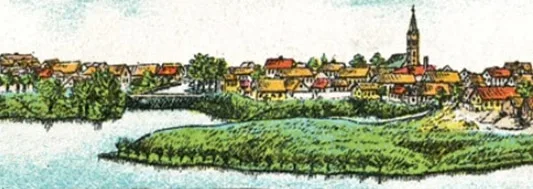
It so happened that a stranger from distant parts came to Ragnit and decided to stay there for good.
He built a fine, handsome house at the southern end of the town, but on the very first stormy night the house collapsed, while several old, already dilapidated houses standing to one side remained undamaged.
The owner decided to build again, but all in vain — soon nothing was left of the house but a heap of stones once more.
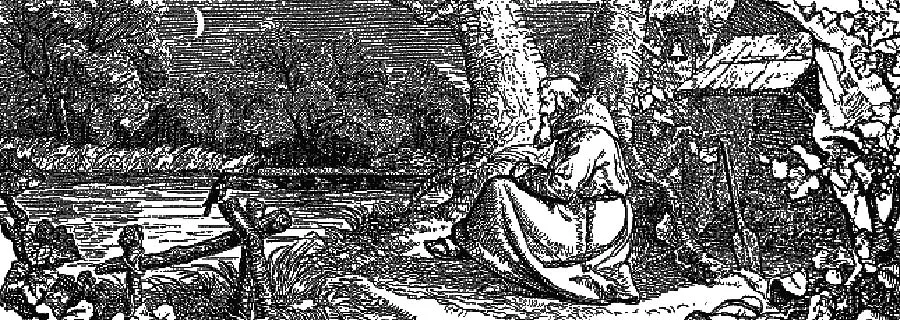
And then an old man who had been born in the night between Saturday and Sunday told him that his house stood right in the path of the dead flying from one churchyard to the other. And he showed him a shed standing nearby, the ridge of its roof sagging to one side. The thing was, the top of the ridge lay in the path of the flying dead, and every time the ridge of the roof broke and had to be repaired again and again. Then the hapless builder, now wiser, moved his house aside, out of harm's way, off the path of the flying dead, where it surely still stands today, unless it has crumbled with time.
SOURCE
Johann Grässe, "The Book of Legends of the Prussian State" (Ger. Johann Georg Theodor Grässe, «Sagenbuch des Preussischen Staats»), Glogau, 1868.
● Editor's note: Read on VisitPrussia.com an interview with the translator of German and, in particular, Prussian fairy tales, our regular contributor Tatyana Kolivay, who runs her own blog, where countless other parables, legends and fairy tales in her translations have been published.
Translated from Russian with the help of AI (Claude, Anthropic), October 2026.