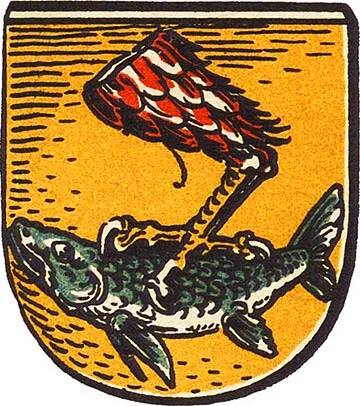
 Coat of arms
of Friedland
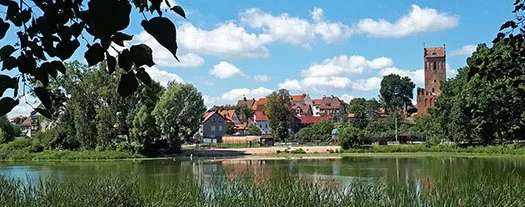
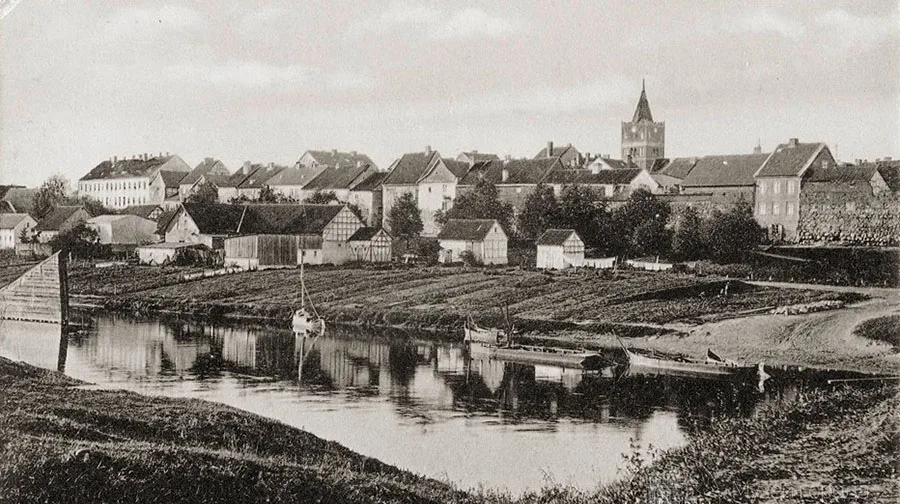
Friedland ("Land of Peace") was founded by the Grand Master of the Teutonic Order, Karl Beffart von Trier. The settlement belonged to the Komturei of Brandenburg (Ushakovo). In 1313, a wooden church was built here. In the first years after the settlement was founded, a monastery was built on its outskirts. In 1335, the settlement of Friedland received Kulm town rights; the charter was handed to the townspeople by the Komtur of Brandenburg and future Grand Master of the Order, Heinrich Dusemer von Arfberg. On one side the town was protected by the Alle (Lava) River, on another by marshes, and on a third by a ravine with a stream. A dam was built on the stream, creating a pond that shielded the town even better. A mill was set up on the dam, after which the stream and the pond received the names Mühlenfließ and Mühlenteich ("Mill Brook" and "Mill Pond") respectively. The town was unique in that it did not grow up around a castle of the Order or of a bishop. For this reason, an additional moat and rampart were built on the west side. However, these fortifications proved insufficient for a reliable defence: in 1347, Friedland was taken by Lithuanian forces and burned down.
Rebuilding of the town began immediately afterwards. This time more attention was paid to the fortifications, and the town was additionally surrounded by a defensive wall. Gates were built in the wall on the east and west: the Alle Gate (Alle-Tor) and the Domnau Gate (Domnauertor). On the south, the wall was protected by two small towers. The south-western tower, by contrast, was large and received its own name, the "Powder Tower" (Pulverturm). Another tower was built in the north-western part of the town wall. The gates were protected by iron-clad leaves and a portcullis. The moats were deepened and filled with water.
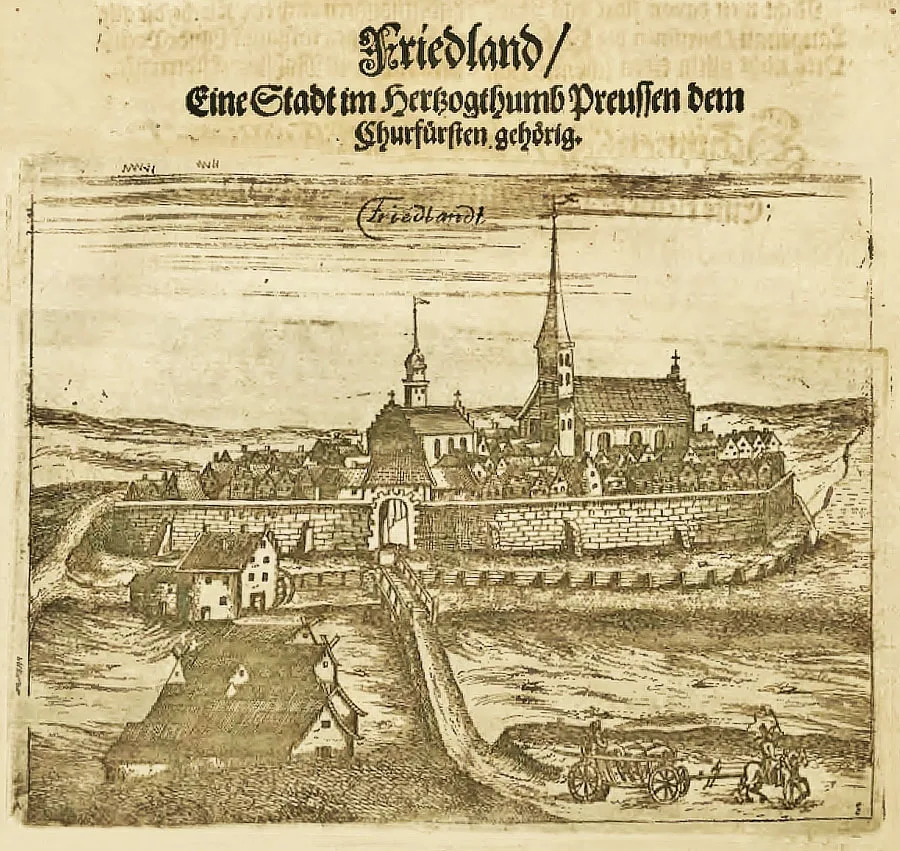 Friedland in an engraving by Christoph Hartknoch, 17th century.
Since the wooden church had burned down in 1347, a new brick church was built between 1360 and 1380. In 1400, a market was opened in Friedland and a three-storey town hall was built.
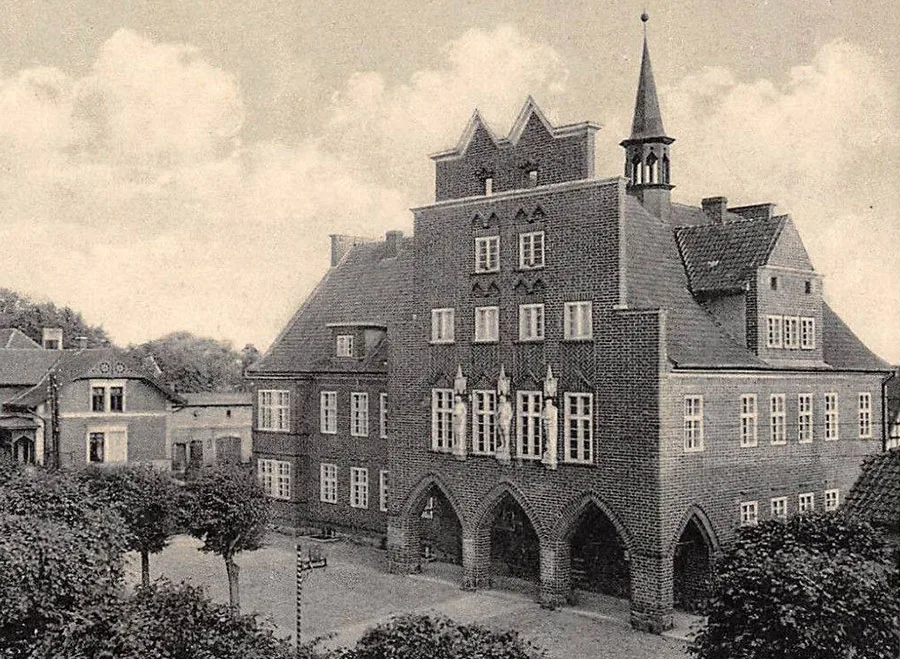 Friedland Town Hall (not preserved).
A town almshouse is mentioned in 1406. In 1425, Friedland had 55 households. In the 15th century, Friedland's streets were paved with cobblestones and a water supply system was built. Water was lifted from the mill pond by a wheel and flowed by gravity through wooden pipes into the houses.
During the Thirteen Years' War (1454–66), Friedland was an active member of the Prussian Confederation. The Order's troops besieged the town without success in 1455 and 1458. In 1461, however, with the help of supporters of the Order inside the town, the Teutonic army managed to take it.
In the early 16th century, the Mill Gate (Mühlen-Tor), reinforced by two towers of different heights, was built in the northern part of the town. In 1522, the German theologian and philosopher Moritz Heling (d. 1595) was born in Friedland. In 1539, Friedland had 112 residential houses. Some houses had literally grown into the town wall, and in 1543 Duke Albrecht instructed the magistrate to clear access to the wall so that it could be used for military purposes and as a fire-prevention measure. But it seems this was not done in time. In 1553, a fire broke out in a suburb of Friedland. The flames leapt over the town gate and engulfed the buildings inside the town. As a result, it burned almost to the ground; chroniclers note that only the church and the mill survived intact. Rebuilding after the fire was slow. By 1634, Friedland had only 76 residential houses. There were also about 100 other buildings and 38 suburban farmsteads.
The Polish–Swedish (Northern) War of 1655–60 also did damage to Friedland. In 1656, the town was occupied by the Swedish army, which plundered it.
It is noted that by this period the townspeople had refused to finance and maintain the town fortifications, evidently as a consequence of poverty. At the end of the 17th century, fairs began to be held in Friedland, which was meant to improve the town's finances somewhat. Nevertheless, the number of residential houses continued to fall, now totalling only 60. There were also 150 farm buildings. Then came the plague epidemic of 1709–10, which greatly reduced the population of Friedland (as of other towns in Prussia). As a result, the townspeople lost all interest in maintaining the defences: in 1729 their general dilapidation and the partial filling-in of the moats are recorded. Part of the defensive wall continued to be used for building houses against it. In 1793, the Alle Gate was demolished. In 1795, another great fire broke out in Friedland.
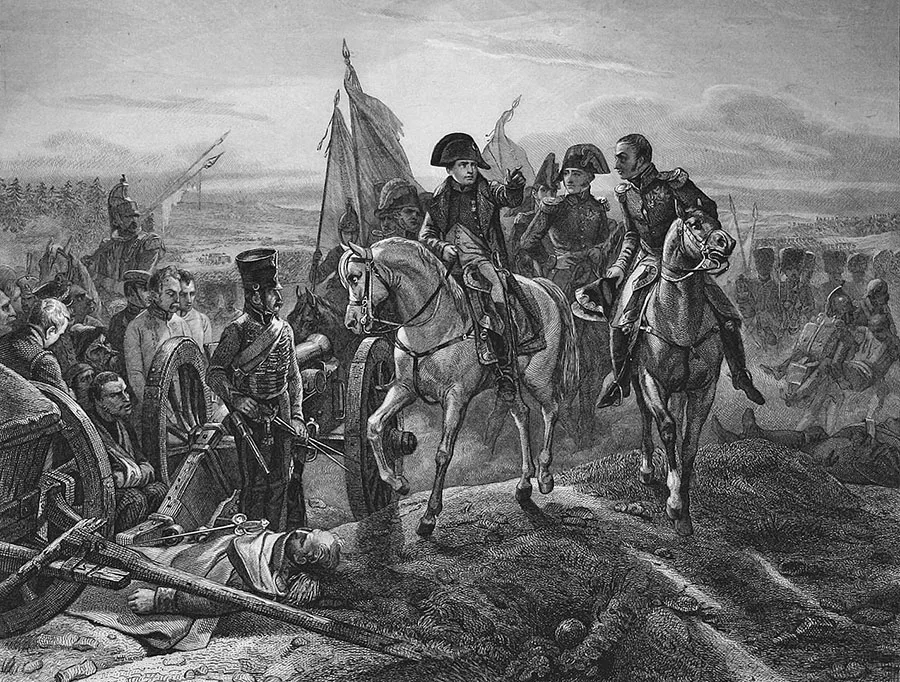
The small Prussian town of Friedland became known throughout Europe on 14 June 1807, when, during the War of the Fourth Coalition, the Battle of Friedland was fought near it and within the town itself – the battle that in fact ended that war. In it, Napoleon's army inflicted a decisive defeat on the Russian army.
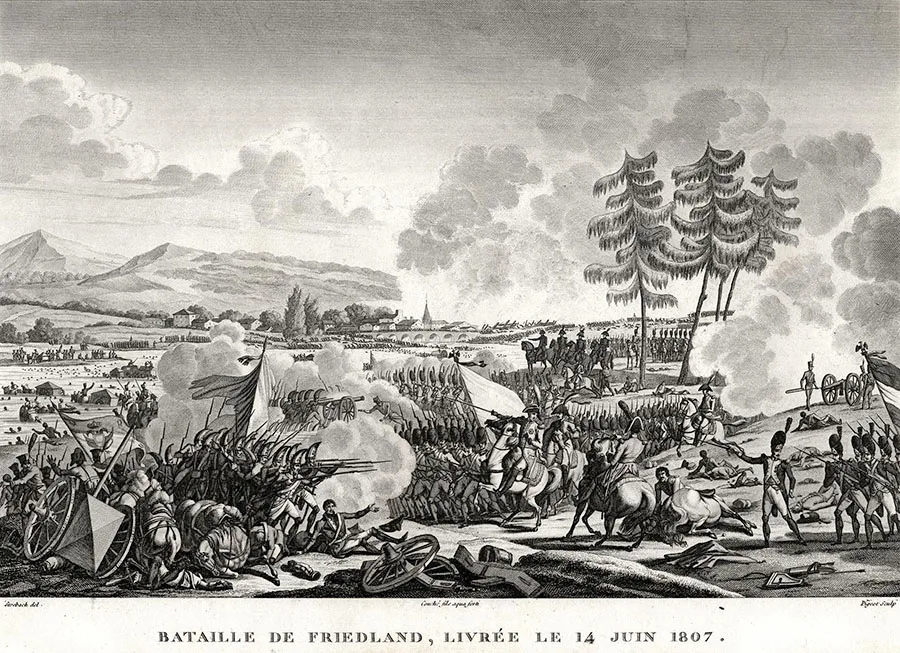
The defeated Russians withdrew eastwards beyond the borders of Prussia, after which everything ended with the Peace of Tilsit (07.07.1807). After the battle, the town was left with a mass grave of Russian soldiers and the grave of Major General N. N. Mazovsky (1756–1807), commander of the Pavlovsky Grenadier Regiment.
On 01.02.1818, in accordance with the administrative reform, a new Kreis (district) of Friedland was formed, comprising 18 church parishes with a total of 22,574 inhabitants. However, as early as 01.04.1845 the district seat was moved to Domnau (Domnovo), and on 01.10.1902 to Bartenstein (Bartoszyce, Poland). On 21.09.1927, the Kreis itself was renamed Bartenstein.
In 1862, the Mill Gate was demolished. In 1871, Friedland had 267 residential houses. In 1877, the town hall burned down. The town had no funds to rebuild it, and for half a century the magistrate made do with temporary premises. In 1895, the last town gate, the "Domnau" Gate, was dismantled.
In 1898, the town got a railway connection: the branch line from Königsberg to Gerdauen (Zheleznodorozhny) ran through it, and a station was built on it in the western part of the town.
In 1908, a gasworks was put into operation in Friedland. In 1911, a railway line was built to the town from Wehlau (Znamensk). Also in 1911, a narrow-gauge line (750 mm) from Friedland to Tapiau (Gvardeysk) was put into service. A separate station was opened on the narrow-gauge line.
During the Russian army's East Prussian Operation (1914), the 1st Guards Cavalry Division (Gen. N. N. Kaznakov) approached Friedland on 26 Aug. On the outskirts of the town, its Life Guards Horse Regiment engaged the German 1st Grenadier Regiment. After an artillery bombardment, the German units retreated, but residents trying to leave the town blocked the roads and hampered the pursuit of the enemy. The cuirassier brigade of the 1st Guards Infantry Division remained in the town until it was driven out by advancing German troops on 07.09.1914. Friedland suffered only minor damage as a result of the fighting.
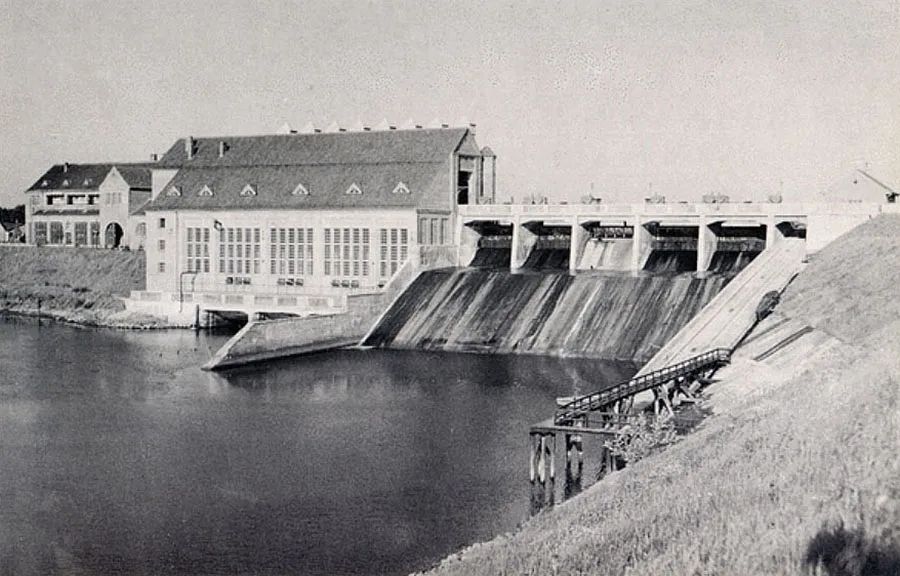
After the war, in 1924, a power station was put into operation whose capacity (10.99 MW) was enough not only for Friedland and its surroundings but also to supply other parts of East Prussia. The well-known architect Friedrich Lahrs (1880–1964) took part in building the power station.
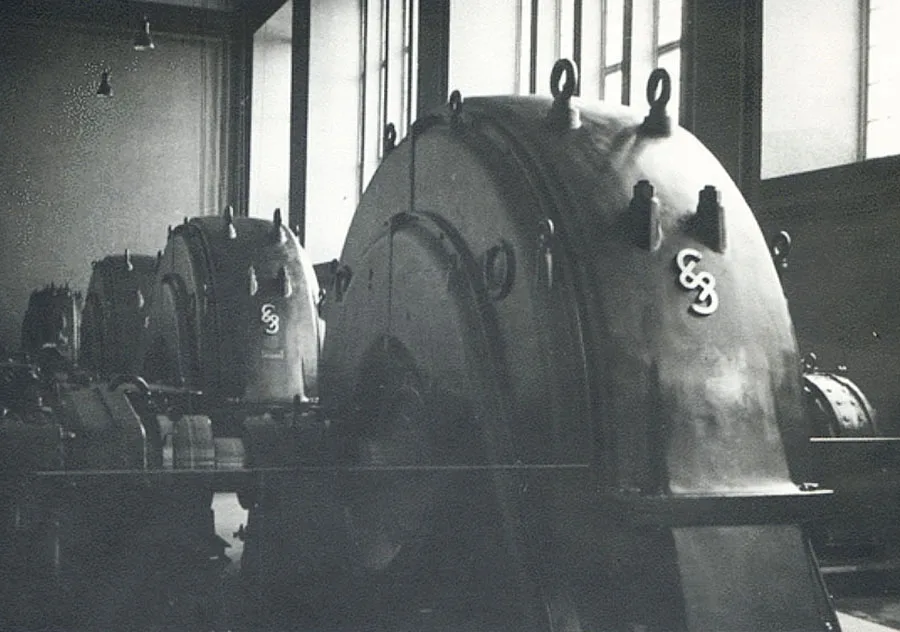 The machine hall of the Friedland power station.
On 01.11.1928, two abolished Gutsbezirke were incorporated into the municipality of Friedland: Postehnen (Peredovoye) and Kloschenen (Lukino).
By 1931, the municipality of Friedland comprised, in addition to the town itself, eight suburbs and settlements: Eichenwaldchen (54°27'53'' N 21°01'04'' E), Forsthaus Frisching forestry (54°32'41'' N 20°57'58'' E), Forsthaus Heegewald forestry (54°25'35'' N 21°02'11'' E), Friedlandshof (Yeryomino), Kloschenen (Lukino), the Ziegelei Kloschenen brickworks (Pravdinsk, 54°26'49'' N 21°01'51'' E), Postehnen (Peredovoye) and the Gut Postehnen estate (Peredovoye). The municipality had 345 residential houses and 910 farm buildings. The town and its settlements had a gasworks and a brickworks, a sawmill, a steam mill, a cheese factory, a brewery and a meat-processing plant. There were two railway stations. Children were taught at a secondary school and a vocational school for girls.
There were a stadium, gyms, a tennis court, a cinema and a museum. For worshippers there were a Lutheran church, a Protestant parish house and a Catholic chapel.
During the Red Army's East Prussian Operation, on 27.01.1945 the 852nd Rifle Regiment (Col. F. I. Kim, killed on 01.03.1945 near Kreuzburg, Slavskoye) of the 277th Rifle Division of the 5th Army reached the approaches to Friedland. Units of the 97th Rifle Division were approaching the town from the north. However, the offensive on Friedland was handed over to the 28th Army. Threatened with encirclement, the German troops abandoned Friedland, and on 31.01.1945 soldiers of the 20th Rifle Division (Maj. Gen. A. A. Myshkin) of the 20th Rifle Corps of the 28th Army entered it. On 25.02.1945, the Normandie-Niemen air regiment was redeployed to Friedland.
Stadinberg was an estate within the municipality of Friedland. The estate belonged to the parish of Friedland. Until the early 1870s, Stadinberg housed the headquarters and stables of the Insterburg Lithuanian Uhlan Regiment. In the 1920s, construction of detached houses began next to the estate, and the area was named Garten-Forstadt. In the late 1930s, a Thingplatz – an open-air amphitheatre for mass events – was built in Stadinberg.
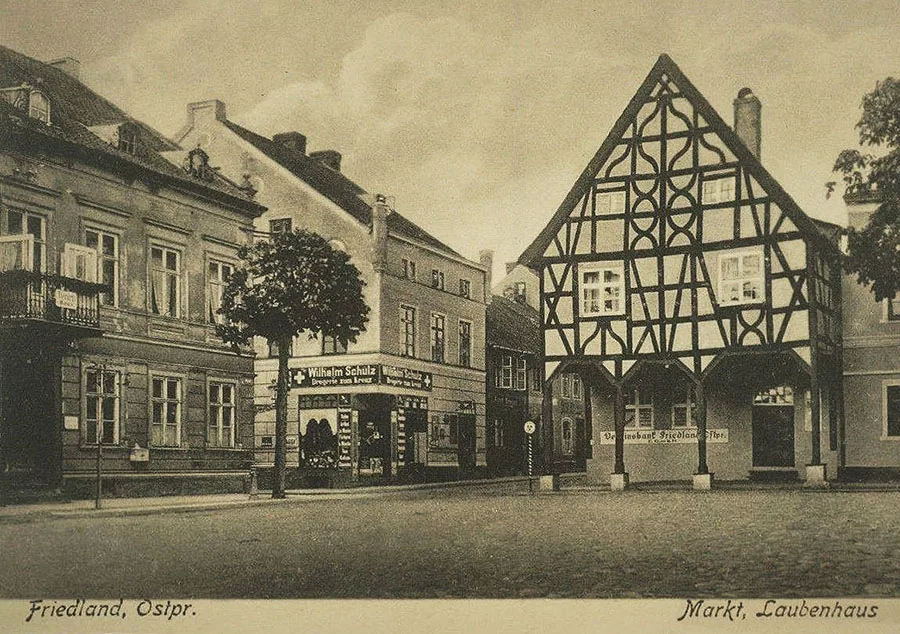
On 7 September 1946, Friedland was renamed the town of Pravdinsk, and the Pravdinsk District was created at the same time. Stadinberg was not renamed by the decree and became part of Pravdinsk de facto.
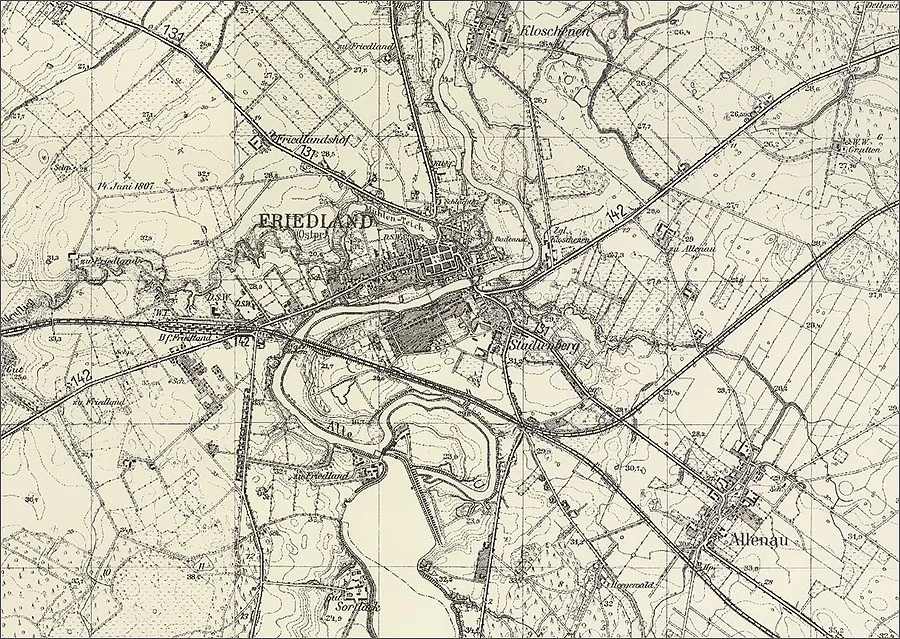
By the end of 1946, Pravdinsk had 254 residential buildings. By then, the hydroelectric power station, the flour mill, the sawmill, the workshops of the "Smychka" industrial cooperative (sewing, shoemaking, metalwork, joinery), the MTS, a collection point of the "Zagotzerno" office and a bakery had been put into operation. For residents, there were a collective farm market, two grocery stores, one manufactured goods store and three general stores, a tea room and a buffet. A hairdresser's and a savings bank were open. Children were taught at a secondary school for 140 pupils. Patients were treated at three medical institutions: a polyclinic, a maternity home and an infectious diseases hospital. For leisure, residents had a cinema and a summer town club. In 1947, the district newspaper "Kolkhoznaya Pravda" (an organ of the CPSU) began publication. From October 1947 to October 1948, the Germans were deported en masse from Pravdinsk and the Pravdinsk District, while the area was simultaneously settled by migrants, mainly from Belarus and the Kostroma Region.
By mid-1948, fallen Soviet soldiers had been reburied from their original graves in a mass grave in the town, with a monument placed on it. A bathhouse, a hotel and a boating station on the Lava began operating. In the town, 212 radio outlets were installed, a telephone exchange was put into service, and roadways and pavements were repaired. 2,400 m² of housing was commissioned, increasing the housing stock by 20%. By 1949, a cheese-making shop had been opened at the restored dairy. A pharmacy and a bookshop opened in the town.
The Pravdinsk District developed as a producer of meat and milk (by 1948, 38 collective farms had been set up here), while its district centre specialised in processing these products and served as a logistics base.
The 1950s were marked by the creation of municipal services in the town: a state communal services office, two housing management offices, and a consumer services centre (1956). The retail and catering network expanded to four grocery stores, a manufactured goods store, a general store, a bookshop and a second-hand store, two tea rooms and a snack bar. A cooperative trade administration began operating. Residents had a school, a nursery and a kindergarten. Healthcare was provided by a district hospital, an outpatient clinic, a maternity home and a sanitary and epidemiological station. Leisure was provided by a house of culture, a library and the Udarnik cinema. A fire brigade was set up. In 1954, the monument to General Mazovsky was repaired. For the 150th anniversary of the Battle of Friedland, a memorial plaque was unveiled at the mass grave of Russian soldiers.
By 1975, the Pravdinsk hydroelectric power station had been closed because its equipment was completely worn out. That same year, a bus station opened in the town. By the end of the 1970s, in addition to the existing enterprises, the town had a forestry enterprise, a branch of "Selkhoztekhnika", an oil depot, a printing house, a branch of a shoe factory and an inter-collective-farm construction office. A children's music school, a children's library, a children's sports school, a House of Pioneers, a boarding school and a DOSAAF motoring club were also opened. The "Urozhay" voluntary sports society was set up in the district. For consumers, a clothing atelier, a photo studio, a rental shop and the Niva department store were also opened. In the 1980s, an asphalt plant and the "Baltik Mebel" furniture factory began operating in the town.
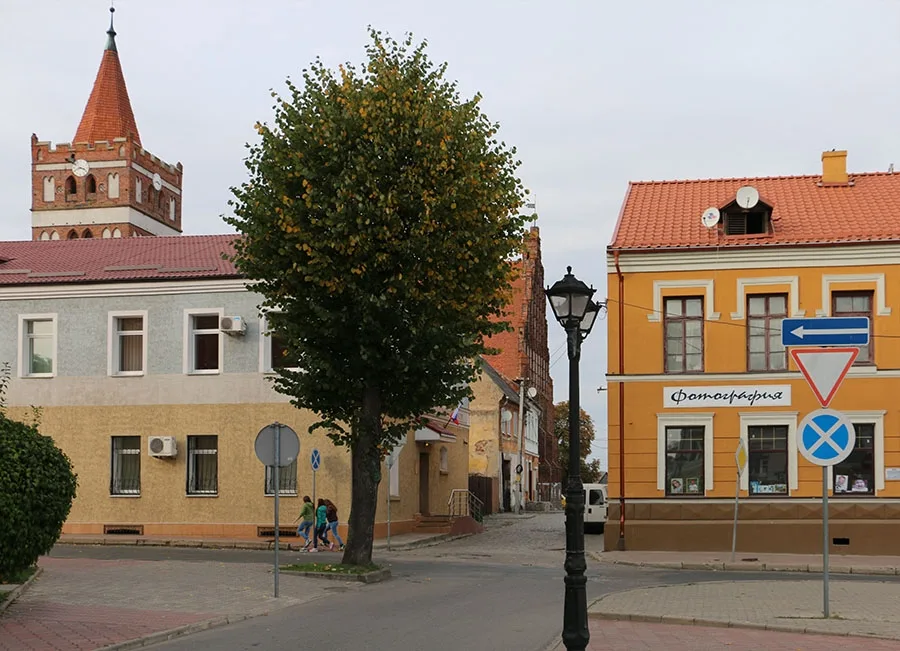
In 1985, the region's first district museum opened in Pravdinsk. In 1990, the building of the abandoned church was handed over to a newly founded Russian Orthodox congregation.
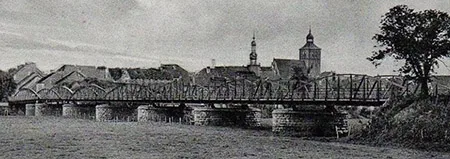
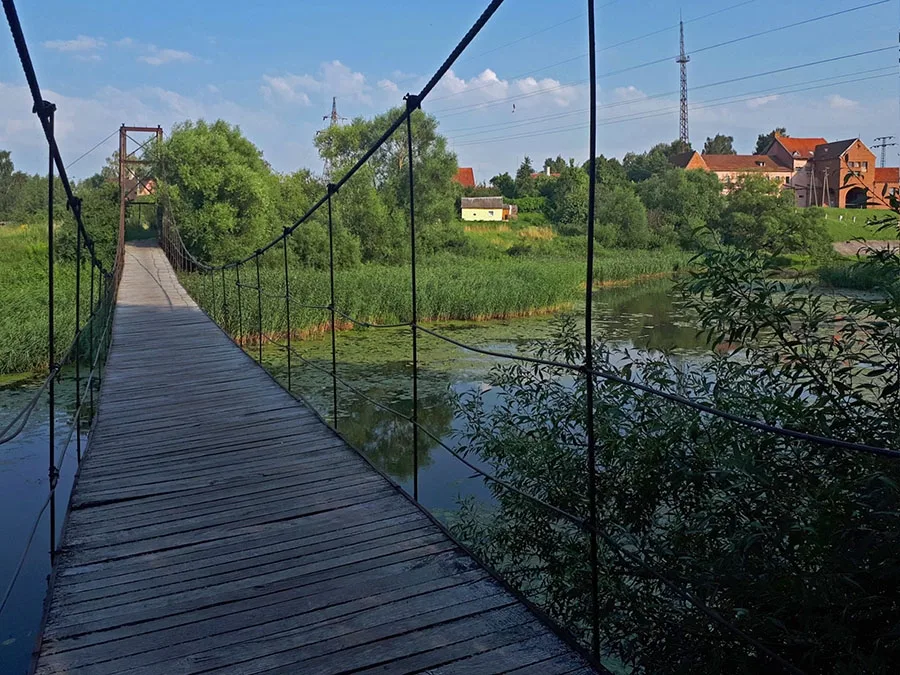 The suspension bridge over the Lava River near the power station.
In the 1990s, the asphalt plant and the consumer services centre ceased operating, while the other enterprises were turned into joint-stock companies and passed into private ownership. In 1999, the Pravdinsk hydroelectric power station was restarted. In 1999 and 2007, Pravdinsk hosted congresses of the "Friedland Brotherhood", an organisation uniting the many towns named Friedland. In 2007, for the 200th anniversary of the Battle of Friedland, a large-scale historical re-enactment of the fighting was staged with the participation of clubs from abroad.
At present (2022), the town's main enterprise is a butter and cheese plant; there are also the "Lava-Mebel" furniture works, a branch of a shoe factory and a meat products plant. The town has a school with its own gym and stadium, as well as school workshops. For children there are also a kindergarten, a nursery, a children's creativity centre and a children's sports school.
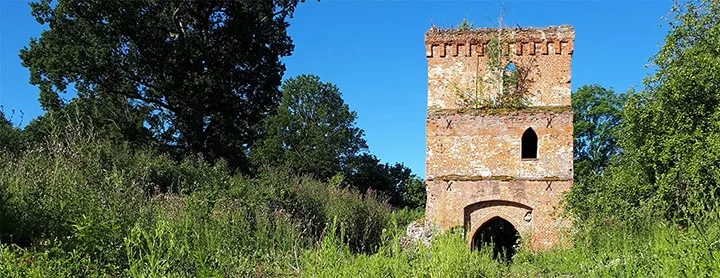
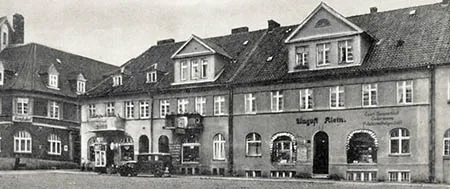
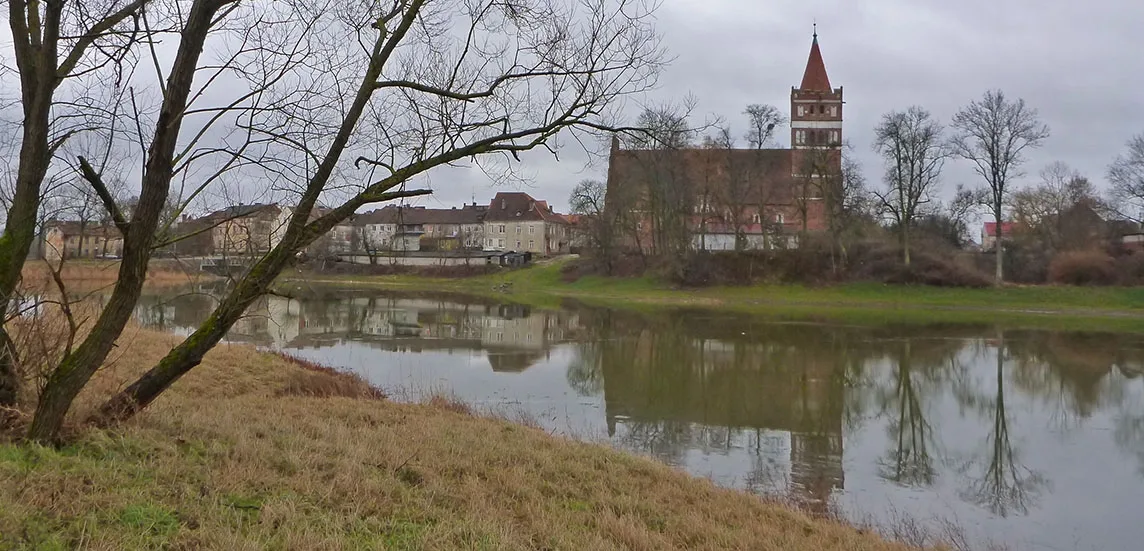
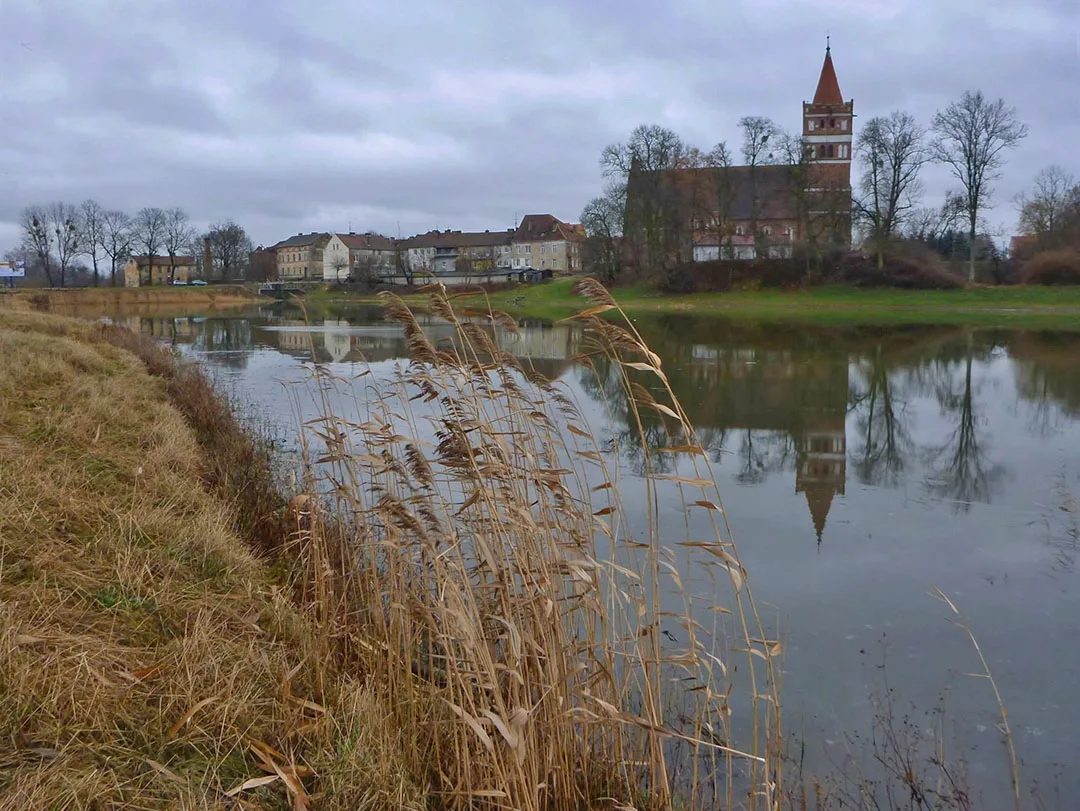
Sights: St George's Church (c. 1360), a fragment of Friedland's defensive wall and moat, the mass grave of Russian soldiers killed in the Battle of Friedland (1807), the grave of General Mazovsky (1807), the "Napoleon House", the hydroelectric power station, the locks, the post office building (1885), the prison building (late 19th century), the Catholic chapel (1900), the ruins of the railway water tower (1902), the water tower (1924), the folk school building (early 20th century), a school building (early 20th century), the gasworks office building (early 20th century), the mill warehouse, numerous residential houses and villas (late 19th – early 20th century), the station hotel building (early 20th century), the town hall building (early 20th century), the district hospital building (early 20th century), the former railway station building, the dairy building (1925–26), a pre-war transformer kiosk, the ruins of the railway bridge over the Lava, the mass grave of Soviet soldiers (211 people, monument 1949), the mass grave on the grounds of the hydroelectric power station (297 people, monument 1952), the bust of M. I. Kutuzov (1953).
For reference
Population of Pravdinsk–Friedland over time: 1736 – 1,6801, 1782 – 2,000, 1867 – 3,412, 1871 – 3,486, 1875 – 3,296, 1890 – 2,609, 1910 – 3,027, 1925 – 3,709, 1933 – 4,410, 1939 – 4,417, 1946 (Nov.) – 8022, 1947 – 2,3703, 1959 – 2,718, 1970 – 3,335, 1989 – 4,143, 2002 – 4,480, 2009 – 4,443, 2010 – 4,323, 2012 – 4,314, 2013 – 4,318, 2014 – 4,288, 2015 – 4,241, 2016 – 4,212, 2017 – 4,171, 2018 – 4,144, 2019 – 4,099, 2020 – 4,025 inhabitants.
Number of residential houses: 1539 – 112, 1634 – 76, 1871 – 267, 1931 – 345, 1946 – 254.
Composition of the population of Friedland in 1871: Protestant Christians – 3,404, Catholics – 45, other Christians – 8, Jews – 29, children under 10 – 752, literate – 2,171 (83%), blind – 5, insane – 1.
1 — including the garrison.
2 — excluding military personnel, including 363 Germans.
3 — including 570 Germans.
Population of Stadinberg: 1905 – 102 inhabitants.
Population of Eichenwäldchen: 1905 – 5 inhabitants.
Population of the Frisching forestry: 1905 – 6 inhabitants.
Population of the Heegewald forestry: 1905 – 5 inhabitants.
Population of the Kloschenen brickworks: 1905 – 14 inhabitants.
Composition of the parish of Friedland: Battkeim (54°24'02'' N 21°01'32'' E), Bothkeim (Chistopolye), Eichenwäldchen (54°27'52'' N 21°01'01'' E), Friedland (Pravdinsk), Götzlack (Krutoy Yar), Grünwalde (Antonovo), Försterei Hegewald forestry (54°25'35'' N 21°02'10'' E), Heinrichsdorf (Rovnoye), Heide (Kostyukovka), Kloschenen (Lukino), Lawdt (54°23'16'' N 21°01'09'' E), Mertensdorf (Tyomkino), Postehnen (Peredovoye).
Modern photos by Mikhail Ogorodnikov.
Translated from Russian with the help of AI (Claude, Anthropic), October 2026.