Cawemann built a hunting lodge here for receiving noble guests. It was later rebuilt as a manor, which was named Georgenswalde in honour of George William, although the name is also linked with the village of Gerge. The founding date of Georgenswalde is considered to be 7 July 1629.
In the 19th century Georgenswalde was an estate which from 1867 formed a Gutsbezirk in the Kreis Fischhausen (Primorsk; from 1939 part of the Landkreis Samland). Until 1929 the estate belonged to the parish of Sankt Lorenz (Salskoye). In 1871 Georgenswalde had six dwelling houses, home to 19 families and one bachelor. On 13 June 1874 the Gutsbezirk Georgenswalde was included in the newly established Amtsbezirk Warnicken (Lesnoye). Residents of Georgenswalde headed the Amtsbezirk Warnicken in 1897–1900 (the landowner Arthur Neumann) and in 1927–33 (the retired captain Ziemer, who continued to perform his duties after the Amtsbezirk was renamed).
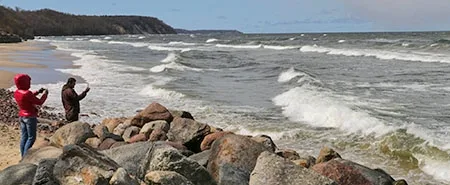
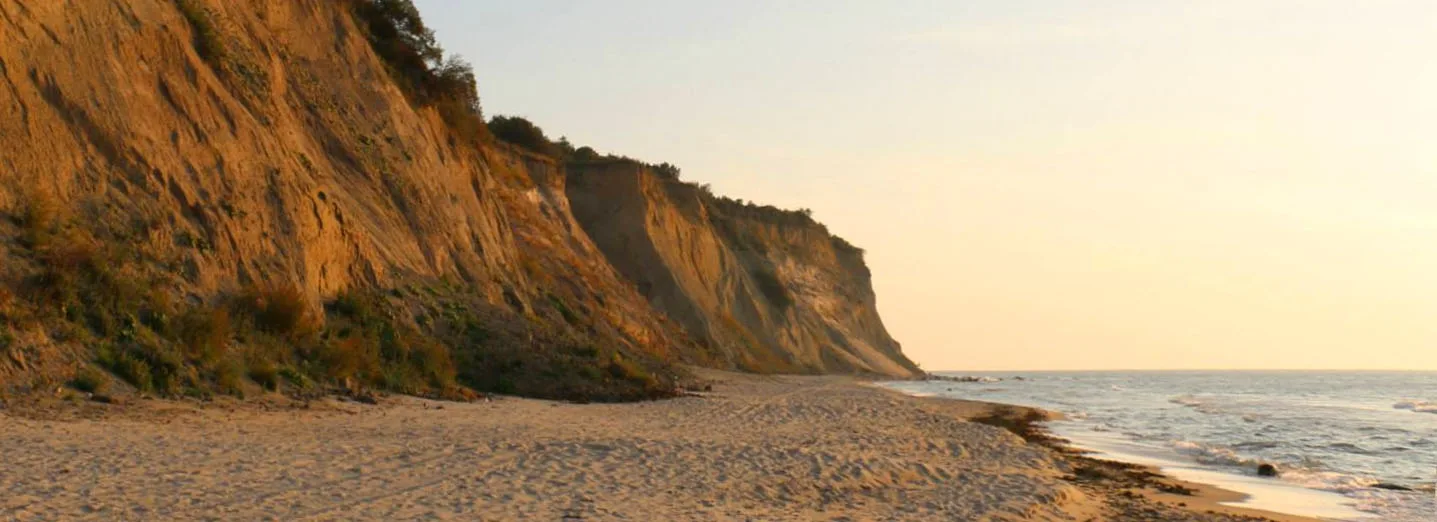
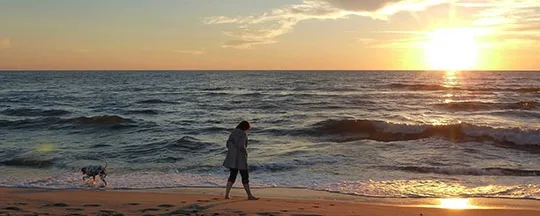
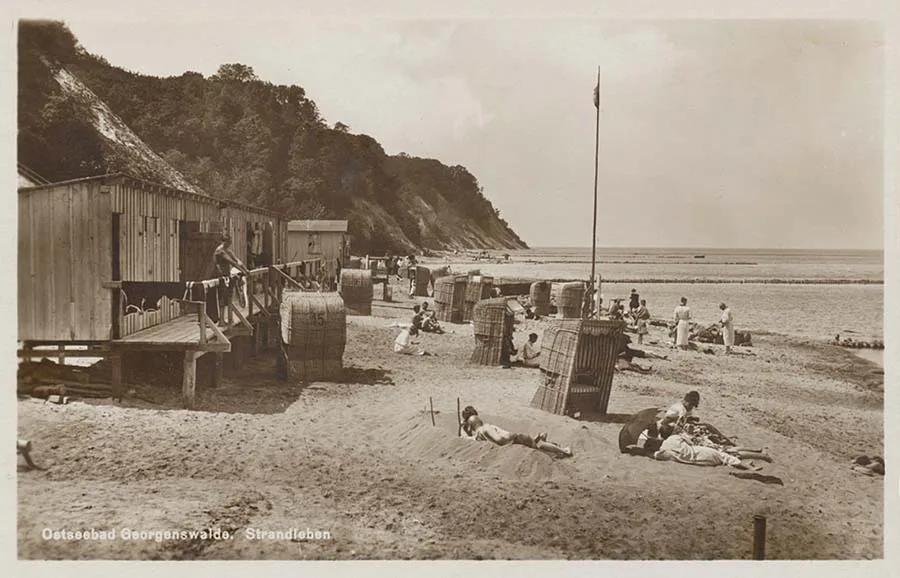 On the beach at Georgenswalde.
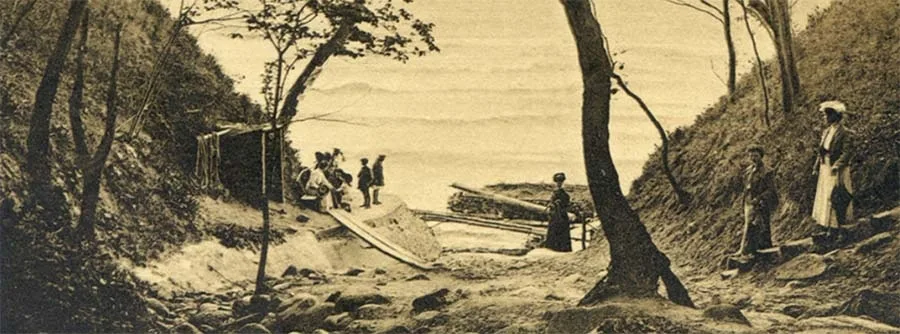
From the mid-19th century Georgenswalde was used as a holiday spot, but real resort life began here only in the 20th century.
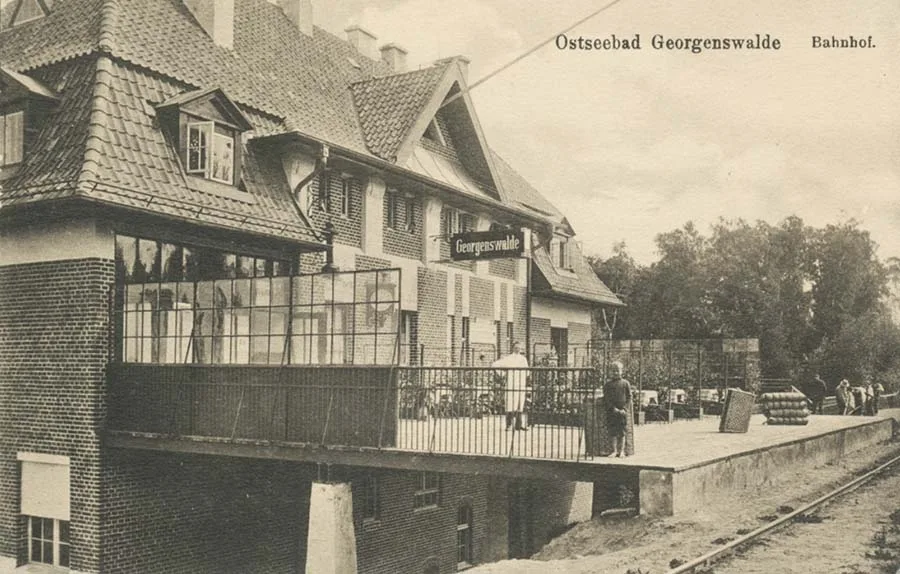 Georgenswalde railway station.
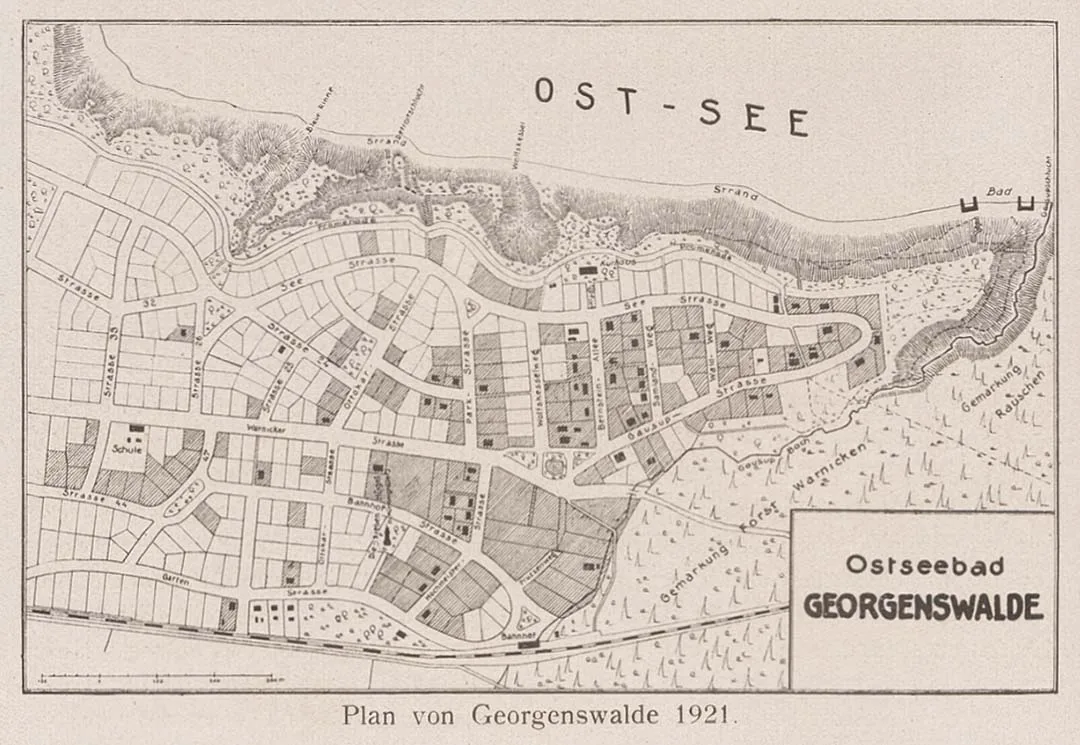
On 14 July 1900 traffic opened on the Samland Railway (Samlandbahn), and a station was built on it at Georgenswalde. In 1908 the Landbank Berlin AG divided Georgenswalde into two parts. The first (221 ha) was assigned to the estate, and the second (75 ha) was divided into 400 plots for building villas. By 1910, 16 houses had been built on them and a water supply had been laid. In that same year of 1908 a water tower was built to a design by the architect K. Fischer. Before the outbreak of the First World War a modern sanatorium was built, the station was enlarged and a post office was opened. After the war the building of villas continued, their number growing steadily until the 1930s. The country houses here were built mainly by the Königsberg middle class: civil servants, doctors, merchants, artists and military officers.
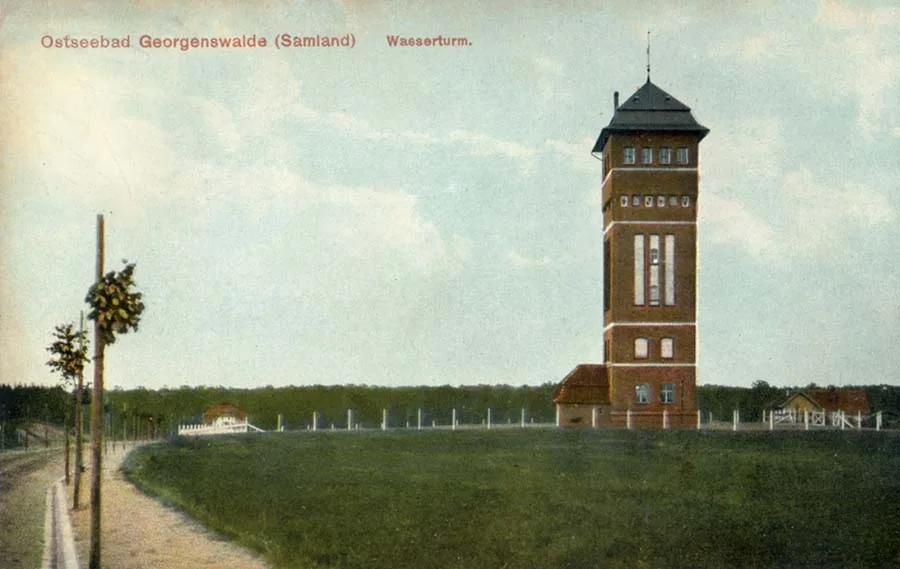 Georgenswalde water tower.
The villas were most often used for winter holidays, and pensioners and elderly people moved here to live.
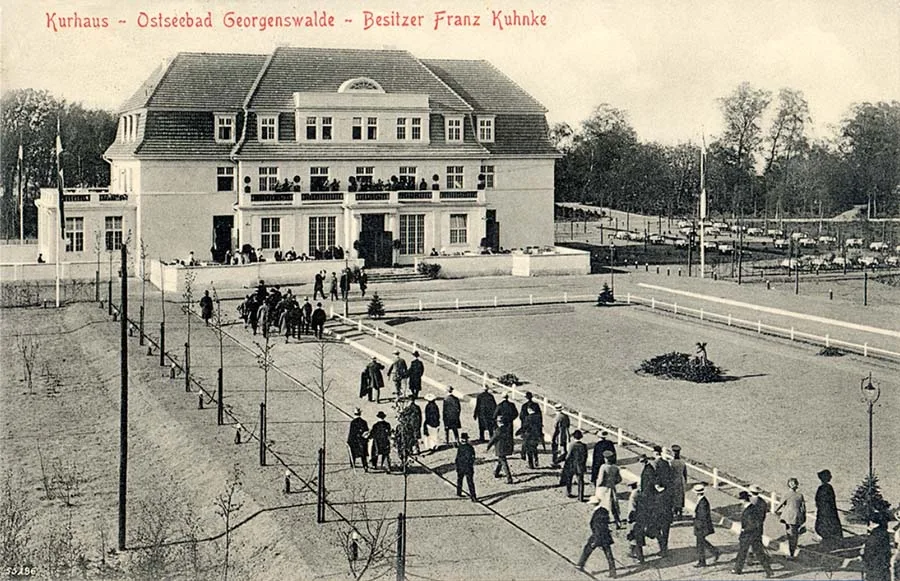 Georgenswalde Kurhaus.
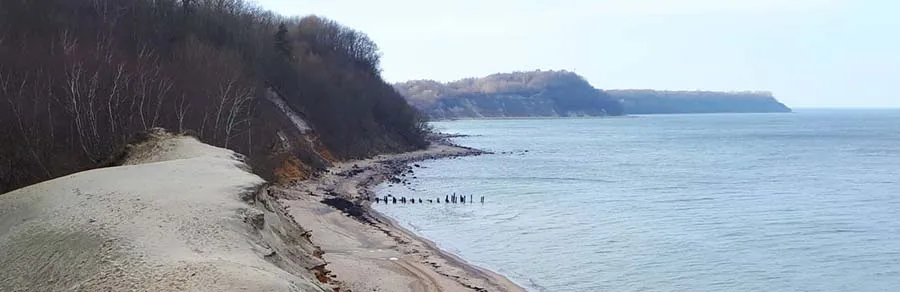
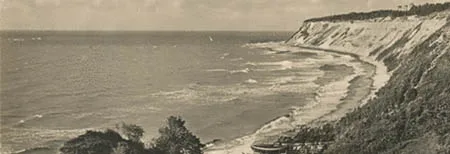
Hotels and shops opened in Georgenswalde. Until 1913 children from Georgenswalde went to school in Rauschen (Svetlogorsk). In 1913 the Landbank Berlin subsidised the building of a school in Georgenswalde. That year 61 pupils started there. In 1926 the number of pupils was 80. From 1925 coastal protection works were carried out in Georgenswalde.
On 8 July 1926 the Gutsbezirk Georgenswalde was converted into a rural community of the same name. On 1 December 1928 the village (colony) of Warnicken (Lesnoye) and the Schönwalde forest park were incorporated into the rural community of Georgenswalde. On 1 April 1929 the new parish of Rauschen (Svetlogorsk) was opened, and the Georgenswalde community came to belong to it. On 18 May 1930 the Amtsbezirk Warnicken was renamed the Amtsbezirk Georgenswalde. From its renaming until 1945 it comprised the single rural community of Georgenswalde. It was run by the local mayors, residents of Georgenswalde.
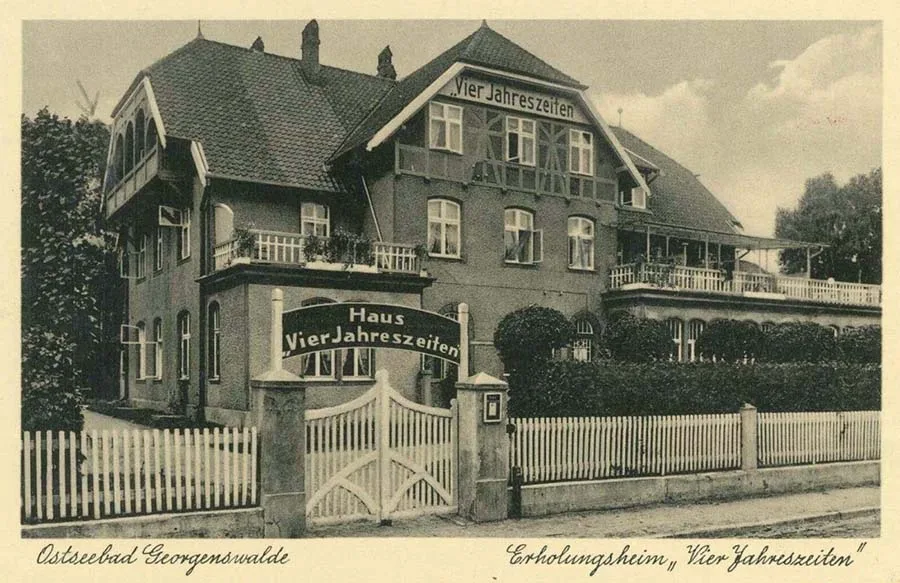 The Four Seasons sanatorium (Vier Jahreszeiten).
In the years of the Third Reich the sculptor Hermann Brachert (1890–1972) moved to Georgenswalde from Königsberg.
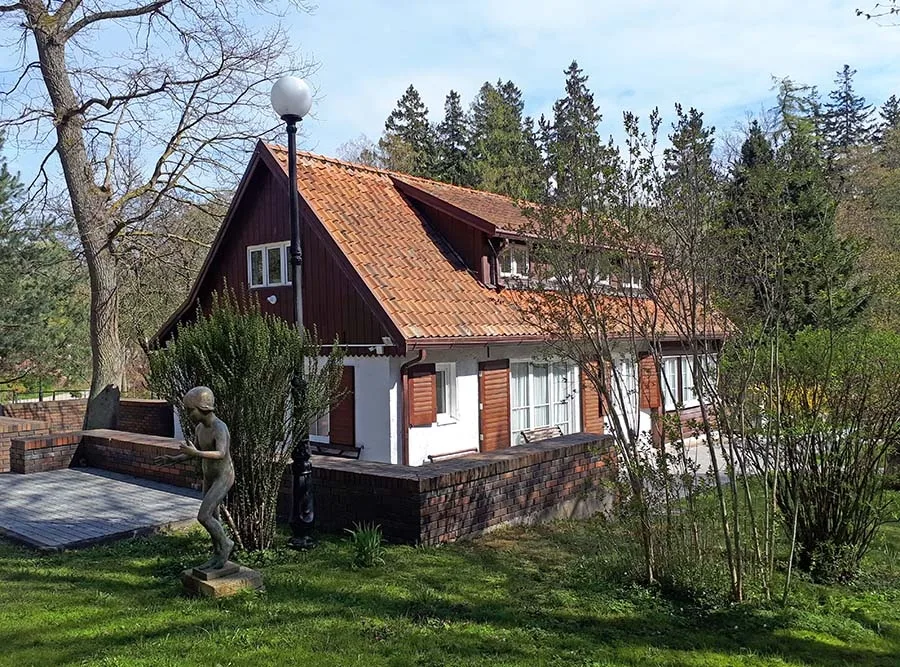
Hermann Brachert House Museum.
In 1944 Königsberg hospitals were moved to Georgenswalde, into the buildings of the Vier Jahreszeiten (Four Seasons) and Samlandheim sanatoriums. After the bombing of Königsberg in August 1944, Königsberg residents who had country houses here began moving to Georgenswalde, and by the autumn of 1944 the first refugees from the eastern districts of the province had begun to arrive.
The first Red Army breakthrough into the Georgenswalde area took place in February 1945. On 14 April 1945 Red Army units occupied Georgenswalde.
Even before the official renaming, by November 1946 the district authorities had proposed giving Georgenswalde the status of a workers' settlement and renaming it Vzmoryevsk, Vzmorye or Vzmoryevsky, but the regional authorities did not support the proposal.
On 17 November 1947 Georgenswalde was renamed the settlement of Otradnoye. In 1955 Otradnoye had 143 houses. As late as 1975 Otradnoye had the status of a settlement within the city limits of Svetlogorsk. By 1989 the settlement had been fully integrated administratively into the town of Svetlogorsk. In 1993 a house museum was opened in the house where Hermann Brachert had lived. In 2006 Otradnoye station was closed and train services to it ceased. It is now expected that the station building will be restored as a tourist attraction.
Sights: the house museum of the sculptor Hermann Brachert, villas of the early 20th century, the water tower (1908), the "Amber Age Park" family entertainment complex, the railway station (1912–13), the Wolf Ravine, a Bronze Age barrow cemetery.
Population change of the Georgenswalde Gutsbezirk and community: 1867 – 105, 1871 – 109, 1885 – 91, 1905 – 106, 1910 – 174, 1925 – 682, 1933 – 694, 1939 – 791, 1946 – 721 inhabitants.
Population of Georgenswalde in 1871: Evangelical Christians – 108, Catholics – 1, children under 10 – 38, literate – 46 (65%).
For reference
Owners of the Georgenswalde estate
1626–76 — Caspar Cawemann and his son;
1677 — Henning Weydemeyer;
1778–93 — Johann Friedrich Bergau;
1793–1829 — Ernst Bergau, chamber accountant;
1829–53 — Johann Friedrich Bergau, state secretary;
1753–70 — Friedrich Wilhelm Julius Bergau, city treasurer;
1870–73 — Friedrich Heinrich Gaedacke, privy councillor; Adolf Aron Moses Aronson, merchant; Gustav Simon, merchant;
1873–78 — Friedrich Heinrich Gaedacke, privy councillor;
1878–1902 — Friedrich Heinrich Neumann, property manager;
1902–07 — Arthur Neumann, property manager;
1907 — Landbank Berlin;
1908–17 — Rudolf Bergau;
1917–45 — Waldemar Rade.
The design uses photos from the East Prussia Photo Archive and by Mikhail Ogorodnikov.
Translated from Russian with the help of AI (Claude, Anthropic), October 2026.