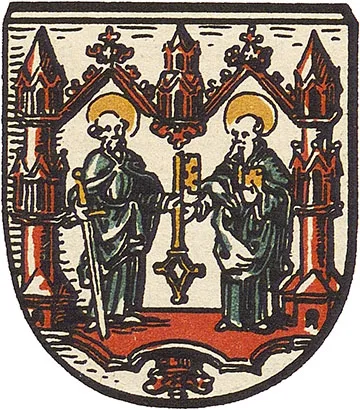
 Coat of arms
of Gerdauen
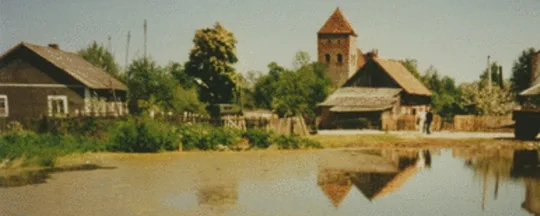
A Prussian stronghold stood on the site of Zheleznodorozhny even before the Teutonic invasion. The land of Barta, where the stronghold was located, was conquered by the Teutonic Order in 1251. The Prussian chieftain who held the fortress, Gerdav or Girdava (the local stronghold, Gerdavia, was named after him), of the Rendalia clan, converted to Christianity, and in return the fortress was left under his control.
In 1257 the Order established a commandery here. Documents dated 14 April 1257 mention the first commander (Komtur) of Gerdauen, Henricus de Alfeld. Gerdav himself became a devout Christian, obtained permission from Pope Innocent IV to build a church on his lands, and attempted to found a settlement beneath the walls of the fortress. In 1260, however, these plans were thwarted by the outbreak of the Second Prussian Uprising.
In 1262 the insurgents besieged the fortress, which was being defended by Gerdav and other Christians. Realizing that further resistance was impossible, Gerdav burned the fortress and broke through the rebel lines to Königsberg.
After the uprising was crushed, around 1272 the Rendalia clan returned to its lands and began rebuilding the fortress, but the chieftain Gerdav is no longer mentioned in the chronicles of the time. The Rendalia clan itself appears in documents for the last time in 1326.
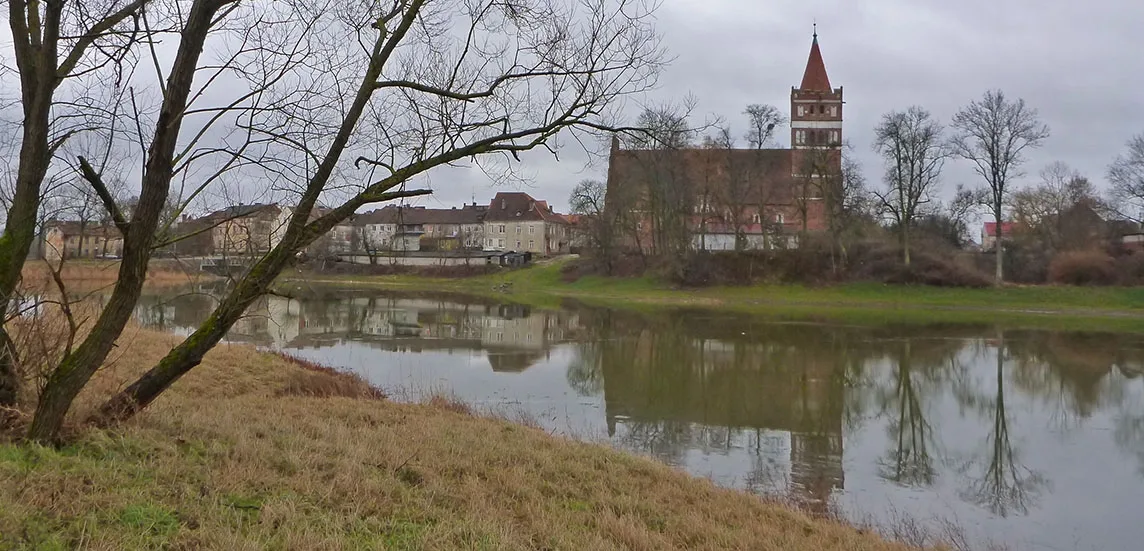
On 21 August 1315 Johannes von Winnungen was appointed the new commander of Gerdauen, and he began rebuilding the castle in stone. It was also decided to dam the Omet River and build a mill on it. Construction of the castle was completed in 1325, and on the Feast of Saints Peter and Paul (29 June) the castle was consecrated. By that time, however, the Gerdauen commandery had been abolished, and the castle had been downgraded to the seat of a Pfleger.
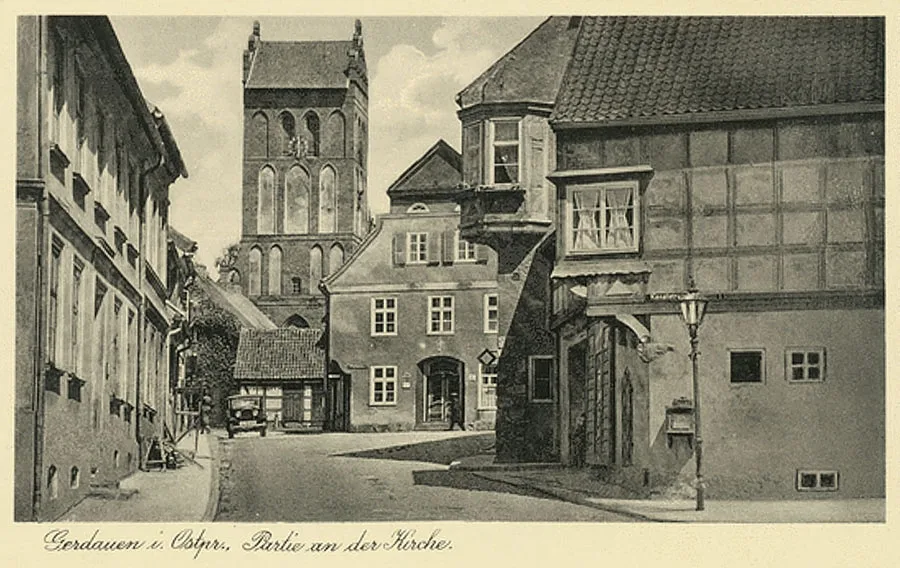
In the mid-14th century a settlement grew up by the castle, and in 1345 a church was built.
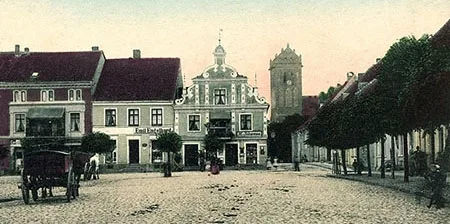
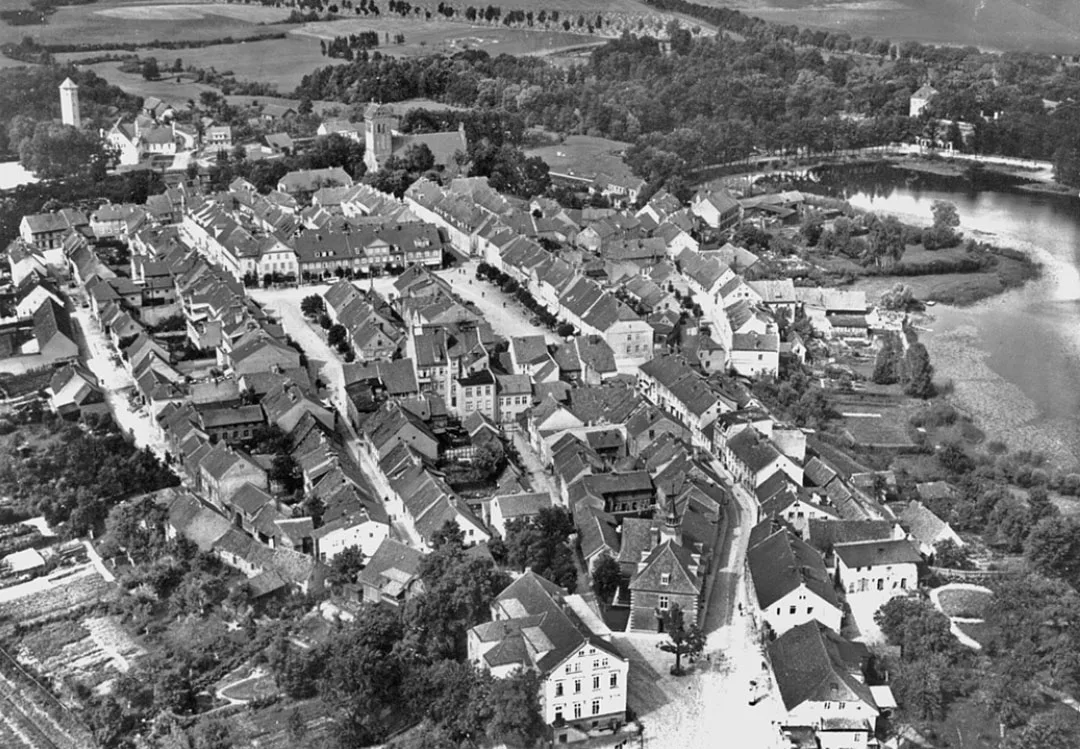
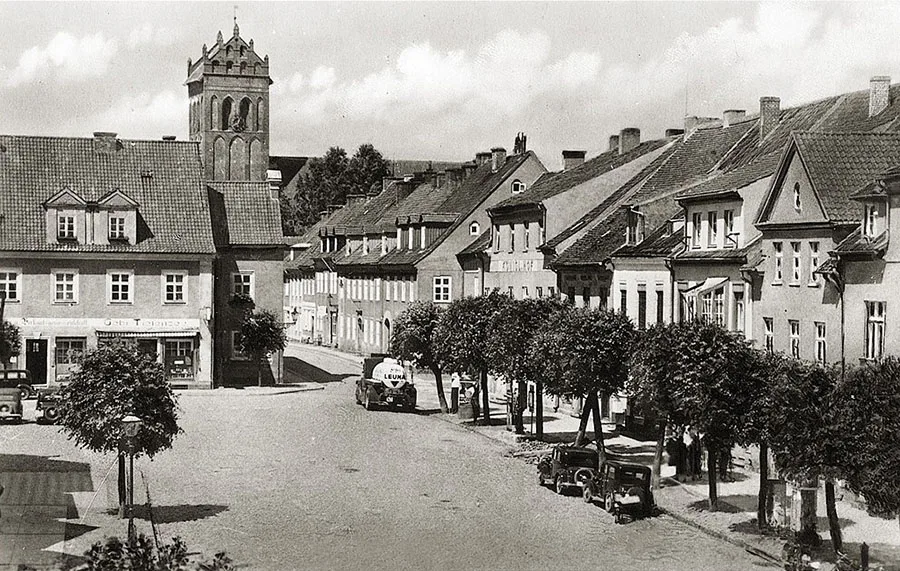 The central square of Gerdauen in the first quarter of the 20th century.
In 1347 the troops of the Lithuanian Grand Duke Algirdas approached the castle, but they did not dare to storm Gerdauen and contented themselves with plundering and burning four villages in the surrounding area. On 21 September 1398 Gerdauen was granted town rights. In 1406 the town fortifications were completed. In 1428 a Dominican monastery was moved to Gerdauen from Nordenburg (Krylovo).
At the very beginning of the Thirteen Years' War (1454–66) Gerdauen rose against the Teutonic Order; it was taken by the Order's troops and in 1469 stripped of its town rights. That same year it was handed over to the Saxon mercenary captain Georg von Schlieben and his brother Christoph as payment for their military services, and Gerdauen remained the property of the von Schlieben family until 1809. In 1485 the town burned down and was not rebuilt until 1493.
In 1525, during the secularization of the Order, the local Dominican monastery in Gerdauen was closed. In 1585 and 1665 Gerdauen again suffered severe fires. It is recorded that by 1672 the castle already stood empty and was gradually falling into ruin. In 1690 an organ built by the master J. J. Mosengel of Königsberg was installed in the Gerdauen church.
In 1708 King Frederick I granted Gerdauen the right to hold fairs. During the plague of 1709–10 half of Gerdauen's inhabitants died.
After the Kingdom of Prussia was established and an administrative reform carried out, Gerdauen became part of the district (Kreis) of Rastenburg (Kętrzyn, Poland). In 1729 a pulpit and an altar were installed in the church. In 1741 the philosopher and statesman T. G. von Hippel was born in Gerdauen.
During the Seven Years' War, after the Battle of Groß Jägersdorf (Motornoye), advance detachments of Cossacks approached Gerdauen. They did not even attempt to take the fortified town, on whose walls townspeople armed with muskets had appeared, but they ravaged the von Schlieben castle estate.
In 1809 Gerdauen ceased to be the property of the von Schlieben family, but it did not regain its town rights as a result.
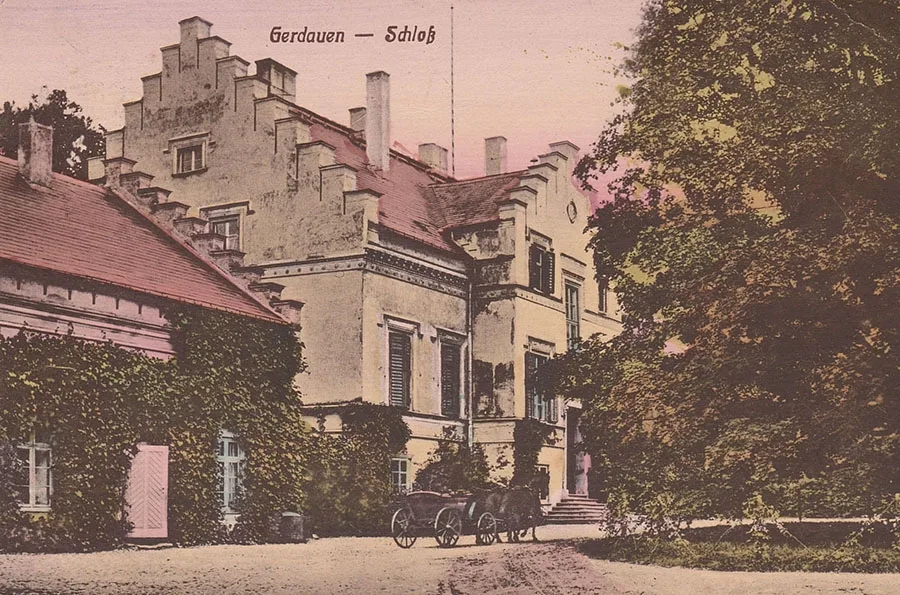 House built on the foundations of the castle in Kinderhof, Gerdauen.
In 1818, under an administrative reform, the district (Kreis) of Gerdauen was created, with its administration based in Gerdauen. In 1822 the town underwent reconstruction, and in 1831 it regained its town status.
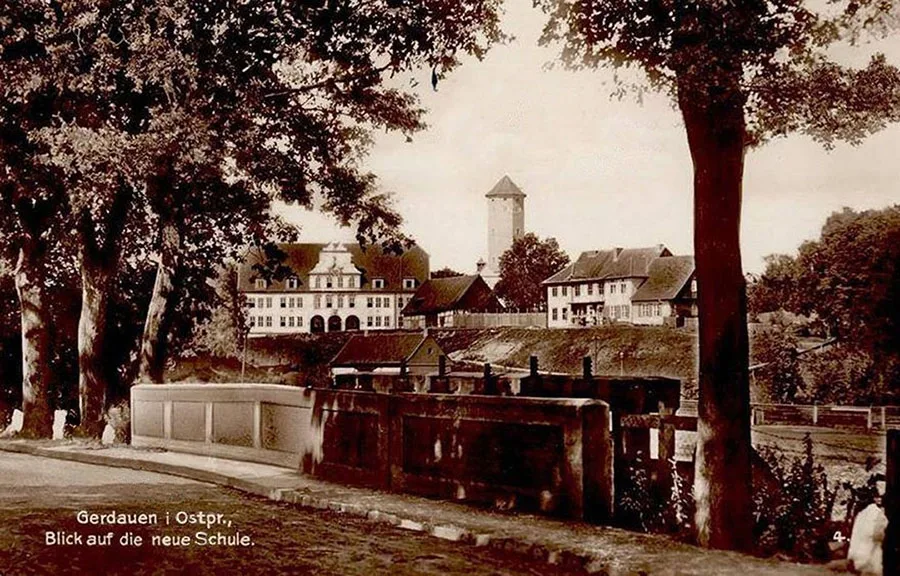
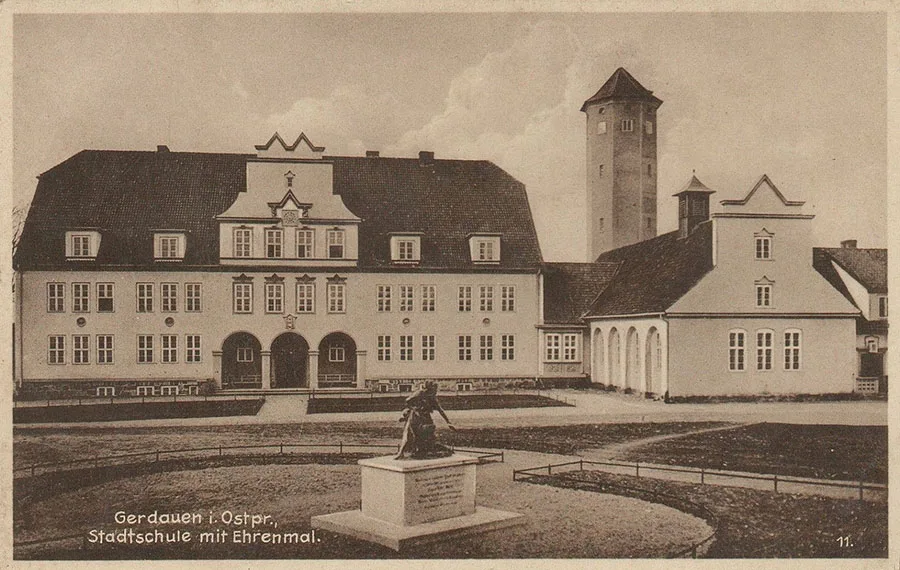 The school and water tower of Gerdauen.
Gerdauen Castle, meanwhile, remained an estate that formed a separate Gutsbezirk (manorial district) and was not part of the Gerdauen municipality. In 1833 the Schloss Gerdauen estate was sold to Colonel Baron Wilhelm Gisbert Konrad von Romberg (1788–1856).
In 1871 the Gerdauen municipality comprised eight settlements in addition to the town itself, with a total of 221 residential buildings. That same year the Schloss Gerdauen Gutsbezirk consisted of 15 settlements with 59 residential buildings. In 1872 Colonel von Romberg's son, Lieutenant General Maximilian Konrad Joseph Freiherr von Romberg (1824–1904), demolished the buildings of the outer bailey (Vorburg) and built a residence. Also in 1872 the Insterburg–Allenstein railway (Chernyakhovsk–Olsztyn) was laid through the town. In 1882 the Gerdauen estate was bought by Alfred von Janson. In 1898 a rail link was opened between Gerdauen and Königsberg via Friedland (Pravdinsk) and Preußisch Eylau (Bagrationovsk). As a result, Gerdauen became an important railway junction.
In 1905 the Kreishaus (district administration building) was built in Gerdauen, and in 1909 the castle mill building. In 1913 a major fire broke out in the Gerdauen church.
The town suffered heavily during the First World War. Shelling and fighting on 9 September 1914 destroyed some 150 buildings, half of them residential. The damage was concentrated mainly in the historic quarter. Yet by 1921 all the houses had been repaired, and the restoration techniques used still mislead tourists into believing they are looking at original medieval buildings. The partner cities of Budapest and Berlin-Wilmersdorf took part in the rebuilding. The architects Ludolf August Heinrich Stoffregen (1879–1929), Otto Walter Kuckuck (1871–1942) and Hugo Wagner (1873–1944) were involved in reconstructing Gerdauen's buildings. On 25 July 1916 the Gerdauen–Barten narrow-gauge branch line (Zheleznodorozhny–Barciany, Poland) was opened as part of the Rastenburger Kleinbahnen. After the First World War the town was a centre of the grain trade; it also had a cloth factory and a tannery.
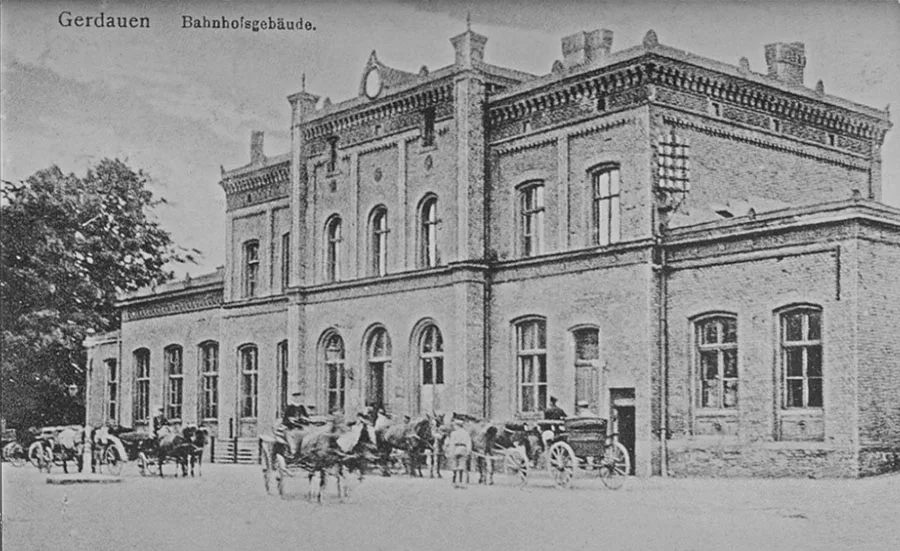 The railway station of Gerdauen.
By 1931 the town community included 20 suburban villages, farmsteads, forestry lodges and other settlements. Gerdauen had 355 residential buildings and 1,054 outbuildings.
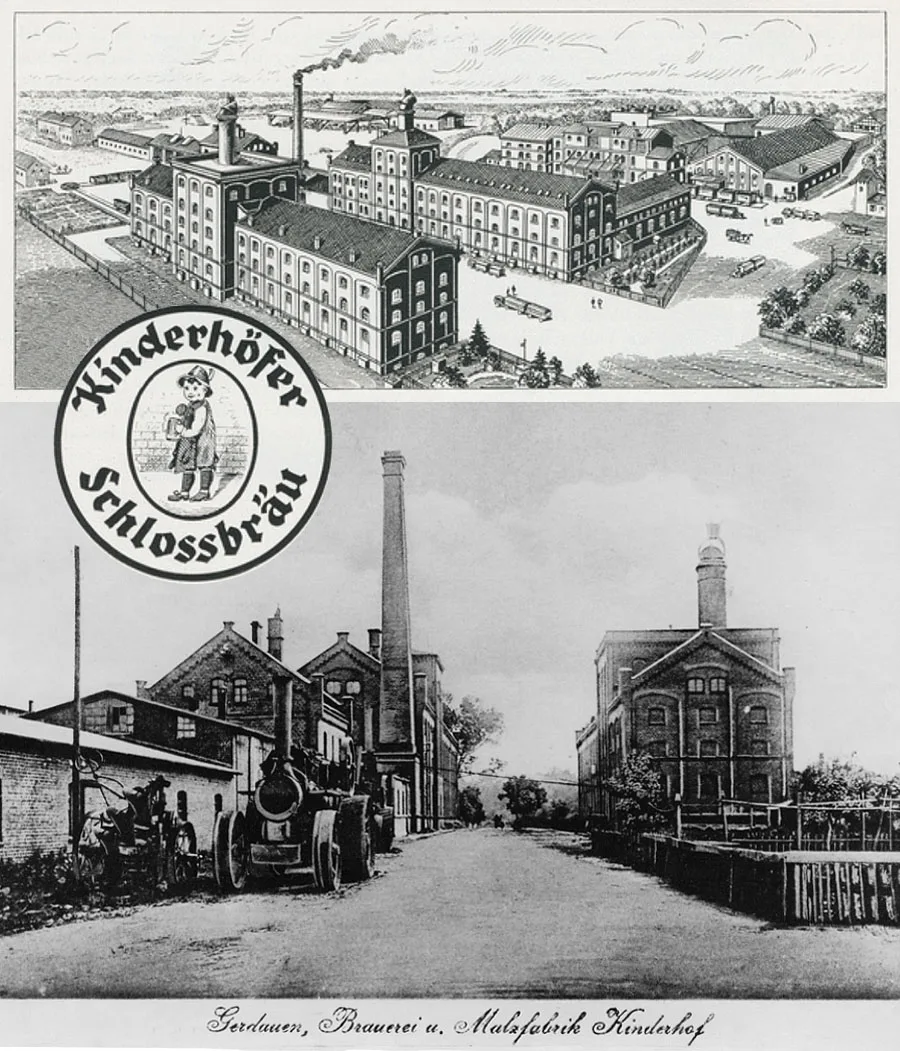
Kinderhof Brewery (no longer extant).
In the pre-war years, Gerdauen's main enterprises were a machine-building works, a brewery, a sawmill and a mill. The town had a water supply system with a pumping station and a water tower. Children were educated at the municipal Realschule and at the agricultural school. The town had all the institutions typical of a district seat: a town hall, the Kreishaus (district administration), a district hospital, an administrative court and a tax office. Its social facilities also included an old people's home, a house of culture, a Jewish cultural centre (until the Nazis came to power), a sports ground and a tennis court. There were two hotels.
On 27.01.1945, after a battle lasting a full day, Gerdauen was taken by soldiers of the 28th Army of the Red Army. The fighting caused some damage to the town, but it was not significant.
In 1946, the now Soviet Gerdauen had about 400 buildings. By 1946, a railway station and a dairy were operating in the town. There were also tailoring and shoemaking workshops. In September 1946, a primary school opened in Gerdauen. By 01.11.1946, it had been decided to grant Gerdauen the status of a workers' settlement. The district authorities proposed several new names: Vishnevskoye, and later Komsomolskoye and Komsomolsk, but none of them was accepted by the regional administration.
On 17.06.1947, Gerdauen was renamed the settlement of Zheleznodorozhny. At the same time, the Zheleznodorozhny village council of Pravdinsk District was created. However, as early as 25.07.1947 the settlement's status was raised, and Zheleznodorozhny became the centre of the newly formed Zheleznodorozhny District. In 1947, a brewery began operating in Zheleznodorozhny on the site of the former Kinderhof brewery. A secondary school, a 25-bed hospital and an outpatient clinic were opened. In 1949, 1951 and 1952, the regional authorities tried to obtain town status for Zheleznodorozhny, but Moscow refused each time. By 1949, a butter factory, a furniture workshop, a confectionery and a small sausage-making business had opened in the settlement. A forestry enterprise also began operating. The railway station had a locomotive depot. The district hospital was expanded to 60 beds, and a nursery, a kindergarten, a library, a house of culture with 500 seats, a cinema with 300 seats, a bathhouse and a hotel were opened.
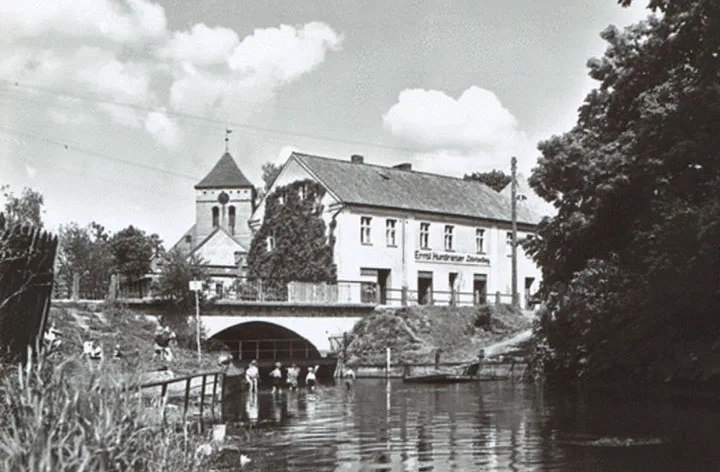
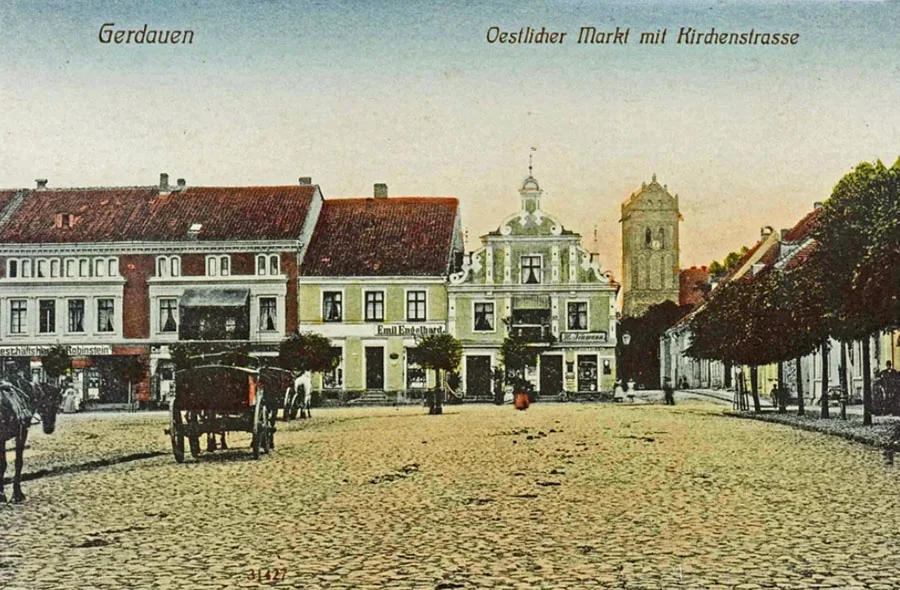 The centre of Gerdauen before...
In the 1950s, a brickworks began operating in Zheleznodorozhny. A secondary school moved into the former Kreishaus. In 1957–59, landscaping work was carried out in the settlement, a bathing area opened on the lake, and a children's playground appeared.
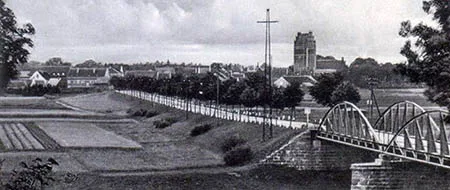
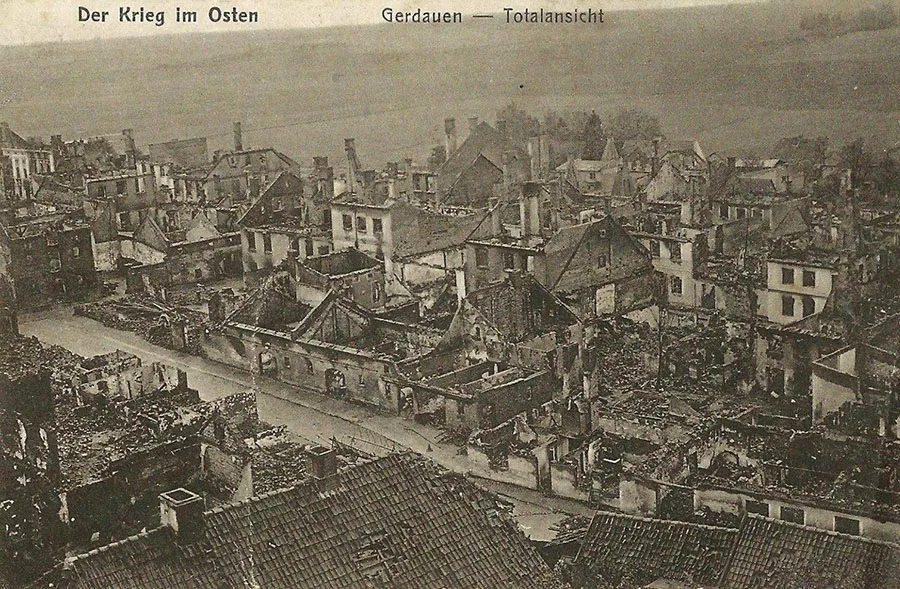 ...and after the First World War.
In 1962, Zheleznodorozhny District was abolished and merged into Chernyakhovsk District, and from 1963 into Pravdinsk District. In the same year, a cinema with 230 seats was built. In 1964, a tuberculosis hospital opened in the settlement; in 1967, a new house of culture was built, and in 1968, a children's music school.
In the early 1970s, the settlement's school moved to a new building, and a boarding school for orphans was housed in the former Kreishaus. By the end of the 1970s, the settlement's population had reached its peak, and after that it only declined. In the 1970s and 80s, the best-known enterprise in Zheleznodorozhny remained the brewery, whose beer was considered the best in the region and was known even beyond its borders. Legend has it that this was because production was managed by a German who had been kept on at the brewery. In terms of the number of employees, the brickworks led the way, with 182 workers.
In the 1990s, the town's enterprises were turned into joint-stock companies, but this did not help them stay afloat. The brewery soon closed, the butter and cheese factory was bought by Moloko JSC, and the brickworks changed hands several times yet still produced only a minimal output.
Attempts were made to develop tourism in the settlement, but the projects to reconstruct the castle and the castle mill were carried out incompetently and were abandoned, and the castle ruins suffered serious damage in the process. In 1992–98, with German support, conservation work was carried out on the ruins of the church in Gerdauen.
In 2004, the settlement received the status of an urban settlement, the Urban-Type Settlement of Zheleznodorozhny, which also included 30 rural localities. As of 2006, the settlement had a school, an outpatient clinic, a cultural and leisure centre, a children's arts centre, a kindergarten, a library and a music school. In that same year, 2006, the Kreishaus building was declared unsafe, and the children's boarding school was moved to the settlement of Sevskoye. From 2011, a new owner began dismantling the brewery buildings for their bricks, as a result of which the entire complex was destroyed. In 2017, on the orders of Russian Railways, the twin railway water towers built in 1890 were badly damaged. The demolition was halted at the demand of the public, but by then the towers had suffered irreparable damage.
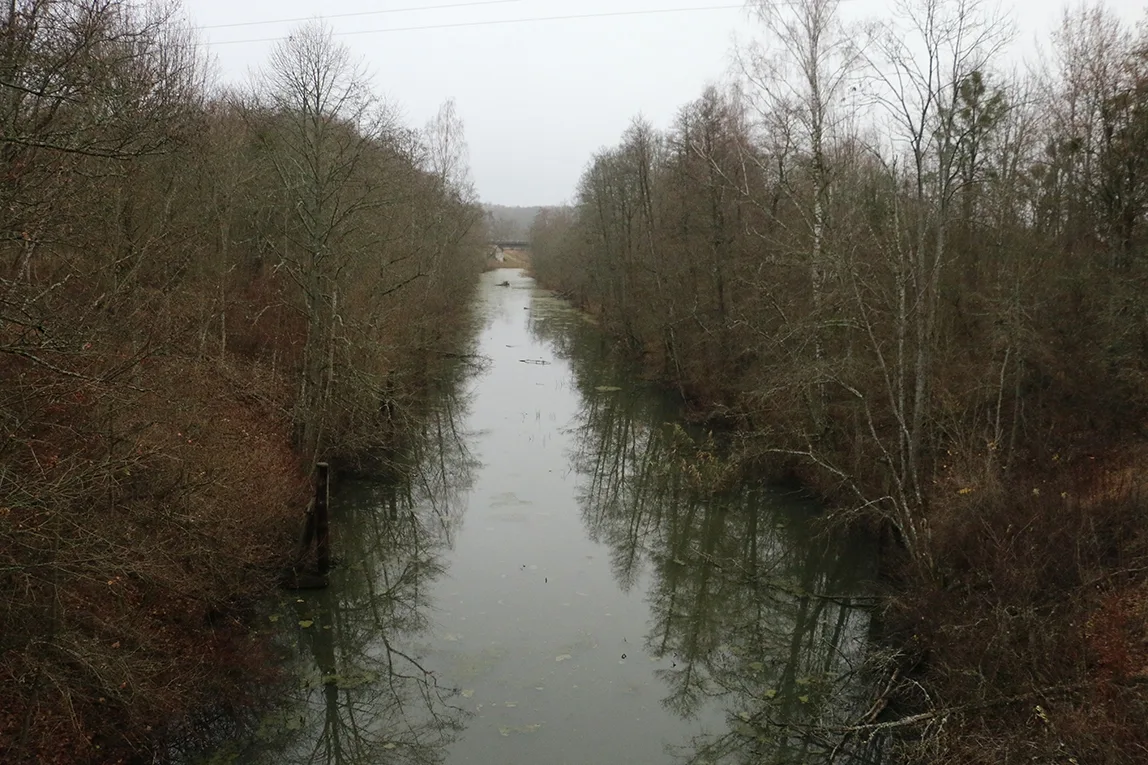
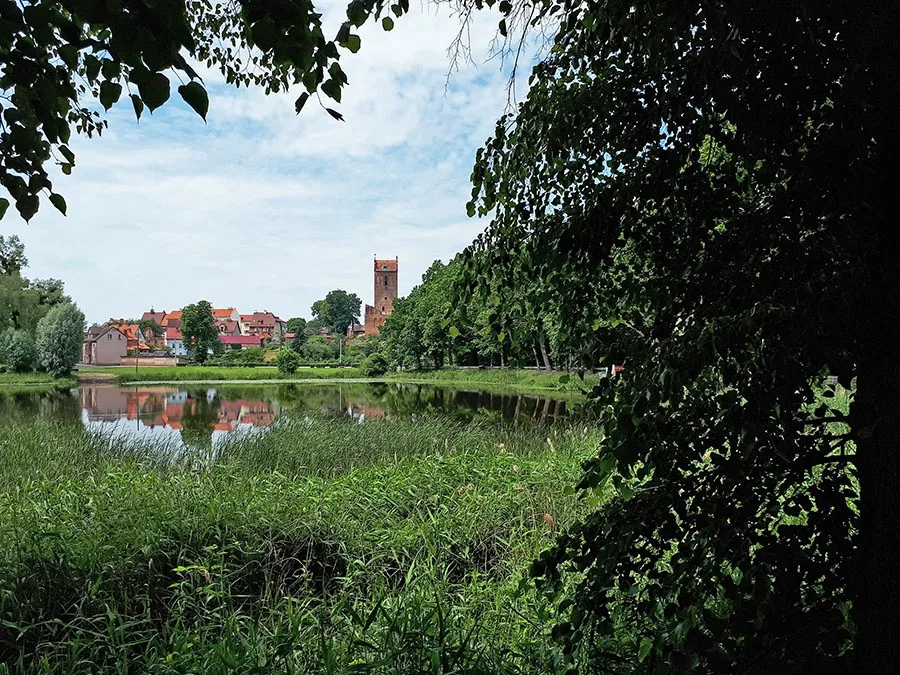 View of Zheleznodorozhny from Chernyakhovskogo Street, which links the centre with the eastern part of the settlement.
In 2020, extensive renovation of pre-war buildings began, with the aim of making the settlement more attractive to tourists. In 2021, the "Patefon" museum opened in Zheleznodorozhny, but as early as 2022 an advertisement appeared offering its premises for sale.
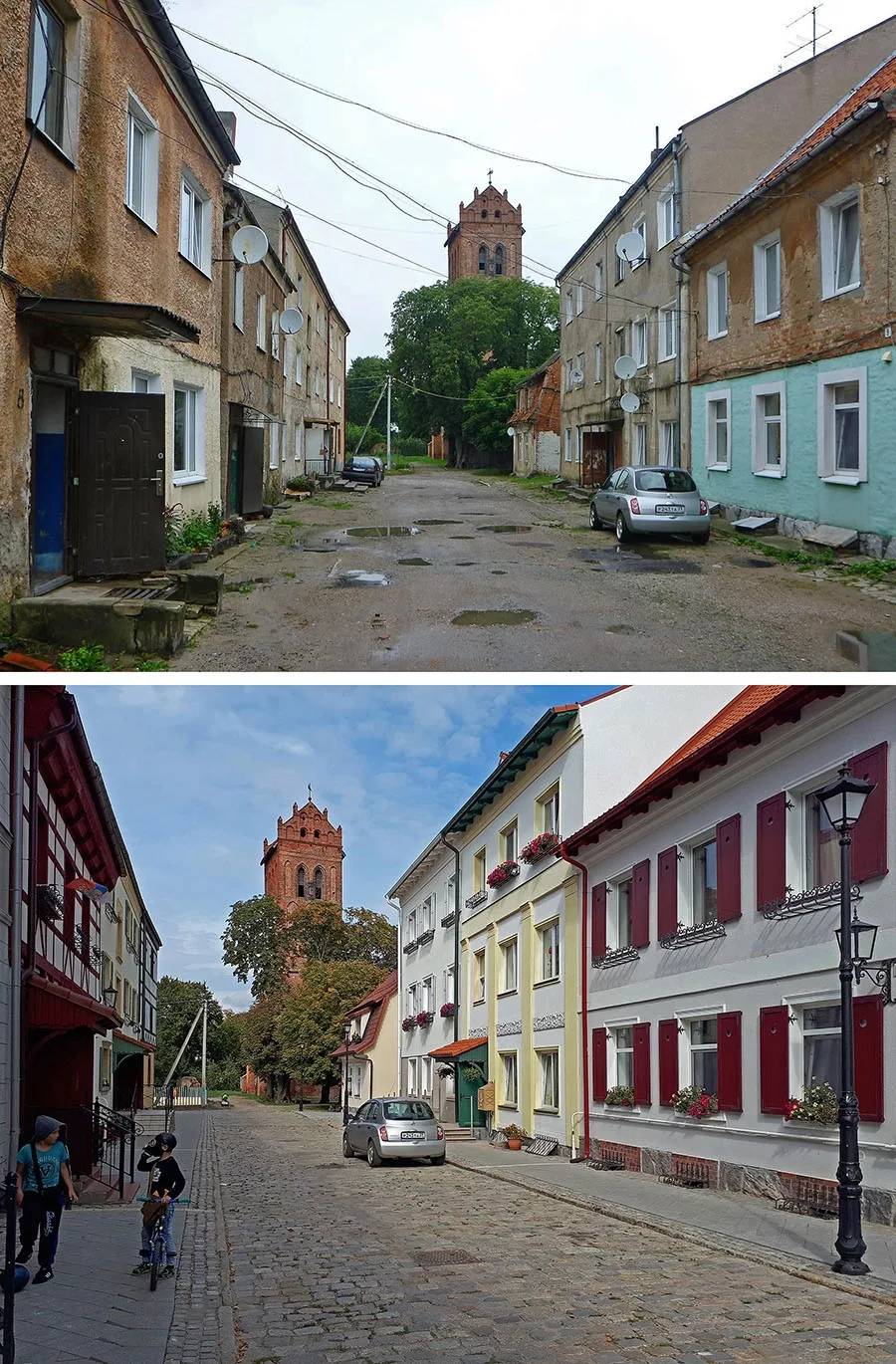 Pervomayskaya Street before and after major renovation in the first quarter of the 21st century.
Sights: ruins of Gerdauen Castle (1325), the church (1345), the castle mill (1909), ruins of the twin railway water towers (1890), the railway water tower (1901), the town water tower (1921), the Kreishaus (1905), the town hall building (late 19th c.), half-timbered warehouses (late 19th c.), the railway station building (early 20th c.), the post office building (early 20th c.), the building of the Ostpreußische Landschaft bank (early 20th c.), the courthouse (early 20th c.), the school building (early 20th c.), the Johanniter hospital building (1926), residential houses (late 19th – early 20th c.), the burial site of 50 Russian and 14 German soldiers (1914), the memorial to those who fell in the First World War (1936), the mass grave of Soviet soldiers (345 people, memorial 1957).
For reference
Population of the town of Gerdauen – settlement of Zheleznodorozhny: 1729 – 813, 1782 – 1600, 1831 – 2096, 1867 – 2861, 1871 – 3009, 1875 – 2864, 1885 – 2887, 1890 – 2858, 1910 – 4578, 1915 – 4339, 1933 – 4712, 1939 – 5125, 1946 (Nov.) – 4601, 1946 (Dec.) – 7602, 1947 – 994, 1959 – 3380, 1966 – 3500, 1970 – 3661, 1979 – 3772, 1989 – 3246, 2002 – 2945, 2005 – 2767, 2009 – 2863, 2010 – 2767, 2012 – 2809, 2013 – 2802, 2014 – 2831, 2015 – 2830, 2016 – 2767, 2017 – 2728, 2018 – 2676 inhabitants.
Population of the Gutsbezirk Schloß Gerdauen: 1867 – 1186, 1871 – 1217,
Population of the Kinderhof brewery: 1905 – 74 inhabitants.
Population of the Kinderhof sawmill: 1905 – 65 inhabitants.
Population of the Damerau forestry: 1905 – 36, 1986 – 10 inhabitants.
Composition of the population of the Gerdauen municipality in 1871: Protestants – 2932, Catholics – 27, Jews – 50, children under 10 – 706, literate – 1865 (85%), blind – 2, deaf-mute – 1, mentally ill – 1.
Composition of the population of the Gutsbezirk Schloß Gerdauen in 1871: Protestants – 1215, Catholics – 2, children under 10 – 273, literate – 761 (81%), blind – 1, deaf-mute – 1, mentally ill – 1.
1 – including 228 Germans.
2 – including 178 Germans.
Kinderhof was founded as a Vorwerk (outlying manor farm) of the Order. In the 19th century the Vorwerk belonged to the Gutsbezirk Schloß Gerdauen and to the parish of Gerdauen. When the Amtsbezirk Schloß Gerdauen was formed on 9 April 1874, the Vorwerk Kinderhof was included in it as a separate Gutsbezirk, but by 1883 this idea had been abandoned, and the Vorwerk once again formed part of the Gutsbezirk Schloß Gerdauen. Oberinspektor Morgenstern / Morgenstern of Kinderhof served as head of the Amtsbezirk from 1901 until its abolition in 1930.
Brewing developed at the Vorwerk Kinderhof. In the early 1870s Maximilian von Romberg, the owner of Gerdauen Castle, built the brewery's main buildings: a three-storey malt house, a boiler house, a refrigeration plant, fermentation cellars and a warehouse. The brewery complex was expanded in 1881 by its new owner, Alfred von Janson. In 1896 a brewery office building was erected; in 1900 the malting, bottling and refrigeration equipment was modernised and a cooperage was opened. In the 1930s the brewery added a lemonade bottling line.
Damerau was a Vorwerk within the Gutsbezirk Schloß Gerdauen. The Vorwerk belonged to the parish of Gerdauen. On 30 September 1928 the Gutsbezirk Schloß Gerdauen was dissolved, and the Vorwerk became part of the municipality of the town of Gerdauen
The Damerau forest lodge belonged to the Gutsbezirk Schloß Gerdauen / Gerdauen, Schloß (Zheleznodorozhny). Its parish church was in Gerdauen. On 30 September 1928 the Gutsbezirk was dissolved, and the forest lodge became part of the municipality of the town of Gerdauen. In the pre-war years there was a shooting range next to the forest lodge.
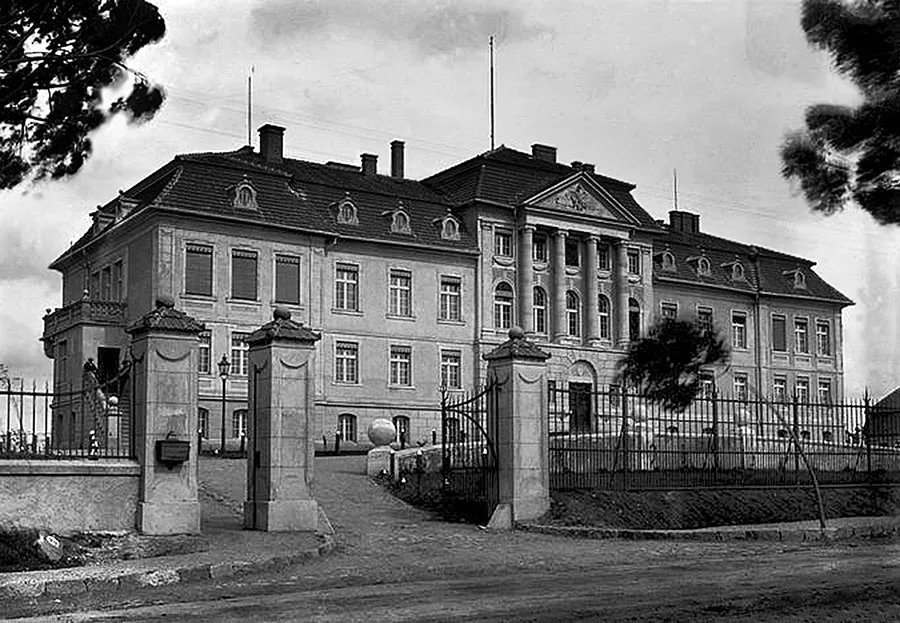 The Kreishaus. As of late 2022 the building survives but stands unused.
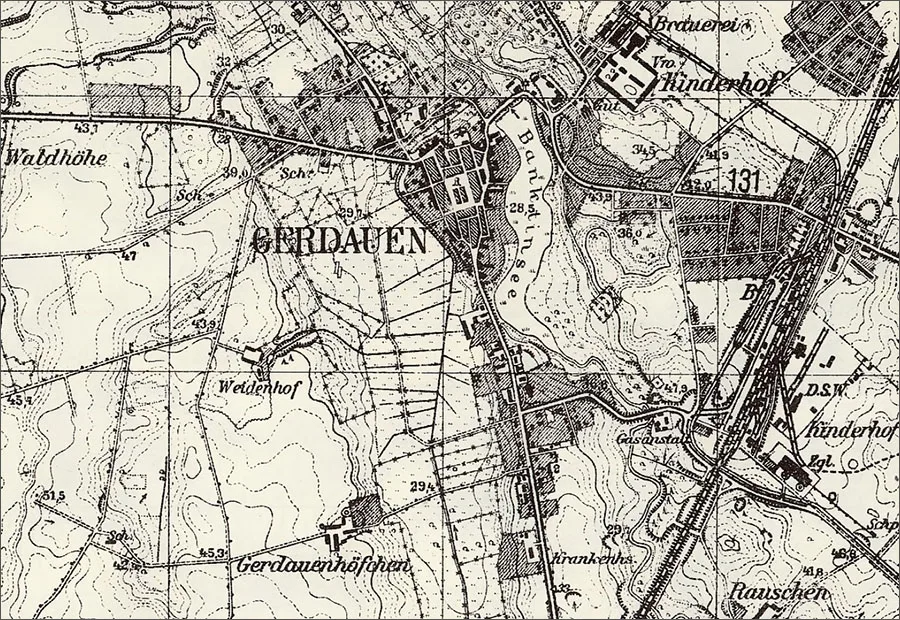
Waldhöhe was founded in 1853 as a Vorwerk within the municipality of Gerdauen. The Vorwerk belonged to the parish of Gerdauen. The Vorwerk Waldhöhe consisted of a single large farmstead.
Weidenhof was called Abbau du Vignau / Abbau du Vignau until 1 May 1921. It was a Vorwerk with a single medium-sized farm, part of the municipality of the town of Gerdauen. The Vorwerk belonged to the parish of Gerdauen.
Gerdauenhöfchen was founded in 1842 as a Vorwerk within the municipality of the town of Gerdauen. The Vorwerk belonged to the parish of Gerdauen. The Vorwerk consisted of a single large farmstead.
Hochheim was called Abbau Mollenbauer / Abbau Mollenbauer until 23 January 1893 and was a Vorwerk within the municipality of Gerdauen. The Vorwerk belonged to the parish of Gerdauen. The Vorwerk Hochheim consisted of a single medium-sized farmstead.
The parish of Gerdauen comprised: Adamswalde / Adamswalde (Novo-Galichevsky), Altendorf / Altendorf (Vishnyovoye), Altenweg forest lodge / Forsthaus Altenweg (54°23'36'' N 21°21'55'' E), Althof / Althof (Gogolevskoye), Arbeitsdank / Arbeitsdank (Chaykino, part), Berthawerth / Berthawerth (54°19'23'' N 21°21'34'' E), Brolost / Brolost (Chaadayevo), Christinenfeld / Christinenfeld (Sovkhoznoye), Damerau / Damerau (Dezhnyovo), Döhrings / Döhrings (Derzhavino), Doyen / Doyen (from 1938 Dugen / Dugen; Duje, Poland), Friedrichswalde / Friedrichswalde (Novo-Biyskoye), Gerdauen (Zheleznodorozhny), Gerdauenhöfchen / Gerdauenhöfchen (Tikhonovo), Gneisenau / Gneisenau (Kholmogorye), Großheim / Großheim (Kostromino), Grümheim / Grümheim (Kostromino), Hochheim / Hochheim (Slavyanskoye), Kanoten / Kanoten (Kanoty, Poland), Karolinenhof / Karolinenhof (Zvyozdnoye), Kinderhof / Kinderhof (Zheleznodorozhny, part), Klein Gerdauen / Klein Gerdauen (Shaposhnikovo), Klintehenen / Klintehenen (Znamenka), Königsfelde / Königsfelde (Vostochnoye), Korklack / Korklack (Kurkławki, Poland), Kröchern / Kröchern (Novo-Galichevskoye), Lablack / Lablack (Lyublino), Langmichels / Langmichels (Mikhaylovo), Melchersdorf / Melchersdorf (Ilyushino), Mühling / Mühling (Kholmogorye), Neuendorf / Neuendorf (Novosyolki), Neuendorfshof / Neuendorfshof (Odoyevskoye), Neuhof / Neuhof (Sovkhoznoye), Partsch / Partsch (Kholmogorye), Peißnick / Peißnick (Kholmogorye), Posegnick / Posegnick (Zori), Prätlack / Prätlack (Krymskoye), Rathsthal / Rathsthal (Ranneye), Rauschen / Rauschen (Chaykino), Spochthaus forest lodge / Forsthaus Spochthaus (54°25'18'' N 21°20'18'' E), Trausen estate / Gut Trausen (Lipnyaki), Trausen Vorwerk / Vorwerk Trausen (Ayvazovskoye), Trausen forest lodge / Forsthaus Trausen (Lipnyaki, part), Waldhöhe / Waldhöhe (Ushinskoye), Weisenhof / Weisenhof (Ryleyevo), Wilhelmshof / Wilhelmshof (Marinovka), Wisdehlen / Wisdehlen (Kholmogorye), Wolla / Wolla (from 1938 Ebenau / Ebenau; Volnoye).
The Gutsbezirk Schloß Gerdauen in 1905 comprised: Albrechtsfelde / Albrechtsfelde (54°26'02'' N 21°12'48'' E), Altenweg forest lodge / Forsthaus Altenweg (54°23'36'' N 21°21'55'' E), Althof / Althof (Gogolevskoye), road keeper's house / Chausseehaus (54°23'02'' N 21°18'08'' E), Christinenfeld / Christinenfeld (Sovkhoznoye), Damerau / Damerau (Dezhnyovo), Döhrings / Döhrings (Derzhavino), Gneisenau / Gneisenau (Kholmogorye), Gerdauen railway station / Bahnhof Gerdauen (Zheleznodorozhny station), Gerdauen Castle / Schloß Gerdauen (Zheleznodorozhny, part), Kinderhof sawmill / Dampfsägewerk Kinderhof (Zheleznodorozhny, part), Kinderhof brewery / Brauerei Kinderhof (Zheleznodorozhny, part), Kinderhof Vorwerk / Vorwerk Kinderhof (Zheleznodorozhny, part), Kinderhof brickworks / Ziegelei Kinderhof (Zheleznodorozhny, part), Kröchern / Kröchern (Novo-Galichevskoye), Mühling / Mühling (Kholmogorye), Mühling forest lodge / Försthaus Mühling (54°25'18'' N 21°13'13'' E), Neuhof / Neuhof (Sovkhoznoye), Partsch / Partsch (Kholmogorye), Spochthaus forest lodge / Forsthaus Spochthaus (54°25'18'' N 21°20'18'' E), Trausen forest lodge / Forsthaus Trausen (Lipnyaki, part), Trausen Vorwerk / Vorwerk Trausen (Ayvazovskoye), Wisdehlen / Wisdehlen (Kholmogorye).
Photos on this page: Bildarchiv Ostpreußen, bildarchiv-ostpreussen.de, Mikhail Ogorodnikov.
Translated from Russian with the help of AI (Claude, Anthropic), October 2026.