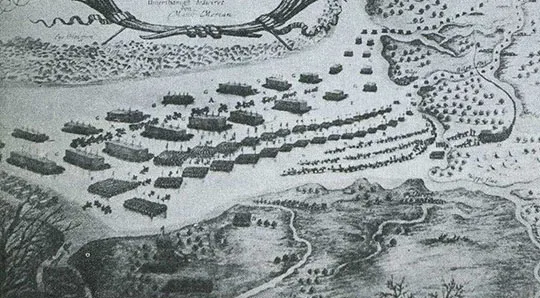
Gilge is first mentioned in 1411. In 1497 the merchant and cattle breeder Georg Weyse received a charter to open an inn, in which a brewery and schnapps distillery were also set up. After 1500 so many Lithuanians moved to Gilge that by the 16th century Lithuanian was the predominant language here. In 1679 the Elector Frederick William was in Gilge. It was here that he received news of his army's victory over the Swedes. In 1707 a half-timbered church was built in Gilge, which became the parish church for the surrounding villages. In 1849–51 a brick church in the Neo-Gothic style was erected on the site of the former church. Later a bell tower was built next to it.
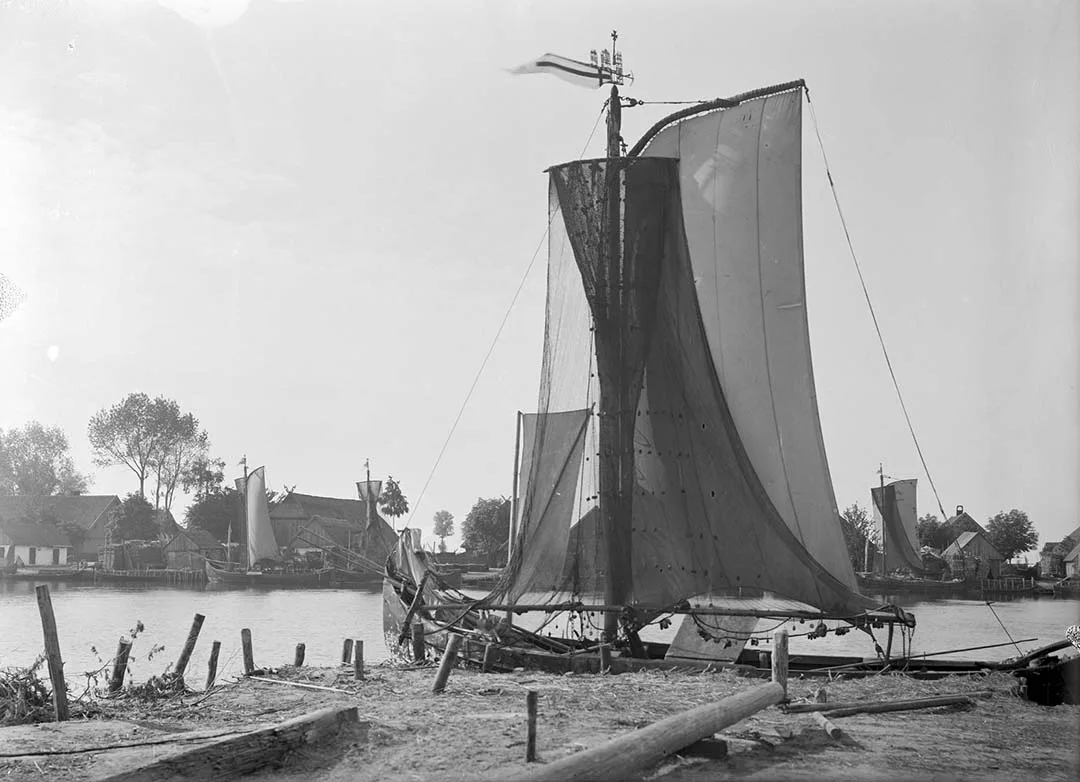
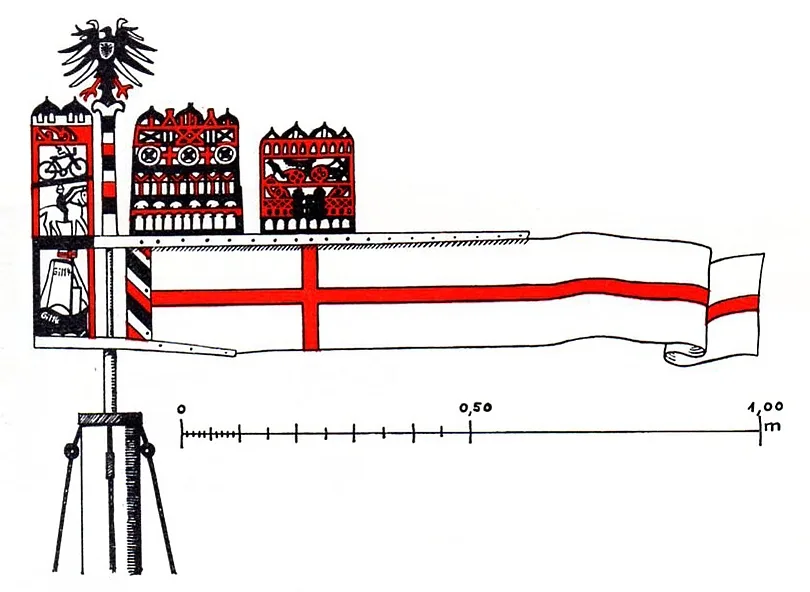 Fishing pennant of Gilge.
In 1874 Amtsbezirk No. 14 Gilge was established in the Landkreis Labiau, comprising two rural communities: Gilge (Matrosovo) and Marienbruch (Sazhentsy).
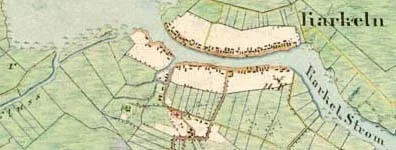
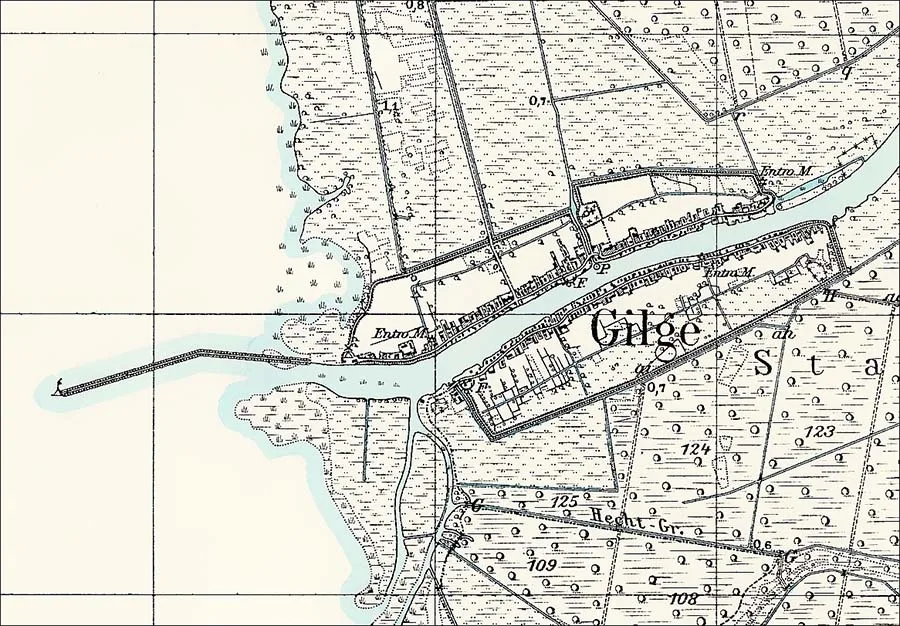 Gilge on a topographic map of East Prussia from the early 20th century.
The head of the Amtsbezirk in 1877–84 was D. Boywindt, a Gilge resident and chief border inspector, then in 1884–90 the leaseholder Albert Boywindt (who subsequently moved to Marienbruch), and in 1930–45 Kratteit, a leaseholder from Gilge. In 1881 part of the forest Gutsbezirk Oberförsterei Tawellningken (Zapovednoye, part) became part of the Amtsbezirk Gilge, and by 1908 the whole forest Gutsbezirk. However, on 1 December 1935 Tawellningken was separated into an independent Amtsbezirk. In 1929 the first motor road was built to Gilge; until then the village could only be reached by water. In 1933 the Labiau – Gilge bus route opened. Before the war there were two factories here (including the largest reed factory in East Prussia), two schools and 10 grocery shops. The village had a ferry crossing, a landing stage and three wind-powered drainage pumps.
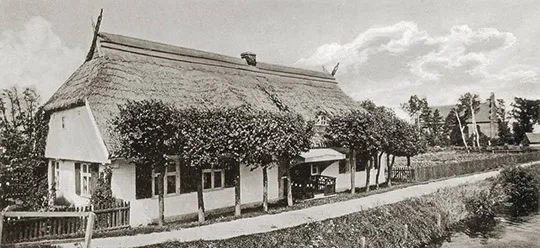
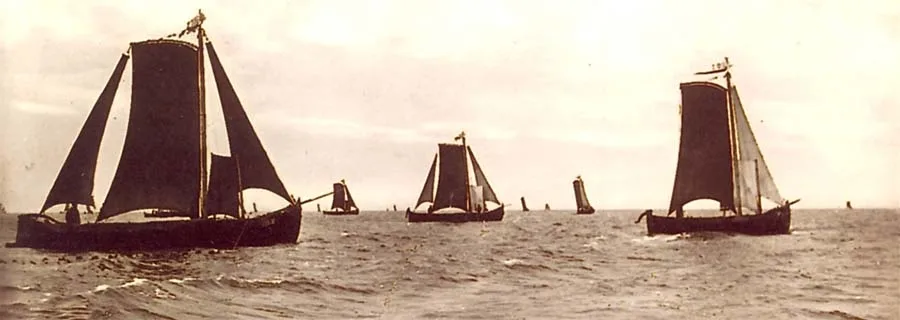
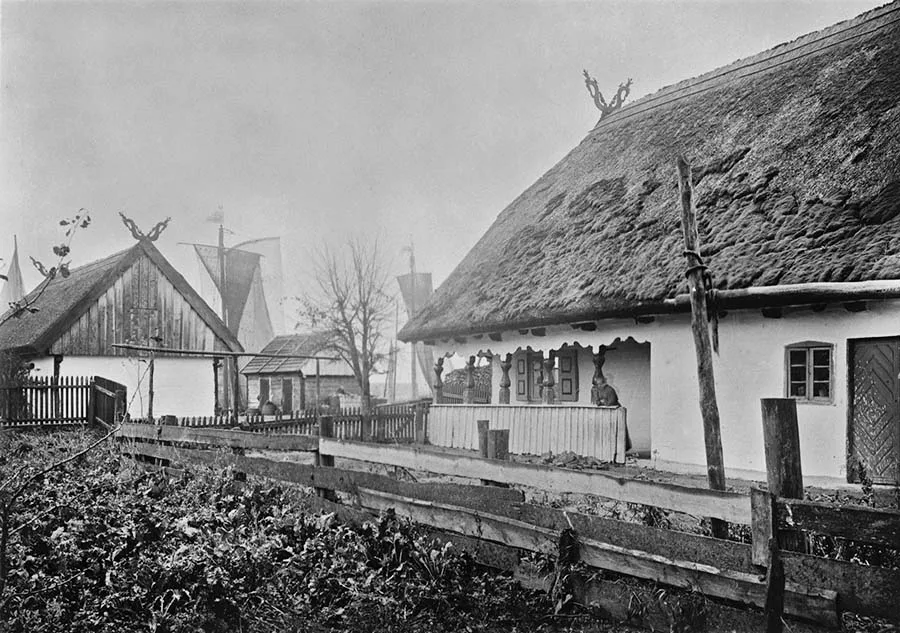 Typical local cottages, with the sails of fishing boats visible behind them.
On 19 January 1945 the evacuation of the local population began, and on 21 January 1945 the settlement was occupied by units of the Red Army.
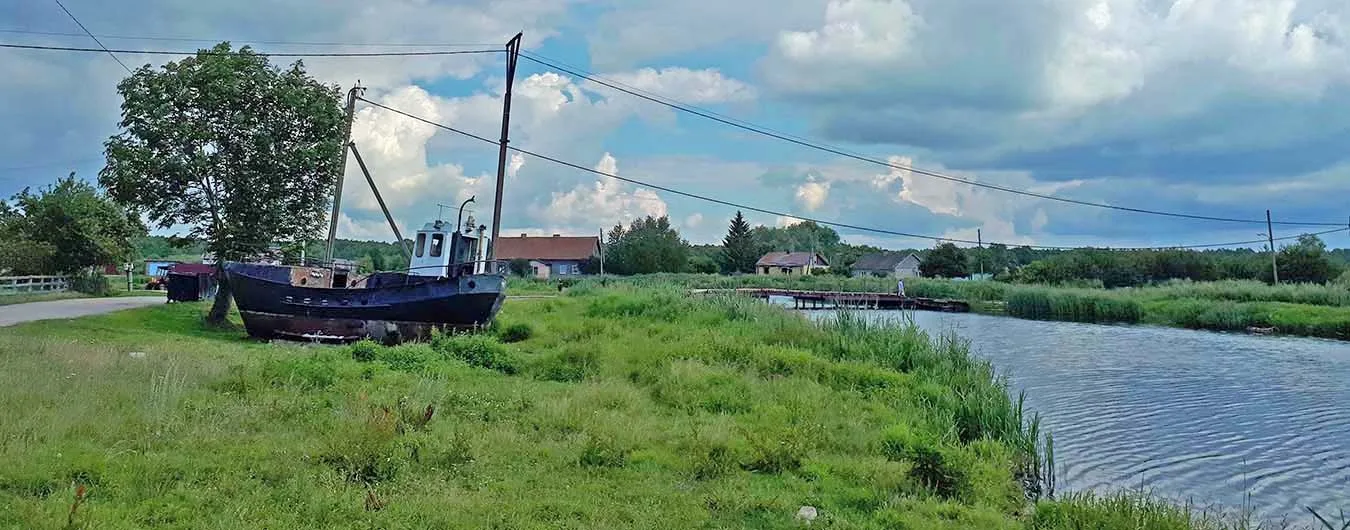
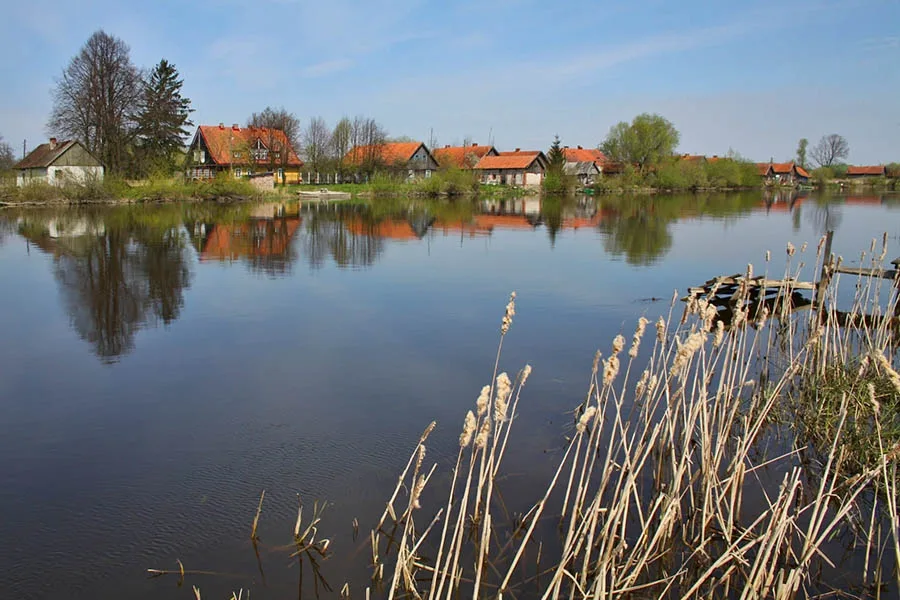 A spring view of the Matrosovka, as the river that gave the settlement its name is now called.
On 17 November 1947 Gilge was renamed the settlement of Matrosovo. At first it was part of the Zalivino Village Council. In 1948 the remaining German population was deported. From 1965 it was in the Golovkino Village Council. In 1973 the settlement had 71 houses. In 1984 there was a hospital. In the 1990s the House of Culture and the school were closed, and children began travelling to school in Golovkino.
Coordinates of the settlement: 55°00'43'' N 21°14'26'' E
Sights: the ruins of the church (1849–51), the pedestal of a monument to those who fell in the First World War (1920s), a monument to fishermen, a pre-war navigation mast.
Population change: 1820 – 284, 1905 – 1623, 1910 – 1566, 1933 – 1352, 1939 – 1154, 1984 – 190, 2002 – 122 inhabitants.
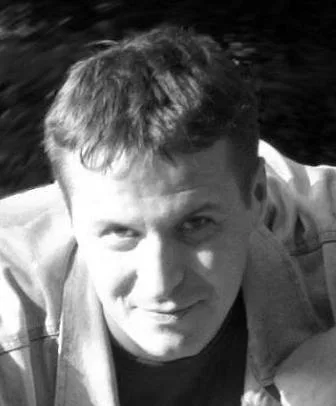
Modern photo by Mikhail Ogorodnikov.
Translated from Russian with the help of AI (Claude, Anthropic), October 2026.