Görken is first mentioned in 1272 as Gerken. Before 1875 it was called Gericken, and from 1820 Görken.
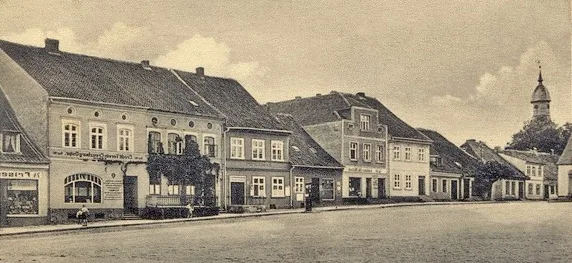
In the 19th century Görken was an estate forming a Gutsbezirk in the Kreis Preußisch Eylau (Bagrationovsk). The estate belonged to the parish of Klein Dexen (Furmanovo). The Gutsbezirk Görken also included the noble estate of Pilzen and a Vorwerk. In 1871 the Görken estate had five houses, the Pilzen estate four, and one more was in the Vorwerk. On 7 May 1874 the Gutsbezirk Görken was included in the newly established Amtsbezirk Dexen (Nagornoye). In 1877–96 and in 1919–25 the post of head of the Amtsbezirk was held by members of the Corsepius family, who owned the Görken estate. On 6 March 1876 the Pilzen estate (part of Dubrovka) split off from the Gutsbezirk Görken as a separate Gutsbezirk. On 30 September 1928 the Gutsbezirk Görken was abolished and merged with the Gutsbezirk Graventin (Kamyshevo) into a new rural community of Graventin. From 1937 Görken belonged to the new parish of Domtau (Dolgorukovo).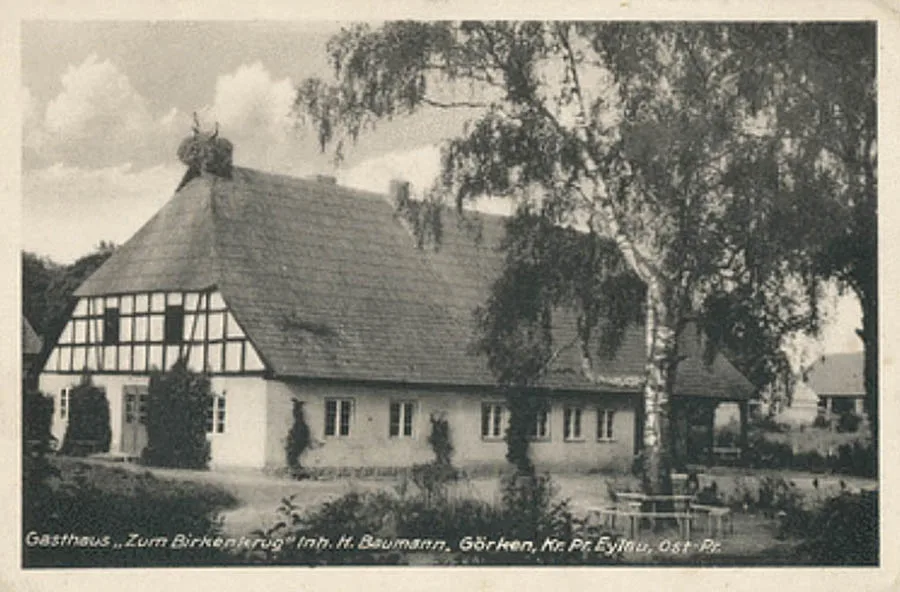 The Zum Birkenkrug guest house in Görken (1941).
In the pre-war years Görken had a school. In September 1939 a prisoner-of-war camp, Stalag IA Stablack (54°25'01'' N 20°32'23'' E), was opened near Görken.
Klaussen was founded around 1400. After 1414 it was called Clausigen. After 1600 it is mentioned as Klausenn, after 1774 as Klausen, and after 1820 the name Klaußen became established.
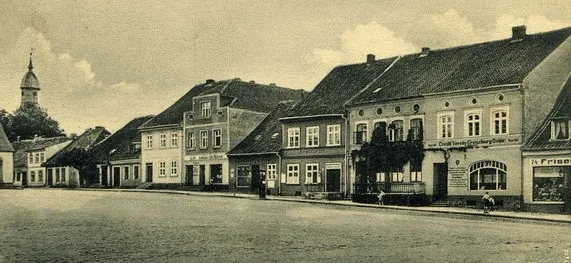
From 1818 Klaussen was a village forming a rural community in the Kreis Kreuzburg, renamed in 1819 the Kreis Preußisch Eylau (Bagrationovsk). The village belonged to the parish of Klein Dexen (Furmanovo). In 1871 Klaussen had 11 houses. On 7 May 1874 the Klaussen community was included in the newly established Amtsbezirk Dexen (Nagornoye).
From 1937 the village of Klaussen belonged to the new parish of Domtau (Dolgorukovo).
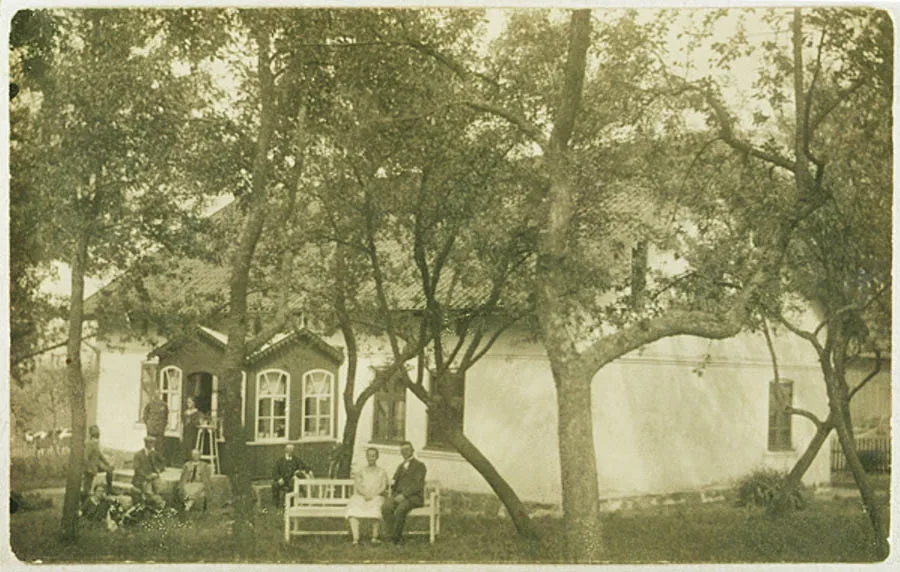 The Paschke family house in Klaussen (1920–1930).
Pilzen was founded in 1288 as Pilseden. After 1762 it is mentioned as Piltzen. Then, after 1774, the name changed to Pultzen, and after 1785 to Pültzen. After 1846 it was called Pülzen.
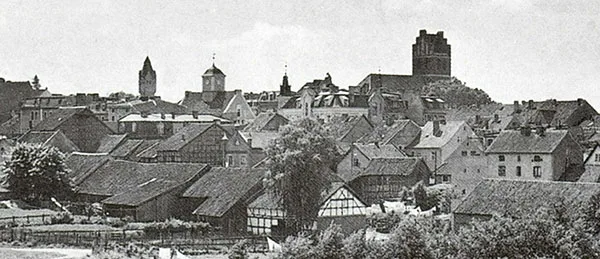
Until 1876 Pilzen was a noble estate in the Gutsbezirk Görken (Dubrovka) of the Kreis Preußisch Eylau (Bagrationovsk). The estate belonged to the parish of Klein Dexen (Furmanovo). In 1871 Pilzen had four houses. On 7 May 1874 the Pilzen estate, as part of the Gutsbezirk Görken, was included in the newly established Amtsbezirk Dexen (Nagornoye). On 6 March 1876 Pilzen became a separate estate and formed a Gutsbezirk of the same name, which was also part of the Amtsbezirk Dexen (Nagornoye). The Pilzen estate became well known because in the 20th century its owner was Wolfgang Kapp (1858–1922), a German politician and revanchist, one of the organisers of the Kapp Putsch (1920), who also served in 1907–20 as General Landschaft Director of East Prussia. On 30 September 1928 the Gutsbezirk Pilzen was abolished and merged with the Gutsbezirk Lölken (part of Furmanovo), the village of Klein Dexen (Furmanovo) from the Amtsbezirk Körnen (Kiersnowo, Poland), and the forest districts of Stablack (Dolgorukovo) and Wilhelmshöhe (54°22'58'' N 20°28'44'' E) from the forest Gutsbezirk Preußisch Eylau (Preußisch Eylau, Forst) into a new rural community of Klein Dexen (Furmanovo). From 1937 Pilzen belonged to the new parish of Domtau (Dolgorukovo). On 1 April 1938 Pilzen, together with the whole Klein Dexen community (Furmanovo), was included in the newly formed Gutsbezirk Stablack (Dolgorukovo). On 1 January 1939 the Gutsbezirk Stablack and the localities belonging to it became part of the re-established Amtsbezirk Stablack.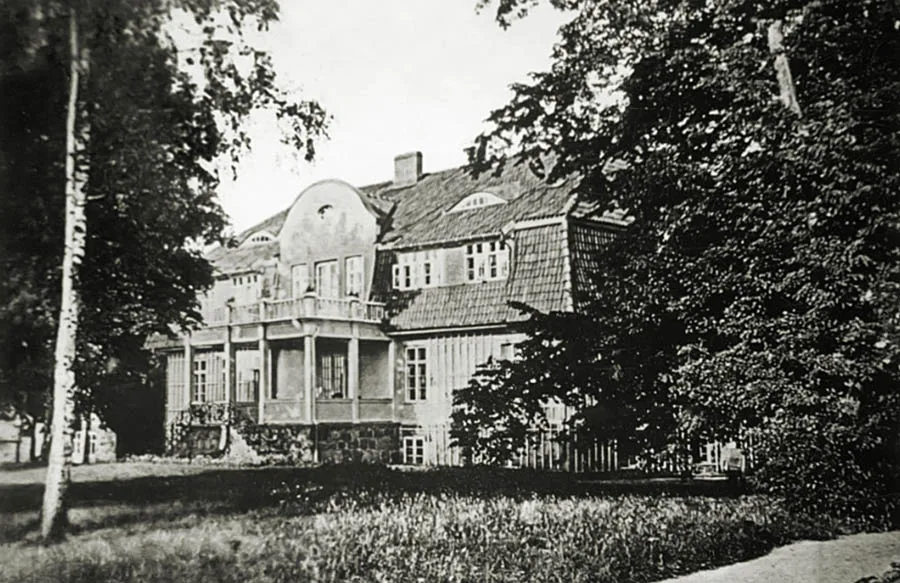 Manor house of the Pilzen estate (1907).
In 1945 Pilzen went to Poland, but after the border was changed in 1946 it became part of the Kaliningrad Region. On 17 November 1947 Görken, Klaussen and Pilzen were merged and renamed the settlement of Dubrovka.
Initially Dubrovka was part of the Chapayevo Village Council. In 1963 Dubrovka had 18 houses (ten in Görken and eight in Klaussen), while only farm buildings remained in Pilzen. No later than 1975 Dubrovka came under the Orekhovo Village Council. By 1984 another fifteen or so houses had been built on the territory of former Görken, and by the end of the 1990s there were more than 40 here. On the territory of former Klaussen two farmsteads remained, along with a livestock complex in which a furniture factory opened in the 2000s. The railway running near the settlement has survived on the Bagrationovsk–Dolgorukovo section, but it is practically unused.
Coordinates of the settlement: 54°24'38'' N 20°31'57'' E (Klaussen), 54°24'50'' N 20°33'03'' E (Görken); on the site of Pilzen (coordinates 54°23'51'' N 20°30'58'' E) there are currently no houses.
Population change: 1984 – 200, 2002 – 184, 2010 – 158 inhabitants.
Görken
Population change of Görken: 1867 – 108, 1871 – 107, 1910 – 99 inhabitants.
Composition of the population of Görken in 1871: all 107 — Evangelical Christians, children under 10 — 30, literate — 57 (74%).
Klaussen
Population change of Klaussen: 1867 – 100, 1871 – 107, 1910 – 90, 1933 – 81, 1939 – 84 inhabitants.
Composition of the population of Klaussen in 1871: all 107 — Evangelical Christians, children under 10 — 27, literate — 67 (84%).
Pilzen
Population change of Pilzen: 1867 – 103, 1871 – 124, 1910 – 79 inhabitants.
Composition of the population of Pilzen in 1871: all 125 — Evangelical Christians, children under 10 — 42, literate — 75 (93%), insane — 1.
Photos on this page: Bildarchiv Ostpreußen, bildarchiv-ostpreussen.de
Translated from Russian with the help of AI (Claude, Anthropic), October 2026.