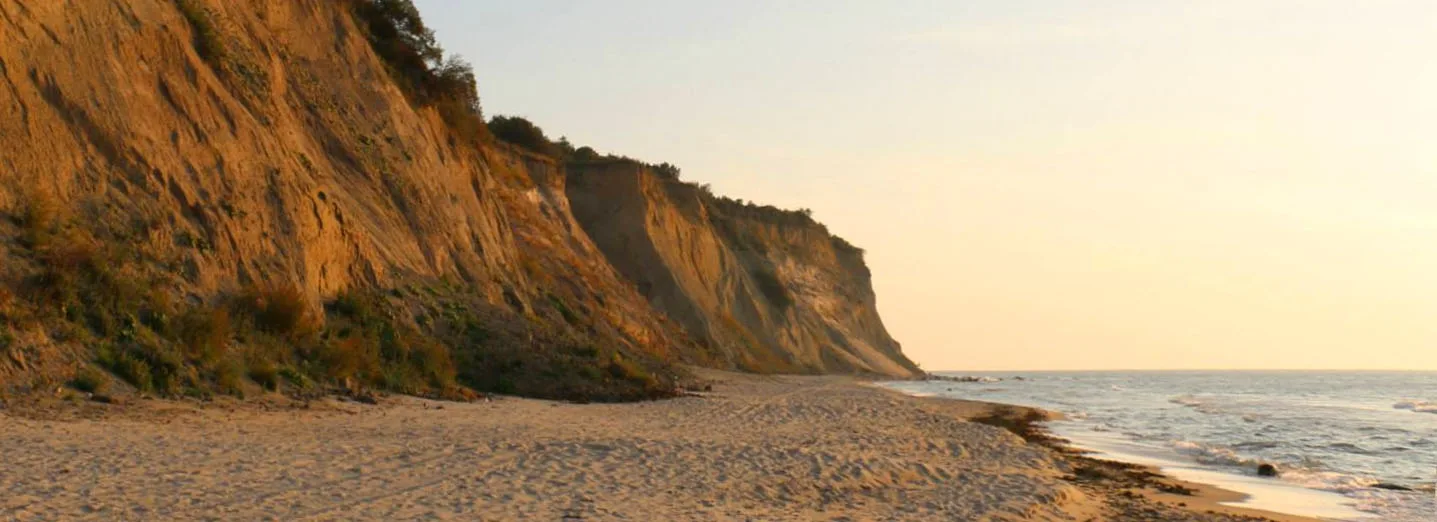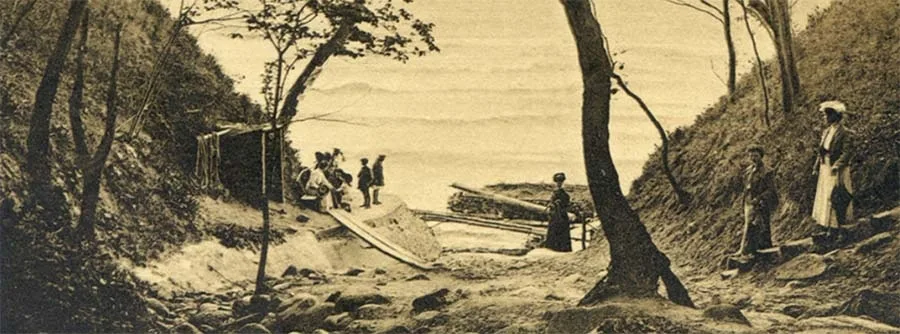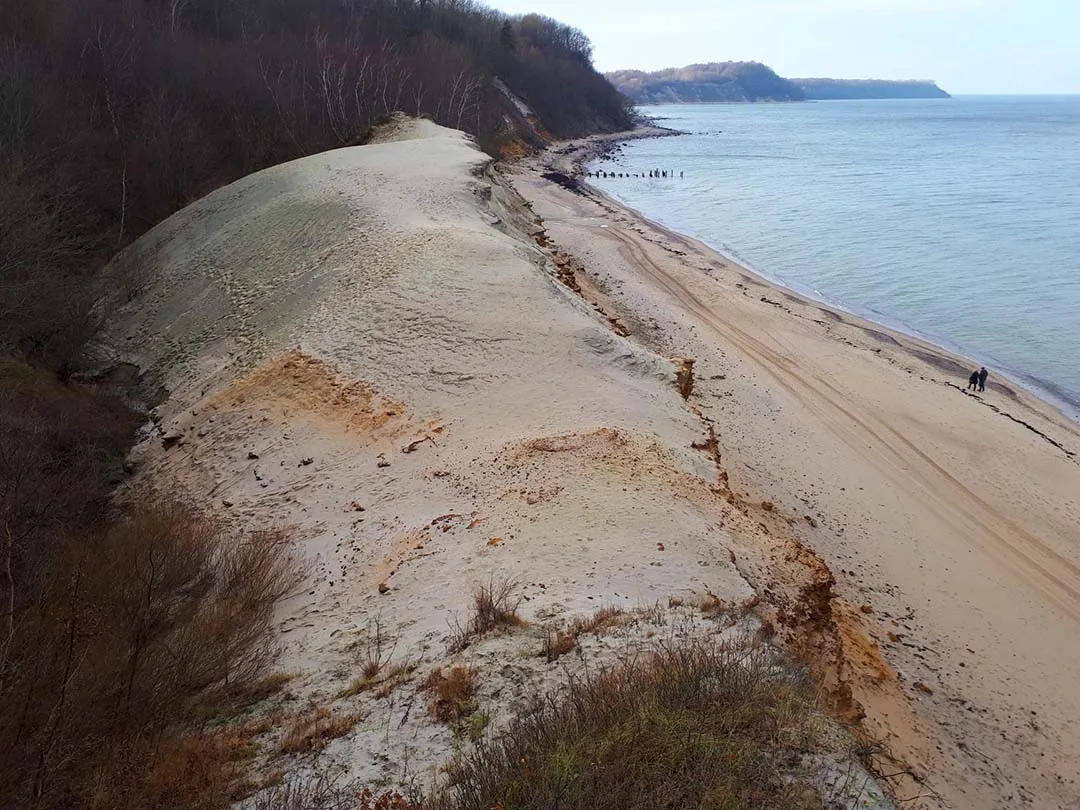
Gross Kuhren was founded in 1400, although the fishing village of Pella had existed on the site of the settlement even earlier. In 1404 it is mentioned as Kuwrendorf, then until 1563 as Couhren. From the mid-19th century Gross Kuhren was a popular tourist destination thanks to the natural beauty of its surroundings.
In 1785 Gross Kuhren was classified as a royal village (Königlich Dorf) with 48 households. By 1818 the village still had 48 households, but it is referred to as a "peasant" village (Bauer-Dorf).
In the 19th century Gross Kuhren was a village which from 1818 formed a rural community in the Kreis Fischhausen (Primorsk; from 1939 part of the Landkreis Samland). Until 1913 the village belonged to the parish of Heiligenkreutz (Krasnotorovka). In 1871 Gross Kuhren had 72 residential houses, in which 131 families and 4 single men lived. On 13 June 1874 the rural community of Gross Kuhren was included in the newly established Amtsbezirk Gross Kuhren.
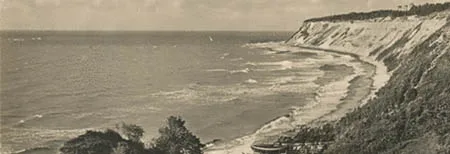
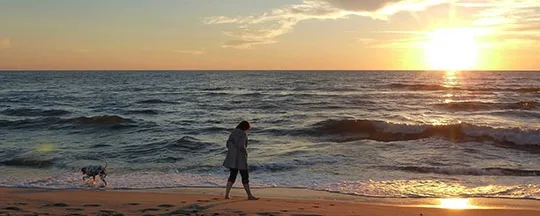
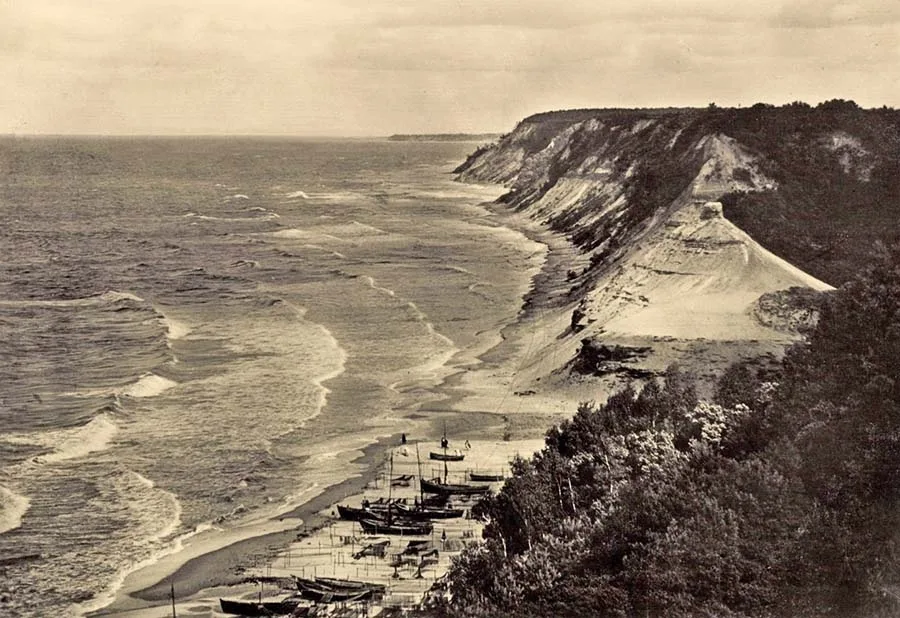
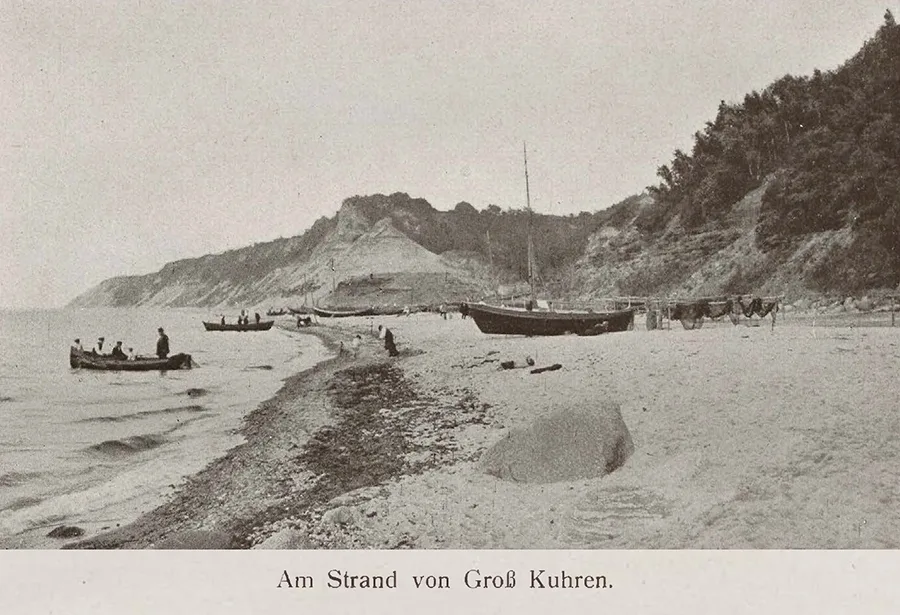 Beach at Gross Kuhren.
At the beginning of the 20th century Gross Kuhren received the status of a resort. In 1913 Gross Kuhren got its own church. From 1939 rail services ran on the Cranz–Pillau (Zelenogradsk–Baltiysk) line, on which a station was built in Gross Kuhren. Before the Second World War Gross Kuhren had 130 buildings.
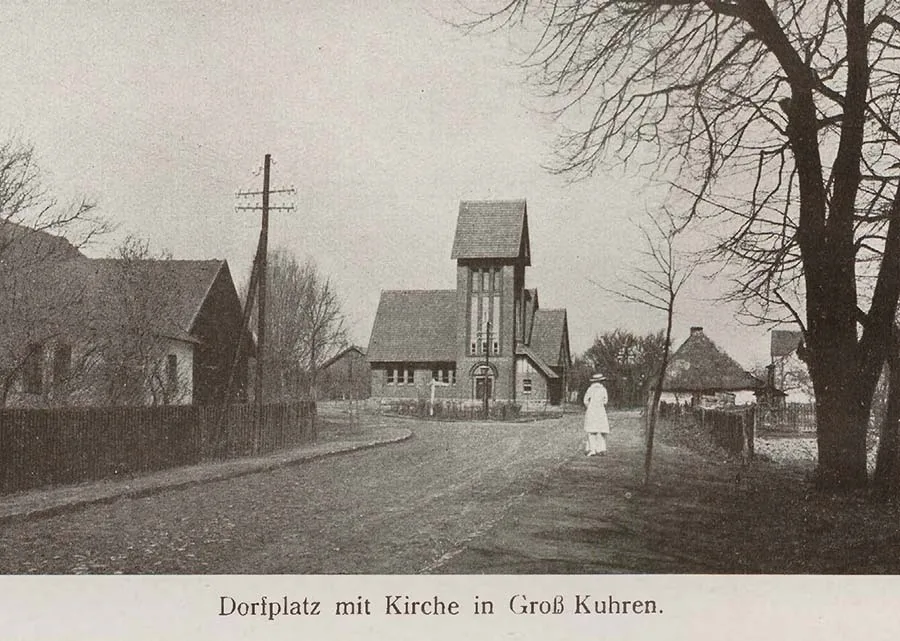 Village landscape with Gross Kuhren church.
Gross Kuhren was first taken on 3 April 1945 by the 2nd submachine-gun company of the 271st Separate Motorised Special Purpose Battalion (Guards Major A. Kobylinsky). However, as early as 4 April 1945 it was recaptured by German troops. It was taken by the Red Army again on 15 April 1945.
On 17 November 1947 Gross Kuhren was renamed the settlement of Primorye.
Initially it belonged to the Yantarny Village Council of the Primorsk (from 1963 Zelenogradsk) District. In 1951 it became the centre of the newly formed Primorye Settlement Council. In 1955 Primorye had 87 houses. In Soviet times there was a fishing collective farm in Primorye. By the end of the 1990s the settlement had about 240 houses.
Sights: the church (1913), pre-war residential houses, a monument to Lenin, the Rosenschlucht and Morgenschlucht ravines, and Mount Zipfelberg, the highest point of the Baltic coast in Samland (54.1).
Population change: 1818 – 320, 1830 – 278, 1867 – 592, 1871 – 616, 1885 – 650, 1905 – 516, 1910 – 575, 1919 – 718, 1925 – 695, 1933 – 705, 1939 – 844, 1979 – 745, 1989 – 705, 2002 – 848, 2010 – 954, 2012 – 958, 2014 – 1019, 2015 – 1008, 2016 – 1013, 2017 – 1097 inhabitants.
Composition of the population of Gross Kuhren in 1871: Protestant Christians – 611, Catholics – 1, Jews – 4, children under 10 – 140, literate – 336 (71%).
The Amtsbezirk Gross Kuhren
On 13 June 1874 Amtsbezirk No. 40 Gross Kuhren was established in the Kreis Fischhausen, comprising five rural communities: Alt Katzkeim (Tolbukhino), Gross Kuhren (Primorye), Mandtkeim (Maysky), Neu Katzkeim (Barkasovo) and Schalben (Orekhovo). Residents of Neu Kuhren held the post of head of the Amtsbezirk in 1919–21 (the senior teacher Schilfert) and from 1931 (the bricklayer Karl Fischer).
No later than 1908 the Neu Katzkeim community (Barkasovo) was dissolved, and the village itself was incorporated into the forest Gutsbezirk Warnicken, Forst (Lesnoye), part of which now lay in the Amtsbezirk Gross Kuhren.
On 17 October 1928 the Mandtkeim community (Maysky) became part of the rural community of Schalben (Orekhovo). On 1 December 1928 part of the forest Gutsbezirk Warnicken, namely the village of Neu Katzkeim (Barkasovo), was incorporated into the rural community of Alt Katzkeim (Tolbukhino). Thus the Amtsbezirk Gross Kuhren came to consist of three rural communities: Alt Katzkeim (Tolbukhino), Gross Kuhren (Primorye) and Schalben (Orekhovo), and its composition did not change again until 1945.
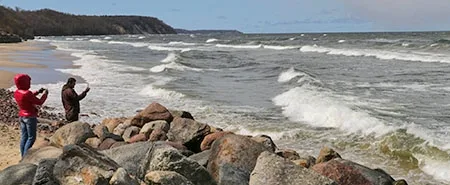
Modern photo (at the very top): Mikhail Ogorodnikov.
Translated from Russian with the help of AI (Claude, Anthropic), October 2026.