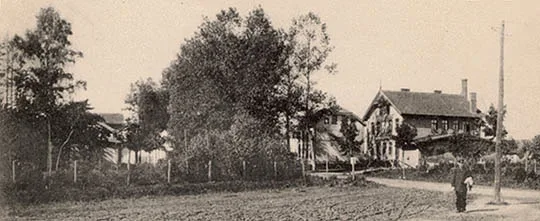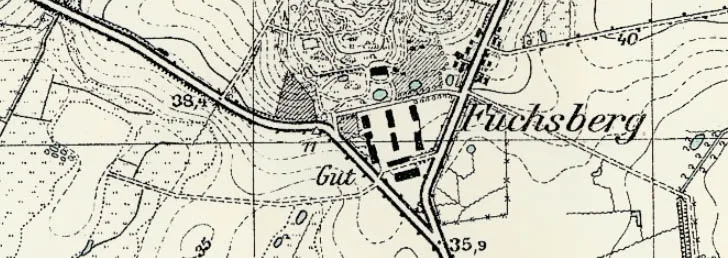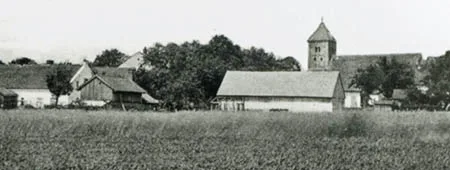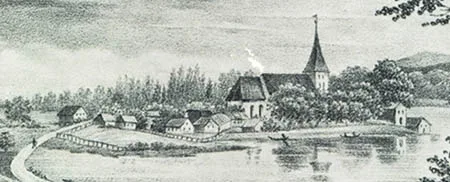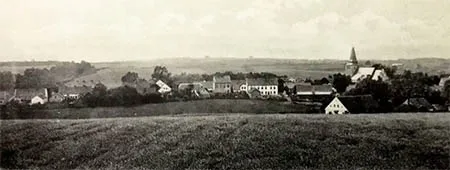
In 1550 the estate was owned by the armourer von Foller, who was granted a patent of nobility in 1570. In 1713 Jacob Lexdehn became the owner. In 1785 von Didenburg is mentioned as the owner, and around 1900 the estate was acquired by the inventor Georg Knorr (1859–1911).
In 1785 Gross Mischen was classified as a noble estate (adelich Gut) with 11 households. The estate belonged to the parish of Wargen / Wargen (Kotelnikovo) and was part of the Kreis of Schaaksen / Schakenschen. By 1818 the number of households was unchanged, while the settlement's status had changed to a noble outlying farm (adliches Vorwerk).
In the second half of the 19th century Gross Mischen was a knight's estate (Rittergut), which from 1867 formed a Gutsbezirk in the Kreis of Fischhausen (Primorsk; in 1939 it was merged into the Landkreis of Samland). The estate still belonged to the parish of Wargen (Kotelnikovo).
By 1871 the Gutsbezirk also included the outlying farms of Klein Mischen (54°49'48'' N 20°24'42'' E) and Perkuiken (54°49'24'' N 20°26'31'' E). Notably, in the 18th–20th centuries the Perkuiken farm belonged to a different parish, Rudau / Rudau (Melnikovo). In 1871 the Gross Mischen Gutsbezirk had 11 residential houses: eight on the Gross Mischen estate itself, two on the Perkuiken farm and one on the Klein Mischen farm. On 13.06.1874 the Gross Mischen Gutsbezirk was incorporated into the newly established Amtsbezirk of Gross Mischen. By that time the farms of Backenfeld (Kuznetskoye) and Zielkeim (Petrovo) had become part of the Gross Mischen Gutsbezirk, although in various documents these two farms appeared as a separate Gutsbezirk of Zielkeim. The question was finally settled only on 04.06.1907, when the independent status of the Zielkeim estate with the Backenfeld farm was officially confirmed.
In 1879 the estate owned 737 ha of land (11th among the 140 Gutsbezirke of the Kreis), and property tax receipts amounted to 6,635 marks (22nd place in the Kreis). By 1885 the land holdings of Gross Mischen had increased to 747 ha, of which 385 ha were arable land, 102 ha meadows and 65 ha forest. In 1885 the Gutsbezirk had 11 houses (8 on the Gross Mischen estate, 1 in Klein Mischen, 2 in Perkuiken), home to 32 families.
By 1895 the Gross Mischen Gutsbezirk had scarcely changed: it had 10 residential houses and a school building, with 29 families living in these houses. As before, two of the houses were in Perkuiken and one in Klein Mischen.
By 1905 the number of residential houses on the Gross Mischen estate had fallen to six, while on the Perkuiken and Klein Mischen farms it remained unchanged (2 and 1 respectively). Although the total number of residential houses in the Gutsbezirk had fallen to nine, the number of resident families rose to 33, and one more person lived in Gross Mischen without a family. The population of the estate also continued to grow. In 1905 property tax receipts per hectare of land amounted to 8.95 marks, almost 10% below the average for the Gutsbezirke of the Kreis of Fischhausen.
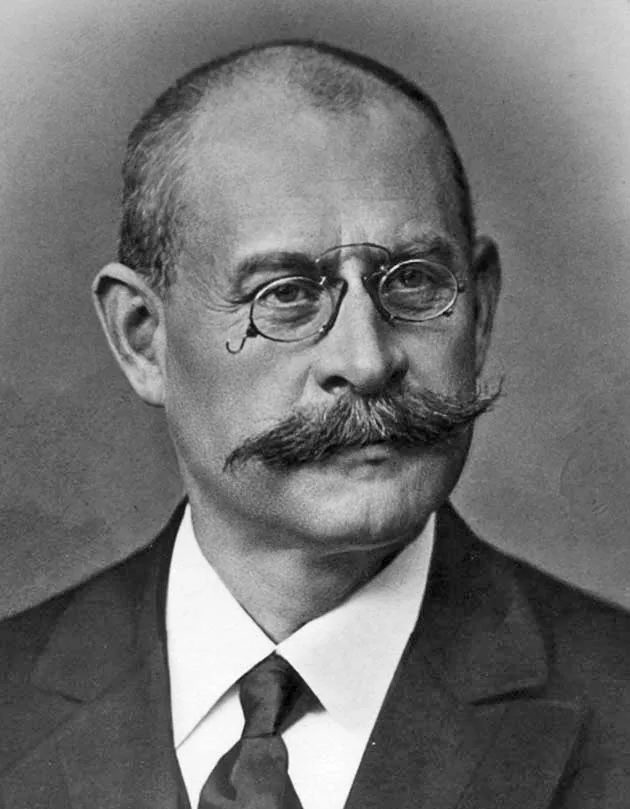
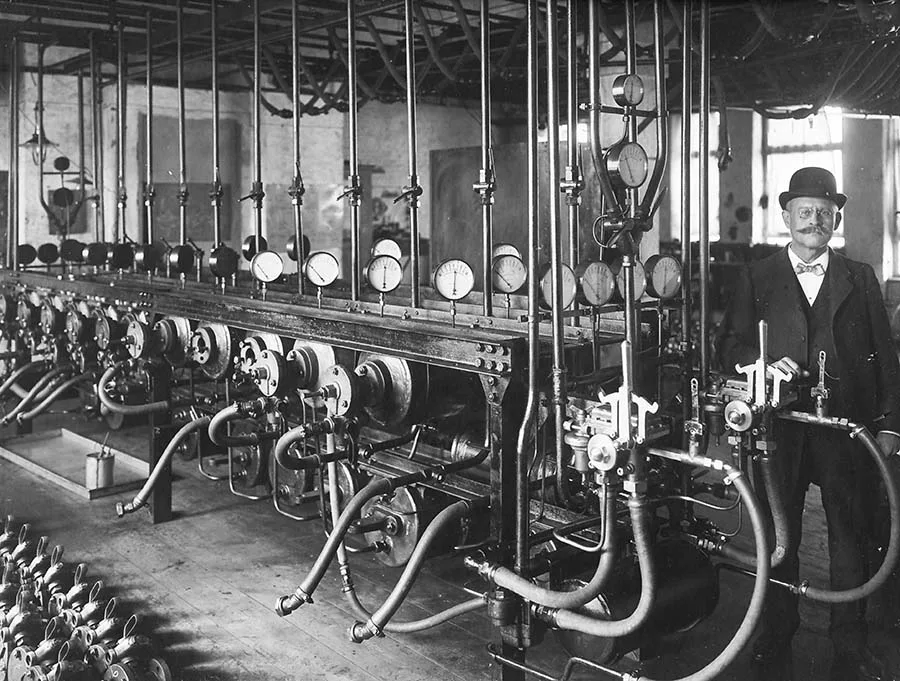 The inventor Georg Knorr and his brainchild.
The owner of the estate during that period, Georg Knorr, deserves special mention. He was the inventor of the so-called "Knorr quick-acting brake" used in railway transport, as well as other mechanisms and devices for the railways. In the early 20th century this brake made it possible to raise the maximum speed of freight trains from 45 km/h to 90 km/h.
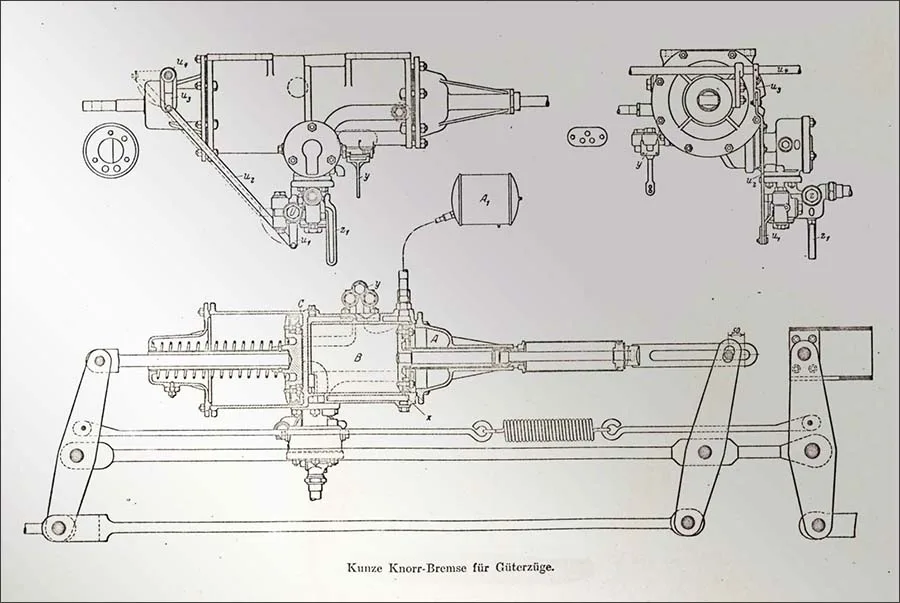 The drawings that brought fame and fortune to the owner of Gross Mischen.
Knorr also improved a number of other braking systems. In 1893 he bought the company Carpenter & Schulze / Carpenter & Schulze, and in 1905 he turned it into Knorr-Bremse GmbH. This company still exists today and is the largest manufacturer of railway brakes and braking systems for heavy road vehicles (50% of the world market), with more than 100 branches in 30 countries. Two streets and a square in Berlin and a street in Munich are named after Georg Knorr. Knorr-Bremse braking systems are fitted, among others, on Russia's "Sapsan" and "Lastochka" trains.
On 30.09.1928 the Gross Mischen Gutsbezirk was abolished and merged with the Gutsbezirke of Waldhausen (Pereleski) and Zielkeim (Petrovo) into the new rural municipality of Gross Mischen.
In 1932 the Gross Mischen estate with its outlying farms had 748 ha of land, of which 380 ha were arable land, 173 ha meadows, 74 ha pasture, 100 ha forest, 14 ha wasteland and 27 ha water. The farm had 60 horses, 250 head of cattle (including 100 cows), 23 sheep and 100 pigs. The estate was valued at 364,000 marks and was owned by Frau Kleppe.
From May to August 1941 an intelligence school operated near the Gross Mischen estate, training agents recruited from Russian émigrés, Poles and Czechs to be infiltrated into the USSR.
The Amtsbezirk of Gross Mischen
On 13.06.1874 Amtsbezirk No. 19 Gross Mischen was established in the Kreis of Fischhausen. It comprised two rural municipalities, Pojerstieten (from 1906 Elchdorf, Kulikovo) and Rosignaiten (Otkosovo), as well as 5 Gutsbezirke: Auschlacken (Alekseyevka), Brasnicken (Voloshino), Gross Mischen (Petrovo), Parschwitz (54°50'17'' N 20°19'40'' E) and Waldhausen Waldhausen (Pereleski). On 04.06.1907 the Gutsbezirk of Zielkeim / Zielkeim (Petrovo) was separated from the Gross Mischen Gutsbezirk. On 30.09.1928 the Gutsbezirke of Gross Mischen (Svobodnoye), Waldhausen (Pereleski) and Zielkeim (Petrovo) were merged into the new rural municipality of Gross Mischen. The Brasnicken Gutsbezirk became part of the rural municipality of Rosignaiten (Otkosovo). The Parschwitz Gutsbezirk was incorporated into the rural municipality of Elchdorf (Kulikovo). The Amtsbezirk of Gross Mischen now consisted of three rural municipalities: Gross Mischen (Petrovo), Elchdorf (Kulikovo) and Rosignaiten (Otkosovo), and its composition did not change thereafter.
On 05.07.1950 Gross Mischen was renamed the settlement of Svobodnoye. In 1955 the settlement had three houses, and the Kholmogorovka primary school was in operation. In 1969 the school moved from Svobodnoye to Petrovo. As of 2011, 24 households were registered in the settlement.
After 2010 large-scale private house building began in the settlement. As of 2025 Svobodnoye has 70 registered residential and public buildings; there is an equestrian branch of the youth Olympic reserve sports school for modern pentathlon with an indoor arena, a guesthouse and a grocery shop.
Population trend: 1818 – 92, 1871 – 142, 1885 – 107, 1895 – 96, 1905 – 142, 1982 – 60, 2002 – 68, 2010 – 66, 2011 – 70, 2012 – 69 inhabitants.
Population trend of the Gutsbezirk and municipality of Gross Mischen: 1867 – 189, 1871 – 219, 1885 – 173, 1895 – 179, 1905 – 218, 1910 – 223, 1925 – 496, 1933 – 547, 1939 – 695 inhabitants.
Composition of the population of the Gross Mischen Gutsbezirk in 1871: Protestants – 218, Catholics – 1, children under 10 – 49, literate – 156 (88%).
Composition of the population of Svobodnoye in 2011: men – 31, women – 39, children – 17 (incl. 12 schoolchildren), pensioners – 7, disabled – 2.
Population trend of Perkuiken: 1818 – 25, 1871 – 40, 1885 – 40, 1895 – 47, 1905 – 39 inhabitants.
Population trend of Klein Mischen: 1818 – 20, 1871 – 37, 1885 – 26, 1895 – 36, 1905 – 37 inhabitants.
Photos from the author's archive.
Translated from Russian with the help of AI (Claude, Anthropic), October 2026.