Grünhoff has been known since 1322 as an Order farm for breeding war horses and working horses. Around 1414 it is mentioned as Grunenhoff, after 1542 as Grunhof, after 1565 as Grunenhof, and from 1785 it is called Grünhoff.
In 1422, according to Order documents, Grünhoff kept 57 large breeding mares, 18 foals and 35 small mares with 11 foals. In 1433–1513 Grünhoff was a Kammeramt that administered the western part of Samland. Until 1513 the Order farm was run by a Pfleger.
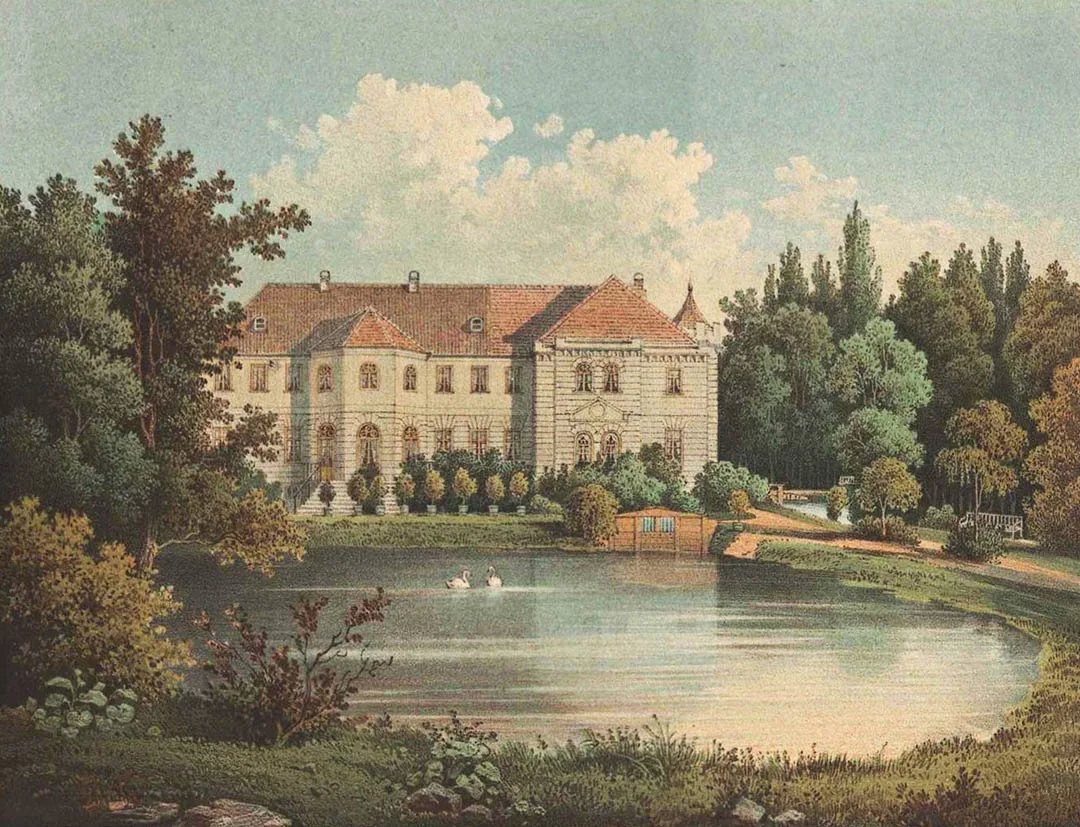
It is assumed that a fortified Order building, an Ordenshaus, stood in Grünhoff on the site of the later manor. In 1623 a wooden hunting lodge (the "Elector's House") appeared in its place, which the Electors George William and Frederick William used for hunting.
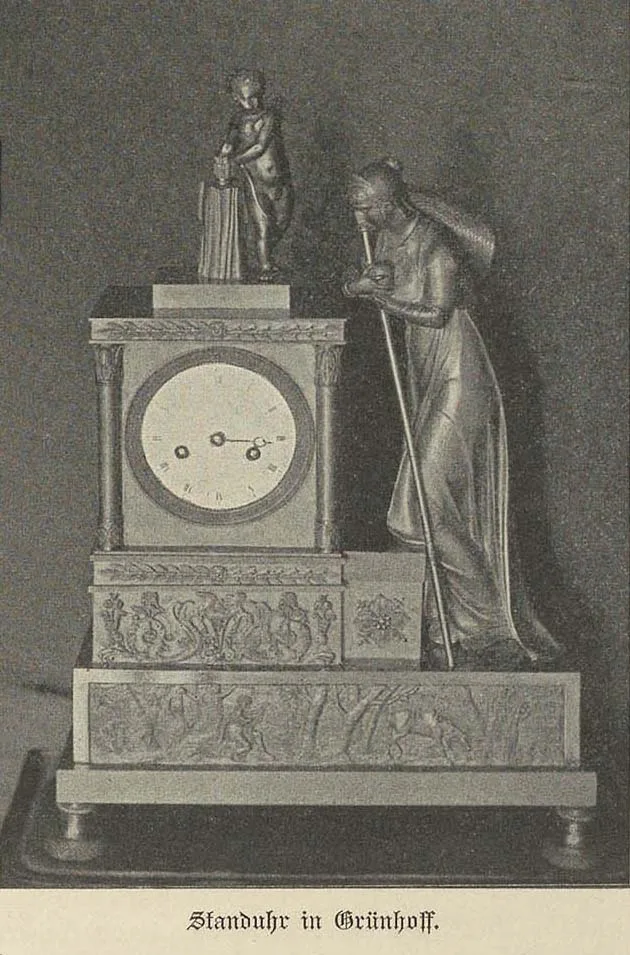
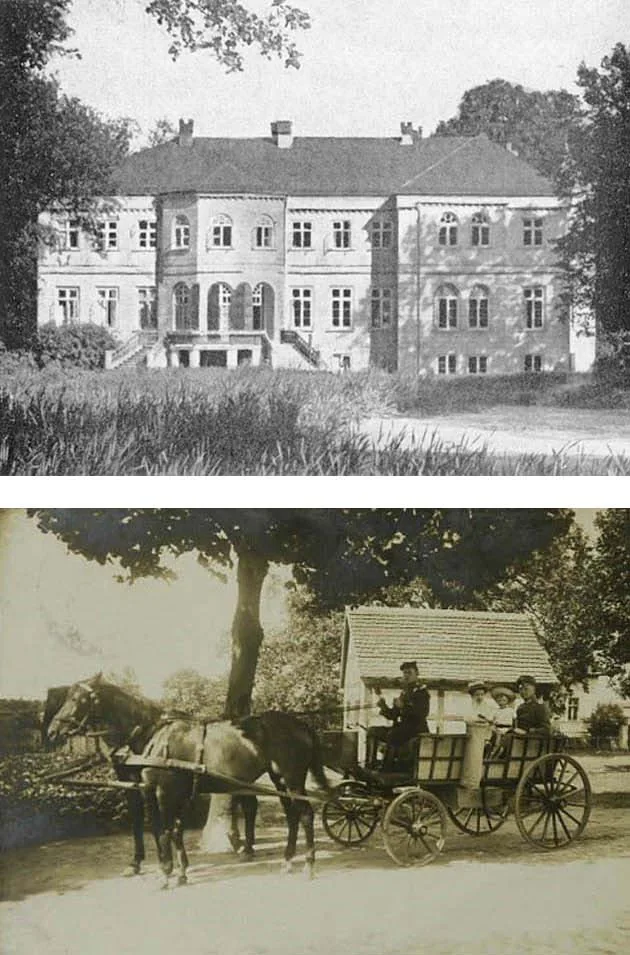
In 1697, during the "Grand Embassy", Peter I came to Grünhoff to hunt.
In 1697–1701 the architect Christian Eltester from Potsdam rebuilt the hunting lodge as a stone building in the classicist style. In 1814 the Grünhoff estate was granted, for services to the fatherland, to Count Friedrich Wilhelm von Bülow, who was buried here in 1816. In 1851–54 the architect Mohr added a Neo-Renaissance extension to the south side of the palace. By this time the estate covered 8,700 Morgen (2,175 ha) of land, of which 2,900 Morgen (725 ha) was forest and 700 Morgen (175 ha) meadows. A notable feature of the palace was its collection of antlers, gathered over many years both from antlers shed by deer and from hunting trophies.
In the 19th century Grünhoff consisted of the village of Königlich Grünhoff and the Adlig Grünhoff estate. The village formed a rural community, and the estate a Gutsbezirk, in the Landkreis Fischhausen (from 1939 the Landkreis Samland). Adlig Grünhoff and Königlich Grünhoff belonged to the parish of Pobethen (Romanovo). The Gutsbezirk Adlig Grünhoff also included: the villages of Alt Kupzau (54°53'45'' N 20°21'37'' E) and Neu Kupzau (part of Rodniki), the Kringitten estate (54°54'57'' N 20°19'24'' E), the Vorwerke Nautzau (Kovrovo) and Radnicken (Rodniki), the Waschke forestry (Forsthaus Waschke; Zvyagintsevo) and the Grünhoff brickworks (Ziegelei Grünhoff; on the territory of Kovrovo, 54°54'35'' N 20°24'01'' E). In 1874 Amtsbezirk No. 33 Grünhoff was established in the Landkreis Fischhausen, comprising the Königlich Grünhoff community (Roshchino) and two Gutsbezirke: Adlig Grünhoff (Roshchino) and Pokirren (part of Roshchino). No later than 1893 the Gutsbezirk Pokirren was converted into a rural community of the same name. On 23 June 1893 the village of Königlich Grünhoff lost its independence and became part of the Pokirren community. On 7 October 1910 the separate community of Radnicken (Rodniki) split off from the Gutsbezirk Grünhoff. On 26 September 1913 the Kringitten estate split off from the Gutsbezirk Grünhoff and began to form a separate Gutsbezirk.
On 30 September 1928 the Pokirren community (part of Roshchino) was merged with the Gutsbezirk Adlig Grünhoff (Roshchino) and the Schupöhnen community (Shumnoye) from the Amtsbezirk Woytnicken (Volodino) into a new rural community of Grünhoff (Roshchino). The new community consisted of: the Adlig Grünhoff estate, the village of Schupöhnen (Shumnoye), the village of Pokirren (part of Roshchino), the village of Alt Kupzau, the village of Neu Kupzau (part of Rodniki) and the Grünhoff brickworks (Ziegelei Grünhoff; on the territory of Kovrovo). The Grünhoff community became the sole constituent of the Amtsbezirk Grünhoff. However, as early as 1930 the Amtsbezirk was joined by the Eisseln community (Beregovoye) from the Amtsbezirk Pobethen (Romanovo) and the Michelau community (Kamenka) from the abolished Amtsbezirk of the same name. After that the composition of the Amtsbezirk Grünhoff did not change again.
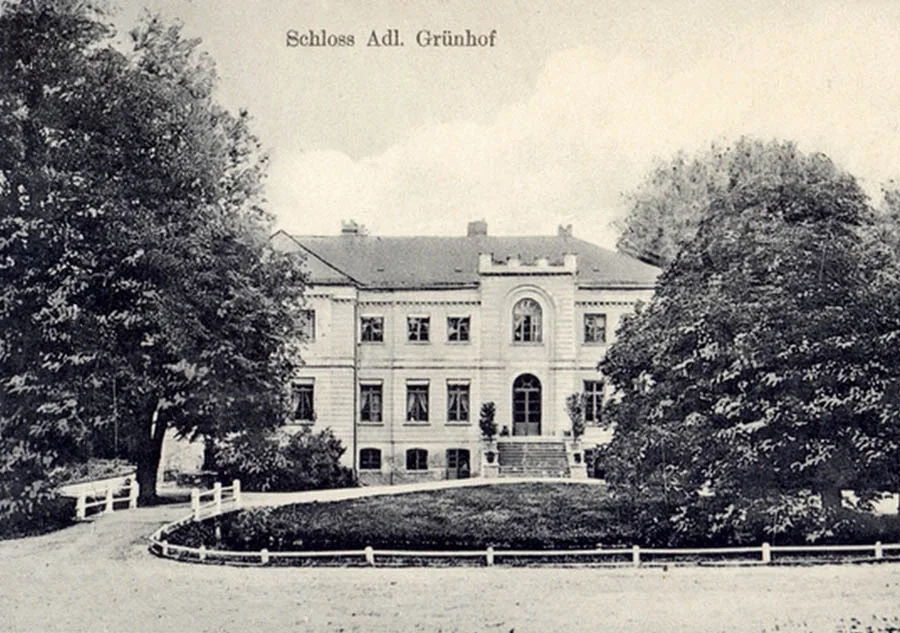
Before the Second World War Grünhoff had a school and a sawmill.

Pokirren was an estate forming a Gutsbezirk in the Landkreis Fischhausen (from 1939 the Landkreis Samland). The estate belonged to the parish of Pobethen (Romanovo). In 1874 the Gutsbezirk Obrotten was included in the newly established Amtsbezirk Grünhoff (Roshchino). No later than 1893 the Gutsbezirk Pokirren was converted into a rural community of the same name. On 23 June 1893 the village of Königlich Grünhoff (Roshchino), which had previously formed a separate community, became part of the Pokirren community. On 30 September 1928 the Pokirren community lost its independence and was merged with the Gutsbezirk Adlig Grünhoff (Roshchino) and the Schupöhnen community (Shumnoye) from the Amtsbezirk Woytnicken (Volodino) into a new rural community of Grünhoff (Roshchino). Before the war Pokirren had a windmill.
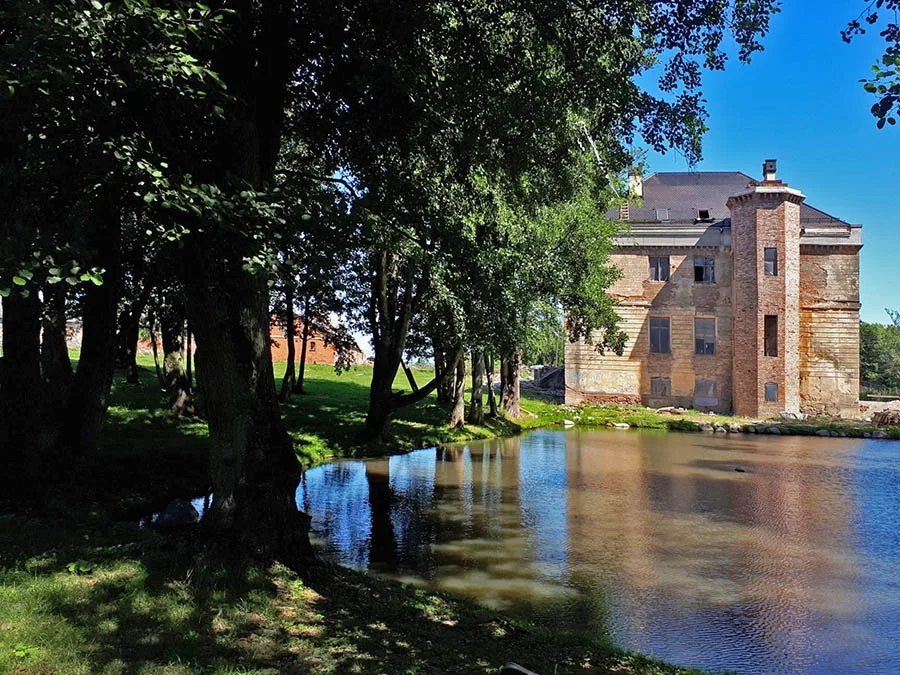
On 30 January 1945 Grünhoff was taken by troops of the 26th Rifle Division of the 54th Rifle Corps of the 43rd Army.
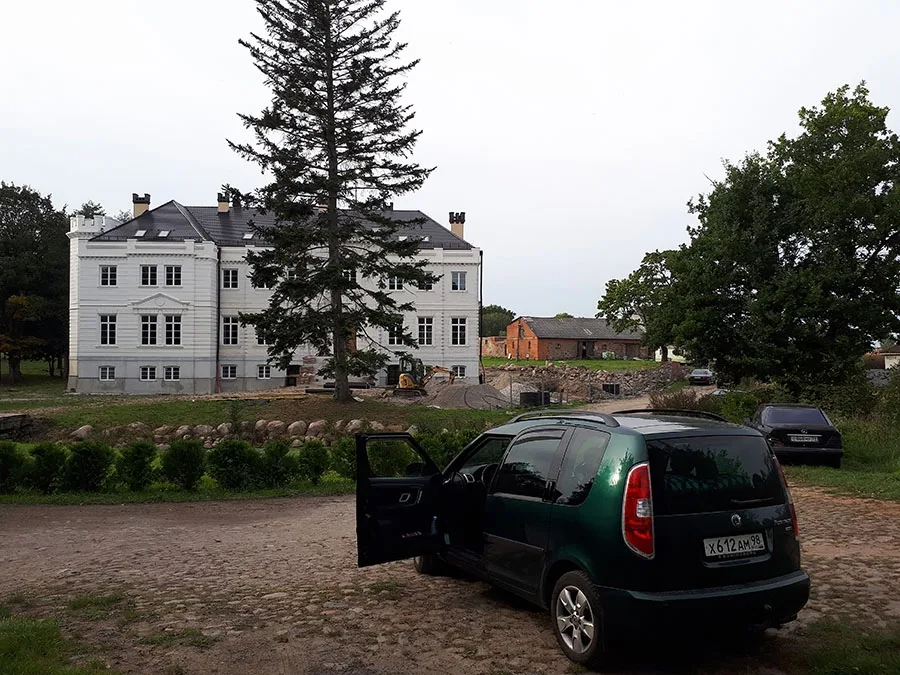
On 17 November 1947 Grünhoff was renamed the settlement of Roshchino. Pokirren was not officially renamed and became part of Roshchino de facto. Initially the settlement of Roshchino was part of the Romanovo Village Council. In 1955 the settlement had 14 houses (four of them on the territory of former Pokirren). From 1959 it was part of the Vishnyovoye Village Council. In 1966 the quadrangular complex of estate buildings was still intact. At the end of the 1990s the settlement had 42 houses (including 16 houses on the territory of Pokirren). As of 2018 the settlement had about 35 houses.
In 2022 the manor house of the estate is in the final stage of renovation. Details can be found on the project website.
Coordinates of the settlement: 54°54'26'' N 20°22'11'' E
Sights: the memorial to Soviet soldiers (1975, 278 people), Grünhoff Palace, a family burial ground (54°54'35'' N 20°22'47'' E, condition to be verified).
Population change: 1984 – 160, 2002 – 159 inhabitants.
Population change of the Gutsbezirk Adlig Grünhoff: 1905 – 447, 1910 – 343 inhabitants.
Population change of the merged Grünhoff community: 1925 – 473, 1933 – 513, 1939 – 472 inhabitants.
Population change of the Pokirren community: 1905 – 65, 1910 – 65 inhabitants.
Population change of the Kringitten estate: 1905 – 48, 1910 – 43 inhabitants.
Population of Alt Kupzau: 1905 – 2 inhabitants.
Population of Neu Kupzau: 1905 – 15 inhabitants.
Population of the Grünhoff brickworks: 1905 – 8 inhabitants.
Modern photos by Mikhail Ogorodnikov.
Translated from Russian with the help of AI (Claude, Anthropic), October 2026.