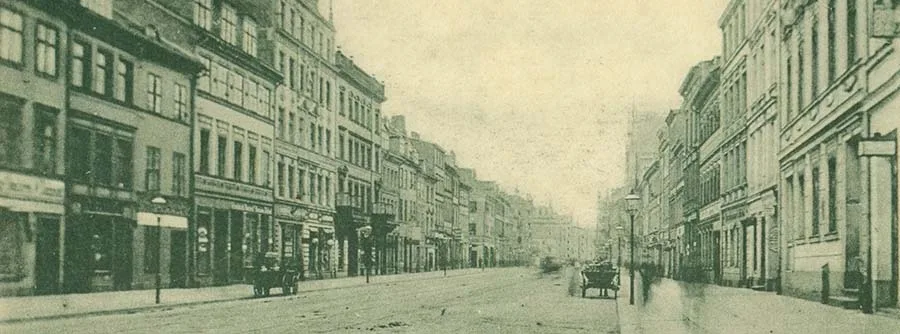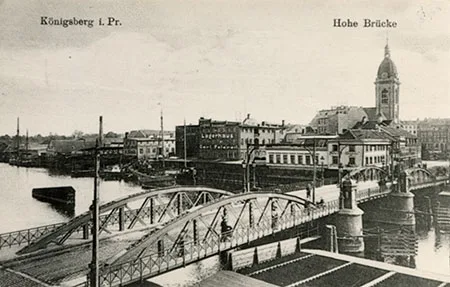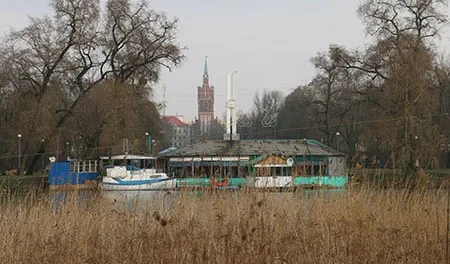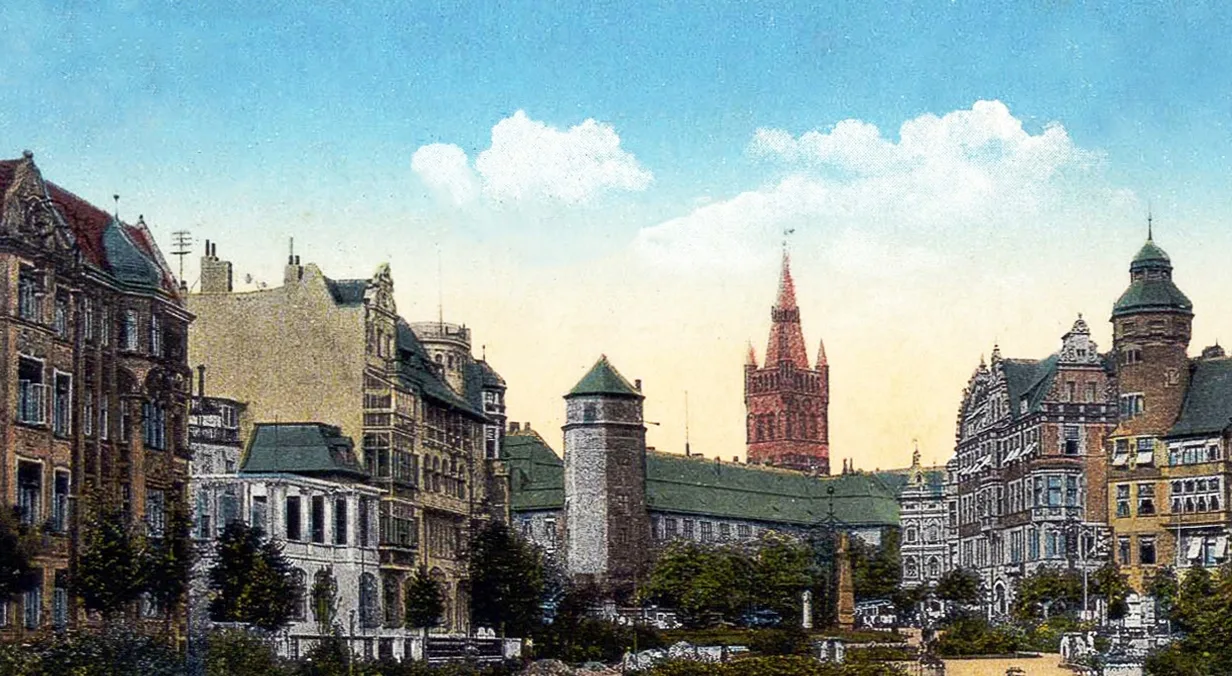
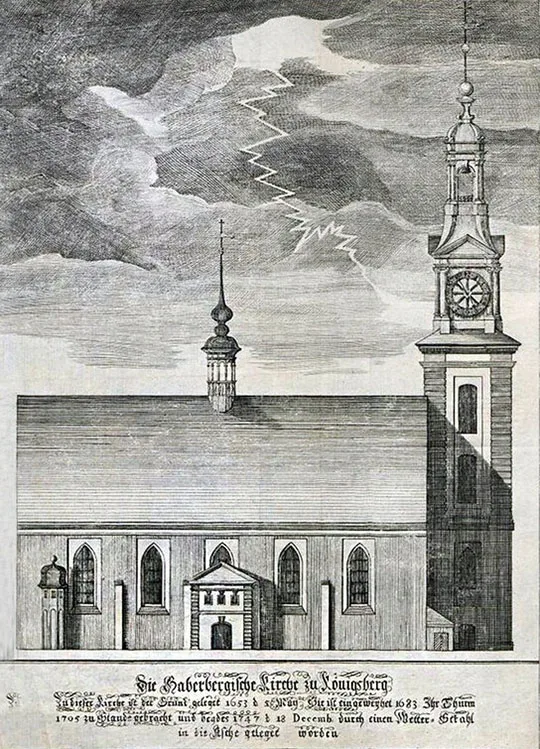
It was a wide, rectangular, plastered brick building with a tower that was rebuilt in 1705. In 1747 the church burned down after being struck by lightning. From 1748 to 1753 a new church was built using the old walls. The slender openwork top of the tower was built in 1775.
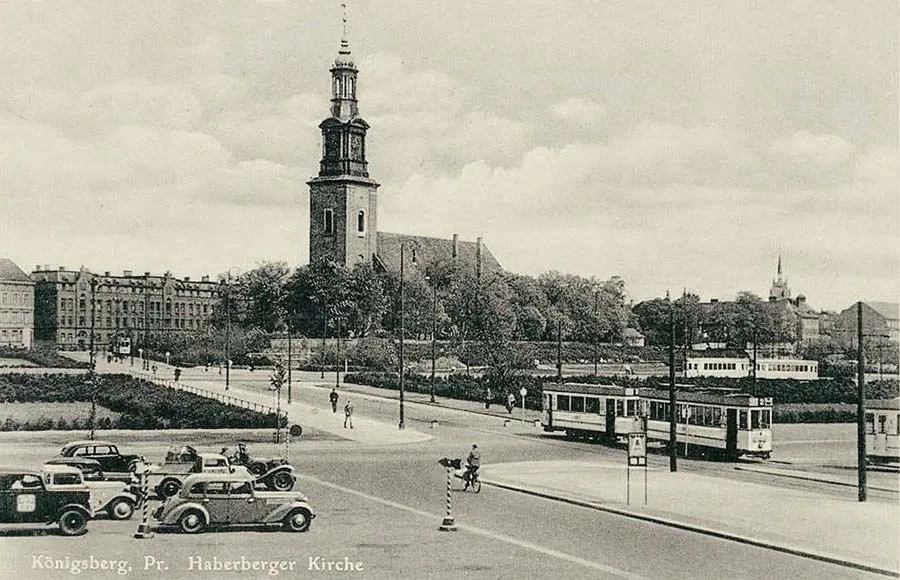
The interior had three naves and five bays with cross vaults resting on Doric limestone columns, with galleries along the sides.
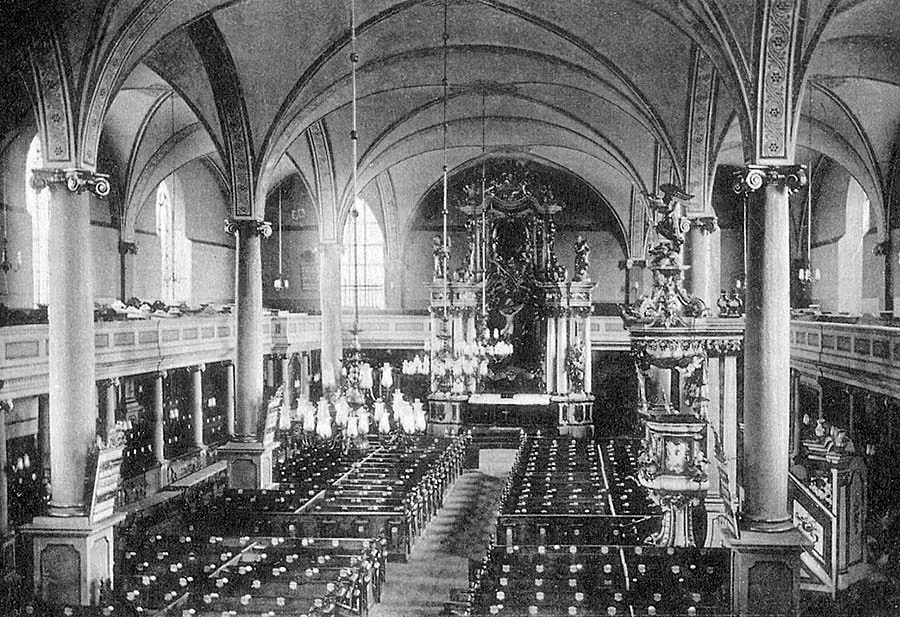
There were portraits of 17th- and 18th-century pastors, among them Christian Kalau (1692), Chr. Heiligendörfer (1686) and L. J. Porsch (1757). Almost all the altar plate was the work of Königsberg goldsmiths. A brass font of 1689 and a baptismal bowl of 1729, both in the Rococo style. The altar dated from 1766; its altarpiece depicted the Baptism. The confessional and pulpit dated from 1765.
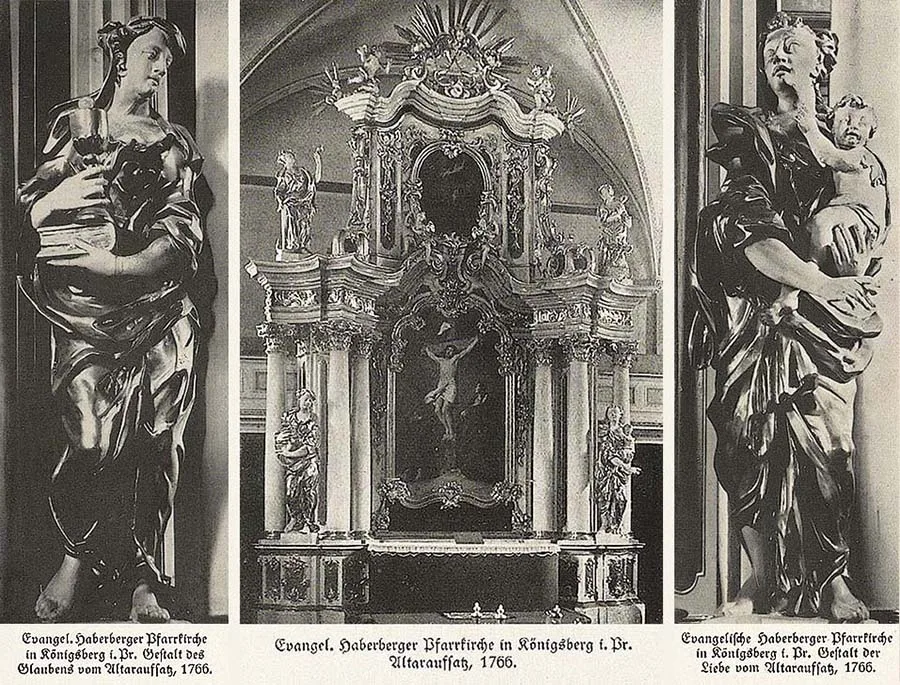 The altar of the Haberberg Church.
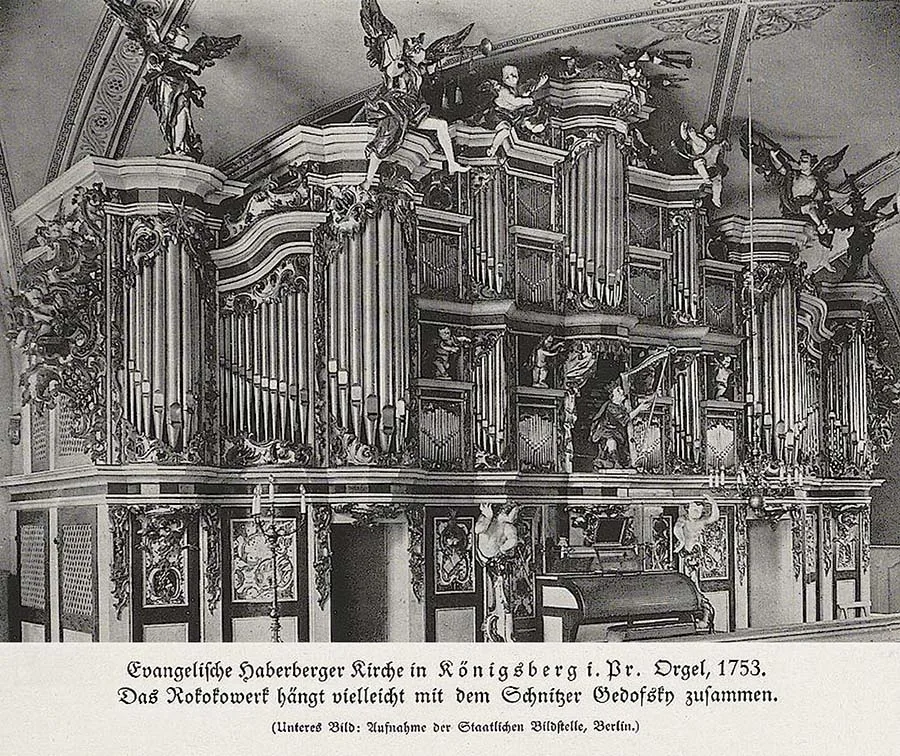
The organ was made by Adam Casparini and was considered one of the finest in East Prussia at the time. It was renovated in 1902 by the firm of Wilhelm Sauer of Frankfurt an der Oder.
During the First World War the Haberberg parish lost its old bronze bells and only in 1920 received three new ones cast in steel.
The ruins of the Haberberg Church, destroyed during the Second World War, stood, gradually crumbling, until the end of the 1950s. Then, in the early 1960s, the church was finally demolished together with the adjoining cemetery; skulls from it lay for some time along the tram tracks and were then taken away to an unknown destination. The Oktyabr cinema was built on the site of the former church and cemetery. Today it is a cultural centre.
Translated from Russian with the help of AI (Claude, Anthropic), October 2026.