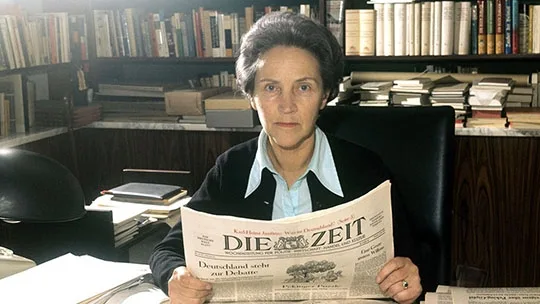
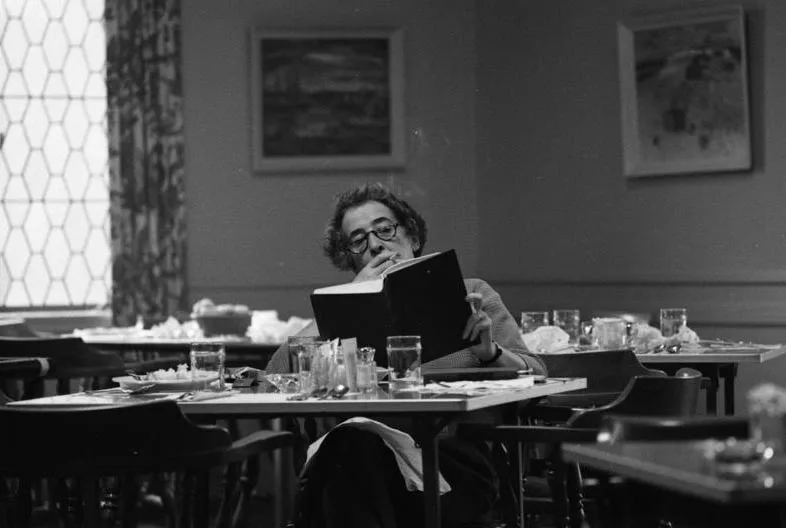
The personality and work of Hannah Arendt increasingly attract the attention of scholars and intellectuals; today she is one of the most compelling and intriguing figures of Western culture. Numerous academic symposia are devoted to Arendt's work, and the number of publications about her grows year by year. Streets and express trains bear Arendt's name. A Hannah Arendt Prize for contributions to political thought has been established, and centres and institutes have been set up to study her work and develop her most important ideas. All this confirms Kurt Sontheimer's words that she has become a kind of icon in the modern Western world — a symbol of our time.
For a long time the name of Hannah Arendt remained unknown, or almost unknown, to the people of Kaliningrad. Residents knew very well who Kant was, and many were familiar with the names of such famous Königsbergers as Hoffmann, Hamann, Hippel and others. But the name Arendt meant something only to a select few intellectuals. So what is Hannah Arendt known for, and what connects her with our city?
Major works and ideas
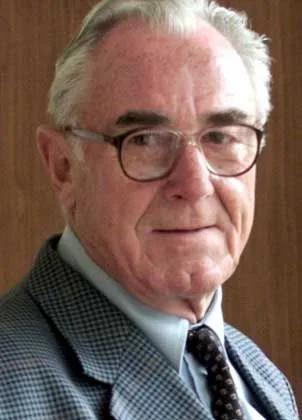
Kurt Sontheimer
(Kurt Sontheimer, 1928–2005)
German political scientist, a well-known scholar of Hannah Arendt's work.
Of Hannah Arendt's extensive legacy, perhaps three books stand out as landmarks in the thinker's work. The book that made Hannah Arendt famous was "The Origins of Totalitarianism". One of the best-known books in the world, it was banned in our country for many years. And when its appearance in Russia finally became possible, the book could not be published for lack of funds. It first appeared in Russian only in 1996 (and has not been reissued since). Today "The Origins of Totalitarianism" is a classic of political thought. Arendt deserves credit for being the first theorist to see in the phenomenon of totalitarianism an absolutely new form of political power in human history. Hannah Arendt not only introduced the term "totalitarianism" into scholarly usage but also substantiated it as a socio-philosophical, political and sociological concept.
What, then, is totalitarianism? Arendt defines it as a system of terror carried out by means of mass repression, which creates an atmosphere of universal fear in the country, paralysing the social activity of the population and thereby opening the way to any social experiments on the people. This means that totalitarianism and systematic mass repression are organically linked. Incidentally, the widespread belief that Hannah Arendt equated National Socialism with the Soviet regime is wrong. She calls totalitarian the period of Soviet history under Stalin's sole rule, i.e. from 1929 to 1953. Moreover, Hannah Arendt does not put an equals sign between Stalinism and National Socialism, although she finds much in common between them.
Another book that brought Arendt fame is "The Banality of Evil: Eichmann in Jerusalem". It was written as a result of Arendt's attendance at the trial of the Nazi criminal Adolf Eichmann, who was brought to justice for directing the deportation of Jews to the death camps in Eastern Europe. In 1960 Eichmann was abducted in Argentina by the Israeli secret service, and on 19 December 1961 he was sentenced to death. Hannah Arendt attended the trial as a correspondent for the influential American magazine "The New Yorker", for which she described her impressions in five essays.
Arendt was deeply disappointed in the Israeli judicial authorities, which conducted the prosecution of Eichmann on behalf of the victims. For her Eichmann was not a monster but a petty functionary who, as he repeatedly asserted, had only done his duty. The concept of the "banality of evil" fits Arendt's view of this new type of "desk murderer". Psychiatrists described Eichmann as "perfectly normal", and this "normality", which stands in contradiction to unimaginable cruelty, was, in her view, the main feature of the Nazi totalitarian regime.
Not all the criminals were "mad executioners"; among them were a great many quite ordinary, even commonplace people who "simply did their job well". Therein lay the banality of the evil they committed.
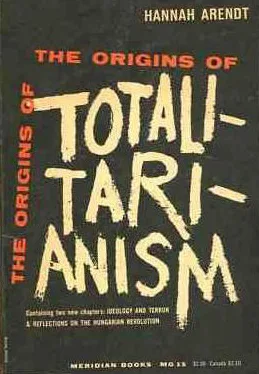
The Origin of Totalitarianism
1951
After her articles were published, a storm of indignation arose, above all among activists of Jewish communities. What turned many of them against Arendt was not her thesis of the banality of evil, nor her undisguised disappointment with the trial, but the fact that she publicly criticised the cooperation of the victims with the perpetrators. The Jewish community perceived this as the breaking of a taboo and as something outrageous and immoral. Hannah Arendt's critics could not accept her negative assessment of the role of the Judenräte, the Jewish councils, in the tragedy of the Jewish people during the Second World War. As emerged during the trial, Jewish functionaries had drawn up lists of persons and property, collected money for the deportations, provided guards to prevent escapes and, in the end, duly handed over the property of the Jewish communities to the Nazis. "Without the active assistance of the Jewish Councils, such a large-scale, systematic murder of Jews would have been impossible", Arendt wrote in her report.
The book whose title in the Russian edition reads "Vita activa, or On the Active Life" was first published in 1958 in the USA under the title "The Human Condition". It was written under the impression of the event when a man-made earthly object, the first satellite, left the Earth's atmosphere and the possibility of human life beyond the Earth came into view. The question of the form of social life on Earth acquired a new dimension. As an analysis of political existence, this major work of Hannah Arendt is a practical complement to Heidegger's "Being and Time". However, in contrast to Heidegger, the starting point of Hannah Arendt's thought is not death but birth and life. Birth gives a human being the possibility of beginning something. Therefore the task of each individual is to shape the world together with others. Hannah Arendt makes the subtle observation that, according to Plato and Aristotle, freedom is realised not in the personal sphere but in the public sphere of the polis. This, in her view, still holds true today.
According to Arendt, human life consists of three basic kinds of activity: labour (work), making (fabrication) and action. All of them are equally important and necessary. All three make up human existence. But it is very important that a balance be kept between these spheres, so that there is no bias in one direction or another to the detriment of the other kinds of activity, since this threatens to make people lose their orientation in the world. The danger of our time lies in a strong shift towards production and consumption. The triumphal march of homo faber (man the maker) produces not only a political vacuum — even, more than that, political unfreedom — but also such a quantity of goods and information that the animal laborans (the labouring creature), being merely a consumer, can easily perish from passive consumerism. Television consumption and kilometre-long rows of shops promising the fulfilment of every wish confirm Hannah Arendt's alarming analysis.
Civil society lives through the independent political participation of its citizens.
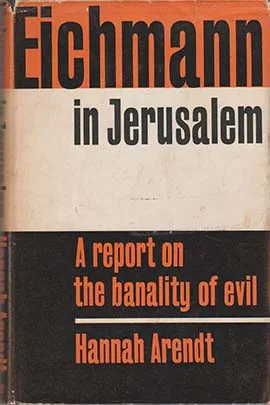
Eichmann in Jerusalem: A Report on the Banality of Evil
1963
Hannah Arendt's critique of our human condition shows with full sharpness and clarity the dangerous tension in the modern world. Without expressing optimism, she formulates a passionate appeal for the revival of political life.
Arendt's legacy undoubtedly belongs to the whole world, just as she herself was a citizen of the world by conviction, despite her especially close ties with particular cultures: Jewish and German by birth, French and American by force of circumstance and conscious choice. The world is large, and the life path of the thinker, caught up in the whirl of the most dramatic events of the past century, became interwoven with the history of many places. She was born in Hanover, studied under Martin Heidegger in Marburg, defended her dissertation under Karl Jaspers in Heidelberg, married in Berlin, worked in Paris, was an inmate of the French internment camp at Gurs, taught at Princeton, became famous for her book on Eichmann in Jerusalem, and died in New York. In contrast to the greatest stay-at-home philosopher, who spent his whole life within the confines of a remote East German province, she seems truly to have become the embodiment of the cosmopolitan idea — the idea of the cosmos as a polis.
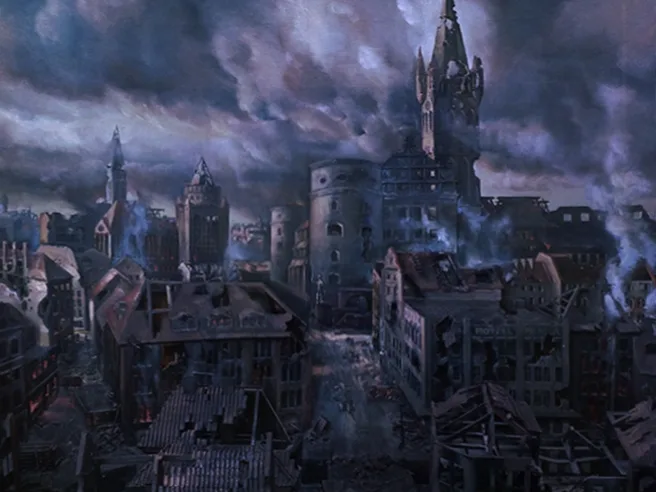
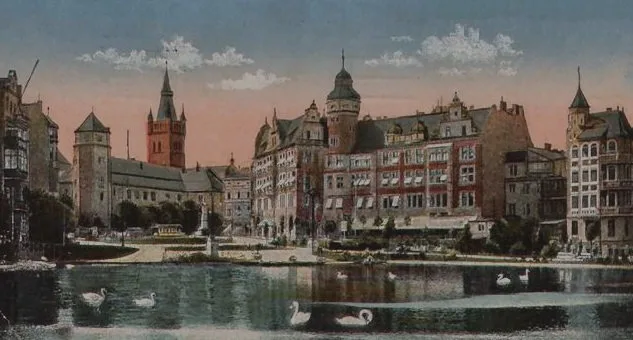
And yet there was one place on Earth for which Hannah Arendt had special feelings — Königsberg, the city on the Pregel. Arendt, who never made a secret of her origins, emphasised her Königsberg identity. Thus once, in a conversation with the historian and journalist Joachim Fest in 1964, she declared:
"In my way of thinking I am still a Königsberger. Sometimes I try to hide this from myself. But it is so."
Childhood and youth in Königsberg
Königsberg was Hannah Arendt's home town, even though Johanna — that was her real name — was born in Linden near Hanover, where her father worked for a local electrical engineering company. Hannah was the only child of the engineer Paul Arendt and his wife Martha, née Cohn. Both parents belonged to the same social stratum of the prosperous Jewish bourgeoisie. In 1909 the family was forced to return to Königsberg because of the serious illness of Hannah's father. The family settled in the Hufen district, at Tiergartenstraße 6 (today Zoologicheskaya Street). Paul's father, Hannah's beloved grandfather Max Arendt, lived very close by, on Goltz-Allee (now Gostinaya Street).
Her ancestors on her father's side (the Arendts) and on her mother's side (the Cohns) were migrants from the Russian Empire who had come to Königsberg in the 18th and 19th centuries. Hannah's paternal grandfather, Max Arendt, as a member of the liberal Progressive Party and chairman of the city council and of the liberal Jewish community, enjoyed considerable influence in the city. Jacob Cohn, Hannah's maternal grandfather, owned a tea-importing firm that was one of the largest businesses in Königsberg.
In 1905 Königsberg had about two hundred thousand inhabitants, including 4,500 Jews. They did not, however, form a homogeneous group. There were marked differences between the long-established German Jews and the Eastern European Orthodox Jews. The former, as a rule, lived in the respectable middle-class district of Tragheim or even, in the case of the especially wealthy, in the Hufen and Amalienau districts. Most of them went to synagogue only on the three most important holidays. Among the Orthodox Jews the picture was quite different: in their quarters, located between the railway station and the Pregel River, Yiddish could be heard; they strictly observed the religious precepts and wore sidelocks at the temples and traditional dress.
In Hannah's family religion played a secondary role, and Christian holidays such as Christmas were celebrated alongside the Jewish ones.
The Arendt family was typical of those German citizens of Jewish origin who believed that, thanks to their economic success and social position, they had become organically integrated into the German bourgeoisie.
The members of the family were open to the ideas of progress and enlightenment and also sympathised with Social Democratic ideas and politics, in which such well-known figures of Jewish origin as Eduard Bernstein and Rosa Luxemburg played a leading role. It was in this social and intellectual environment that Hannah grew up.
In March 1913 Max Arendt died, and in October of the same year his sick son Paul Arendt passed away. Little Hannah was brought up by her mother Martha, née Cohn. In 1920 the widowed Martha Arendt married the hardware merchant Martin Beerwald. He was the son of an emigrant from Russia and had been born and raised in Königsberg. Martha and her daughter Hannah moved into the stepfather's house on Busoltstraße (now Yermaka Street), literally two blocks from Tiergartenstraße. The Hufen district was home to well-to-do Königsbergers, and it was there — between Tiergartenstraße, Goltz-Allee and Busoltstraße — that little Hannah grew up.
Hannah read a great deal, devoting all her free time to it. Along with novels and poems she devoured philosophical works. So it is no surprise that the girl was one of the best pupils not only in her class but in the whole school. At the age of 14 she read Kant's "Critique of Pure Reason" and some works by Kierkegaard and Jaspers. Only philosophy, the queen of the sciences, could satisfy Hannah's intellectual needs. During the revolution of 1918 the thirteen-year-old Hannah encountered politics for the first time. Her mother admired Rosa Luxemburg and took her daughter with her to discussion evenings among friends.
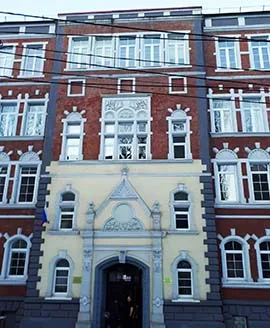
Queen Louise School
Königin-Luise-Schule
Today it is Gymnasium No. 32 on Sergeya Tyulenina Street.
At the age of 15–16 Hannah was increasingly "gripped by rebellious moods"; she found it hard to accept the strict discipline then customary in Prussian schools. Hannah attended the first girls' school in East Prussia, the Queen Louise Gymnasium, located on Landhofmeisterstraße. It was the only school in Königsberg where girls could study Latin and Greek. Considering early-morning Greek lessons unacceptable for herself, she asked her mother to have her excused from them.
Her obstinacy was not confined to school. It extended to her mother's new husband, Martin Beerwald, and his two daughters, with whom she had difficult relations. In religion classes she declared herself an atheist and came into conflict with the teacher. When she tried to persuade other pupils to skip religion lessons, the school authorities' patience ran out, and she was expelled from the girls' gymnasium, even though she was considered one of the best pupils. However, thanks to Martha Arendt's good connections, Hannah was able to study for a time at the University of Berlin without a school-leaving certificate. In the spring of 1924 the eighteen-year-old Hannah returned to a Königsberg gymnasium to obtain her school-leaving certificate early. She passed the examinations with distinction a year ahead of her peers. And in the autumn of 1924 Hannah became a student at the Faculty of Philosophy of the University of Marburg and left her home town. In the following years she kept up her ties with her home town, where her mother lived with her second husband Martin Beerwald and his daughters Clara and Eva. Apparently Hannah Arendt last visited Königsberg in April 1932, when she came for the funeral of Clara Beerwald, her stepfather's daughter.
Hannah Arendt and Kaliningrad: coming home
For us, the inhabitants of Kaliningrad (formerly Königsberg), Hannah Arendt's belonging to our city is an additional reason to turn to her work: we live in the city of her childhood and youth, which gives us grounds to feel a closer connection with her. After all, we walk the very same streets she once walked, see the same buildings she saw, and contemplate the same nature that surrounded the city in her day.
For us Hannah Arendt is not only an outstanding personality and thinker, but also someone who grew up in our city and absorbed its atmosphere.
The acquaintance of the people of Kaliningrad with Hannah Arendt is only just beginning. As the events of 2014 within the "Hannah Arendt Year in Kaliningrad" showed, there is interest in her personality and work, and no small interest at that. Moreover, it can now be said with confidence that this name is no longer unfamiliar to many residents of our city. This means that Hannah Arendt's return to the city of her childhood and youth, which she considered her home, has begun. Those to whom the name of one of the most important thinkers of the twentieth century is dear still have much work ahead of them on the way to the full return of this name to her home town. Perhaps one day Kaliningrad will have a memorial plaque, a school named after Hannah Arendt, and a street bearing her name. A street named after a person who all her life protested against tyranny and violence, against totalitarianism and the banality of evil, against passivity and conformism.
Translated from Russian with the help of AI (Claude, Anthropic), October 2026.