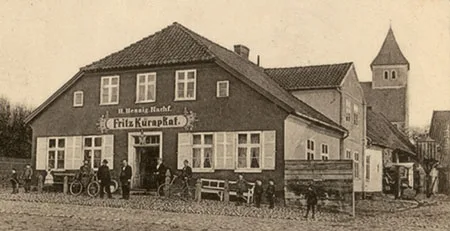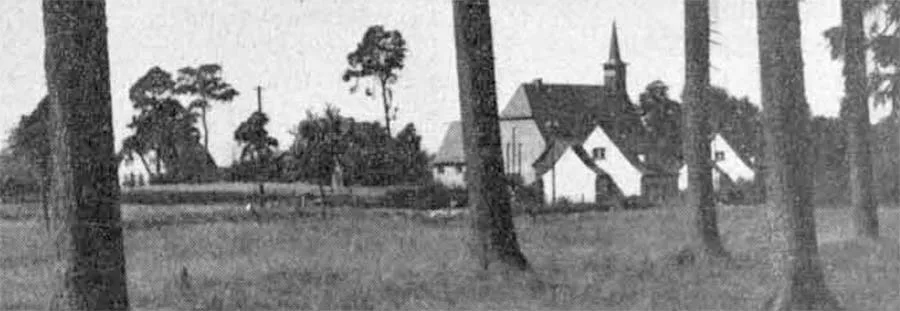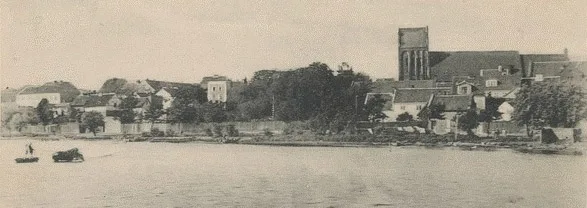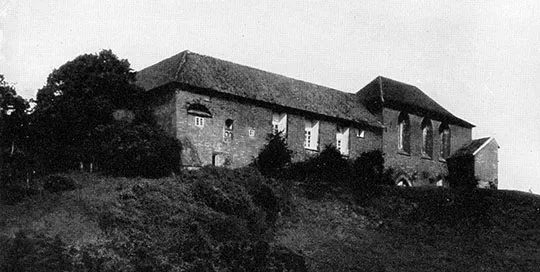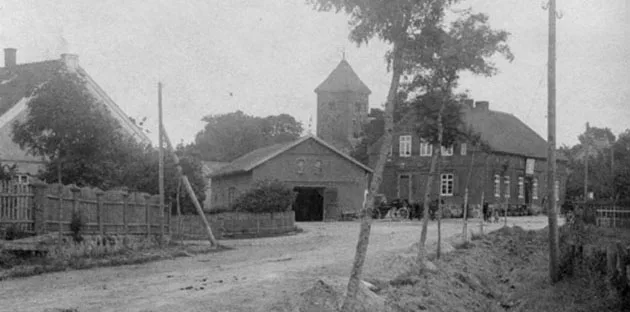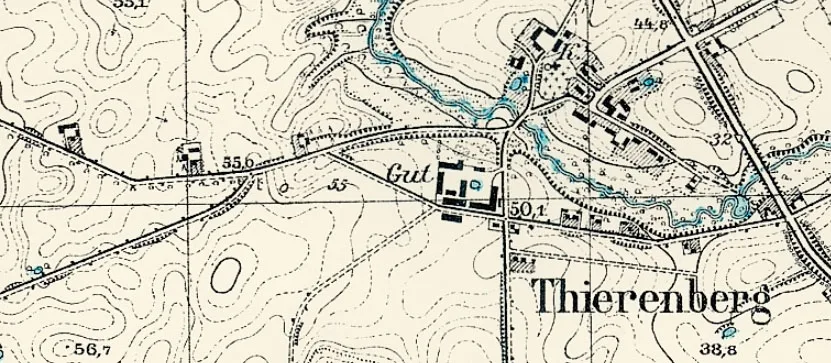
Bishop Jacobus of Samland founded the "Church of the Holy Cross among the Sudauer" here in 1353. The name recalls the resettlement of 1,600 Sudauer (Sudovians, or, as they were also called, Yotvingians) to these parts in 1258. The church is of brick on a fieldstone foundation. A square tower roofed with flat tiles, topped by a weathervane of 1855. A nave, a straight-ended chancel, a sacristy on the south side.
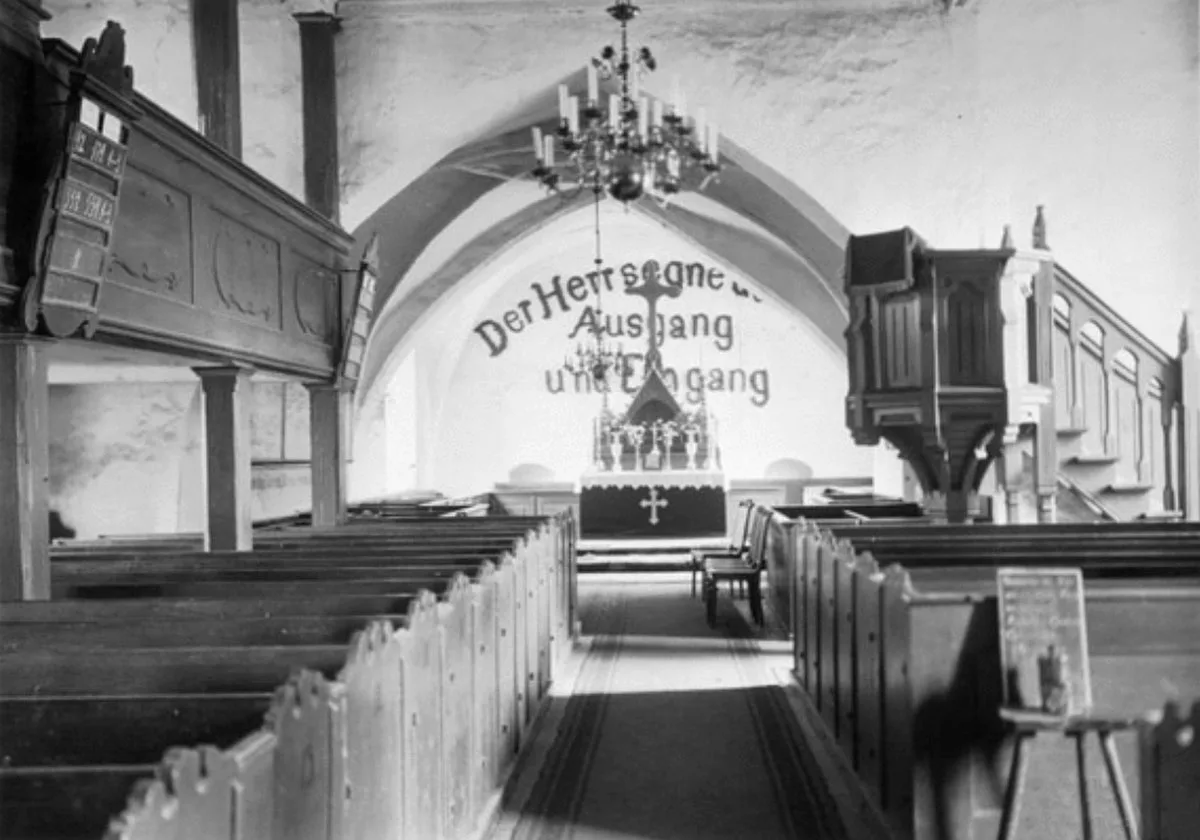
In 1767 the church burned down after a lightning strike. It was restored in 1768. In 1833 lightning struck the church again and set it on fire. A lightning conductor was installed in 1837. The portal at the tower is Gothic. Next to it are two buttresses reaching up to the roof. The weathervane on the chancel roof dates from 1767. The altar and pulpit are combined. Organ of 1832 (?). Bells of 1789 and 1839 (?).
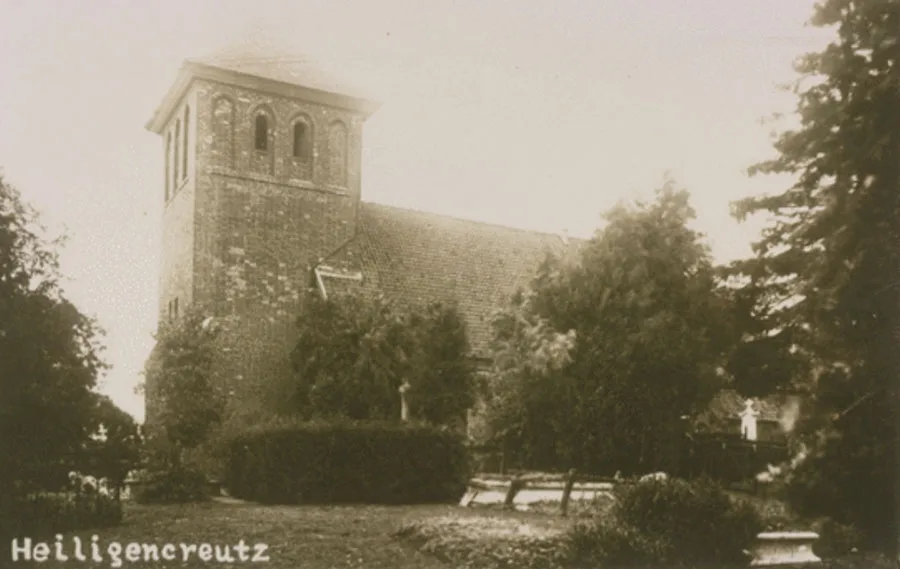
The church was intact when the war ended. In the late 1940s it was used as a grain dryer.
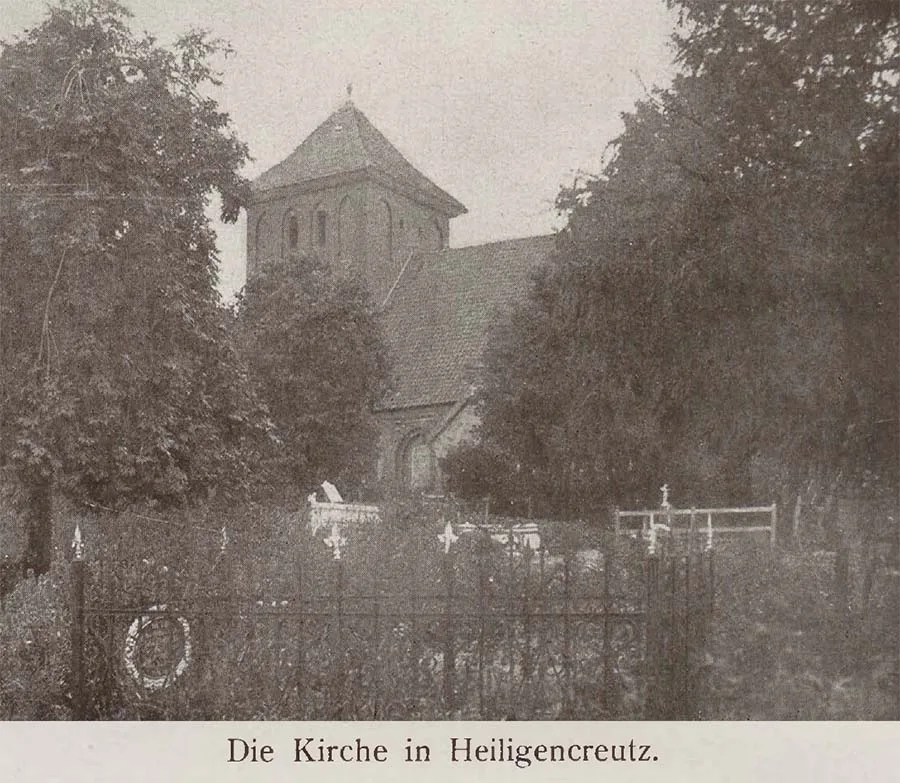
In the same period local residents threw down the large bell. It was handed in as scrap metal. The altar was still intact at that time. After 1950 the organ was dismantled, and the church began to be used as a club. But for lack of maintenance the building fell into decay, and the club had to be closed. In the late 1960s local youths set fire to the church, which burned for five days. After the fire the walls were taken apart.
All that remains is a corner of the tower no more than one metre high. The cemetery has not survived.
Photos on this page: Bildarchiv Ostpreußen, bildarchiv-ostpreussen.de
Translated from Russian with the help of AI (Claude, Anthropic), October 2026.