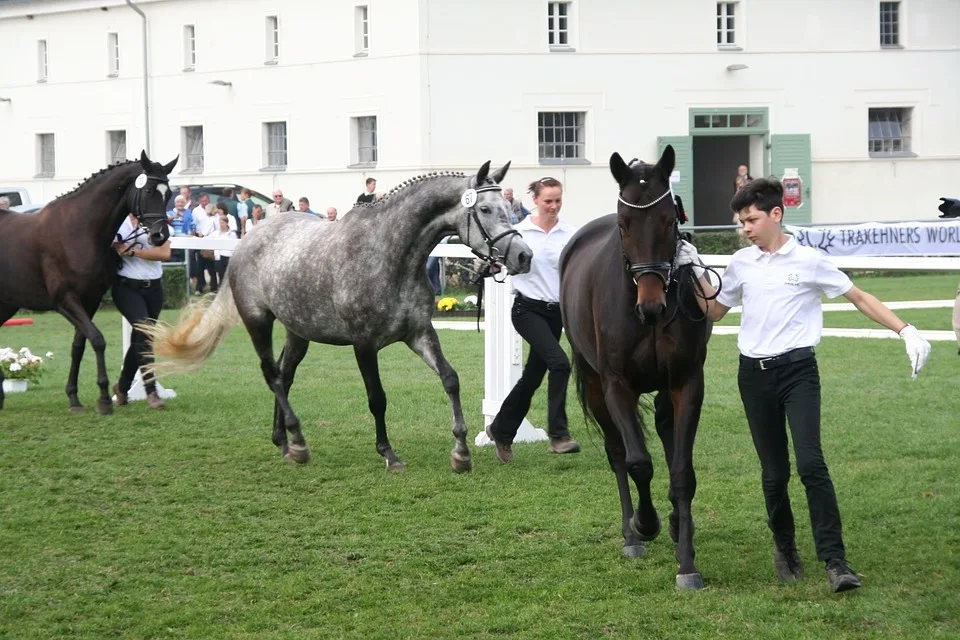
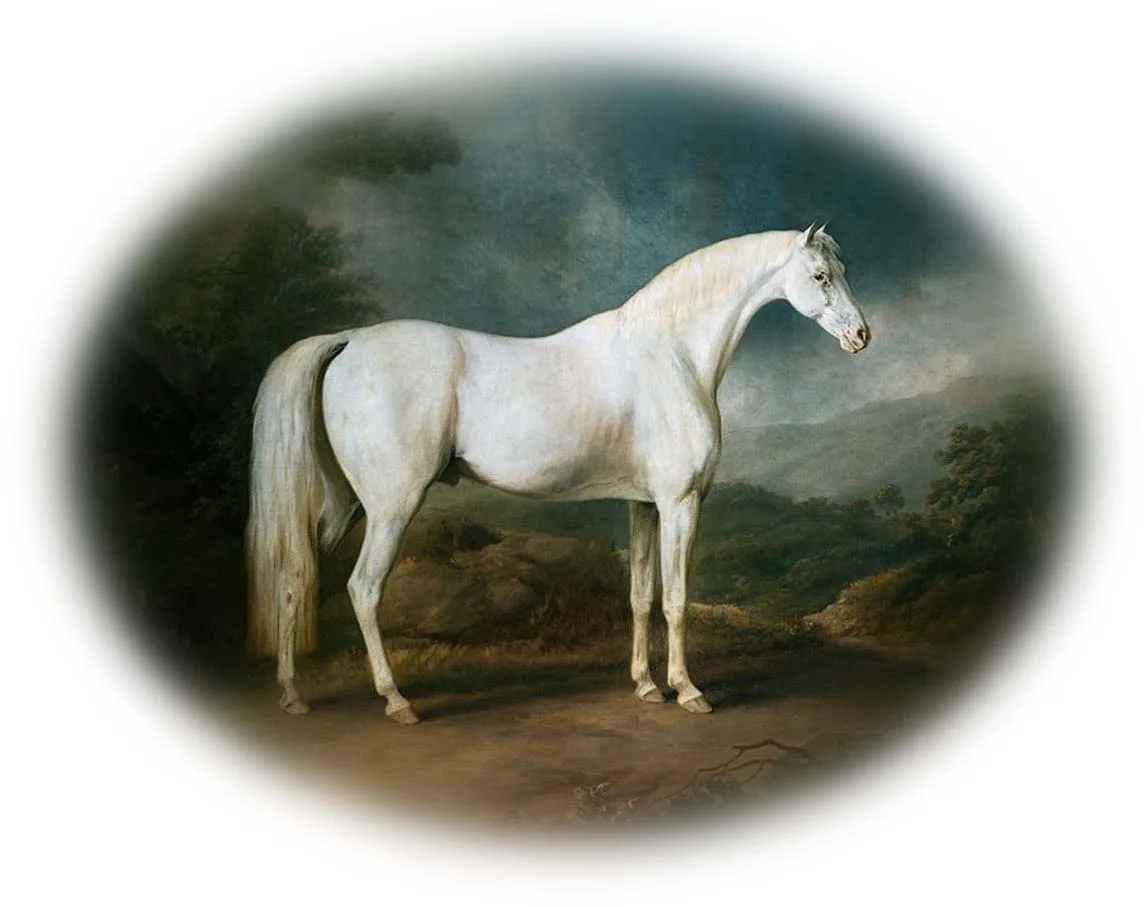
It is the stately white stallion on which Vogt Dietrich once rode to Drago, chieftain of the Prussians, to persuade him to give up an old pagan custom among the Prussians, who killed every white horse as soon as it was born1. Dietrich had strapped a protective cross to his saddlebag, and all the knife blows the Prussians dealt the white stallion did it no harm. Then Drago bowed before the power of the new teaching. And the horse broke free and galloped off into the forest, having absorbed the magic power of the cross...
…Once it so happened that the wife of a villager in a remote place fell gravely ill, and her husband hurried off to Königsberg (modern Kaliningrad) for a doctor. The road was long, and there seemed to be no end to it. The man walked on and on, thinking of his wife, who was now lying in a fever, and of how far it still was to Königsberg… Oh, if only a cart going his way would overtake him now and take him along, or some peasant would suddenly turn up nearby who would lend him his horse... And when he roused himself from his gloomy thoughts and happened to glance aside, he suddenly saw a white horse in old-fashioned saddle harness grazing in a small meadow. The man never remembered that this was the very Wishing Horse of folk legend; without a second thought he leapt into the saddle, intending to leave the horse where he had found it on the way back. The horse flew like an arrow, its hooves barely touching the ground. Already the towers of Königsberg had appeared in the distance, and only then did the villager first suspect that there was something uncanny about this horse. But he had no time to think: suddenly, with a quick jerk, the horse threw him off its back and vanished into the bushes.
And so the man stood once more on the country road, anxious about his sick wife: there was still a very long way to go to Königsberg. But suddenly, from round a bend, a carriage appeared, driving fast from the town towards him.
Drawing level with the traveller, the carriage stopped, and a man in a three-cornered hat called out to the villager from inside: "Tell me, will this road take me to Loppöhnen2?"
Our traveller stared at him, utterly bewildered. Loppöhnen! That was his home village. What a coincidence! Nodding yes, he added that he himself came from Loppöhnen and gave his name.
"Why, it is to you that I am going from Königsberg. I am a doctor. Get in!" The astonished man climbed into the carriage, and it rolled on.
"My name is Doctor Schneitgut. A little boy came running to me and said that a woman in Loppöhnen urgently needed medical help. I quickly packed everything I needed, and as I was leaving the house to tell my coachman to harness the carriage, I saw that a carriage was already standing at my door. I asked whether it was waiting for me, the coachman said it was, and I told him to drive to Loppöhnen."
"Your Honour," the villager replied, "when your carriage stopped beside me, I saw neither horse nor coachman."
The doctor leaned out of the window: "Devil take it! I can't see them either. Where are they?! And yet we are going as fast as if a hurricane were carrying us!"
"It must be the Wishing Horse pulling your carriage invisibly," the villager answered.
Soon they arrived in Loppöhnen, and since the doctor knew his trade well and had brought the right healing herbs with him, the woman soon recovered.
From then on our villager was convinced that he possessed the true inner power of wishing needed to summon the wonder-stallion. Much time passed. And then one stormy night the news spread through his village that a large three-masted ship was in distress off the coast.
The man hurried to the shore in the hope of rich booty, such as the sea waves usually wash ashore when a hurricane smashes ships to splinters nearby.
He saw the lights of the barque dancing far off in the pitch darkness like will-o'-the-wisps over a marsh. Now they were to the left, now to the right, and the villager ran back and forth along the shore to work out exactly where the ship would go down. But this ship had a Klabautermann3 on board, and he would not let the vessel perish; it weathered the storm. And when dawn broke, the heroic sailing ship could be seen hastening into the harbour of Pillau.
Exhausted, the greedy villager returned home. His legs could barely hold him up for weariness, and then he remembered the Wishing Horse and began to summon it with all the strength of his soul. And indeed the magic horse appeared to him, but its look was dreadful. Covered in foam, it reared up and beat the air furiously with its forelegs. A wild neighing came from its missing head. The hapless peasant could not remember how he got away. From then on he swore never even to think of the magic horse again. For it turns against the one who summons it if that person does wrong.
TRANSLATOR'S NOTES
1. The translator knows that to the words of the legend "...killed every white horse as soon as it was born" one may object that foals are not born white but grey. Well, what can she, the translator, say to that? In the old 19th-century legend that I took for translation it is written exactly so: "jedes weisse Pferd sofort nach der Geburt zu toeten", i.e. "killed every white horse immediately after its birth.." What doesn't happen in fairy tales!
2. Loppöhnen. Founded in 1405. Old names — Lepaynen, Lepeinen, Lypeinen. In Soviet times it was called Rybnoye — a settlement which in the 1990s became part of the town of Pionersky (formerly Neukuhren).
3. The Klabautermann — a guardian spirit of a ship. For more, see "In the Footsteps of German Fairy Tales and Legends. The Klabautermann".
SOURCE
Tales of Mecklenburg and Western Pomerania. The Wishing Horse (Sagen aus Mecklenburg-Vorpommern. Das Wunschpferd)
● Editor's note: Read on VisitPrussia.com an interview with the translator of German and, in particular, Prussian fairy tales, our regular contributor Tatyana Kolivay, who runs her own blog, where countless other parables, legends and fairy tales in her translations have been published.
Translated from Russian with the help of AI (Claude, Anthropic), October 2026.