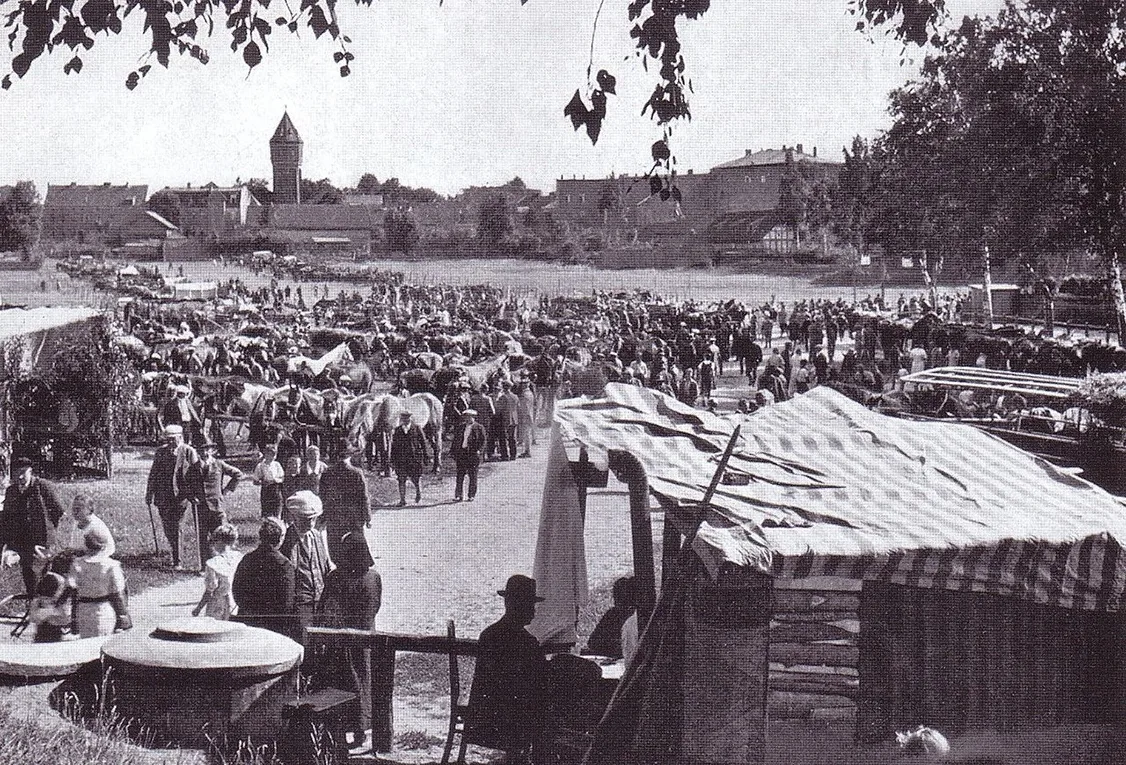
The garrison town of Wehlau (today's Znamensk), part of the Königsberg administrative district, was considered fairly prosperous at the end of the 19th century and, thanks to its horse fairs, was known far beyond East Prussia. Horse dealers and stud breeders flocked to them from all over the world. Naturally, the guests had to be fed well and generously. So skilled cooks from other towns were invited to help prepare such an important event. Horsemeat dishes became part of the traditional fair menu and of this professional celebration.
Wehlau is a small town, so everyone's private life is an open book. Any newcomer immediately attracted the attention of the locals and was at once surrounded by rumour and speculation. From the century before last comes the story of a young cook, Otto Wulbert, told in his book "The Unforgettable Cuisine of East Prussia" (Harald Saul. «Unvergessliche Kueche Ostpreussen») by Harald Saul, a chef from Gera and collector of stories and recipes already familiar to our readers.
Otto Wulbert came to Wehlau from Berlin to help prepare the celebrations of the local garrison's 200th anniversary and to show off the abilities and skills he had acquired not in some provincial backwater but in the capital itself. However, although he never really distinguished himself professionally in Wehlau, he did succeed on the personal front: he "put a ring" on Cecilie Gahlert, the daughter of a restaurant owner who also owned a hotel with guest rooms for foreigners on the outskirts of town. In November of that same year, 1878, the young couple had a daughter, Hildegard, followed by sons Erich and Rudolf. (Sadly, both were killed in the First World War.) Time flew by, and in 1900 Hildegard – the daughter of the luckless cook from the capital, Otto Wulbert, and by marriage now Metz – gave birth to a son, who was named Karl.
His ancestor Theodor Metz, famous in his day, was not merely a successful horse breeder but also the teacher of Dietrich Born himself, one of the "creators" of the warmblood Trakehner (the Trakehner horse breed) and of cold-blooded draught horses. Theodor Metz died at the age of 98, before he could rejoice in the successes of his celebrated protégé.
Fortunately, he also did not live to see the day when his own descendant Karl Metz would become famous throughout the district for his skill in cooking horsemeat dishes. He would certainly not have survived that.
The young man followed in the footsteps of his grandfather Otto Wulbert. He trained as a cook and left his parents' home at the age of 20. For a while young Karl worked as a trainee in Wiesbaden. There, admittedly, he had no chance to show off his skill with horsemeat. Nevertheless, Metz quickly climbed the career ladder and soon became head chef at the Hotel Eden.
Naturally, his recipes found their way into the Metz family cookbook.
Horse rump roulades
— 4 thin slices of horsemeat, about 180 g each (preferably rump)
— Salt (to taste)
— Ground black pepper
— 150 g blue cheese (such as Roquefort)
— 4 long, thin carrots
— 4 sprigs of basil
— 50 g clarified butter
— ¼ l meat stock
— 2 red peppers
— 2 tbsp wheat flour
— 50 g crème fraîche
Pound the meat well, season with salt and pepper and sprinkle with the blue cheese. Peel the carrots, cut them into long thin strips and lay them on the slices of meat together with the basil sprigs. Then roll the slices up tightly, tie with string and brown on all sides in a sauté pan. Carefully pour the meat stock down the side of the pan, cover with a lid and braise for 30 minutes over a medium heat. Towards the end of cooking add the sliced peppers. After 1 hour place the roulades on a warmed dish and keep them warm.
Toast the wheat flour in a frying pan and mix with the crème fraîche. Add the mixture to the sauce produced while braising the roulades and stir.
The dish is best served with braised cabbage.
Horse rump in red wine sauce
— 1 kg horse rump
— ½ l full-bodied red wine
— 2 onions
— 1 bunch of soup greens (parsley, dill, marjoram, leek, etc., as desired)
— Carrot
— 2 bay leaves
— 3 sprigs of thyme
— White pepper and salt (to taste)
— 50 g clarified butter
— 20 ml brandy
— 1 tbsp tomato paste
— 50 g raisins
— 1 tbsp redcurrant jam
— 50 g sour cream
Pat the piece of horsemeat dry with a cloth, place it in a deep earthenware dish and cover with the red wine. Chop the onions and greens and add them to the meat together with the crumbled bay leaves, thyme and pepper. Cover the meat and leave to marinate. After 1–2 days take it out of the marinade, dry it well and rub with salt and pepper. Brown the meat in sizzling clarified butter in a sauté pan.
Strain the marinade; squeeze the vegetables out well and fry them, pour in the brandy, add the tomato paste and the marinade and transfer everything to the sauté pan. Braise the meat for 2 hours over a low heat. Then take it out of the pan and keep warm. Strain the liquid left after braising and pour it back into the pan. Add the raisins to the sauce and stir in the redcurrant jam and sour cream. Season with salt and pepper to taste.
This dish was usually served with broad homemade noodles or boiled potato dumplings.
Horsemeat and potato soup
— 1 kg horsemeat (shoulder or brisket)
— Salt and pepper – to taste
— 3 large onions
— 80 g fat
— 1 l meat stock
— 1 tsp black peppercorns
— 2 bay leaves
— 3 cloves
— 500 g potatoes
— Juice of one lemon
— 1 tbsp capers
Wash the meat, pat dry and cut into small bite-sized pieces. Season with salt and pepper and put in the refrigerator for 30 minutes. Meanwhile, peel the onions, cut them in half, slice each half thinly and fry in the fat in a sauté pan. Add the horsemeat, fry until a brown crust forms and pour in the hot meat stock.
Cut the potatoes into small cubes and add to the soup together with the black peppercorns, bay leaves and cloves. Keep checking whether the meat is done. At the very end of cooking add the lemon juice and capers. The potatoes make the soup thick.
Horsemeat is considered the most environmentally clean, nutritious and healthy kind of meat, with the highest protein content and an ideally balanced amino acid profile. Few other meats can compare with it in trace elements and vitamins. A further advantage is that it is hypoallergenic and perfectly suitable for feeding children.
According to historians, at the dawn of civilisation humankind did not shy away from horsemeat, since the horse was domesticated first and foremost as a source of meat, and only later came to be used as a pack animal and so on.
The chief connoisseurs of horsemeat – nomadic peoples – have known from time immemorial that its taste depends directly on the age of the horse and how it was kept.
The "right" meat comes from a horse that grazed freely. And the tastiest dishes are made from a young animal, a foal.
Horsemeat still holds a place of honour on the menus of many peoples today. In Tatar cuisine, for example, horsemeat rolls are very popular. They are made with onion, garlic, vinegar, pepper and other spices. Of course, they differ from Karl Metz's roulades in their herbs and seasonings, depending on local traditional preferences, but the essence is the same – and they are said to be very tasty.
Christians have taken an ambiguous approach to eating horsemeat. Calvin Schwabe, author of the book "Unmentionable Cuisine", asserts that in pre-Christian times clear evidence of horsemeat being eaten in Northern Europe was its presence on the tables during the religious rituals of the Teutons, in particular those dedicated to the god Odin. The tradition proved tenacious and became so widespread that in 732 Pope Gregory III launched a determined offensive against this pagan custom. Scholars believe that the people of Iceland long resisted conversion to Christianity not least because they were unwilling to give up eating horsemeat.
In France, horsemeat was banned until 1811. Today horses are raised there specifically for meat in the southern provinces. Thinly sliced raw horsemeat with a hot sauce is especially prized. Belgians and Swedes would not say no to this delicacy either. In Switzerland horsemeat is deep-fried, South Americans dry-cure it, and Italians, Germans and Hungarians use it as an ingredient in sausages. Traditional Japanese cuisine also has horsemeat dishes. The Yakuts prefer it as stroganina (frozen shavings) or boil it in one large piece. Brazilians and Indians, on the other hand, do not eat horsemeat. There is also a strict prohibition among the Roma: in their cultural tradition the horse is a friend, and they do not eat their friends. In the USA and England it is forbidden to eat sporting animals.
So while for nomadic peoples and their heirs horsemeat is something perfectly ordinary, for others it is taboo – for either religious or ethical reasons.
Translated from Russian with the help of AI (Claude, Anthropic), October 2026.